
Reviewed · GAUDÍ BUILDING TOURS
Barcelona: Art Nouveau & Gaudí Tour
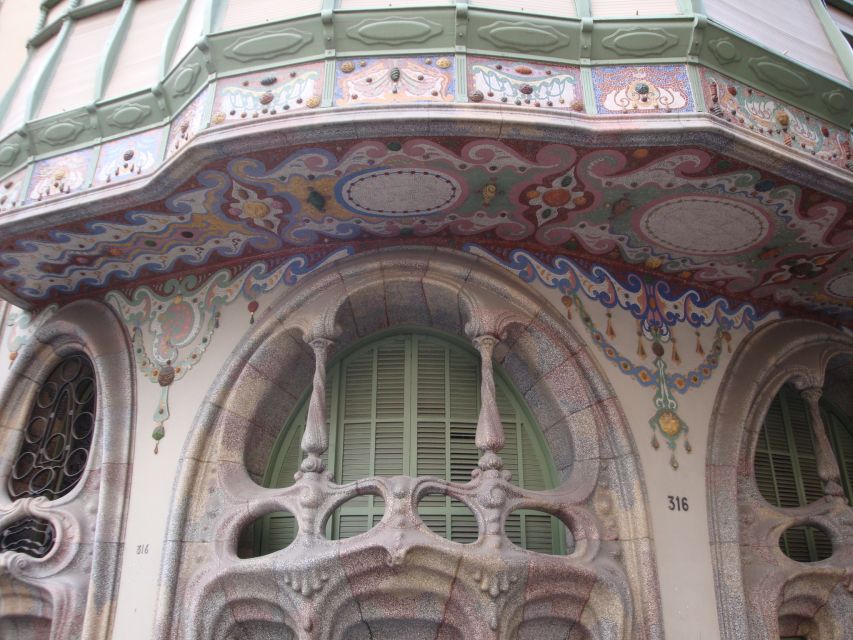
A perfect façade can tell a whole story. This 3.5 hour Eixample walk turns Art Nouveau and Gaudí details into history you can actually see, from stone carvings to ceramic pattern work. My favorite part was the way my guide, Johannes, tied buildings to the political and social shocks Barcelona went through in the 1800s, so the streets stopped feeling random.
I especially loved two things: first, the focus on the Golden Square area, where industrialists and aristocrats put their money on display with star architects. Second, the guide’s ability to connect style and symbolism, like Catalan Modernism growing out of a broader cultural movement that began around 1885, not just a new building fad.
One drawback to consider: this is a relaxed walk with stops mainly for exteriors, and entry tickets are not included. If you’re craving lots of indoor viewing, you may feel a bit impatient waiting for the one or two exceptions.
In This Review
- Key things that make this tour worth your time
- Entering Eixample’s world: why the grid feels like a time machine
- Golden Square origin story: 1854, walls down, and big money moving in
- Modernism in context: Catalan style as culture, not just decoration
- The streets you’ll walk: Eixample’s corner façades and why they matter
- Gaudí’s hour: what to notice when you see trencadís, curves, and myth
- Block of Discord and the idea of style as competition
- Story stops that make the city feel less like postcards
- Street level surrealism: dragons, confetti, and Dali’s shadow
- How the tour runs in real life: 3.5 hours, private group, and relaxed pacing
- Price and value: $212 per group up to 4, what you actually get
- Who should book this Barcelona Modernism and Gaudí walk
- Bottom line: should you book this tour?
- FAQ
- How long is the Barcelona Art Nouveau & Gaudí Tour?
- What languages does the tour guide speak?
- Where does the tour meet?
- Is entry to museums or attractions included?
- Will we spend most of the time outside?
- What should I bring for the weather?
- Can I cancel for a refund?
Key things that make this tour worth your time
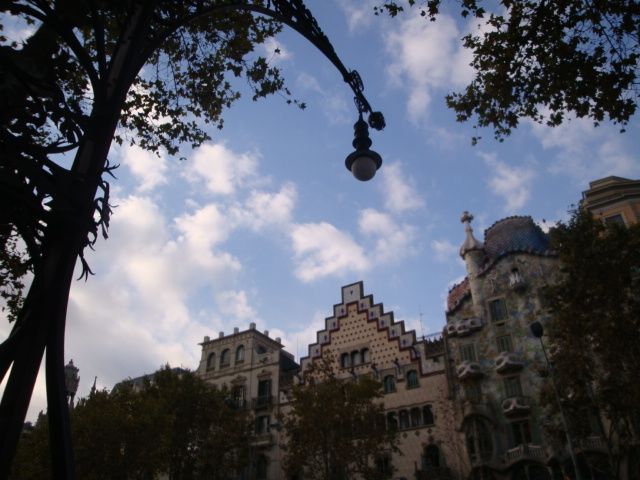
- Golden Square setting: You walk the Eixample grid where wealth and ambition reshaped the city after the old walls fell.
- Modernism explained clearly: Catalan Modernism as a cultural movement, not only architecture.
- A guide who connects dots: Johannes explains how local history, politics, and design choices link together.
- Gaudí from street level: You learn what to notice in façades and why certain motifs matter.
- Photo friendly pacing: It’s not a sprint, and you get time for pictures and bathroom breaks.
- Weather ready: It runs in sun, rain, wind, and strong showers, so plan for outdoors.
Entering Eixample’s world: why the grid feels like a time machine
Eixample is the kind of neighborhood that looks orderly at first, then hits you with surprises the longer you stand in it. The streets are wide, the corners feel engineered, and the buildings line up like a stage set. But the real payoff is what your guide does with that space, because every block becomes a clue about how Barcelona’s power shifted over time.
The tour starts at Plaza de Urquinaona, in front of the Theater Borrás. From there, you head into Eixample, often called the “city expansion,” which is a hint that the area was literally built to absorb growth. It’s also where the wealthy classes chose to show off, with architecture made from stone, ceramic, and glass.
If you love cities where the story is written in architecture, this is a very “read the street” kind of tour. And if you’re more of a museum person, it can still work, because the guide uses explanations that help you look harder at what’s right in front of you.
Golden Square origin story: 1854, walls down, and big money moving in
Eixample proper was planned after Barcelona’s walls came down. Your guide frames it as a major turn: once the old city was overfilled and cramped, and the area between the old center and the town of Gracia finally became available, the city could expand in a controlled way.
A key historical contrast drives the mood of the tour. For about 200 years, the upper classes largely lived separately from the poorest classes in the old city, and the central government in Madrid limited local autonomy and shared decision making. Local officials could not do much unless money was available, so when fortunes came in, architecture became a visible outlet for power and identity.
That’s why the Golden Square feels like more than pretty façades. This is where industrialists, aristocrats, and the so-called Indianos (Catalans who made money in South America) built palaces. And instead of using one anonymous style, they hired the era’s biggest names, turning wealth into a public statement.
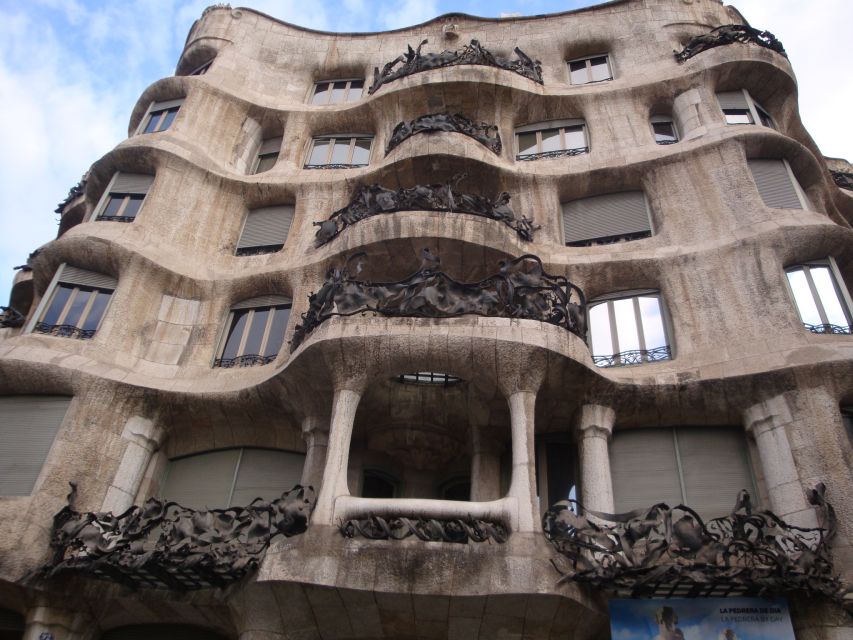
More curves, barely a straight line
- Barcelona: Park Güell and Gaudí House Museum Entry Ticket
★ 4.5 · 6,326 reviews - Barcelona: Gaudí’s Park Güell Tour with Fast-Track Ticket
★ 4.8 · 4,512 reviews - Barcelona: Sagrada Familia, Modernism, and Old Town Tour
★ 4.7 · 1,621 reviews
Modernism in context: Catalan style as culture, not just decoration
You’ll hear Catalan Modernism described as a cultural movement starting around 1885, rather than a single architectural invention. That matters, because it explains why the buildings feel expressive and symbolic, with details that look like art as much as engineering.
Your guide points out that this was not only about façades. It was also about ideas circulating through literature and visual arts. A building like the Palau de la Música becomes easier to understand when you know it was designed to pay homage to Catalan folk songs, not just in reference to music, but through an allegory built from stone.
This tour makes you look at symbols with a calmer eye. You’re not just hunting for the prettiest surface. You learn to notice what the designer seems to be saying, and how the message fits the moment Barcelona was living through.
The streets you’ll walk: Eixample’s corner façades and why they matter
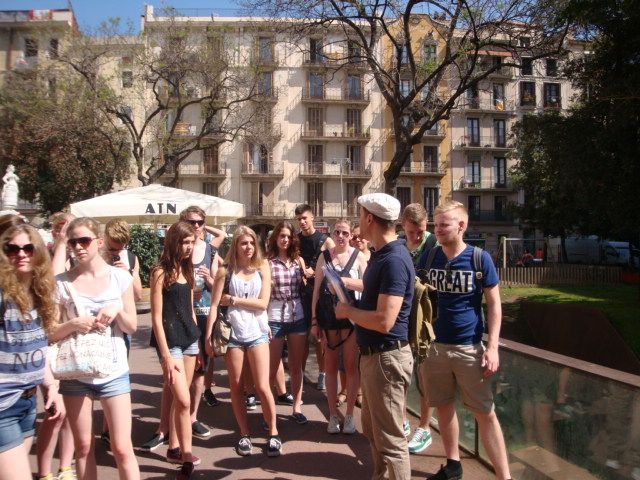
One of the quiet tricks of this neighborhood is that leveled corner façades are part of the planning. If you’ve walked past Eixample before, you might remember how corners “invite” you to look sideways as you turn. The guide uses that geometry to help you see how Modernist architects used street-facing views as a canvas.
Because it’s a walking tour, you’ll get repeated chances to compare buildings and details. Ceramic and glass don’t read as one-off decoration. They start to look like a language.
You should expect exterior viewing only in most cases. Museums and interior explorations are not part of the normal flow, with a couple of exceptions. So what you’re really buying is time with a guide who can help you interpret what you’re seeing without needing to go inside.
Gaudí’s hour: what to notice when you see trencadís, curves, and myth
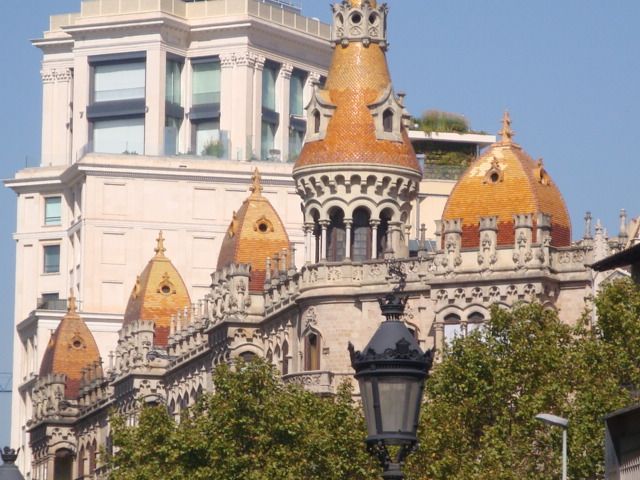
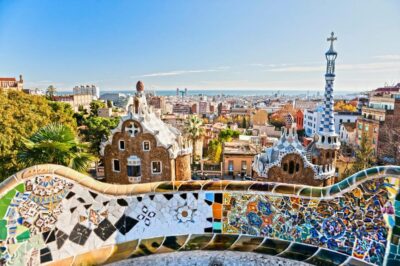
Even if you think you know Gaudí, you’ll still pick up new “spotting skills” after a few blocks. The tour places special weight on his influence across Eixample, especially in the area of Passeig de Gràcia, where trencadís (shard mosaics) brings luck and visual impact through its glittery surfaces.
Your guide also talks about the “why” behind motifs. That’s a big deal with Gaudí. When you understand how he experimented, you stop calling everything random and start recognizing patterns. One highlight you’ll hear about is Gaudí’s trick with string, a method tied to shaping forms.
You also get the thrill of hearing about Gaudí with references that stretch beyond Barcelona. The tour includes stories like Gaudí and New York, which helps you see how a local style became a recognizable world image.
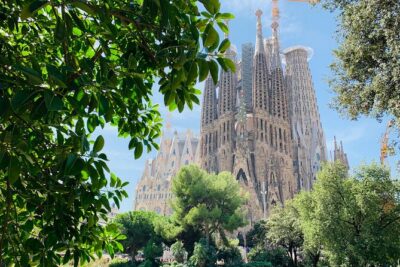
And then there’s the big finish energy around the Sagrada Família, including the idea of Gaudí’s lost plans. Even when you cannot step inside, those conversations change your view of the building’s purpose and the scale of ambition behind it.
Block of Discord and the idea of style as competition
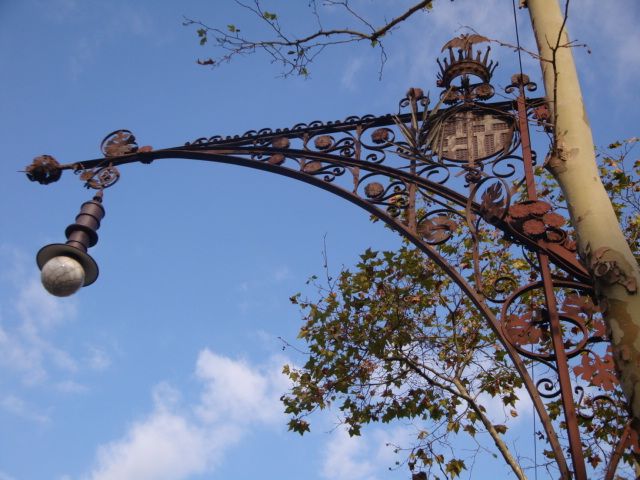
Eixample’s design includes dramatic showdowns between architects. You’ll hear about the block of discord, described in the tour as “three stars at the block of discord.” The point is not that one designer was objectively better. It’s that Barcelona’s wealthy patrons treated architecture like a public rivalry.
This is where your guide’s storytelling really helps. Instead of just listing names, you learn what those names meant in their time, and why the clients wanted to be associated with modern ideas. The façades then read like arguments, not just pretty walls.
If you’ve ever felt that Art Nouveau is a little hard to “get” at first, this stop type is how you do it. You’re given a frame, then you’re allowed to look until the details start making sense.
One ticket rarely covers it all. Here's what else is nearby.
- Barcelona: Sagrada Familia Entry Ticket with Audio Guide★ 4.6 · 105,312 reviews
- Barcelona: Park Güell Admission Ticket★ 4.4 · 76,534 reviews
- Barcelona: Casa Batlló Entry with Self-Audioguide Tour★ 4.7 · 25,359 reviews
- Barcelona: Montjuïc Cable Car Roundtrip Ticket★ 4.5 · 22,368 reviews
- Barcelona: Hola Barcelona Public Transport Travel Card★ 4.5 · 20,985 reviews
- Barcelona: 24 or 48-Hour Hop-On Hop-Off Bus Tour★ 4.4 · 20,872 reviews
Story stops that make the city feel less like postcards
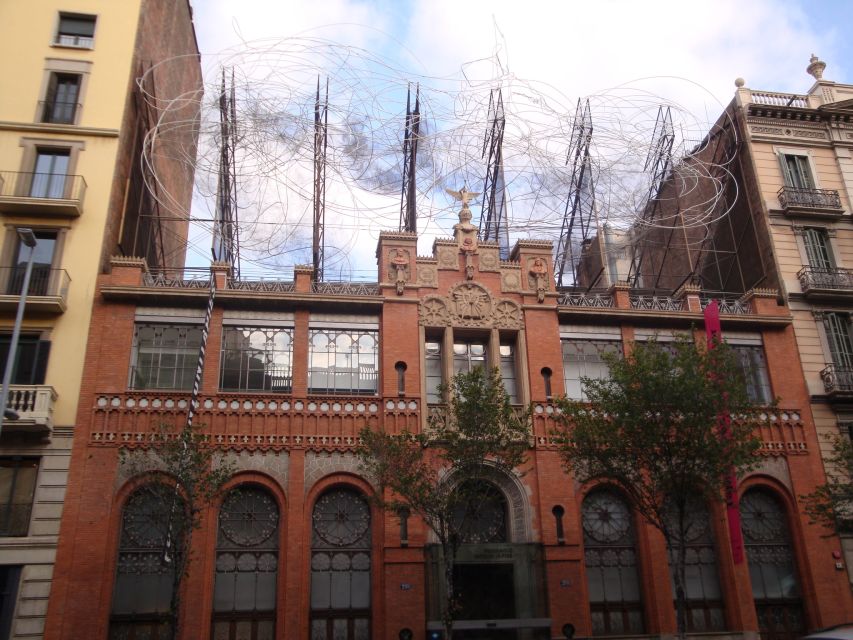
This tour doesn’t only chase the prettiest buildings. It also connects the façades to major turning points, many of them linked to conflict, identity, and growth.
You’ll hear about the repercussions of the war of secession, including 1714 and beyond. Your guide also brings up the idea of the “enslaved city,” and the moment the wall was torn down, which helps explain why expansion felt both hopeful and politically charged.
Then the narrative shifts toward city dreams. The tour includes Ildefons Cerdà’s utopia of the perfect city, which helps you understand why Eixample’s grid isn’t just a convenience. It was an attempt to plan a better future after old constraints had trapped people and classes in separate realities.
Later, you’ll hear about the Barcelona World’s Fair, the cleaner-up moment of the city, and the mix of industry and festival that shows up elsewhere, like the contrast of Raval. Those stories matter because they remind you that Modernism did not appear in a vacuum. It grew inside real social friction.
Street level surrealism: dragons, confetti, and Dali’s shadow
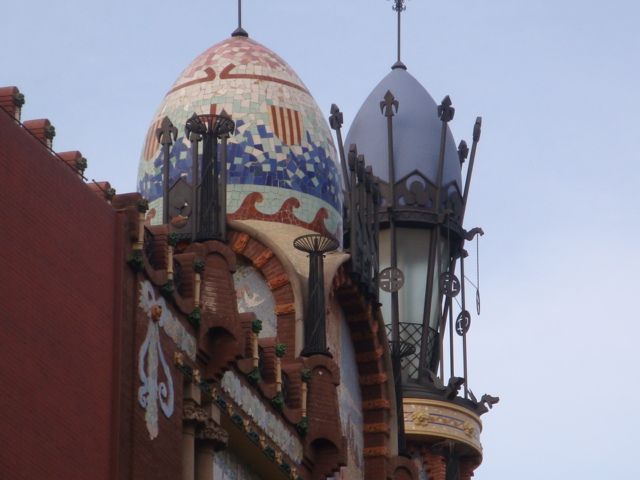
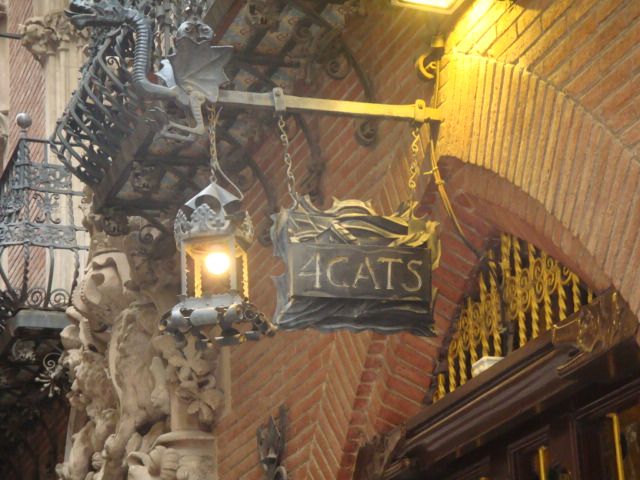
One of the more fun parts of this tour is that it treats Barcelona as a place where whimsy and seriousness coexist. You may hear about “a dragon’s den with relics,” framed as something like a Karneval with confetti. Even if you do not get a dramatic costume moment, the language nudges you to look for the theatrical side of the architecture.
The tour also includes Dali and the Chupa-Chups empire. Even without going deep into museum stops, this kind of reference gives you permission to see Catalonia as creative in many eras, not only the one labeled Modernism. It’s a good reminder that a city’s art culture is not one style. It’s a chain of influences.
How the tour runs in real life: 3.5 hours, private group, and relaxed pacing
This is a private group experience for up to four people. That matters because the guide can move at a human pace and still give you detailed explanations. It also means you’re not forced into a rigid group rhythm with strangers.
The tour lasts 3.5 hours, and it’s a relaxed walk. You should expect time to stop for photos, and yes, the guide allows bathroom breaks. You are not racing from stop to stop.
The meeting point is fixed at Plaza de Urquinaona, in front of the Theater Borrás, so plan to arrive a few minutes early to collect yourself and spot the exact entrance area.
Transport is handled lightly. The tour includes an U-Bahn (subway) ticket, which is helpful if the route uses short transit gaps. Because the main format is walking, you’ll still want comfortable shoes and a willingness to take your time.
Price and value: $212 per group up to 4, what you actually get
At $212 per group up to four, this tour prices like a private experience rather than a per-person ticket. If you have a group of two or four, you can think of it as paying for a guide’s attention and a tighter, more responsive pace.
The included city tour and U-Bahn ticket add value, especially if you’d otherwise pay for transit as you crisscross between key points in Eixample. What’s not included is entry fees, so you’re mainly paying for guided interpretation, not admission to attractions.
In practical terms, you’re getting a high-value format if you enjoy outdoor learning and you like the idea of a guide telling you what to look for. If you require indoor tickets and lots of museum time, you’ll want to pair this with a separate plan for one or two interior sights.
Who should book this Barcelona Modernism and Gaudí walk
This tour is a smart fit if you:
- Love architecture but sometimes struggle to translate design into meaning
- Want a guided explanation of Eixample’s Golden Square without hustling
- Prefer exteriors and street-level viewing, with minimal museum time
- Want the story of Barcelona’s 1800s shift in autonomy, money, and identity tied to the buildings
It can also be great for couples and small friends groups because the private setup helps you ask questions and steer the pace a bit.
If you only want a quick highlights loop, you might find 3.5 hours long. But if you like walking slowly and being taught how to look, it’s a good match.
Bottom line: should you book this tour?
Yes, I’d book it if your goal is to understand Barcelona’s Modernism and Gaudí influence through Eixample’s street architecture. The format makes sense for a first or early stop in the neighborhood, because it teaches you what to see as you keep exploring on your own afterward.
Skip it if you mainly want museum interiors and paid entries during your tour window. Also note the weather reality: it runs in sun, rain, wind, and strong showers. Go with the right layer and attitude, and the outdoors pacing feels fun rather than annoying.
If you come here expecting pretty buildings, you’ll still get that. If you come here ready to learn how the city’s history got baked into façades, you’ll have a much better day.
FAQ
How long is the Barcelona Art Nouveau & Gaudí Tour?
The tour lasts 3.5 hours.
What languages does the tour guide speak?
The live guide offers German and English.
Where does the tour meet?
You meet at Plaza de Urquinaona, in front of the Theater Borrás.
Is entry to museums or attractions included?
No. Entry fees are not included, and the tour focuses mainly on what you can see from the street with a couple of exceptions.
Will we spend most of the time outside?
Yes. The tour sticks to streets and squares to get close to the area’s character, and it focuses on exteriors rather than interior visits.
What should I bring for the weather?
It is a three-weather tour that runs in sun, rain, and wind, including strong showers. Bring a hat and sunscreen in summer, and in winter a jacket or thin coat. A small bottle of water can also help.
Can I cancel for a refund?
Yes. Free cancellation is available up to 24 hours in advance for a full refund.
The latest to open for booking



Gaudí Building Tours, side by side.
Park Güell and Gaudí House Museum Entry Ticket
Read our review →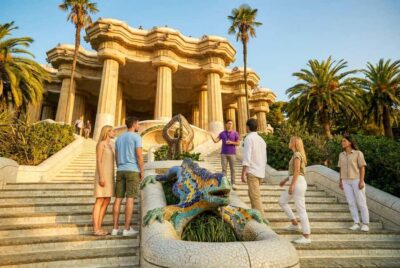
Gaudí’s Park Güell Tour with Fast-Track Ticket
Read our review →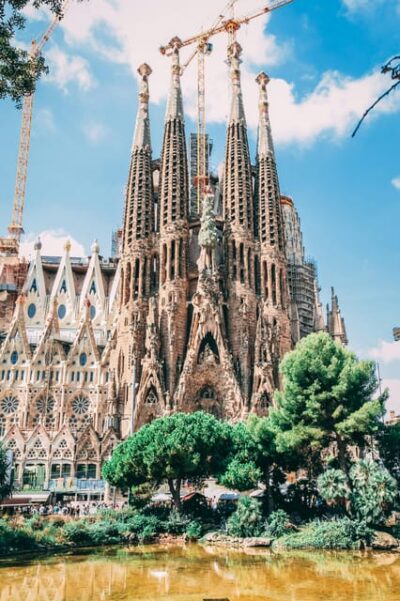
Sagrada Familia, Modernism, and Old Town Tour
Read our review →
Sagrada Familia & Gaudi Tour Private or Small Group with Tickets
Read our review →
Complete Gaudi Tour: Casa Batllo, Park Guell & Sagrada Familia
Read our review →
Barcelona e-Bike Tour: Gaudí & Old Town Small Group
Read our review →
Ramblas, Old Town, Gothic and Gaudi Architecture Walking Tour
Read our review →
Gaudi´s Casa Vicens Skip the Line Ticket with Audioguide
Read our review →Where else this one turns up