Reviewed · GUIDED TOURS
Barcelona: Biblioteca Arús Guided Tour
A library built for workers still matters. The Arús Public Library tour packs a focused look at working-class education and the history of Freemasonry in Spain. I like how it turns what could be a quiet building into real social history, and I also appreciate that the original collection is still there. The one drawback is simple, the visit is only 1 hour, so it is an overview, not a long, slow museum read.
You start at Passeig Sant Joan 26 and step into a place opened March 24, 1895 by Rossend Arús, in the house where he lived. The library was created to educate working people, and that idea still shapes the way the site functions today as a specialized research center for the 19th and early 20th centuries. The tour also connects the library to social movements, including labor history, anarchism, and Freemasonry.
Because it runs for just an hour and is in English with a live guide, it is a nice add-on if you want something smarter than another photo stop. It is also wheelchair accessible, which makes it easier to plan. Just go in expecting a guided story in the library, not a free-form wander.
In This Review
- Key Things I’d Prioritize Before You Go
- Why the Arús Public Library Feels Different Than Most Barcelona Stops
- Meeting at Passeig Sant Joan 26: What Your First Minutes Should Feel Like
- Rossend Arús and the Working People: The 1895 Opening That Sets the Tone
- The Original Collection Still There: Why That Detail Changes the Whole Visit
- Freemasons in Spain, Plus the Library’s Social-Movement Collections
- What the 1-Hour Format Gets Right (and What It Doesn’t)
- English Guidance and Private Tour Feel: The Practical Benefit
- Price and Value: Is $21 Worth It for This Library Tour?
- Practical Tips So Your Hour Goes Smoothly
- Should You Book the Barcelona Biblioteca Arús Guided Tour?
- FAQ
- Where is the meeting point for the tour?
- How long is the Biblioteca Arús guided tour?
- How much does the tour cost?
- Is the tour offered in English?
- Is the tour private?
- What is included in the price?
- Is the tour wheelchair accessible?
- What topics will the guide cover?
- When did the Arús Public Library open?
- Can I cancel for a refund?
Key Things I’d Prioritize Before You Go
- A working-class mission from 1895: Rossend Arús opened Barcelona’s first public library with education in mind.
- Freemasonry history, not generic trivia: You get the story as part of Spain’s broader social currents.
- Original collection preserved: The library opened with around 24,000 books, and those holdings remain.
- Social movements connected to the building: Labor movement, anarchism, and Freemasonry show up in the specialized collections.
- Private, guided, and timed well: It is a tight 1-hour experience with a live English guide.
Why the Arús Public Library Feels Different Than Most Barcelona Stops
Barcelona has plenty of grand sights, but the Arús Public Library is the kind of place that gives you a different lens. This is not about sweeping views from a rooftop. It is about how ideas spread, who got access to reading in the first place, and how communities organized through books.
What I like most is that the library’s mission is specific and historical. It opened March 24, 1895 through the determination of Rossend Arús, and it was designed to benefit the education of the working people. That purpose matters because it explains why the collection is so broad, why the library was built for use, and why the site still functions as a research center.
The tour’s focus on Freemasons in Spain also adds a layer people often miss. Instead of treating Freemasonry as a vague conspiracy topic, you approach it through historical context and the library’s own research collections.
Meeting at Passeig Sant Joan 26: What Your First Minutes Should Feel Like
The meeting point is Passeig Sant Joan, 26, Barcelona. Plan to arrive a bit early so you can settle in without rushing. Once the guide has everyone, the tone is practical and story-driven, with the library itself serving as your main “text.”
Because the duration is just 1 hour, the tour is likely paced to give you the key through-lines quickly. You should expect the guide to set the stage right away, linking the building to Rossend Arús, the opening date, and the idea that the library was meant for working people. This is the kind of start that helps you later when the guide talks about the specialized collections.
If you are the type who likes to understand where a place fits in Barcelona’s social history, you will probably feel at home fast. If you mainly want a long, self-guided wander, you may wish you had more time.
Other things to see around Barcelona
- Barcelona: Sagrada Familia Entry Ticket with Audio Guide
★ 4.6 · 105,312 reviews - Barcelona: Park Guell Guided Tour with Skip The Line Entry
★ 4.7 · 17,563 reviews - Fast Track Sagrada Familia Guided Tour
★ 4.5 · 8,795 reviews
Rossend Arús and the Working People: The 1895 Opening That Sets the Tone
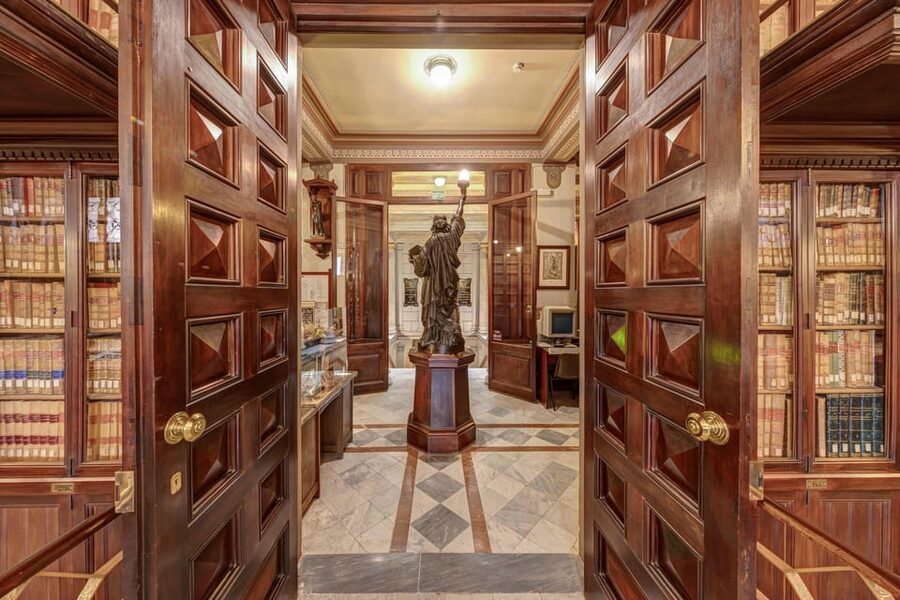
The core of the experience is how the Arús Library was created. It opened on March 24, 1895, thanks to Rossend Arús’s determination, and it was designed to benefit the education of the working class. The library later settled in the house where Arús lived, which gives it a personal origin, not a purely institutional one.
This matters more than it might sound at first. In many cities, public libraries are presented as neutral infrastructure. Here, you learn it was built with a social goal: education as a way to widen opportunity for people who were often left out.
You will also hear that the library opened with about 24,000 books covering all areas of knowledge of the moment. That detail helps you picture the ambition behind the project. It was not a small reading room with a handful of titles. It was a serious library collection from the start, aimed at real access.
The Original Collection Still There: Why That Detail Changes the Whole Visit
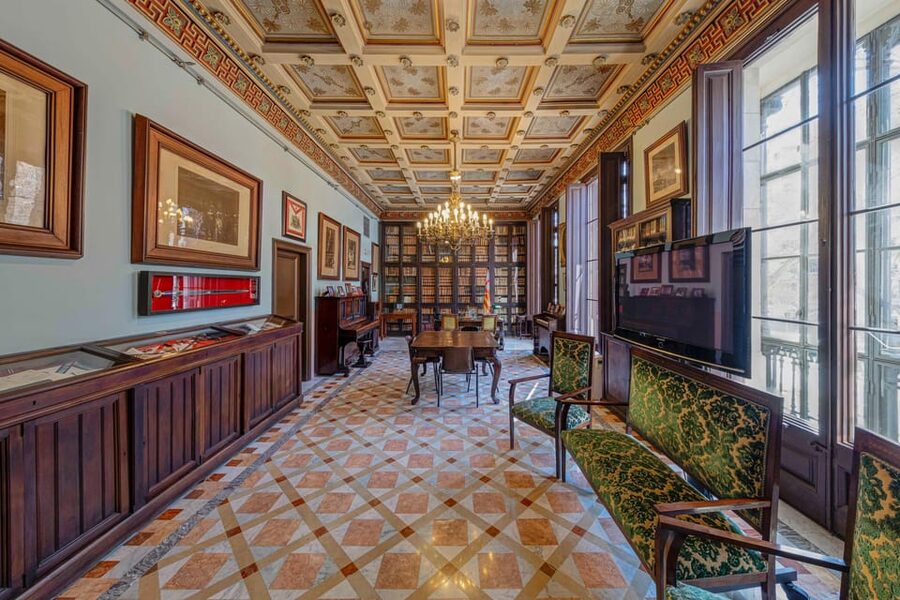
One of the most compelling aspects of this tour is the idea that the original holdings remain. You learn that the Arús Public Library still keeps its original collection as a living link back to the time it was founded. When a place preserves its beginnings like that, it turns “history” into something physical.
For your visit, this creates a different kind of satisfaction. You are not only hearing about the past. You are seeing the continuity, the fact that the library has maintained the collection as a testimony to its founding purpose.
The library today functions as a specialized research center of history and culture from the 19th century and the beginning of the 20th century. That means the emphasis is not just on general reading. It is about study, context, and how ideas moved through society.
If you like museums where you can trace themes over time, this format will feel right. If you want to skim and move on, you might find yourself wishing for more time with a slower pace.
Freemasons in Spain, Plus the Library’s Social-Movement Collections
A key highlight is learning about the history of the Freemasons in Spain. What I find valuable here is the framing. The library is also home to special collections covering the history of labor movement, anarchism, and Freemasonry. So Freemasonry becomes part of a broader story about social currents, not an isolated topic.
You also learn that the Arús Library was a hot spot for social movements from the 19th and 20th centuries. That helps you understand why the library was not just a quiet storage space for books. It was tied to the people and ideas orbiting around labor rights, political thought, and community organizing.
In practice, this means your hour likely covers multiple angles. First you get the “why it was founded,” then you shift into what the library preserves and studies. Finally, you connect those collections to the specific highlight, the history of Freemasons in Spain. That structure makes it easier to remember, because each piece reinforces the other.
The only thing to keep in mind is focus. This tour is not trying to cover all of Barcelona’s history. It narrows in on the library’s specific role in 19th and early 20th century social history.
What the 1-Hour Format Gets Right (and What It Doesn’t)
At $21 per person and about 1 hour, this is priced like a targeted cultural experience, not a full-day deep dive. For me, that is a plus. You can fit it into a day without feeling like the tour stole your whole schedule.
You also get a live English guide, which is important because library history can get abstract fast. A good guide keeps it understandable: who Rossend Arús was, why the library opened, what the collection was, and how the social movement collections connect to topics like Freemasonry.
A possible drawback is that one hour can only do so much. If your goal is to read lots of material on site or take extremely detailed notes, this format will feel tight. But if your goal is to leave with context and a clear sense of why this library matters, the timing works.
One ticket rarely covers it all. Here's what else is nearby.
- Barcelona: Park Güell Admission Ticket★ 4.4 · 76,534 reviews
- Barcelona: Casa Batlló Entry with Self-Audioguide Tour★ 4.7 · 25,359 reviews
- Barcelona: Montjuïc Cable Car Roundtrip Ticket★ 4.5 · 22,368 reviews
- Barcelona: Hola Barcelona Public Transport Travel Card★ 4.5 · 20,985 reviews
- Barcelona: 24 or 48-Hour Hop-On Hop-Off Bus Tour★ 4.4 · 20,872 reviews
- Barcelona Aquarium: Entry Ticket★ 4.4 · 16,717 reviews
English Guidance and Private Tour Feel: The Practical Benefit
This experience includes a guided tour and runs as a live English visit. It is also wheelchair accessible, which means you can plan without guessing about access.
I also like the private-tour angle in theory, because it usually supports questions and pacing. With only an hour, being able to ask something relevant is a big advantage. It turns the visit from a fixed lecture into a more responsive experience, even if you are simply curious about how Freemasonry fit into Spanish society.
And there is one more practical note. If you are doing a day of big landmarks, a shorter, quieter tour can refresh your brain. You get to trade crowds and lines for a more focused setting.
Price and Value: Is $21 Worth It for This Library Tour?
I look at value in two parts: what you learn and how much time you spend. At $21 per person for a 1-hour guided visit, you are paying for a focused dose of context inside a site that is specifically preserved from its founding era.
You get at least three high-value learning angles from the highlights:
- the first public library of the city
- the history of Freemasons in Spain
- the library’s collections tied to labor movement, anarchism, and related social currents
Then you add the built-in value of the setting: the Arús Library opened in 1895 and still keeps the original collection, with around 24,000 books at opening that remain. That is the kind of authenticity you cannot easily recreate elsewhere with a generic city walk.
So for $21, I’d call it a solid cultural bargain if you enjoy history with a social angle. If you want only famous sightseeing, you might prefer spending your money on a ticket to something more visually dramatic. This is for the thinking traveler, in the best way.
Practical Tips So Your Hour Goes Smoothly
Here are the small choices that help you get more out of the time you have.
- Wear comfortable shoes. Libraries are indoor, but you still need mobility for the tour pace.
- Go with one question in mind, like how the library connected education to the working class, or how the Freemason story connects to other social movements.
- Keep your expectations matched to the duration. Plan for a guided overview, then decide if you want to follow up on your own after the tour.
If you like to compare stories across Barcelona, this is a nice counterpoint to the city’s architecture-first reputation. You get the “how society worked” angle, with a clear anchor: Rossend Arús’s library.
Should You Book the Barcelona Biblioteca Arús Guided Tour?
Book it if you want an hour of guided, English-friendly history that is grounded in a real preserved collection from 1895. This tour is especially worth it if you are curious about Freemasons in Spain, labor movement history, or how working-class education was championed through public institutions.
Skip it if you need lots of free time to browse at your own pace or you are looking for a major visual spectacle. This is a thoughtful visit, not a sightseeing marathon.
If you are trying to balance your Barcelona day, this one fits neatly. You will leave with a sharper idea of how books, ideas, and social movements shaped the city long before modern headlines.
FAQ
Where is the meeting point for the tour?
The meeting point is Passeig Sant Joan, 26, Barcelona.
How long is the Biblioteca Arús guided tour?
The tour lasts 1 hour.
How much does the tour cost?
The price is $21 per person.
Is the tour offered in English?
Yes, the live tour guide provides the tour in English.
Is the tour private?
Yes, it is described as a private tour.
What is included in the price?
The included item is a guided tour.
Is the tour wheelchair accessible?
Yes, it is wheelchair accessible.
What topics will the guide cover?
The highlights include exploring the first public library of the city and learning about the history of Freemasons in Spain, along with the library’s role in education for the working class and its special collections tied to social movements.
When did the Arús Public Library open?
The Arús Public Library opened on March 24, 1895.
Can I cancel for a refund?
Yes. Free cancellation is available up to 24 hours in advance for a full refund.
The latest to open for booking


Guided Tours, side by side.
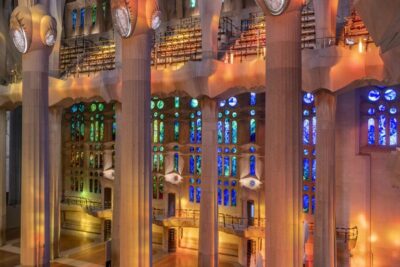
Sagrada Familia Entry Ticket with Audio Guide
Read our review →
Park Guell Guided Tour with Skip The Line Entry
Read our review →
Park Guell Guided Tour with Skip the Line Ticket
Read our review →
Montserrat, Girona & Costa Brava Guided Day Trip from Barcelona
Read our review →