
Reviewed · GAUDÍ BUILDING TOURS
Barcelona: Catalan Modernism Architecture Walking Tour
Barcelona turns into a design classroom on foot. This Barcelona Modernism architecture walking tour strings together the city’s biggest names and smart lesser-known stops, starting at Hospital de Sant Pau and ending at Palau de la Música Catalana. I especially like how you get both the emotional wow factor of Gaudí and the “wait, look again” details of turn-of-the-century residential Modernism, plus you finish in one of Barcelona’s most radiant interiors. The main drawback to plan for is language: the live guide is Russian, and entrance fees for sights are not included.
What makes this route work is the rhythm. In about three hours you move from UNESCO-listed Art Nouveau grandeur to Gaudí’s iconic Sagrada Família, then onto Passeig de Gràcia for the showpiece houses, including the Block of Discord area and the celebrated facades of La Pedrera and Casa Batlló. You will be walking the whole time, so you will want comfortable shoes and some water, especially in sunny months.
In This Review
- Key points at a glance
- The big idea: a tight 3-hour loop of Catalan Modernism
- Starting at Sant Pau | Dos de Maig: Hospital de Sant Pau, UNESCO and Art Nouveau muscle
- Sagrada Família: how to read Gaudí when it is unfinished
- Casa Comalat: the Modernism side that rewards slower looking
- Passeig de Gràcia and the Block of Discord: rival styles in one big photo run
- La Pedrera, Casa Milà: when stone starts acting like waves
- Casa Batlló: the dreamlike facade and the logic behind it
- Casa Calvet: Gaudí’s elegant touch, still stylishly restrained
- Palau de la Música Catalana: finish in a jewel box of glass, light, and mosaic
- Price and value: is $200 per group worth it?
- The guide experience: why the storytelling is part of the product
- What to bring, and how to avoid an exhausting three hours
- Who this Barcelona Modernism architecture walking tour fits best
- Should you book this tour?
- FAQ
- How long is the Barcelona Catalan Modernism architecture walking tour?
- What does the tour price include?
- Are entrance fees included for the attractions?
- Where does the tour meet?
- What language is the live tour guide?
- Is the tour wheelchair accessible?
Key points at a glance
- Hospital de Sant Pau first: start with a UNESCO World Heritage site and one of the biggest Art Nouveau hospital complexes in the world
- Sagrada Família in the middle: you get time to understand the unfinished masterpiece right when your eyes are warmed up
- A real Modernism neighborhood mix: Casa Comalat and several Passeig de Gràcia residences show more than just the famous two
- Block of Discord context: you learn why rival architects built bold statements next to each other
- End at Palau de la Música Catalana: finish in a concert hall that feels like glass, light, and mosaic
The big idea: a tight 3-hour loop of Catalan Modernism
This tour is built for people who want meaning, not just postcards. The route is compact enough to fit an afternoon, but it still covers the arc of Catalan Modernism, from visionary public architecture to private homes and then a spectacular music venue.
The pacing also matters. You have short guided segments at each stop, so you get a focus topic each time, rather than one long speech where your feet start bargaining with you. Because it’s a private group, you are not competing with a crowd for the best angles at facades.
Starting at Sant Pau | Dos de Maig: Hospital de Sant Pau, UNESCO and Art Nouveau muscle
You begin just by the metro exit at Sant Pau – Dos de Maig, which is a smart setup. It keeps the tour from wasting your first minutes on getting oriented, and it’s easy to reach from the rest of Barcelona.
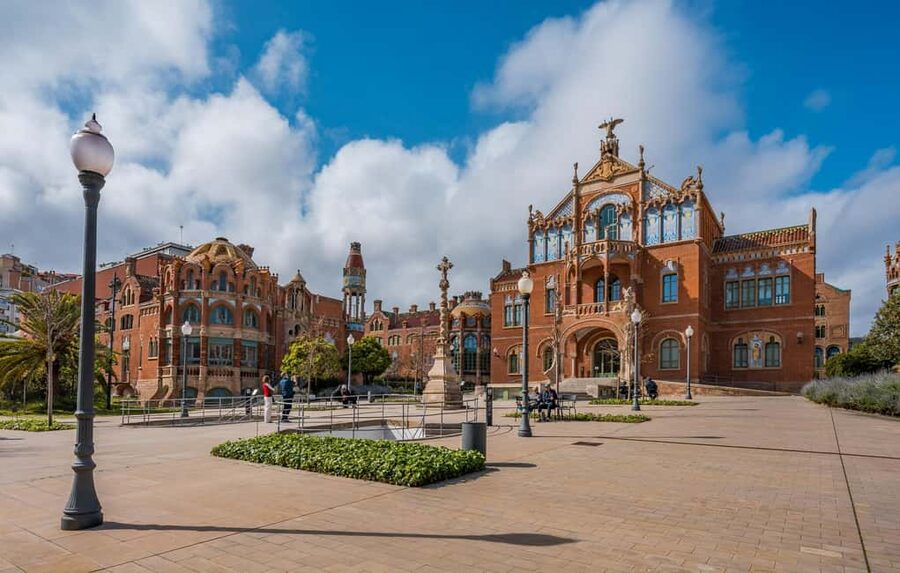
The first guided focus is Hospital de Sant Pau, a UNESCO World Heritage site and one of the largest Art Nouveau complexes in the world. If you only know the word Art Nouveau, this stop expands it into something physical: you can see how design becomes structure, and how architecture turns function into beauty. Even if you only get an overview, the key is learning to look for patterns and intentions in the layout, not just the facades.
Plan for the basics here. The tour is walking-based, so treat this first stop as your warm-up, with your camera ready and your water within reach.
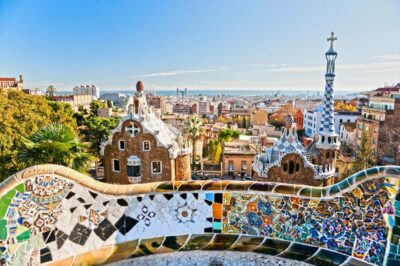
More curves, barely a straight line
- Barcelona: Park Güell and Gaudí House Museum Entry Ticket
★ 4.5 · 6,326 reviews - Barcelona: Gaudí’s Park Güell Tour with Fast-Track Ticket
★ 4.8 · 4,512 reviews - Barcelona: Sagrada Familia, Modernism, and Old Town Tour
★ 4.7 · 1,621 reviews
Sagrada Família: how to read Gaudí when it is unfinished
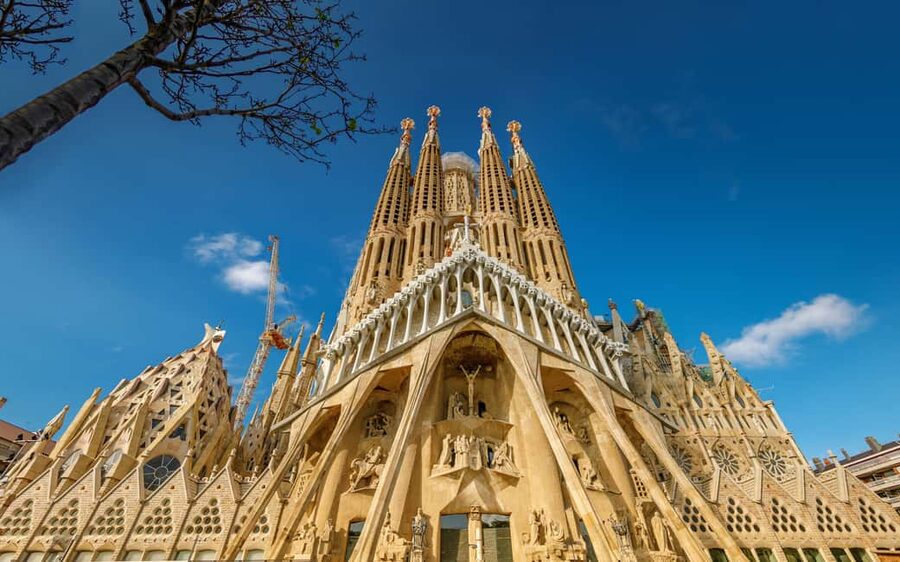
After Sant Pau, you head toward Sagrada Família, Gaudí’s iconic and unfinished masterpiece. The tour gives you about 30 minutes with a guide, which is just enough time to build a mental map of what you are seeing.
Here’s the practical value: when a building is famous, your eyes can slide over details without understanding what they mean. A guide helps you connect visual cues to ideas, and this is especially important at Sagrada Família, where the story is partly in the process and partly in the symbolism.
Also, remember entrance fees are not included. That means if you want interior access, you should budget separately and be ready for timing constraints based on your visit day. Either way, you can still get a lot from the exterior and from the guide’s interpretation.
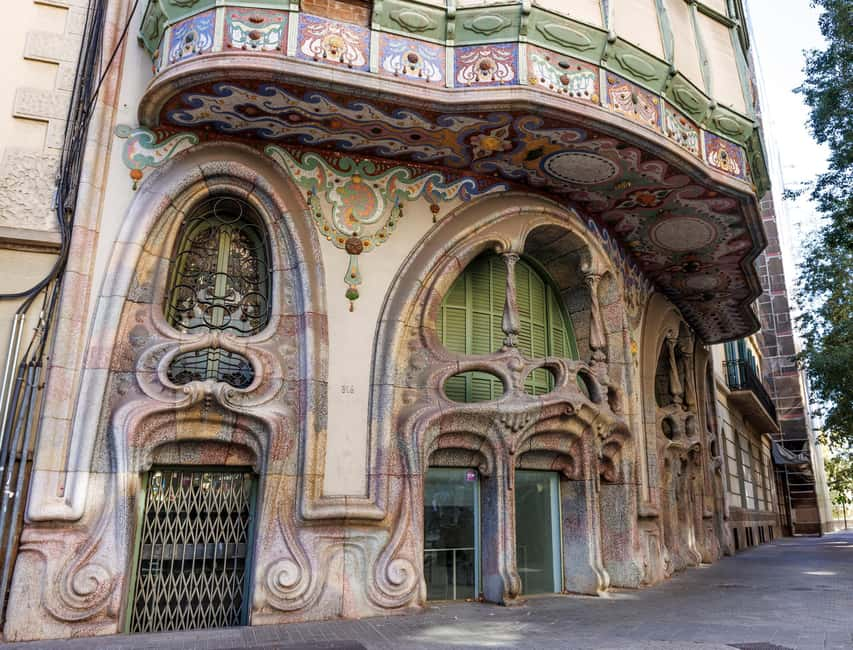
Casa Comalat: the Modernism side that rewards slower looking
One of the strengths of this tour is that it does not treat Modernism as a two-stop checklist. You also visit Casa Comalat for a shorter guided segment, around 20 minutes.
This is the kind of stop that makes the whole experience feel more human. Major monuments can sometimes overwhelm you, but a residence like Casa Comalat nudges you to notice the domestic scale of design. It helps you understand that Barcelona’s Modernist leap was not only for cathedrals and landmarks. It also reshaped how people lived and how wealth displayed itself through architecture.
If you love small details, this is where you’ll likely enjoy the most. Look for how the building’s curves and lines guide your eye, and how ornament can still feel orderly when you understand the idea behind it.
Passeig de Gràcia and the Block of Discord: rival styles in one big photo run
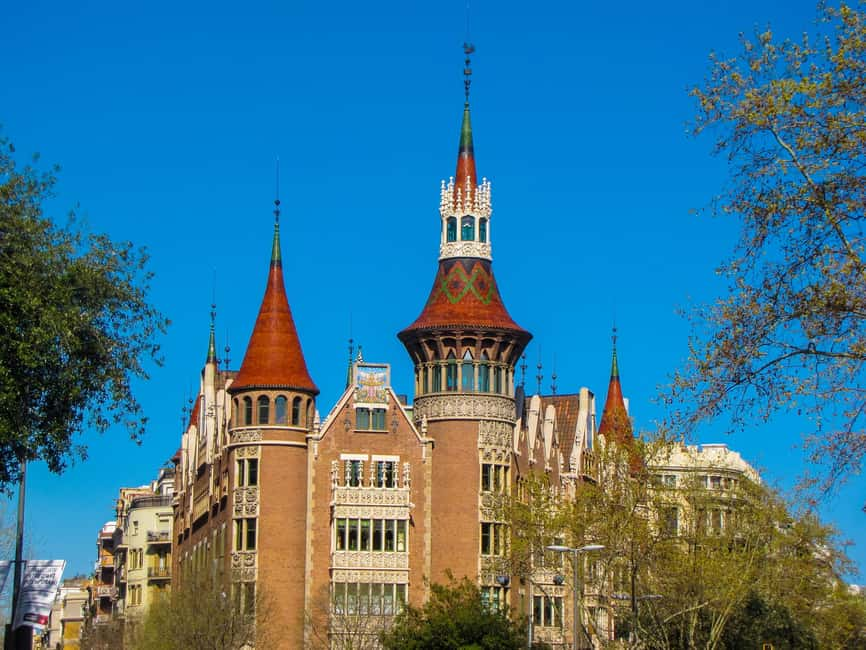
Then you get to Passeig de Gràcia, the city’s architecture runway, with about 40 minutes of guided time along the avenue. This is where Barcelona’s Modernism becomes a competition, not just an art movement.
The highlight is the Block of Discord, where buildings by rival architects stand side by side, turning the street into a live argument about beauty. For your visit, this matters because it changes how you view the houses. Instead of asking which one is prettier, you start noticing what each architect is trying to prove.
You also move through a lineup of stops with guided time built around specific facades:
- Casa Milà for about 15 minutes
- Casa Batlló for about 15 minutes
- Then later Casa Calvet for about 15 minutes
Because entrance fees are not included, treat these segments as focused facade and context time. If you do enter, that is a separate purchase on your end, but the guided storytelling should help you understand what you are stepping into.
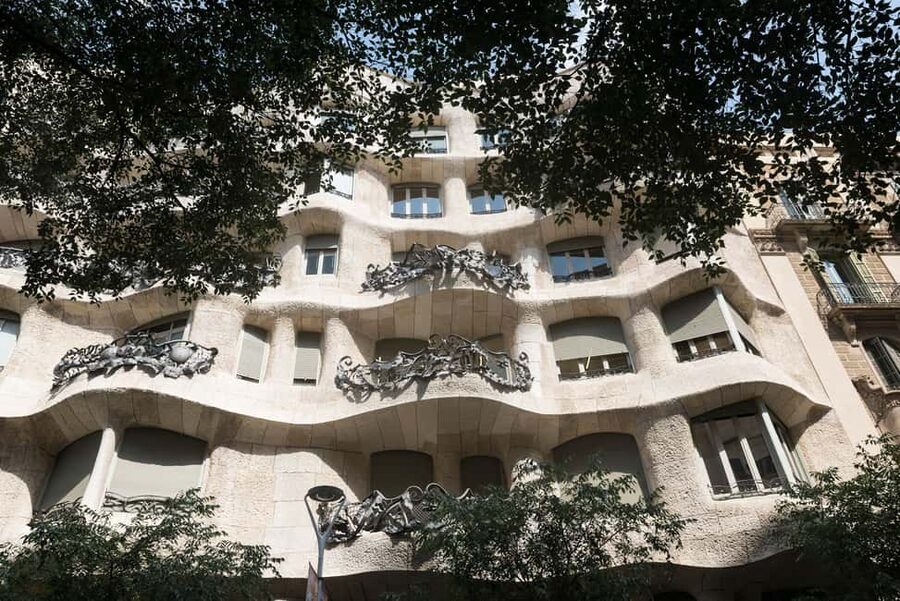
La Pedrera, Casa Milà: when stone starts acting like waves
Gaudí’s Casa Milà, known as La Pedrera, is one of the best places in the city to see Modernism’s obsession with movement. Even if you are not sure what you are looking at at first, the guide’s job is to give you a set of features to track while you look.
Give yourself time with the facade. From street level you can connect the swirling stone energy to Gaudí’s broader approach, and you’ll likely see why it became so memorable. This is not “clean and classical.” It is Barcelona doing architecture as theater.
Other things to see around Barcelona
- Barcelona Tapas and Wine Experience Small-Group Walking Tour★ 5.0 · 5,804 reviews
- Barcelona: Tapas Walking Tour with Food, Wine, and History★ 4.8 · 4,261 reviews
- Barcelona: Food Walking Tour with Tapas and Wine★ 4.9 · 2,180 reviews
- Barcelona Tapas Walking Tour: Food, Wine & History★ 4.5 · 1,928 reviews
- Barcelona Helicopter, Sailboat & Old Town Private Walking Tour★ 5.0 · 1,395 reviews
- Barcelona: Old Town and Gothic Quarter Walking Tour★ 4.8 · 1,393 reviews
Casa Batlló: the dreamlike facade and the logic behind it
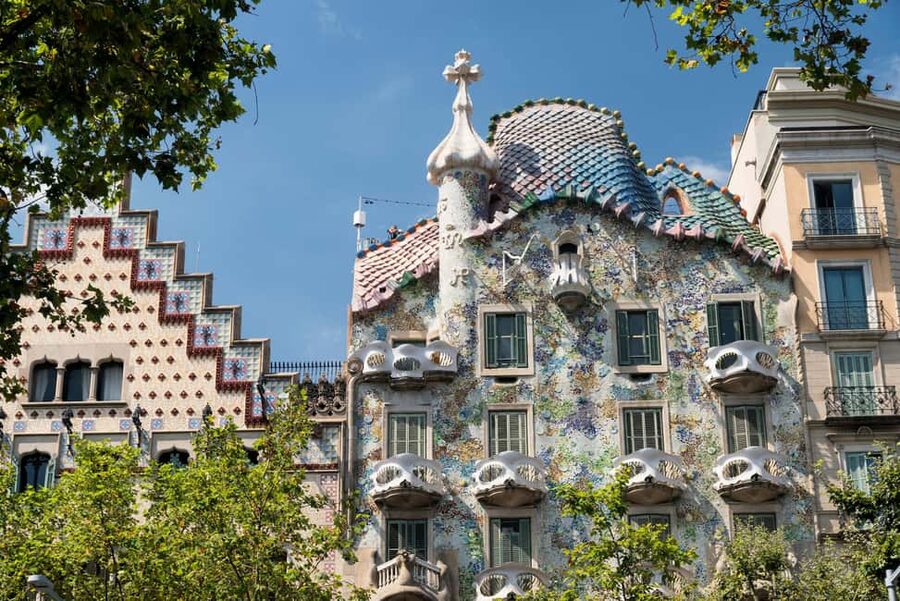
Next is Casa Batlló, another Gaudí masterpiece on Passeig de Gràcia. The guided segment is shorter, about 15 minutes, so this is where your best move is to listen for the guide’s key interpretation points before you shoot a hundred photos.
Casa Batlló works well for a walking tour because the facade is the main event. Once you know what the guide wants you to notice, the building starts making sense as a designed experience rather than a strange sculpture.
Casa Calvet: Gaudí’s elegant touch, still stylishly restrained
After the big avenue spectacle, you continue with Casa Calvet, also by Gaudí. You get around 15 minutes guided here, which is perfect if you want to compare styles without rushing.
Casa Calvet tends to feel more composed than the wildest late-period Gaudí moments. For you, that contrast is useful. It helps you see how the same architect could shift mood and detail based on project needs and patron expectations.
This stop also reinforces a theme the guide will bring up through the walk: Modernism was not just artists doing whatever they wanted. It was design shaped by ambitious patrons and by the cultural push to make Barcelona feel modern and confident.
Palau de la Música Catalana: finish in a jewel box of glass, light, and mosaic
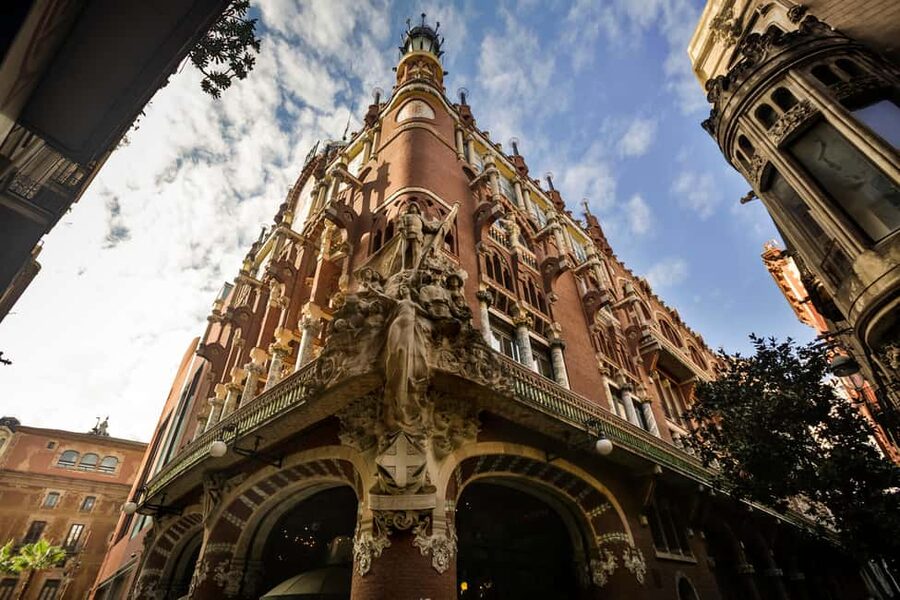
Your tour ends at Palau de la Música Catalana, with about 25 minutes of guided time. This is a strong finish because it hits a different sense level than the streets do. A concert hall is meant for experience, not just viewing, and this one is famously ornate.
The best way to approach this ending is to slow down your photo habits. At Palau de la Música Catalana, you will get more out of looking in layers, glass and light and mosaic details working together. If you are tired from walking, this is still worth it, because the place feels like it is showing you a conclusion to the tour’s story.
And if the earlier stops built your architectural vocabulary, this final one is where you let that vocabulary become emotion.
Price and value: is $200 per group worth it?
The price is $200 per group up to 5 people for a three-hour tour. That number can look steep until you translate it into group math.
If you’re a solo traveler, that’s expensive compared with standard public group tours, mostly because you are paying for the guide privately. But if you travel with up to four companions, the cost per person can drop fast, and suddenly this becomes a solid value. You also get the benefit of a private group setup, which usually means your guide can respond to your questions and your group can move at a comfortable pace.
What you should also plan for: entrance fees to attractions are not included. That can add cost, especially for major sites. The value question, then, becomes this: are you using the guide time well enough to justify those additional tickets? From how the tour is structured, the guide’s storytelling is the main benefit, and the stops are chosen so you can appreciate the architecture even before you pay for any interior access.
The guide experience: why the storytelling is part of the product
The tour includes a live guide, and the language is Russian. That matters because architecture tours can feel like a lecture if the guide is dry. In this case, one Russian-language experience note praised the guide as truly loving the job, explaining with real enthusiasm and making the tour feel like it had soul.
You can also read the guide’s value in the itinerary itself. The stops are arranged so each segment is short enough to stay sharp, and each one has a clear theme: UNESCO scale at Sant Pau, the unfinished narrative at Sagrada Família, the Modernism experiment of a residence like Casa Comalat, and then the grand finale at Palau de la Música Catalana.
For your enjoyment, this kind of guide energy is not a “nice to have.” It’s the difference between seeing buildings and understanding why they matter.
What to bring, and how to avoid an exhausting three hours
Since this is a walking tour, your comfort choices will make or break the day. Bring comfortable shoes first. Then add a camera, sunscreen, and water, because the route is outdoors for major chunks and Barcelona sun can be sneaky.
My practical suggestion is to treat each stop like a mini assignment. At Hospital de Sant Pau, look for structural patterns. At Sagrada Família, focus on what makes it feel unfinished yet deliberate. On Passeig de Gràcia, pick one facade to “study” more closely, and let the others be visual context.
This approach saves you from camera fatigue and helps you remember the tour later.
Who this Barcelona Modernism architecture walking tour fits best
This tour fits best if you want a guided route through the heart of Catalan Modernism without trying to plan your own mini pilgrimage. It’s also a good fit for small groups, since the group cap is up to 5 and the format is private.
You’ll likely enjoy it most if you care about architecture as a cultural story, not just a list of must-sees. The tour’s emphasis on architects, patrons, and how Barcelona transformed around the Modernism era makes the buildings feel connected rather than random.
One more detail: wheelchair accessibility is listed, so it is designed with mobility needs in mind. Still, since it’s a walking tour, confirm what your day looks like in terms of pace and transfers.
Should you book this tour?
Book it if you like the idea of a focused, three-hour route that hits Hospital de Sant Pau, Sagrada Família, key residences on Passeig de Gràcia, and ends at Palau de la Música Catalana with guided context at every stop. It’s especially smart for small groups, because $200 per group can become a bargain once you spread the cost and lean into the guide’s main value, the storytelling.
Skip it or rethink it if Russian language support is a dealbreaker for your group, or if you are expecting everything to be included, since entrance fees are not part of the price. If you do want interior access at the major sites, budget those tickets separately and plan your day so you are not rushed.
FAQ
How long is the Barcelona Catalan Modernism architecture walking tour?
The tour lasts 3 hours.
What does the tour price include?
It includes the walking tour and a live tour guide.
Are entrance fees included for the attractions?
No. Entrance fees to attractions are not included.
Where does the tour meet?
The meeting point is just next to the metro station Sant Pau – Dos de Maig exit.
What language is the live tour guide?
The live tour guide is Russian.
Is the tour wheelchair accessible?
Yes, the tour is wheelchair accessible.
The latest to open for booking

Gaudí Building Tours, side by side.
Park Güell and Gaudí House Museum Entry Ticket
Read our review →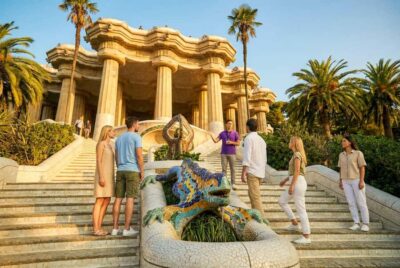
Gaudí’s Park Güell Tour with Fast-Track Ticket
Read our review →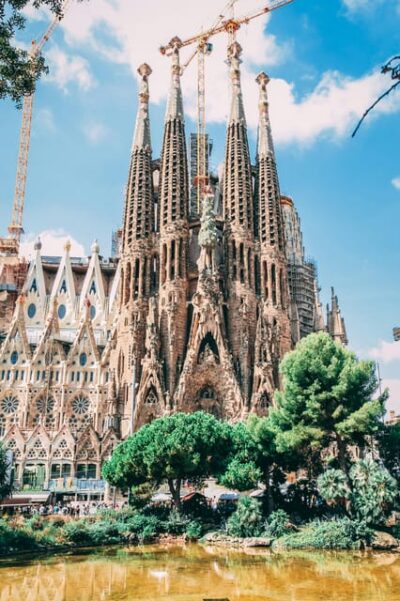
Sagrada Familia, Modernism, and Old Town Tour
Read our review →
Sagrada Familia & Gaudi Tour Private or Small Group with Tickets
Read our review →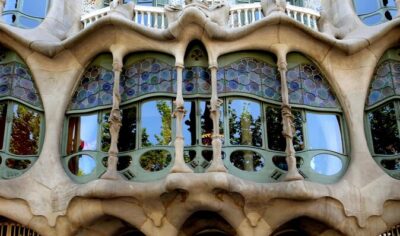
Complete Gaudi Tour: Casa Batllo, Park Guell & Sagrada Familia
Read our review →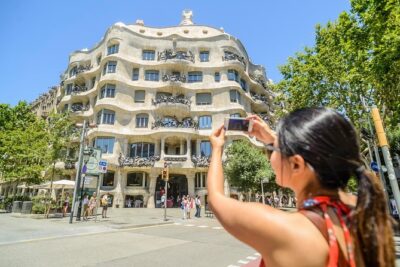
Barcelona e-Bike Tour: Gaudí & Old Town Small Group
Read our review →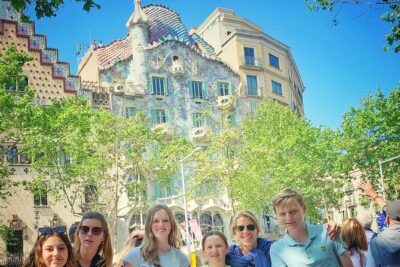
Ramblas, Old Town, Gothic and Gaudi Architecture Walking Tour
Read our review →
Gaudi´s Casa Vicens Skip the Line Ticket with Audioguide
Read our review →Where else this one turns up