
Reviewed · MUSEUM VISITS
Barcelona Contemporary Street Art and Gallery Tour
Street art here has a point. This 2.5 hour walk ties together famous murals and everyday street corners, then finishes with an inside gallery visit. It is built for people who want more than photos, a guided story through Barcelona’s creative districts and the people shaping them.
I like the way the route mixes well-known stops with smaller, off-to-the-side scenes. You get clear explanations of symbols and social messages, and you also get a sense of where culture spills into regular life, from music shops to a quick square pause.
One drawback to consider is that much of what you see is outdoors. If the day is crowded or you are sensitive to foot traffic, the walking pace and street energy may feel like a lot.
In This Review
- Key things I’d circle before you go
- Starting at Plaça Universitat, then easing into La Rambla
- Carrer dels Tallers: alternative shops and real street culture
- Plaça de Castella: the small square feeling that anchors the walk
- Keith Haring’s Mural del Sida: activism, symbols, and why it sticks
- Museu d’Art Contemporani de Barcelona: modern architecture in El Raval
- Passatge del Crèdit: the city’s hidden passage and layered urban life
- Carrer d’Avinyó and the Base Elements Gallery finish
- Why the guide style makes a difference on this tour
- Practical tips so you get more out of the route
- Who this tour fits best
- Should you book this Barcelona Contemporary Street Art and Gallery Tour?
- FAQ
- How long is the Barcelona Contemporary Street Art and Gallery Tour?
- What language is the tour offered in?
- Do I need a printed ticket?
- Where does the tour start?
- Where does the tour end?
- Is there an inside gallery visit?
- What is the maximum group size?
- Are there admission fees for the featured stops?
- Are service animals allowed?
- Can I get a refund if I cancel?
Key things I’d circle before you go
- Keith Haring’s Mural del Sida explained in plain language, including why the symbols matter
- Small group cap (up to 10), which helps the guide keep momentum without rushing
- Route variety, from La Rambla to El Raval and backstreets that most visitors miss
- Museum and architecture moment at Museu d’Art Contemporani de Barcelona, not just murals on walls
- Passageways and squares that show how artists and locals use the city in real time
- Finish inside Base Elements Gallery, so street art links to today’s art scene
Starting at Plaça Universitat, then easing into La Rambla
Most walking tours start with a blur of streets. This one starts in the Eixample, near Plaça de la Universitat, a good place because it is easy to reach and you can orient fast before you go city mode.
From there you roll straight toward La Rambla, Barcelona’s famous boulevard where street life, performers, and urban culture overlap. The point here is not just to see a landmark. It is to understand how this kind of central street became a public stage, a place where people express themselves without waiting for a gallery door.
What I like about this early section is the framing. You do not just hear facts, you hear how La Rambla works as a “gateway,” a seam between the Old Town and neighborhoods known for creativity. That helps later stops click, because you start seeing the city as a connected system rather than a set of disconnected sights.
If you are expecting silence and tidy sidewalks, know this is a real street. It is active and social, so wear comfortable shoes and keep your plans flexible for crowd flow.
Carrer dels Tallers: alternative shops and real street culture
Next you shift from the broad boulevard to Carrer dels Tallers, a lively street tied to alternative shops, music stores, and creative energy. This is one of those streets where you can sense the “scene” just by looking at what is on display and what people are carrying.
The tour emphasizes how this area became a hub for counterculture and independent expression. That matters because Barcelona’s street art is not only about aesthetics. It is also about identity, and it grows in places that let small voices exist.
A practical win here is that your guide’s storytelling makes the street level obvious. You begin to notice details you would probably skip on your own, like where the street art fits alongside everyday retail and music culture.
The only caution is simple: if you are hungry or shopping-focused, you may be tempted to stray. Keep your eyes on the guide for timing, then you can break away later if you want to return.
Other things to see around Barcelona
- Barcelona Street Art and Graffitti Bicycle Tour
★ 5.0 · 361 reviews - Barcelona Street Art Tour with Exclusive Artist Studios Visit
★ 5.0 · 152 reviews - Raval Street Art and Graffiti Guided Tour in Barcelona
★ 5.0 · 81 reviews
Plaça de Castella: the small square feeling that anchors the walk
Then you slip into Plaça de Castella, a smaller square tucked between busy streets. It is the kind of place that can disappear if you are only moving fast. But the tour uses it to show something important about how cities work: everyday life is part of the art ecosystem.
Here the idea is connection, informal meeting points where artists, skaters, and locals gather. You start understanding that street art is not floating in space. It depends on people using public space, repeatedly, at their own pace.
This stop also helps you reset. After the movement of bigger streets, a small square gives your brain a break, and it makes it easier to take in what comes next.
If you are traveling with someone who hates stopping, this is still worth it. The pause is short, but it gives context you feel in the later mural section.
Keith Haring’s Mural del Sida: activism, symbols, and why it sticks
The tour saves its most iconic wall for a key moment: Mural del Sida by Keith Haring. This mural was created in Barcelona as a powerful message against AIDS. The guide focuses on how Haring’s bold lines and universal symbols helped street art become social activism you can read without a degree in art history.
This is one of those stops where the explanation matters more than the wall itself. Without context, you might just register it as famous street art. With context, you see it as a public statement, designed to travel, designed to be recognized.
I love that the tour treats symbols as communication, not decoration. It also connects the artwork to why street art can work on a mass scale, because it sits in the middle of normal daily routes.
One consideration: murals can be crowded when photo-takers converge. If you want to linger for the full story, be ready to wait a minute, then step back in.
Museu d’Art Contemporani de Barcelona: modern architecture in El Raval
After the mural, the route swings into a different mode at Museu d’Art Contemporani de Barcelona, in El Raval. The emphasis here is on the contrast: striking modern architecture placed against historic streets.
This is a smart move. Street art tours sometimes forget that contemporary art does not start and stop on walls. Here you see how the city supports contemporary work in formal spaces too, and how modern design interacts with older neighborhoods.
You also get a chance to notice the surrounding culture. El Raval is known for creative energy, and the museum setting helps you understand why contemporary expression keeps finding roots in this part of town.
A realistic note: the time at the museum highlight is short. It is more like a focused viewing moment than a long museum day. If you want deeper museum time, plan to return on your own with a larger block of time.
Passatge del Crèdit: the city’s hidden passage and layered urban life
Then comes Passatge del Crèdit, a historic passageway. Passageways like this are the secret sauce of Barcelona. They show how the city is built in layers, with shortcuts, tucked routes, and spaces that feel different from the streets outside.
The tour uses the passage to connect everyday life with street culture and the city’s evolving artistic identity. You are not just learning names of murals and artists. You are learning how the physical city shapes what people create and share.
This stop is also good for photos, because the light and angles in passageways often feel more intimate than on main streets. More importantly, it gives you a breath of calm between busier segments.
If you are prone to getting turned around, pay attention here. Passageways can look similar, and it helps to know where you are in the flow of the walk.
One ticket rarely covers it all. Here's what else is nearby.
- Barcelona: Sagrada Familia Entry Ticket with Audio Guide★ 4.6 · 105,312 reviews
- Barcelona: Park Güell Admission Ticket★ 4.4 · 76,534 reviews
- Barcelona: Casa Batlló Entry with Self-Audioguide Tour★ 4.7 · 25,359 reviews
- Barcelona: Montjuïc Cable Car Roundtrip Ticket★ 4.5 · 22,368 reviews
- Barcelona: Hola Barcelona Public Transport Travel Card★ 4.5 · 20,985 reviews
- Barcelona: 24 or 48-Hour Hop-On Hop-Off Bus Tour★ 4.4 · 20,872 reviews
Carrer d’Avinyó and the Base Elements Gallery finish
Near the end, you head into Carrer d’Avinyó and the surrounding area, including a referenced location on the street. The tour frames this street as part of Barcelona’s modern artistic identity, tied to shifts in contemporary art and connected to global artistic movements.
What I like about ending near here is the transition from open-air expression to a gallery context. It is a good “closing argument” for the whole tour theme, street culture linking to institutions and modern creative communities.
The final stop is inside Base Elements Gallery, at Carrer d’Avinyó, 31. Going indoors changes the way you look. The art gets quieter, and you can spend more time with it without the distraction of traffic and passing crowds.
This is also where the tour feels most like a curated experience, but not in an overly polished way. It is more like a thoughtful handoff, from public message walls to contemporary art viewing.
If you are the type who likes to ask questions, this ending gives you more room to stay longer after the walking part.
Why the guide style makes a difference on this tour
A big theme in the strong feedback is guide delivery. One guide named Damil has been singled out for being engaging and clearly passionate about street art and the city. The praise also highlights how stories behind murals and neighborhoods are explained in a clear, interesting way.
That matters because street art can feel abstract if you only see images. This tour tries to connect the dots: what you are looking at, why it was made, and what it meant to the community around it.
Pace is another strong point. The walk is designed to keep moving, but not so fast that you miss the meaning. With a maximum group size of 10 travelers, it is easier for the guide to check in with the group and for you to hear explanations without constant noise.
Practical tips so you get more out of the route
This is a walking-heavy, outdoors-heavy experience, so a few basics help:
- Wear comfortable shoes. You will be on foot for about 2 hours 30 minutes.
- If you can, charge your phone. The tour uses a mobile ticket.
- Bring a light layer, even in warm months, because street corners and passageways can feel cooler.
- Plan for short stop times. This tour shows a lot, so the goal is understanding, not lingering for hours.
- If you take photos, be ready for quick repositioning at famous spots, especially around the Keith Haring mural.
For best value, go in with a curious mindset. Ask yourself what kind of message each work sends. Then you will start noticing patterns across the whole neighborhood web.
Who this tour fits best
I think this tour works best for:
- First-time visitors who want a different side of Barcelona than the usual postcard stops
- People who love street art but want context, not just locations
- Travelers who prefer a small group and a guide-led story
- Anyone interested in how contemporary art connects public walls, museums, and galleries
If you want a long museum day or a slow wander with zero structure, you might prefer a self-guided plan plus extra museum time. This one is designed as a focused circuit.
Should you book this Barcelona Contemporary Street Art and Gallery Tour?
If you want street art with meaning and you like the idea of linking murals to institutions, I would book it. The route logic is strong, you see a major Keith Haring work, you get museum architecture in El Raval, and you end with an indoor gallery visit at Base Elements Gallery.
It is also a good value style of experience, because you are paying for a guided explanation and a tight route that saves you time compared to piecing it together yourself. The group cap helps the tour stay personal, not crowded chaos.
If you hate walking outdoors or you need long dwell time at museums and galleries, adjust expectations. Think of it as a sharp introduction, not a full day of art immersion.
FAQ
How long is the Barcelona Contemporary Street Art and Gallery Tour?
It lasts about 2 hours 30 minutes.
What language is the tour offered in?
The tour is offered in English.
Do I need a printed ticket?
No. You use a mobile ticket.
Where does the tour start?
It starts at Plaça Universitat, in the Eixample area of Barcelona.
Where does the tour end?
It ends at Art Gallery Barcelona, Base Elements Gallery, on Carrer d’Avinyó, 31, in Ciutat Vella.
Is there an inside gallery visit?
Yes. The tour ends with an inside visit to Base Elements Gallery.
What is the maximum group size?
The tour has a maximum of 10 travelers.
Are there admission fees for the featured stops?
The featured highlights are marked as admission ticket free.
Are service animals allowed?
Yes, service animals are allowed.
Can I get a refund if I cancel?
Yes, you can cancel for a full refund up to 24 hours in advance of the experience start time.
The latest to open for booking

Museum Visits, side by side.

FC Barcelona Museum “Barça Immersive Tour” Ticket
Read our review →
Park Güell and Gaudí House Museum Entry Ticket
Read our review →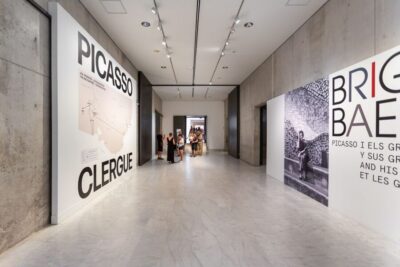
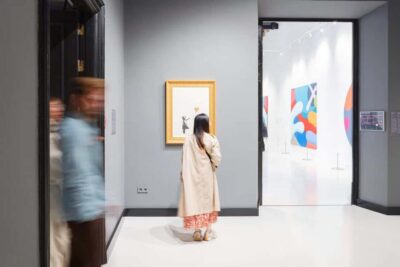
Moco Museum Barcelona: Modern & Contemporary Art
Read our review →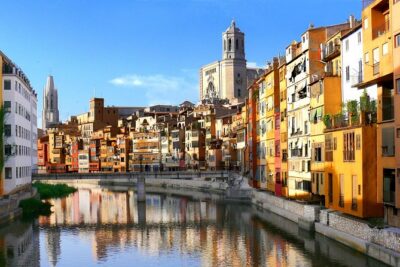
Girona & Dali Museum Small Group Tour with Pick-up from Barcelona
Read our review →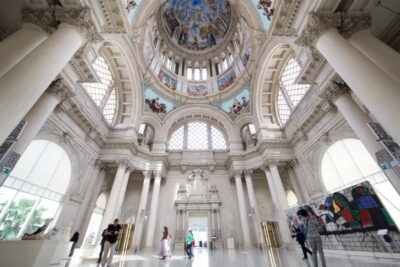
Barcelona Card: 25+ Museums and Free Public Transportation
Read our review →
Barcelona Interactive Spanish Cooking Experience
Read our review →
Where else this one turns up