
Reviewed · GAUDÍ BUILDING TOURS
Barcelona: Discover Gaudi Architectural Guided Tour
Gaudí is easier to enjoy when you learn how he engineered ideas into stone. This 3-hour, morning walking tour is led by practising architects, so you see Barcelona like a designer, not a tourist with a map.
I especially love how the guide connects Modernisme style to the city’s bigger story, from early urban thinking to Gaudí’s career turning points. I also like that the walk mixes famous facades with quieter details, including hidden courtyards that turned into public gardens.
One thing to consider: you won’t go inside the major buildings. You’re there to read the architecture from the outside and experience courtyards up close, not to tour interiors.
In This Review
- Key highlights you should know
- Why an architect-led Gaudí walk is worth your morning
- Finding the meeting point at Passeig de Gràcia and Gran Via
- The Modernisme streets you’ll walk, and the story you’ll learn
- Antoni Tàpies Foundation: where modern Barcelona’s ideas start showing
- Casa Lleó Morera: Domènech i Montaner’s influence in plain sight
- Casa Amatller and Puig i Cadafalch: style as a city personality
- Hidden courtyards that became public gardens
- Gaudí’s residential trio: Calvet, Batlló, Milà
- Casa Calvet
- Casa Batlló
- Casa Milà
- The Gaudí career turning points you’ll piece together
- How the guides explain architecture: the engineering angle
- What you should expect on the ground
- Price and value: why $53 for 3 hours can be a smart deal
- Who this tour is best for
- Should you book this Gaudí architectural guided tour?
- FAQ
- What is the duration of the Barcelona Gaudí architectural guided tour?
- How much does the tour cost?
- Where is the meeting point?
- Is the tour in English?
- Do we go inside the buildings?
- Is the tour wheelchair accessible?
- What should I bring and how does weather affect the tour?
- Is there a free cancellation option?
Key highlights you should know
- Architect guides with real-world teaching and critique experience
- A clear Gaudí career timeline, from social concerns toward the divine
- Four big stops beyond Gaudí, including the Antoni Tàpies Foundation and Casa Lleó Morera
- Hidden courtyards that explain how private space became public garden space
- Gaudí’s 3 residential icons, Casa Calvet, Casa Batlló, Casa Milà, on one walking route
- A written guide at the end with suggestions for drinks and more architecture to admire
Why an architect-led Gaudí walk is worth your morning

A lot of Gaudí tours teach you names and dates. This one does that too, but the main value is how it explains why buildings look the way they do. When your guide is a practising architect, you tend to get better answers than generic “because it’s Gaudí” talk.
I like the way the tour frames Gaudí as a thinker. You start with his beginnings in a Barcelona that was actively changing, then follow his shift toward something more spiritual and total. It’s not just artistic evolution, it’s a change in focus, from human concerns and city life to an almost single-minded obsession.
You also get a practical payoff. After the walk, the city makes more sense. You’ll notice patterns in façades, street planning, and how buildings relate to light and movement. And you’ll know what to look for when you roam on your own afterward.
Finding the meeting point at Passeig de Gràcia and Gran Via
You meet at the sculpture by Joan Brossa, right in front of Comedia Cinema, at the intersection of Passeig de Gràcia and Gran Via. That’s a great spot because it puts you in the right neighborhood for Modernisme, and it’s easy to orient yourself for the rest of the day.
This tour runs in English and lasts 3 hours, so pace matters. I’d treat it like an “architecture primer on foot.” If you arrive a few minutes early, you can settle in before the guide starts connecting the city layout to what you’re about to see.
More curves, barely a straight line
- Barcelona: Park Güell and Gaudí House Museum Entry Ticket
★ 4.5 · 6,326 reviews - Barcelona: Gaudí’s Park Güell Tour with Fast-Track Ticket
★ 4.8 · 4,512 reviews - Barcelona: Sagrada Familia, Modernism, and Old Town Tour
★ 4.7 · 1,621 reviews
The Modernisme streets you’ll walk, and the story you’ll learn
The walk is built to show you more than a highlight reel. It follows a thread: how Barcelona moved toward modern urbanism, and how the Modernisme period created a new visual language for the city.
Along the route, you’ll see examples of the period’s creativity and its “city conversation” between architects and patrons. You’ll also get a sense that Gaudí wasn’t working in isolation. Other designers were shaping the same urban moment, with different approaches and priorities.
A big plus is that the tour includes key non-Gaudí landmarks, not as filler, but as context. When you understand the alternatives, Gaudí’s choices become clearer. You’ll also start to read details you would otherwise miss, like how decorative choices relate to structure and how courtyards influence how buildings behave beyond the street.
Antoni Tàpies Foundation: where modern Barcelona’s ideas start showing
One of the stops is the Antoni Tàpies Foundation. Even if you’re not a museum person, it’s useful in the tour because it helps anchor the story of how Barcelona evolved from 19th-century ambitions into more modern thinking.
The tour approach here is simple. You look at architectural expression in its urban setting, then you connect that expression to the broader shift toward modern ideas. It’s a reminder that Modernisme was not only about façades. It was about rethinking how city life could work.
Casa Lleó Morera: Domènech i Montaner’s influence in plain sight
You’ll also see Casa Lleó Morera, designed by Domènech i Montaner. This matters because Montaner represents a different flavor of Modernisme than Gaudí, and that contrast makes the walk more rewarding.
Instead of memorizing the surface look, the guide helps you interpret what you’re seeing. You learn how architects of the period were imagining the city, not just decorating it. This stop sets you up to notice how Gaudí later pushes those concepts further, especially in how his designs communicate structure and atmosphere.
Casa Amatller and Puig i Cadafalch: style as a city personality
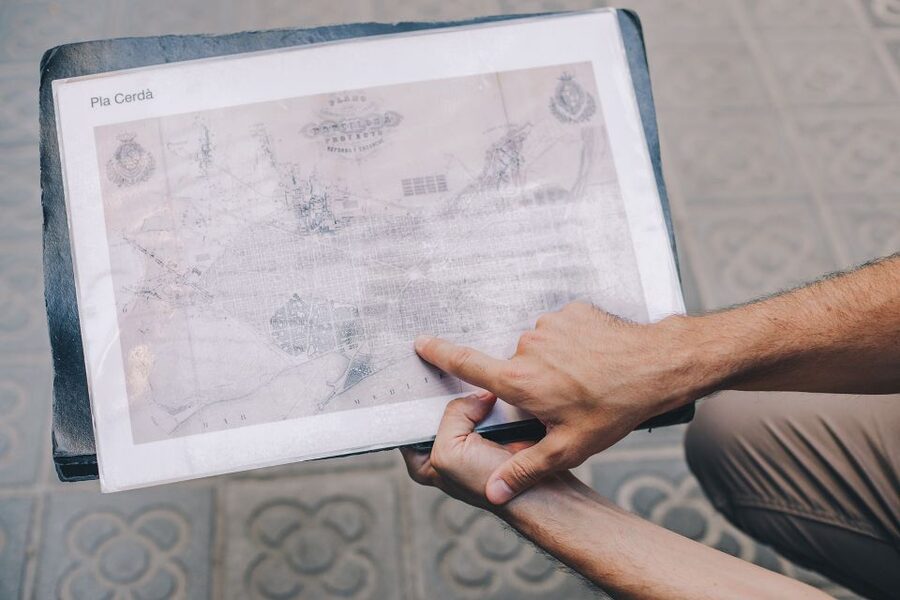
Casa Amatller by Puig i Cadafalch is another important non-Gaudí stop on the route. Here you get an example of how Modernisme created distinct identities for buildings in the same general city corridor.
This is where the tour starts feeling like city reading. Once you’re looking for differences in approach, you can compare them fast. You see how each architect’s choices shape the mood of the street, not just the look of an isolated building.
If you like architecture as culture, this portion is the sweet spot. It helps you understand why Barcelona feels like one big architectural argument between creators, all responding to the same modern moment.
Other things to see around Barcelona
- Barcelona: Sagrada Familia Entry Ticket with Audio Guide★ 4.6 · 105,312 reviews
- Barcelona: Park Guell Guided Tour with Skip The Line Entry★ 4.7 · 17,563 reviews
- Fast Track Sagrada Familia Guided Tour★ 4.5 · 8,795 reviews
- Park Guell Guided Tour with Skip the Line Ticket★ 4.5 · 6,996 reviews
- Barcelona: Sagrada Familia Skip-the-Line Guided Tour★ 4.3 · 5,365 reviews
- Montserrat, Girona & Costa Brava Guided Day Trip from Barcelona★ 5.0 · 5,128 reviews
Hidden courtyards that became public gardens
One of the tour’s standout themes is how private courtyard space became public garden space. You’ll get inside hidden courtyards and learn how they evolved into something shareable.
This part is valuable because courtyards change the way you understand a city block. From the street, you see façades. In a courtyard, you see light, air, movement, and the relationship between residents and shared space.
I also like this moment because it breaks the pattern. After several iconic buildings, it’s a reset. You get a quieter, more human experience that makes the city feel livable, not only impressive.
Gaudí’s residential trio: Calvet, Batlló, Milà
The tour focuses heavily on Gaudí’s three main residential buildings, and they’re spaced out so you can compare how his ideas shift while staying unmistakably his.
Casa Calvet
Casa Calvet is often the most useful “entry” to Gaudí for first-timers. The guide helps you read the design like a system, not a pile of decorative tricks. You’ll start noticing how forms and ornament work together, and you’ll begin to understand his visual power as something engineered, not accidental.
Casa Batlló
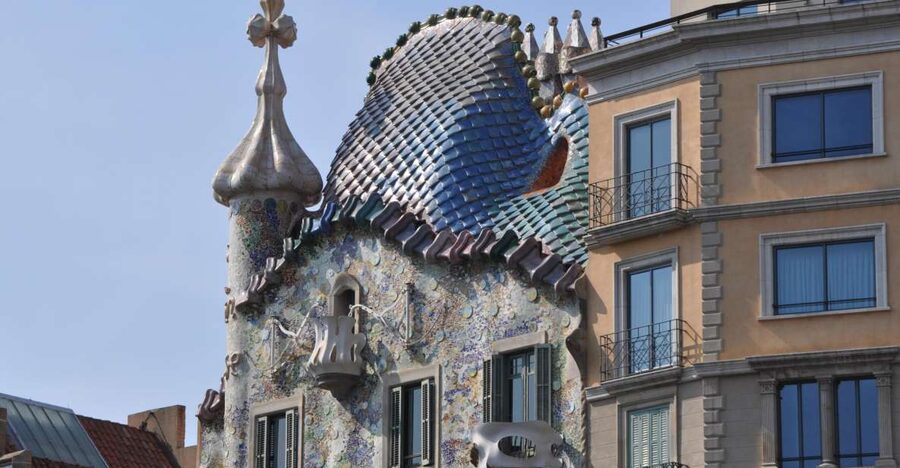
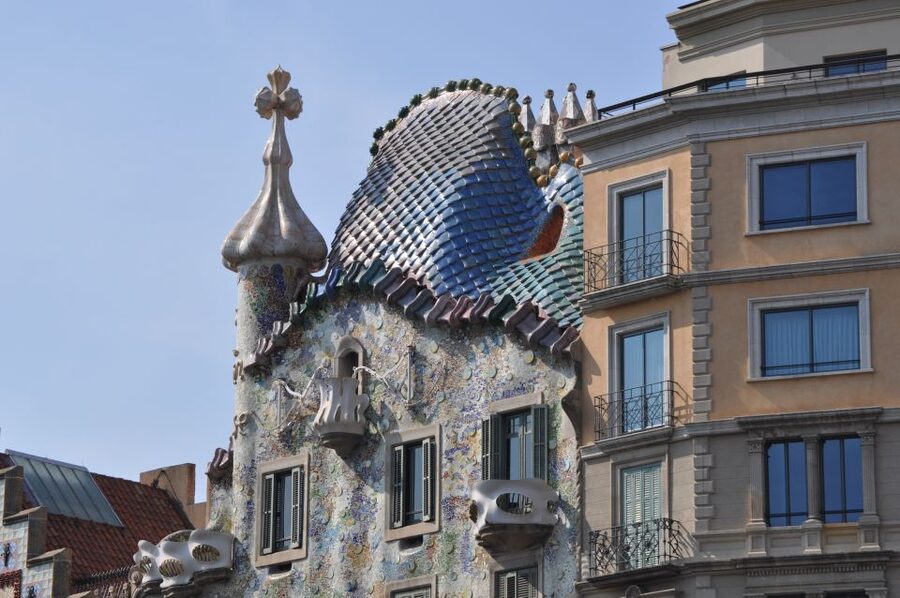
Casa Batlló is where most people’s eyes lock on immediately. On this walk, it becomes more than a wow stop. You learn what Gaudí was likely responding to in his era, how his social concerns can show up through design choices, and why the building feels so animated.
If you’re going to take only one Gaudí-inspired photo, this is a strong candidate. But the guide pushes you to look beyond the obvious angles so you understand what makes it click visually.
Casa Milà
Casa Milà, sometimes called La Pedrera, rounds out the residential story. This stop is good for seeing Gaudí’s evolution. By now, you’ve heard how his career turning points reshape his direction, so the building reads like a later chapter rather than just another façade.
The best part is that you see continuity. It’s not random. The tour helps you connect the design language to Gaudí’s growing absorption with something larger than everyday commissions, described in the walk as his move toward being the last great cathedral builder.
The Gaudí career turning points you’ll piece together
A key feature of this experience is the timeline. The guide traces Gaudí’s path from social concerns toward a total absorption with the divine, ending with that idea of him becoming the last great cathedral builder.
You’ll also cover three career moments that help you place the buildings in context:
- A project in Manhattan, to show Gaudí was not trapped in one local style
- The last commission from his patron, Eusebi Güell
- His first architectural steps with the Sagrada Família
This is the kind of context that makes future visits easier. If you go on to see Sagrada Família later, the tour’s framing gives you a head start. You’re not walking in cold.
How the guides explain architecture: the engineering angle
What really gets praised again and again in this tour format is the way the guide connects history, engineering, and architectural form. In practice, you get explanations that treat buildings as working ideas.
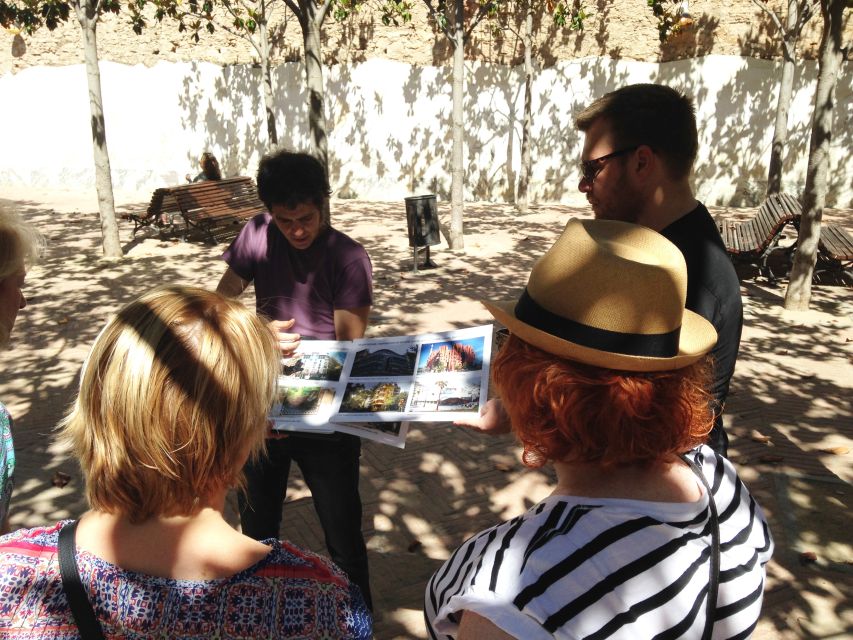
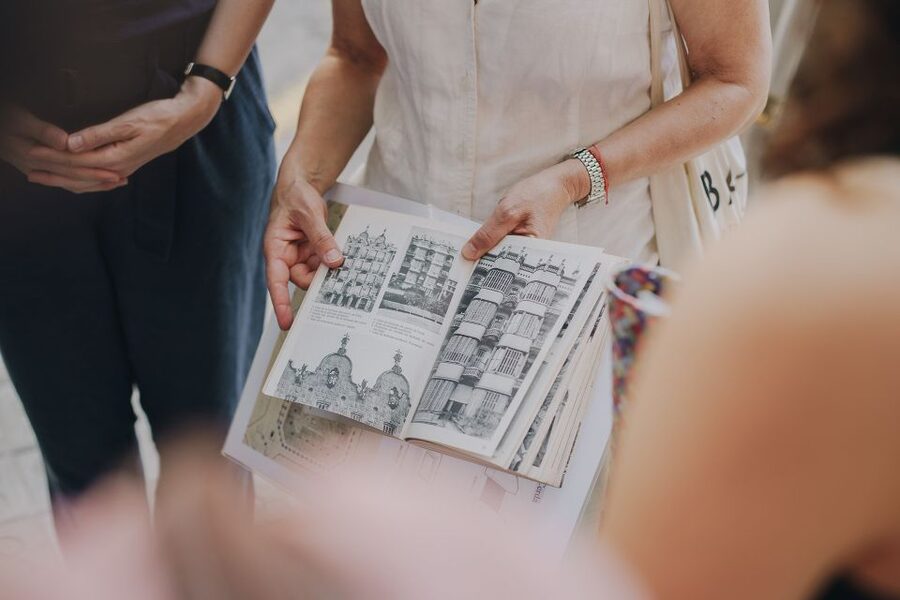
You’ll also see the guide’s teaching style up close. Some guides use visual aids and pictures to reinforce points, and that helps a lot if you’re the kind of person who learns best by seeing how something changes from one angle to another.
I also appreciate that the guides can match their depth to the group. Some days you want the technical thread, other days you want the bigger human story. The architect guides can talk shop with anyone who’s curious, without turning the walk into a lecture you can’t shake.
What you should expect on the ground
This is a walking tour with city stops and lots of explanation. You won’t go inside the buildings, but you will get into hidden courtyards. That means you should plan for outdoor walking and time spent looking closely.
Bring weather-appropriate clothing. Barcelona’s weather is usually pleasant, but morning tours can still be cool or breezy depending on the season. Wear comfortable shoes because the experience is designed around steady walking and frequent stops.
Tour cancellations happen only if weather becomes a safety threat, so you’re not dealing with constant last-minute drama. Still, check the forecast before you leave your hotel.
Price and value: why $53 for 3 hours can be a smart deal
At $53 per person for a 3-hour architect-led walk, the value comes from the guide quality and the amount of context you get in one morning.
You’re not just paying for someone to point at buildings. You’re paying for a practising architect to explain:
- how Modernisme shaped a changing city
- how Gaudí’s career turning points affected what you see
- what details mean in terms of design logic and engineering
The tour also includes an architectural city guide and a guided tour, plus a written guide at the end from the local partner’s team with suggestions for drinks and more architecture to admire. That post-walk guide can turn your remaining hours in the neighborhood into a smarter, more intentional loop.
If you’re the type who wants a guided foundation before you explore Barcelona on your own, this price is easier to justify. If you only want quick snapshots and you don’t care about structure and context, you might feel it’s more than you need.
Who this tour is best for
This fits best if you’re curious about architecture beyond the famous names.
It’s especially good for:
- first-time visitors who want to understand what makes Barcelona unique
- people who like architecture but don’t want a textbook
- design-minded travelers who want practical city-reading skills
- families or groups who will benefit from clearer guidance and frequent stops
It might be less ideal if you’re chasing interior access. Since you won’t go inside the main buildings, plan other activities if you need indoor museum-style experiences.
Should you book this Gaudí architectural guided tour?
I’d book it if you want Gaudí explained in a way that connects art to city life and engineering. The architect-led format is the real differentiator, especially if you’ve ever wondered why his buildings look so alive and how his ideas evolved over time.
I’d skip or reconsider if your top priority is entering major building interiors, because this is mostly an on-street and courtyard experience. Also, if you prefer very long, technical deep learning, note that the guides adjust their pace to stay engaging for mixed audiences.
Bottom line: for $53 and 3 hours, you get a focused route through Modernisme, major Gaudí residential buildings, and the career context that makes everything click. If that sounds like your kind of morning, this is a strong choice.
FAQ
What is the duration of the Barcelona Gaudí architectural guided tour?
The tour lasts 3 hours.
How much does the tour cost?
The price is $53 per person.
Where is the meeting point?
Meet by the sculpture by Joan Brossa, located in front of the Comedia Cinema at the intersection of Passeig de Gràcia and Gran Via.
Is the tour in English?
Yes, the live tour guide is English.
Do we go inside the buildings?
No. You will not go inside the buildings, but you will get inside hidden courtyards.
Is the tour wheelchair accessible?
Yes, the tour is wheelchair accessible.
What should I bring and how does weather affect the tour?
Wear weather-appropriate clothing. Tours will be canceled only if weather poses a safety threat.
Is there a free cancellation option?
Yes. You can cancel up to 24 hours in advance for a full refund.
The latest to open for booking



Gaudí Building Tours, side by side.
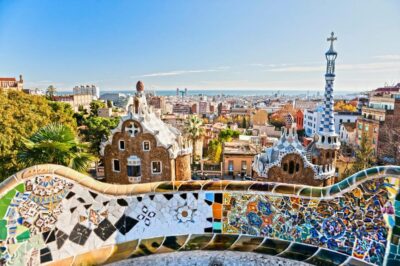
Park Güell and Gaudí House Museum Entry Ticket
Read our review →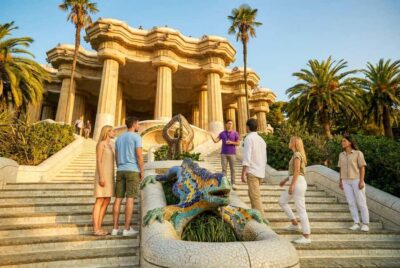
Gaudí’s Park Güell Tour with Fast-Track Ticket
Read our review →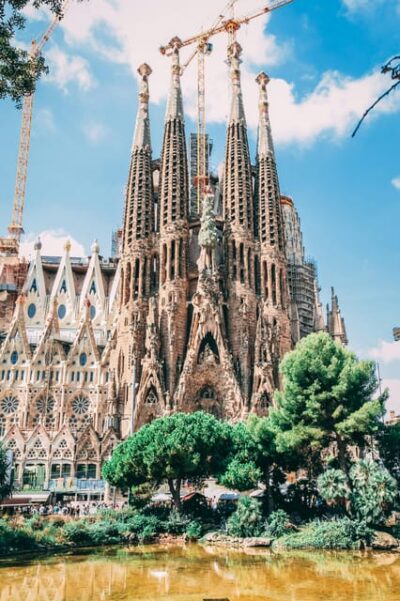
Sagrada Familia, Modernism, and Old Town Tour
Read our review →
Sagrada Familia & Gaudi Tour Private or Small Group with Tickets
Read our review →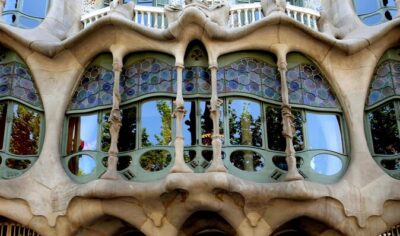
Complete Gaudi Tour: Casa Batllo, Park Guell & Sagrada Familia
Read our review →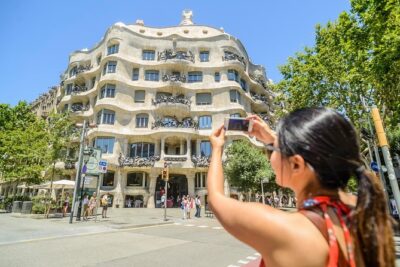
Barcelona e-Bike Tour: Gaudí & Old Town Small Group
Read our review →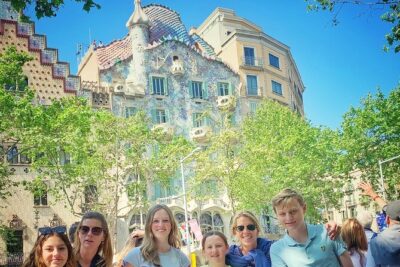
Ramblas, Old Town, Gothic and Gaudi Architecture Walking Tour
Read our review →
Gaudi´s Casa Vicens Skip the Line Ticket with Audioguide
Read our review →Where else this one turns up