
Reviewed · WALKING TOURS
Barcelona: Ghosts of a Dark Past Walking Tour
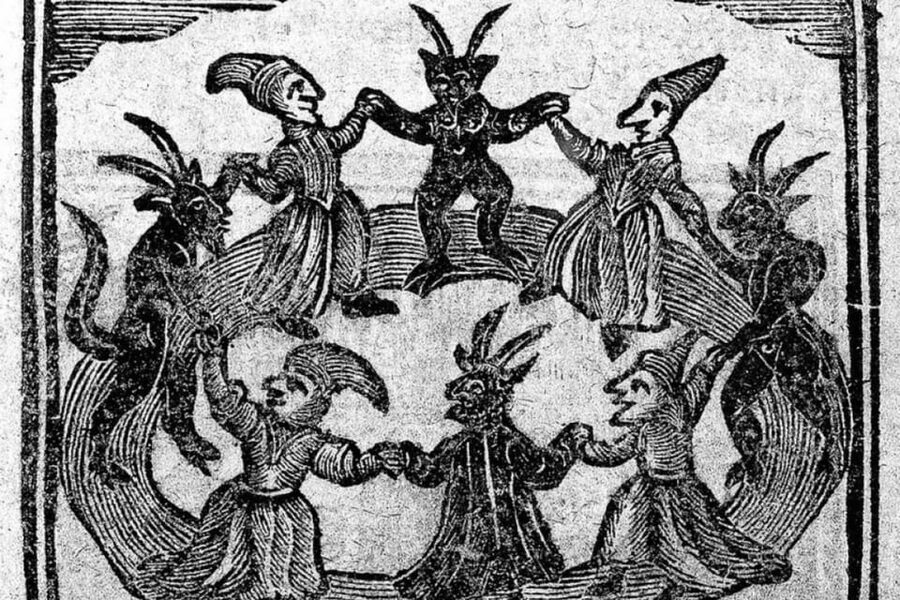
Barcelona’s dark past comes to life fast. This 2-hour evening walk focuses on documented history, not cheap scares, as you move through the Gothic Quarter while a local guide connects medieval terror to dictatorship. I like that the tour keeps its promises, with no ghost stories, just documented events and clear context. I also like the storytelling style, where the guide explains why people believed what they did and how violence was carried out. One consideration: the subject matter is heavy, and the pacing involves walking uneven streets at night.
If you want a different way to understand Barcelona, this works. You get the Spanish Inquisition and witch-trials era, plus the shocking early 20th-century case people still remember as the Vampire of Barcelona. The tour is delivered in English and guided live by a professional history specialist, and one guide name that shows up in the experience quality is Onno, praised for being friendly and well spoken. A possible drawback is that it may not suit everyone physically or emotionally, since the tour is not recommended for young kids and includes themes like executions, torture, and political violence.
In This Review
- Key takeaways before you go
- A night walk through Barcelona’s Gothic Quarter, minus the staged scares
- What you pay for: $21 for a focused 2-hour history experience
- Where you meet: Plaça de Catalunya, and the white umbrella cue
- Entering the Gothic Quarter’s dark systems: executions, superstition, and public power
- The Spanish Inquisition and witch trials: why fear became law
- Henriqueta Martí, the Vampire of Barcelona: true crime with historical context
- Anticlerical violence, political assassinations, and Barcelona’s rupture moments
- Franco’s shadow: how dictatorship shaped everyday life
- How the pacing feels, what to wear, and who should skip this one
- Who this tour is for, and who might want a different style of Barcelona tour
- Should you book Barcelona: Ghosts of a Dark Past Walking Tour?
- FAQ
- How long is the Barcelona Ghosts of a Dark Past Walking Tour?
- How much does it cost?
- Where does the tour start?
- Is the tour in English?
- Does this tour include ghost stories?
- Is there an extra cost for a headset?
- Are flash photos allowed?
- Who should avoid this tour?
Key takeaways before you go
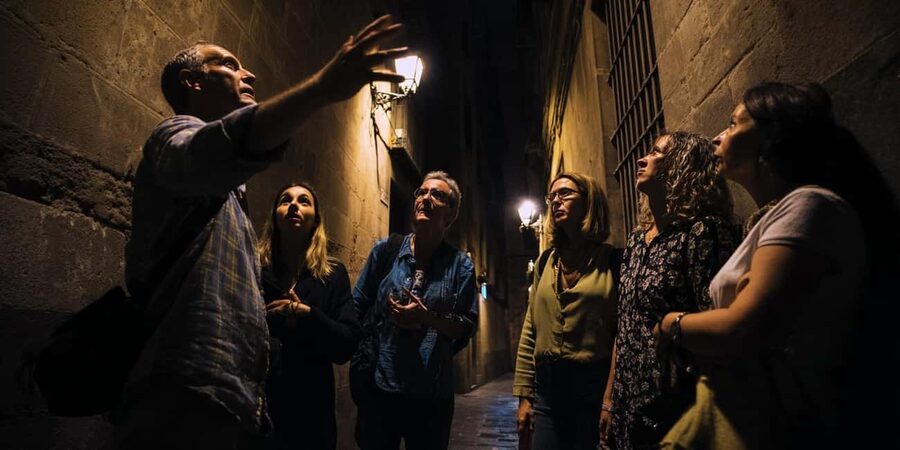
- No ghost tales here, just real, documented history you can actually track
- Hidden Gothic Quarter corners tied to public executions and punishments
- Henriqueta Martí, the Vampire of Barcelona, told with context and care
- Spanish Inquisition and witch beliefs explained in a practical, historical way
- Dark 20th-century links, from anticlerical violence to Franco-era oppression
- English live guide with a clear, engaging delivery style
A night walk through Barcelona’s Gothic Quarter, minus the staged scares
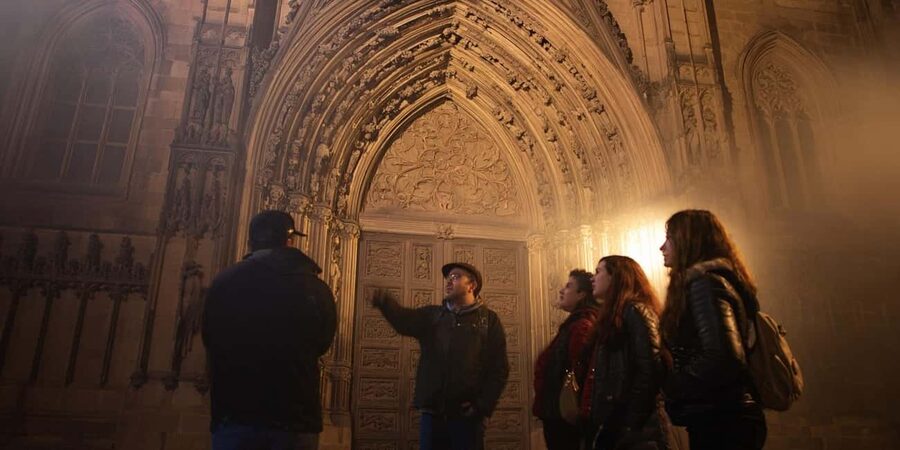
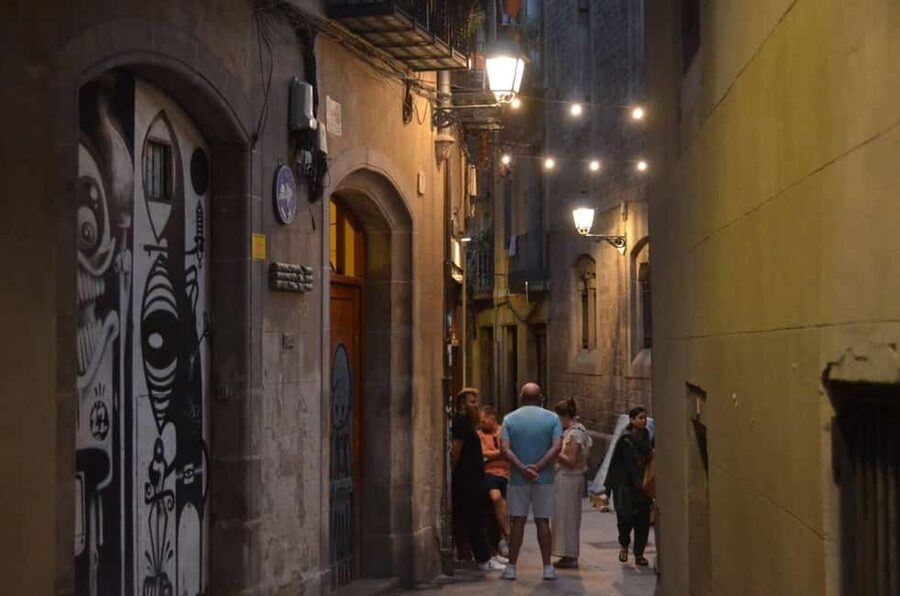
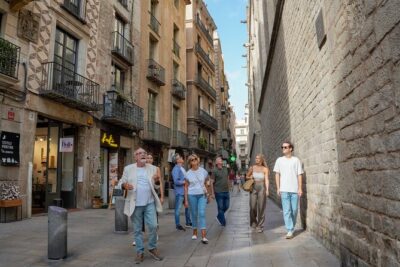
This tour is built for people who like their Barcelona stories grounded. Instead of jumping from spooky alley to spooky alley, you’re guided through real systems of fear: religion used as power, superstition weaponized into punishment, and politics turning ordinary life into danger. The Gothic Quarter is the perfect setting because it still feels like an old city layer on top of a modern one, with narrow streets that make every turn feel intentional.
I like how the tour frames the topic with nuance. You’re not just handed gruesome anecdotes. You’re also shown how belief became policy, and how policy became street-level reality. That matters, because it turns the tour from shock value into understanding. You walk away with a stronger sense of how Barcelona got shaped by fear, resistance, and propaganda, not just by architecture and football.
And yes, it is a night tour, so the mood helps. You’ll be in the alleys after dark, which makes the historical details land harder than they would during daylight. Just remember, you’re paying for history, not entertainment costumes.
What you pay for: $21 for a focused 2-hour history experience
At $21 per person for a 2-hour guided walk, this lands in the “value if you’ll use it” category. You’re getting a professional guide (live, English) who brings together several eras: medieval persecution, the witch-trials belief system, and Barcelona’s more modern violent politics. That mix is the whole point. If you usually skip dark-tour content, it may feel like a lot to pack into one evening. If you’re the kind of traveler who wants context, it feels efficient.
There is one small extra cost to be aware of. A guide-radio headset is used so you can hear the guide clearly, and that headset costs 1€ per person, paid at the start of the tour. If you dislike extra fees, you’ll want to budget for that. Otherwise, it’s a smart setup on uneven streets and in narrow lanes where voices can get lost.
Other things to see around Barcelona
- Barcelona Tapas and Wine Experience Small-Group Walking Tour
★ 5.0 · 5,804 reviews - Barcelona: Tapas Walking Tour with Food, Wine, and History
★ 4.8 · 4,261 reviews - Barcelona: Food Walking Tour with Tapas and Wine
★ 4.9 · 2,180 reviews
Where you meet: Plaça de Catalunya, and the white umbrella cue
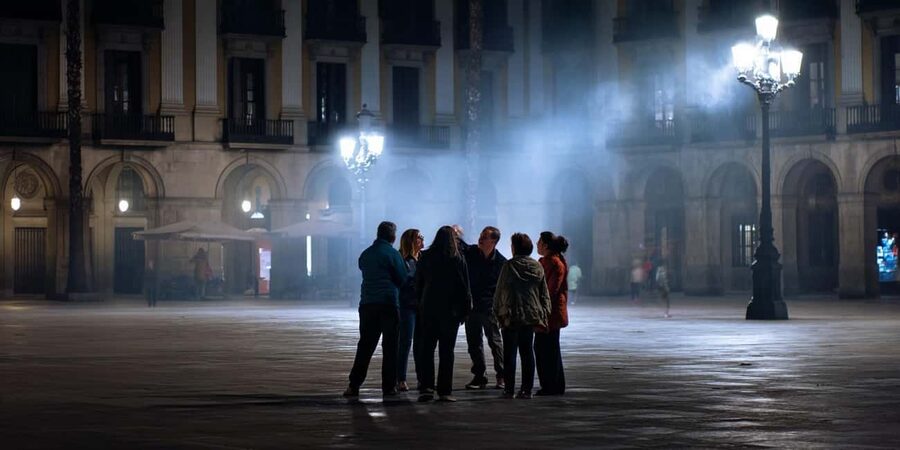
You start at street level on Plaça de Catalunya, right in front of Foot Locker. The guide will be holding a white umbrella, which makes it easier to spot the right group quickly, even if you’re arriving from the metro and are slightly out of breath.
This meeting point is convenient. Plaça de Catalunya is a hub, so you’re not stuck trying to coordinate a remote pickup. If you’re using transit, you can build your schedule around one central location, rather than hunting for a neighborhood corner with the wrong street name.
Practical tip: arrive a few minutes early so you can get settled and sort out the headset payment without delaying the group.
Entering the Gothic Quarter’s dark systems: executions, superstition, and public power
Once you’re in the Gothic Quarter, the tour leans into atmosphere while staying anchored to what happened. You’ll hear about hidden corners tied to public punishments, including the kind of places where execution and burning could happen. The guide explains the mechanisms behind it, not just the outcomes, so you understand how terror was used to control communities.
Here’s what I think you’ll appreciate most: the tour connects individual stories to larger institutions. You hear about systems like tribunals and church-aligned power, and then you see how those ideas traveled from formal proceedings to everyday fear. It’s not random darkness. It’s a timeline of control.
And even though the tour focuses on horrifying topics, the storytelling is meant to stay clear and understandable. That matters when you’re dealing with subjects like heresy accusations or beliefs around demonic possession. The guide doesn’t just repeat shock details. They explain what people believed and why authorities treated those beliefs as threats.
The Spanish Inquisition and witch trials: why fear became law
The Spanish Inquisition and witch trials are central themes, and they’re handled in a way that feels educational rather than sensational. You learn about the beliefs that were treated as criminal, and you hear how accusations could spiral into punishment. The tour’s goal is to show how superstition moved from folklore into judicial action.
If you’ve ever wondered how a society could justify cruelty, this section gives you the framework. Authorities weren’t acting in a vacuum. They were responding to social anxiety, political pressure, and religious power structures. That doesn’t excuse anything, but it explains the logic that kept the machine running.
You’ll also get a clearer sense of why these stories became a kind of language of fear. The tour shows how communities learned to police themselves, which is one of the most unsettling parts of the historical record. It’s not only punishment from above. It’s social pressure that turns neighbors into informants.
Henriqueta Martí, the Vampire of Barcelona: true crime with historical context
One of the most memorable parts is the story of Henriqueta Martí, known as the Vampire of Barcelona. The tour treats this like a true-crime case, but with historical context so it doesn’t feel like a modern tabloid retelling.
What makes this section work is the balance. You get the intrigue, the horror elements, and the public reaction, but you also get the “how and why” behind it. You’re not just collecting gruesome details. You’re learning how the city processed fear and how a notorious case can become a symbol bigger than the original events.
Even better, it fits the broader tour theme. The Martí story sits next to earlier eras of persecution, showing how ideas of threat and contamination can persist across centuries, even when the details change. That link makes the tour feel cohesive, not like five random spooky facts stitched together.
If you like true crime, you’ll likely enjoy this most. It’s also a good entry point if you’re not sure you want an entire evening of execution history. The name recognition and sheer notoriety pull you in, and the guide then widens the lens to show the real-world machinery around the headlines.
One ticket rarely covers it all. Here's what else is nearby.
- Barcelona: Sagrada Familia Entry Ticket with Audio Guide★ 4.6 · 105,312 reviews
- Barcelona: Park Güell Admission Ticket★ 4.4 · 76,534 reviews
- Barcelona: Casa Batlló Entry with Self-Audioguide Tour★ 4.7 · 25,359 reviews
- Barcelona: Montjuïc Cable Car Roundtrip Ticket★ 4.5 · 22,368 reviews
- Barcelona: Hola Barcelona Public Transport Travel Card★ 4.5 · 20,985 reviews
- Barcelona: 24 or 48-Hour Hop-On Hop-Off Bus Tour★ 4.4 · 20,872 reviews
Anticlerical violence, political assassinations, and Barcelona’s rupture moments
The tour doesn’t stop at medieval terror. It moves forward into the chaos of violent politics, including anticlerical violence, church burnings, and political assassinations. This is where Barcelona’s story becomes less about old institutions and more about power struggles in modern life.
I like how the guide handles these chapters with clarity. Political violence can easily turn into a blur of dates and factions if the guide lacks structure. Here, the tour aims to keep you oriented, linking the violence to the social conditions that allowed it to spread.
You’ll come away with a deeper sense of how violence affects ordinary residents, not just leaders. Oppression shapes daily routines, fear shapes friendships, and public life changes when people expect retaliation. That theme continues into the last major era the tour covers.
Franco’s shadow: how dictatorship shaped everyday life
One of the tour’s selling points is its reach into the Franco dictatorship era. You’ll hear about how repression shaped the lives of ordinary Barcelonans and how control worked through fear and political pressure.
This section can be emotionally difficult, depending on your tolerance for political history. But it’s also one of the most important pieces if you want the “why” behind modern Barcelona attitudes. Even if you came for gothic streets and true crime, the tour uses the dictatorship period to show how trauma and control can leave long-lasting traces.
A good guide makes this easier, because dictatorship history can become abstract. The aim here is to keep it human and concrete. You’re walking the city while hearing how oppression landed on real people.
How the pacing feels, what to wear, and who should skip this one
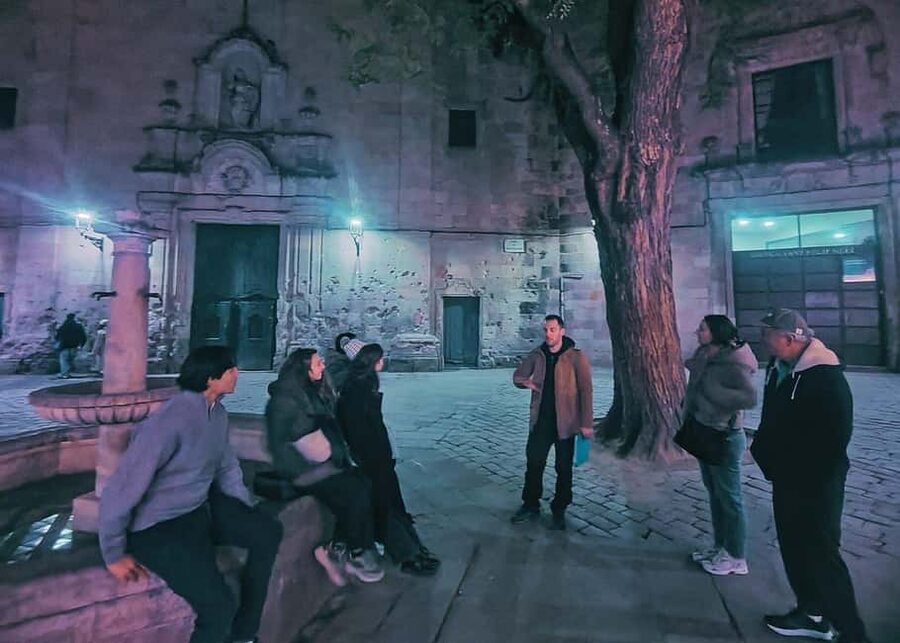
This is a walking tour, and it lasts 2 hours. The surfaces are uneven, so comfortable shoes are not optional. You’ll also want a water bottle, especially if you tend to walk fast or if you’re doing other things before the tour.
No flash photography is allowed, which is a common rule on night walks. It also nudges you to actually look at the guide’s direction and the street details, instead of taking frantic photos in low light.
Now the big practical consideration: the tour is not suitable for:
- children under 12
- pregnant women
- people with mobility impairments
- people with heart problems
At the same time, the experience is listed as wheelchair accessible. That combination can be confusing. If mobility is a concern, your safest move is to treat the “not suitable” note as the real warning and confirm fit with the provider before booking. Don’t assume wheelchair access automatically means it will work for everyone’s needs.
Who this tour is for, and who might want a different style of Barcelona tour
This one is best for you if you enjoy dark tourism with substance. You’ll likely be happiest here if you care about:
- true crime and real cases
- historical storytelling tied to real locations
- history that includes political violence, not sanitized versions
- travelers who want Barcelona beyond postcards
It might be less ideal if you want a light, casual night stroll. This tour is intentionally about terror, institutions, and oppression. Even when the guide is engaging, the content stays serious.
If you’re traveling solo, it’s also a solid pick. Night tours are often easier to join alone, and a guided group helps you move through the Gothic Quarter without getting lost.
Should you book Barcelona: Ghosts of a Dark Past Walking Tour?
Book it if you want Barcelona in a form that most standard sightseeing tours skip. For $21, you’re paying for a focused, 2-hour walk with a live guide, and the topics are tightly connected: inquisition-era fear, witch-trial logic, the Henriqueta Martí case, then the violence of anticlerical uprisings and Franco-era oppression. The value comes from the structure, not just the shock factor.
I would skip it or choose something else if heavy subject matter will derail your trip. If you need a cheerful night out, this isn’t it. And if mobility or health limits apply, pay attention to the listed restrictions.
If you do book, go prepared: sturdy shoes, water, and a mindset for real history. You’ll leave with a more honest, sharper understanding of the city you came to see.
FAQ
How long is the Barcelona Ghosts of a Dark Past Walking Tour?
The tour lasts 2 hours.
How much does it cost?
The price is listed as $21 per person.
Where does the tour start?
It starts on the sidewalk in front of Foot Locker on Plaça de Catalunya. The guide will have a white umbrella.
Is the tour in English?
Yes, it is a live tour guide in English.
Does this tour include ghost stories?
No. The tour is described as real history, not ghost stories.
Is there an extra cost for a headset?
Yes. A guide-radio headset costs 1€ per person, paid at the start of the tour.
Are flash photos allowed?
No, flash photography is not allowed.
Who should avoid this tour?
It is not suitable for children under 12, pregnant women, people with mobility impairments, and people with heart problems.
The latest to open for booking




Walking Tours, side by side.
Barcelona Tapas and Wine Experience Small-Group Walking Tour
Read our review →
Tapas Walking Tour with Food, Wine, and History
Read our review →

Barcelona Tapas Walking Tour: Food, Wine & History
Read our review →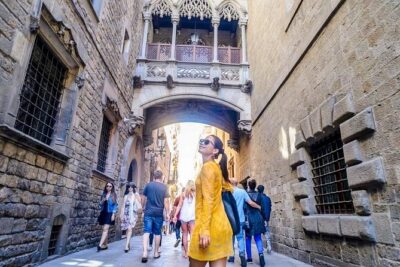
Barcelona Helicopter, Sailboat & Old Town Private Walking Tour
Read our review →
Guided Food Walking Tour with Tapas and Wine
Read our review →Where else this one turns up