
Reviewed · WALKING TOURS
Barcelona: Hidden Gems Walking Tour Including 10+ Sights
Barcelona clicks into place on foot. This 2,000 years tour traces Roman Barcino roots through the Gothic core, while your guide ties in legends like the Pont del Bisbe secret skull. In a short time, you get the feel of how Catalans remember, argue, celebrate, and myth-make.
I love the pacing, 10+ sights in two hours without feeling herded. I also love how the guides bring it down to everyday life, including local food tips, like Sonia’s standout croissant stop that one guest called the best ever.
One thing to plan for: cathedral and basilica entry are not included, so you mainly see the architecture and story context from outside or from viewpoints your guide sets up.
In This Review
- Quick Hits
- Why This 2-Hour Barcelona Walk Works
- Meeting Point and Pace: What to Expect Before You Start
- Stop-by-Stop: 10+ Stories From Barcino to Santa Maria del Mar
- Escultura Barcino: Where the Roman Story Starts
- Els Quatre Gats: Art, Attitude, and Catalan Identity
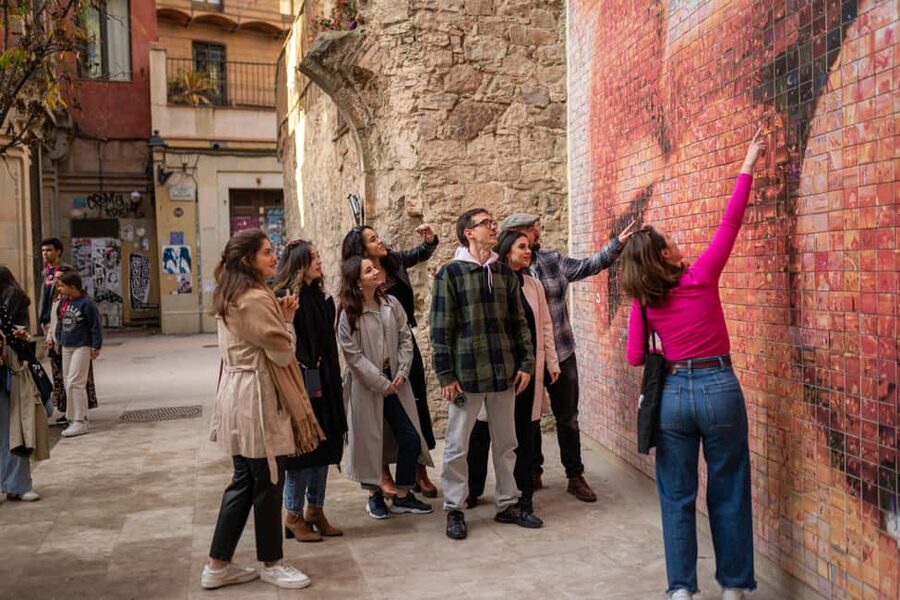
- The Kiss of Freedom: Symbolic Street History
- Barcelona Cathedral: The Big Exterior Impressions
- La Casa de l’Ardiaca: Details You’ll Miss Without Help
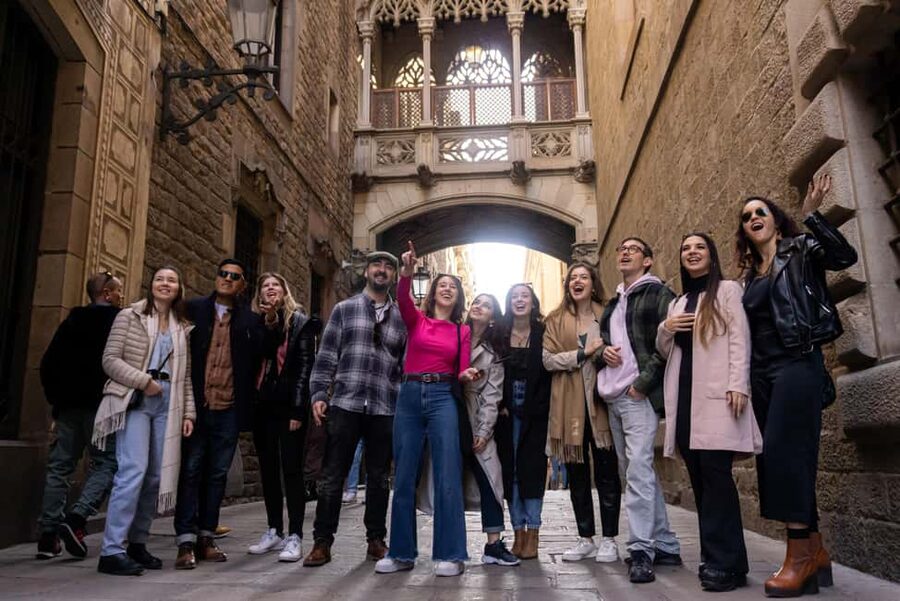
- Carrer del Bisbe and the Pont del Bisbe Skull Legend
- Plaça de Sant Felip Neri: A Quiet Square With Weight
- MUHBA El Call: Jewish Quarter Realities
- Plaça de Sant Jaume and Plaça del Rei: Power on Display
- Plaça de l’Àngel and Plaça de Santa Maria: Small Squares, Big Themes
- Finish at Basílica de Santa Maria del Mar
- Guides and Storytelling: What Separates a Great Walk From a Basic One
- Value for Money: Is $22 Worth It for 10+ Stops?
- Who Should Book This Barcelona Walking Tour
- Should You Book This Tour?
- FAQ
- How long is the Barcelona walking tour?
- How much does it cost?
- What language is the live tour guide?
- Where do I meet the guide?
- Where does the tour finish?
- Are entry tickets to cathedrals and basilicas included?
- What should I bring?
- Can I cancel for a full refund?
- Is there a way to book without paying today?
Quick Hits
- 10+ stops packed into a 2-hour route, ideal for getting oriented fast
- Roman Barcino to the Golden Age, with clear links to what you see today
- Dark-history context, including the Spanish Inquisition and the Spanish Civil War influence
- The legend of the secret skull on Pont del Bisbe, told as part of the walk’s folklore
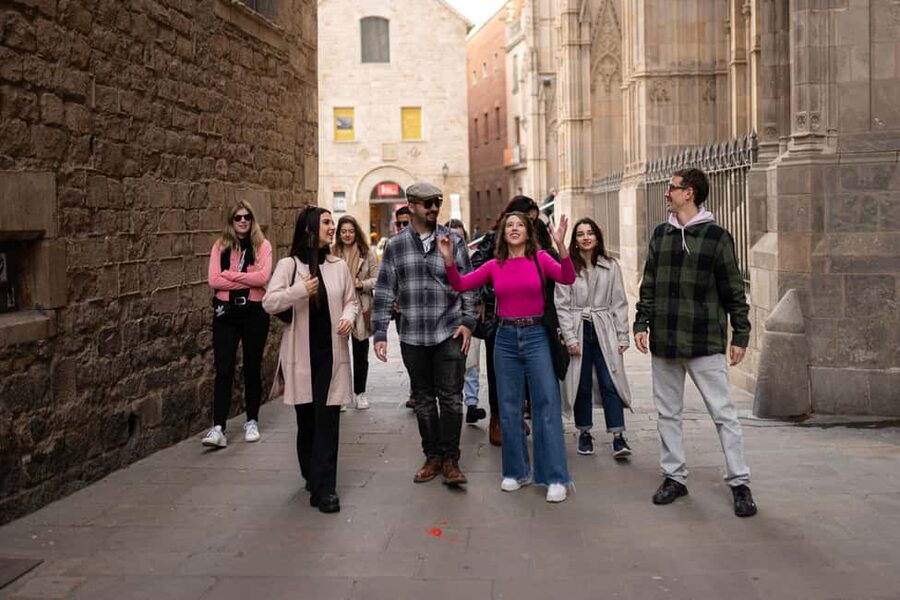
- Guides who mix humor with real stories, and keep groups moving at a steady pace
- Practical local recommendations, including bakery and meal suggestions
Why This 2-Hour Barcelona Walk Works
Barcelona is a city where streets act like history notes. This tour is built for that. In just two hours, you move through squares, narrow lanes, and major landmarks, and the guide explains how today’s Gothic atmosphere grew from much older layers.
What makes it work is the balance. You get big-picture timelines, Roman origins through later power and culture, but you also get the small street-level stuff that makes a place feel lived-in. The result is a walk that helps you understand Barcelona, not just collect photos.
Also, it is an easy format to fit into a trip. If you are doing museum days or beach days too, this is the one activity that helps everything else click into place. It is not long enough to drag, and it is not so brief that you miss the point.
Meeting Point and Pace: What to Expect Before You Start
You meet at Plaça del Vuit de Març, inside the park near Balmesiana Biblioteca Balmes and the Roman aqueduct remains, next to the white van. Look for the yellow Carpe Diem Tours flag, and arrive about 10 minutes early so you are not doing the classic last-minute shuffle.
The tour runs for about 2 hours, and it is a walking format with frequent stops. Bring comfortable shoes and comfortable clothes, and a camera if you like architectural details and street textures. If the weather turns, you will still keep moving, since the pace is built around short explanations at each stop.
One more planning note: you can expect to spend your time outside major religious buildings. Entry into cathedrals and basilicas is not included, so if your dream is standing inside for a full ticketed visit, pair this with a separate cathedral plan later.
Other things to see around Barcelona
- Barcelona: Tapas Walking Tour with Food, Wine, and History
★ 4.8 · 4,261 reviews - Highlights & Hidden Spots of Barcelona Bike Tour w/ Local Guide
★ 4.5 · 3,009 reviews - Barcelona Tapas Walking Tour: Food, Wine & History
★ 4.5 · 1,928 reviews
Stop-by-Stop: 10+ Stories From Barcino to Santa Maria del Mar
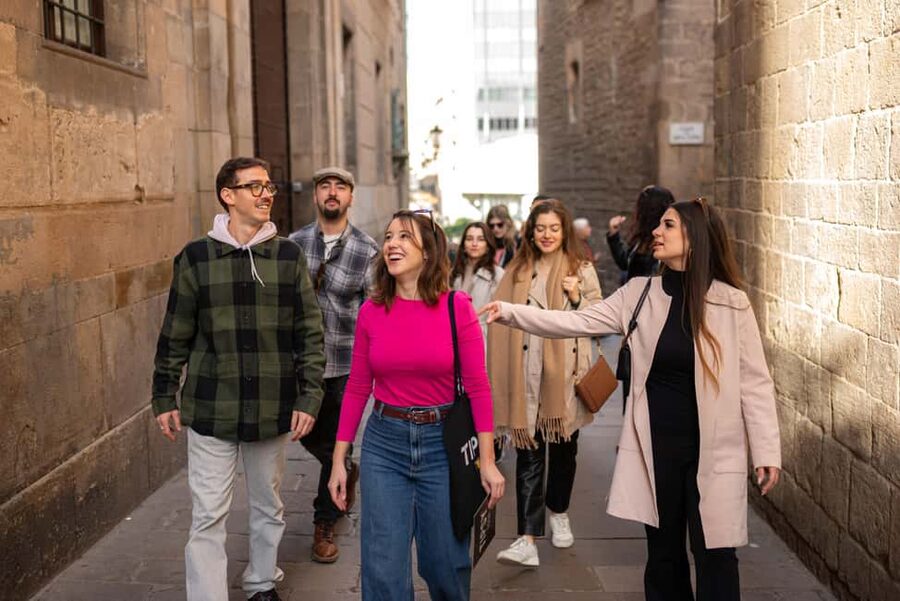
This route is centered on Barcelona’s old core, with a mix of grand monuments and quieter street-corners. Your guide ties each place to a theme: Roman beginnings, medieval life, local identity, and the darker corners of European history.
The walk begins around the Roman layer. Then it shifts into Catalan culture and public squares, and ends at the sea-facing grandeur of Santa Maria del Mar. Along the way you also hear the eerie folklore that Barcelona is famous for, including the legend tied to a skull on Pont del Bisbe.
Escultura Barcino: Where the Roman Story Starts
If your departure starts at the Barcino Sculpture (Escultura Barcino), you get an immediate mental image of the Roman colony that preceded the Gothic city you see today. The guide uses this first stop to frame what you will be looking for later, like how walls, layouts, and power centers evolve over centuries.
Even if you are not a history person, this works because it gives you a reference point. Instead of guessing why streets curve and squares feel positioned just so, you start with a baseline and then the rest makes sense.
Els Quatre Gats: Art, Attitude, and Catalan Identity
From there you head toward Els Quatre Gats, a name that matters in Catalonia’s cultural story. This stop is less about religious architecture and more about mood, ideas, and the kind of creative energy that helped shape the city’s modern identity.
One reason I like this part of the walk is that it shifts you out of purely “monument sightseeing.” Your guide connects what you see to people, scenes, and attitudes, so Barcelona stops feeling like a list of buildings.
The Kiss of Freedom: Symbolic Street History
Next is The Kiss of Freedom, a stop designed to make you notice how public spaces hold meaning beyond their physical design. The name alone sets up curiosity, and your guide uses it to explain what the story represents in the city’s cultural memory.
This is one of those stops where you learn to read the street like a page. You stop seeing a sign or a spot, and you start seeing symbolism.
One ticket rarely covers it all. Here's what else is nearby.
- Barcelona: Sagrada Familia Entry Ticket with Audio Guide★ 4.6 · 105,312 reviews
- Barcelona: Park Güell Admission Ticket★ 4.4 · 76,534 reviews
- Barcelona: Casa Batlló Entry with Self-Audioguide Tour★ 4.7 · 25,359 reviews
- Barcelona: Montjuïc Cable Car Roundtrip Ticket★ 4.5 · 22,368 reviews
- Barcelona: Hola Barcelona Public Transport Travel Card★ 4.5 · 20,985 reviews
- Barcelona: 24 or 48-Hour Hop-On Hop-Off Bus Tour★ 4.4 · 20,872 reviews
Barcelona Cathedral: The Big Exterior Impressions
You will reach Barcelona Cathedral during the walk. Since entry is not included, your time here is about exterior views and the architectural story your guide builds around it.
Even outside, the cathedral is powerful. The guide’s job is to help you see why it looks the way it does, and how that style fits into the broader Gothic atmosphere of the area you are walking through.
La Casa de l’Ardiaca: Details You’ll Miss Without Help
La Casa de l’Ardiaca is the kind of building that rewards close attention. It is not just a “pretty facade” stop. Your guide points out the features that make the structure memorable, and ties those details to the era that produced them.
This is also where the tour’s “story per corner” format shines. You learn what to look for, so you keep noticing details after the stop ends.
Carrer del Bisbe and the Pont del Bisbe Skull Legend
Carrer del Bisbe is where the walk gets darker and more theatrical. This is the moment you hear the legend of the secret skull on Pont del Bisbe, along with the superstition about what happens if you look at it.
I like folklore like this because it adds a layer you cannot get from guidebooks alone. It is not about verifying a claim. It is about learning how locals treat a story as part of the street’s identity.
Plaça de Sant Felip Neri: A Quiet Square With Weight
You then move to Plaça de Sant Felip Neri, a square that can feel calmer than the busiest postcard spots. Here, your guide uses the setting to connect the city’s social life to its architecture and rules of the past.
Expect a small dose of reflection, mixed with the timeline explanation you have been hearing all along. It helps break up the more dramatic landmark moments so you do not feel overloaded.
MUHBA El Call: Jewish Quarter Realities
MUHBA El Call is one of the most important stops on this route. It is tied to Barcelona’s Jewish quarter history, and it is also where your guide brings up Barcelona’s darker past, including the Spanish Inquisition.
This is not “spooky tourism.” It is history presented through the place itself. Even if you keep your walk at an outdoor pace, you leave with a stronger sense of how communities were shaped, limited, and remembered.
Plaça de Sant Jaume and Plaça del Rei: Power on Display
Plaça de Sant Jaume and Plaça del Rei are public squares linked to governance and authority. Your guide uses them to connect how cities control space, how decisions get made in public, and how power leaves marks that last.
This is also where the tour brings in the Spanish Civil War influence. The guide ties that 20th-century trauma back to the physical city you are standing in, so the story stops being abstract.
Plaça de l’Àngel and Plaça de Santa Maria: Small Squares, Big Themes
You then pass Plaça de l’Àngel and Plaça de Santa Maria, 1. These stops are short, but they matter because they keep you anchored in the day-to-day fabric of the Gothic core.
If you are the type who worries you will miss the “in-between” parts of Barcelona, this is a win. These squares help you understand how the city’s official and unofficial life overlap.
Finish at Basílica de Santa Maria del Mar
The walk ends at Basílica de Santa Maria del Mar, and it is a strong closing point. This basilica is the kind of landmark that gives you a sense of arrival, like the tour has brought you to the heart of the story.
Again, entry is not included, so it is about what you can see and how your guide frames the building’s meaning in the broader timeline. By the end, you should feel like Barcelona’s architecture has a narrative thread, not just pretty shapes.
Guides and Storytelling: What Separates a Great Walk From a Basic One
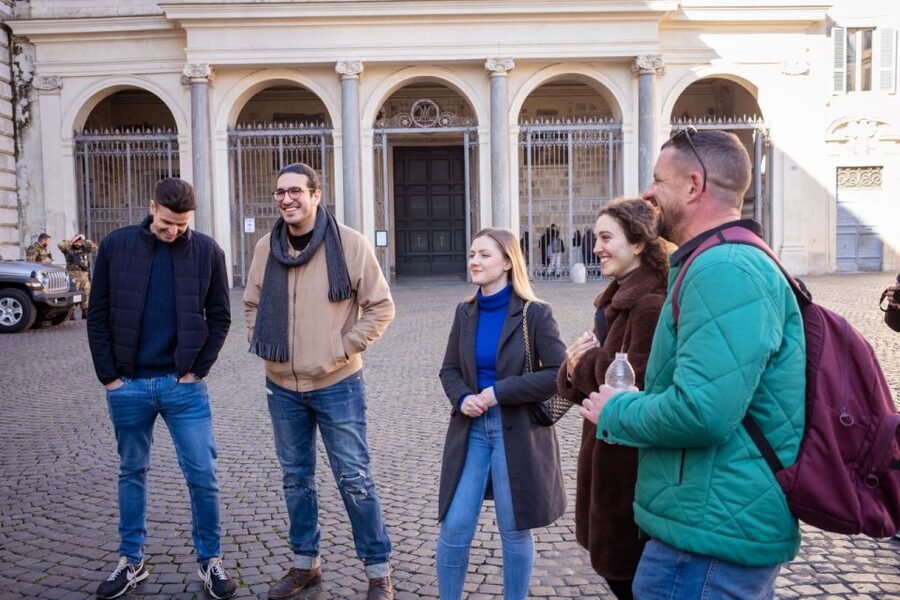
The tour’s quality depends heavily on the guide, and the feedback for this experience is unusually consistent about one thing: the guides make history feel human. People repeatedly mention humor, clear explanations, and a pace that feels comfortable for the group.
You might get a guide like Sonia, praised for staying upbeat and energetic even in rain. Or Petra, described as warm, fun, and good at making everyone feel welcome. Another guide mentioned often is Juan, including a guest who joked about the stormtrooper surprise and called the tour pure magic. (That kind of playful moment is not the point of the tour, but it says a lot about how the guide keeps attention during a fast walk.)
A few other names show up for a reason: Craig is noted as cheerful and strong on facts, Darren is praised for answering questions and being patient, and Tammy is commended for adjusting pacing when someone needed to go slower. When a group tour works, everyone feels looked after. That is what these descriptions have in common.
Finally, guides do not just talk and move on. Many guests highlight restaurant and bakery recommendations. One specific example stands out: Sonia suggested a local bakery, and a guest called the croissant the best they had ever had. Even if you do not chase that exact bakery, you can expect your guide to point you toward good, nearby food.
Value for Money: Is $22 Worth It for 10+ Stops?
At $22 per person for a 2-hour, guided walk with 10+ sights, this is priced for value. You are paying for time, logistics, and interpretation, not for entry tickets. Since cathedral and basilica access is not included, the price makes sense only if you treat this as a guided orientation and story walk rather than a ticketed sightseeing tour.
If you are the kind of traveler who gets restless when a walking tour is too slow or too repetitive, this format usually fits. The stops are short and designed to keep motion and attention aligned. And because the guide connects locations to themes like Roman beginnings, the Golden Age, the Inquisition, and the Spanish Civil War, the information feels purposeful.
If you expected to walk into major interiors as part of the price, you might feel a bit limited. In that case, pair this with a separate timed-entry visit to one or two interiors you care most about. You will get the best of both worlds: the story context from this walk and the full interior experience where tickets apply.
Who Should Book This Barcelona Walking Tour
This is a great fit if:
- you want a fast, story-led orientation to Barcelona’s Gothic core
- you like legends mixed with real historical context, including the Pont del Bisbe skull story
- you are traveling with limited time and want to cover 10+ key places in 2 hours
- you enjoy asking questions and getting food ideas from a local guide
It might not be ideal if:
- your main goal is entering and touring cathedrals and basilicas inside, since entry is not included
- you dislike guided group pacing, since the stops are timed and frequent
In practice, it is especially helpful early in your trip. You will know where things are, and you will have a mental map of why the city looks the way it does. Then your later self-guided wandering feels smarter, not random.
Should You Book This Tour?
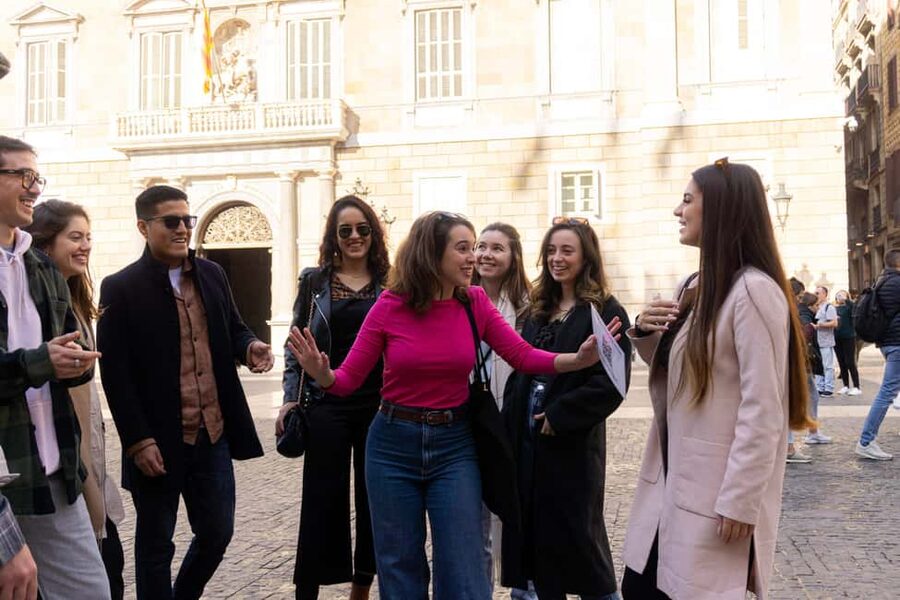
I think you should book it if you want the Barcelona experience that connects streets, buildings, and stories into one clear route. The combination of 2,000-year context, strong guide performance, and the ability to end at Santa Maria del Mar makes this tour a simple win for many first-time visitors.
If you can only do one guided activity and you want it to pay off every other day, this is a solid choice. Just go in with the right expectation: you are getting a guided walk and outside views with story depth, not ticketed interior visits.
FAQ
How long is the Barcelona walking tour?
The tour lasts about 2 hours.
How much does it cost?
It is priced at $22 per person.
What language is the live tour guide?
The tour is guided in English.
Where do I meet the guide?
Meet at Plaça del Vuit de Març, inside the park near Balmesiana Biblioteca Balmes and the Roman aqueduct remains, next to the white van. Look for the yellow Carpe Diem Tours flag, and arrive 10 minutes early.
Where does the tour finish?
The tour finishes at Basílica de Santa Maria del Mar.
Are entry tickets to cathedrals and basilicas included?
No. Entry into cathedrals and basilicas is not included.
What should I bring?
Wear comfortable shoes and comfortable clothes, and bring a camera if you want photos.
Can I cancel for a full refund?
Yes, you can cancel up to 24 hours in advance for a full refund.
Is there a way to book without paying today?
Yes, the tour offers reserve now & pay later, so you can book and pay later.
The latest to open for booking


Walking Tours, side by side.
Barcelona Tapas and Wine Experience Small-Group Walking Tour
Read our review →
Tapas Walking Tour with Food, Wine, and History
Read our review →

Barcelona Tapas Walking Tour: Food, Wine & History
Read our review →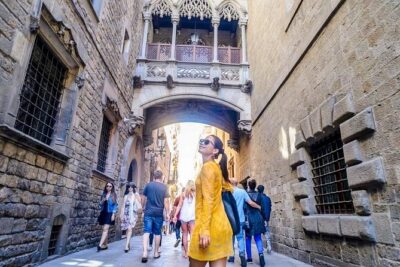
Barcelona Helicopter, Sailboat & Old Town Private Walking Tour
Read our review →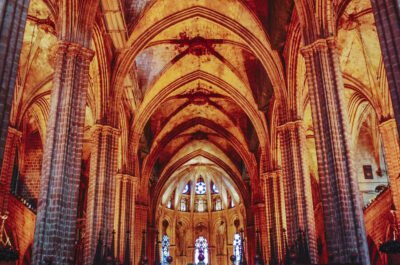
Guided Food Walking Tour with Tapas and Wine
Read our review →Where else this one turns up