

Reviewed · HOP-ON HOP-OFF BUS TICKETS
Barcelona: Hop-On Hop-Off Bus & Aquarium Tour
Aquarium plus a bus loop, on your schedule. What makes this combo smart is the 24 or 48 hour Hop-On Hop-Off pass that covers both routes and the Barcelona Aquarium ticket, so you can see a lot without a strict plan. One caution: it can be a little tricky to find the right boarding spot at some stops, because signage is not always easy to spot.
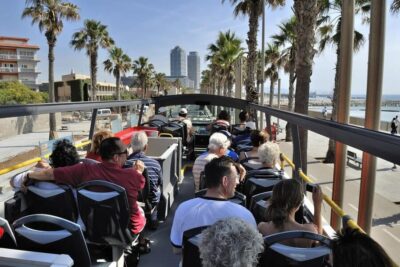
You’re riding air-conditioned double-decker coaches with a multilingual audio guide, and each route takes about 2 hours. Buses run roughly every 5 to 30 minutes depending on the season, and the day window runs about 9:00 AM to 7:00 PM with the last return. The main starting point is Plaça Catalunya, but you can start at any hop-on stop along the way.
In This Review
- Key Points I’d Use to Decide
- How the Hop-On Hop-Off Works for 24 or 48 Hours
- The Barcelona Aquarium, Mediterranean Theme, Ebro Delta, and a Shark Tunnel
- West Route (Orange) From Miramar Views to Port and Gaudi Icons
- East Route (Green) Beaches, Sant Pau, Park Güell, and the Old Town Edge
- My Suggested 1-Day and 2-Day Planning Approach
- If you have 1 day
- If you have 2 days
- Price and Value: Is $73 Actually Fair for This Combo?
- The One Real Downside: Stop Signage and Boarding Clarity
- Who Should Book This, and Who Should Skip It
- Should You Book This Barcelona Hop-On Hop-Off and Aquarium Combo?
- FAQ
- How long is the Hop-On Hop-Off bus ticket valid?
- Does the ticket include the Aquarium of Barcelona?
- How many bus routes are included, and can I use them both?
- Where is the main meeting point for the bus?
- How often do the buses run?
- What languages is the audio guide available in?
Key Points I’d Use to Decide
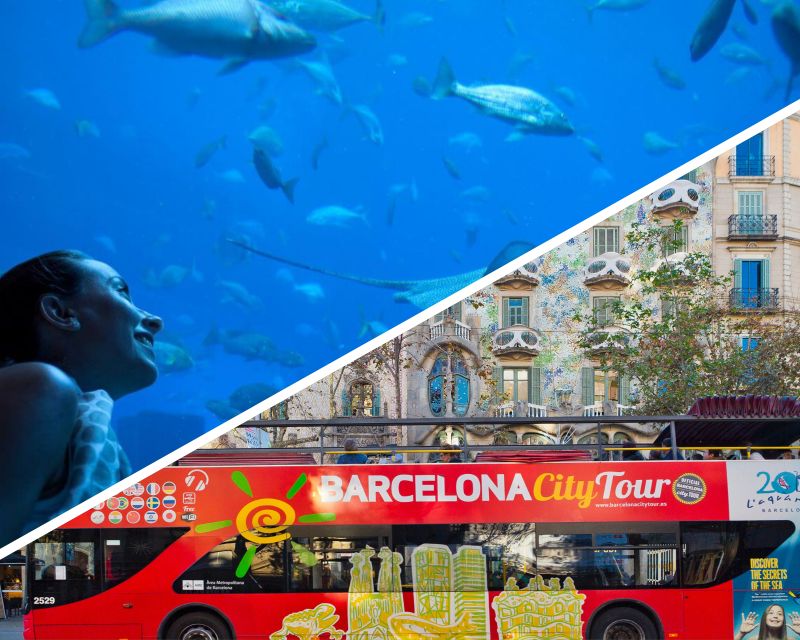
- Two routes on one ticket: you can hop on and off as many times as you want during your 1 to 2 consecutive day validity.
- Aquarium is the star: it’s Mediterranean-themed and includes animal habitats like the Ebro Delta and Medes Islands.
- Good comfort for sightseeing: double-decker buses are air-conditioned, which matters in warmer months.
- Plan for time in the city: each bus route is about 2 hours, so it’s easy to overpack your day.
- Watch your stop navigation: if you hate hunting for boarding points, give yourself a little extra time.
How the Hop-On Hop-Off Works for 24 or 48 Hours

This is an at-your-own-pace day plan in Barcelona, built around a simple idea: ride the bus, get off when something catches your eye, then hop back on later with the same ticket.
You choose the option you want, 24 hours or 48 hours, and your ticket is valid for that number of consecutive days. That’s a big deal for value. Instead of paying for multiple rides or trying to time everything perfectly, you can use the bus as your moving base and spend your energy on the places you actually want to stop.
Here’s what the schedule looks like in real life:
- There are 2 routes (West in orange, East in green), and your ticket works on both.
- Each route takes about 2 hours end to end.
- Bus frequency depends on the season, roughly every 5 to 30 minutes at stops.
- The main operating window is about 9:00 AM to 7:00 PM, with the last return in that range.
So what should you do with this? I’d treat the bus like a flexible timeline. If you’re doing one day, pick one route focus and only a couple of off-bus stops you truly care about. If you have two days, you can split it, ride one full route one day and then mix and match on the second day.
Also, keep in mind that the itinerary can change due to events or circumstances. In a city like Barcelona, that’s normal. The practical move is to stay flexible and check stop locations before you commit to a tight plan.
The Barcelona Aquarium, Mediterranean Theme, Ebro Delta, and a Shark Tunnel
The aquarium ticket is included, and it’s the part of this combo that feels most special. The Barcelona Aquarium is described as the largest Mediterranean-themed aquarium in the world, and the layout is built around marine communities and habitats inspired by protected areas on Spain’s coastline.
What you’ll actually want to look for once you’re inside:
- Multiple exhibits arranged to show how different marine ecosystems work.
- Two specific habitat inspirations: the Ebro Delta and the Medes Islands.
- A walk-through acrylic tunnel inside the Oceanarium, designed to give you the feeling of being surrounded, like you’re swimming with sharks.
That shark tunnel is the kind of thing that works even if you’re not a hardcore aquarium fan. You spend real time walking through it, and it’s also a natural photo stop. It’s a good break from the city. After time on the bus, you’ll likely appreciate switching to a quieter, indoor experience.
The ticket is single use, so don’t assume you can bounce in and out. Plan your aquarium visit for when you have enough time to enjoy it without rushing.
If you want the best flow, I suggest pairing the aquarium with one bus route day. You can hop to stops near the waterfront, then use the aquarium as your anchor activity.
Get off wherever catches your eye
- Barcelona: 24 or 48-Hour Hop-On Hop-Off Bus Tour
★ 4.4 · 20,872 reviews - Barcelona: City Sightseeing Hop-On Hop-Off Bus Tour
★ 4.4 · 10,061 reviews - City Sightseeing Barcelona Hop-On Hop-Off Bus Tour: 24 or 48-Hour
★ 4.0 · 5,250 reviews
West Route (Orange) From Miramar Views to Port and Gaudi Icons

The West Route is the orange line, and it’s a great match if your priorities lean toward big viewpoints, major museums, and several of Gaudí’s landmark stops.
The route includes these notable stops, in this general order:
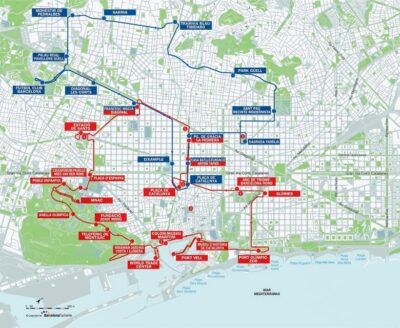
World Trade Center (WTC), Jardins de Miramar, Fundació Joan Miró, Anella Olímpica, Museu Nacional d’Art de Catalunya (MNAC), Poble Espanyol, Caixafòrum Pavelló Mies van der Rohe, Plaça d’Espanya, Estació de Sants, Camp Nou Museu FC Barcelona, Plaça Pius XII, L’Illa Diagonal, Avinguda Diagonal, La Pedrera, Sagrada Familia (), Estació del Nord, Zoo Poblenou, Port Olímpic, Pla de Palau, Passeig de Colom ().
How to read this list:
- Jardins de Miramar and the climb toward MNAC area are about views and big panorama energy. If you like looking over the city, this is where you cash in.
- Fundació Joan Miró is a culture stop if modern art appeals to you.
- Museu Nacional d’Art de Catalunya (MNAC) and the surrounding Montjuïc zone is one of the classic sights areas on the bus route. Even if you don’t go inside, riding past and getting off for photos is usually worth the stop time.
- Poble Espanyol is a self-contained attraction. It’s useful if you want something more structured than a photo stop.
- Caixafòrum Pavelló Mies van der Rohe points you to modern architecture territory, which can be a welcome change after older streets.
- Plaça d’Espanya and Estació de Sants are major transport and city hubs, helpful if you plan to connect elsewhere.
- If you care about stadium culture, Camp Nou Museu FC Barcelona is the obvious stop.
- La Pedrera and Sagrada Familia () are your Gaudí anchors on this route.
- Zoo Poblenou is practical if you’re traveling with kids or just want a zoo break.
- Port Olímpic, Pla de Palau, and Passeig de Colom () are your waterfront, easy-walk zones. This is a nice area to reset before heading back on the bus.
About the star connection stops:
- The notes say Sagrada Familia () and Passeig de Colom () serve as connections, so you can shorten routes. One connection option is for Orange route passengers who want to go to Parc Güell without reaching Port Olímpic. Another note mentions a connection for Green route passengers going to Sagrada Familia without taking the full route.
Translation into real-world planning: if you’re trying to save time and you care about specific Gaudí or major sights, those starred stops can help you avoid a longer ride.
A practical drawback I’d keep in mind for the West Route: because this line climbs into major sights zones, it can be tempting to hop off everywhere. The problem is that each route is about 2 hours, and it’s easy to lose the rhythm. I’d pick one or two “must enter” spots and let the rest be photo and stroll moments.
East Route (Green) Beaches, Sant Pau, Park Güell, and the Old Town Edge
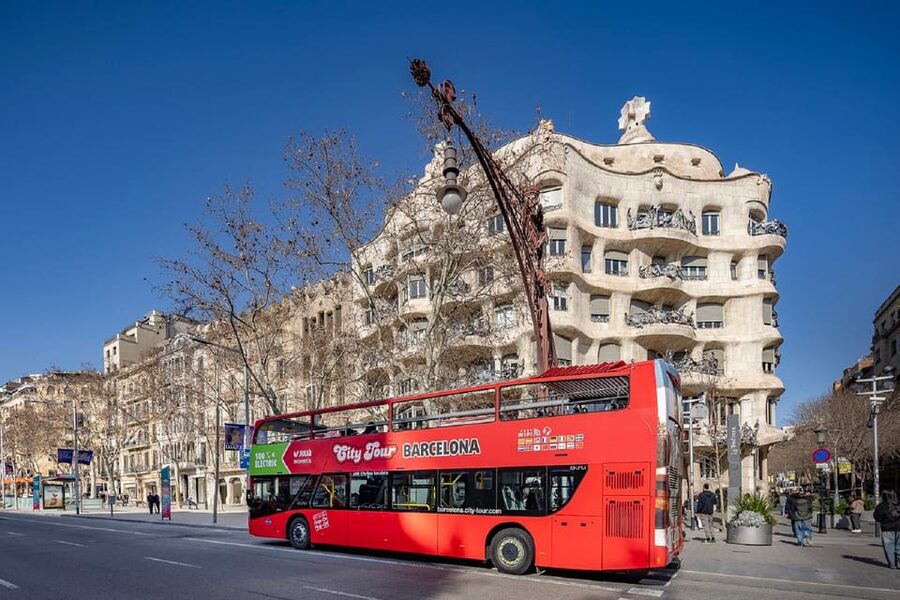
The green line often feels like the route that strings together Barcelona’s different moods. You get waterfronts, classic architecture, and old-city energy, plus more Gaudí.
Stops on the East Route include:
Pla de Palau, Barceloneta, Port Olímpic, Platja del Bogatell, Nova Mar Bella, Fòrum, Torre Glòries, Recinte Modernista de Sant Pau (), Park Güell, La Pedrera, Casa Batlló, Plaça Catalunya, Arc de Triomf, El Born Parc de la Ciutadella ().
How you should use it:
- Barceloneta and Platja del Bogatell help you get to beach areas without needing to figure out transit. Even if you don’t swim, walking the promenade and grabbing a snack can be a good reset.
- Fòrum and the area around it are more open, modern spaces. It’s a different feel than the tight medieval streets.
- Torre Glòries is a skyline moment. If you want modern Barcelona on your route, this stop delivers.
- Recinte Modernista de Sant Pau ()**
This is a major architecture draw. Even if you don’t go inside, it’s worth getting off to see the building complex style from street level.
- Park Güell is the big one. If your Barcelona list includes Gaudí’s park, this route puts it within easy reach.
- La Pedrera and Casa Batlló are your other Gaudí high points.
- Plaça Catalunya is a central hub, and since this is also the main meeting stop, it’s a convenient place to plan around.
- Arc de Triomf is a great photo stop if you like long views and classic city structure.
- El Born Parc de la Ciutadella ()**
This gets you into a neighborhood style that many people love for strolling and casual meals. If you want to end a day with walking rather than more transit decisions, this is a strong closer.
The footnote notes that Recinte Modernista de Sant Pau () and El Born Parc de la Ciutadella () serve as connections. The note specifically says Green route passengers can connect to visit Sagrada Familia without taking the full route to La Pedrera. Again, the practical value is time saving. Use that if you want key sights while avoiding extra riding.
A small realism note: this route includes both beach zones and big attractions like Park Güell. In one day, it’s easy to feel like you need to sprint. You don’t. Use the bus, get off, and if you’re tired, stay on and enjoy the ride. The air-conditioned comfort is there for a reason.
My Suggested 1-Day and 2-Day Planning Approach
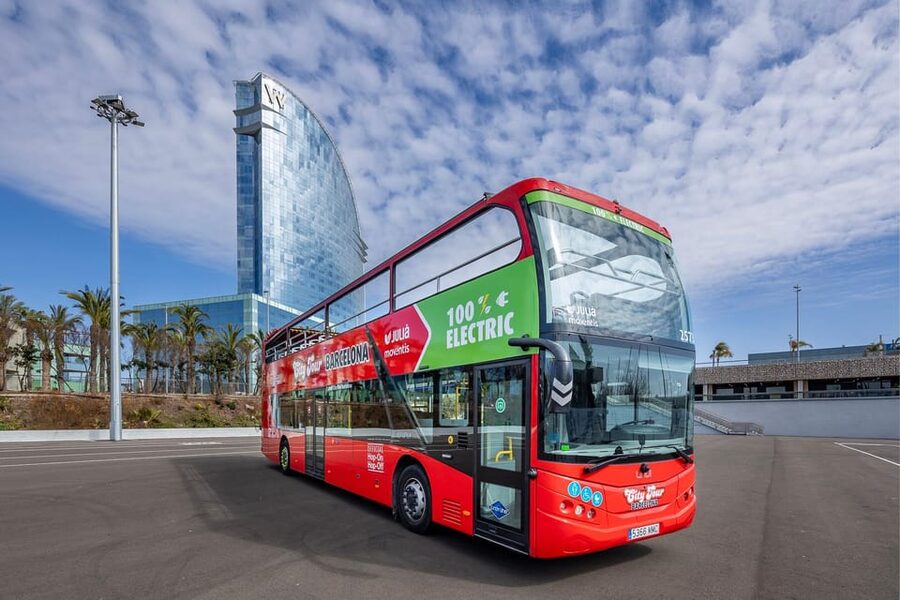
Since each route takes about 2 hours, the trick is not to cram. You’ll enjoy Barcelona more if you let a few stops be true breaks.
If you have 1 day
Pick one route as your backbone. For many people, that means:
- Choose the green route if you want beaches, Sant Pau, and Gaudí sights like Park Güell.
- Choose the orange route if you want Montjuïc-adjacent viewpoints and major museum zones plus La Pedrera and Sagrada Familia.
Then pick two “heavy hitters” off the bus:
- One museum or architectural interior stop (like Sant Pau or Park Güell).
- One aquarium block or a second Gaudí stop.
Because the aquarium ticket is included, I’d schedule it as your indoor activity, ideally on the day you also do water or waterfront walking. It helps you avoid feeling like you’re running between neighborhoods.
Other things to see around Barcelona
- Barcelona Aquarium: Entry Ticket★ 4.4 · 16,717 reviews
- Barcelona Aquarium Skip the Line Ticket★ 4.0 · 109 reviews
- Barcelona City Tour Hop-On Hop-Off and Aquarium★ 4.5 · 6 reviews
If you have 2 days
This is where the ticket feels like it pays off.
Day 1:
- Do most of one full route. Get a feel for the city layout.
- Stop for photos at the Gaudí icons you see repeatedly.
Day 2:
- Now you can “target.” Use the bus as a connector between the places you loved most on day 1 and the aquarium.
Also remember the bus runs until about 7:00 PM with the last return, so build your day so you’re not stuck near a stop late. If your final stop is far from your dinner plan, plan a quick bus segment near the end of the evening.
Price and Value: Is $73 Actually Fair for This Combo?
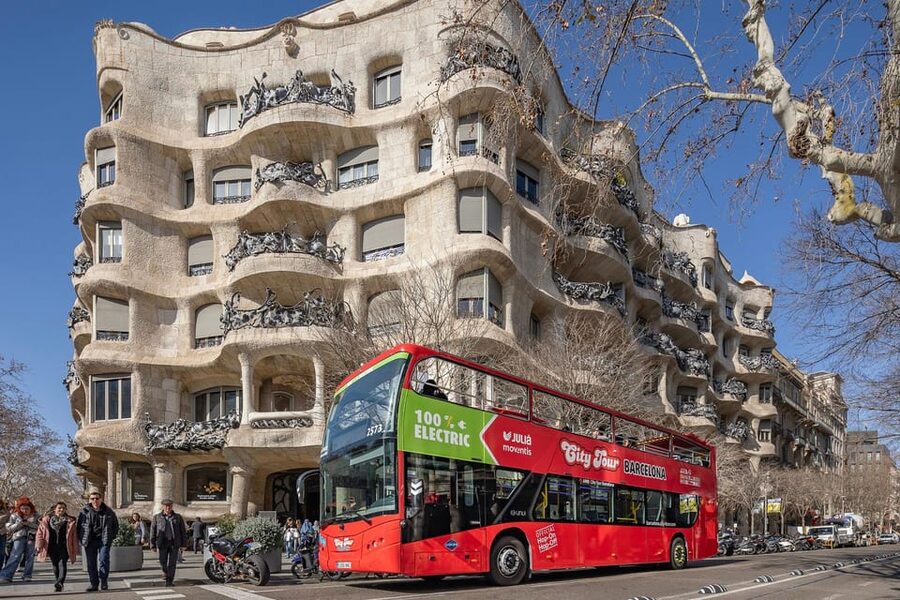
At about $73 per person, this could be either a smart deal or a waste, depending on your travel style. Here’s the honest math of value based on what’s included.
You get:
- A Hop-On Hop-Off pass for 24 or 48 hours with both routes.
- Multilingual audio guidance for the bus system.
- An aquarium entrance fee included once per ticket.
- Air-conditioned double-decker coaching.
- A discount booklet and a city tour stops guide.
You don’t get:
- Lunch or drinks.
- Pickup and drop-off.
So where does the money land?
- If you plan to visit the aquarium anyway, the included entry matters a lot. Add to that the bus flexibility, and you’re not spending extra cash and time on transit tickets.
- The biggest practical value is that it lets you see several top sights without locking yourself into one walking loop or one timed tour.
Could it feel pricey? Sure, if you’re only using a small portion of the bus. If you barely ride and only do the aquarium, you might question the value. This ticket works best when you actually use the hop-on hop-off part like a tool, not just a backup.
Also watch the “hidden cost” of time: if you stop too often on route planning, you’ll spend more time managing bus boarding and fewer hours enjoying the attractions. That’s not a fault of the ticket, it’s just how combo days work.
The One Real Downside: Stop Signage and Boarding Clarity
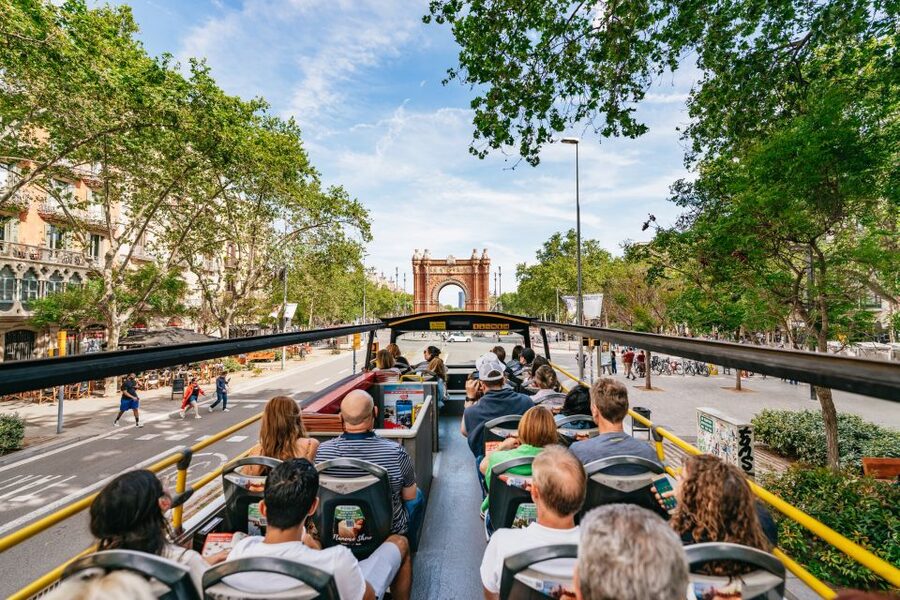
One review highlighted a very practical issue: the bus itself can be great, but finding the right stop can be harder than it should be because signage is not always clear.
Here’s how I’d handle that:
- Before you commit to your next hop, look carefully at the stop area for route info.
- Give yourself a few extra minutes when switching from one stop to another, especially if you are trying to connect around Plaça Catalunya or near the waterfront.
- If you’re trying to reach a specific Gaudí stop like Sagrada Familia or Park Güell, use the connection notes on the starred stops to reduce backtracking.
This is not a deal-breaker. It just means you should travel with a little margin, not zero tolerance for confusion.
Who Should Book This, and Who Should Skip It
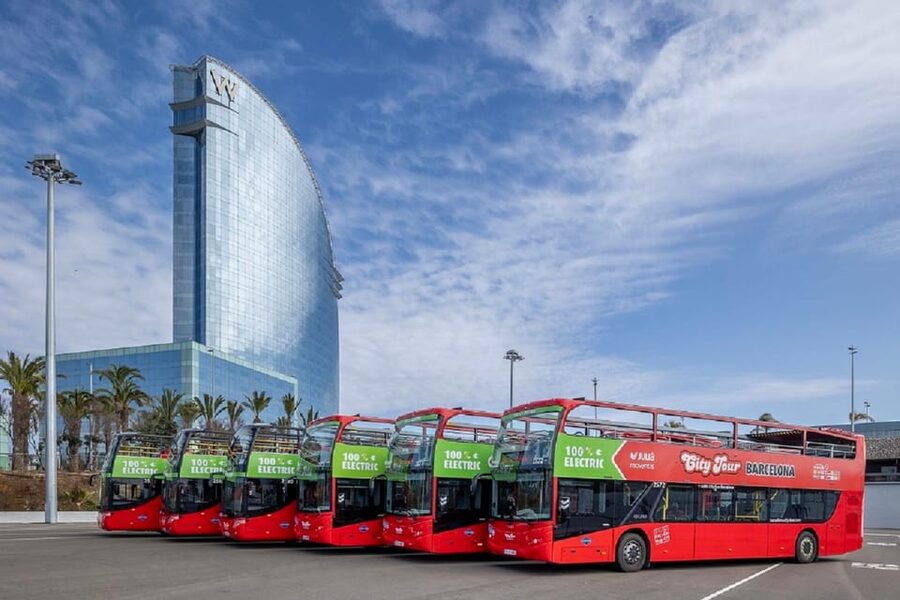
You’ll probably like this combo if:
- You want maximum sight coverage without committing to a rigid schedule.
- You’re okay using the bus as a flexible connector between neighborhoods.
- You value an indoor anchor like the aquarium for part of your itinerary.
You might skip it if:
- You hate the idea of spending time on a route bus and prefer walking only.
- You only want one or two stops total, because the hop-on hop-off value comes from using the flexibility.
- You want guided, timed entries for everything. This combo gives you access, not a set tour program for each stop.
Overall, it suits families, first-time visitors, and anyone who wants an easy way to connect Gaudí highlights, major city zones, and a big aquarium stop in one ticket.
Should You Book This Barcelona Hop-On Hop-Off and Aquarium Combo?

If your Barcelona plan includes both bus sightseeing and the aquarium, I think this is an easy yes. You get the best of both worlds: easy city movement on air-conditioned coaches, plus an aquarium that feels purpose-built around Mediterranean habitats, including the Ebro Delta, Medes Islands, and that acrylic tunnel experience.
If you’re on the fence, use this quick test: will you ride the bus more than once, not just once? If the answer is yes, the price makes sense. If the answer is no, you might be better off buying attractions separately and planning transit your own way.
Either way, bring comfortable shoes, and plan for a little patience at boarding points. Then enjoy the payoff: a big aquarium day plus a city view ride you can shape as you go.
FAQ
How long is the Hop-On Hop-Off bus ticket valid?
Your ticket is valid for 1 to 2 consecutive days, depending on the option you choose. It covers your selected number of days starting from your travel date.
Does the ticket include the Aquarium of Barcelona?
Yes. The ticket includes entry to the Aquarium of Barcelona. The aquarium ticket is valid for a single use.
How many bus routes are included, and can I use them both?
Both routes are included on a single ticket. You can hop on and off using either the West route (orange) or the East route (green).
Where is the main meeting point for the bus?
Plaça Catalunya is the main stop. You can start the tour at Plaça Catalunya or at any other stop along the Barcelona City Tour route.
How often do the buses run?
Bus frequency at stops varies by season, roughly between 5 and 30 minutes. Each route takes about 2 hours.
What languages is the audio guide available in?
The audio guide includes English, Catalan, Spanish, French, German, Russian, Portuguese, Chinese, Japanese, Dutch, Hebrew, Italian, Arabic, Swedish, Norwegian, and Turkish.
The latest to open for booking




Hop-On Hop-Off Bus Tickets, side by side.

City Sightseeing Barcelona Hop-On Hop-Off Bus Tour: 24 or 48-Hour
Read our review →
Barcelona City Tour Hop-On Hop-Off with Optional Boat
Read our review →
Shore Excursion: Barcelona City Tour Hop-On Hop-Off
Read our review →

Barcelona City Hop On Hop Off and FC Barcelona Immersive Tour
Read our review →Where else this one turns up