
Reviewed · WALKING TOURS
Barcelona in 2 Hours: Guided Walk Through History and Sights
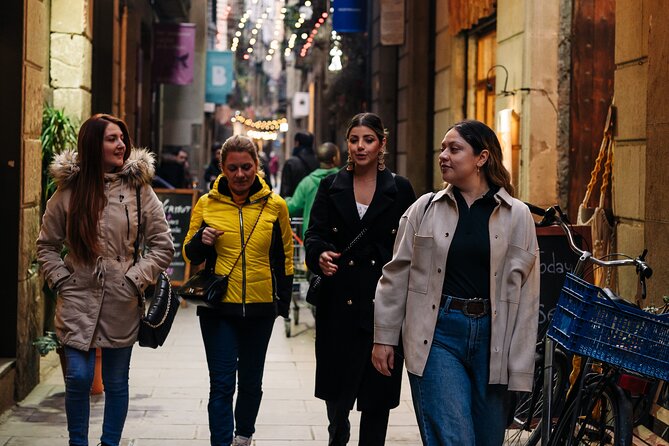
Barcelona tells stories in two hours. This walk turns Ciutat Vella into a living timeline, with Els 4 Gats and political street art that explain why Barcelona thinks the way it does. I also like the tight, story-first route through Gothic and Renaissance corners, because you are not just ticking off buildings. One thing to plan for: two major churches need separate entry tickets if you want to go inside.
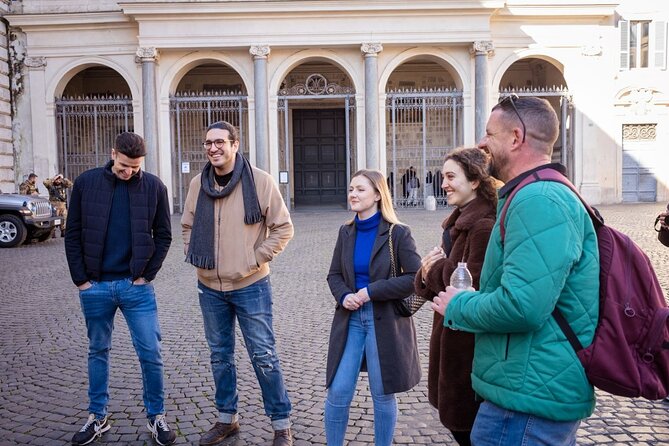
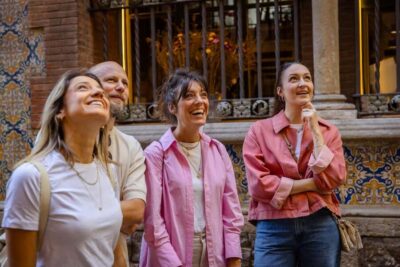
The format is simple. You go at a human pace with a small group (max 20), and you get an English guide who can answer questions on the spot. Names you may hear in the guide lineup include Darren, Petra, Jorge, Sonia/Sonja, Lydia, Sarah, Vanessa, Rolene, and Mariah, and they are consistently praised for clear explanations and good local direction.
Comfort matters. This is a walk with multiple short stops, so bring good walking shoes and some sun protection, especially if you hit it midday. Also, you will cover a lot, so if you want to linger for long interior visits at every stop, you may want a follow-up on your own afterward.
In This Review
- Key things that make this walk worth your time
- Why this 2-hour Barcelona walk beats the usual checklist
- Starting at Plaça del Vuit de Març and stepping into Els 4 Gats
- El Mon Neix En Cada Besada: a photo-friendly mosaic with a 1714 wound
- Catedral de Barcelona: Gothic power and Saint Eulalia’s martyr story
- Casa de l’Ardiaca and the Roman leftovers you can still spot
- Pont del Bisbe: legend, superstition, and a better way to interpret it
- Plaça Sant Felip Neri, MUHBA El Call, and Plaça de Sant Jaume: identity in three moods
- Plaça del Rei and Plaça de l’Àngel: monarchy’s dark shadow and a saint’s grain trade miracle
- Santa Maria del Mar in El Born: a Gothic finish with maritime DNA
- Price and what you actually get for $22.99
- How to time it, what to bring, and how to walk smarter
- Private upgrade: when paying more actually makes sense
- Should you book this Barcelona two-hour history walk?
- FAQ
- How long is the Barcelona walking tour?
- How much does the tour cost?
- What language is the tour offered in?
- Where does the tour start and end?
- Is a mobile ticket included?
- Are admission tickets included for all stops?
- What is the group size limit?
- What is the cancellation policy?
- Is the tour good for most travelers?
Key things that make this walk worth your time
- Els 4 Gats context you would miss alone: You learn who met there and why it mattered for the artists and thinkers Barcelona produced.
- La Diada history tied to street art: A famous mosaic becomes a lesson on the Catalan struggle after 1714.
- Gothic Quarter details at human speed: You get the meanings of places like Plaça Sant Felip Neri without needing a textbook.
- Jewish Quarter storytelling (El Call): Narrow streets and medieval layers come with clear explanations.
- Legends with a reality check: Pont del Bisbe myths are explained in a way that feels fun, not foolish.
- Most stops are free to view: Many key moments cost nothing to see, so your money goes to the guide and the route.
Why this 2-hour Barcelona walk beats the usual checklist
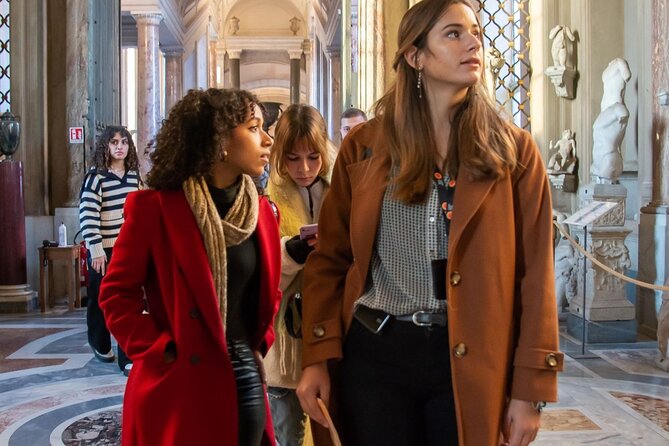
If you only have a short window in Barcelona, this kind of route is a smart first move. The goal is not to flood you with names. It is to give you the “why” behind what you are seeing, especially in Ciutat Vella, where layers of Roman, medieval, Gothic, and Catalan modern identity overlap in a few streets.
You also get a practical benefit: the stops are close enough that you can actually connect the dots. You see an Art Nouveau façade, then you turn and hit a political street art reference, then the architecture shifts into Gothic and medieval spaces. By the time you reach El Born, you have a mental map of how the city tells its story.
And because it is led in English with a group limited to 20, it tends to feel conversational. You can ask questions when something catches your eye, like why a square is named a certain way or what an old building used to do.
Starting at Plaça del Vuit de Març and stepping into Els 4 Gats
Your walk starts in Ciutat Vella at Plaça del Vuit de Març, and the first big personality of the neighborhood is Els 4 Gats. This is not just a charming café front. It is a historic meeting place that helped shape creative conversations in the city.
What I like here is the way the guide frames it as culture in motion. Els 4 Gats is tied to the world Barcelona became famous for, including the kind of artistic circles that later included Pablo Picasso and Antoni Gaudí. Even if you have seen photos of its quirky exterior, it is the “why this place mattered” explanation that makes it land.
A practical note: the stop is short, so use the moment to look closely at the building. The Art Nouveau style is part of the fun, and if you are the type who likes noticing details, this is a good spot to train your eye for Barcelona’s signature shapes and ironwork energy.
Short on time? This still fits
- Barcelona: 2-Hour City Sights Guided Segway Tour
★ 4.9 · 610 reviews - Barcelona: 2-Hour Sailboat Tour with Snacks and Drinks
★ 4.8 · 357 reviews - 2-Hour Sailing Tour in Barcelona with Open Bar & Snacks
★ 5.0 · 318 reviews
El Mon Neix En Cada Besada: a photo-friendly mosaic with a 1714 wound
Next comes El Mon Neix En Cada Besada, the photomosaic you have probably seen in pictures. What makes this stop better than a quick photo is the story behind it.
This piece connects to the Catalan defeat tied to September 11, 1714, an event that became the heartbeat of La Diada, Catalonia Day. So instead of treating the mosaic as just street art, you understand it as a public memory marker. The guide helps you read the city like it is writing in two languages at once: beauty on the surface, history underneath.
Because this is a quick stop, the best move is simple. Take the photo if you want it, but also listen to what the guide says about why this specific commemoration matters. It gives you a second lens for the rest of the walk.
Catedral de Barcelona: Gothic power and Saint Eulalia’s martyr story
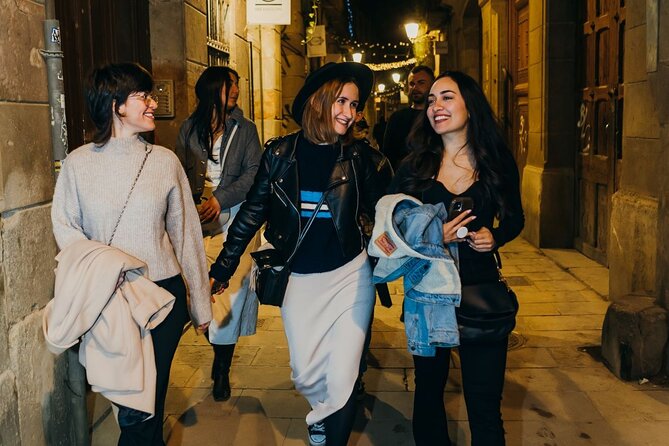
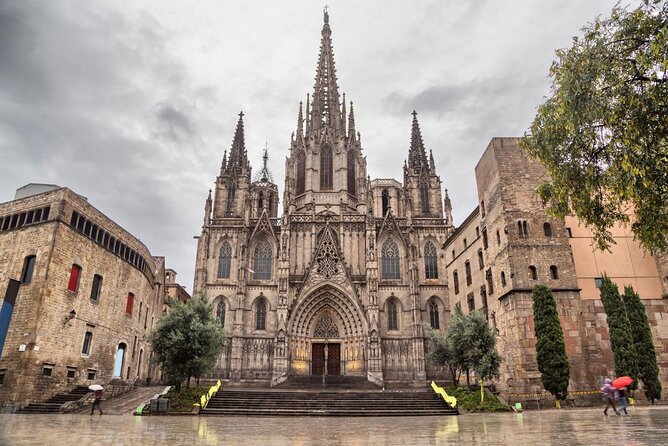
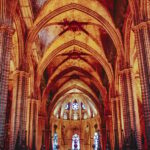
Then you hit the Catedral de Barcelona, a Gothic-style cathedral built over centuries. It is in the center of the city, which means you feel the cathedral’s role as a civic anchor, not just a religious one.
The highlight here is Eulalia, the patron saint of Barcelona. You get the story of her life and death, including the gruesome end that shaped the cathedral’s symbolism. This is one of those “you can look but you cannot fully understand without context” stops, which is exactly why a guided walk like this works.
Two practical considerations:
- Entry to the cathedral is not included, so if you plan to go inside, budget separately.
- Even if you stay outside, you will still get value. The guide’s explanation helps you see the cathedral as part of the city’s identity, not just a pretty façade.
Casa de l’Ardiaca and the Roman leftovers you can still spot
Casa de l’Ardiaca is a tiny architectural treat in the Gothic Quarter. The building’s charm is how it blends styles, with elements of Gothic and Renaissance in one compact space.
But the really cool part is the time travel the guide points out. You see remnants tied to Roman Barcino, including pieces of an old wall and arcades connected to the aqueduct that supplied water to the ancient city. You get a sense that Barcelona did not just reinvent itself. It reused, built over, and kept pieces of the earlier world.
This stop is short and free to view, so it is easy to miss if you are walking fast on your own. With a guide, you know exactly what to look for. Think of it as learning how to read stone.
Pont del Bisbe: legend, superstition, and a better way to interpret it
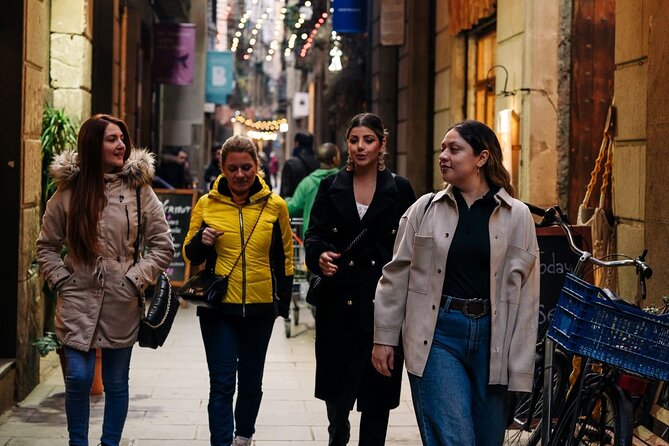
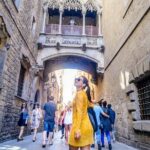
From there you move to Pont del Bisbe, Bishop’s Bridge. It is often described as one of the most photographed spots in Barcelona, and for good reason. The framing is photogenic, and the bridge has a distinctive look in the surrounding streets.
The legend is the fun part. There is a superstition connected to walking underneath it, and the guide presents it in a way that lets you enjoy the story without taking it too literally. If you like folklore, you will probably have a moment of “okay, I get why people repeat this.”
If you are standing there and debating whether to go under, do what you prefer. The value of this stop is the explanation that connects the myth to how people have historically talked about fear, fate, and city power.
Other things to see around Barcelona
- Barcelona: Tapas Walking Tour with Food, Wine, and History★ 4.8 · 4,261 reviews
- Highlights & Hidden Spots of Barcelona Bike Tour w/ Local Guide★ 4.5 · 3,009 reviews
- Barcelona Tapas Walking Tour: Food, Wine & History★ 4.5 · 1,928 reviews
- Barcelona 3-hour Bike or E-Bike Tour: Highlights and Hidden Gems★ 5.0 · 1,429 reviews
- Barcelona: 2.5-Hour Bike or E-Bike Historical Tour★ 4.5 · 1,262 reviews
- Barcelona Old Town Tapas Tour: Vermouth, Bites & Hidden Gems★ 5.0 · 627 reviews
Plaça Sant Felip Neri, MUHBA El Call, and Plaça de Sant Jaume: identity in three moods
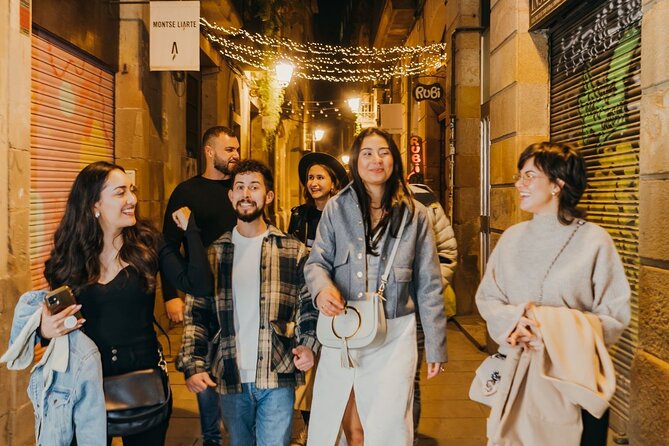
This stretch is where Barcelona’s identity becomes loud, quiet, and then loud again.
First: Plaça Sant Felip Neri. This square holds a sombre story related to the desire for Catalan independence, and you can still see scars of the tragic past. Even if you do not know the details before you arrive, the guide gives you a thread to follow so the square does not feel like “just another pretty place.”
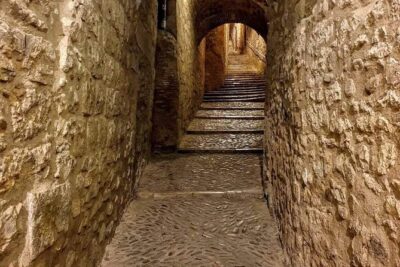
Then: MUHBA – El Call. El Call is the medieval district tied to Barcelona’s former Jewish population. The streets are narrow and characterful, and the medieval architecture makes the history feel close. The guide’s job here is clarity, helping you understand what you are looking at without needing to memorize a timeline first.
Finally: Plaça de Sant Jaume. This is one of the city’s main squares, and it houses the seat of the Catalan government and City Hall. So while it is visually a square you can stroll through, it is also a political stage. The guide explains how the space connects to celebration and protest, and how an important figure is celebrated on a beloved holiday.
What ties these three stops together is theme. You go from independence history, to community history, to the political heartbeat of modern Catalonia. It is not random. It is how Barcelona explains itself in public space.
Plaça del Rei and Plaça de l’Àngel: monarchy’s dark shadow and a saint’s grain trade miracle
Next up is Plaça del Rei, home to the Royal Palace. This place brings you into one of the city’s darker chapters, connected to the Spanish Inquisition. The guide helps you understand how power and fear shaped the city’s story, and why this square matters even if you only spend a minute looking around.
Then you shift to Plaça de l’Àngel, once called Wheat Square because grain trading happened here. The name change comes from a miracle story: the square was renamed when a heavenly apparition appeared during the procession of Saint Eulalia’s body.
This is a small but satisfying stop because it shows Barcelona’s habit of turning everyday life into sacred meaning. Grain trading might sound boring on paper. In person, with context, it becomes part of a larger religious and civic narrative.
Santa Maria del Mar in El Born: a Gothic finish with maritime DNA
Your walk ends at Basilica de Santa Maria del Mar in El Born, and it is a strong note to close on. This Gothic basilica is a staple of the neighborhood and ties into Barcelona’s maritime history.
Even if you do not go inside, you can feel the scale and the sense that this is a working part of city life, not just a photo backdrop. The guide ties the basilica to the maritime identity that shaped Barcelona over time, which helps you connect the dots between architecture and daily survival.
Like the cathedral earlier, entry to this basilica is not included. So if you want to step inside, plan for extra tickets.
Price and what you actually get for $22.99
At $22.99 per person for about two hours, the value comes from three things.
First is the route density. You get a structured arc across Ciutat Vella and El Born with meaningful stops, not just a random wandering walk. In a city like Barcelona, where streets can be gorgeous but confusing, that structure saves your time and helps you see the right places for your first day.
Second is that many stops are free to view. Els 4 Gats, El Mon Neix En Cada Besada, Casa de l’Ardiaca, Pont del Bisbe, multiple squares, and MUHBA El Call are all listed as free entries for the tour experience. Your money is mostly paying for the storytelling and the guided reading of the city.
Third is the guided interaction. The tour is designed to explain why these places matter, including political and cultural context around Catalan identity. That is what makes the time feel worth it, even when you are only standing at a place for 10 minutes.
Possible cost surprise: cathedral and Santa Maria del Mar entry are not included. If you go inside both, you will pay extra. If you stay focused on the guided explanations outside, you can keep the total spend closer to the tour price.
How to time it, what to bring, and how to walk smarter
Because the schedule moves quickly through 10-minute stops, your success depends on how you show up.
- Start with comfortable shoes. You will be on your feet for the full two hours, and a few cobblestoned segments can be rough.
- Bring sun protection. Even in two hours, Barcelona sun can be intense.
- Keep water handy. You do not need a long picnic, just a quick sip when you pause.
- Bring curiosity, not a checklist. The tour works best when you listen for the connections between stops, like history leading to street art, or squares leading to identity.
Also note the language and group size. It is offered in English, and the group max is 20. That balance tends to make the pacing feel more personal than big bus tours.
Private upgrade: when paying more actually makes sense
The tour also offers a private upgrade, which can be a good idea if you want flexibility. Private tours often work well if you:
- have questions you want to linger on
- want the guide to adjust pace for seniors or slower walkers
- prefer a quieter experience with more back-and-forth
Even without the upgrade, the walk is built to be clear and manageable for most people who can handle steady walking.
Should you book this Barcelona two-hour history walk?
Book it if you want a sharp orientation to Barcelona’s core neighborhoods. This is especially good for a first day in town, when you need context fast and you want your photos to mean something.
It is also a great choice if you enjoy stories that connect art, religion, politics, and architecture. The mix here is what makes the route feel like Barcelona, not a generic highlights tour.
Skip or plan alternatives if you hate walking or you expect long indoor time at every stop. Because the churches that require separate admission are included as brief moments, you might want to come back later for longer visits.
If you are on the fence, here is the deciding question I use: do you want help reading the city’s clues in a short window? If yes, this is a strong match.
FAQ
How long is the Barcelona walking tour?
It lasts about 2 hours.
How much does the tour cost?
The price is $22.99 per person.
What language is the tour offered in?
It is offered in English.
Where does the tour start and end?
The tour starts at Plaça del Vuit de Març, Ciutat Vella, 08002 Barcelona, Spain, and ends at Basílica de Santa Maria del Mar Plaça de Santa Maria, 1, Ciutat Vella, 08003 Barcelona, Spain.
Is a mobile ticket included?
Yes, the tour includes a mobile ticket.
Are admission tickets included for all stops?
Not for every stop. Els 4 Gats, El Mon Neix En Cada Besada, Casa de l’Ardiaca, Pont del Bisbe, Plaça Sant Felip Neri, MUHBA – El Call, Plaça de Sant Jaume, Plaça Del Rei, and Plaça de l’Àngel are listed as free for this experience, while Catedral de Barcelona and Basilica de Santa Maria del Mar are not included.
What is the group size limit?
The tour has a maximum of 20 travelers.
What is the cancellation policy?
You can cancel for a full refund if you cancel up to 24 hours in advance of the experience start time. If you cancel less than 24 hours before, the amount paid is not refunded.
Is the tour good for most travelers?
Most travelers can participate, and it is near public transportation.
More Walking Tours in Barcelona

The latest to open for booking


Walking Tours, side by side.
Barcelona Tapas and Wine Experience Small-Group Walking Tour
Read our review →
Tapas Walking Tour with Food, Wine, and History
Read our review →

Barcelona Tapas Walking Tour: Food, Wine & History
Read our review →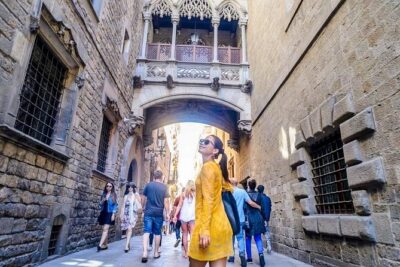
Barcelona Helicopter, Sailboat & Old Town Private Walking Tour
Read our review →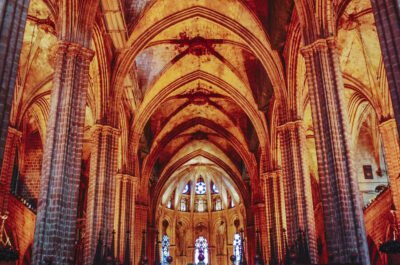
Guided Food Walking Tour with Tapas and Wine
Read our review →Where else this one turns up