
Reviewed · AUDIO TOURS
Barcelona: Mies van der Rohe Pavilion Ticket and Audio Guide
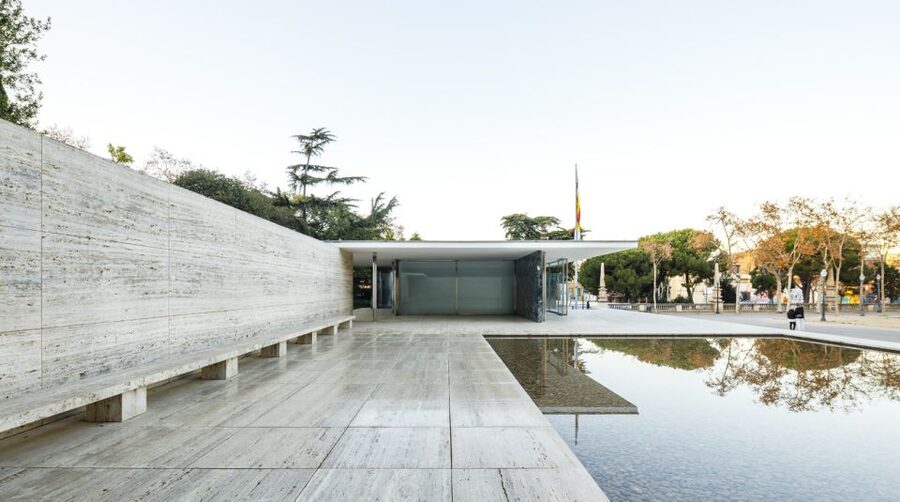
A building this pared down can still stop you cold. The Mies van der Rohe Pavilion is one of those Barcelona sights where architecture feels personal, calm, and exacting, not loud or crowded. I like how the space strips everything to essentials, so you notice edges, reflections, and how interiors breathe into the exterior.
I also like having a self-guided audio guide in Spanish, Catalan, English, French, and German. It helps you understand what you are looking at while you walk, instead of just snapping photos and guessing. One consideration: the pavilion is intentionally minimal, so if you expect a big, full-day museum-style route, you may find it short and slightly underwhelming for the ticket price.
In This Review
- Key points to know before you go
- The Pavilion’s real superpower: quiet that makes you pay attention
- The ticket and audio guide: what you truly get for $10
- The story behind the pavilion: 1929 to 1986 in your own footsteps
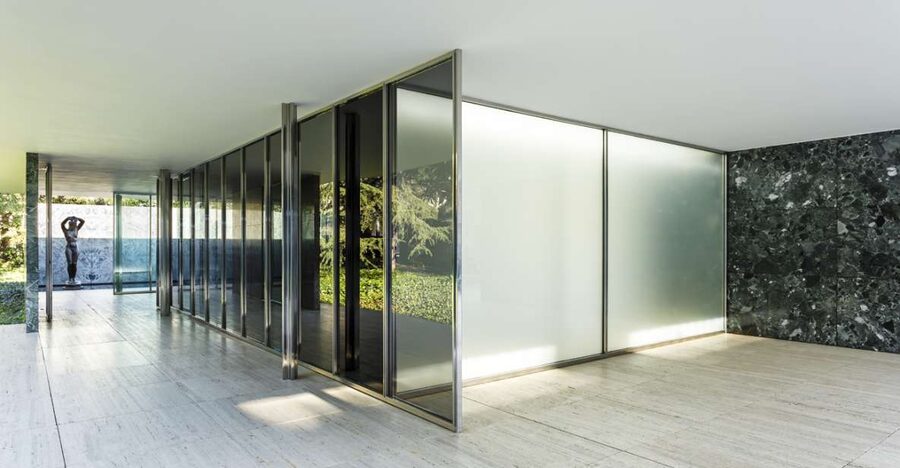
- What to expect in the space: interiors, exteriors, and perfect framing
- Materials with a long reach: where the palette comes from
- The 1986 reconstruction you should actually notice
- How long to plan: short visit, big payback if you go prepared
- Rules that matter (and why they’re there)
- Who this is for: architecture lovers, budget thinkers, and slow walkers
- The one possible downside: minimal can mean short
- Should you book the Mies van der Rohe Pavilion ticket?
- FAQ
- Where is the Mies van der Rohe Pavilion?
- How much does the ticket cost?
- How long should I plan to spend?
- What is included with the ticket?
- What languages are available for the audio guide?
- Is skip the ticket line included?
- Is the pavilion wheelchair accessible?
- Are food and drinks allowed inside?
- Are pets or tripods allowed?
- Can I cancel if my plans change?
Key points to know before you go
- Modernist design pared down to essentials, so details matter more than crowds or exhibits
- Audio guide in 5 languages helps you connect the look with the story
- Reconstructed on its original site, reopened in 1986, so you can compare the idea to what you see today
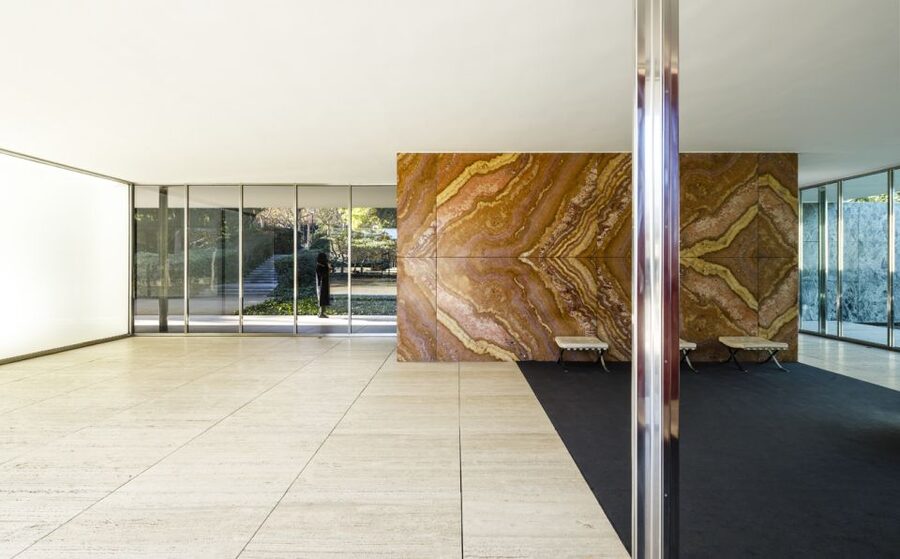
- Materials and color contrasts are part of the message, with stones and elements sourced from far beyond Barcelona
- Sometimes the pavilion hosts artistic interventions, which can change what the space feels like in the moment
The Pavilion’s real superpower: quiet that makes you pay attention
I love when a famous building feels usable, not just famous. The Mies van der Rohe Pavilion does that. It is small by design, but it never feels cramped. Instead, it feels deliberate, like the architect cleared your mental noise so you can focus on proportion, texture, and light.
If you like architecture that is about precision rather than spectacle, this is your kind of stop. You will notice how the layout nudges you from one view to the next. Long sightlines keep drawing your eye across the pavilion, and the boundaries between inside and outside blur in a way that feels almost logical, not gimmicky.
And yes, it is calm. That matters in Barcelona. The city can sprint. This place slows you down without asking.
The ticket and audio guide: what you truly get for $10
This experience includes an entrance ticket plus an audio guide, and it is valid for one day. That structure makes sense for how the pavilion works. There are not dozens of rooms to cover. Your value comes from watching your own pace and letting the audio explain the meaning behind the visual simplicity.
The audio guide is available in five languages: Spanish, Catalan, English, French, and German. That is genuinely useful if you want something more than a few signs. You can start in your language and then switch if you are traveling with people who want something different. Either way, you are not left interpreting modernist choices alone.
Also, the ticket includes skip the ticket line. For a short site like this, saving even a little time helps. You want time to stand still, not time to queue.
Price-wise, $10 plus an audio guide is a reasonable deal for a landmark tied to modern architecture. If you only want a quick exterior glance, you can probably do that for free with a walk-by. But if you want the pavilion as a guided, meaningful experience, the ticket feels fair.
Other things to see around Barcelona
- Barcelona: Sagrada Familia Entry Ticket with Audio Guide
★ 4.6 · 105,312 reviews - Casa Batllo Admission Ticket with Intelligent Audio Guide
★ 4.5 · 3,168 reviews - Barcelona: Montjuïc Cable Car Ticket with Audio Guide
★ 3.9 · 270 reviews
The story behind the pavilion: 1929 to 1986 in your own footsteps
Here is the context you will want in your head before you start walking, because it changes how you read the space.
The pavilion was designed by Mies van der Rohe and Lily Reich. It served as the German national pavilion for the 1929 Barcelona International Exhibition. After the exhibition ended, the pavilion was dismantled. That is one of those facts that makes the site feel almost miraculous today, because it was not just preserved like a typical monument.
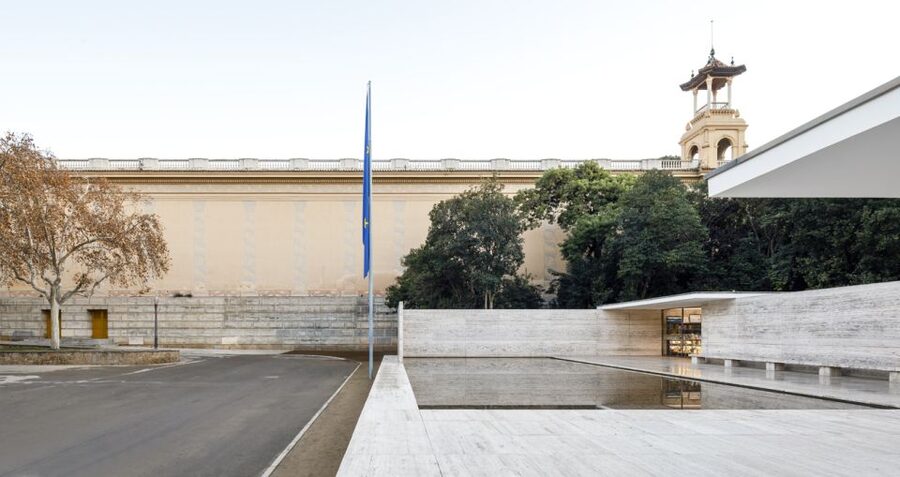
Then comes the key turnaround: because of its significance, the pavilion was later reconstructed and reopened on its original site in 1986. When you visit now, you are not only seeing an iconic design. You are seeing a reconstruction of an idea that mattered enough to be brought back.
As you move around, the audio guide helps you connect this story to what you see. You can treat the pavilion like a lesson in how modern architecture thinks: clean forms, intentional materials, and a layout that performs as much as it looks.
What to expect in the space: interiors, exteriors, and perfect framing
This is not a building that shouts at you. It works by relationships.
You will likely spend your time doing three simple things:
1) watching how the open plan guides you
2) checking how surfaces meet, reflect, and separate
3) noticing how the pavilion holds views like a camera frame
The highlights are exactly what they sound like on paper: pared down to its essence, linear interplay between interior and exterior, and precise contrasts in the palette of materials. In practice, that means you keep turning your body slightly to find the next best angle.
One of the most satisfying parts is how the pavilion feels “complete” even though it is minimal. You do not need clutter or decoration to understand what the designer wanted. The space does the work.
During some visits, the area can also be used by professionals for photography and modeling, which can change the vibe without changing the architecture. If you are taking photos yourself, that can even be helpful. You get a sense of how the pavilion reads on camera, because the space is built for strong lines and clean backgrounds.
Materials with a long reach: where the palette comes from
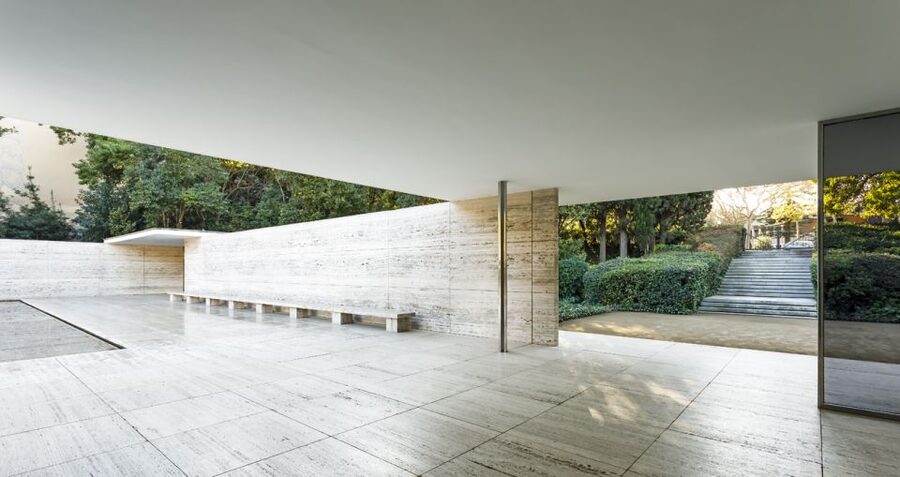
Mies van der Rohe’s modernism is not just about what you see, it is about what you chose and where it comes from.
The pavilion is described as using a carefully chosen palette of materials, brought from the Alps, Tivoli, Atlas, and Tinos. That detail matters because it makes the pavilion feel connected to a wider world, not a local one. Barcelona is Mediterranean, but this pavilion carries a broader, almost continental feel through stone choices and contrasts.
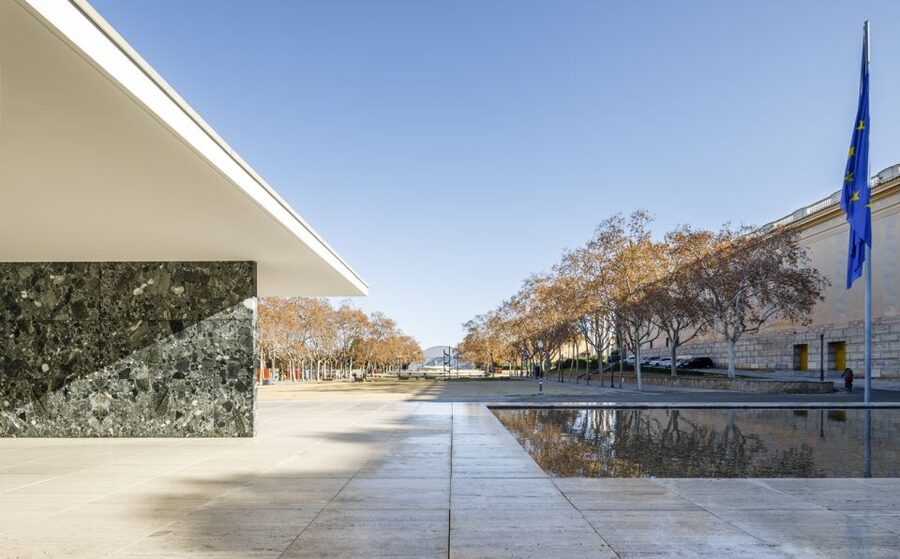
On site, you do not need to be able to name every material to appreciate the effect. You just need to look for contrast: lighter versus darker surfaces, smooth versus textured elements, and the way those materials catch or reject light. These contrasts create a visual rhythm that supports the pavilion’s calm mood.
If you tend to skim signage and miss the point, try this instead: pick one material and follow it with your eyes for a minute. You’ll start to see why the pavilion looks “balanced” rather than stark. The balance comes from deliberate choices.
The 1986 reconstruction you should actually notice
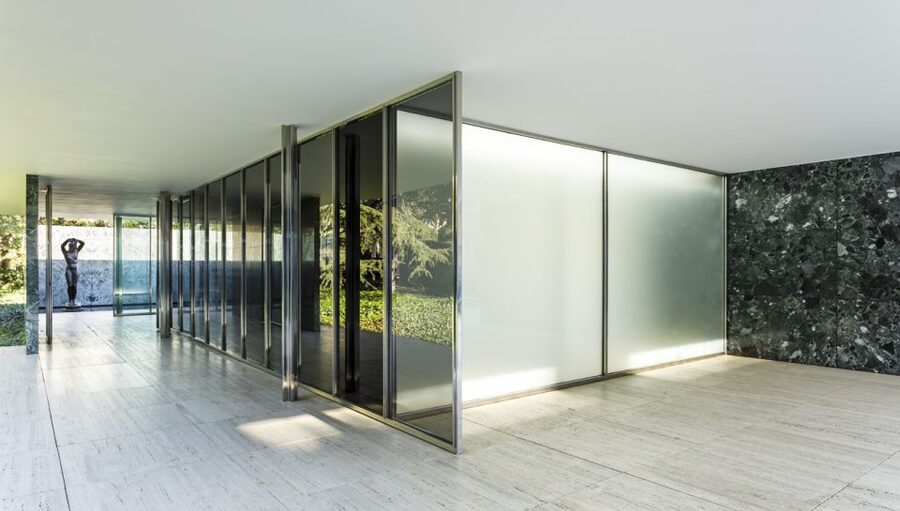
Reconstruction can be a tricky word. Sometimes it means a building that lost its soul. Here, it is part of the site’s meaning.
Because the pavilion was dismantled after 1929, what you see today depends on the reconstruction in the 1980s and its reopening in 1986. That puts a question in your head as you visit: how much of the original intent survived the rebuilding?
This is where your audio guide earns its keep. The guide’s history context helps you interpret the pavilion not just as an object, but as a cultural decision. People decided the concept was worth reviving. That is why the pavilion today works like a benchmark for architects and artists who came after.
You can also use the reconstruction idea to slow down your expectations. Look at the structure as a model of modern architecture, not as a faded original. Then ask yourself a simple question: does it still feel like a modernist masterpiece? In my view, that is the point.
One ticket rarely covers it all. Here's what else is nearby.
- Barcelona: Park Güell Admission Ticket★ 4.4 · 76,534 reviews
- Barcelona: Casa Batlló Entry with Self-Audioguide Tour★ 4.7 · 25,359 reviews
- Barcelona: Montjuïc Cable Car Roundtrip Ticket★ 4.5 · 22,368 reviews
- Barcelona: Hola Barcelona Public Transport Travel Card★ 4.5 · 20,985 reviews
- Barcelona: 24 or 48-Hour Hop-On Hop-Off Bus Tour★ 4.4 · 20,872 reviews
- Barcelona: Park Guell Guided Tour with Skip The Line Entry★ 4.7 · 17,563 reviews
How long to plan: short visit, big payback if you go prepared
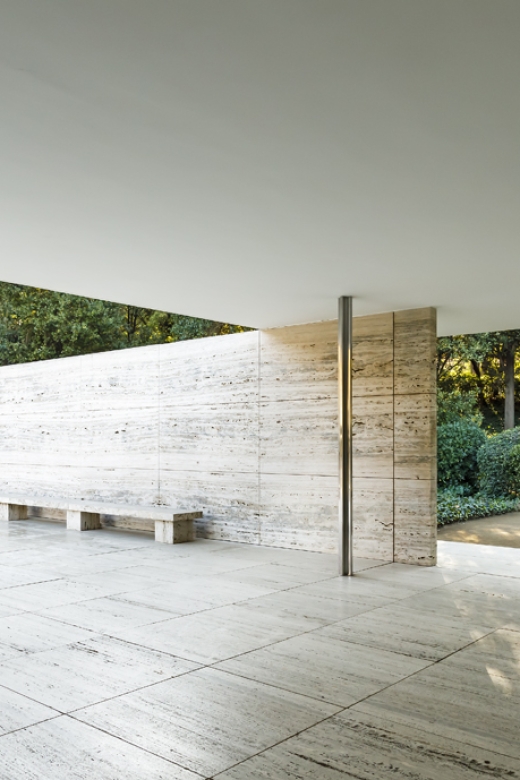
The whole experience is designed to fit into a one-day visit. The pavilion itself is not massive, so you can do it without turning your day into a marathon.
Plan for a relaxed pace. The best moments often happen when you pause. Stand where the space gives you a strong line of sight. Then take one step, not ten. With minimalist buildings, tiny movement changes what you see, because the layout is built around controlled perspectives.
One tip that comes up for sites like this: arrive on time. If you run late, you rush, and minimalist architecture does not reward rushing. It rewards attention.
Also, keep in mind that the pavilion can host artistic interventions sometimes. That can alter the appearance. If you see an intervention, do not treat it as a disruption. Treat it as proof the space stays in cultural use, not just in theory.
Rules that matter (and why they’re there)
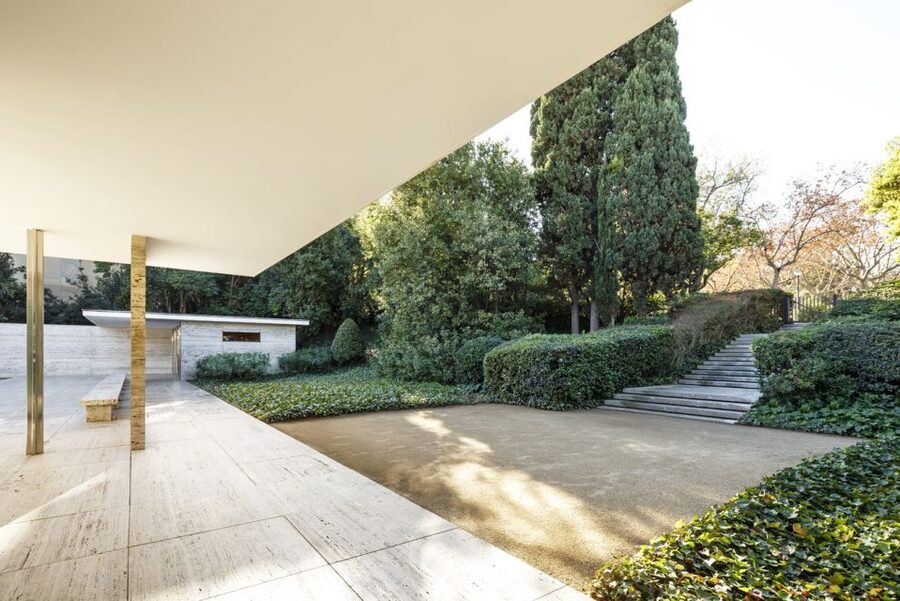
This is a calm site, so the rules keep it that way. You cannot smoke, food and drinks are not allowed, and pets are not allowed (assistance dogs are allowed). Tripods are also not allowed.
None of this is surprising, but it does affect your visit. If you carry snacks, plan to eat before or after. If you are bringing camera gear, plan around the tripod rule.
The “why” is simple: the pavilion is designed for controlled viewing and quiet. The rules protect that atmosphere.
Who this is for: architecture lovers, budget thinkers, and slow walkers
This experience works best for you if you:
- enjoy modern architecture and want to understand it with an audio guide
- like calm stops that are short but meaningful
- want a benchmark site that shaped architectural thinking for generations
- travel with different language preferences and want everyone on the same footing
It also suits people who love photography and clean compositions, since the pavilion’s design naturally supports strong images. If you are a casual tourist who wants only iconic checkboxes, you might still love it, but you should know it will feel less like a full program and more like a focused walk-through.
If you struggle with minimalist spaces, or you need lots of interactive features, you may find it too quiet. In that case, pair it with another nearby Barcelona highlight so your day has both variety and rhythm.
The one possible downside: minimal can mean short
This is the key tradeoff. The pavilion is spectacular, but it is not built to occupy you for hours.
A few visitors are turned off by the idea of paying for a site that feels small, and if you hold that mindset, you may hesitate at $10. That does not mean it is overpriced. It means you should calibrate your expectations. You are paying for access plus an audio guide that gives meaning to the minimalist design.
Also, if you rely on the audio guide to orient yourself, make sure you start with it ready and set to your language. If you are missing audio on a visit like this, the experience can feel confusing rather than inspiring, because there is very little visual “explain it to me” content. The audio is the bridge.
Should you book the Mies van der Rohe Pavilion ticket?
Book it if you want a high-impact architecture stop without the pressure of a long museum day. For $10, you get entrance plus a 5-language audio guide, and the payoff is understanding. The pavilion is not just a pretty shape. It is tied to a real story, designed by Mies van der Rohe and Lily Reich, presented in 1929, dismantled, then reconstructed and reopened in 1986.
Skip booking if you are only after casual photo ops from the sidewalk and you do not want to pay for an audio-supported, short walk. If you prefer big exhibitions, this site will probably feel too small.
FAQ
Where is the Mies van der Rohe Pavilion?
It is located in Barcelona, in the region of Catalonia, Spain.
How much does the ticket cost?
The price is listed as $10 per person.
How long should I plan to spend?
The duration is 1 day.
What is included with the ticket?
You get an entrance ticket to the Mies van der Rohe Pavilion and an audio guide.
What languages are available for the audio guide?
The audio guide is available in Spanish, Catalan, English, French, and German.
Is skip the ticket line included?
Yes, the ticket includes skip the ticket line.
Is the pavilion wheelchair accessible?
Yes, wheelchair accessibility is included.
Are food and drinks allowed inside?
No, food and drinks are not allowed.
Are pets or tripods allowed?
Pets are not allowed, but assistance dogs are allowed. Tripods are also not allowed.
Can I cancel if my plans change?
Free cancellation is available, and you can cancel up to 24 hours in advance for a full refund.
The latest to open for booking



Audio Tours, side by side.
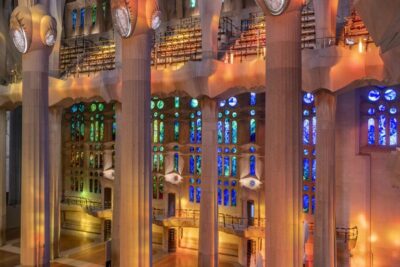
Sagrada Familia Entry Ticket with Audio Guide
Read our review →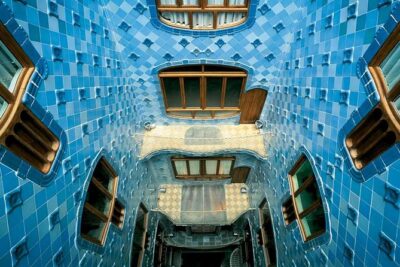
Casa Batllo Admission Ticket with Intelligent Audio Guide
Read our review →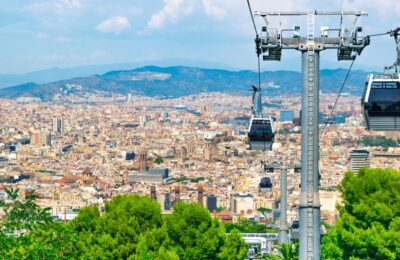
Montjuïc Cable Car Entry Voucher with Audio Tour on Your Phone
Read our review →
Gaudi and La Sagrada Familia Exterior Self-Guided Audio Tour
Read our review →
Sagrada Familia Skip The Queue With Audio Guide Tour
Read our review →
Palau Guell by Gaudi with Audio Guide in Barcelona
Read our review →
Reserved Entrance to Casa Mila (La Pedrera) with Audio
Read our review →Where else this one turns up