
Reviewed · WALKING TOURS
Barcelona: Migrant History and Interculturality Walking Tour
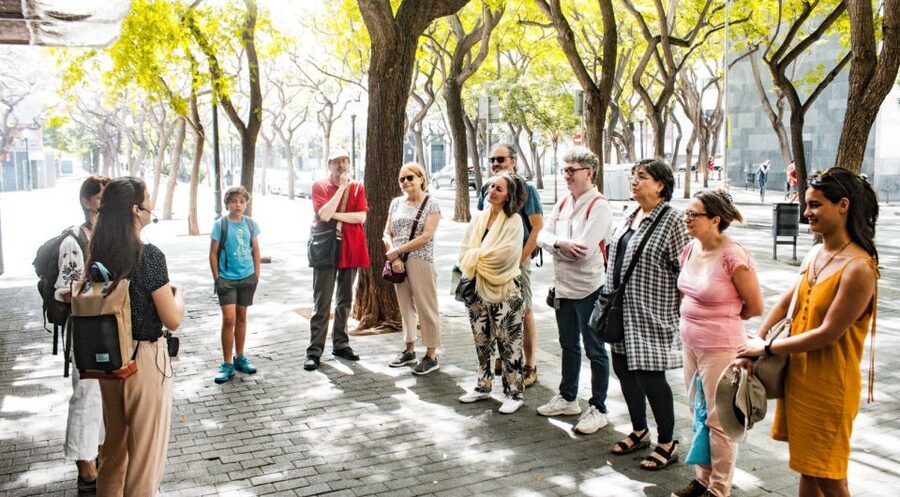
A street tour with a conscience. This Barcelona migrant history experience uses a walking format to connect you to personal migration stories and the social change happening right now in El Raval. I love how it treats the barrio as a living classroom, and I also like the focus on resilience and overcoming, not just facts on a board.
One thing to consider: the themes are serious, with discussions of racism, colonialism, and inequality. If you want a light, purely sightseeing tour, this may feel more reflective than fun.
In This Review
- Key things to know before you go
- Why this Barcelona migrant history walk feels different
- Meeting at Arts Santa Mònica Museum, then straight into El Raval
- Inside El Raval: organization, activism, and real community spaces
- Ágora JA Benítez: a conversation you can feel
- Top Manta: why it lands as a highlight
- If your guide is Karina, expect an intimate tone
- How personal migration stories connect to bigger questions
- Price and logistics: $17 for 2 hours, what you really get
- Should you book the Migrant History and Interculturality tour?
- FAQ
- How long is the Barcelona Migrant History and Interculturality walking tour?
- How much does the tour cost?
- Where does the tour start?
- Where does the tour end?
- What is included in the price?
- What languages are the tours offered in?
- Is hotel pickup included?
- Is the tour wheelchair accessible?
- Can I cancel for a refund?
- Is there a reserve now and pay later option?
Key things to know before you go
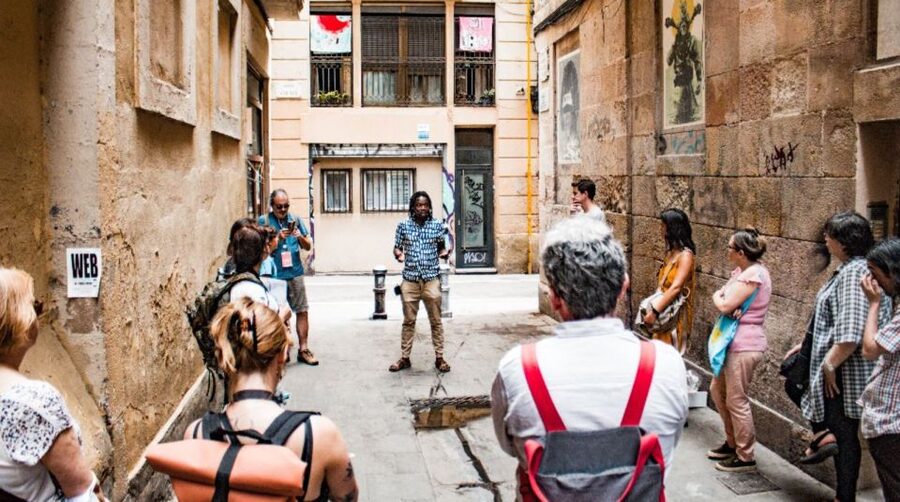
- El Raval is the main stage, with a focus on community organization and activist energy
- Personal stories drive the discussion, including resilience and overcoming
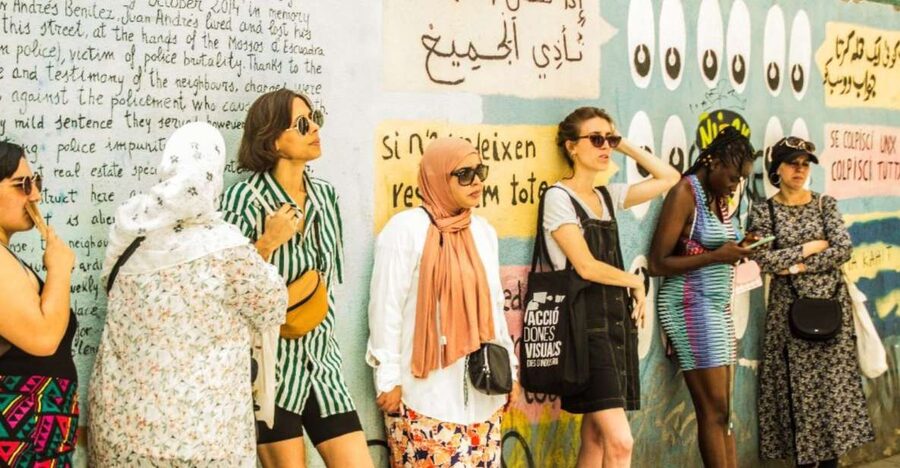
- Anti-racist struggle is part of the route, not an afterthought
- Stops connect people and places, including a conversation at Ágora JA Benítez
- Top Manta is highlighted as a strong moment, so expect an on-the-ground perspective
- Guides explain through intercultural learning, with an international and local vision
Why this Barcelona migrant history walk feels different
Most walking tours in Barcelona aim for beauty, big monuments, or a clean timeline of art and kings. This one goes for something harder to package: how migration shaped the city, and how communities respond when inequality and discrimination show up.
You will not just hear about migration as a concept. You will hear it as lived experience, tied to identity, belonging, and daily struggle. The tour’s center of gravity is interculturality, meaning the goal is not only to respect difference, but to build practical connection between people. That matters in a neighborhood like El Raval, which often gets reduced to stereotypes. Here, it becomes a place where organization, resistance, and solidarity are visible.
I especially like that the tour asks you to think, not memorize. When you hear reflections on the validity of racism, colonialism, and inequality, it lands as real questions. You leave with better tools for reading what you see around Barcelona, not just a story you heard once.
Meeting at Arts Santa Mònica Museum, then straight into El Raval
The walk starts at Arts Santa Mònica Museum, at Rambla de Santa Mònica, 8. It is a good place to anchor the experience because you are already in the central pulse of the city, with the Rambla nearby and easy access on foot. From there, you move toward El Raval, the neighborhood that the tour uses to challenge the popular, overly simple narrative.
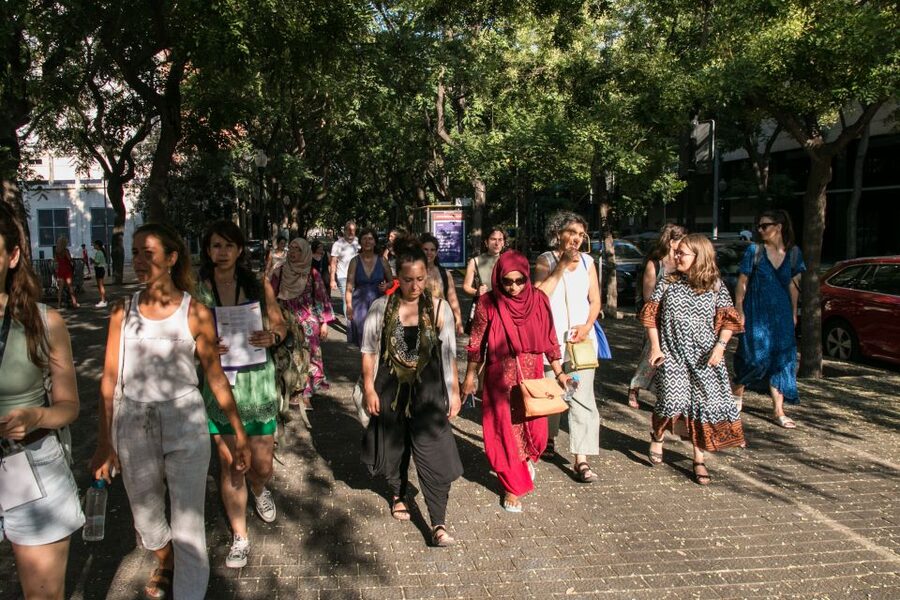
The full experience runs about 2 hours, and it is designed as a single guided walk rather than a stop-and-go museum hop. That format helps you learn the neighborhood through movement, changing street views, and conversations at specific points where social life happens.
One practical note: because the route focuses on people, community spaces, and dialogue, it is not the kind of tour where you can fully disengage for long stretches and still get the point. Bring curiosity, and be ready to listen closely.
Other things to see around Barcelona
- Barcelona: Tapas Walking Tour with Food, Wine, and History
★ 4.8 · 4,261 reviews - Highlights & Hidden Spots of Barcelona Bike Tour w/ Local Guide
★ 4.5 · 3,009 reviews - Barcelona Tapas Walking Tour: Food, Wine & History
★ 4.5 · 1,928 reviews
Inside El Raval: organization, activism, and real community spaces
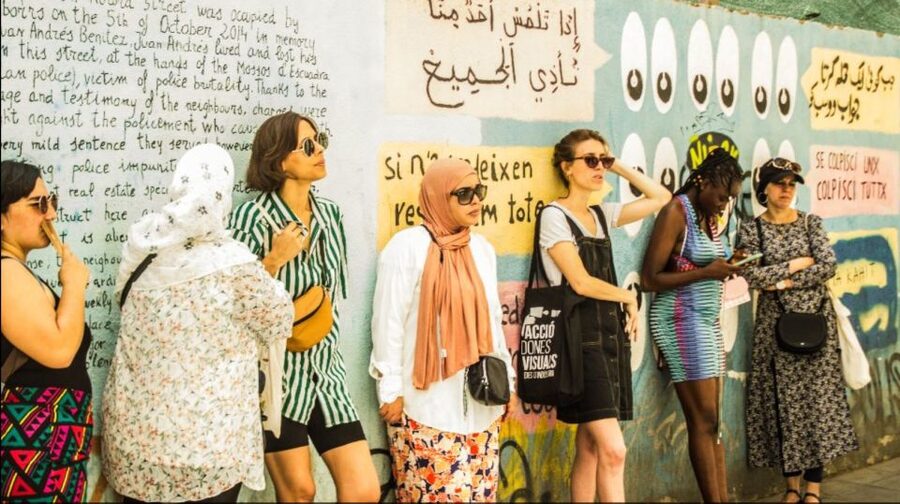
El Raval is where this tour earns its seriousness. The route centers on a neighborhood that is frequently dismissed as a place of crime and inequality. The tour flips that script by showing the neighborhood as a site of organization and anti-racist struggle.
This is also where you start seeing how the tour’s mission turns into action. The project behind the experience is promoted by Nexes Interculturals SCCL. Their approach is about intercultural learning and active participation, with values that include democracy, human rights, international cooperation, and fighting social exclusion. On the street, those words do not stay theoretical. They show up as where the guide takes you, what they ask you to notice, and what stories they connect to each area.
Ágora JA Benítez: a conversation you can feel
One of the stronger moments on the route is a stop connected to Ágora JA Benítez. Even without getting lost in details you can not verify, the key takeaway for you is this: the tour uses specific community spaces where people talk, organize, and make change. That is the difference between hearing about activism in the abstract and seeing it tied to a place where it is practiced.
If you like tours that let you meet the city through its local networks, this kind of stop is a big deal. It also helps the discussion move beyond generalities about migration. You get a sense of how support systems and community action work in daily life.
Top Manta: why it lands as a highlight
Another stop described as a high point is Top Manta. The value here is not just the location. It is the meaning of the stop inside the route’s theme: migration, vulnerability, economic pressure, and the social debates Barcelona has around those realities.
This is the kind of stop that makes you look at what you normally walk past with fresh eyes. You start asking better questions, like who benefits from inequality, who bears the cost, and what the city does or does not do to protect people.
If your guide is Karina, expect an intimate tone
One review noted that a guide named Karina led the tour in an intimate, delicate way, with a quiet walk that pairs reflection with shared personal experience. That is a big clue about the tour’s style. It is not a megaphone. It is more like a guided conversation with structure.
So if you are the type of traveler who enjoys hearing personal histories and connecting them to neighborhood change, the odds are good you will find the tone thoughtful and human.
One ticket rarely covers it all. Here's what else is nearby.
- Barcelona: Sagrada Familia Entry Ticket with Audio Guide★ 4.6 · 105,312 reviews
- Barcelona: Park Güell Admission Ticket★ 4.4 · 76,534 reviews
- Barcelona: Casa Batlló Entry with Self-Audioguide Tour★ 4.7 · 25,359 reviews
- Barcelona: Montjuïc Cable Car Roundtrip Ticket★ 4.5 · 22,368 reviews
- Barcelona: Hola Barcelona Public Transport Travel Card★ 4.5 · 20,985 reviews
- Barcelona: 24 or 48-Hour Hop-On Hop-Off Bus Tour★ 4.4 · 20,872 reviews
How personal migration stories connect to bigger questions
The tour’s structure is built around intercultural guides, often with both a local and international lens. What that means for you in practice is that you will not only hear facts about Barcelona’s demographics. You will hear how people interpret the city, how they navigate belonging, and how they deal with stigma or exclusion.
It also helps that the tour explicitly frames migration as a global concept that has shaped humanity across time. That matters because it prevents the conversation from feeling trapped in one decade or one neighborhood. Barcelona becomes a case study, not a box.
The tour also makes you reflect on racism and colonialism, and how they link to inequality. Even if you think you already know these ideas, the route pushes you to apply them to a real place. When you see how neighborhoods get labeled, how people get categorized, and how power can shape who is heard, the topic stops being academic.
A smart move for you during the walk: ask yourself what you assume about El Raval before you meet the stories. Then notice what changes after you hear the guide’s framing. That mental comparison is basically the educational engine of this tour.
Price and logistics: $17 for 2 hours, what you really get
At $17 per person for 2 hours, the pricing sits in the lower-to-mid range for Barcelona guided experiences. But the value is not only the cost. It is the kind of learning you get for the time you spend.
You are paying for:
- A guided walking route through El Raval focused on social change
- A guide who brings intercultural context and personal history
- Community-focused stops that help you see activism and organization on the ground
If you are used to paying for headline attractions, this may feel different. It is not about getting photos with famous landmarks. It is about trading a bit of that certainty for a deeper understanding of how Barcelona works for different people.
You do not get hotel pickup or drop-off, so plan to arrive on foot or by your own transit. Since the route begins at Arts Santa Mònica Museum, it is relatively easy to reach from central areas.
Also, the tour is wheelchair accessible, which is a meaningful practical detail if mobility is part of your planning.
Should you book the Migrant History and Interculturality tour?
Book it if you want Barcelona beyond the postcard. You will enjoy it most if you like walking tours that teach you how to read a neighborhood socially, not just visually. It is also a strong fit if you are drawn to intercultural learning, human rights themes, and guided reflection on racism, colonialism, and inequality.
Skip it if you want a purely upbeat sightseeing route or if you strongly prefer tours that avoid heavy topics. The experience is designed for thoughtful conversation, and that is not a mistake. It is the point.
If you are curious, open-minded, and ready to listen, this is one of those tours where you leave with a better sense of place. And in a city like Barcelona, that is often more valuable than another photo.
FAQ
How long is the Barcelona Migrant History and Interculturality walking tour?
The tour lasts 2 hours.
How much does the tour cost?
The price is $17 per person.
Where does the tour start?
The meeting point is Arts Santa Mònica Museum, Rambla de Santa Mònica, 8.
Where does the tour end?
The tour finishes at Plaça de Sant Agustí, 2, 08001 Barcelona, Spain.
What is included in the price?
The included items are a walking tour and a guide.
What languages are the tours offered in?
The live tour guide is available in English and Spanish.
Is hotel pickup included?
No, hotel pickup and drop-off are not included.
Is the tour wheelchair accessible?
Yes, the tour is wheelchair accessible.
Can I cancel for a refund?
Yes. Free cancellation is available up to 24 hours in advance for a full refund.
Is there a reserve now and pay later option?
Yes. You can reserve your spot and pay later.
The latest to open for booking

Walking Tours, side by side.
Barcelona Tapas and Wine Experience Small-Group Walking Tour
Read our review →
Tapas Walking Tour with Food, Wine, and History
Read our review →

Barcelona Tapas Walking Tour: Food, Wine & History
Read our review →
Barcelona Helicopter, Sailboat & Old Town Private Walking Tour
Read our review →
Guided Food Walking Tour with Tapas and Wine
Read our review →Where else this one turns up