
Reviewed · FLAMENCO TABLAO SHOWS
Barcelona: Old Town Artistic Tour & Flamenco Show
Flamenco meets street-level Barcelona in one walk. I like how this tour turns major sights into a connected story, with artist-guides who explain the city’s creative DNA street by street, then lands you at Palau Dalmases for an intimate flamenco finale. Two things I really love are the walk through El Raval’s bohemian streets and the way the Gothic Quarter and Roman layers get explained on foot. One drawback to plan for: it is a walking tour through historic neighborhoods, so you will want comfortable shoes and a head for lots of steps on uneven old streets.
This is also built for small groups, capped at 10, which makes the pacing feel human instead of rushed. I also appreciate that you get live moments along the route, not just a slideshow, and the final show is in a real historic palace setting. If you get sensitive to crowds, the size helps.
Guides can make or break a tour, and here the storytelling reputation is strong. I’ve seen names like Daniele, Marcus, Carlos, and David linked with standout guiding, from quick wit to detailed neighborhood notes and even extra kindness when the group needed it.
In This Review
- Key highlights that make this Old Town tour worth your time
- Barcelona’s creative backstage walk, and why it works
- Starting at Plaça de la Universitat: a smart first move for first-timers
- El Raval’s colorful streets: where creativity has a complicated past
- Gothic Quarter medieval alleys and Roman walls, explained in plain terms
- El Born’s atmosphere: palaces, workshops, and real Old Town rhythm
- The tour’s big landmarks: La Rambla, Liceu, and the cathedral corridor
- Roman and medieval holdovers: Temple of Augustus and Bishop’s Bridge
- Ending at Palau Dalmases: flamenco inside a 17th-century palace
- Price, value, and what you actually get for $71
- Practical walking tips so you enjoy, not just endure
- Who this tour suits best, and who might not need it
- Should you book Barcelona: Old Town Artistic Tour & Flamenco Show?
- FAQ
- Where is the meeting point for the Barcelona Old Town Artistic Tour?
- How long is the tour?
- How many people are in the group?
- What languages is the tour available in?
- Is this tour wheelchair accessible?
- What is included in the price?
- Are food and drinks included?
- Can I reserve now and pay later?
- What should I bring?
- What is the cancellation policy?
Key highlights that make this Old Town tour worth your time
- Small group of up to 10 keeps the experience personal
- El Raval street art and bohemian backstory gives you context fast
- Gothic Quarter lanes plus Roman walls help you read the city on foot
- El Born palaces, workshops, and local atmosphere balance the big landmarks
- Palau Dalmases flamenco show in a 17th-century palace delivers an intimate finale
- Multilingual guides (English, French, Italian, Spanish) so you can actually follow the story
Barcelona’s creative backstage walk, and why it works
Barcelona can feel like a lot of separate highlights, especially if it’s your first trip. This tour is designed to connect the dots, so you start seeing neighborhoods as living ideas, not just postcards.
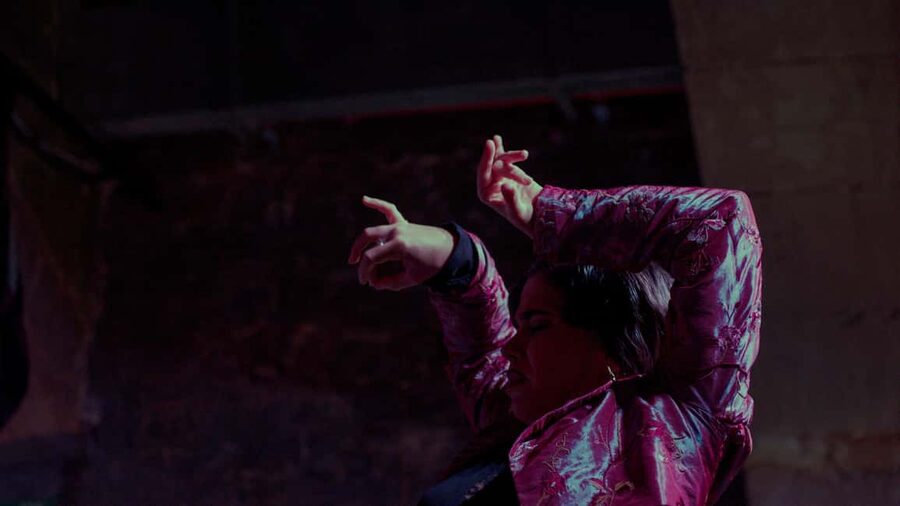
I like the structure because it has two modes that fit together well. First comes the street-level walk where the guide paints a picture through stories, sketches, or short live moments. Then comes the flamenco, which is emotion and rhythm in a historic room, so it feels like a natural ending rather than an unrelated ticket you squeeze in.
You also get a tour size that makes it easier to ask questions and actually hear the guide. When the group is small, the guide can slow down when someone wants clarification. That matters in Barcelona, where the streets reward attention.
Starting at Plaça de la Universitat: a smart first move for first-timers
You meet in the center area around Plaza Universitat, right by the metro station. That is convenient because it puts you near a transit node, so you are not trying to route across the city before the walk even begins.
The tour runs about 4 hours, which is a sweet spot. It gives you enough time to walk meaningful segments in the Old Town without feeling trapped for an entire day. Also, since it is a walking format, you can pace yourself, rest when the route allows, and still feel like you experienced a full arc.
You’ll also get multiple short stops along the way, including photo moments at landmarks like Teatre Goya and the Grand Theater of Liceu. These are quick, but they help you learn what you are looking at. And once you know what to notice, the Old Town becomes less of a maze.
Guitar, heels, and a small stage
- Barcelona: Tablao Flamenco Cordobes with Food/Drink Options
★ 4.6 · 4,368 reviews - Barcelona: Flamenco Show with Drink Option at La Rambla
★ 4.7 · 3,770 reviews - Tablao Flamenco Cordobes on Rambla Barcelona with Dinner Option
★ 4.5 · 2,756 reviews
El Raval’s colorful streets: where creativity has a complicated past
You start in El Raval, and that’s a good choice because it sets the theme immediately. This is where Barcelona’s creative scene has long worked in the margins, where artists, musicians, and dreamers turned weird corners into ideas.
What I like about this part is that it’s not just about murals or scenery. The guide talks about how the quarter evolved into a kind of creative laboratory, so the street art and youthful energy feel earned, not accidental. Even if you are just passing through later, you’ll understand why El Raval feels different from the more polished tourist strips.
Expect a lot of street texture here. You’re looking at narrow passages, color, and urban life close up. If you tend to walk with your phone up, this is where you’ll want to do both, because the small visual details often carry the story.
Gothic Quarter medieval alleys and Roman walls, explained in plain terms
Next the tour shifts into older layers of the city, including the Gothic Quarter. This is where the guide’s job gets more important, because centuries can look similar when you’re walking fast.
You’ll move through medieval alleys, hidden squares, and Roman walls. The value is that you don’t just see stones, you learn what they used to mean, and why the layout feels the way it does. When the guide uses sketches or short live performance moments, it can make the time periods feel less abstract and more believable.
A quick note for your comfort: old neighborhoods often mean uneven surfaces and tight corners. The good part is that the tour timing gives you breaks in the form of short stops. So you can keep your energy steady and still follow the narrative.
El Born’s atmosphere: palaces, workshops, and real Old Town rhythm
After the Gothic Quarter, you’ll spend time in El Born, another neighborhood that Barcelona uses well. It has glamour in the architecture, but it also keeps a day-to-day feel through artisan workshops and lively bars.
I like the way this district balances the tour emotionally. The story up to this point is history-heavy, then El Born brings in a sense of present creativity. You’re still in the Old Town, but you start feeling the city as something you can live in, not only something you view.
You may also pass by or pause for landmarks and major streets on the way, which helps you stitch districts together in your mind. That is useful later when you try to navigate independently. After a tour like this, you often realize you understand how neighborhoods connect without needing maps every ten minutes.
The tour’s big landmarks: La Rambla, Liceu, and the cathedral corridor
Even if your focus is the Old Town, a tour that includes big landmarks has a benefit. It gives you orientation and anchors the smaller alleys you’ll be walking after.
You get photo stops along or near La Rambla, and you also pause at the Grand Theater of Liceu. Liceu can look impressive from the street, but seeing it with context helps. It becomes part of the city’s arts identity, which ties back to the tour theme.
Then you reach the cathedral corridor area. You’ll see Basilica de Santa Maria del Pi and Barcelona Cathedral as part of the route. You also stop at Plaça de Sant Felip Neri, a pocket square that helps you slow down. When the guide explains why these places matter, you stop seeing them as just photo spots and start understanding their role in how the city gathered.
If you are an architecture fan, this sequence helps you compare styles without overthinking it. The guide keeps it practical, so you know what to notice rather than getting lost in technical terms.
Other things to see around Barcelona
- Barcelona: Flamenco Show with Dinner at Tablao de Carmen★ 4.7 · 2,009 reviews
- Flamenco Show Ticket at Theatre Barcelona City Hall★ 4.5 · 1,264 reviews
- Authentic Flamenco Show Barcelona : Intimate Casa Sors Experience★ 5.0 · 809 reviews
- Barcelona: Flamenco Show at Palau Dalmases★ 4.6 · 704 reviews
- Teatro Flamenco Barcelona: Authentic Live Flamenco Show★ 4.7 · 520 reviews
- Barcelona Basilica: Immersive Light and Sound Show – LUMINISCENCE★ 4.6 · 447 reviews
Roman and medieval holdovers: Temple of Augustus and Bishop’s Bridge
Barcelona has a habit of hiding earlier eras right under your feet. This is where the route gets extra interesting, because you get stops tied to Roman and transitional history.
You’ll visit the Temple of Augustus area and also stop for Bishop’s Bridge. I like these moments because they remind you that the city has been layering itself for a very long time. Even when the buildings around them change, the geography and old pathways still shape what you experience today.
If you’ve ever felt like Barcelona history is too big to hold in your head, these stops help. They act like milestones. After them, other sights feel easier to place.
Ending at Palau Dalmases: flamenco inside a 17th-century palace
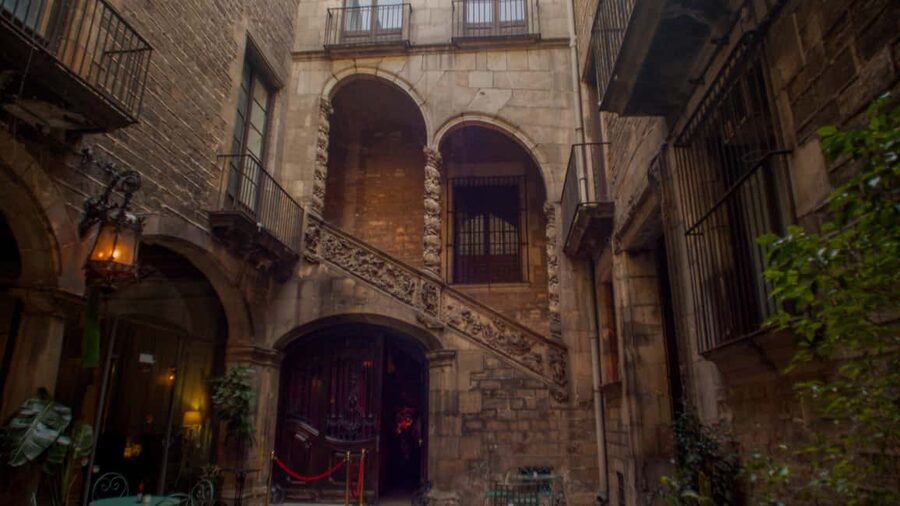
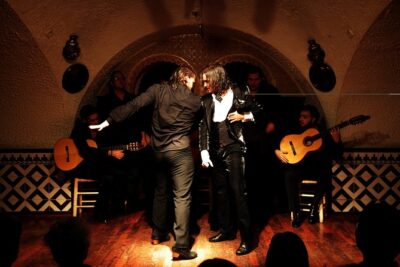
The final stop is the reason many people book this tour: the flamenco show at Palau Dalmases. This is described as a 17th-century palace, and that historic setting matters. Flamenco is all about acoustics, closeness, and emotional timing, and a palace room tends to give you that intimacy.
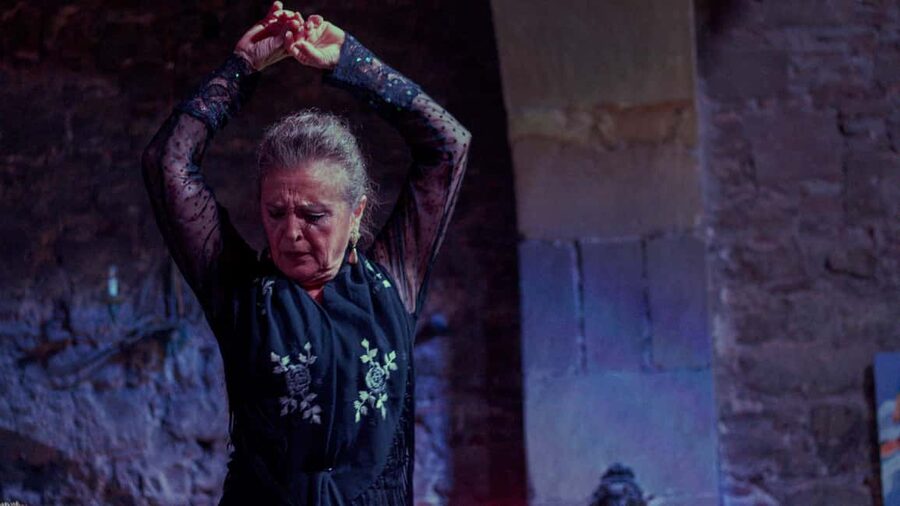
What you should expect is an intimate, live performance where the passion shows through in the dancers, the guitar, and the voice. This is not the type of experience where you feel like you are watching something far away. The setup is made for being near, so you feel the rhythm rather than only hearing it.
Also, the tour includes live moments before the show, so you arrive already warmed up. By the time the flamenco starts, you’re not starting from zero. You’ve walked through the city’s layers and themes, then you finish with art that is immediate.
In several guided examples tied to this experience, the flamenco finale is repeatedly called a powerful highlight. That tracks with what I look for in performances: you want a setting that supports emotion, not just a stage.
Price, value, and what you actually get for $71
At about $71 per person for a 4-hour experience, the big question is value: is this mainly a flamenco ticket, or is it a real guided Old Town walk with something extra?
Here, it is both. You get:
- a guided walking tour
- live performances during the route
- the flamenco show at Palau Dalmases
That matters because you are not paying separately for the sightseeing and the show in two disconnected chunks. You also skip the ticket line, which sounds minor until you are standing in a long queue on a busy day.
Since the group is limited to 10 participants, the price also makes more sense. A small group means more attention for the guide, and you feel less like you’re herded through.
Food and drinks are not included, so don’t assume the tour price covers tapas or drinks. But that is common for walking tours, and it can be a plus if you like choosing your own spots. You can plan a meal after, when you’re not rushed.
Practical walking tips so you enjoy, not just endure
This is a Old Town walk, which means you should treat it like a comfort test. A couple things will make the day better.
- Wear comfortable shoes with good grip. Old streets can be slick, and corners are tight.
- Bring a camera, because the stops are designed for quick photo moments at major points.
- Plan to walk steadily for a few hours, with short pauses. The tour includes stops that help you catch your breath.
If you need wheelchair access, the tour is listed as wheelchair accessible. Still, old districts can be tricky for movement, so it is smart to go in with a flexible mindset and allow extra time around tighter segments.
Languages are available in English, French, Italian, and Spanish, which helps a lot if you want the storytelling to land clearly.
Who this tour suits best, and who might not need it
This is a great pick if you want more than a checklist. You’ll enjoy it if you like walking, asking questions, and getting the story behind why neighborhoods feel the way they do.
It is also a strong first-trip Old Town option because it covers multiple districts: El Raval, the Gothic Quarter, El Born, and then anchors it all with a flamenco finale at Palau Dalmases.
If you are not into walking much, or if you prefer to choose your own pace without stops, you might prefer a shorter, more flexible format. The good news is that the route is built around short photo and guided segments, so it’s not nonstop motion, but you should still expect walking through historic streets.
Should you book Barcelona: Old Town Artistic Tour & Flamenco Show?
I’d book it if you want a guided walk that actually connects neighborhoods to creativity, and you also want an intimate flamenco experience in a historic setting. The combination of artist-guided storytelling plus a Palau Dalmases finale is a clean value proposition for a first or second visit.
I’d skip it if your top goal is pure lounging, or if you hate walking on uneven streets. For everyone else, it’s one of those Barcelona experiences where the route makes the performance feel earned, not tacked on.
If you want an arts-focused day without wasting time piecing together tickets and directions, this one is a solid, practical choice.
FAQ
Where is the meeting point for the Barcelona Old Town Artistic Tour?
You meet your guide by the metro station in the center of Plaza Universitat.
How long is the tour?
The tour lasts 4 hours.
How many people are in the group?
The group is limited to 10 participants.
What languages is the tour available in?
The live guide is available in English, French, Italian, and Spanish.
Is this tour wheelchair accessible?
Yes, the tour is listed as wheelchair accessible.
What is included in the price?
The price includes a guided walking tour, live performances, and the flamenco show at Palau Dalmases.
Are food and drinks included?
No, food and drinks are not included.
Can I reserve now and pay later?
Yes, there is a reserve now & pay later option.
What should I bring?
Bring comfortable shoes and a camera.
What is the cancellation policy?
You can cancel up to 24 hours in advance for a full refund.
The latest to open for booking
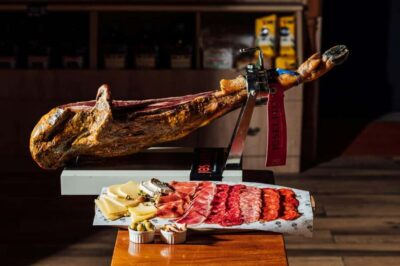

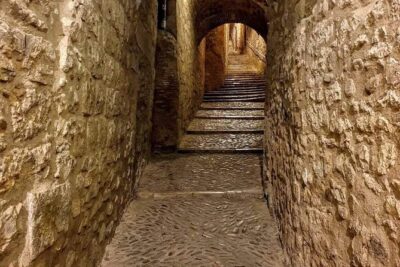

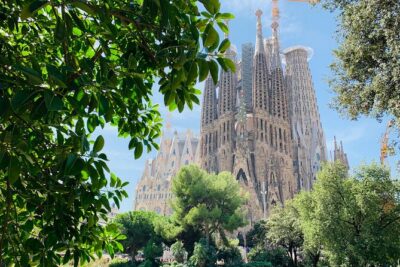
Flamenco Tablao Shows, side by side.
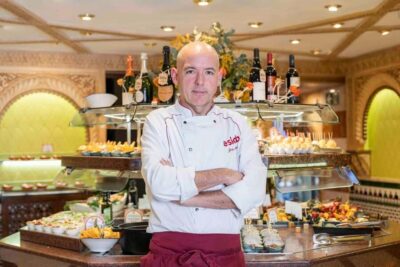
Tablao Flamenco Cordobes with Food/Drink Options
Read our review →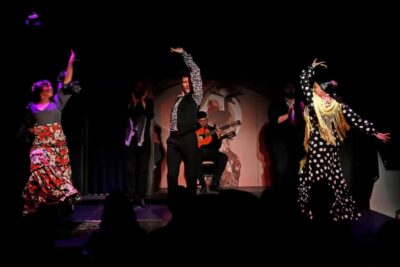
Tablao Flamenco Cordobes on Rambla Barcelona with Dinner Option
Read our review →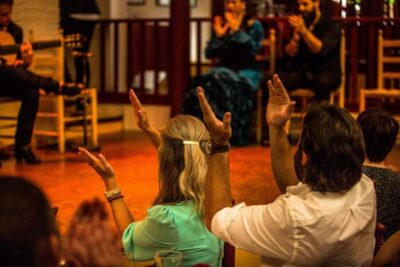
Flamenco Show with Dinner at Tablao de Carmen
Read our review →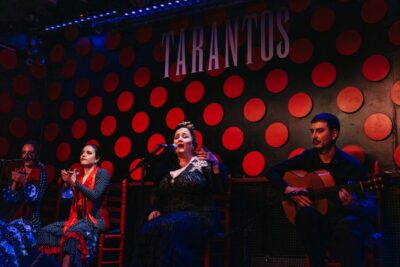
Flamenco Night at Tablao Cordobes in Barcelona
Read our review →
Flamenco Show Ticket at Theatre Barcelona City Hall
Read our review →
Authentic Flamenco Show Barcelona : Intimate Casa Sors Experience
Read our review →Where else this one turns up