
Reviewed · WALKING TOURS
Barcelona Panoramic Walking Tour – private tour
Montjuïc gives Barcelona its best angles. This private walking tour is built for your pace, not a group shuffle, and the guide explanations (including Christian’s clear take on the pavilion columns and the flag) make the sights easier to understand. The big bonus is the lineup of viewpoints over the city, all wrapped into an easy arc across Montjuïc. The tradeoff is the hill walking, so you need solid shoes and enough stamina for partly steep ground.
I like that you get curated structure while still feeling free to linger. It’s also a smart way to connect dots from the World Fair of 1929 to later Olympic-era stories. One thing to consider upfront: the Barcelona Pavilion start says admission is not included, so you may pay separately if you want to go inside.
In This Review
- Key takeaways
- Why This Private Montjuïc Walk Feels Like Your Barcelona
- Price and Time, and Why It Can Be Good Value
- Where You Start and How the Route Finishes in Poble Sec
- German Pavilion 1929: Bauhaus Details You’ll Notice After the Guide
- Climbing Up to the Magic Fountain via Local Escalators
- Museu Nacional d’Art de Catalunya: Free Access to the World Fair Crossroads
- Lluís Companys Olympic Stadium and the 1936 Alternative People’s Games
- Montjuïc Cemetery: A Quick Glimpse Into How Barcelona Remembers
- Montjuïc Castle: Fortified Views and the Hill as a Watch Tower
- Calle Blai Pinchos: End With Food, Not Stress
- Walking Comfort, Fitness, and the One Thing You Should Not Ignore
- Getting the Most From a Private Guide
- Should You Book This Barcelona Panoramic Private Walking Tour?
- FAQ
- How long is the Barcelona Panoramic Walking Tour?
- Is this a group tour or truly private?
- What are the main stops you’ll see?
- Are tickets included for the attractions?
- What fitness level is required?
- Where does the tour start and end?
- What happens if the weather is bad?
Key takeaways
- Private, not pack-walk: your group moves at your pace, with time for questions.
- World Fair 1929 thread: you see how the city’s big 1929 showcase shapes what stands on Montjuïc.
- Panoramas built in: views are planned into the climbs, with photo moments along the way.
- Olympic history with a protest angle: the Lluís Companys Stadium stop ties 1992 to the Alternative People’s Games from 1936.
- Pinchos finish in Poble Sec: Calle Blai is the payoff, with a fun local food street feel.
- Mostly free sights: the tour includes plenty of stops where admission is listed as free, with the main ticket note at the Barcelona Pavilion.
Why This Private Montjuïc Walk Feels Like Your Barcelona
Barcelona can be a lot at street level. This tour helps you slow down without getting lost, because your guide holds the route and the story.
What makes it feel special is the balance. You’re not sprinting to keep up, and you’re not left reading signs alone. You’ll cover major Montjuïc landmarks, but you can actually spend a few extra minutes when something catches your eye, like a view point or a detail on a facade.
The other thing I appreciate is how the guide role shows up in the details. In feedback tied to the experience, Christian was praised for explaining specific visual elements like the four columns and the flag at the pavilion. That’s exactly the kind of context that turns a quick photo into a memory you understand.
Price and Time, and Why It Can Be Good Value
At $107.25 per person for about 3 hours, this is not a budget “see-everything” deal. But it can still be good value because it’s private and structured.
Here’s what you’re paying for in practical terms:
- A guide who sets the itinerary so you do not have to plan every transit step across Montjuïc.
- A private walking pace that is more comfortable than group tours on steep ground.
- A story line that connects several sites on and around Montjuïc, plus a neighborhood food stop.
Also, many listed admissions are free at the sites on this route. The one notable exception is the Barcelona Pavilion start, where admission is not included. If you were hoping to keep costs low, you’ll still have a lot of value even if you skip any paid interior time there.
The whole city from above
- Barcelona: Mirador torre Glòries Skip-the-Line Ticket
★ 4.5 · 1,082 reviews - Panoramic Barcelona and Montserrat with Cog-Wheel Train
★ 4.0 · 268 reviews - Entrance to the Mirador Torre Glories Barcelona
★ 4.5 · 193 reviews
Where You Start and How the Route Finishes in Poble Sec
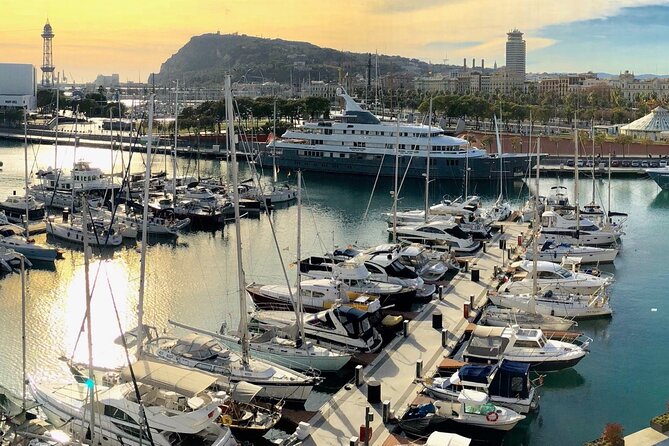
You start at Av. de Francesc Ferrer i Guàrdia, 7 in the Sants-Montjuïc area. The tour ends in Poble Sec near Carrer de Blai, a very walkable food street vibe. The description notes that the green metro line is close by, which matters because Montjuïc can feel like a gravity test once you’ve climbed it.
This finish location is a smart choice for practical travel flow. After a few hours of viewpoints and walking, you do not want a complicated return plan. You want to end near a simple metro option and a place where you can grab pinchos without hunting.
German Pavilion 1929: Bauhaus Details You’ll Notice After the Guide
You begin at the German Pavilion of the World Fair of 1929. Even if you are not an architecture fanatic, Bauhaus design has a way of looking clean and intentional, like it’s still thinking clearly more than a century later.
The big payoff here is interpretation. One highlight from feedback was how Christian explained the pavilion’s four columns and the flag. When you know what to look for, the building stops being just a postcard and becomes a piece of design logic.
Practical note: admission for the pavilion is listed as not included. So if you want to step inside, factor in the possibility of an extra ticket. Even without interior time, you can still get plenty from focusing on the exterior design and the World Fair context your guide will frame for you.
Climbing Up to the Magic Fountain via Local Escalators
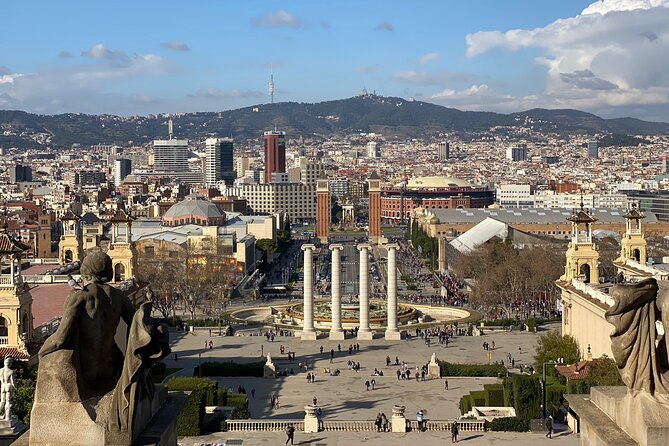
Next you head up the hill and discover the Magic Fountain area. The route includes using local escalators, which is a small detail but a big comfort factor. Montjuïc is famous for climbs, and anything that reduces foot fatigue helps you enjoy the viewpoints instead of just surviving them.
This is also where the World Fair story gets visual. As you go, you are not only moving uphill, you’re learning how the 1929 showcase shaped how Barcelona uses this part of the hill. You’ll hit view points that are good for photos, and your guide can help you pick angles so you’re not just snapping from the first spot you reach.
Admission for the Magic Fountain stop is listed as free. If the goal is the walk, the views, and the context, this is one of the most cost-friendly parts of the tour.
Museu Nacional d’Art de Catalunya: Free Access to the World Fair Crossroads
From the Magic Fountain area, you cross the zone tied to the World Fair held in Barcelona in 1929. That’s a big theme of this tour. You keep returning to the idea that this hill was planned and showcased, and later repurposed.
The Museu Nacional d’Art de Catalunya stop is listed with admission as free. That means you can spend time soaking in the surrounding area and the overall Montjuïc setting without adding another ticket cost. The museum building is also one of those structures you can “read” better after hearing what the guide says about the 1929 context.
If you like architecture, you’ll probably enjoy watching how the space feels open and ceremonial up here, even in the middle of a city.
Other things to see around Barcelona
- Barcelona Tapas and Wine Experience Small-Group Walking Tour★ 5.0 · 5,804 reviews
- Barcelona: Tapas Walking Tour with Food, Wine, and History★ 4.8 · 4,261 reviews
- Barcelona: Food Walking Tour with Tapas and Wine★ 4.9 · 2,180 reviews
- Barcelona Tapas Walking Tour: Food, Wine & History★ 4.5 · 1,928 reviews
- Barcelona Helicopter, Sailboat & Old Town Private Walking Tour★ 5.0 · 1,395 reviews
- Barcelona: Old Town and Gothic Quarter Walking Tour★ 4.8 · 1,393 reviews
Lluís Companys Olympic Stadium and the 1936 Alternative People’s Games
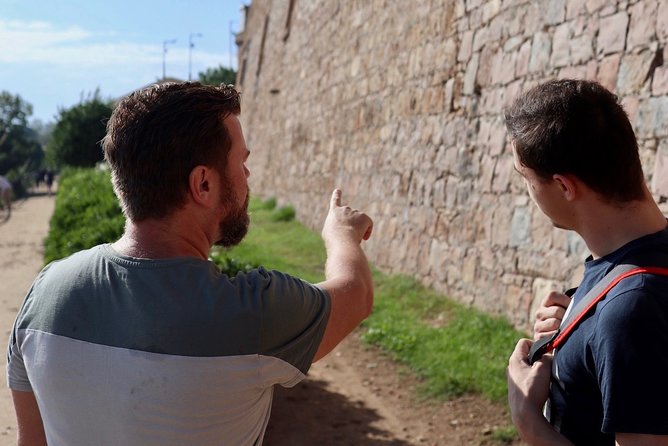
You’ll also get to the Lluís Companys Olympic Stadium, a stop that adds another layer beyond sightseeing. This is where the story shifts from the World Fair into sports and politics.
Two specific references matter here:
- The Olympic Games of 1992.
- The Alternative People’s Games of 1936, described as a protest event against the Games in Nazi Germany.
That pairing is powerful because it shows how Barcelona’s major sports moments sit next to earlier European tensions. You’re not just looking at stadium seating. You’re seeing how the city’s athletic identity connects to protest and historic context.
Admission for this stop is listed as free, and you’ll spend about 20 minutes here. That’s long enough to get the story, take a few photos, and then move on before fatigue kicks in.
Montjuïc Cemetery: A Quick Glimpse Into How Barcelona Remembers
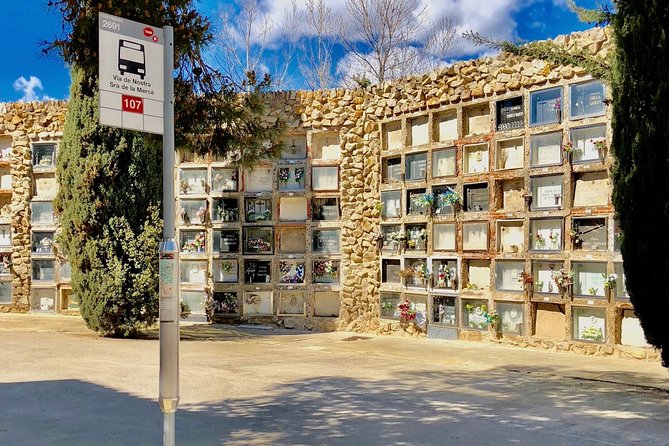
Then it’s on to Cementerio de Montjuïc. This is not the kind of stop you linger at for hours, but it can leave a strong impression because it’s a place tied to memory.
The tour plans for a short visit, about 10 minutes. That timing is reasonable because the setting can feel solemn, and it also keeps the day flowing. The value here is that your guide can frame why the cemetery is famous and what its existence says about the city.
Admission is listed as free, so this part is low-cost and time-efficient. If you’re sensitive to darker places, keep your expectations calm and respectful. This is more of a meaningful glance than a full exploration.
Montjuïc Castle: Fortified Views and the Hill as a Watch Tower
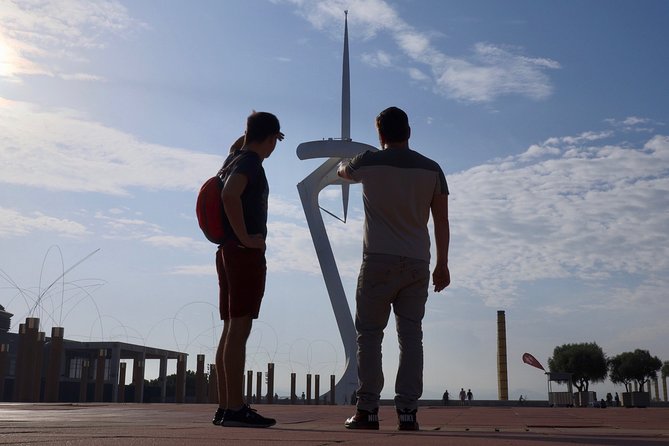
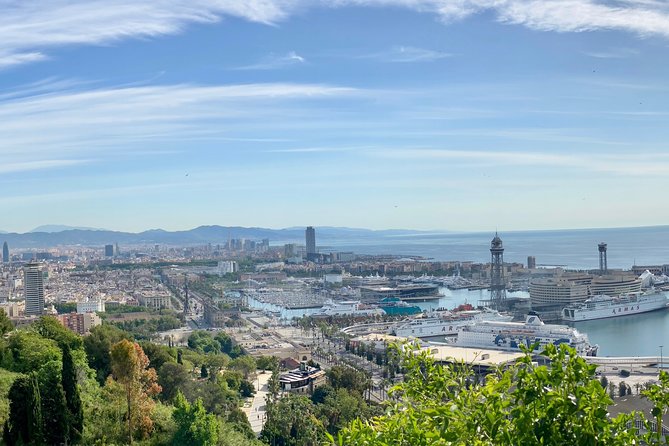
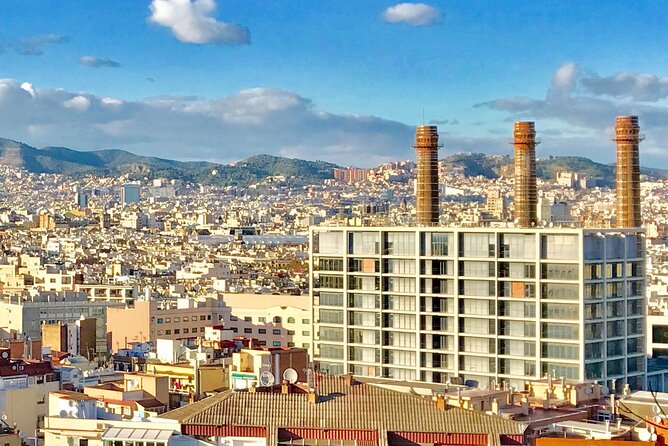
After the cemetery, you head to Montjuïc Castle. This stop connects the hill’s natural features to human control. You’re learning about the hill’s importance as a watch tower and the historic significance when it was fortified by fortresses across medieval and civil war history.
What I like about this segment is that it makes the physical terrain make sense. Montjuïc is steep and dramatic, and when you understand the hill’s strategic value, the views stop being random. They become the point.
Admission is listed as free here as well. You’ll want comfy walking shoes because even with a planned route, this area can feel uneven and sloped. If you take your time at overlooks, you’ll get that classic Barcelona skyline feel.
Calle Blai Pinchos: End With Food, Not Stress
Finally, you finish at Calle Blai in Poble Sec. This is where the tour turns from monuments to neighborhood life.
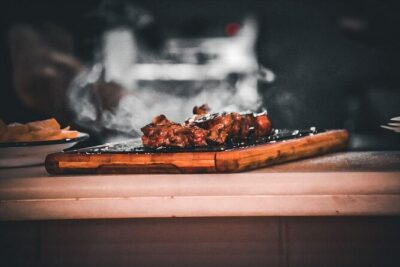
The description highlights Calle Blai’s chaotic layout and its multicultural feel. That’s the kind of street that makes pinchos seem natural, not staged. Pinchos are a variation of tapas, and they’re said to have become fashionable, which fits the vibe you’ll likely sense as you walk.
You spend about 30 minutes here. That’s enough time to treat it like a real food break. Ask your guide for what’s good in season and how locals order pinchos if you want the simplest plan. Even if you do not follow their suggestion, you’ll leave with a better idea of where to look.
Admission is listed as free, so this is also one of the best parts for value. You pay for the experience and then you get to spend your remaining money on food you actually choose.
Walking Comfort, Fitness, and the One Thing You Should Not Ignore
This tour is described as requiring moderate physical fitness, with minimum age 12 due to length of walk and uphill segments. It also explicitly notes it is not recommended if you cannot walk at least 5 miles on partly very steep ground.
So treat the distance and grade like it matters, because it does. If you usually do fine on long city walks but hate steep climbs, this might still be doable, especially with the use of escalators on the way up. If you struggle with uphill walking, you may find the pace frustrating even with a private setting.
Good weather is also required. That’s important on Montjuïc because wet ground can make steep areas feel slippery. The experience provider notes that if the tour is canceled due to poor weather, you’ll be offered a different date or a full refund.
Getting the Most From a Private Guide
Because this is private, you can get way more out of it than you would on a standard group walk. Use that.
A few smart ways to get value:
- Ask about the World Fair of 1929 as you move between sites, so the story clicks in order.
- When you reach the pavilion area, ask what design detail to look for first, so your photos show meaning.
- At the stadium, ask how the 1936 protest event connects to the 1992 Olympic era in the city’s memory.
- Save your questions for when you stop, not while walking between climbs.
This is also where the praised guide style comes in. In feedback about Christian, his explanations and ability to answer questions were singled out. That is exactly what you want in a city where signage alone does not give you the full picture.
Should You Book This Barcelona Panoramic Private Walking Tour?
I’d book it if you want a Montjuïc-focused experience with real context and you prefer breathing room over group pacing. It’s especially a strong match if you like architecture, enjoy historic layers, and want a guide who can explain what you are seeing, not just recite facts.
Skip it or consider an easier alternative if uphill walking is a problem for you. The route is built around climbs, and the minimum age and walking requirement reflect that. Also, plan around weather, since the tour depends on good conditions.
One more practical point: this tour is typically booked about 88 days in advance, so if your dates are fixed, do not wait until the last minute. Private tours are smaller by nature, and Montjuïc is popular.
If you’re aiming for a morning or early afternoon plan that ends with pinchos in Poble Sec, this route does exactly that. It gives you the big viewpoints, the World Fair and Olympic connections, and then a fun neighborhood finish instead of a rushed return.
FAQ
How long is the Barcelona Panoramic Walking Tour?
It lasts about 3 hours.
Is this a group tour or truly private?
It is a private tour. Only your group will participate.
What are the main stops you’ll see?
The tour includes the German Pavilion of the World Fair of 1929, the Magic Fountain area, Museu Nacional d’Art de Catalunya area, Lluís Companys Olympic Stadium, Cementerio de Montjuïc, Montjuïc Castle, and ends in Calle Blai in Poble Sec.
Are tickets included for the attractions?
Admission is noted as not included for the Barcelona Pavilion start. For the other listed stops, admission is listed as free.
What fitness level is required?
You should have moderate physical fitness. It is not recommended if you cannot walk at least 5 miles on partly very steep ground.
Where does the tour start and end?
It starts at Av. de Francesc Ferrer i Guàrdia, 7, Sants-Montjuïc. It ends at Carrer de Blai in the Poble Sec area, near the green metro line.
What happens if the weather is bad?
This experience requires good weather. If it is canceled due to poor weather, you’ll be offered a different date or a full refund.
The latest to open for booking

Walking Tours, side by side.
Barcelona Tapas and Wine Experience Small-Group Walking Tour
Read our review →
Tapas Walking Tour with Food, Wine, and History
Read our review →
Barcelona Tapas Walking Tour: Food, Wine & History
Read our review →
Barcelona Helicopter, Sailboat & Old Town Private Walking Tour
Read our review →
Guided Food Walking Tour with Tapas and Wine
Read our review →Where else this one turns up