Reviewed · TOURS & DAY TRIPS
Barcelona: Royal Academy of Pharmacy of Catalonia Tour
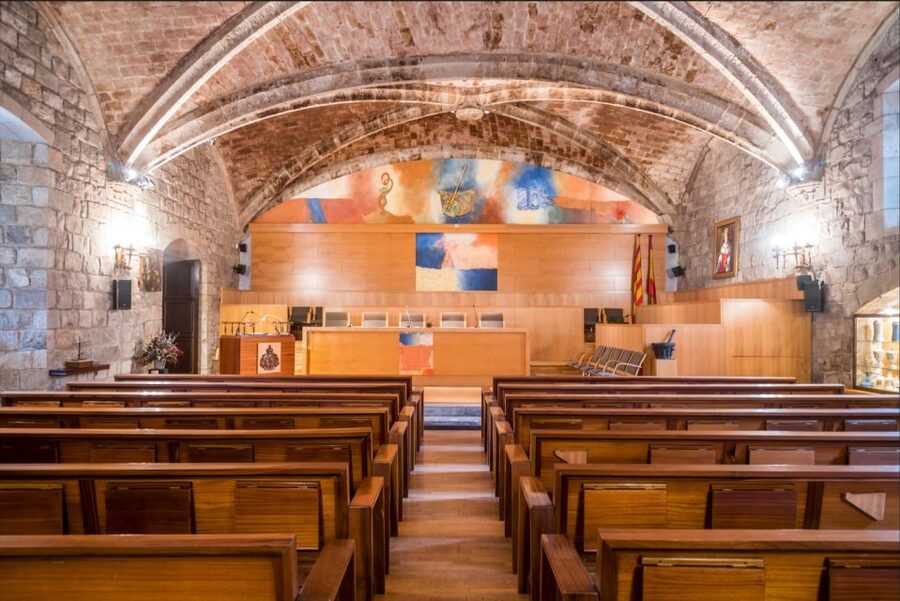
A real pharmacy museum moment in Barcelona. You step into a Medieval setting and follow the story of medicine through rooms that still feel lived in. I love how the tour is built around the actual Old Hospital de la Santa Creu setting, and how you get to see working-looking details like ceramic medicine containers and pharmacy-themed stained glass. The only catch is simple: it is a compact 50-minute visit, so if you want a long, slow museum day, plan something else.
You start in the cloister and end with a clearer picture of how medicines were made and delivered over centuries. I also like that the guide explains what you are looking at, not just where it is, and the tour is offered in Spanish, Catalan, and English. One possible drawback to keep in mind: the experience is focused on pharmacy and hospital history, so if you are looking for modern art, food stops, or major viewpoints, this may feel narrower than other tours.
In This Review
- Key Highlights You Should Expect
- Stepping Into the Old Hospital de la Santa Creu, Not a Generic Museum Room
- Where You Start: The Cloister Meeting Point (and Why It Helps)
- The 1417 Pharmacy Rooms: How the Tour Makes History Feel Tangible
- Ceramic Containers and Pharmacy Tools: Details That Pay Off
- Stained Glass Pharmacy Window and the 1696 Medicine Delivery Detail
- The Royal Academy of Pharmacy of Catalonia Connection
- Timing: Why 50 Minutes Is Perfect for Busy Days
- Languages and Guide Quality: What You’ll Notice
- Price and Value: Why $16 Can Make Sense Here
- Who This Tour Suits Best
- Practical Tips Before You Go
- Should You Book the Barcelona Royal Academy of Pharmacy Tour?
- FAQ
- How long is the Barcelona Royal Academy of Pharmacy of Catalonia tour?
- Where do I meet the guide?
- How much does the tour cost?
- What languages are available for the live guided tour?
- Is the tour wheelchair accessible?
- What should I bring?
Key Highlights You Should Expect

- Meet in the Santa Creu cloister to start the story in the heart of the old hospital complex
- Enter a pharmacy dating to 1417, one of the oldest in Europe
- See original ceramic containers used to prepare or store medicines in earlier times
- Admire a pharmacy-themed stained-glass window, including a version from 1696 linked to medicine delivery
- Tour the Royal Academy of Pharmacy space, with furniture and historic displays you can actually see up close
Stepping Into the Old Hospital de la Santa Creu, Not a Generic Museum Room
Barcelona has plenty of historic sites, but this one has a special feel because it is not an off-site collection. You are inside the Old Hospital de la Santa Creu, and that matters. Hospitals shaped how people thought about illness, care, and the practical side of medicine. So when you walk toward the pharmacy area, you are not just viewing objects, you are tracing the environment where those objects would have been used.
The tour is built to give you that context fast. It starts with a live guide and a clear focus: the history of pharmacy and medicine as it evolved, tied to the physical space you are standing in. That is a big deal in a city where it is easy to get lost in descriptions that never quite connect to daily life.
The other thing I like about the setting is the sense of discovery. This is one of Barcelona’s medicine-related spaces that many first-time visitors do not automatically plan around. If you want something genuinely different from the usual cathedral plus market circuit, this fits the bill.
Where You Start: The Cloister Meeting Point (and Why It Helps)
Meet your guide right in the middle of the ancient hospital’s cloister, in front of the Royal Academy of Pharmacy of Catalonia. Starting in the cloister is practical, and it also sets the tone. You get oriented right away in the hospital complex, instead of entering the pharmacy like it is a separate, disconnected attraction.
It is also an easy starting point once you are there. You do not need to hunt through multiple galleries or follow a maze of hallways before you begin. Your first moments are already part of the story.
If you are the type who likes to show up early and settle in, arrive a little ahead so you are not rushing. Comfortable shoes are a must here, since you are moving through a historic site.
Barcelona rewards the wandering, here are a few more stops worth adding.
- Barcelona: Sagrada Familia Entry Ticket with Audio Guide
★ 4.6 · 105,312 reviews - Barcelona: Park Güell Admission Ticket
★ 4.4 · 76,534 reviews - Barcelona: Casa Batlló Entry with Self-Audioguide Tour
★ 4.7 · 25,359 reviews
The 1417 Pharmacy Rooms: How the Tour Makes History Feel Tangible
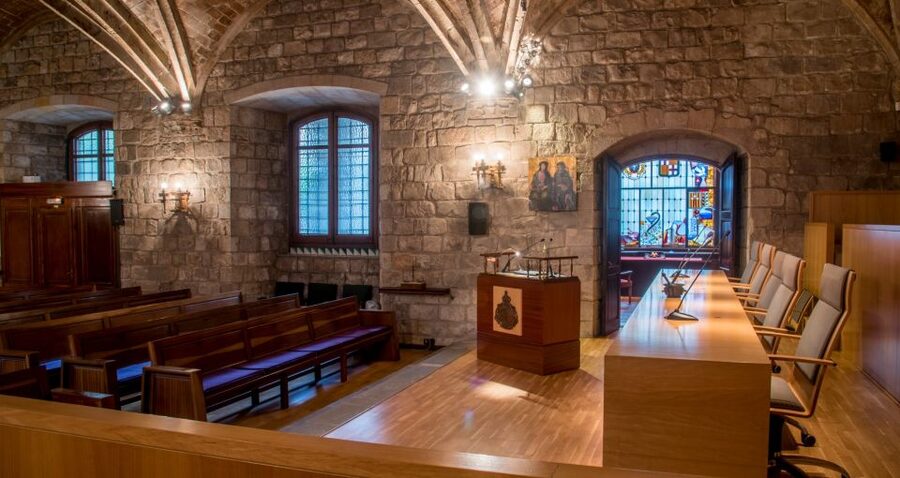
The heart of the experience is the pharmacy itself, dating back to 1417. That date is the kind of fact that sounds impressive until you see how the space supports it. Here, the age of the pharmacy is not just a label, it is the reason the tour feels like you are moving through time step by step.
Inside, you follow your guide through the pharmacy rooms and learn about different tools used to create medicines over the years. That phrasing matters because the tour is not only about names of medicines or dates. It is about the practical side of making them, and how that practice changed.
What you should watch for during this part:
- The original ceramic containers, which are displayed as proof of how medicines were handled in earlier periods
- Furniture and pharmacy-related objects that help you picture daily preparation and storage
- The guide’s explanation that connects items to methods used at the time
Even if you are not a “museum person,” these are concrete visual details. You can understand what they might have been used for just by seeing their form and purpose in the room.
Ceramic Containers and Pharmacy Tools: Details That Pay Off
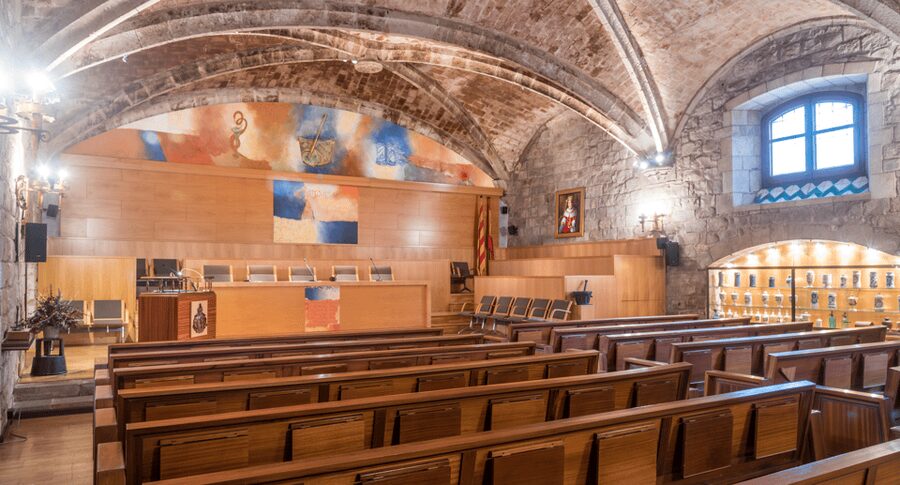
I especially like the focus on ceramic containers. These are the kind of objects that are easy to overlook on a standard self-guided visit. But on a guided tour, they become meaningful. You learn that they were used in times gone by to make medicines, and that turns “pretty old ceramics” into actual clues about the workflow of pharmacy.
This is the moment where the tour earns its keep. It gives you a way to interpret what you are looking at, instead of leaving you with only dates and locations. The ceramic containers help you understand the material culture of medicine, how people relied on storage and preparation tools before modern packaging and labeling.
If you like practical history, this is where you will feel the most satisfied in just 50 minutes. It is not abstract. It is objects, purpose, and explanation.
Stained Glass Pharmacy Window and the 1696 Medicine Delivery Detail
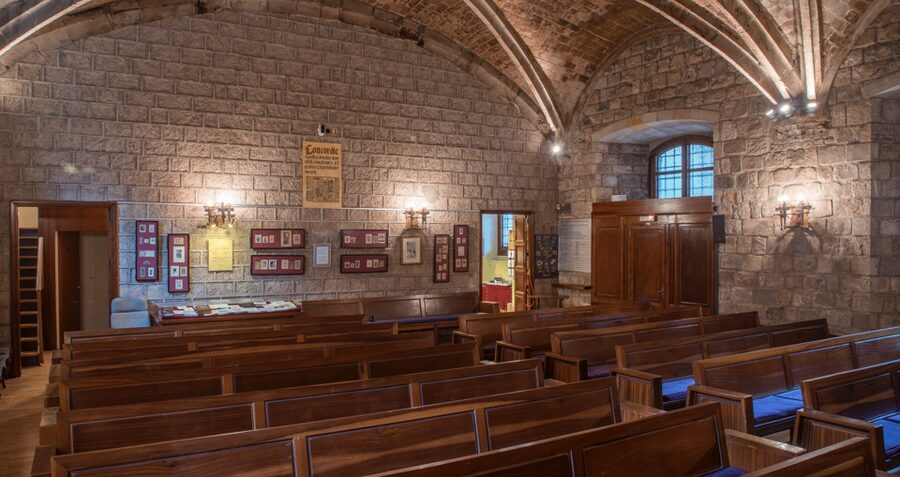
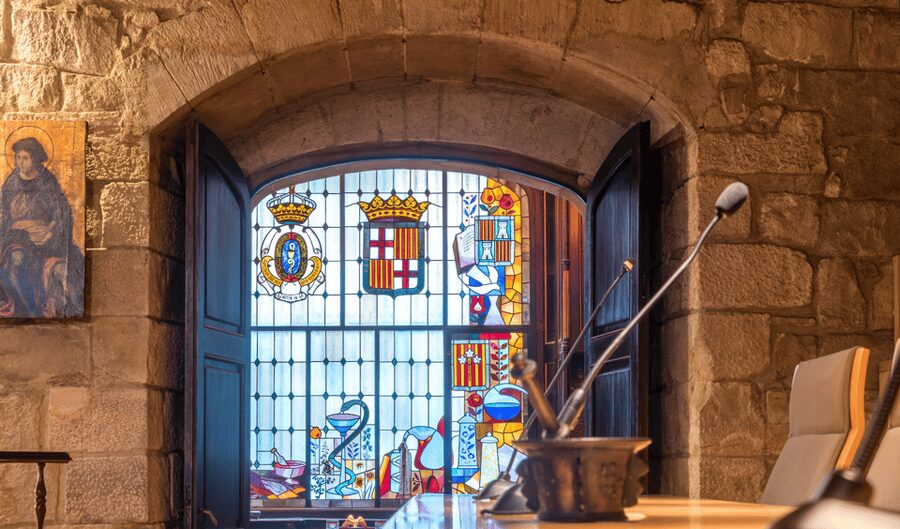
One of the big visual draws is the colorful stained-glass window with pharmacy-related images. Stained glass can sometimes feel like a decorative extra in other tours, but here it is clearly tied to the pharmacy theme.
Your guide points out the main stained-glass window, and also the window dating from 1696, connected to medicine delivery. That is a great detail because it links the interior work of making medicines to the movement of medicines to patients. You get a fuller picture: not just preparation, but the handoff.
This part is ideal if you want an emotional snapshot as well as facts. The colors and images help your brain hold onto the story. When you leave, you might not remember every tool mentioned, but you will likely remember the stained glass because it anchors the idea of pharmacy as part of everyday care.
If you are taking photos, be mindful that historic interior lighting can be tricky. Move slowly and check whether there are any posted rules inside before shooting.
The Royal Academy of Pharmacy of Catalonia Connection
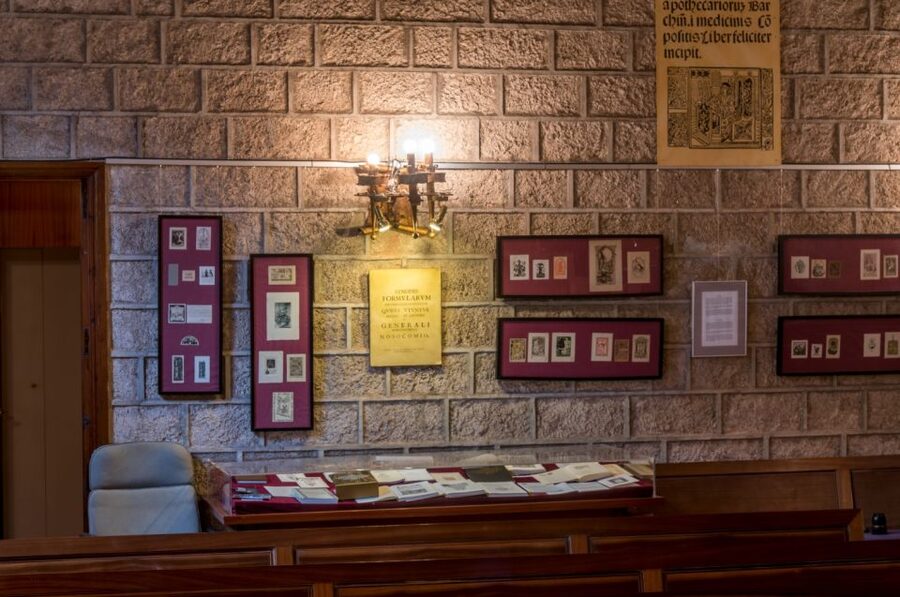
The tour is not only about a medieval pharmacy that exists in the past. Today, the space is used by the Royal Academy of Pharmacy of Catalonia. That connection matters for two reasons.
First, it signals continuity. The site is not sealed off like a fossil. It is still part of how pharmacy knowledge is preserved and presented.
Second, it adds credibility to what you are learning. You are seeing the pharmacy history through an institution that cares about pharmacy heritage. The guide approach also reflects that: they explain what you see and how it fits into the broader story of medicine.
This is a smart fit for curious travelers who do not want a generic “walk and point” tour. You come away with an understanding of the history of medicine that feels tied to the real room, not just a slideshow.
One ticket rarely covers it all. Here's what else is nearby.
- Barcelona: Montjuïc Cable Car Roundtrip Ticket★ 4.5 · 22,368 reviews
- Barcelona: Hola Barcelona Public Transport Travel Card★ 4.5 · 20,985 reviews
- Barcelona: 24 or 48-Hour Hop-On Hop-Off Bus Tour★ 4.4 · 20,872 reviews
- Barcelona: Park Guell Guided Tour with Skip The Line Entry★ 4.7 · 17,563 reviews
- Barcelona Aquarium: Entry Ticket★ 4.4 · 16,717 reviews
- Barcelona in 1 Day: Sagrada Familia, Park Guell,Old Town & Pickup★ 5.0 · 13,541 reviews
Timing: Why 50 Minutes Is Perfect for Busy Days
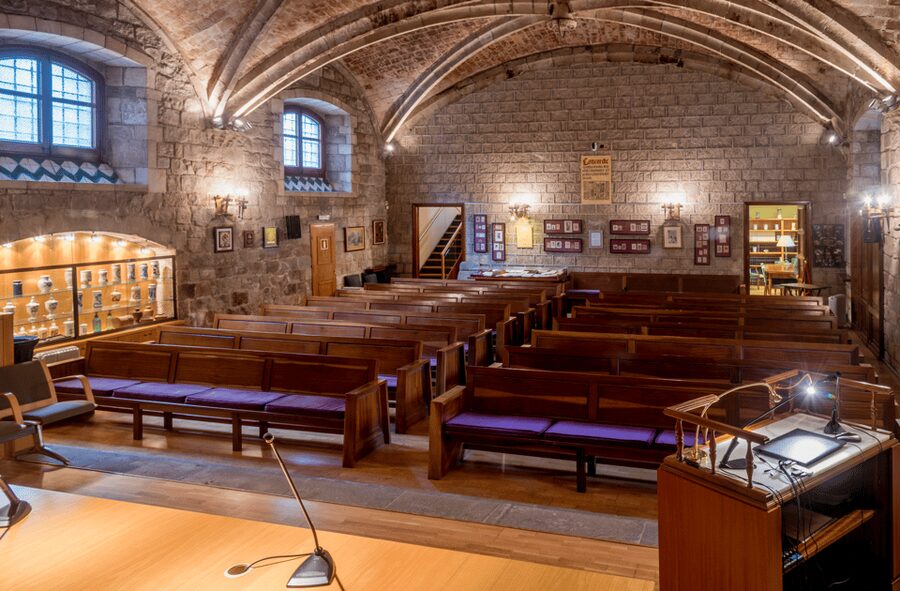
The tour lasts about 50 minutes. That is short enough to fit into a packed Barcelona itinerary, but long enough to cover the key visual stops: cloister start, entrance into the 1417 pharmacy area, ceramic containers, furniture, stained glass, and the wrap-up that ties it all together.
Here is the practical way to think about it:
- If your day includes major landmarks, this is a good add-on that does not steal your entire afternoon.
- If you are traveling with people who get impatient in museums, the structured timing helps keep attention.
- If you love deep research and want to read every label and linger for an hour or more, you might wish it were longer, because the tour is designed to be focused.
In other words, it is not trying to replace a full museum day. It is trying to give you a sharp, memorable hit of pharmacy history.
Languages and Guide Quality: What You’ll Notice
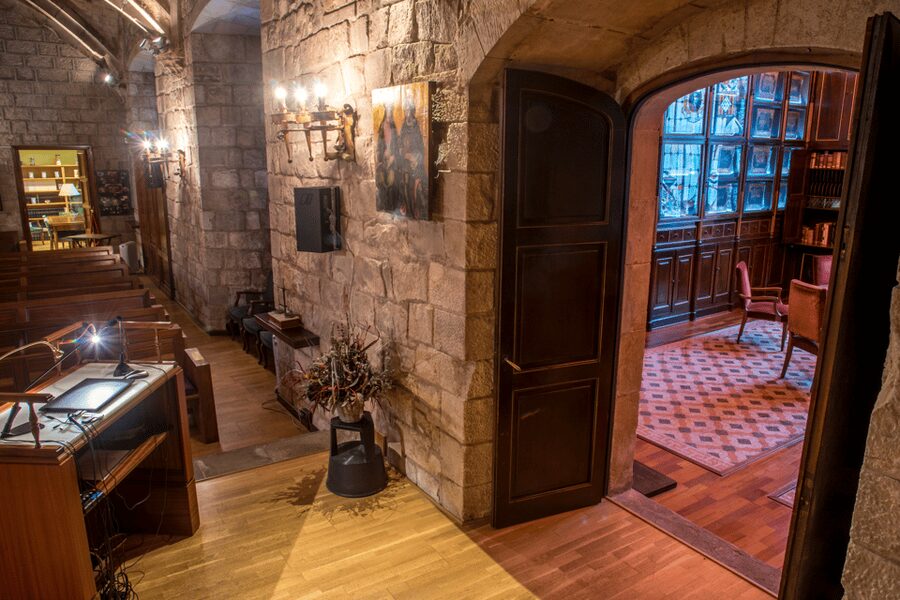
The tour has a live guide and is offered in Spanish, Catalan, and English. That means you should be able to follow the explanation smoothly no matter your comfort level, as long as you are in the right language group.
From the kind of feedback this tour receives, the guide style leans strongly toward being informative and clear. That matters because pharmacy history can sound technical if someone only recites facts. A good guide translates objects into meaning, so you understand why the containers, tools, and stained glass matter.
If you want a smoother experience, arrive with a curious mindset. Ask yourself what question you want answered. For example: How did they prepare and deliver medicines before modern manufacturing? The tour is built to point you toward that answer.
Price and Value: Why $16 Can Make Sense Here
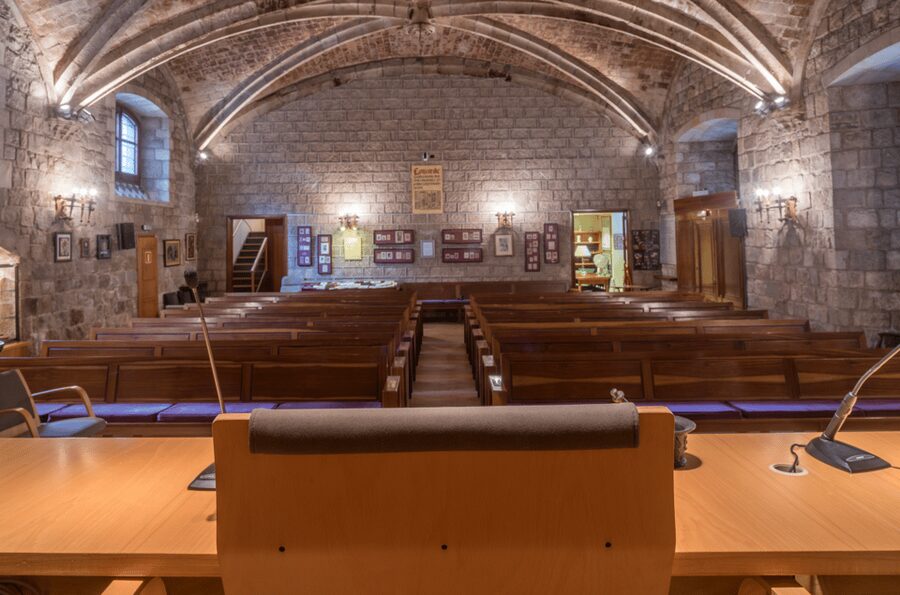
At $16 per person, this is a very reasonable price for what you get. You are paying for three things at once:
- Access to a historic space connected to the Royal Academy of Pharmacy of Catalonia
- Entry and guided interpretation inside a unique old hospital setting
- A focused 50-minute narrative centered on real objects, not a generic talk
If you compare it to typical guided tours that charge similar amounts but cover larger, more crowded areas, this one feels efficient. You do not spend most of the time traveling across the city or waiting in lines. You are placed directly in the context, then guided through the most meaningful parts.
Is it a bargain in the sense of being free? No. But at this price and time length, it is strong value for travelers who want a distinct topic and a high “wow, that is old” factor.
Who This Tour Suits Best
This tour is a great match if you:
- Like history that shows how real people worked, not just monuments
- Want a break from the usual top sights in Barcelona
- Enjoy seeing specific objects with practical explanations
- Prefer short tours that still feel complete
It is also a good option for couples and small groups who want a shared experience that is different from the standard tourist rhythm.
Practical Tips Before You Go
You do not need special gear, but do bring comfortable shoes. The site is historic, and you will be walking through parts of the old hospital complex.
If you are sensitive to group pacing, you might want to keep expectations realistic for a 50-minute format. Plan it as a focused stop, not a long wander.
Should You Book the Barcelona Royal Academy of Pharmacy Tour?
Yes, you should book it if you want a short, high-impact tour focused on the history of pharmacy in a real Medieval hospital setting. The combination of the 1417 pharmacy dating, the ceramic medicine containers, and the colorful stained-glass pharmacy window gives you multiple ways to connect with the story. And the guide format in Spanish, Catalan, and English means you are likely to actually understand what you see.
Skip it only if you are looking for a broad, multi-neighborhood experience, or if you want a long, self-paced museum-style visit. This one is intentionally focused, and that is what makes it work.
FAQ
How long is the Barcelona Royal Academy of Pharmacy of Catalonia tour?
The tour lasts about 50 minutes.
Where do I meet the guide?
Meet your guide in the middle of the cloister of the Old Hospital de la Santa Creu, in front of the Royal Academy of the Pharmacy of Catalonia.
How much does the tour cost?
The price is $16 per person.
What languages are available for the live guided tour?
The live tour guide is available in Spanish, Catalan, and English.
Is the tour wheelchair accessible?
Yes, the activity is wheelchair accessible.
What should I bring?
Wear comfortable shoes.
The latest to open for booking


Tours & Day Trips, side by side.


Park Guell Guided Tour with Skip The Line Entry
Read our review →
Sagrada Familia Skip-the-Line Entry Ticket & Tour
Read our review →
FC Barcelona Museum “Barça Immersive Tour” Ticket
Read our review →