
Reviewed · WORKSHOPS
Barcelona: Tango Dance Class for Beginners
Tango starts with rules you can feel. I like that this is a small group class limited to 10 people, so you get real attention, not just watching from the sidelines. I also love that you practice role changes (leader and follower), so you understand what your partner feels, not just your own steps.
One thing to consider: the instructor teaches in English, but based on one note I’ve seen, the English translation could be improved. If you’re not comfortable with some language nuance, try to lean on body language, keep questions simple, and you’ll still get a lot out of the class.
In This Review
- Key highlights you’ll care about
- Why a 75-Minute Beginner Tango Class Feels Worth It
- Meeting Point: Entlo, 9 Left Staircase
- Inside El Puntazo Estudio de Tango: Small Group + Subgroups
- The Session Focus: Technique, Music, and Couple’s Communication
- Learning tango technique without getting stuck
- Music as the boss
- Couple’s dance practice, with collaboration
- Milonga Codes: The Social Rules That Make Tango Fun
- Leader-Follower Role Changes You Actually Practice
- Socializing Tango in Barcelona, Even If You Go Alone
- Progressive Program: How You Keep Improving
- What I Thought Would Be Hard, and Why It Isn’t
- Who This Tango Class Is Best For
- Should You Book This Tango Class in Barcelona?
- FAQ
- How long is the Barcelona tango class for beginners?
- Is this tango class good for absolute beginners?
- Do I need to attend as a couple?
- What is the group size?
- Does the class include role changes between leader and follower?
- What languages are spoken by the instructor?
- Where do I meet for the class?
- Is the venue wheelchair accessible?
- Is video recording allowed during the class?
- Can I cancel and get a full refund?
Key highlights you’ll care about
- Small group of up to 10 means more time on your feet
- Milonga codes help you dance socially, not just technically
- Role-change practice teaches both sides of the conversation
- Beginner-focused but flexible levels (levels are orientative) so you can progress at your pace
- You can attend alone, and you’ll still get couple’s dance practice
- Instructor guidance is built into the class for steady improvement
Why a 75-Minute Beginner Tango Class Feels Worth It
A tango class can go two ways. Either you get a pile of steps you forget in an hour, or you learn a few core ideas you can actually use on the social dance floor. This Barcelona class leans hard into the second option.
In 75 minutes, the goal is practical: you learn tango as a social couple’s dance with structure. That includes technique and music, plus the stuff most beginners miss, like how tango works between partners in real milonga culture. If you’ve ever felt tango is “mysterious,” this is a friendly way to make it make sense.
You’ll also be working in a group setting, but the design is meant to keep you from feeling lost. The class is arranged so students with different experience levels can participate more than once in a week, and can recover missed sessions later in the week.
Meeting Point: Entlo, 9 Left Staircase
You meet at a specific spot, and showing up on time matters for a class that moves quickly.
- Meeting point: the bell is at Entlo, number 9, on the left staircase.
Practical tip: when you arrive, don’t wait until class time to find the exact entrance. Stand outside, locate the bell, and give yourself a few minutes to settle your shoes and water before you join the group.
Other things to see around Barcelona
- Barcelona Paella Cooking Class with Market Visit, Tapas & Sangria
★ 5.0 · 2,531 reviews - Barcelona: Cocktail Master Class by Mixologist with Tapas
★ 4.7 · 959 reviews - Barcelona: Paella Cooking Class with Market Visit and More
★ 4.9 · 711 reviews
Inside El Puntazo Estudio de Tango: Small Group + Subgroups
This experience is run by El Puntazo Estudio de Tango, and the setup is a big part of why it’s comfortable for beginners.
You’re in a small group limited to 10 participants. That number matters because tango teaching is hands-on. You need enough space to practice partner work, but you also need enough instructor attention to correct your posture, timing, and partner communication.
Even though you’re joining a beginner tango class, the session is divided into subgroups based on experience. Levels are orientative, meaning they’re a guide, not a strict label. So if you’re brand new, you won’t be forced into advanced patterns. If you’ve danced a bit before, you can still join beginner content and focus on the fundamentals you might have skipped.
Wheelchair accessibility is listed, so the studio is built to be navigable for mobility needs.
The Session Focus: Technique, Music, and Couple’s Communication
Even with no full itinerary list provided, you can predict the structure from the class aims. In a typical session like this, you’ll do three things: learn what to do, feel how it fits the music, and practice it with a partner.
Learning tango technique without getting stuck
You’ll be taught tango basics for beginners in a group setting. The emphasis is not just on “what step,” but on how to move your body in tango style. Expect instruction tied to couple’s dancing, meaning your movement connects to your partner’s movement.
The class also includes personalized guidance, so if your feet and your timing disagree with each other at first, you’ll have help getting on track. That matters because beginners often don’t need more complexity. They need clearer feedback.
Music as the boss
Tango is driven by music, not by counting in a robotic way. Since the class includes music as an element, you’ll work on how tango relates to the rhythm and how your partner connection changes as the phrasing shifts.
If you usually struggle with finding the beat, don’t worry. Small-group instruction makes it easier to correct that early, before bad habits lock in.
One ticket rarely covers it all. Here's what else is nearby.
- Barcelona: Sagrada Familia Entry Ticket with Audio Guide★ 4.6 · 105,312 reviews
- Barcelona: Park Güell Admission Ticket★ 4.4 · 76,534 reviews
- Barcelona: Casa Batlló Entry with Self-Audioguide Tour★ 4.7 · 25,359 reviews
- Barcelona: Montjuïc Cable Car Roundtrip Ticket★ 4.5 · 22,368 reviews
- Barcelona: Hola Barcelona Public Transport Travel Card★ 4.5 · 20,985 reviews
- Barcelona: 24 or 48-Hour Hop-On Hop-Off Bus Tour★ 4.4 · 20,872 reviews
Couple’s dance practice, with collaboration
You’ll also work on tango as a couple’s dance, even if you attend alone. You’ll be paired for practice and coached as you go. The class describes a collaborative approach where you work on difficulties and celebrate achievements with the group. That sounds fluffy, but in practice it translates into a calmer room where nobody feels like they’re failing alone.
Milonga Codes: The Social Rules That Make Tango Fun
This is one of the most valuable parts of the experience, because tango is social by design. The class specifically includes codes of the Milonga, which are the norms that help people share the dance space without chaos.
As a beginner, you might think the only “rules” are stepping correctly. Milonga codes go further. They relate to:
- how you take space respectfully,
- how you navigate with other couples,
- and how you manage the partner relationship in a way that works in public.
Learning these codes early is a time-saver. You’re not just learning to dance. You’re learning how to behave while dancing. That’s what makes it easier to step into a milonga later without feeling awkward.
If you’re planning a future night of tango in Barcelona, this part pays off fast. It’s the difference between copying moves and actually participating.
Leader-Follower Role Changes You Actually Practice
A lot of beginner tango classes teach leader skills or follower skills, but not both in a structured way. Here, role change practice is included, and that’s a real strength.
You’ll frequently work on role changes (leader and follower). That’s one of the best training tools for tango because it forces you to understand the dance from the other side:
- If you’re learning as a leader first, you’ll discover what your follower needs to feel confident.
- If you’re learning as a follower first, you’ll understand why leaders create certain cues with their body and timing.
Role changes also help with something emotional: tango can feel intimidating when you don’t know what the other person is supposed to do. Switching roles reduces that mystery. You start seeing tango as a conversation.
Practical tip: during role changes, focus less on being perfect and more on noticing signals. Look at your partner’s posture and timing cues, and respond clearly. The class is built for progress at your own pace.
Socializing Tango in Barcelona, Even If You Go Alone
You do not need to attend as a couple. You can join alone, and the class still supports partner practice.
In a tango class like this, socializing happens naturally because you’re rotating and practicing with multiple partners across the session. That gives you a low-pressure way to meet people and learn the dance vocabulary without the awkwardness of trying to find a partner on your own.
Also, the class offers socialization opportunities, which lines up with tango’s reputation as a dance where community matters. You’re not just learning steps in isolation. You’re joining a small group that’s there for the same reason: to understand tango and share the floor later.
One small consideration: because it’s group-based and limited to 10 participants, you’ll feel more engaged than you would in a big crowd class. If you thrive in interaction, that’s a plus. If you prefer silence while you learn, you might find the room a bit chatty, even if it stays harmonious.
Progressive Program: How You Keep Improving
This experience includes a progressive program and notes that students can participate more than once a week. It also says you can recover classes you lose at other times during the week.
That structure matters for value. Tango is not a one-session hobby. The progressive approach lets you build on earlier basics instead of restarting every time you attend.
The class also clarifies that levels are orientative, and advanced students may still benefit from beginner classes. That’s smart. Even if you’ve danced before, beginner content can correct fundamentals like frame, timing, and partner communication, which are the things that quietly limit your progress.
What I Thought Would Be Hard, and Why It Isn’t
Beginners often worry about three things in tango classes: partner work, timing, and embarrassment.
Partner work is handled through small-group organization and role changes. Timing improves because the class includes music instruction and practice. And embarrassment drops because beginners are taught together, in subgroups, and you get guidance at your pace. The room is designed so you can make mistakes and keep moving.
If your English is not strong, remember the instructor lists languages including English, French, Italian, and Spanish. One note I’ve seen points to the English translation possibly needing improvement, so if English is your only language, go in with patience and focus on the physical cues.
Who This Tango Class Is Best For
This is a great match if you want tango that feels social and practical, not just performative.
I’d especially recommend it for:
- first-time tango learners who want guidance and structure in a 75-minute session
- people who plan to attend milongas and want milonga codes early
- anyone who thinks learning only one role will hold them back, since you practice leader-follower role changes
- solo travelers who want partner practice without having to find someone on arrival
It’s also useful if you already know a few basics. Beginner classes can fix technique and communication holes that advanced dancers often carry forward.
Should You Book This Tango Class in Barcelona?
If your goal is to start tango in a way you can use right away, I think this is a solid booking. The small group size, the focus on milonga codes, and the built-in role change practice make it more than a beginner “try it once” class. It’s training for actual social dancing.
You might consider a different option only if you strongly depend on flawless English translation. In that case, be ready to use nonverbal learning and ask short, direct questions.
FAQ
How long is the Barcelona tango class for beginners?
It lasts 75 minutes.
Is this tango class good for absolute beginners?
Yes. It is designed for beginners and includes tango basics, plus Milonga codes and couple’s dance fundamentals.
Do I need to attend as a couple?
No. You can attend alone, and the class supports partner practice.
What is the group size?
It is a small group, limited to 10 participants.
Does the class include role changes between leader and follower?
Yes. Role change practice is included, and you’ll practice leader and follower roles.
What languages are spoken by the instructor?
The instructor teaches in English, French, Italian, and Spanish.
Where do I meet for the class?
You meet at the bell at Entlo, 9 on the left staircase.
Is the venue wheelchair accessible?
Yes, wheelchair accessible is listed.
Is video recording allowed during the class?
No. Video recording is not allowed.
Can I cancel and get a full refund?
Yes, you can cancel up to 24 hours in advance for a full refund.
The latest to open for booking


Workshops, side by side.

Barcelona Paella Cooking Class with Market Visit, Tapas & Sangria
Read our review →

Paella Cooking Class with Market Visit and More
Read our review →
Paella Cooking Class with Professional Chef: Four Course Dinner
Read our review →
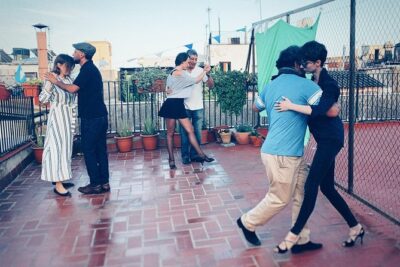
Barcelona Tango Lesson, where passion meets fun
Read our review →
Half-Day Spanish Cooking Class & Boqueria Market Tour
Read our review →
Where else this one turns up