
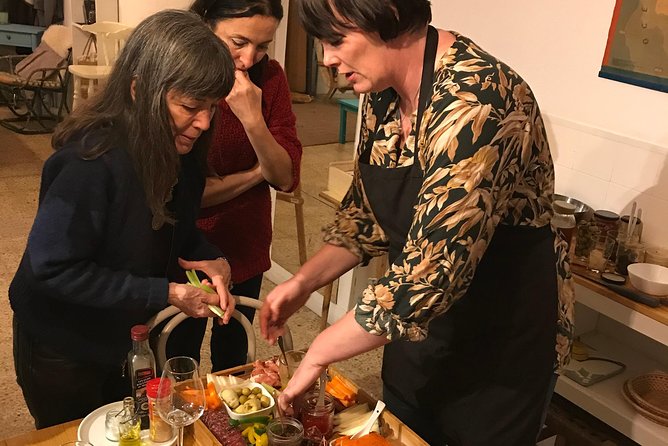
Reviewed · WINE & CAVA TOURS
Build A Catalan Charcuterie Cheese Board & Wine Pairing (V/VG Options)
Charcuterie skills, no stove required. In Barcelona, this small-group class helps you build a Catalan board and then taste wines with practical pairing tips.
I love the hands-on, no-cooking format, where you assemble cured meats, cheeses, and extras into a spread that looks great on day one. I also like that you can request a vegetarian or vegan version and still learn how to match the flavors with wine.
The one thing to consider is the expectations, it is a no-cooking class, so if you want real cooking technique, this is more about board building than culinary training.
In This Review
- Key highlights you should care about
- Why Catalan charcuterie is a real Barcelona skill
- Meeting at Savour Academy, and what the 8:00 pm timing changes
- The no-cooking approach: how this workshop still feels hands-on
- What you actually build: cured meats, cheeses, and the board “mix”
- The vegetarian and vegan option, and why it matters
- Wine tastings and pairing tips that help you shop and host
- What you eat, and why the meal feels like a full event
- The vibe: small-group, friendly hosts, and a fun learning curve
- Price and value: what $106.04 buys you here
- Logistics that actually affect your night
- Who should book this workshop (and who might skip)
- Tips to get the most out of your Catalan board and wine
- Should you book this Catalan charcuterie and wine pairing class?
- FAQ
- How long is the charcuterie and wine pairing workshop?
- What time does it start in Barcelona?
- Is the group size small?
- Are there vegetarian or vegan options?
- Is the workshop offered in English?
- Can I cancel and get a full refund?
Key highlights you should care about
- Max 10 people keeps the atmosphere intimate and makes questions easy
- No-cooking charcuterie building means you get a polished result without kitchen prep stress
- Catalan ingredients like embotidos, Spanish and Catalan cheeses, local preserves, and seasonal produce
- Wine tastings with pairing tips so you understand why each sip works
- Veg and vegan options on request so the board does not feel like an afterthought
- You eat what you make and it is enough as a proper meal, not just a snack
Why Catalan charcuterie is a real Barcelona skill
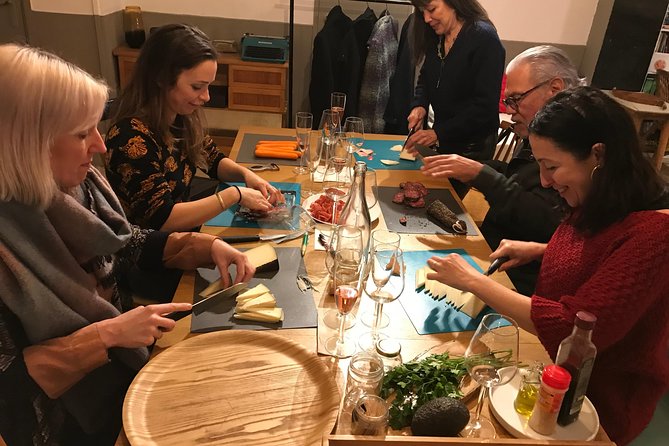
A great board in Catalonia is not random meat and cheese piled onto a board. It is about balance: salt and fat, bright and sweet, crunchy and creamy, plus a few Catalan flavor signatures that make the whole thing feel local.
In this class, you build that logic step by step using fresh seasonal ingredients. You also learn how to turn a pile of ingredients into a board that looks intentional, not chaotic. That is the kind of skill that pays off fast, whether you are planning a birthday spread or hosting a casual dinner.
And you get more than food advice. The workshop is run by an instructor with wine credentials, including WSET Level 2 and a sommelier diploma from Gremi de Restauracio de Barcelona. That matters because the wine part is not just guessing, it is pairing thinking you can reuse.
Meeting at Savour Academy, and what the 8:00 pm timing changes
The workshop meets at Savour Academy, Carrer del Farell, 12, bajos, in the Sants-Montjuïc area of Barcelona. It starts at 8:00 pm, and it ends back at the same meeting point.
That evening schedule is a hidden advantage. You can treat it like a pre-dinner ritual instead of squeezing it into your day. Plus, because you eat the board afterward as a meal, timing helps you avoid that awkward moment of still being hungry after class.
The location is also close to public transportation, which is useful in Barcelona when you do not want to plan around parking. Service animals are allowed too, so the setup is practical for more people.
Bubbles from just outside the city
- Montserrat Half-Day Tour with Tapas and Gourmet Wines
★ 5.0 · 7,359 reviews - Montserrat & Cogwheel Train, Gourmet Wine Tasting & Tapas/Lunch
★ 5.0 · 6,290 reviews - Barcelona Tapas and Wine Experience Small-Group Walking Tour
★ 5.0 · 5,804 reviews
The no-cooking approach: how this workshop still feels hands-on
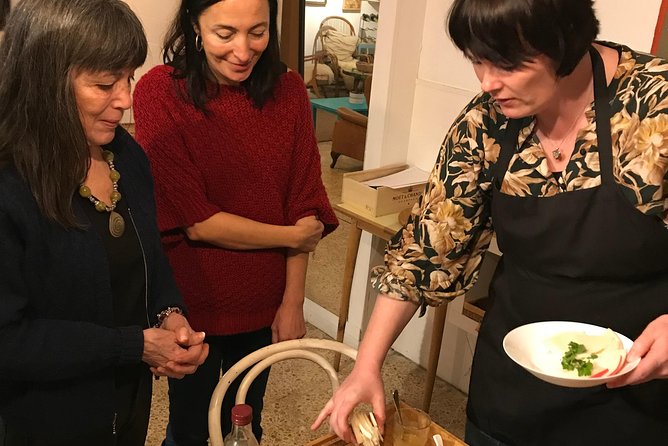
This is a “no-cooking cooking class.” Translation: you are not stuck doing stove work or learning hard kitchen techniques. Instead, you do the fun part, building and styling a board that tastes like it belongs in a good bar or tapas spot.
You start with Catalan basics. The goal is to understand which components belong on a board and why, then assemble them with an eye for variety. Even if you cannot cook, you can still make something impressive, because the structure is taught.
The process is also designed so you can move at a group pace. With a cap of 10 people, the instructor can check details and keep the pace friendly instead of rushed. You are not just watching, you are creating.
What you actually build: cured meats, cheeses, and the board “mix”
The board centers on Catalan-style components. In the sample menu, you get starter-style elements such as Barcelona embotidos (cured meats) and both Spanish and Catalan cheeses.
Then you add the “supporting cast” that makes the board feel complete:
- local preserves
- seasonal fruits and vegetables
- dried fruits and crackers
This mix is not random. The cured meats and cheeses bring salt, fat, and texture. The preserves and fruit add sweetness and acidity to reset your palate. Vegetables and crackers bring crunch and break up richness. Dried fruit rounds out the sweetness, and it helps connect with many wine styles.
If you like the idea of hosting, you will appreciate that the workshop explicitly teaches you how to build your own board after you leave. That is the real takeaway. You learn a repeatable layout and flavor strategy, not just how to make one board once.
The vegetarian and vegan option, and why it matters
One of the most practical parts of this experience is that you can request a vegetarian or vegan board. The key is that you have to ask ahead, so you can plan around it.
In a lot of food experiences, the non-meat option becomes a token change. Here, the approach is framed as an option you can genuinely choose, with the same structure in mind. You still build variety, and you still learn how the wine pairing logic applies.
For you, this is a big deal if you are traveling with a friend, partner, or group where not everyone eats the same way. It also means you can still learn the board-building technique without forcing yourself to compromise.
Wine tastings and pairing tips that help you shop and host
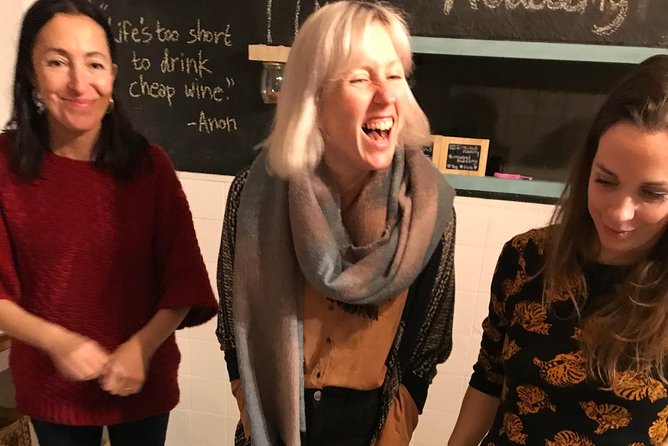
Wine is built into the experience, not tacked on at the end. You get tastings alongside the board, and you receive tips on pairing.
What I like about this format is that pairing becomes concrete. Instead of memorizing wine rules, you taste with the board in front of you, then you learn the logic: how acidity cuts richness, how tannins can work with saltier foods, and how fruit or sweetness can balance fat.
The instructor’s wine background shows in the structure. With WSET Level 2 training and a sommelier diploma, the focus stays on practical pairing guidance rather than vague talk.
And because you are eating what you make, the pairing is not just a lesson. You get to feel how each combination lands on your palate in real time, then you can reuse the same thinking when you choose wines back home.
One ticket rarely covers it all. Here's what else is nearby.
- Barcelona: Sagrada Familia Entry Ticket with Audio Guide★ 4.6 · 105,312 reviews
- Barcelona: Park Güell Admission Ticket★ 4.4 · 76,534 reviews
- Barcelona: Casa Batlló Entry with Self-Audioguide Tour★ 4.7 · 25,359 reviews
- Barcelona: Montjuïc Cable Car Roundtrip Ticket★ 4.5 · 22,368 reviews
- Barcelona: Hola Barcelona Public Transport Travel Card★ 4.5 · 20,985 reviews
- Barcelona: 24 or 48-Hour Hop-On Hop-Off Bus Tour★ 4.4 · 20,872 reviews
What you eat, and why the meal feels like a full event
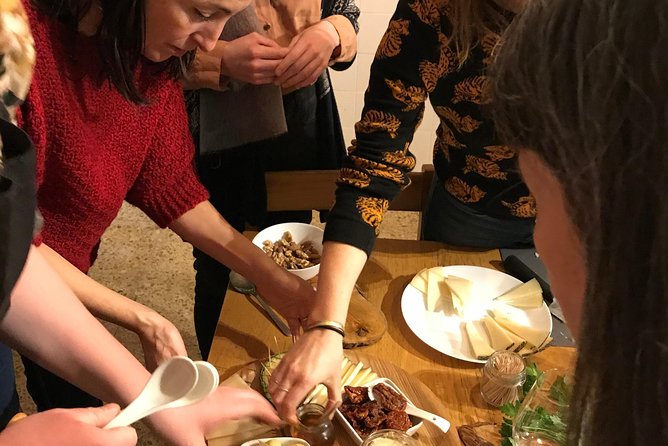
You do not just nibble. The board is served as a meal afterward, with enough portion to feel like dinner-level food.
That matters because it changes how you experience the workshop. You can relax into it. You are not counting minutes while waiting for food. You are building something, tasting while you build, then eating as a proper meal in good company.
The sample menu gives you a good sense of the rhythm: start with cured meats and cheeses, add preserves and local produce, then finish with dried fruit and crackers. It is a clean progression that mirrors how good boards unfold.
The vibe: small-group, friendly hosts, and a fun learning curve
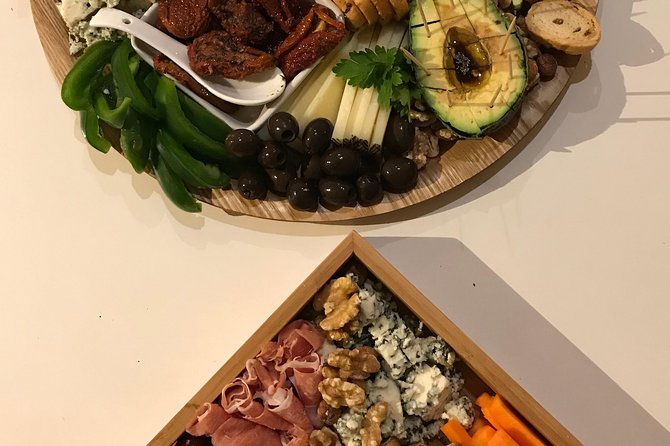
This workshop keeps the tone light. The teaching style is described as friendly and humorous, and the staff includes Zara and Kiki as key hosts.
I like this because board building can feel intimidating if you think you need culinary talent. You do not. The experience is designed so you can get confidence quickly. You see what each ingredient contributes, then you apply it to your own layout.
With a small group size, the class also feels less like a lecture and more like a shared project. Questions fit naturally into the flow, and you can learn from what other people are doing with their boards.
Price and value: what $106.04 buys you here
At $106.04 per person, you are paying for several things at once:
- a hands-on workshop (not just a tasting)
- food ingredients used to build the board
- wine tastings with pairing guidance
- a full board served as a meal
For Barcelona, the best value in food-and-wine experiences often comes from “you eat what you learn.” This one does that, and it is short, about 2 hours. That time efficiency matters on a trip, because you are getting both an activity and dinner without extra planning.
Could a supermarket board cost less? Sure, but you would miss the pairing logic, the ingredient selection help, and the step-by-step layout coaching. Here, you are buying instruction plus ingredients plus wine education, all in one sitting.
If you want a single evening where you learn something useful and also leave with a meal in your stomach, this pricing starts to make sense fast.
Logistics that actually affect your night
The class runs for around 2 hours and starts at 8:00 pm. That timing means you should plan your day so you are hungry enough to enjoy the meal after building.
It is offered in English, which is a real convenience if you want to focus on the pairing logic instead of translating on the fly.
You also get a mobile ticket, and you receive confirmation within 48 hours of booking, subject to availability. If you are traveling with a tight schedule, that short confirmation window helps you make decisions without guessing for weeks.
Who should book this workshop (and who might skip)
This experience is ideal if you want:
- a practical Barcelona food skill you can use at home
- wine pairing tips that connect to what you eat
- a social night with a small group
- a board-building activity that works even if you do not cook
It may not be for you if you expect cooking technique with real heat, chopping drills, or hands-on meal recipes. This is a board and pairing class. If you want a true cooking lesson, you might feel it is too focused.
But if you want results, fast, with ingredients that feel local and seasonal, you will probably love it.
Tips to get the most out of your Catalan board and wine
First, go in with curiosity, not perfection. The point is learning how to build balance, not producing a magazine board. Ask questions as you build, and watch how different ingredients change how the wine feels.
Second, if you need a vegetarian or vegan option, tell them ahead. This avoids last-minute compromises and helps you get a board that matches the experience structure.
Third, pay attention to the pairing tips while you taste. If you can connect each wine to a specific board element, you will remember it later when you shop for a host night.
Finally, take the board-building method seriously. When you get home, that is what lets you build a crowd-pleaser without stress. You will be able to explain the logic, not just the ingredients.
Should you book this Catalan charcuterie and wine pairing class?
If you want an evening in Barcelona that combines Catalan produce, a guided hands-on board build, and wine pairing education that you can actually repeat, I think this is a smart booking. It is short, social, and you eat what you make, which gives the night a satisfying payoff.
Book it if you are traveling with people who want good food plus a real skill, not just a tasting. Consider skipping if you are chasing a classic cooking class with stove time. For the right mindset, this is a confidence builder you can take home, along with a meal you will remember.
FAQ
How long is the charcuterie and wine pairing workshop?
It runs for about 2 hours.
What time does it start in Barcelona?
It starts at 8:00 pm.
Is the group size small?
Yes. The workshop has a maximum of 10 travelers.
Are there vegetarian or vegan options?
Yes. You can request a vegetarian or vegan option when booking or by asking.
Is the workshop offered in English?
Yes, it is offered in English.
Can I cancel and get a full refund?
You can cancel for a full refund if you cancel at least 24 hours before the experience’s start time. If you cancel less than 24 hours before, the amount you paid is not refunded.
The latest to open for booking


Wine & Cava Tours, side by side.
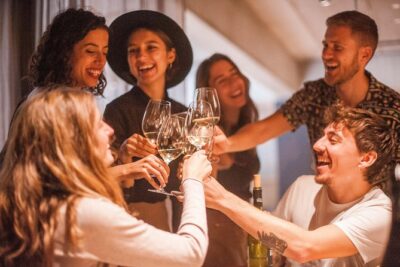
Montserrat Half-Day Tour with Tapas and Gourmet Wines
Read our review →
Montserrat & Cogwheel Train, Gourmet Wine Tasting & Tapas/Lunch
Read our review →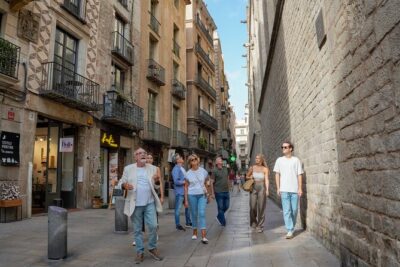
Barcelona Tapas and Wine Experience Small-Group Walking Tour
Read our review →Montserrat, Cogwheel, Black Madonna & Winery Tour
Read our review →
Montserrat with Black Madonna & Medieval Winery with Tapas/Lunch
Read our review →
Tapas Walking Tour with Food, Wine, and History
Read our review →
Barcelona Tapas Walking Tour: Food, Wine & History
Read our review →Where else this one turns up