
Reviewed · GAUDÍ BUILDING TOURS
Exclusive Gaudi Segway Guided Tour Architectural Marvels
Segways make Gaudí feel close. This guided ride mixes effortless gliding with major architectural stops, including Casa Milà, Casa Batlló, and Sagrada Família, plus Gothic Quarter and waterfront sights. I love the Segway glide itself, and I also like that the guide pays attention to what you want to see most. One thing to plan for: entry to Sagrada Família and the Casa buildings is not included, and the tour depends on good weather.
At $75.19 per person for a 2 to 3 hour loop, the value comes from time saved. You cover a lot of ground in one go without feeling like you are rushing on foot between Barcelona’s top sights. With a maximum group size of 30 and mobile ticket access, it is easy to fit into a busy day.
You start in Ciutat Vella, right where Barcelona’s old streets and Roman-era remnants meet the modern pull of the city. From there, the route gradually shifts from stone history to Gaudí’s sculptural designs, then toward parks and harbors.
In This Review
- Key highlights worth planning for
- Segway meets Gaudí: why this 2 to 3 hour loop works
- Plaça dels Traginers and the Roman Wall in the Gothic Quarter
- From Passage Colom to Cara de Barcelona, then into Port Vell
- Estació de França: a grand façade between old city and rail lines
- Port Olímpic and the Moorish Revival Plaza de Toros
- Sagrada Família and the two Gaudí houses on Passeig de Gràcia
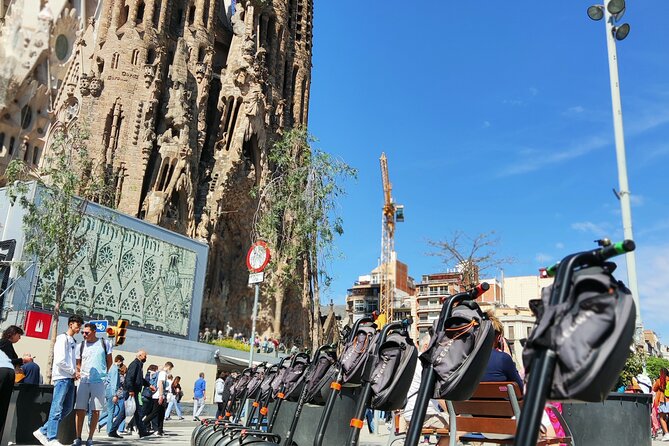
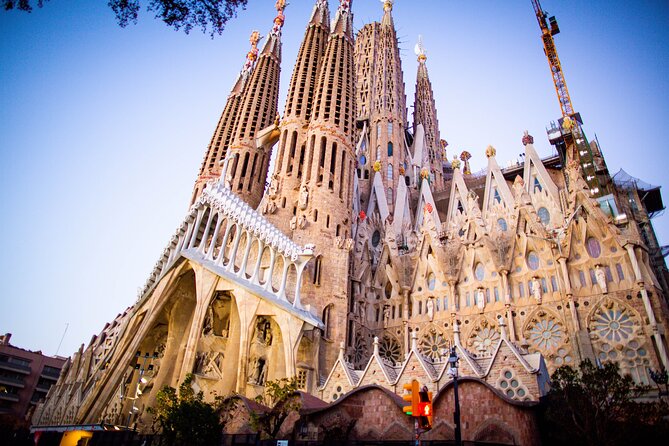
- Basilica de la Sagrada Família: what the tour helps you notice
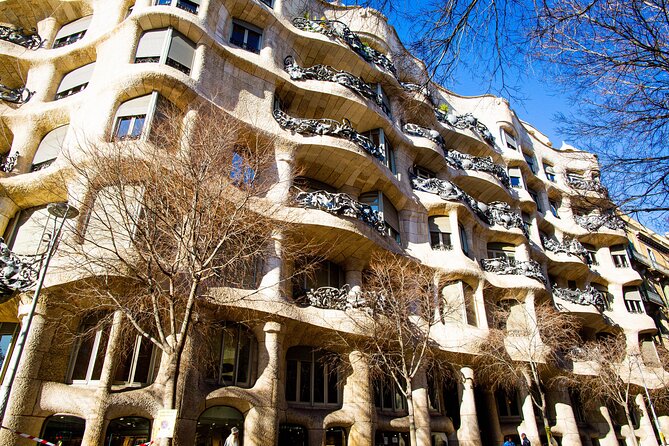
- Casa Milà (La Pedrera): the rooftop is the real personality
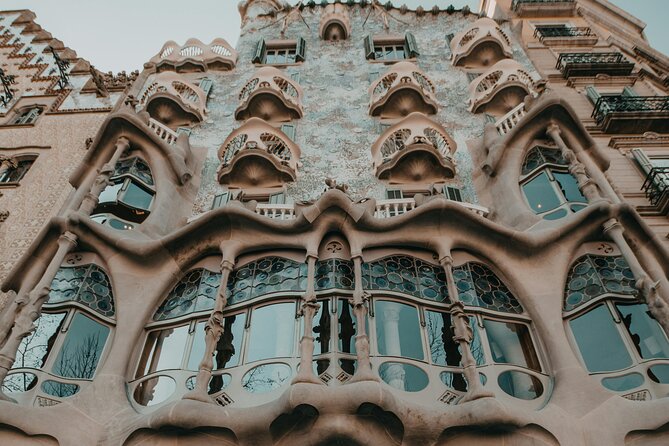
- Casa Batlló: dragon-back drama and light-filled design
- Passeig de Sant Joan, Arc de Triomf, and Parc de la Ciutadella
- Arc de Triomf: a World Fair gateway with a playful face
- Parc de la Ciutadella: green pause plus major landmarks
- Ending near El Born: medieval streets after the ride
- How much time you should budget for ticketed Gaudí sights
- Who this Segway architecture tour is best for
- Should you book this tour?
Key highlights worth planning for
- Segway-friendly city flow: the route uses areas where bike paths and easy circulation help you reach key monuments without burnout
- Gothic Quarter start at Plaça dels Traginers: you begin with the Roman Wall, a rare, quick hit of Roman Barcelona
- Big Gaudí cluster in one ride: Sagrada Família, Casa Milà (La Pedrera), and Casa Batlló are all built into the arc of the tour
- Two water stops plus a station stop: Port Vell, Port Olímpic, and Estació de França add variety beyond the usual photo circuit
- Pause in Parc de la Ciutadella: you get green space and major landmarks without losing momentum
- End near El Born: you finish close to medieval streets and major neighborhood culture
Segway meets Gaudí: why this 2 to 3 hour loop works
A Segway tour in Barcelona is all about efficiency with style. Gaudí’s buildings are spread out across the city, and even when you know the map, walking can feel like a full-day mission. This tour turns that problem into something fun: you glide between stops, so you spend less time transferring and more time actually looking.
The other reason this works is the mix of architecture types. Yes, you get the famous Gaudí trio: Sagrada Família plus Casa Milà and Casa Batlló. But you also get earlier layers like the Roman Wall in the Gothic Quarter, plus civic and maritime Barcelona at Port Vell, Port Olímpic, and Estació de França. That variety matters because it helps you see how Barcelona shifted over centuries, not just how it looks on postcards.
At $75.19, it is not a budget activity, but it is priced like a guided, moving experience. The value comes from bundling time, guidance, and transportation into one payment. Just note the trade-off: the major attraction entries are not included, so you still need to handle those separately if you want to go inside.
Plaça dels Traginers and the Roman Wall in the Gothic Quarter
Your tour begins at Carrer del Correu Vell in Ciutat Vella and quickly settles you into the Gothic Quarter atmosphere. The first notable stop is Plaça dels Traginers, where you can see the Roman Wall. Dating to the Roman era, it is one of those moments where Barcelona’s story stretches back far earlier than most first-time visitors expect.
What I like about starting here is contrast. You get ancient stone first, in a space that feels tight and medieval around you, with narrow streets that make you slow down and look at details. The stop is short, about 15 minutes, and the admission for this part is free. So it is a low-risk, high-reward way to kick off the ride.
Practical tip: arrive ready for a bit of stop-and-go. This is an old neighborhood, so even with a Segway, you will be moving through pedestrian spaces and near historic structures. If you are prone to motion anxiety, mention it to the guide at the start and keep your focus on steady pacing.
Cover more ground, standing up
- Barcelona Segway Tour
★ 5.0 · 680 reviews - Barcelona Segway Tour
★ 4.7 · 630 reviews - Barcelona: City Highlights Guided Segway Tour
★ 4.9 · 624 reviews
From Passage Colom to Cara de Barcelona, then into Port Vell
Next, the route threads through the Gothic Quarter into Passage Colom, a covered passage named for Christopher Columbus. It is more than a walkway. With shops and cafes along the way, it gives you a taste of how locals and visitors mix in central Barcelona, not just a quiet museum corridor.
From there, you hit Cara de Barcelona, the Face of Barcelona sculpture. It is a brief stop, about 5 minutes, and there is no admission ticket included for it. Still, it serves a purpose. Meeting-point art like this is fun because you can pause, take photos, and reset your bearings before you move toward the waterfront.
Then the tour shifts to Port Vell. Here you trade Gothic alley texture for harbor energy. Port Vell is a waterfront area where you can see luxury yachts, browse and eat around the Maremagnum area, and get a classic landmark moment at the Christopher Columbus Monument. For many people, it is the point where Barcelona starts to feel more Mediterranean and open.
What to expect here: this stretch gives you wide views and big sight lines, which is a nice break from the tight streets of the old city. If you plan to shop or snack, this is the part of the tour where you might want to keep an eye out.
Estació de França: a grand façade between old city and rail lines
After the harbor area, you pass by Estació de França, or Francia Station. This is a historic railway station with architectural grandeur built for the 1929 International Exposition. The station’s façade blends classical and Mediterranean influences, and it works as a reminder that Barcelona’s modern identity was shaped not only by art and design, but also by infrastructure.
Even if you do not use the train that day, the station is worth noting because it is a strong “architecture without paying for an entrance” type of stop. The guide can help you spot the design cues that make it feel special: the way the façade reads from the street, and the feeling of a major civic building rather than a utilitarian transit point.
Value note: this kind of stop keeps the tour from feeling like only ticketed attractions. You get guided context while most of your walking budget stays spent on moving between highlights.
Port Olímpic and the Moorish Revival Plaza de Toros
The tour then moves to Port Olímpic, a waterfront area developed for the 1992 Summer Olympics. This is where Barcelona shows its sporting, modern side. You get beaches, a promenade feel, and access to restaurants and bars that pick up later in the day.
Admission is marked as free here, and the short time slot means you are not stuck. It functions like a palate cleanser between major architecture and major churches, and it also sets up the idea that Barcelona builds public spaces around its water.
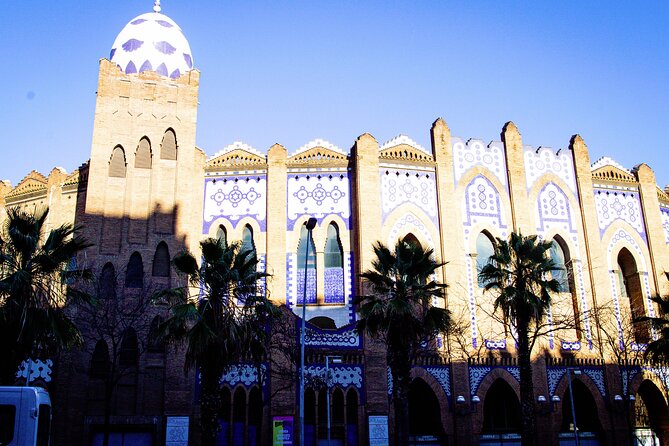
A standout cultural contrast comes next at Plaza de Toros Monumental. The arena is built in Moorish Revival style, and it is one of Barcelona’s iconic landmarks. Bullfighting used to happen here, but the practice stopped in 2011. Today, the arena hosts other events like concerts and exhibitions.
Even if you do not care about the history of bullfighting, the building matters architecturally. The Moorish Revival design gives the tour a regional flavor you might not expect when you are focused on Gaudí. It also adds a useful “how culture changes” perspective, because the venue evolved from one tradition to a different role in modern city life.
Sagrada Família and the two Gaudí houses on Passeig de Gràcia
This is the heart of the tour. You get Gaudí’s fingerprints on a massive scale at Sagrada Família, then you go into the residential drama of Casa Milà and Casa Batlló.
More curves, barely a straight line
- Barcelona: Park Güell and Gaudí House Museum Entry Ticket★ 4.5 · 6,326 reviews
- Barcelona: Gaudí’s Park Güell Tour with Fast-Track Ticket★ 4.8 · 4,512 reviews
- Barcelona: Sagrada Familia, Modernism, and Old Town Tour★ 4.7 · 1,621 reviews
- Sagrada Familia & Gaudi Tour Private or Small Group with Tickets★ 4.5 · 1,188 reviews
- Complete Gaudi Tour: Casa Batllo, Park Guell & Sagrada Familia★ 5.0 · 1,152 reviews
- Barcelona e-Bike Tour: Gaudí & Old Town Small Group★ 5.0 · 769 reviews
Basilica de la Sagrada Família: what the tour helps you notice
Sagrada Família is a UNESCO World Heritage Site and a symbol of Gaudí’s visionary design. The basilica is still under construction, and it is funded entirely by donations, so ticketing and entry are a big part of the whole experience. On this tour, the admission ticket is not included, so plan to treat it as a separate time and cost decision.
The big thing to pay attention to is Gaudí’s “nature-meets-religion” language. The interior is described as a forest of towering columns, with stained glass windows and intricate sculptures. Even if you only do a quick look from outside during the ride, the guide’s context can help you connect exterior details to interior themes, so the building stops feeling like only a photo spot.
Practical consideration: if you want to go inside, check your schedule. The tour is 2 to 3 hours total, so ticket entry can affect how much time you have at each Gaudí stop.
Casa Milà (La Pedrera): the rooftop is the real personality
Casa Milà, also known as La Pedrera, is a UNESCO World Heritage Site completed in 1912. Its most obvious feature is the undulating stone façade with wrought-iron balconies. The rooftop is where the building really shows off, with surreal chimneys and sculptures.
The interior is equally inventive, with curved walls and organic shapes, matching Gaudí’s modernist style. Admission is not included on the tour, but if you add entry, you may also be able to visit spaces like the Espai Gaudí museum and use the rooftop terrace for panoramic Barcelona views. Even without going inside, the guide’s pointing can help you see how the façade is more than decoration. It is part structure, part sculpture.
Casa Batlló: dragon-back drama and light-filled design
Casa Batlló is another Gaudí masterpiece on Passeig de Gràcia. Gaudí remodeled it between 1904 and 1906 for the Batlló family. The façade looks like a dragon’s back, with vibrant ceramic tiles and wrought-iron details. It is one of those buildings that makes you feel like Gaudí designed it for walking past in slow motion.
Inside, the spaces are described as fluid, with organic forms and innovative use of light and color. If you go in, you can explore the Noble Floor, the Loft, and the rooftop terrace with its dragon-inspired spine. Again, admission is not included on the Segway tour, so you are deciding how many of these interior experiences you want to add.
If you are trying to prioritize: pick one to go inside deeply. With all three Gaudí sites, it is easy to spread yourself too thin unless you plan ahead.
Passeig de Sant Joan, Arc de Triomf, and Parc de la Ciutadella
After the Gaudí cluster, the route shifts away from ticketed interiors and into wide, scenic spaces.
Passeig de Sant Joan is a tree-lined boulevard stretching from the Arc de Triomf toward the Gràcia district. It is known for cafes, shops, and boutiques, and it feels more local than the center-of-everything zones near Gaudí. This is where you can breathe, look at street life, and reset between big architecture moments.
Arc de Triomf: a World Fair gateway with a playful face
Arc de Triomf is built as the main access gate for the 1888 Barcelona World Fair. Josep Vilaseca i Casanovas designed it, and the arch has a red-brick façade with ornate sculptures and inscriptions. It is a triumphal arch, but not in the stern, military way you might expect from other cities. The whole area feels light and social, often with street performers and musicians around the park.
Stop time here is short, so use it to lock in the landmark. Even a quick look helps, because it puts your next big green space into context.
Parc de la Ciutadella: green pause plus major landmarks
Parc de la Ciutadella is a large park in the heart of Barcelona. It started as a military fortress in the 18th century and was transformed into a public park for the 1888 Barcelona World Fair. You can see the Cascada fountain, created by Josep Fontsére with help from a young Antoni Gaudí. That kind of detail is exactly why having a guide on a Segway tour helps. You hear the connections between periods.
The park also holds the Barcelona Zoo and the Catalan Parliament. The stop length is about 20 minutes, and admission is listed as not included. The good news is that most of what makes this park worth visiting is outdoors: walking paths, gardens, and shaded areas to pause.
Tip for your photos: this is a great place to take non-ticket photos and stretch your legs. The architecture stops are dramatic, but a park keeps your eyes from overload.
Ending near El Born: medieval streets after the ride
The tour also includes El Born, the neighborhood between the Gothic Quarter and Ciutadella Park. Born is known for medieval-style streets and a lively mix of boutiques, cafes, and art galleries. A highlight in the area is Santa Maria del Mar church, an outstanding example of Catalan Gothic architecture.
El Born also ties into Barcelona’s culture through things like the Picasso Museum, known for its collection of Pablo Picasso works. Even if you do not step into a museum today, this is a strong neighborhood to walk after your tour ends, because the street layout encourages exploring slowly.
Why this works at the end of a Segway day: you finish close to foot-friendly areas. Your Segway ride has already delivered the major architecture hits. Now you get the neighborhood feeling and can decide what to explore next at your own pace.
How much time you should budget for ticketed Gaudí sights
The big Gaudí stops have admission tickets marked as not included: Sagrada Família, Casa Milà (La Pedrera), and Casa Batlló. That is the main planning variable.
If you want to see the interiors of all three, you may need a second day or a separate booking strategy. If you only have one day, a smart approach is:
- Book your Segway tour for one focused architecture overview
- Choose one or two of the Gaudí sites for interior entry
- Use the others for exterior appreciation plus guide context
Also consider how you handle crowd flow. Sagrada Família is under construction and typically draws lines. Casa Milà and Casa Batlló are major attractions too. This is not a “show up and casually stroll in” situation. It is manageable, but you should treat tickets as part of the plan, not an afterthought.
Who this Segway architecture tour is best for
This tour fits best if you want a guided architecture hit without turning your day into a marathon.
You will likely love it if:
- You want to combine Gaudí with other architectural periods like Roman-era remnants and civic landmarks
- You prefer moving efficiently between sights rather than walking every connection
- You like guides who adjust to your priorities
From a practical angle, the guide focus matters. One helpful tip from real-world experience with this kind of tour format is to tell the guide what you care about most. When the guide knows your top interests, the “moving” part becomes more than transportation.
It might be less ideal if:
- You want lots of free time at each site for deep museum-style exploration
- You are sensitive to weather changes, since the tour requires good weather
- You cannot handle the idea of adding separate admission tickets to your plan
Should you book this tour?
If your goal is to see Barcelona’s architecture highlights in one guided Segway loop, this is a very solid booking. The price gives you movement, structure, and expert interpretation, and it layers in more than just Gaudí by adding Roman-era, harbor, and civic stops.
Book it if you want efficient sightseeing and you are comfortable treating Sagrada Família and the Casa buildings as separate ticket decisions. Skip or rethink it if you only care about one single site and would rather spend your time inside than moving around.
If you do book, plan your Gaudí entry tickets early, pick one interior priority, and show up ready for a guided ride that uses Barcelona’s easy-moving circulation to get you to the goods faster.
The latest to open for booking

Gaudí Building Tours, side by side.
Park Güell and Gaudí House Museum Entry Ticket
Read our review →
Gaudí’s Park Güell Tour with Fast-Track Ticket
Read our review →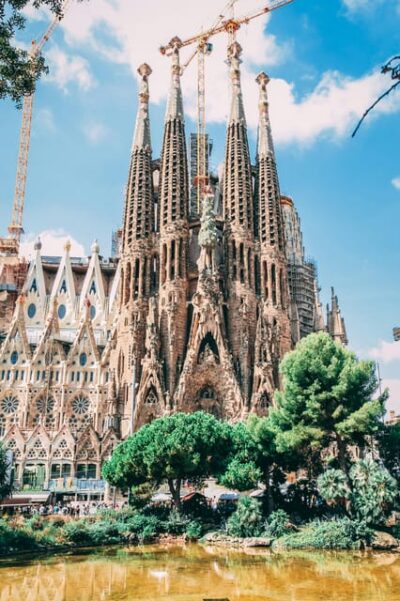
Sagrada Familia, Modernism, and Old Town Tour
Read our review →
Sagrada Familia & Gaudi Tour Private or Small Group with Tickets
Read our review →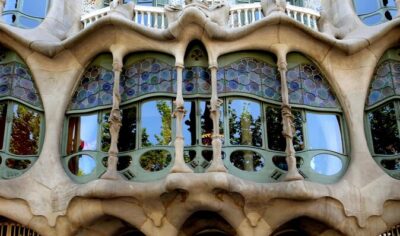
Complete Gaudi Tour: Casa Batllo, Park Guell & Sagrada Familia
Read our review →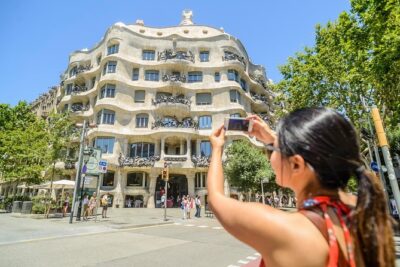
Barcelona e-Bike Tour: Gaudí & Old Town Small Group
Read our review →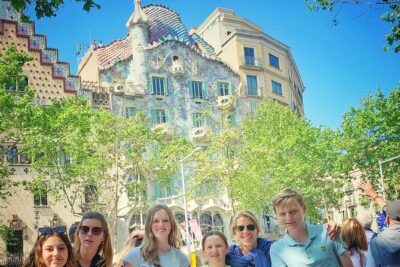
Ramblas, Old Town, Gothic and Gaudi Architecture Walking Tour
Read our review →
Gaudi´s Casa Vicens Skip the Line Ticket with Audioguide
Read our review →Where else this one turns up