Reviewed · TOURS & DAY TRIPS
From Barcelona: Medieval Villages Day Tour
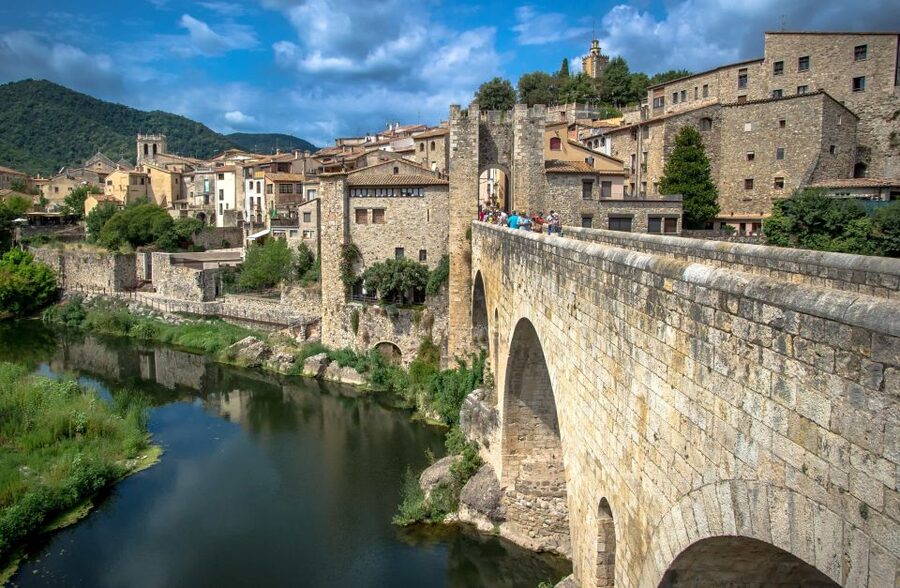
A day trip this good starts with medieval stone. You get three Catalan villages in one go, plus countryside drives and clifftop viewpoints that feel a world away from Barcelona. I especially love the mix of guided walks and real free time, and I also like how the route sneaks in lesser-visited places that most people miss.
What I like most is how the story sticks. In Besalú, you get to see the arcaded streets and the preserved Jewish sites, including a 12th-century mikveh, then you shift gears to Rupit’s cobblestones and hanging bridge, and end in Tavertet with its preserved houses and a big view over the Panta de Sau Lake. Guides such as Berta and Nuria are known for making the history feel practical, not like a lecture.
One thing to consider: it’s a 10-hour day, so you will move fairly often. And while Rupit and Tavertet get good time for wandering, some people wish they had a few extra minutes in each village, especially if you like taking slow photos.
In This Review
- Key points to know before you go
- Meeting Point in Barcelona: Where the Day Starts
- Besalú: Arcades, Medieval Jewish Sites, and the Mikveh Moment
- Castellfollit de la Roca: A Tiny Cliff Town That Adds Big Drama
- Rupit: Hanging Bridge Streets, Sant Miquel, and 2 Hours to Wander
- Lunch in Rupit: Plan Around Local Food, Not Package Meals
- Cingles de Tavertet: Sandstone Cliffs, Iberian Relics, and the Long View Payoff
- Tavertet: 48 Preserved Houses, Sant Cristòfol, and Panta de Sau Lake Views
- Coffee break or viewpoint time
- The Return Drive: Montseny and the Green Backdrop to Match the Stone
- Price and Value: Is $117 a Fair Deal for 3 Villages?
- Comfort, Pace, and Small Group Reality
- Who Should Book This Medieval Villages Day Tour?
- Should You Book It?
- FAQ
- What villages are included in the tour?
- How long is the Medieval Villages Day Tour from Barcelona?
- What is the meeting point in Barcelona?
- Is food included in the price?
- Does the tour include a guide, and is it in English?
- Do I get free time during the day?
- Is hotel pickup included?
- Can I cancel and get a full refund?
Key points to know before you go
- Three villages, three vibes: Besalú’s Jewish past, Rupit’s bridge and baroque church, Tavertet’s clifftop stillness
- Guided history plus time to roam: you get tours with your guide, then breaks to explore at your own pace
- Cliff views and classic geology: the Cingles de Tavertet sandstone cliffs and viewpoint moments are a highlight
- A small-town stop on the drive: Castellfollit de la Roca adds a rare edge-of-a-cliff perspective
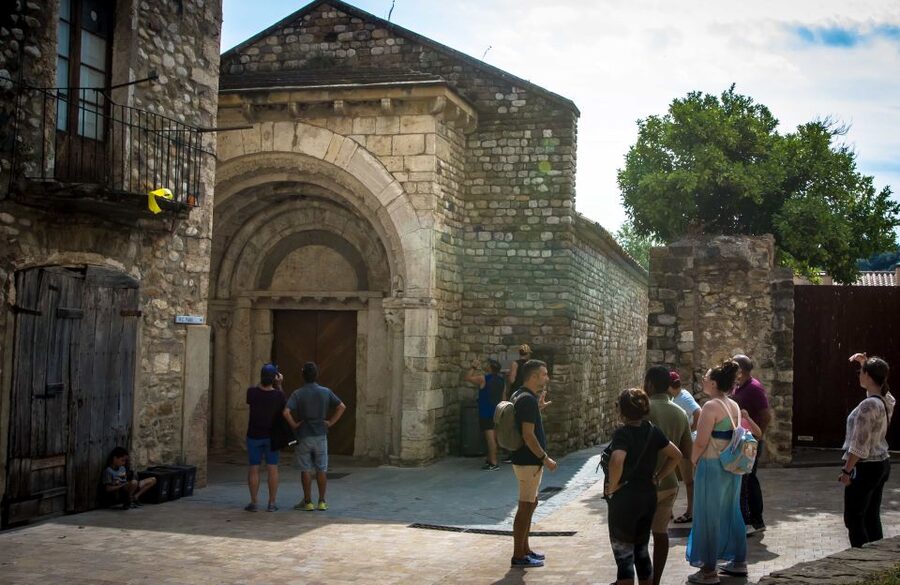
- Stops include major medieval details: Besalú’s mikveh, Rupit’s Church of Sant Miquel, and Tavertet’s Romanesque church
Meeting Point in Barcelona: Where the Day Starts
Your tour meets in central Barcelona at the Explore Catalunya office, directly across from the Palau de la Musica, off Via Laietena. This is an easy part of the city to reach, and it also means you do not have to deal with complicated hotel pickup logistics.
Plan to arrive a little early. You’ll want time to get your bearings, check the restroom situation if you need one, and settle in before you head out into Catalonia. The day is structured, but the pace still feels relaxed because the driving is mostly between compact stops rather than nonstop sightseeing.
Also, note the tour is English live-guided. That matters here because the best parts of this day come from what your guide points out in each village, from street details to religious history.
Besalú: Arcades, Medieval Jewish Sites, and the Mikveh Moment
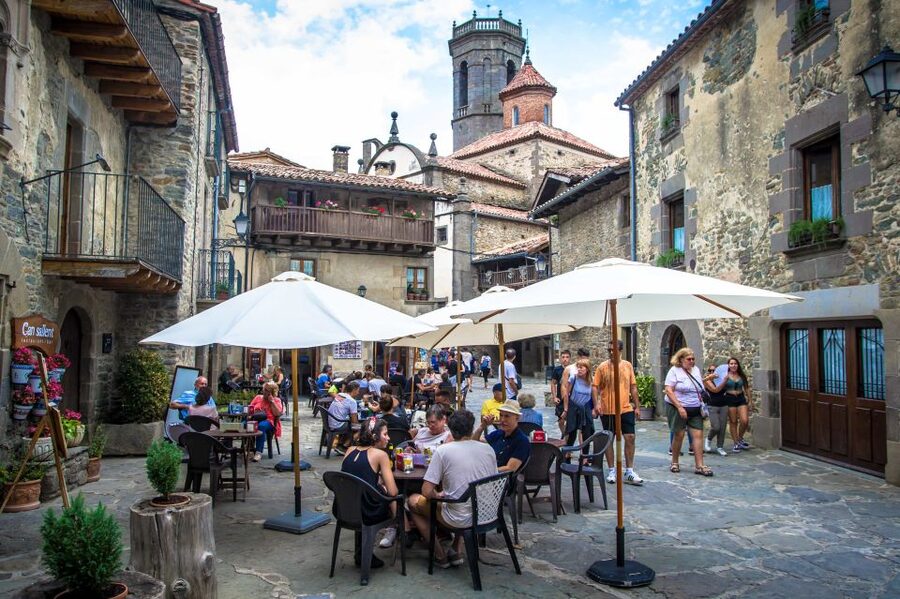
Besalú is the kind of place where the buildings do half the explaining. When you arrive, you start with a guided walk through the Middle Ages-era core. The first impression is the arcaded streets, the stone that looks like it has always been there, and the way the old town feels intentionally preserved.
This is also where you get one of the most distinctive stops of the day: the restored mikveh. It’s a 12th-century Jewish ritual bath, and it’s not just a random museum stop. Seeing it gives you a concrete sense of daily life and community practices in medieval Besalú, not just castles and church facades.
Your guide also shows you remains connected to a medieval synagogue. Even if you only know a little about that era, you’ll come away understanding how Besalú’s Jewish history is part of the town’s identity, not an afterthought.
If you like walking slowly, this is the village where your pace can stretch. The guided portion helps you spot the key details fast, then you can keep wandering if you still have energy after the walk.
Barcelona rewards the wandering, here are a few more stops worth adding.
- Barcelona: Sagrada Familia Entry Ticket with Audio Guide
★ 4.6 · 105,312 reviews - Barcelona: Park Güell Admission Ticket
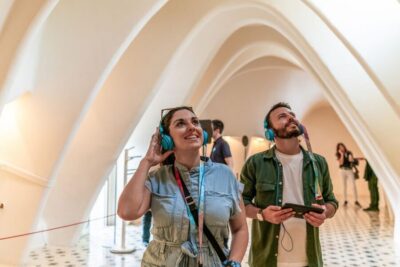
★ 4.4 · 76,534 reviews - Barcelona: Casa Batlló Entry with Self-Audioguide Tour
★ 4.7 · 25,359 reviews
Castellfollit de la Roca: A Tiny Cliff Town That Adds Big Drama
On the way to Rupit, the tour makes a stop at Castellfollit de la Roca. This is one of the smallest towns in Catalonia, with about 1,000 inhabitants, and it hugs a basalt precipice.
That cliff-edge setting is the point. Even from just a quick stop, you start seeing Catalonia as more than “pretty villages.” It’s also geology and how people adapt to dramatic terrain. You also get a breather from full-day walking because this stop is more about perspective than museum time.
One practical note: bring your eyes up, not only down. In places like this, the best photos come from looking outward over the drop, not from just photographing streets at ground level.
Rupit: Hanging Bridge Streets, Sant Miquel, and 2 Hours to Wander
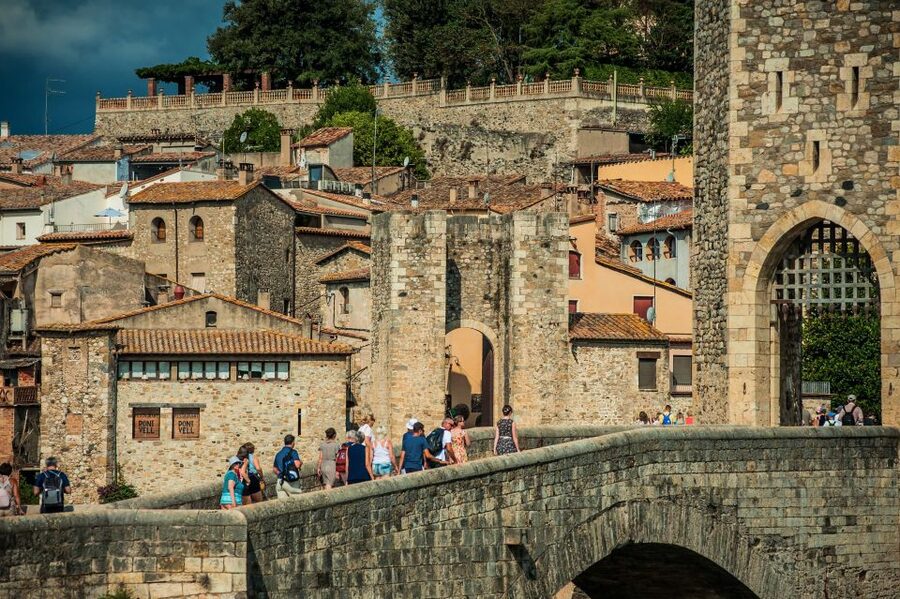
Rupit is where the day gets more intimate. After the drive from Besalú and the cliff-town stop, you arrive and then you get a full 2 hours of free time to explore at your leisure.
You’ll likely notice cobblestone lanes right away, plus country houses with 16th-century features. Rupit is small, but it has enough corners to keep you busy without feeling frantic.
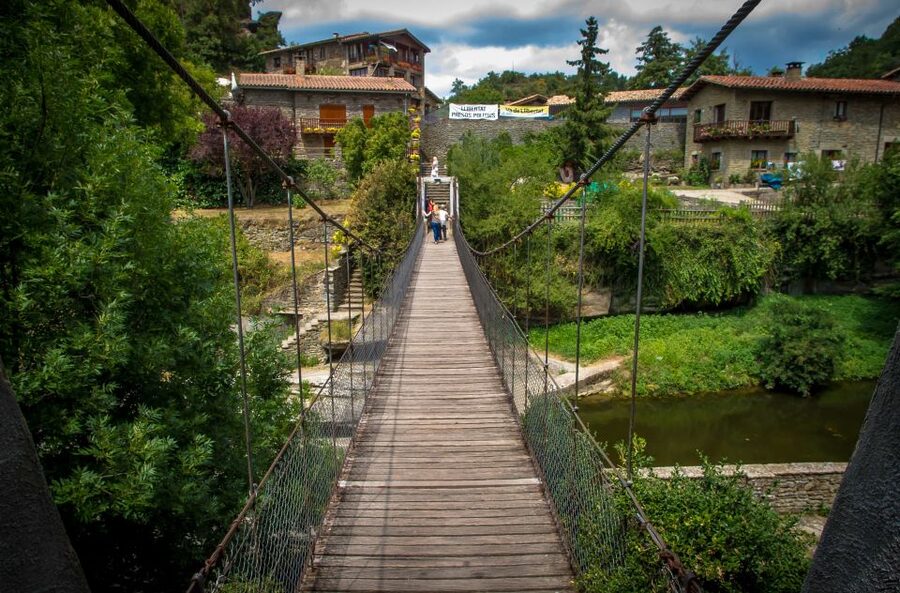
A major highlight is the hanging wooden bridge. It’s the kind of detail that makes the village feel alive, like people still use the rhythms of their old town. If you enjoy “walk, pause, look again” sightseeing, Rupit is a good match.
Your guided stop also points you to the Baroque-era Church of Sant Miquel. Pairing this with the older street fabric helps you see time layered in the same place, instead of seeing villages frozen in one decade.
If you want more structure, Rupit also includes the remains of the Castle of Rupit perched on a rocky peak. Even if you do not hike hard, just the sight of that position helps you understand why medieval life clustered where it did: control, protection, and visibility.
Lunch in Rupit: Plan Around Local Food, Not Package Meals
Lunch is not included in the price, so you purchase it at a local restaurant. This can be a good thing. It gives you a chance to eat in the actual village rather than rushing through a set menu on the road.
If your stomach is sensitive to long days, I suggest keeping your lunch simple and starting your meal early in the free-time window. You’ll thank yourself once you’re back on the drive toward Tavertet.
Cingles de Tavertet: Sandstone Cliffs, Iberian Relics, and the Long View Payoff
After Rupit, you transition from village streets to big open air with a scenic drive to the top of the Cingles de Tavertet sandstone cliffs.
This is one of those segments where the timing matters. The drive is part of the experience, because it sets you up to appreciate what you’re seeing. The cliffs are dramatic, and your guide also includes stops connected to older human history on the way up.
You pass a megalithic tomb described as a field of funerary urns. Then you also see the Iberian Wall before reaching the village of Tavertet. Even if you mostly came for medieval towns, these quick stops add context, showing you that the area mattered long before the medieval stone you’ll see next.
The best practical advice here is to pack a little patience. There are roadside moments where you want to pull your phone out, then a few minutes later you’ll see a better angle. Stay ready to look up and look outward.
One ticket rarely covers it all. Here's what else is nearby.
- Barcelona: Montjuïc Cable Car Roundtrip Ticket★ 4.5 · 22,368 reviews
- Barcelona: Hola Barcelona Public Transport Travel Card★ 4.5 · 20,985 reviews
- Barcelona: 24 or 48-Hour Hop-On Hop-Off Bus Tour★ 4.4 · 20,872 reviews
- Barcelona: Park Guell Guided Tour with Skip The Line Entry★ 4.7 · 17,563 reviews
- Barcelona Aquarium: Entry Ticket★ 4.4 · 16,717 reviews
- Barcelona in 1 Day: Sagrada Familia, Park Guell,Old Town & Pickup★ 5.0 · 13,541 reviews
Tavertet: 48 Preserved Houses, Sant Cristòfol, and Panta de Sau Lake Views
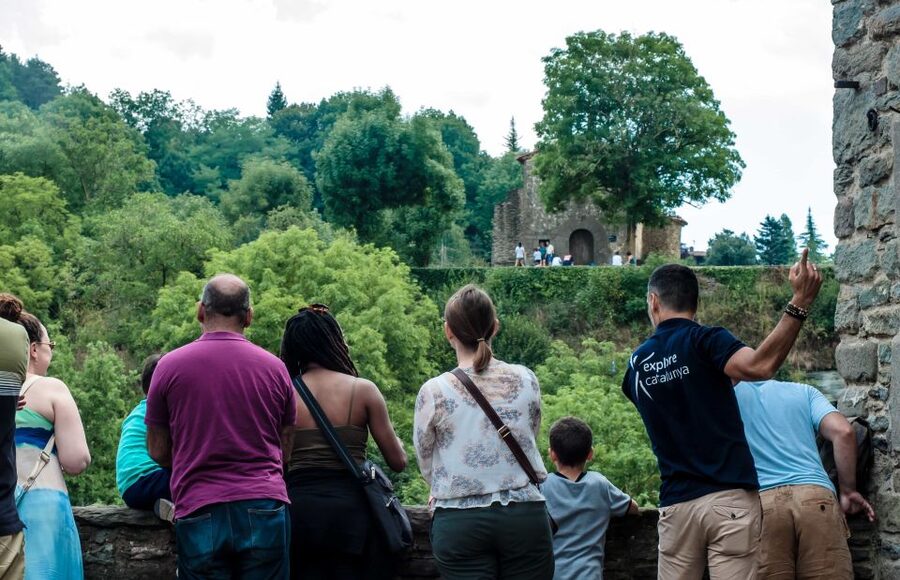
Tavertet is the final village stop, and it has a different energy than Besalú and Rupit. It feels quieter, more perched, and more about lingering with the view.
With your guide, you tour the village and learn why it’s been declared a National Property of Cultural Interest. The key detail is the preserved core: 48 houses from the 17th and 18th centuries. That matters because it means you’re not just walking past a few renovated facades. You’re seeing a large enough preserved group that the place reads like an intact village fabric.
You also visit the Church of Sant Cristòfol, a Romanesque church dating to the 11th century. This is where the day’s timeline clicks into place. You’ve moved from 12th-century Jewish sites in Besalú, through Renaissance-era street fabric and Baroque church architecture in Rupit, and now you land on Romanesque stone at the top of the hill.
Coffee break or viewpoint time
You get a short break for coffee at a local café, which you pay for yourself. If you’d rather not sit, you can walk to the viewpoint. Either choice works, and both connect back to the big reward: views over the Panta de Sau Lake.
This is also where I’d adjust expectations. Tavertet is small, so if you love long museum-style visits, this is not the stop for that. But if you like village wandering plus a strong viewpoint, it’s a perfect ending.
The Return Drive: Montseny and the Green Backdrop to Match the Stone
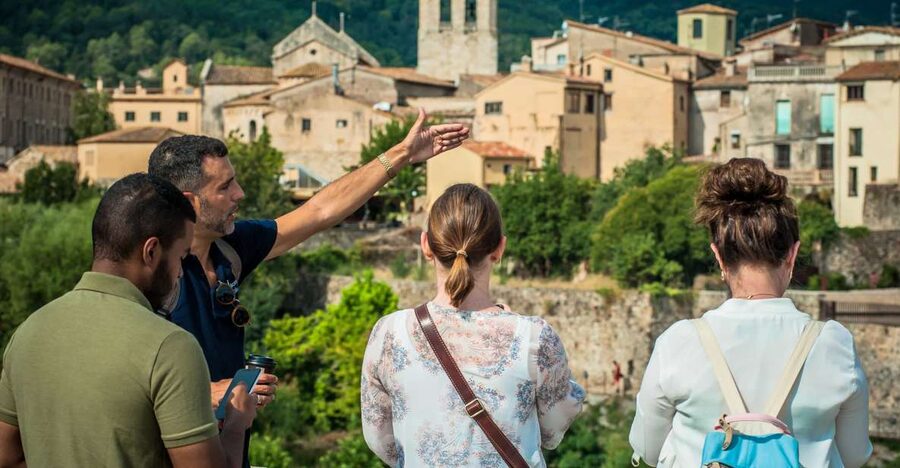
On the way back to Barcelona, you relax on the drive and take in more scenery. You’ll pass El Magatalls, a lush forest area, and then you’ll see El Montseny, a UNESCO Man and Biosphere-listed natural park.
This matters because the day isn’t only stone villages. The drive reminds you that you’re in Catalonia, where villages survive because the land around them provides routes, crops, and livelihoods.
Also, it breaks up the day. After three villages worth of walking and looking, the ride back is a chance to rest your legs and stomach before you return to the city.
Some people will note that they’d love even more time in the first half of the day, especially in Besalú. If that sounds like you, plan to return to Besalú later on your own and do an extra slow walk when you’re not under a tour schedule.
Price and Value: Is $117 a Fair Deal for 3 Villages?
At $117 per person for a 10-hour tour, you’re paying for two things: transportation and an English live-guided day that covers multiple towns you’d otherwise have to plan separately.
Here’s how I look at the value:
- You’re not paying for just one village. You’re paying for three, plus the cliffside stop on the drive.
- You’re not paying for a driver-only transfer. Your guide does walking segments and interpretive stops like the mikveh, synagogue remains, the wooden bridge area, and the Tavertet context.
- Food is not included, so you control lunch quality. That reduces the risk of feeling trapped in a fixed menu.
Is it cheap? No. But it’s also not a day trip that leaves you starving for context. If you want history explained with your feet planted in the right places, this price starts to make sense.
The biggest value lever is whether you enjoy structured storytelling. If you prefer pure self-guided wandering, you could spend less with public transport or a rental car. But if you want someone to point out what you’d otherwise miss, this one tends to feel like a solid deal.
Comfort, Pace, and Small Group Reality
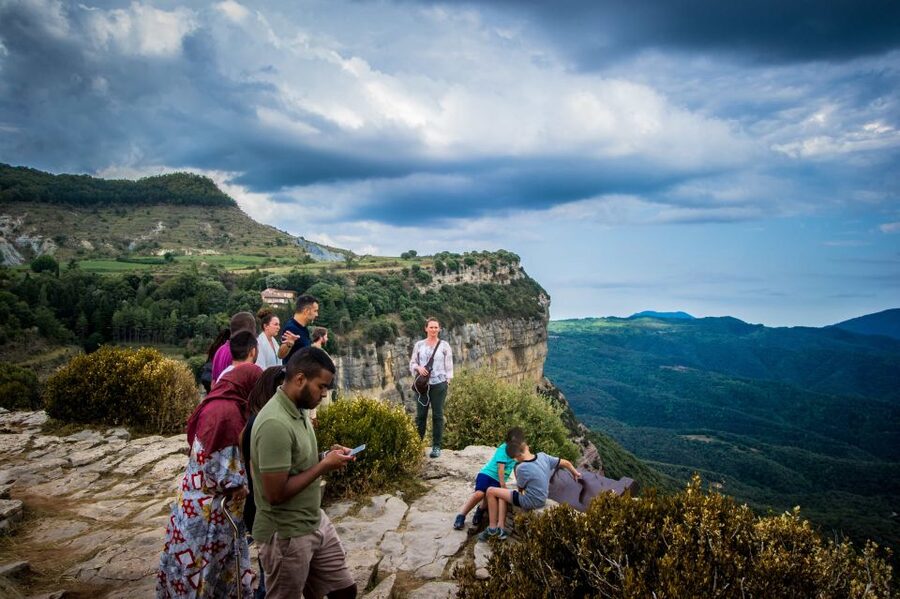
This is a small-group tour, and in many cases you’ll ride in a compact 9-seater minivan. That size helps because it keeps the day efficient without feeling like a crowded bus trip.
Pace-wise, you get a guided walk in Besalú, then guided time mixed with free time in Rupit, then guided time plus viewpoint or café time in Tavertet. It’s a good rhythm. You don’t spend the entire day standing in a line behind a guide, and you also don’t feel like you’re wandering with zero context.
The only comfort note to flag is that some rides can vary depending on the specific vehicle and road conditions. A couple of people have said they wanted a smoother ride. If you’re sensitive to bumps, it’s smart to sit where you feel safest, and consider bringing a light layer, since countryside temperatures can shift.
Who Should Book This Medieval Villages Day Tour?
Book it if:
- you want three Catalan medieval villages without spending your vacation hours on driving and routing
- you like guided explanations that point to specific details, like the mikveh in Besalú and the preserved house core in Tavertet
- you enjoy views. The cliffs and lake viewpoints are a big payoff
You might skip it if:
- you dislike fast-paced days with several transfers, because 10 hours includes a lot of movement
- you want longer, slower time in one single village. The tour distributes attention across all three, and not everyone gets the extra minutes they would like
If you’re traveling as a couple or solo, this tour often works well because the format keeps you social but not cramped. If you have limited mobility, you’ll want to consider that walking happens in each village, but the route is planned around village centers rather than steep climbs.
Should You Book It?
I think this is a strong choice for first-timers in the Catalonia countryside. You get a smart mix of medieval architecture, Jewish history in Besalú, cliff views at Cingles de Tavertet, and a satisfying finale in Tavertet with preserved houses and lake views.
If you hate tour schedules, you might feel rushed. But if you enjoy getting the highlights with a guide, then using free time to wander your way, this day trip has the right balance.
If the weather is decent, go. The views are part of why this works, and clear skies turn the last stretch into the kind of memory you will still describe months later.
FAQ
What villages are included in the tour?
The tour visits Besalú, Rupit, and Tavertet.
How long is the Medieval Villages Day Tour from Barcelona?
The duration is 10 hours.
What is the meeting point in Barcelona?
You meet at the Explore Catalunya office, directly across from the Palau de la Musica, off Via Laietena.
Is food included in the price?
Food and drinks are not included, and you purchase lunch at a local restaurant in Rupit.
Does the tour include a guide, and is it in English?
Yes, it includes a live local guide, and the tour is in English.
Do I get free time during the day?
Yes. In Rupit, you have about 2 hours of free time to explore. There is also time for a short break in Tavertet.
Is hotel pickup included?
No. Hotel pick-up and drop-off are not included.
Can I cancel and get a full refund?
You can cancel up to 24 hours in advance for a full refund.
The latest to open for booking




Tours & Day Trips, side by side.
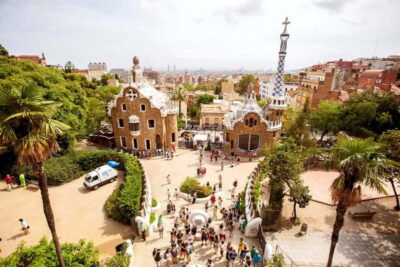
Park Guell Guided Tour with Skip The Line Entry
Read our review →
Sagrada Familia Skip-the-Line Entry Ticket & Tour
Read our review →
FC Barcelona Museum “Barça Immersive Tour” Ticket
Read our review →