
Reviewed · GAUDÍ BUILDING TOURS
Gaudí And Modernism Guided Walking Tour
Modernisme is hiding in plain sight. This Gaudí and Modernism guided walk strings together the look, the politics, and the artists behind Barcelona’s most famous façades, from Plaza de Catalunya to Casa Batlló.
Two things I really like: you get the story first, with modernism placed in the city’s political and social context, and then you learn to spot the details. I also love the way the route pushes you to identify style cues and symbolism on the buildings instead of just naming them.
One consideration: this is very much an exterior-focused walking experience, and Casa Milà’s admission ticket is not included, so your total cost may rise if you want to go inside.
In This Review
- Key highlights you will actually care about
- Why this Gaudí and Modernism route works in Barcelona
- Price and value: what $60.49 buys you
- Plaza de Catalunya: the Modernisme setup before you even hit Gaudí
- Passeig de Gràcia: artists and the streets that made them famous
- Casa Rocamora: style and building history at walking speed
- La Casa Malagrida: the first Modernisme lesson on technique
- La Mansana de la Discordia: learning to read symbolism on façades
- Casa Amatller: details that reward a slower look
- Casa Batlló from the outside: Gaudí’s style cues you can actually spot
- Casa Milà, La Pedrera: what the ticket not included detail means
- Group size, pacing, and weather reality on a 2.5-hour walk
- Who should book this tour
- Should you book the Gaudí and Modernism Guided Walking Tour?
- FAQ
- How long is the Gaudí and Modernism guided walking tour in Barcelona?
- Is the tour offered in English?
- Where do I meet for the tour?
- How many stops are included?
- Are admission tickets included?
- Is the tour affected by weather?
- Quick verdict: book or pass
Key highlights you will actually care about
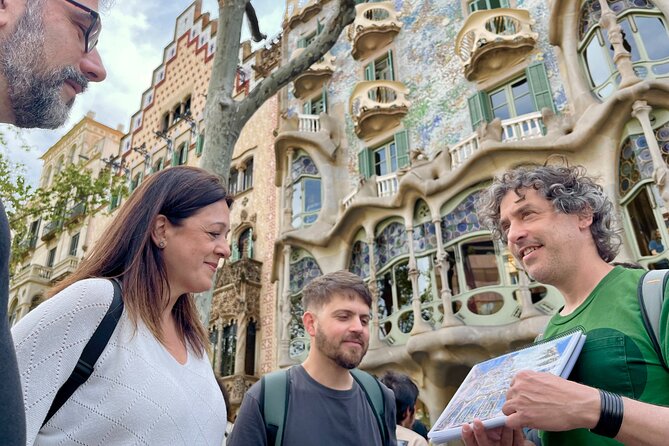
- A tight group (max 15) means more time for questions and practical guidance.
- Modernism explained in context, starting at Plaza de Catalunya and moving outward toward Eixample’s architecture.
- Street-level detail training, including early modernist elements like the street lamps along the route.
- Mansana de la Discordia façade symbolism, taught as a skill, not trivia dumping.
- Clear Gaudí plus art context, with introductions to Antoni Gaudí, Pablo Picasso, and Salvador Dalí.
- Casa Milà is the pay-attention stop, since its admission is not included.
Why this Gaudí and Modernism route works in Barcelona
Barcelona can feel like a photo contest. You see a façade, snap a picture, move on. This walking tour helps you do something better: understand what you are looking at, and why it looks the way it does.
The route is built around the Eixample area where Modernisme shows up in concentrated form. You start at Plaza de Catalunya, then move into Passeig de Gràcia, where the buildings start acting like public statements. The tour keeps you moving, but it also gives you a framework so the stop-by-stop visuals connect to each other.
A big plus is that you are not just chasing Gaudí alone. You also get introductions to the wider modernist culture through figures like Pablo Picasso and Salvador Dalí. Even if you already know the big names, you will appreciate how the guide ties these artists to the broader Modernisme moment you are standing inside.
Price and value: what $60.49 buys you
At $60.49 per person for about 2 hours 30 minutes, you are paying for an expert guide and a curated walking sequence, not for lots of museum-style admissions. That matters because most of the stops on this route are listed as admission ticket free, including key viewpoints along Passeig de Gràcia and the Modernisme “blocks.”
Here is how I think about the value:
- You get a guided story for multiple stops, including technique and symbolism, which is hard to do alone while walking fast.
- You avoid a sticker shock of paid entries at every site because most parts are ticket-free.
- Your main potential extra cost is Casa Milà (La Pedrera), since the admission ticket for that stop is not included.
If you like architecture but do not want to plan tickets for every step, this is a strong setup. If you want to spend lots of time inside buildings, you may prefer an add-on day that includes interiors, because this route is designed to keep you outside and looking closely.
More curves, barely a straight line
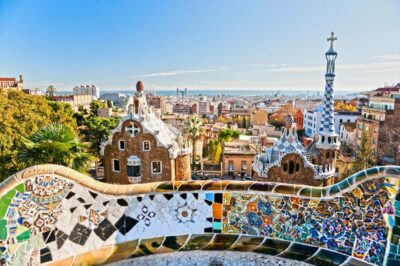
- Barcelona: Park Güell and Gaudí House Museum Entry Ticket
★ 4.5 · 6,326 reviews - Barcelona: Gaudí’s Park Güell Tour with Fast-Track Ticket
★ 4.8 · 4,512 reviews - Barcelona: Sagrada Familia, Modernism, and Old Town Tour
★ 4.7 · 1,621 reviews
Plaza de Catalunya: the Modernisme setup before you even hit Gaudí
The tour starts at Pg. de Gràcia, 2 in the Eixample district and begins with Plaza de Catalunya as your first stop. That is not just a convenient starting point. It is a smart staging area because it lets the guide explain how Barcelona’s history and context shaped what Modernisme became.
You will hear how the city evolved, and then you get Modernisme placed in its political and social context. That matters because Modernisme is not only an art style. It is also a way of expressing identity, ambition, and change in a rapidly developing city.
The guide then zooms in on early Modernisme touches you can actually see, like the street lamps on Paseo de Gràcia. This is a great early moment because you start training your eyes right away. You learn to look for design choices that feel intentional, not decorative afterthoughts.
Practical tip for this stop: give yourself a minute to slow down here. If you rush ahead mentally, you will miss the “how to read the route” lesson that makes the later façades click.
Passeig de Gràcia: artists and the streets that made them famous
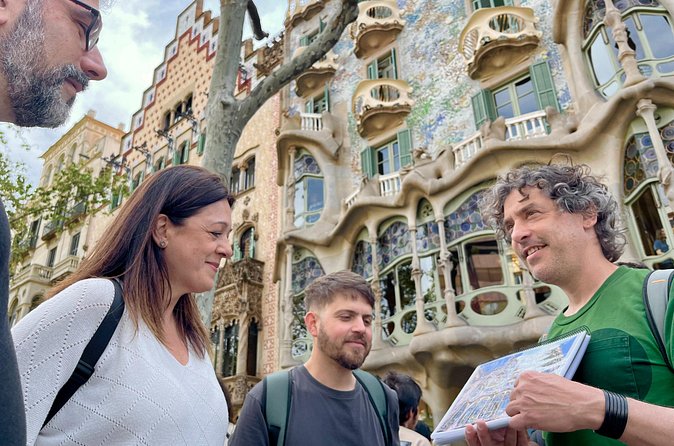
Passeig de Gràcia is the centerpiece street of this whole experience, and the tour treats it that way. You get an introduction to the life and work of Antoni Gaudí, along with Pablo Picasso and Salvador Dalí.
Even if you know these names, you will still benefit from the way they are connected in a single walking frame. Gaudí gives you the architecture anchor. Picasso and Dalí reinforce that Modernisme was part of a broader shift in ideas about form, creativity, and how artists responded to the modern world.
And because you are walking, you are not just hearing facts. You are using them. You can compare what the guide says to what you see in front of you, especially as you head toward the specific buildings that define this stretch of the city.
One thing I like about this pacing is that it avoids the trap of turning art history into a lecture that feels removed from the street. It stays practical, with references you can immediately test against real façades.
Casa Rocamora: style and building history at walking speed
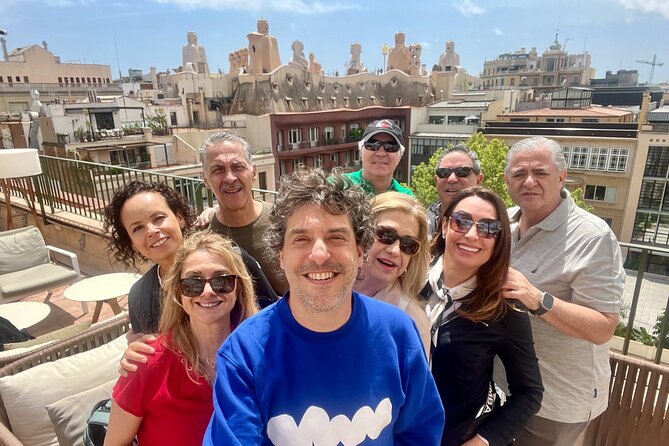
Casa Rocamora is a shorter stop, but it has an important job in the tour. You get a history of the building and an explanation of its style.
When a stop is brief like this, the guide needs to do two things: point out what makes the structure belong to Modernisme and explain it in terms you can remember later. If you are paying attention, you will start noticing patterns across different buildings, like how materials, ornament, and façade choices work together.
A drawback of short stops is that you may want more time for your own photo angles. If you are the type who always thinks one photo is never enough, plan to save extra time after the tour for your favorites.
La Casa Malagrida: the first Modernisme lesson on technique
La Casa Malagrida is framed as one of the earliest Modernist buildings you will see on the tour. The guide explains the technique used, plus something equally valuable: the life of the owner.
That owner detail is not random. Modernisme often carries the imprint of wealth, social ambition, and personal taste. When you learn that a building reflects a real person’s place in society, the façade stops being a decoration and becomes a message.
Technique is where this stop really earns its place. You will not just hear what it looks like. You will hear how it achieves the look, which is exactly what you need for future “spot the style” moments.
If you have ever stood in front of architecture and wondered why one building feels more expressive than another, pay attention here. The guide’s focus on technique gives you a mental checklist for what to look for as the tour continues.
Other things to see around Barcelona
- Barcelona Tapas and Wine Experience Small-Group Walking Tour★ 5.0 · 5,804 reviews
- Barcelona: Tapas Walking Tour with Food, Wine, and History★ 4.8 · 4,261 reviews
- Barcelona: Food Walking Tour with Tapas and Wine★ 4.9 · 2,180 reviews
- Barcelona Tapas Walking Tour: Food, Wine & History★ 4.5 · 1,928 reviews
- Barcelona Helicopter, Sailboat & Old Town Private Walking Tour★ 5.0 · 1,395 reviews
- Barcelona: Old Town and Gothic Quarter Walking Tour★ 4.8 · 1,393 reviews
La Mansana de la Discordia: learning to read symbolism on façades
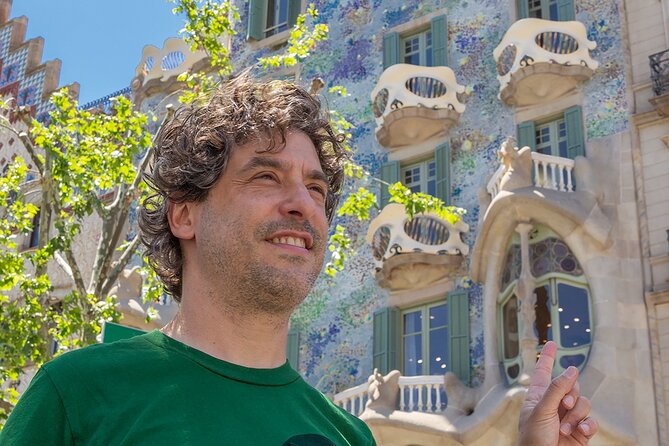
This is one of the most fun parts of the route because it turns looking into a game. At La Mansana de la Discordia, you are taught how to identify a Modernist building, and you also get an explanation of symbolism hidden in its façade.
The phrase hidden in its façade is key. Modernisme is packed with meaning, and not all of it is obvious at a glance. The guide’s job is to show you where to look, what details count, and how those details connect to the broader design.
This stop also helps you build confidence. After you learn the symbols, you do not have to rely on someone telling you what to see every time. You start spotting cues yourself.
How to make the most of it: stand where the guide tells you to stand. For façade symbolism, the angle can change what you notice. If you wander too far, you may miss the exact details the guide is pointing out.
Casa Amatller: details that reward a slower look
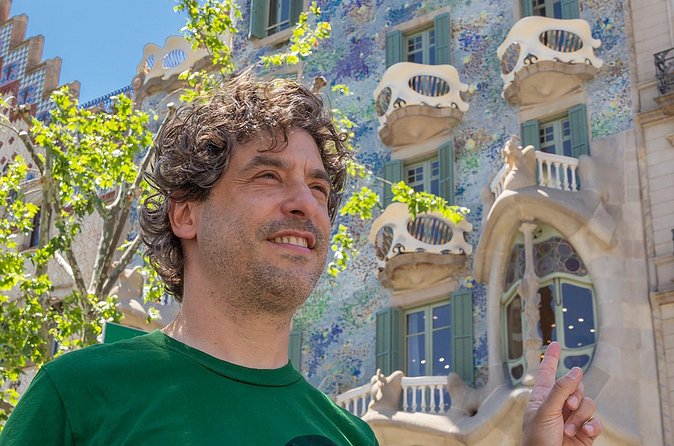
Casa Amatller comes next, with history and details of the building. This is the kind of stop where you benefit from being mentally ready to notice craft work and design choices.
The best value of a stop like this is not the name recognition. It is the explanation that helps you understand why the building belongs to its style and why it looks the way it does.
If you are traveling with someone who likes architecture but gets impatient with long stops, this timing is a good compromise. It is enough detail to matter, but it keeps you moving so the tour maintains energy and momentum.
Casa Batlló from the outside: Gaudí’s style cues you can actually spot
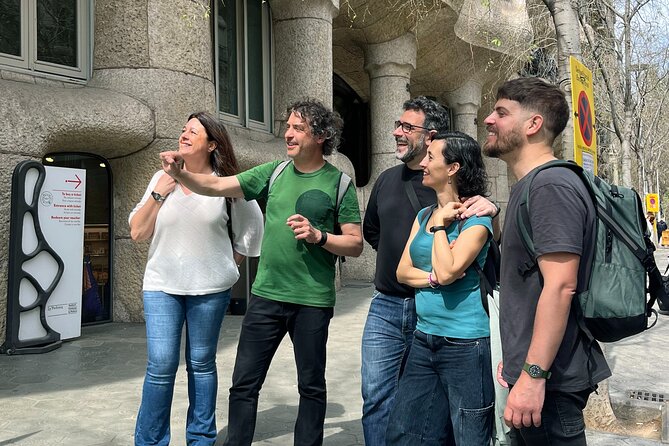
Casa Batlló is one of the tour’s big draws, and the guide stays focused on outside viewing. You get the history of Gaudí’s building and an explanation of his style from the street.
Outside-focused tours can sometimes feel limiting. But on a building like Casa Batlló, the exterior is doing most of the work. The façade is what you need to understand first, since it is the defining visual signature of Gaudí’s approach.
This stop is also a good chance to compare what you learned earlier. By the time you reach Casa Batlló, you should already have a short list in your head: what elements signal Modernisme, how symbolism works, and how technique influences the final effect.
If you want the most satisfying photos, treat Casa Batlló as the moment to slow down and reframe your angle. The guide’s focus on outside style cues will help you take pictures that capture the design, not just the building outline.
Casa Milà, La Pedrera: what the ticket not included detail means
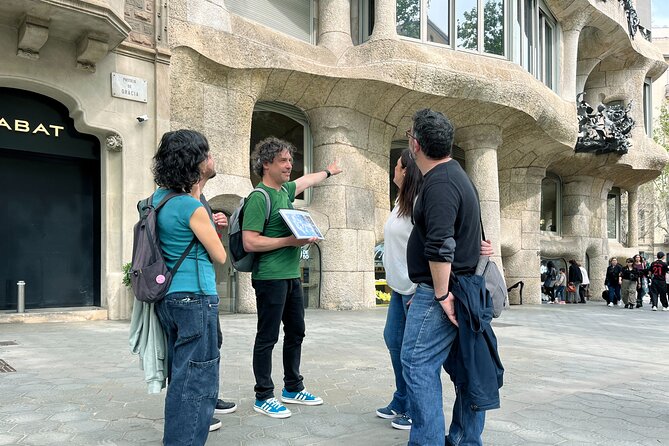
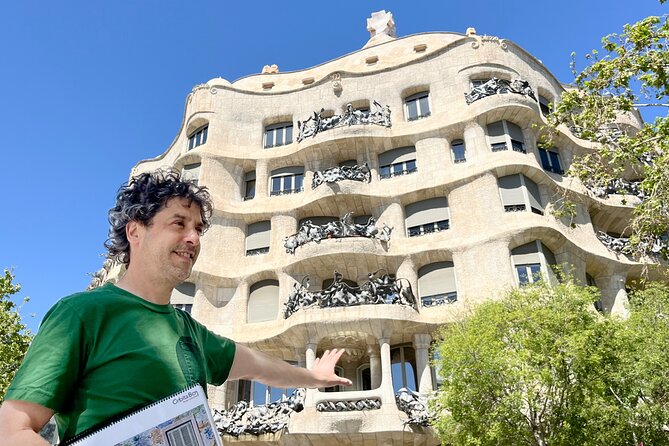
Casa Milà, also known as La Pedrera, is the last major Gaudí stop. The guide helps you understand and enjoy this “jewel” of the city, but there is one catch: the admission ticket is not included.
So you have two possible ways to handle it, depending on your interests:
- If you are happy with the exterior experience, you can focus on what the guide shows you on the building itself.
- If you want to visit inside, you will need to buy a ticket separately.
I like this setup because it gives you control. You can avoid extra spending if you are short on time or budget, or you can upgrade if you want deeper access.
One more real-world note: because it is a walking tour, you will want comfortable footwear. Even if you only stop for 10 to 20 minutes at each site, the cumulative walking time adds up over 2 hours 30 minutes.
Group size, pacing, and weather reality on a 2.5-hour walk
The tour has a maximum of 15 travelers. That is a sweet spot. Big enough for a lively group, small enough for the guide to keep things moving and still respond to questions.
The schedule also shows you the pacing style: short blocks at some stops (around 10 to 15 minutes) and slightly longer looks where the guide expects you to absorb more (like Passeig de Gràcia and Casa Batlló).
One practical constraint is weather. This experience requires good weather. If it is canceled due to poor weather, you will be offered a different date or a full refund. That is worth keeping in mind if you are visiting during the shoulder season or planning around rain.
Also, you will want your phone ready for the mobile ticket. The tour uses a mobile ticket system, and you will start at Pg. de Gràcia, 2 in the Eixample area.
Who should book this tour
This is a great match if you want:
- A focused walking route through Barcelona’s Modernisme core
- Guided explanations that help you identify style and symbolism
- A Gaudí-heavy day without spending it all in indoor lines
It is especially good for couples, solo travelers, and anyone who likes architecture but does not want to build a private itinerary stop by stop.
If your priority is going inside multiple famous buildings, you might pair this tour with separate admission-based experiences. This one is built for exterior learning and context, not full interior touring across the board.
Should you book the Gaudí and Modernism Guided Walking Tour?
Yes, I would book it if you want to understand Barcelona’s Modernisme while you walk through the real streets where it happened. The value is strongest because most stops are admission ticket free, and the guide helps you read façades instead of just looking at them.
Skip it only if you already know Modernisme deeply and you are mainly chasing interior access. In that case, you may find more satisfaction in a ticketed building tour day instead.
FAQ
How long is the Gaudí and Modernism guided walking tour in Barcelona?
The tour lasts about 2 hours 30 minutes.
Is the tour offered in English?
Yes. It is offered in English.
Where do I meet for the tour?
The meeting point is Pg. de Gràcia, 2, L’Eixample, 08002 Barcelona, Spain.
How many stops are included?
The tour includes Plaza de Catalunya, Passeig de Gracia, Casa Rocamora, La Casa Malagrida, La Mansana de la Discordia, Casa Amatller, Casa Batllo, and Casa Mila – La Pedrera.
Are admission tickets included?
Most stops are listed as admission ticket free. The admission ticket for Casa Mila – La Pedrera is not included.
Is the tour affected by weather?
Yes. The experience requires good weather. If it is canceled due to poor weather, you will be offered a different date or a full refund.
Quick verdict: book or pass
Book it if you want a guided, street-level education in Modernisme and Gaudí, with a small group and mostly ticket-free stops. Pass or combine it with other experiences if your top priority is going inside buildings rather than learning from the façades.
The latest to open for booking

Gaudí Building Tours, side by side.
Park Güell and Gaudí House Museum Entry Ticket
Read our review →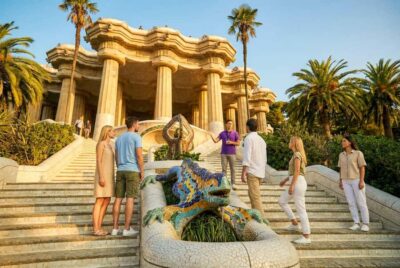
Gaudí’s Park Güell Tour with Fast-Track Ticket
Read our review →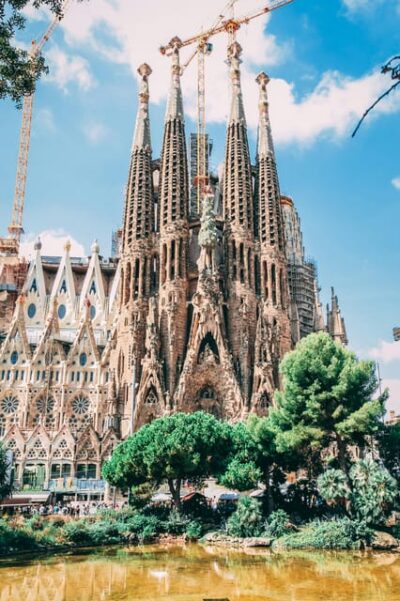
Sagrada Familia, Modernism, and Old Town Tour
Read our review →
Sagrada Familia & Gaudi Tour Private or Small Group with Tickets
Read our review →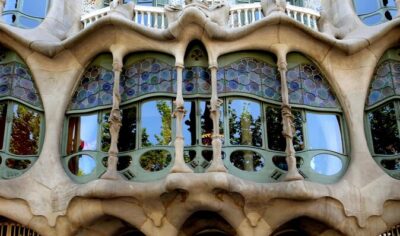
Complete Gaudi Tour: Casa Batllo, Park Guell & Sagrada Familia
Read our review →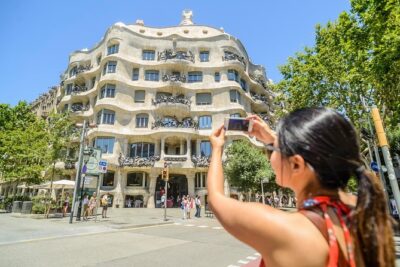
Barcelona e-Bike Tour: Gaudí & Old Town Small Group
Read our review →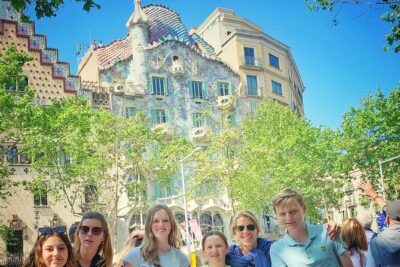
Ramblas, Old Town, Gothic and Gaudi Architecture Walking Tour
Read our review →
Gaudi´s Casa Vicens Skip the Line Ticket with Audioguide
Read our review →Where else this one turns up