
Reviewed · GAUDÍ BUILDING TOURS
Gaudí and Modernism – Private Walking Tour
Modernism in Barcelona has a pulse. This private walking tour connects Gaudí and Modernism with the city’s bigger story, from old Barcelona’s edges to the Sagrada Família finish. My guide, Patrick, kept the mood relaxed and made the buildings feel like evidence, not just pretty stone.
Two things I loved: the way Patrick explained politics and social context alongside the architecture, and the time spent hunting symbols and hidden details on the facades. You also get a slow, discussion-friendly pace, which matters with this style because the best stuff is often at eye level or slightly above.
The one possible drawback is that a lot of what you do is outdoor viewing. The tour lists a good-weather requirement, so if the forecast looks rough, you may want a backup day plan.
In This Review
- Key points
- Where Plaza de Catalunya Sets Up the Whole Modernism Story
- Passeig de Gràcia and the Bancs Fanals Lampposts You Shouldn’t Skip
- The Manzana de La Discordia: Casa Lleó i Morera and Casa Amatller
- Casa Lleó i Morera: Details With Personal Meaning
- Casa Amatller: Chocolate History and Facade Symbols
- Sagrada Família as the Climax: A Monument Still in Motion
- Casa Malagrida: When Argentina and Tobacco Show Up in Stone
- Price, Time, and How the Private Format Changes the Experience
- Who This Tour Is Best For
- Should You Book Gaudí and Modernism – Private Walking Tour?
- FAQ
- How long is the Gaudí and Modernism private walking tour?
- Where does the tour start and where does it end?
- Is this tour private?
- What language is the tour offered in?
- Is pickup available, and will I get a ticket on my phone?
- Do you enter the buildings or is it mainly exterior viewing?
- What if the weather is poor or I need to cancel?
Key points
- Patrick ties politics to buildings, so the architecture makes sense, not just looks cool.
- Bancs Fanals lampposts are a surprisingly fun stop, with symbolism you can actually spot.
- Manzana de La Discordia focus, including Casa Lleó i Morera and Casa Amatller, keeps Modernism storytelling concrete.
- Hidden details and materials matter on these facades, and you’ll know what to look for.
- Sagrada Família ends the walk with Gaudí’s bigger vision, still under construction from the outside.
- A seniors-friendly pace, with real adaptation for people who need it.
Where Plaza de Catalunya Sets Up the Whole Modernism Story
Most Barcelona tours jump straight into buildings. This one starts at Plaza de Catalunya, which is a smart move because it frames what you’re about to see.
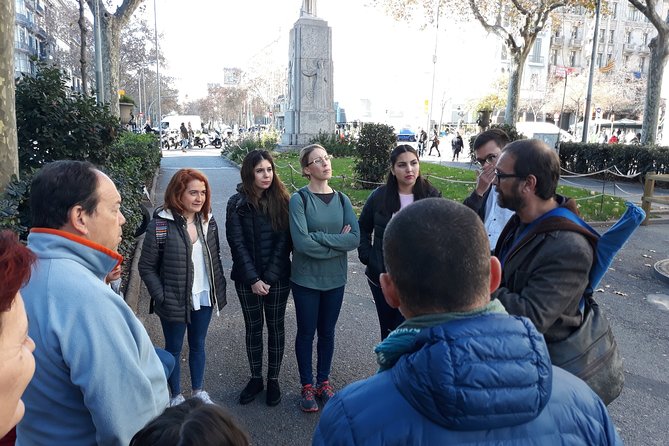
Plaza de Catalunya sits right where the old city and the Eixample meet. That matters because Modernism did not appear in a vacuum. You get a clear sense of how the city evolved, and Patrick also points out the marks left by the Spanish Civil War that can still be seen. It’s not gloomy for the sake of drama, it’s context. Once you understand the “before,” the “during” and “after” architecture hits harder.
You’ll also get an easy mental map for the day. The walk naturally shifts from transition zones into the Eixample, the district built out with grand ambitions. Even the short stop length, around 10 minutes, feels useful because it gets your eyes trained before you hit the big streets.
Practical tip: arrive ready to look up. From this part of Barcelona, rooftops, cornices, and façade textures start telling you what era you’re in.
Passeig de Gràcia and the Bancs Fanals Lampposts You Shouldn’t Skip
After Plaza de Catalunya, you move onto Passeig de Gràcia, the main artery of the Eixample’s wealth story. This is where the 19th-century and early 20th-century Catalan bourgeoisie showed off taste, money, and confidence.
What I like about doing Passeig de Gràcia early is that it sets a baseline for how different the Modernism buildings are from the “normal” streetscape. The street is luxurious, but it’s not just about shopping window glamour. You’re learning how Barcelona expressed status through design, and how architects turned building fronts into public statements.
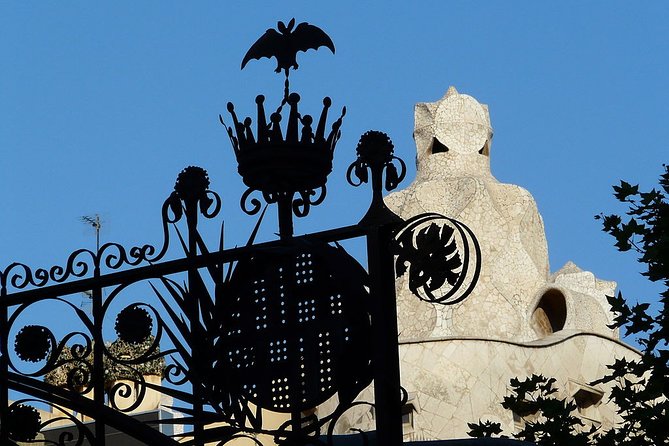
Then comes Bancs Fanals, a stop that surprises people. These are elaborate modernist lampposts decorated for more than a century, and they’re full of symbols and small design choices worth noticing. It’s a reminder that Modernism isn’t only reserved for famous houses. The details show up in street furniture too, which you often miss if you’re rushing.
This is also a good moment to slow down and ask questions. If you’ve never read architecture as “symbol language,” Patrick’s explanations make it click fast.
Practical tip: bring your phone camera or a notebook. The lamppost symbolism is the kind of thing you’ll forget the moment you turn the corner.
More curves, barely a straight line
- Barcelona: Park Güell and Gaudí House Museum Entry Ticket
★ 4.5 · 6,326 reviews - Barcelona: Gaudí’s Park Güell Tour with Fast-Track Ticket
★ 4.8 · 4,512 reviews - Barcelona: Sagrada Familia, Modernism, and Old Town Tour
★ 4.7 · 1,621 reviews
The Manzana de La Discordia: Casa Lleó i Morera and Casa Amatller
This tour really shines in the Manzana de La Discordia area, where the Modernism conversation gets playful and specific.
Casa Lleó i Morera: Details With Personal Meaning
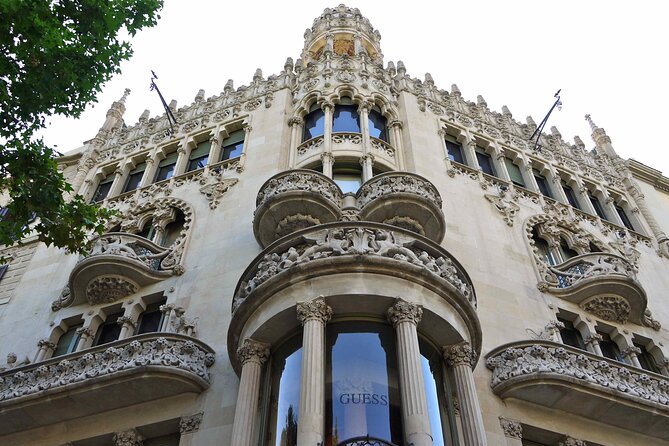
Casa Lleó i Morera is part of that famous block of Modernist buildings. You’ll learn that it was designed by Domènech i Montaner at the beginning of the 20th century, and that the house is packed with details reflecting the life and thoughts of the architect and the owner. Even if you only see the exterior, the façade is treated like a message board, with secrets worked into the design.
Why this stop matters: Modernism here is not just style. It’s identity. The building becomes a biography you can read if you know what to look for. Patrick’s approach helps you stop treating these houses like museum exhibits and start seeing them as personal statements of the era.
Casa Amatller: Chocolate History and Facade Symbols
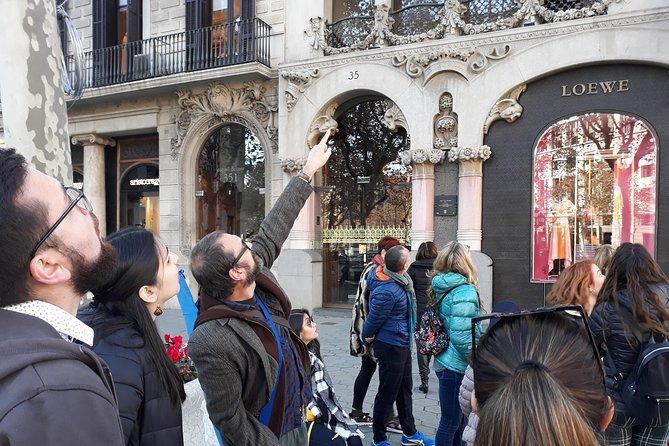
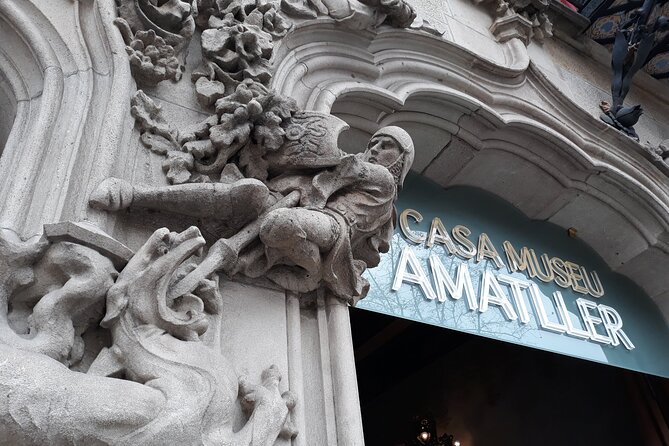
Next is Casa Amatller, one of the best-known Modernist houses on Passeig de Gràcia. This one was designed by Puig i Cadafalch and owned by a family of chocolate producers. That chocolate connection is more than a fun fact. Patrick uses it to explain how business, culture, and design were intertwined in early 1900s Barcelona.
You’ll focus on the history of chocolate at the time, plus the life of the Amatller family, and you’ll look for symbols hidden on the façade. That symbol-hunting part is where the tour earns its strong reputation. It’s not just “look, ornate stuff.” It’s “look here, because this detail is doing a job.”
You may also have a chance to go for free to the inner courtyard of the house. There you can admire elements like the staircase, an older elevator, and refined sculptures. Even if you only spend a short time inside the courtyard area, it gives you a different angle on how Modernism celebrated craft and dramatic interior spaces, not just street-facing showmanship.
Practical tip: if you’re short on time elsewhere in Barcelona, prioritize this block. You’ll get more return per minute here than in most quick photo stops.
Sagrada Família as the Climax: A Monument Still in Motion
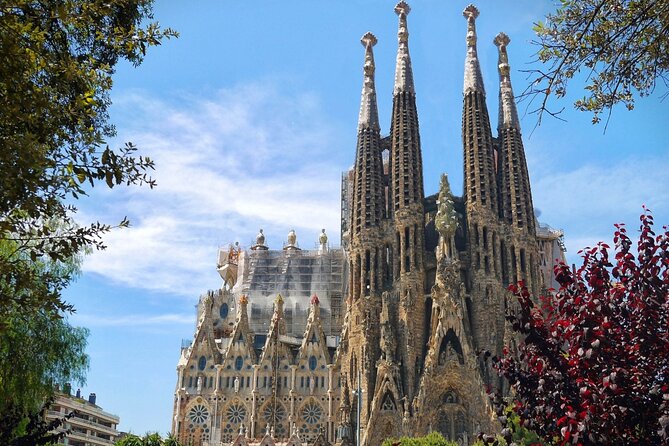
The tour ends in front of Sagrada Família, and it’s a fitting finish because it turns your earlier street-level Modernism lessons into something bigger.
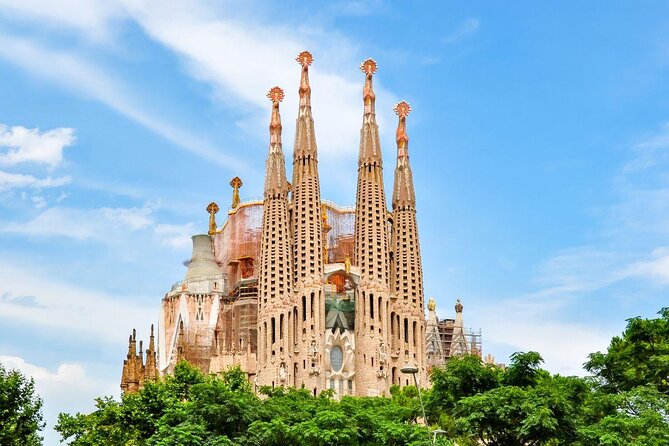
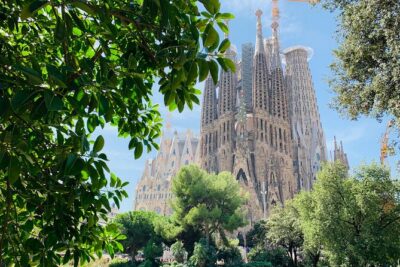
Sagrada Família is described as the most celebrated monument in Barcelona, still incomplete by Gaudí. You’ll spend time looking at various facades from the outside and hear its surprising and long history. Patrick also helps you analyze secrets and interesting details about its construction, which is a key piece of the story people often miss.
Why ending here works: by the time you reach Sagrada Família, you’ve already learned how Barcelona’s Modernism was tied to personal identity, social class, and symbolism in the built environment. Then Gaudí’s work becomes more than a famous name. You start seeing it as an evolving project with design logic and engineering ambition.
This stop is also ideal for photos, but I’d treat it as observation time first. Notice how the structure visually “explains itself” through form, ornament, and repetition. The outside views give you a lot, especially if your guide points out what to look for.
Practical tip: go easy on shoe-shopping during this tour. You’ll walk enough that you’ll want comfortable footwear for this final, lingering look upward.
Other things to see around Barcelona
- Barcelona Tapas and Wine Experience Small-Group Walking Tour★ 5.0 · 5,804 reviews
- Barcelona: Tapas Walking Tour with Food, Wine, and History★ 4.8 · 4,261 reviews
- Barcelona: Food Walking Tour with Tapas and Wine★ 4.9 · 2,180 reviews
- Barcelona Tapas Walking Tour: Food, Wine & History★ 4.5 · 1,928 reviews
- Barcelona Helicopter, Sailboat & Old Town Private Walking Tour★ 5.0 · 1,395 reviews
- Barcelona: Old Town and Gothic Quarter Walking Tour★ 4.8 · 1,393 reviews
Casa Malagrida: When Argentina and Tobacco Show Up in Stone
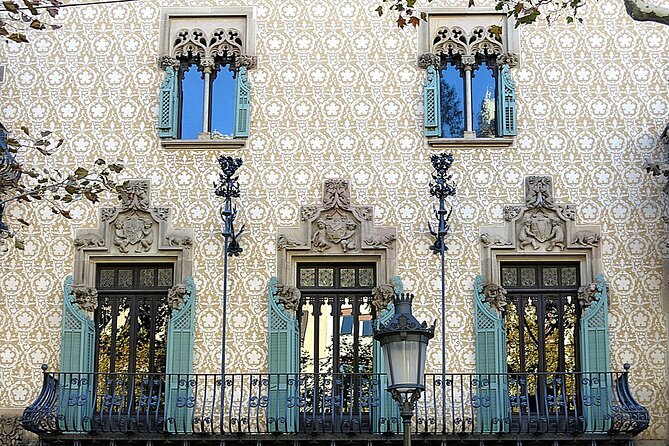
Between the Manzana de La Discordia area and the Sagrada Família finale, you’ll stop at Casa Malagrida, described as the first modernist bourgeois house you’ll see on the route.
This one comes with a story: it belonged to Señor Malagrida, a rich tobacco industrialist. Patrick connects the façade decoration to Malagrida’s life between Argentina and Spain, using the building’s design language as a kind of biography.
This is the kind of stop I recommend even if you’re not a hardcore architecture fan. It helps you understand why Modernism spread so fast among wealthy patrons. It was a way to translate world experience and new money into a public identity.
And because the façade decoration is the “text,” you can enjoy it even from the outside. You’re not only learning names. You’re learning how design can carry personal history across continents.
Price, Time, and How the Private Format Changes the Experience
At $66.08 per person for about 2 hours 30 minutes, this tour sits in the mid-range for a private guide experience. The value comes from the structure: you get a focused route with enough variety to feel like you learned something real, not just did a highlight circuit.
Here’s what you’re paying for, in practical terms:
- A private group setup, so you can go slower when you want to.
- English-language guiding, so the context is clear and not lost in translation.
- A guide who links architecture to history, not only describing shapes.
- A relaxed pace that can be adapted, which matters if anyone in your group needs extra time.
The route also uses a smart mix of stops that are ticket-free for the viewing time. That means you’re not spending your limited hours hunting for entrances or waiting in lines. You’re out walking, listening, and looking.
Two other small perks from the tour details: pickup is offered, and there’s a mobile ticket. If you hate paper tickets, that’s a small quality-of-life win. The meeting point is near public transportation, and that makes it easier to combine this day with other sights.
One more note: this tour is often booked about 14 days in advance on average. If you’re traveling in a busy season or want a specific day, it’s worth booking early so you’re not stuck with inconvenient times.
Who This Tour Is Best For
I’d put this tour at the top of the list if you:
- Like architecture but want the meaning explained, not only the facts.
- Prefer walking with a guide instead of a self-paced audio tour.
- Want to understand Gaudí’s world by seeing the Modernist context around him first.
- Appreciate symbolism and design details, especially when someone points out what to look for.
It’s also a good fit for mixed ages because the guide can adapt pace, including for seniors. If you’re traveling with someone who gets tired quickly, this format gives you flexibility.
If you only want quick photos and zero talking, you might find the storytelling heavy. But if you enjoy hearing why buildings were made the way they were, this tour is built for you.
Should You Book Gaudí and Modernism – Private Walking Tour?
Yes, if you want a Modernism grounding that actually helps you recognize what you’re looking at later in the city. The combination of Plaza de Catalunya context, Passeig de Gràcia street-level grandeur, symbol-rich stops like Bancs Fanals, and the ending at Sagrada Família creates a clean arc. You’ll finish with a better mental map and a sharper eye.
Book it sooner rather than later because it’s a popular slot, and the whole experience depends on good weather. And wear shoes you can stand in comfortably, you’ll do plenty of walking while looking upward.
If you already know a lot about Modernism and just want a Gaudí highlight sprint, you might feel there are too many stops. But for most people starting their Barcelona architecture journey, this is a strong, well-paced intro.
FAQ
How long is the Gaudí and Modernism private walking tour?
It lasts about 2 hours 30 minutes.
Where does the tour start and where does it end?
It starts at Apple Passeig de Gràcia, Pg. de Gràcia, 1, L’Eixample, 08007 Barcelona, Spain. It ends in front of the Sagrada Família in the Eixample.
Is this tour private?
Yes. It is a private tour/activity, and only your group participates.
What language is the tour offered in?
The tour is offered in English.
Is pickup available, and will I get a ticket on my phone?
Pickup is offered, and you get a mobile ticket.
Do you enter the buildings or is it mainly exterior viewing?
The route includes time at major locations with admission ticket-free viewing. One stop also mentions free access to the inner courtyard of the House, where you can admire features like the staircase, an older elevator, and sculptures.
What if the weather is poor or I need to cancel?
The tour requires good weather. If it is canceled due to poor weather, you will be offered a different date or a full refund. For cancellation, you can cancel up to 24 hours in advance for a full refund.
The latest to open for booking



Gaudí Building Tours, side by side.
Park Güell and Gaudí House Museum Entry Ticket
Read our review →
Gaudí’s Park Güell Tour with Fast-Track Ticket
Read our review →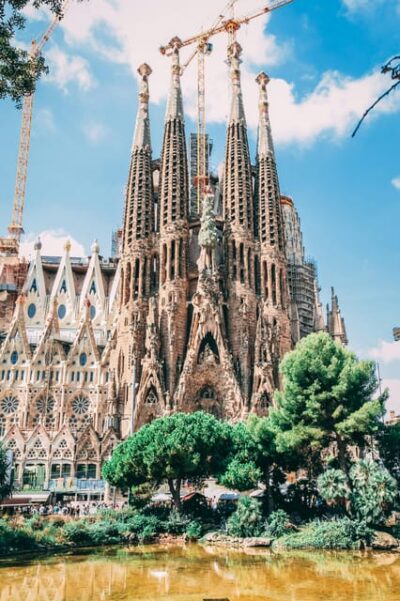
Sagrada Familia, Modernism, and Old Town Tour
Read our review →
Sagrada Familia & Gaudi Tour Private or Small Group with Tickets
Read our review →
Complete Gaudi Tour: Casa Batllo, Park Guell & Sagrada Familia
Read our review →
Barcelona e-Bike Tour: Gaudí & Old Town Small Group
Read our review →
Ramblas, Old Town, Gothic and Gaudi Architecture Walking Tour
Read our review →
Gaudi´s Casa Vicens Skip the Line Ticket with Audioguide
Read our review →Where else this one turns up