Reviewed · GUIDED TOURS
Guided Tour at Catalonia’s Royal Academy of Medicine
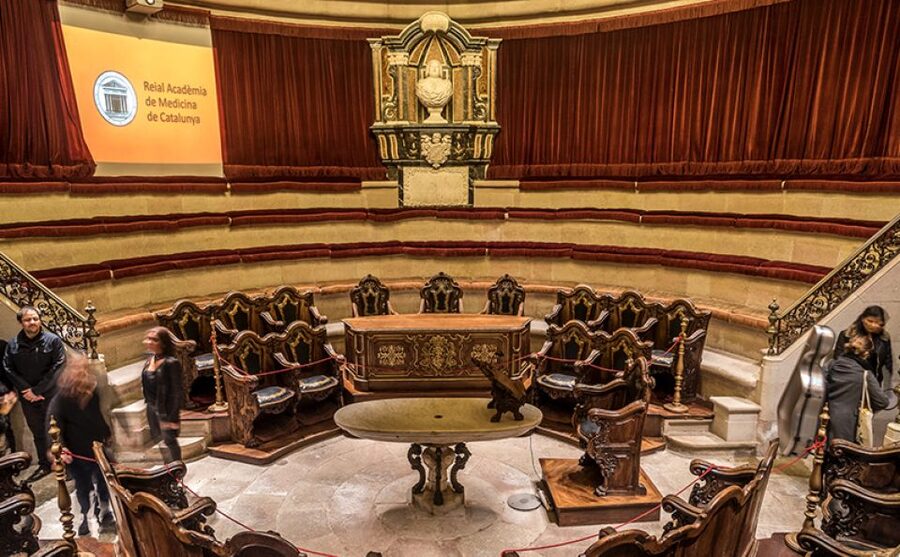
Anatomy meets architecture in Barcelona. This 50 minute visit to Catalonia’s Royal Academy of Medicine links surgery to the building that helped train it, in a neoclassical setting that still feels serious and alive. You get to walk through the Academy halls and see the anatomical amphitheater that Ventura Rodríguez designed for surgeons.
The experience is also a history lesson with a science twist. You’ll hear how the Academy connects to names like Pere Virgili, Antoni de Gimbernat, and Santiago Ramón y Cajal, plus you’ll learn where the first X-ray experiment in Spain took place. One thing to plan for: the visit has steps, so it can be tough if you have mobility limits or any pre-existing medical conditions.
In This Review
- Key highlights you will actually notice
- The Academy’s setting, right by Barcelona’s hospital hub
- Ventura Rodríguez’s anatomical amphitheater: medicine built in stone
- Where Spain’s first X-ray experiment fits into the bigger story
- Halls of the Academy: the names that shaped medicine and surgery
- How the 50 minutes work, and how to get more out of your guide
- Price and logistics: what $16 buys you in Barcelona
- Who this tour suits best, and who should think twice
- Should you book the Royal Academy of Medicine tour?
- FAQ
- How long is the tour?
- How much does it cost?
- What languages are available for the live guide and audioguide?
- Where do I meet for the tour?
- Do I need a confirmation email?
- Is the visit wheelchair accessible?
- Is there free cancellation?
Key highlights you will actually notice
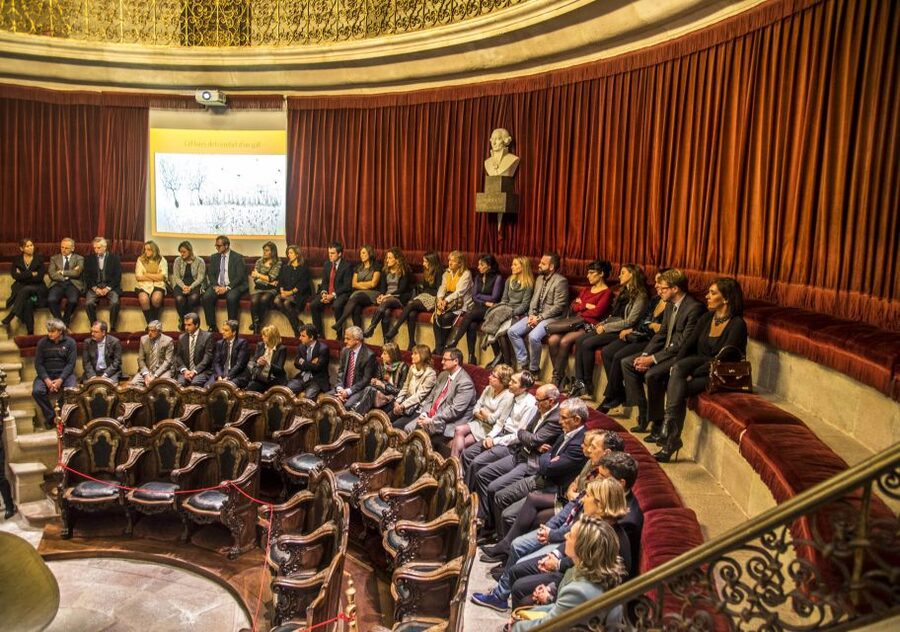
- Ventura Rodríguez’s anatomical amphitheater: still among the last of its kind in Spain and one of Europe’s oldest.
- The Spain first X-ray experiment connection: a quick bridge from surgical training to medical imaging.
- Academy names you can place in your head: Pere Virgili, Antoni de Gimbernat, and Santiago Ramón y Cajal.
- Neoclassical building details make the story click: medicine and architecture work together here.
- Live guide plus multilingual audio: useful if you want to re-check a term while you walk.
The Academy’s setting, right by Barcelona’s hospital hub

The Royal Academy of Medicine of Catalonia sits in one of Barcelona’s important neoclassical buildings, in Catalonia, Spain. What I like about the setting is how practical it is. The Academy is next to the first and main hospital of Barcelona, so you are not just looking at old plaques. You are stepping into a space that was part of how care and training worked.
When you meet at Carme Street, number 47, you are already in the right neighborhood for this kind of stop. Expect to do a guided walkthrough that mixes corridors and interior spaces, not a fast hit-and-run photo session. The guide keeps you moving through the Academy’s rooms so the building itself becomes part of the lesson.
Ventura Rodríguez’s anatomical amphitheater: medicine built in stone
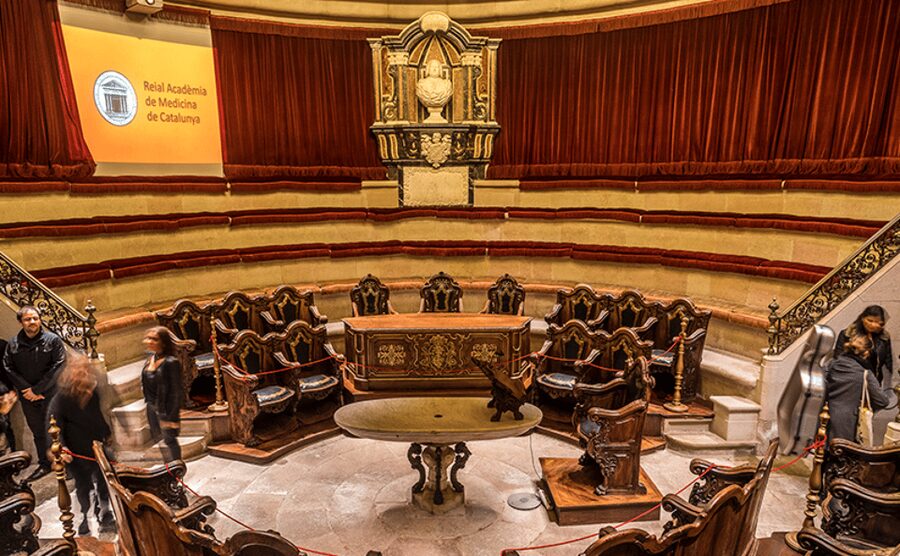
The main moment is the anatomical amphitheater built by Ventura Rodríguez. This is the feature you came for, and it is exactly the right kind of “wow” for a short tour. The tour description calls it spectacular, and the key point is its original purpose: it was intended for training surgeons during the 18th century.
This amphitheater is also described as the last anatomical amphitheater remaining in Spain, and one of the oldest around Europe. That matters because you are not seeing a replica or a museum set. You are standing in a space that was designed for learning anatomy in a very direct way. You can feel why the architecture was treated like equipment, built to support instruction, not just to decorate.
What you’ll get from the guide here is the link between medicine and structure. Your guide explains how the training space tied surgery to its teaching environment, so you understand why this building style shows up in medical institutions. Even if you are not a medical student, this is a clear way to see how knowledge was organized before modern tools changed everything.
Other things to see around Barcelona
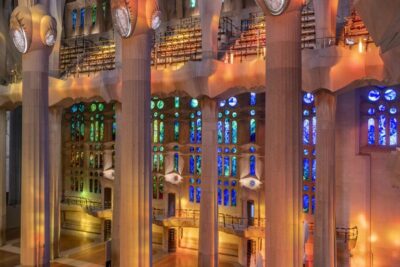
- Barcelona: Sagrada Familia Entry Ticket with Audio Guide
★ 4.6 · 105,312 reviews - Barcelona: Park Guell Guided Tour with Skip The Line Entry
★ 4.7 · 17,563 reviews - Fast Track Sagrada Familia Guided Tour
★ 4.5 · 8,795 reviews
Where Spain’s first X-ray experiment fits into the bigger story

One of the tour’s standout facts is learning where the first X-ray experiment took place in Spain. That single detail changes how you read the building. You start to see the Academy not as a past-only site, but as a place that sat near new medical breakthroughs.
You’ll hear the story in context of medical evolution. First, anatomy training built understanding of the body. Then, technology started offering new ways to look inside it. The X-ray connection gives you a clean timeline in your head, moving from surgical preparation to a future where doctors could observe what they could not directly see.
When you listen to the explanation, pay attention to how your guide points out the relationship between learning methods and tools. The tour is only 50 minutes, so the guide tends to focus on the few pieces that make the science story make sense quickly.
Halls of the Academy: the names that shaped medicine and surgery
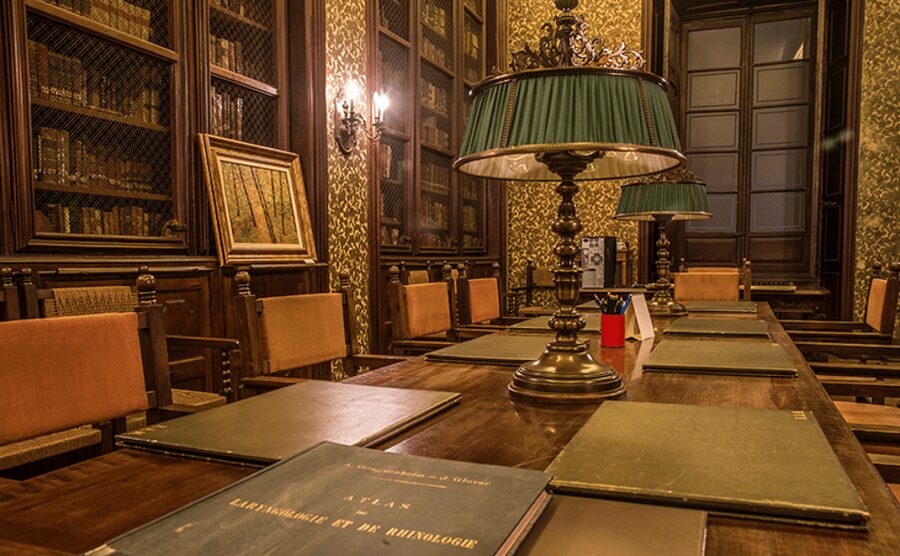
After the amphitheater moment, the tour keeps going through the Academy halls. This is where the experience becomes more than one big photo stop. The Academy is tied to key scientific figures linked to medicine and surgery, including Pere Virgili, Antoni de Gimbernat, and Santiago Ramón y Cajal.
Here’s why I think this part is valuable for you: names like these do not mean much if they sit only in textbooks. In this setting, you can connect their work to the institution that supported research, training, and medical advances. The guide helps you see the Academy as a living network of ideas, not just a silent building.
It also helps that the site is in a neoclassical structure. Neoclassical spaces often aim for order and clarity. That mood fits the medical theme, because the Academy’s mission has always been about turning observation into knowledge.
How the 50 minutes work, and how to get more out of your guide
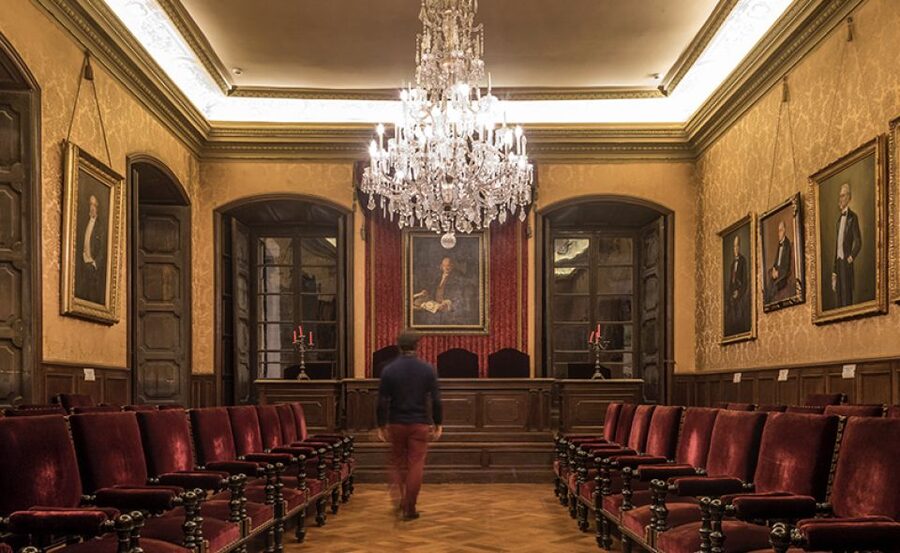
This is a 50 minute guided tour, which is long enough for the main stops but short enough that it stays focused. You’ll also have an audioguide included, with multiple languages available. The live guide is Spanish, Catalan, and English, and the audioguide offers languages including Chinese, English, French, German, and Russian.
A practical tip: arrive with comfy clothes and a mindset for walking inside an old building. The route is compact, but it still moves. Since there are steps, pace yourself and take your time on stair segments.
If your guide is the one people rave about, you’ll notice the tone right away. One guide name that comes up is Alex, praised for being a true pro. Even when you are not getting the exact same guide, aim to ask one smart question during the tour, like how the amphitheater was used for training or why the X-ray experiment mattered. The faster you connect your question to what you see, the more the tour sticks.
Price and logistics: what $16 buys you in Barcelona
At $16 per person, the value comes from what’s included. You get academy entrance fees, a guided tour, and the audioguide. For Barcelona, that combination is often where you save money and time, because you avoid separate tickets and you get someone to translate the building into a story.
Timing is straightforward. You check availability for starting times, and the tour runs for about 50 minutes. You do not need to plan a whole half day around it, which makes it a good add-on to another medical or architecture-focused day.
Meeting point detail matters more than you’d think. You need your confirmation email from Sternalia. Between tours, the main door stays closed, and the guide opens it again about 5 to 10 minutes before the next tour. So if you arrive early and wander too far, you might feel awkward waiting at the entrance. I suggest you arrive close to the start time and stay near Carme Street 47 so you can step in right when the door opens.
One ticket rarely covers it all. Here's what else is nearby.
- Barcelona: Park Güell Admission Ticket★ 4.4 · 76,534 reviews
- Barcelona: Casa Batlló Entry with Self-Audioguide Tour★ 4.7 · 25,359 reviews
- Barcelona: Montjuïc Cable Car Roundtrip Ticket★ 4.5 · 22,368 reviews
- Barcelona: Hola Barcelona Public Transport Travel Card★ 4.5 · 20,985 reviews
- Barcelona: 24 or 48-Hour Hop-On Hop-Off Bus Tour★ 4.4 · 20,872 reviews
- Barcelona Aquarium: Entry Ticket★ 4.4 · 16,717 reviews
Who this tour suits best, and who should think twice
This tour is a great fit if you like medical science, architecture, or both. It also makes sense if you are visiting Barcelona with students, teachers, or anyone curious about how training spaces shape research.
It’s also worth it if you enjoy learning from a place that still has original purpose baked into the design. The amphitheater’s role in surgeon training gives the story a real backbone.
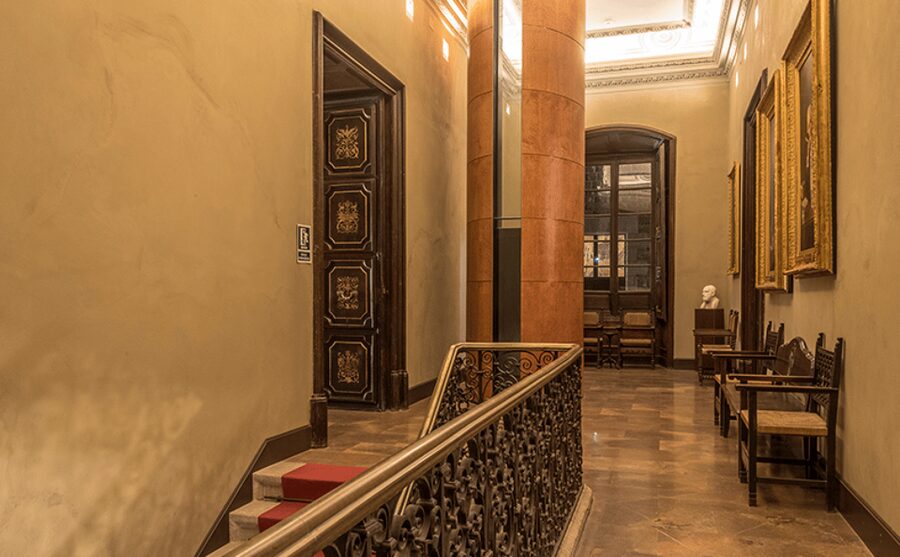
But think carefully if you have mobility concerns. The visit includes steps, and the activity notes that it is not suitable for people with pre-existing medical conditions. Even though the tour is listed as wheelchair accessible, steps during the visit can still be a deal-breaker for some visitors, so plan based on your personal needs rather than the word accessible.
Should you book the Royal Academy of Medicine tour?
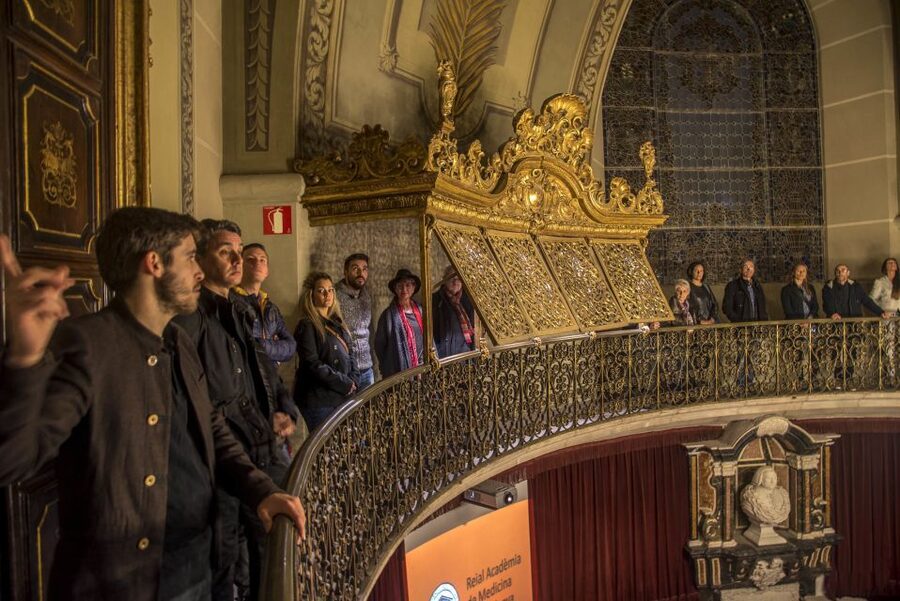
I think you should book if you want a short, focused Barcelona stop that connects medicine to architecture, and you like factual, guide-led explanations instead of self-guided wandering. The anatomical amphitheater is the headline, and the X-ray experiment detail is what keeps it from feeling like only a historical display.
Skip it only if steps or medical constraints will make the tour uncomfortable, or if you are looking for a long, multi-stop city tour. This one is designed to be efficient, about 50 minutes, and it works best when you treat it like a concentrated lesson in how surgery, science, and building design intersect.
FAQ
How long is the tour?
The tour lasts 50 minutes.
How much does it cost?
It costs $16 per person.
What languages are available for the live guide and audioguide?
The live guide is available in Spanish, Catalan, and English. The audioguide is included and available in multiple languages, including Chinese, English, French, German, and Russian.
Where do I meet for the tour?
You meet at Catalonia’s Royal Academy of Medicine, Carme Street, number 47, Barcelona, 08001.
Do I need a confirmation email?
Yes. You need to have the confirmation email from Sternalia before the tour begins.
Is the visit wheelchair accessible?
The activity is listed as wheelchair accessible, but the visit has steps.
Is there free cancellation?
Yes, you can cancel up to 3 days in advance for a full refund.
The latest to open for booking





Guided Tours, side by side.
Sagrada Familia Entry Ticket with Audio Guide
Read our review →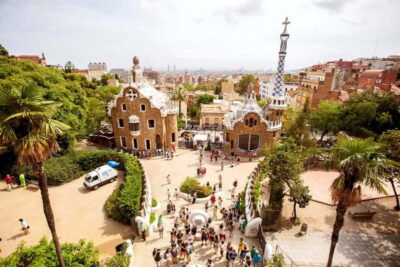
Park Guell Guided Tour with Skip The Line Entry
Read our review →
Park Guell Guided Tour with Skip the Line Ticket
Read our review →

Montserrat, Girona & Costa Brava Guided Day Trip from Barcelona
Read our review →