
Reviewed · MONTJUÏC HILL TOURS
Hidden Barcelona: Montjuïc Cemetery Walking Tour
Cemetery tours rarely feel this personal. This one turns Montjuïc Cemetery into a calm, low-crowd walk of art, sculpture, and real Barcelona characters. You get huge mausoleums, angels, skeleton motifs, and sweeping views that you would almost certainly miss on your own.
I love how the experience stays off the main tourist trail, so you can actually look at the details. I also love the storytelling thread, especially the way the guide connects the graves to anarchists, artists, and forgotten local legends. A potential drawback is that the route includes stairs and uneven walking, so people with knee or mobility limits should think carefully.
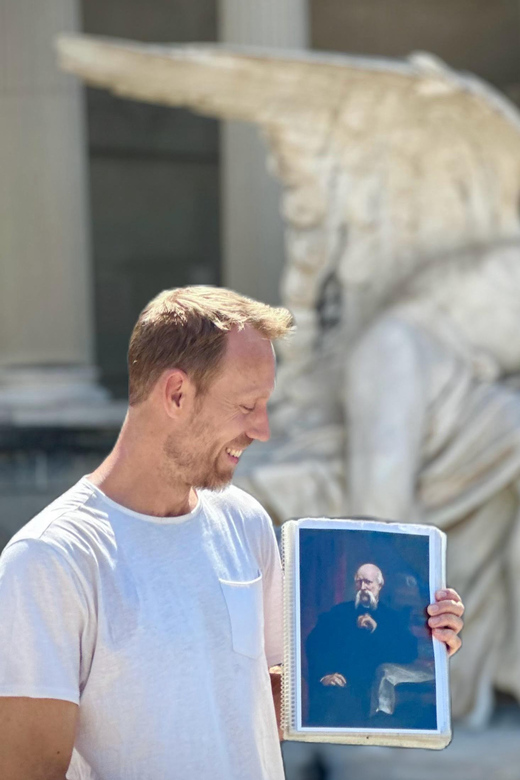
The best part is that you walk with a real guide, not just a ticket and a map. If your guide is Onno, expect a lively, photo-smart style of guiding, with plenty of time for questions and close-up viewing.
In This Review
- Key things you will notice on this Montjuïc Cemetery walk
- Why Montjuïc Cemetery feels like Barcelona, not a roadside attraction
- Meeting at Portal de Santa Madrona, then heading uphill
- What you really get inside Montjuïc Cemetery (2.5 hours of art and stories)
- The Fossar de la Pedrera stop, where the tone shifts
- Buenaventura Durruti’s tomb: Barcelona’s rebel memory, in stone
- Joan Miró’s tomb: art history meets the city of the dead
- The sea views and hillside timing you will want to plan around
- Price and value: $46 for a guide, a huge site, and roundtrip transport
- Who this tour is best for, and who should skip it
- Should you book Hidden Barcelona: Montjuïc Cemetery Walking Tour?
Key things you will notice on this Montjuïc Cemetery walk
- Low-crowd atmosphere that feels like you escaped the main Barcelona crush
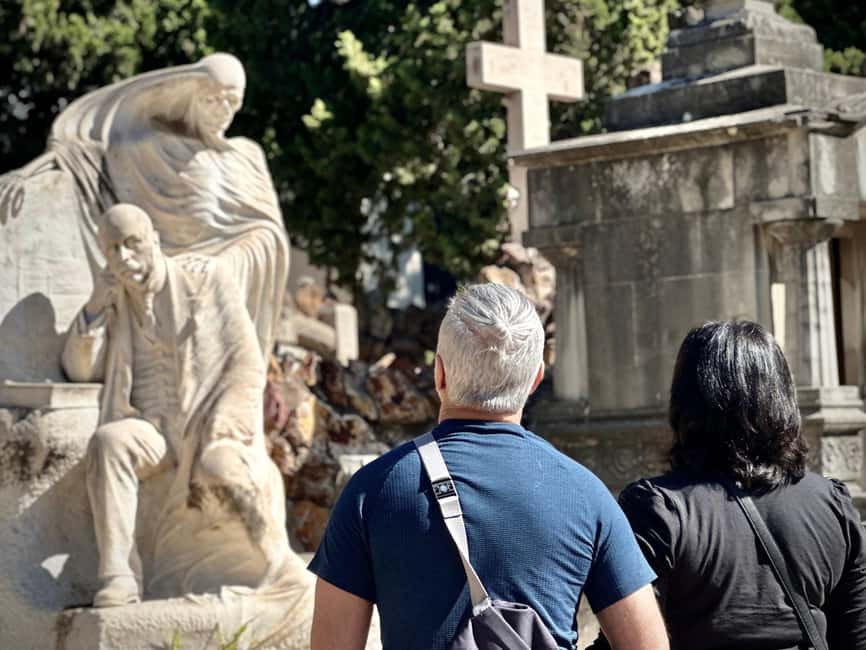
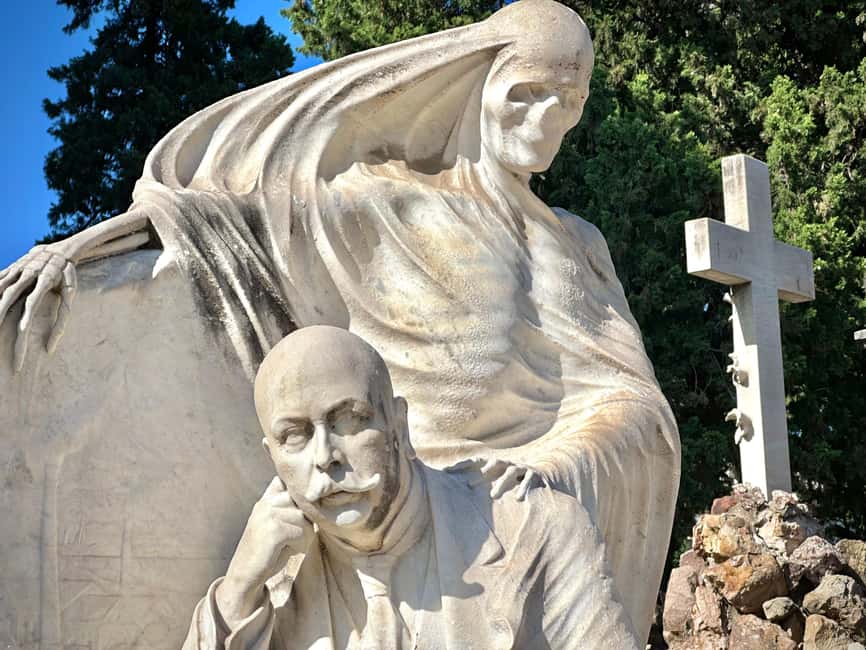
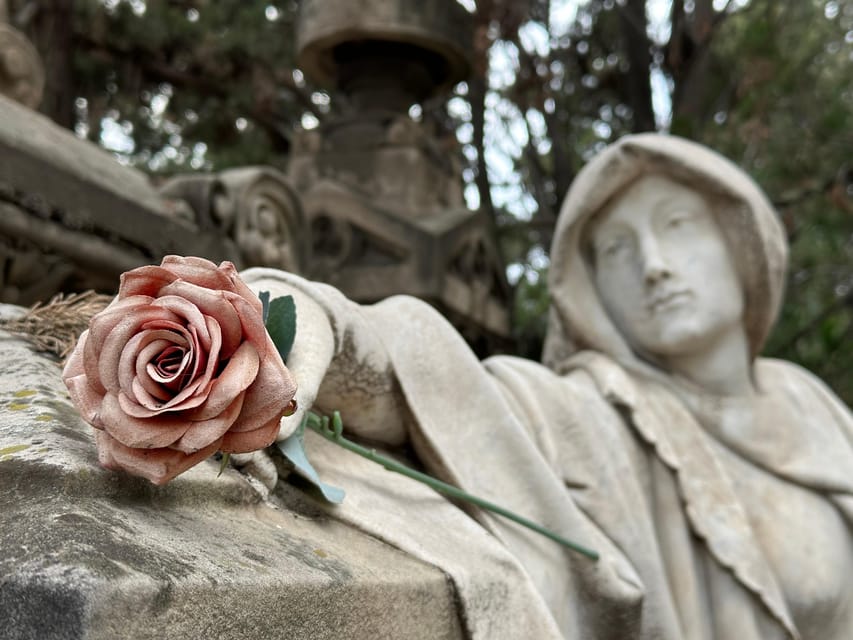
- Giant mausoleums and sculpture details, from angelic statuary to creepy skeleton imagery
- Strong local stories, including figures like Buenaventura Durruti and Joan Miró
- Stunning sea views mixed into the hillside walking and photo stops
- Small-group feel, which helps you slow down and actually see what you came for
Why Montjuïc Cemetery feels like Barcelona, not a roadside attraction
Barcelona has plenty of places where you feel herded. This tour is the opposite. Montjuïc Cemetery is on a hillside, it is visually theatrical, and it is huge, but the walking experience stays calm.
What makes it work is the balance of art and human stories. You are not just looking at stones. You are learning how Barcelona has chosen to memorialize people, from powerful families with church-like mausoleums to more unusual, symbolic monuments. The result is the kind of city portrait you cannot get from a quick stop at a famous viewpoint.
Also, the scenery helps. The cemetery sits high enough that you get sea views in the mix. Even if you are not into cemeteries, that change of angle pulls you in. You start paying attention to light, materials, and scale, and before you know it you are noticing symbolism everywhere.
Meeting at Portal de Santa Madrona, then heading uphill
The tour starts at Portal de Santa Madrona. The guide will be waiting with a white umbrella in front of the wooden doors or gate of the old city wall. That detail matters, because this is not one of those experiences where the crowd sorts itself out for you.
From there, you take a short ride by black cab to reach the cemetery area. The timing is brief, about 10 minutes. The ride is not the point, but it sets the tone. You are quickly moved away from the city’s noise and up into a different pace where the hillside walking makes sense.
This is also a good moment to plan your shoes. Even though the stairs are not constant, you still need footwear that handles frequent stops and starts. You are going to be climbing, descending, and angling for photos in a place built on slopes.
A hilltop castle above the harbor
- Barcelona: Montjuïc Cable Car Roundtrip Ticket
★ 4.5 · 22,368 reviews - Barcelona all included: Sagrada, Park Güell, Montjuic & Gothic
★ 5.0 · 2,169 reviews - From Barcelona: Montserrat Monastery, Easy Hike, Cable Car
★ 4.9 · 1,021 reviews
What you really get inside Montjuïc Cemetery (2.5 hours of art and stories)
The heart of the tour is the guided visit through the cemetery itself, planned for about 2.5 hours. This is where the experience earns its reputation, because you cannot cover this place effectively without a guide.
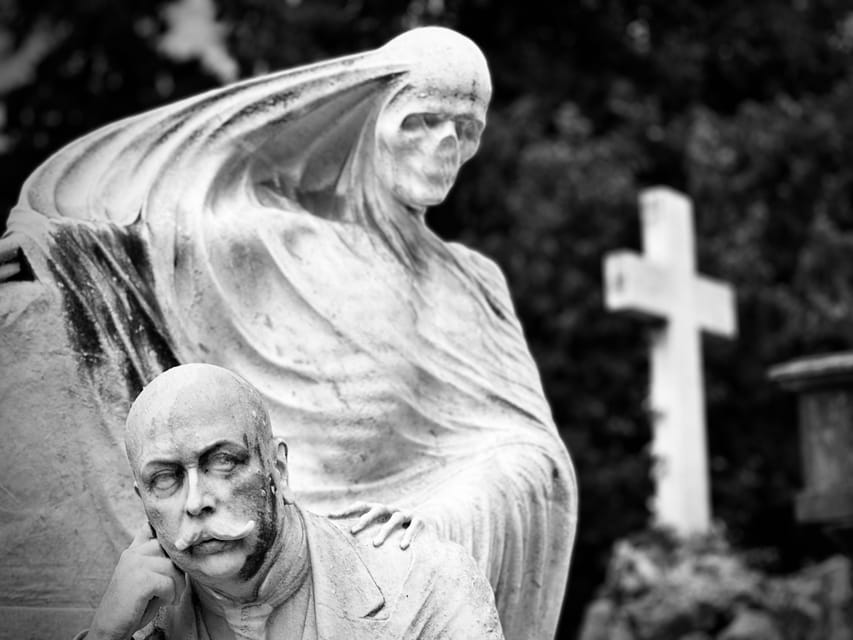
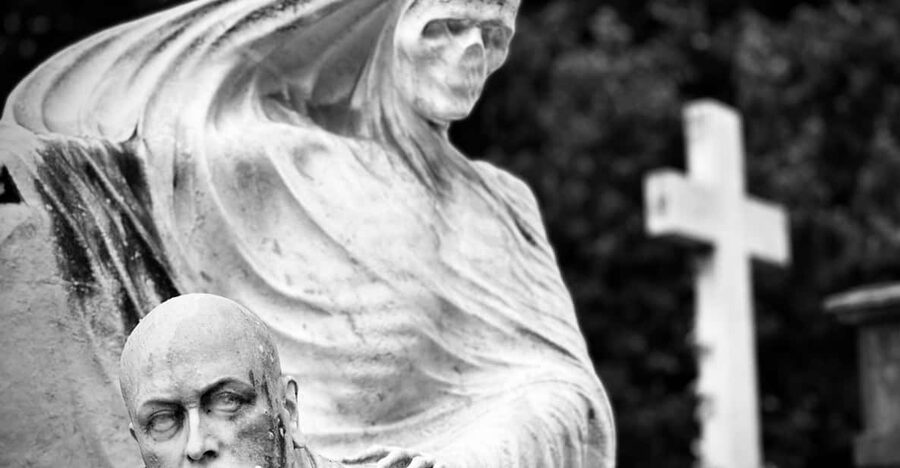
You will see giant mausoleums that can look like mini churches at first glance. Then you will notice the sculptural language. Angels appear in dramatic form. Skeleton-like motifs show up in ways that feel both creepy and strangely honest. You may also encounter more geometric designs, including a pyramid and obelisks, plus other impressive works of art that make the cemetery feel closer to a museum than a graveyard.
The guide’s job is to help you connect each visual detail to a person, a family, or a local story. That is why this does not turn into a walkthrough of random monuments. The guide points out what to look for, then gives you context: who the person was, how they were remembered, and what their story means in the Barcelona of their time.
One of the most practical values here is navigation. The cemetery is enormous, so without guidance you would likely miss the best concentrations of graves and design. With a guide, you get a meandering path that feels intentional, and you end up seeing a wide range of memorial styles in a short amount of time.
Finally, this is one of the rare Barcelona experiences that tends to stay uncrowded. That matters because it keeps the mood quiet. You can stand close to sculptures and read what you can without squeezing past people every ten seconds.
The Fossar de la Pedrera stop, where the tone shifts
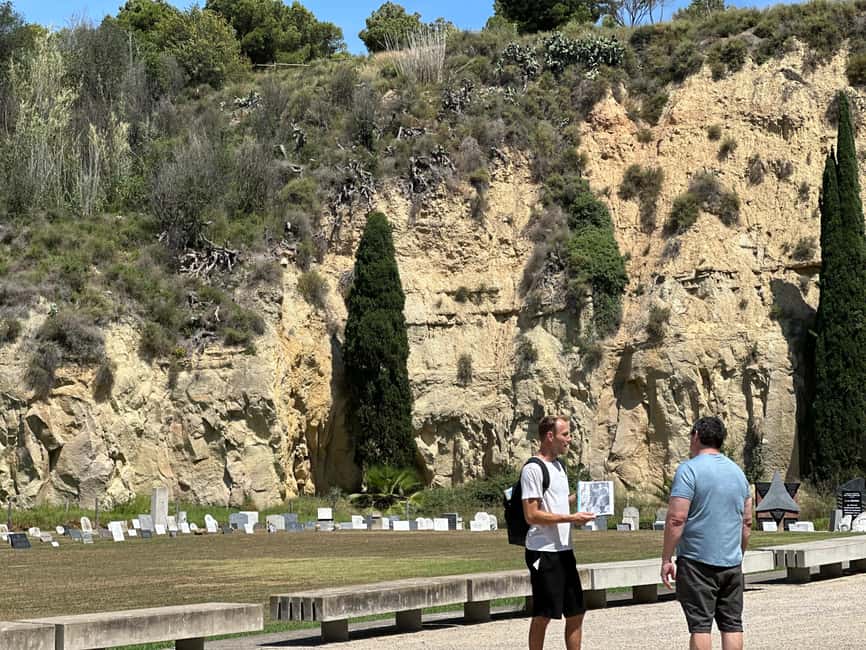
After the main cemetery walk, you return briefly with a quick ride and then focus on Fossar de la Pedrera. This stop is shorter, around 15 minutes, with photo time and a guided look.
This is where the atmosphere can feel a little more concentrated. If the earlier parts were about broad architectural variety, this portion feels like a focused chapter. You take in the memorial space, pause for photos, and get the guide’s explanation of what makes the location significant.
Because the stop is brief, you should treat it like a chance to reset your attention. Look, then listen, then look again. This is where your understanding starts to click, because the guide connects symbolism in the grave spaces to the stories you are hearing.
If you are the kind of person who loves details, this is also a good moment to ask questions. The guide can help you interpret what you are seeing, instead of you guessing based on appearance alone.
Buenaventura Durruti’s tomb: Barcelona’s rebel memory, in stone
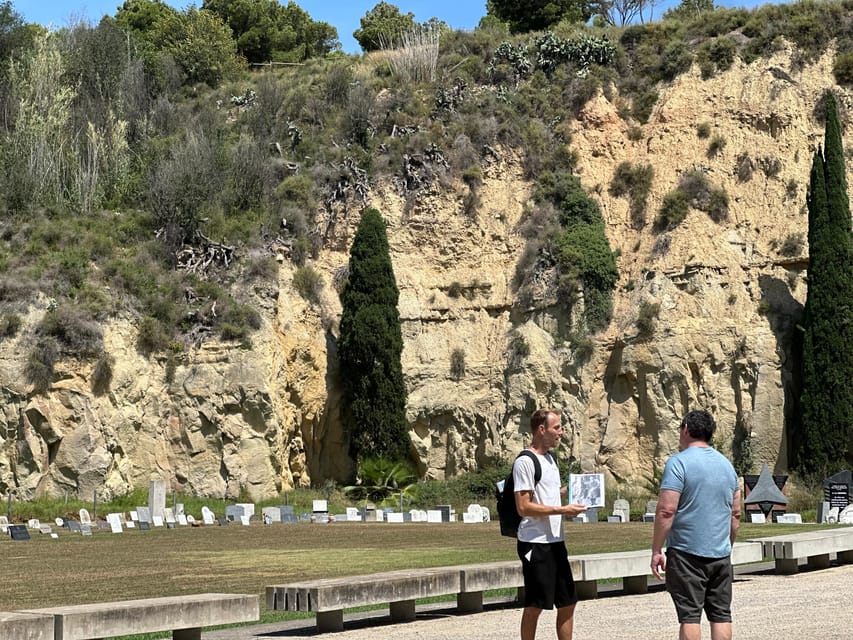
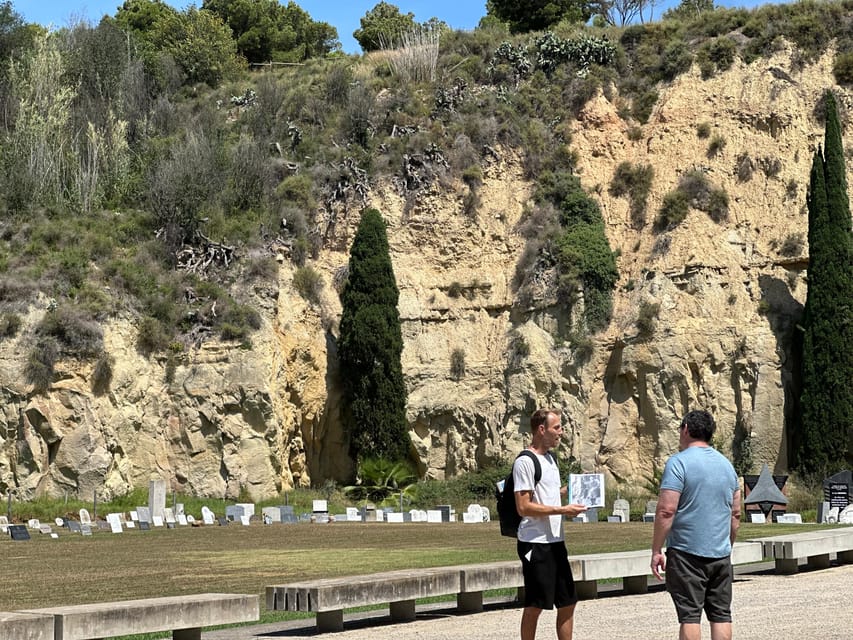
Next comes a quick, high-impact visit: Tomba de Buenaventura Durruti. The stop is about five minutes, including a guided visit and a sight-focused pause.
Even with a short time window, this is not a throwaway stop. Durruti is a figure that carries weight in Barcelona’s story, and the guide gives you context so the tomb does not feel like just another marker. The experience helps you connect political history to the visual design of memorials, so you understand how people wanted to be remembered.
The practical takeaway: do not rush this one just because it is short. Stand, look, listen, and then take one photo from a perspective that captures the tomb in its surrounding setting. In a place like this, the surrounding placement matters because it shows how the cemetery is laid out across the hillside.
Also, this stop is a reminder of what makes the tour different from a typical sightseeing walk. Here, you are learning how Barcelona has stored its complicated stories, including the hard edges.
Joan Miró’s tomb: art history meets the city of the dead
After Durruti, the tour makes one more short stop: Tomba de Joan Miró. Like the previous tomb visit, it is about five minutes with photo time and a guided look.
This is a smart contrast to the rest of the cemetery. Instead of only thinking about memorials as symbols of status or power, you start seeing them as part of a broader artistic culture. The guide frames what you are looking at in a way that connects Miró’s legacy to the city’s way of marking remembrance.
Even if you are not a Miró superfan, you will likely appreciate the idea that an artist’s final resting place still carries meaning. You get to stand in the same place, see how it is represented, and learn how Barcelona gives artists and icons a particular kind of memory.
The time is short, so again, treat it as a moment for attention, not a quick photo. One good photo plus a few minutes of listening tends to be more satisfying here than rushing through.
Other things to see around Barcelona
- Barcelona: Tapas Walking Tour with Food, Wine, and History★ 4.8 · 4,261 reviews
- Highlights & Hidden Spots of Barcelona Bike Tour w/ Local Guide★ 4.5 · 3,009 reviews
- Barcelona Tapas Walking Tour: Food, Wine & History★ 4.5 · 1,928 reviews
- Barcelona 3-hour Bike or E-Bike Tour: Highlights and Hidden Gems★ 5.0 · 1,429 reviews
- Barcelona: 2.5-Hour Bike or E-Bike Historical Tour★ 4.5 · 1,262 reviews
- Barcelona Old Town Tapas Tour: Vermouth, Bites & Hidden Gems★ 5.0 · 627 reviews
The sea views and hillside timing you will want to plan around
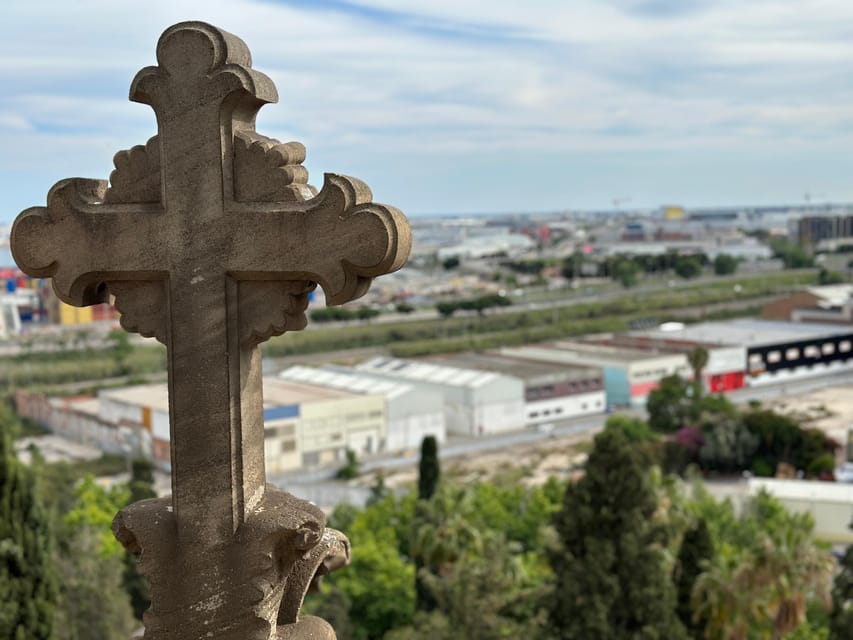
Sea views show up as part of the experience, and they are not just a pretty bonus. They change how you experience the cemetery. When you get a view out toward the port and the water, the cemetery feels less isolated and more connected to the living city below.
That matters for photos, too. Cemetery sculpture can look flat if you only see it head-on. When you get angles from different directions, the carvings, shadows, and textures become clearer. The guide may also share practical photo tips, and several people noted the guide’s ability to help them take better shots from different angles.
Timing wise, this is built as a 150-minute walk including transfer time. The core time is the cemetery portion. The transfers are short, but because you are walking slopes and stairs on the hillside, it is not a “sit on a bus and coast” tour. You should treat it like a half-day activity in terms of energy, even though the total duration is just under three hours.
If you are visiting after a notable date in early November, you might see extra decoration in the cemetery. That is not guaranteed, but it has happened for some groups, and it can add a moving, seasonal layer to the experience.
Price and value: $46 for a guide, a huge site, and roundtrip transport
At $46 per person for a 150-minute guided experience, this tour is priced in a way that can make sense fast. You are paying for three things at once:
First, you get a guide for the main part of the day, including time inside the enormous cemetery. That matters because the site is too complex for a self-guided loop.
Second, you get transport roundtrip from a central meeting area. You are not stuck figuring out how to reach a hillside cemetery and then back again.
Third, you get a curated path that helps you see the cemetery’s standouts instead of wandering until you feel tired and underwhelmed. People tend to come away saying they saw the best of the best, and that is exactly what good guiding buys you.
Is it worth it if you just want a quick cemetery photo? Probably not. But if you care about art, symbolism, and local stories, the price starts looking fair, especially for a tour that tends to avoid crowds.
Who this tour is best for, and who should skip it
This is a strong match if you like sculpture and architecture. You want to see the details up close, not just from far away. It is also ideal if you enjoy history in a human way, meaning you want names and stories connected to places.
You should especially consider it if you are tired of Barcelona’s busiest highlights and want something quieter. Many people go specifically for the calm, low-crowd feel and the chance to look slowly.
On the other hand, the tour is not suitable for children under 12. It is also not recommended for pregnant women, people with mobility impairments, wheelchair users, people with recent surgeries, and people over 70.
And even if you are in the safe zone, know this: the tour includes a lot of walking up and down stairs. It is not continuous, but it is frequent enough that you will feel it. If you have knee issues or balance concerns, you should plan carefully.
Finally, if the idea of cemeteries makes you uncomfortable, this is likely going to feel more intense than a normal museum visit. The tour includes creepy skeleton imagery and dark symbolism, even though it is presented thoughtfully.
Should you book Hidden Barcelona: Montjuïc Cemetery Walking Tour?
Yes, if you want an off-the-beaten-track Barcelona experience that mixes art, local stories, and quiet hillside views. The value comes from a guided route through a huge cemetery, plus transport that gets you there without stress. If you like seeing details and you want something calmer than the typical sightseeing circuit, this is a smart pick.
I would skip it if you need step-free access or if stairs are a hard limit for you. I would also skip it if you want a short, casual stroll with minimal walking, because the route involves plenty of uphill and stair work, even if it is broken up.
If you book, show up early enough to feel unhurried at the meeting point, wear comfortable shoes, and bring a curious mindset. This tour rewards people who pause, look closely, and listen, because the cemetery is built for that kind of attention.
More Walking Tours in Barcelona


The latest to open for booking



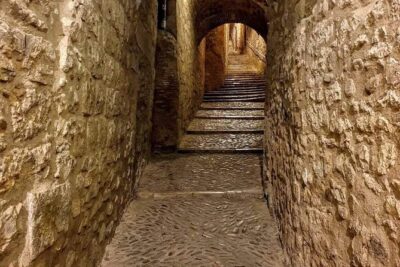

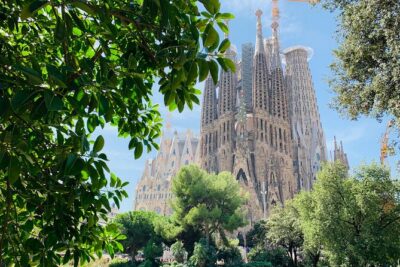
Montjuïc Hill Tours, side by side.
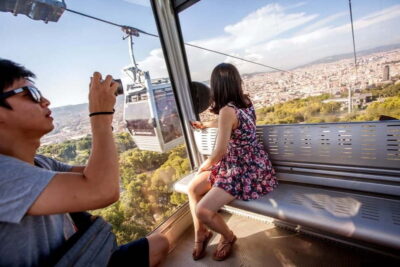
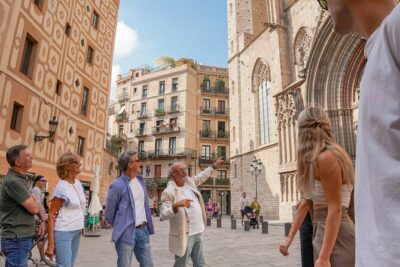
Barcelona all included: Sagrada, Park Güell, Montjuic & Gothic
Read our review →


E-Bike Tour with Montjuic Cable Car & Boat Ride
Read our review →

Montserrat Half Day with Cable Car and Easy Hike from Barcelona
Read our review →Where else this one turns up