
Reviewed · HISTORICAL TOURS
Hidden Barcelona
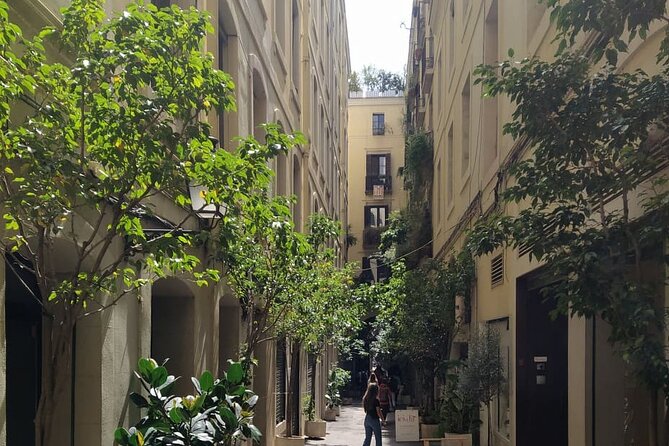
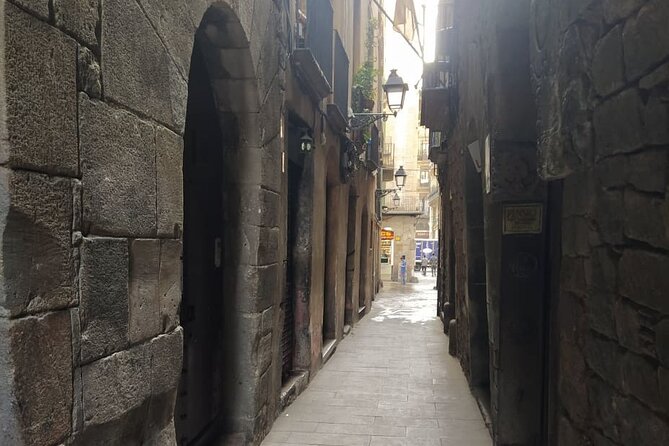
Barcelona hides its real stories in plain sight. This private, English-language history tour strings together small, lesser-known corners of Ciutat Vella, with free admission at every stop and enough time to ask questions instead of sprinting from one postcard to the next. The one thing to watch is the pacing, it is about 2 hours, so if you want long, museum-length lingering at each site, you may feel a bit rushed.
I like that the whole experience is designed for conversation and curiosity, not just sightseeing. With a mobile ticket and a meeting point at Pl. de Sant Jaume, you start in the heart of old Barcelona and end back where you began, with your guide keeping you moving but never frantic.
In This Review
- Key Highlights Worth Prioritizing
- Where the Tour Starts: Pl. de Sant Jaume, City Power in One Square
- Stop 1: Placa de Sant Jaume and the Story Behind the Center
- MUHBA Temple d’August: The Roman Barcelona You Might Walk Past
- Stop 2: MUHBA Temple d’August and the Value of Being Shown the Unseen
- Placa del Rei: Where Royal History Meets the Dark Stuff
- Barcelona Cathedral: A Major Church and a Very Long Timeline
- Casa de l’Ardiaca: Courtyard Secrets, Lawyers, and a Mailbox Detail
- Placa Sant Felip Neri: A Hidden Square with Spanish Civil War Shadows
- Pont del Bisbe: The Bridge Made for the 1929 World Exposition
- Museu Frederic Mares: Spanish Inquisition Headquarters in a Quiet Patio
- The Guide Experience: Humor, Full Attention, and Plenty of Questions
- Duration and Pace: About Two Hours, Structured But Not Rushed
- Price and Value: Paying for Expert Guidance, With Free Admissions
- What You’ll Learn Across the Stops
- Who This Private Hidden Barcelona Tour Is Best For
- Should You Book Hidden Barcelona?
- FAQ
- How long is the Hidden Barcelona tour?
- What is the meeting point for the tour?
- Is this tour private?
- Is the tour offered in English?
- Do I need to buy entry tickets for the listed stops?
- How much does it cost?
- Is a mobile ticket provided?
- What is the cancellation policy?
- Is the tour suitable for most travelers and are service animals allowed?
Key Highlights Worth Prioritizing
- Private guide time so you can ask anything without feeling shuffled along
- Free entry at every planned stop, so you pay mainly for the story and guidance
- A Roman-to-modern timeline, from MUHBA Temple d’August to landmarks tied to 1929
- Dark history, handled thoughtfully, including public executions, Spanish civil war references, and the Spanish Inquisition
- Guide style that invites chat, with humor and practical context
- Occasional pauses in long-running local shops, including a pharmacy stop
Where the Tour Starts: Pl. de Sant Jaume, City Power in One Square
You begin at Pl. de Sant Jaume 3, right in Ciutat Vella. This isn’t a random starting point. It is the civic center you need when you want to understand how Barcelona’s political life developed, because it is where you find both the city hall and the Catalan parliament.
In just about 20 minutes, your guide sets the tone: what this area means, why people have gathered here for centuries, and how later sites in the route connect back to it. I like the way this works for history lovers, you get orientation fast. You also get a chance to ask questions early, which makes the rest of the walk feel less like a checklist and more like a story you can follow.
A small consideration: this part can be busy by nature, so if you prefer quiet, you’ll want to stay close to your guide and not drift too far from the group line as you arrive.
Stop 1: Placa de Sant Jaume and the Story Behind the Center
Placa de Sant Jaume is the launchpad for everything else on the route. You are looking at the main square of Barcelona, and your guide ties what you see to the bigger themes you keep meeting later: power, law, public life, and the way political events shape buildings and streets.
If you enjoy “why this place matters” more than “what this building looks like,” you’ll appreciate the brief, focused time here. It is long enough to understand the setting, short enough to keep momentum.
Other things to see around Barcelona
- Barcelona: Tapas Walking Tour with Food, Wine, and History
★ 4.8 · 4,261 reviews - Highlights & Hidden Spots of Barcelona Bike Tour w/ Local Guide
★ 4.5 · 3,009 reviews - Barcelona Tapas Walking Tour: Food, Wine & History
★ 4.5 · 1,928 reviews
MUHBA Temple d’August: The Roman Barcelona You Might Walk Past
Next comes MUHBA Temple d’August, described as the Roman temple of Barcelona, and noted as the oldest place in town, well hidden from plain sight. That “hidden” part matters. You do not just see a sign, you get pointed toward what is easy to miss if you are wandering alone.
In about 15 minutes, this stop turns the volume down on the tourist noise and turns up the sense of time. A Roman temple under modern streets is a great reminder that Barcelona did not start with today’s map and Instagram angle. Your guide’s job here is to connect the physical remains to everyday life, not just to date it.
Possible drawback: because the site is older and more compact, you might get less “big sweeping views” than you would at a cathedral lookout. But if you care about layers and continuity, this is exactly the kind of stop that rewards attention.
Stop 2: MUHBA Temple d’August and the Value of Being Shown the Unseen
This is one of the stops where a guide really earns the money. Roman structures in cities often sit in awkward pockets, and left to your own devices, you might not realize you are staring at something significant. Here, you’ll get a clear explanation of what you are looking at and why it is still part of Barcelona’s identity.
Placa del Rei: Where Royal History Meets the Dark Stuff
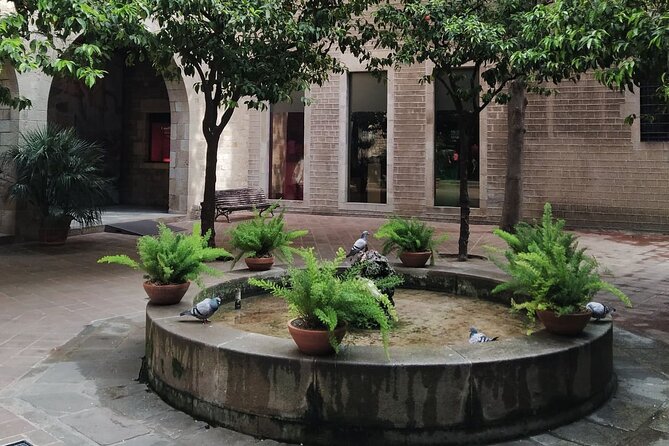
Then you move to Placa del Rei, the place of the palace of the kings of Catalunya. This is also where important historical events took place, including dark ones like public executions.
That word, executions, is not something most “highlights” walks emphasize. The tour does. And that makes this stop more than scenic. It is history in the open, tied to real public spaces where power was displayed, enforced, and remembered.
In roughly 15 minutes, you should expect your guide to explain the context, not just name-drop. You’ll also see how this square fits into the same pattern as the earlier stop: governance and justice, played out in stone and open space.
A consideration here is emotional. If dark history is not your thing, you might still appreciate it as a historical truth. But you may want to mentally prepare, so it does not derail your day.
Barcelona Cathedral: A Major Church and a Very Long Timeline
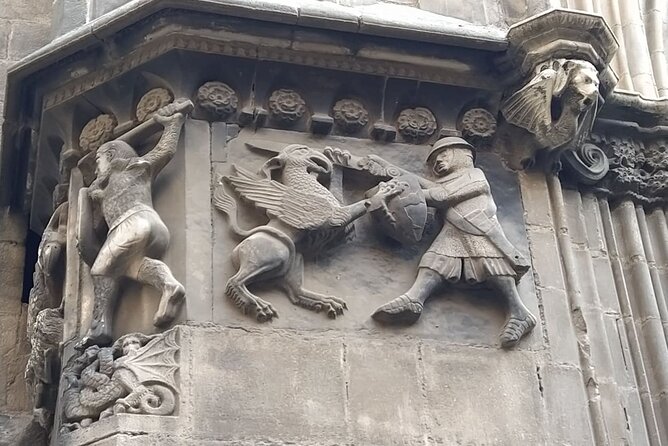
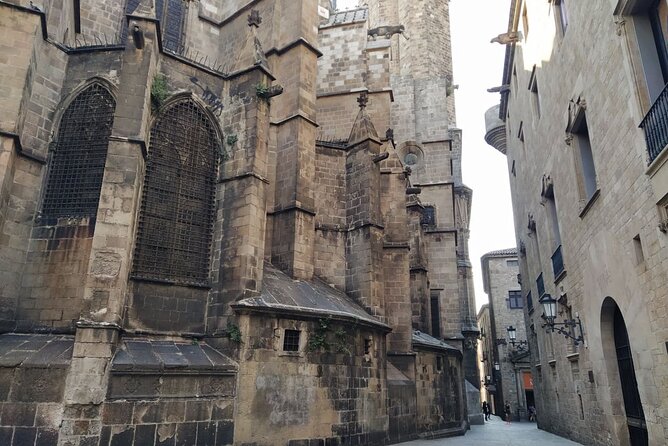
After the royal square, you head to Barcelona Cathedral, called the most important church in Barcelona. The tour points out that its story goes back all the way to 1298 BC, which is presented as the deep starting point for the site’s timeline.
In about 15 minutes, you’ll get the basic why: why this place became central, and how it shaped the area around it. Even when you know the general idea of a cathedral, getting the timeline and importance explained out loud helps you read the building with better instincts. You stop seeing “a church” and start seeing a long-running civic and religious landmark.
Possible drawback: cathedrals attract everyone, so this can feel more open and visible than the other stops. If you are hoping for only secretive, quiet corners, this one is a shift in atmosphere.
One ticket rarely covers it all. Here's what else is nearby.
- Barcelona: Sagrada Familia Entry Ticket with Audio Guide★ 4.6 · 105,312 reviews
- Barcelona: Park Güell Admission Ticket★ 4.4 · 76,534 reviews
- Barcelona: Casa Batlló Entry with Self-Audioguide Tour★ 4.7 · 25,359 reviews
- Barcelona: Montjuïc Cable Car Roundtrip Ticket★ 4.5 · 22,368 reviews
- Barcelona: Hola Barcelona Public Transport Travel Card★ 4.5 · 20,985 reviews
- Barcelona: 24 or 48-Hour Hop-On Hop-Off Bus Tour★ 4.4 · 20,872 reviews
Casa de l’Ardiaca: Courtyard Secrets, Lawyers, and a Mailbox Detail
A short walk brings you to Casa de l’Ardiaca, described as a beautiful courtyard. Here, the story includes the guild of the lawyers, plus a mailbox made by Lluís Domènech i Montaner. The route also notes roman remains hiding in the back and a funny meaning behind the mailbox.
This is the kind of stop that works especially well on a private tour. Courtyards are easy to overlook, and details like a mailbox with an odd or humorous meaning are exactly the sort of thing you miss if you rush through. Your guide helps you notice. They also help you understand why these details exist and what they signaled to the people of the time.
In about 15 minutes, you should be able to get both the architectural vibe and the human story: law, community, and daily rituals that were tied to larger institutions.
Placa Sant Felip Neri: A Hidden Square with Spanish Civil War Shadows
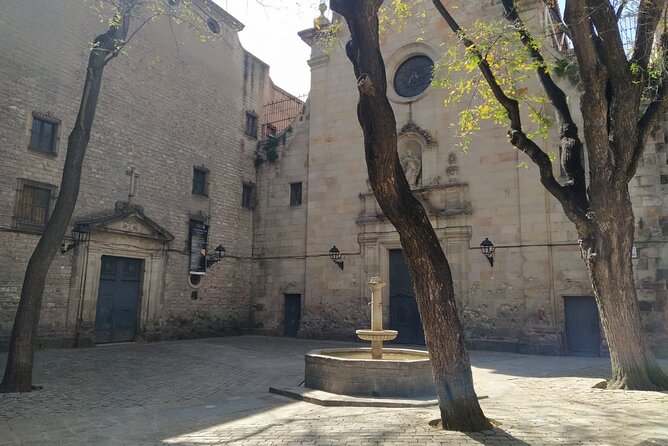
Next is Placa Sant Felip Neri, a beautiful hidden square with a church and a school. The tour mentions a dark history from the time of the Spanish civil war, but also highlights a positive side: a place where movies were filmed.
This mix is powerful. You are not just learning about tragedy. You’re also seeing how places get reused by later generations and how cultural life can take root in the same walls that once held harsher chapters.
In about 10 minutes, you’ll likely cover both the somber historical context and the lighter modern cultural echo. That balance helps keep the tour from turning into only gloom.
Consideration: because it is described as a hidden square, it may feel easy to accidentally pass by. Stay with your guide and keep your attention on the direction they point.
Pont del Bisbe: The Bridge Made for the 1929 World Exposition
Then you reach Pont del Bisbe, called a real landmark of Barcelona. This bridge was made for the world exposition of 1929, and that fact gives it a clear historical anchor.
In about 15 minutes, your guide’s job is to connect the bridge to Barcelona’s longer story of showcasing itself to the wider world. It is a nice change from the stone and courtyard stops, because bridges are about movement, crossing, and how people experience the city in real time.
If you like landmarks with dates you can remember, this one is for you. It is easy to picture the time period once you know the exposition connection.
Museu Frederic Mares: Spanish Inquisition Headquarters in a Quiet Patio
The final major stop is Museu Frederic Mares, described as a beautiful patio with a dark story. The tour notes that it was the headquarters of the Spanish Inquisition in Barcelona.
In about 15 minutes, you get the contrast that makes this route memorable. A quiet patio can look charming in the moment, but the historical context reframes it instantly. This is where your guide’s interpretation matters most, because you need help balancing the setting with the seriousness of what happened there.
This stop also fits the tour’s overall theme: history is not just in famous monuments. It is in everyday-seeming places where you might not expect it.
The Guide Experience: Humor, Full Attention, and Plenty of Questions
A big reason people love this tour is the guide. Adi stands out in the experience for being intelligent, funny, and easy to chat with. That matters because a private tour is not about collecting facts. It is about turning the city into a conversation.
One of the best parts, from the feedback you can use, is that the guide does not rush. The timing stays structured, but you are not shoved along at breakneck speed. That gives you room to ask follow-ups. You can also pick your guide’s brain as much as you want, which is ideal if you are the type who reads street signs and wonders what you are not seeing.
There is also a practical touch: the tour can include quick stops in long-running shops, like a pharmacy. That kind of pause can turn history from abstract to lived-in. You notice how neighborhoods function, not just how monuments look.
Duration and Pace: About Two Hours, Structured But Not Rushed
This is listed at about 2 hours total. Each stop has its own time window, from roughly 10 to 20 minutes, and the schedule keeps you moving through eight main points.
Here is how to use that structure to your advantage. If you want to maximize understanding, treat each stop as a “chapter,” not a photo session. Let your guide finish the story, then take your time for a short look around. If you try to do the sightseeing plus the story plus the photos all at once, you will likely feel behind.
If you are the type who loves long lingering, you might find the pacing snug. But if you want a smart, history-focused route with breathing room for questions, the time allotment works well.
Price and Value: Paying for Expert Guidance, With Free Admissions
At $56.78 per person for about 2 hours, this tour is not priced like a museum ticket. You are paying for the route design and the guide who connects the dots between places.
The value is boosted by one key detail: the tour lists admission tickets as free for the stops on your path. So your money goes toward learning, pacing, and interpretation, rather than stacking extra entry fees on top.
Is it expensive? In a city like Barcelona, guide-led walking tours vary a lot. What makes this one feel like a good deal is that you are covering major civic, Roman, religious, and historical shock-and-spotlight themes in a compact area, with time to talk and no need to pay for separate entries.
What You’ll Learn Across the Stops
Even without a formal “curriculum” label, you can think of this tour as a timeline you can walk through.
- You start with civic power in a major square tied to city hall and the Catalan parliament.
- You get Roman material in MUHBA Temple d’August, presented as the oldest place in town and hidden from easy view.
- You move into royal space at Placa del Rei, with mention of major events including public executions.
- You shift into spiritual and institutional influence at Barcelona Cathedral.
- You see legal life and everyday symbolism at Casa de l’Ardiaca, including the mailbox detail by Lluís Domènech i Montaner.
- You explore memory and culture at Placa Sant Felip Neri, mixing civil war history with film references.
- You learn a modern civic landmark fact at Pont del Bisbe, made for the 1929 world exposition.
- You end with a darker institutional chapter at Museu Frederic Mares, connected to the Spanish Inquisition.
That range is part of the appeal for history buffs who get bored with only one time period.
Who This Private Hidden Barcelona Tour Is Best For
This is a great fit if you match a few simple vibes.
You’ll likely enjoy it if:
- you are a history buff who wants context, not just sights
- you prefer private time where you can ask questions freely
- you like hidden corners, quiet courtyards, and small squares more than big arenas
- you want a mix of eras, from Roman remains to landmarks tied to 1929
You might not love it if:
- you want only light, purely scenic stops
- you want long museum-style pacing at each location
- you are very sensitive to discussion of dark historical events (the route explicitly includes public executions, Spanish civil war references, and the Spanish Inquisition)
Should You Book Hidden Barcelona?
Yes, if you want a focused, story-driven way to understand central Barcelona in about two hours. The biggest reasons to choose it are the private guide attention, the strong history concentration, and the fact that the stops listed come with free admission.
Book it especially if you like asking why things are there, who used them, and how the same street-level spaces can hold very different chapters. If you do not want any dark history themes at all, you might consider a more purely scenic walking tour. But if you want the real Barcelona that sits behind the obvious landmarks, this one is a smart, high-value pick.
FAQ
How long is the Hidden Barcelona tour?
The tour lasts about 2 hours.
What is the meeting point for the tour?
The tour starts at Pl. de Sant Jaume, 3, Ciutat Vella, 08002 Barcelona, Spain.
Is this tour private?
Yes. It is a private tour or activity, and only your group participates.
Is the tour offered in English?
Yes, it is offered in English.
Do I need to buy entry tickets for the listed stops?
The tour information states that admission tickets are free for the stops on the itinerary.
How much does it cost?
It costs $56.78 per person.
Is a mobile ticket provided?
Yes, the tour uses a mobile ticket.
What is the cancellation policy?
You can cancel for a full refund up to 24 hours in advance. If you cancel less than 24 hours before the start time, the amount paid is not refunded.
Is the tour suitable for most travelers and are service animals allowed?
Most travelers can participate, and service animals are allowed.
The latest to open for booking



Historical Tours, side by side.

Tapas Walking Tour with Food, Wine, and History
Read our review →
Highlights & Hidden Spots of Barcelona Bike Tour w/ Local Guide
Read our review →
Barcelona Tapas Walking Tour: Food, Wine & History
Read our review →
Barcelona 3-hour Bike or E-Bike Tour: Highlights and Hidden Gems
Read our review →

Barcelona Old Town Tapas Tour: Vermouth, Bites & Hidden Gems
Read our review →
Barcelona Erotic Museum – Explore Art, History & Fun
Read our review →Where else this one turns up