
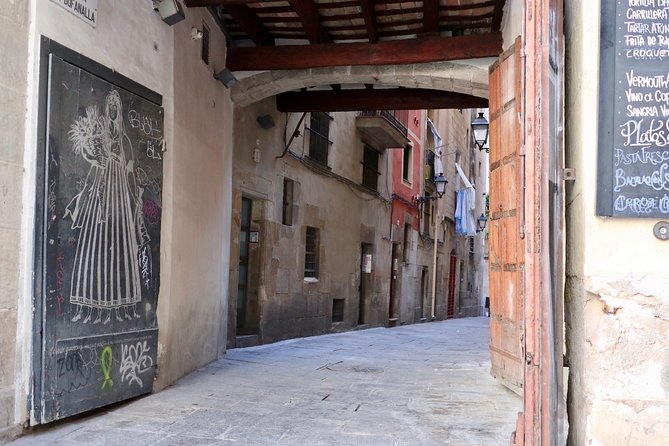
Reviewed · WALKING TOURS
Historic Walking Tour & Food Experience – Private Tour
Food and history walk in Barcelona. This tour traces Barcino days to medieval squares, using a guided stroll through the parts of the city that feel like layers of time.
I also love the food flow: pinchos at a traditional bar, then a tapas stop focused on local produce, and finally churros con chocolate near La Rambla.
The catch is simple, you need to be okay walking about 90 minutes on narrow backstreets.
In This Review
- Key highlights at a glance
- Why this Barcelona history and food route works
- Starting at Carrer del Comerç, then moving toward Barcino
- Mercat del Born area: pinchos first, then the name and the modern link
- El Born and La Ribera: seeing medieval power in stone
- Gothic Quarter backstreets: narrow lanes and the story of legends
- Major Synagogue and the medieval Jewish quarter area
- The regional tapas stop and why it feels different
- Churros con chocolate near La Rambla: the sweet landing
- Walking time, group style, and who this suits best
- Price and value: what $218.98 gets you
- Should you book this private historic walking tour and food experience?
- FAQ
- How long is the private tour?
- Where does the tour start and end?
- Is this tour private?
- How much walking should I expect?
- What food stops are included?
- Are admission tickets required for the sights you stop at?
- What is the cancellation policy?
Key highlights at a glance
- Private pacing through the Gothic Quarter and El Born so you can stay with your guide instead of getting separated
- Three distinct restaurant stops that turn history lessons into real bites, not just sightseeing
- Roman to medieval storytelling anchored at Plaça de Sant Jaume and the Jewish quarter area
- Pinchos bar experience with the classic slice of bread plus snacks on cocktail sticks
- Regional tapas focus with food described as coming from local fields and farms
- Dessert finale near La Rambla with churros con chocolate to close the loop
Why this Barcelona history and food route works
Barcelona can feel like a choose-your-own-adventure city. This tour is nice because it chooses for you. You move through old neighborhoods in a logical arc, Roman core to medieval power centers, and you eat along the way so the story sticks.
I like that the walking route is built around key squares and landmarks, not random alleys. You’ll start near Carrer del Comerç, then work toward Plaça de Sant Jaume, which the tour frames as the Roman heart of Barcelona, founded about 2000 years ago as Barcino. Later you shift into the Gothic Quarter and the Jewish quarter area, where the feel changes from merchant-era elegance to tight medieval streets and legends.
The food part is equally purposeful. Instead of one big meal, you get a sequence: pinchos to start, a tapas stop mid-walk, and a dessert stop to finish. That pattern is ideal if you are on your first day or you want to sample without turning the day into a full food marathon.
Starting at Carrer del Comerç, then moving toward Barcino
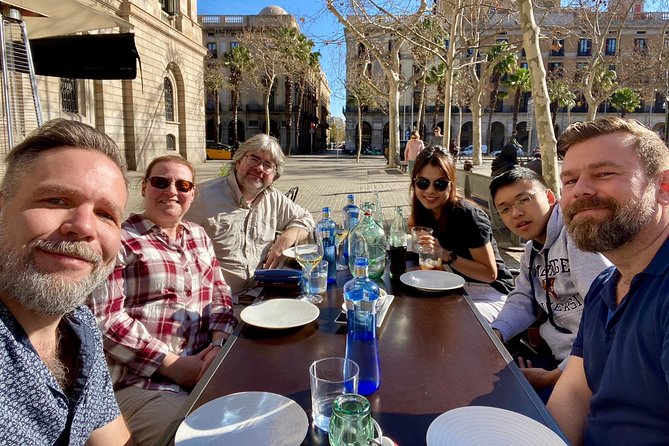
Your tour starts at Carrer del Comerç, 60 in Ciutat Vella. That matters because you’re already in the oldest urban fabric, close to where you can feel the city’s long timeline.
As you walk, Plaça de Sant Jaume becomes a key marker. It is framed here as the Roman heart of Barcelona, the origin of the city founded around 2000 years ago as Barcino. Even if you know the big names already, hearing it tied to where you are standing helps. You get a sense of how the street grid and civic life grew around that early core.
You also have a practical advantage right away. Since the route stays in central Ciutat Vella and you’re close to public transportation, you are not trapped in a far-flung neighborhood for hours. It is the kind of outing that works well on a day you are also planning museums, beaches, or a light evening walk.
Reservations that fill up fast
- Tablao Flamenco Cordobes on Rambla Barcelona with Dinner Option
★ 4.5 · 2,756 reviews - Barcelona: Flamenco Show with Dinner at Tablao de Carmen
★ 4.7 · 2,009 reviews - Flamenco Night at Tablao de Carmen with Tasting Menu or Dinner
★ 4.5 · 800 reviews
Mercat del Born area: pinchos first, then the name and the modern link
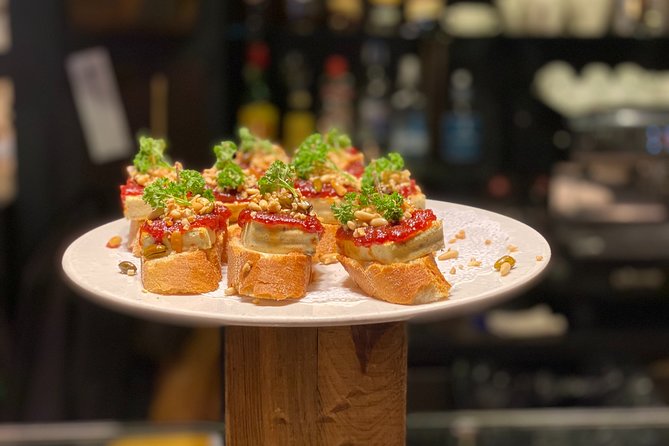
You make your first real food stop in the Born area, described around Mercat del Born. The tour connects the neighborhood’s story to today’s independence movement. That sounds like a heavy topic, but it is handled through local place-based context, the kind you can only get by standing where events and identities were shaped over time.
Right after that, you’ll learn what the name El Born means. You also get a sense of where you are heading, because the tour immediately begins bending toward medieval Barcelona, the era of craftsmen, rich merchants, and the kind of legacy that still shows up in big buildings.
Then comes the pinchos experience. The tour describes the classic setup clearly: snacks connected by cocktail sticks to a slice of bread. This is a great early choice for a history tour because it is easy to eat while you keep walking and looking. You’re not waiting for a plated course. You take bites, listen, and then move to the next square.
El Born and La Ribera: seeing medieval power in stone
From Mercat del Born, you continue into El Born and La Ribera, and this is where the walking tour earns its keep as a history experience. You’re not just told that merchants mattered. You see where their wealth left traces, including palaces and churches tied to that medieval golden era.
A key landmark in this section is Basilica de Santa Maria del Mar. The tour positions the basilica as impressive and connected to the neighborhood’s rich people who financed it. You also spend enough time there to notice why it feels different from smaller parish churches. The basilica’s scale and the way it sits in the neighborhood’s story help you understand that this was not just everyday faith. It was civic identity in architecture form.
Practical tip for this part: keep your eyes moving between the big view and the smaller details. If you only look at one thing, the lesson becomes flat. When you glance at both the façade area and the surrounding streets, the medieval setting feels more real.
Also, the tour lists admission as free at the stops you make here, so you are mainly paying for the experience and the food sequence rather than stacking extra entrance fees.
Gothic Quarter backstreets: narrow lanes and the story of legends
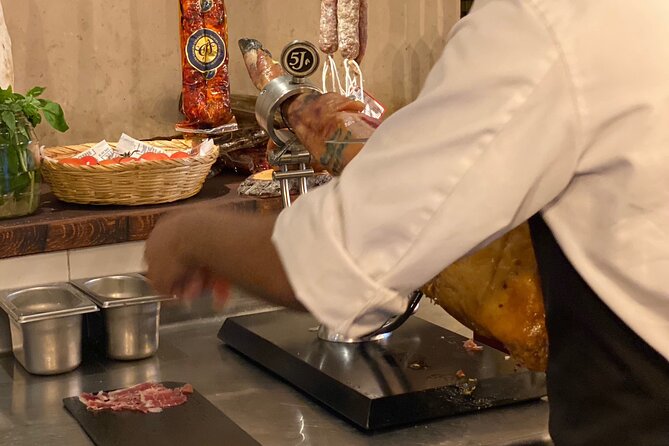
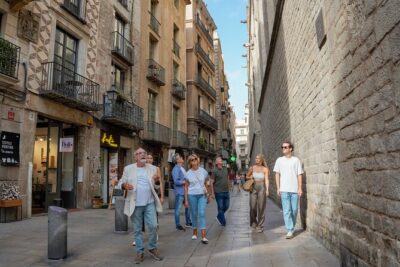
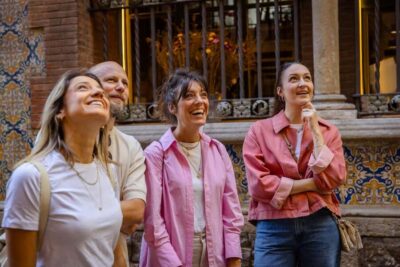
After El Born, you transition into the Gothic Quarter, also called Barri Gotic. This is the part of Barcelona that makes people fall in love fast, the tight lanes, the sudden opens to squares, the feeling that every corner has already had centuries of conversation.
The tour uses that setting to teach. As you stroll through narrow backstreets, you learn how Barcelona developed across eras. If you like history but hate when it turns into lecture mode, this is a good fit because the narrative is tied to where you are walking.
Then you hit Plaça de Sant Just, a square connected to what the tour describes as the oldest Christian church in Barcelona, plus many legends. That combination is exactly why walking tours can outperform museum-style history. Legends may not be provable, but they explain how communities remembered their past. Standing on the square helps you picture that older layer of meaning.
From there, the route continues toward Plaça de Sant Jaume, the Roman heart again, so you get a sense of return and contrast. The tour uses movement to show evolution, not just static facts.
Major Synagogue and the medieval Jewish quarter area
One of the more thoughtful parts of this route is the stop near Major Synagogue. The tour describes crossing the medieval Jewish quarter. Even if you are not deep into Jewish history already, the setting makes it hard to treat the topic like a checkbox.
What you gain here is context. Barcelona did not develop in one cultural lane. You see how the city’s neighborhoods shifted over time and how different communities shaped the streets and institutions around them.
As you walk, keep in mind this is still a food-and-history day, not a long museum tour. So you should expect light to mid-depth storytelling rather than an exhaustive study session. For most people, that is a plus. You end the tour with a clearer mental map of the city instead of feeling overloaded.
Other things to see around Barcelona
- Barcelona: Tablao Flamenco Cordobes with Food/Drink Options★ 4.6 · 4,368 reviews
- Barcelona: Tapas Walking Tour with Food, Wine, and History★ 4.8 · 4,261 reviews
- Barcelona: Food Walking Tour with Tapas and Wine★ 4.9 · 2,180 reviews
- Barcelona Tapas Walking Tour: Food, Wine & History★ 4.5 · 1,928 reviews
- Barcelona Gothic Quarter Tapas & Taverns Food & Wine Tour★ 5.0 · 1,470 reviews
- Barcelona Food Tour: Tapas, Paella, Sangria & 8+ Local Tastings★ 5.0 · 1,275 reviews
The regional tapas stop and why it feels different
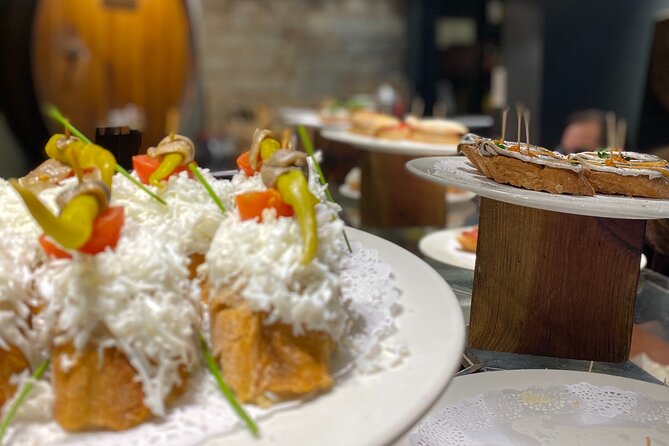
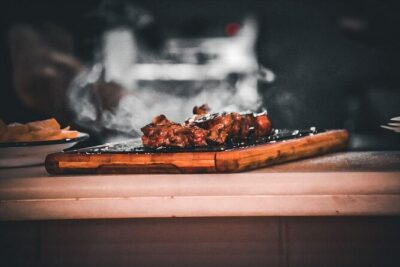
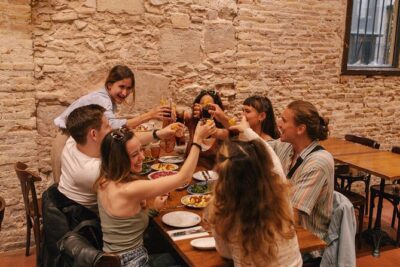
The tour includes a tapas bar stop known for its regionality, described as using food from local fields and farms. That detail matters because tapas can mean anything from plain to fancy depending on the place. Here, the tour frames the experience as a variety of elaborated and high-quality tapas, which sets you up to taste more range than you might get with a basic tapas crawl.
This is also where the day’s pacing becomes smart. You’re not stuffing yourself at every stop, but you do build appetite for the desert finale. By the time you reach dessert, you’re satisfied enough to enjoy it without feeling sickly full.
If you’re a foodie who likes to understand what you are eating, this kind of stop tends to work well. It turns tapas from a vague concept into a guided set of local choices.
One more small but helpful point: the tour ends after the third food stop, and dessert is called out specifically as churros con chocolate. That means you can plan around it. You know there’s a sweet finish coming.
Churros con chocolate near La Rambla: the sweet landing
The tour finishes close to La Rambla in the Gothic Quarter, with churros con chocolate after your tapas and dessert stop sequence. This is a classic Spanish move, sweet, warm, and easy to share, which makes it a good way to end a walking day that started earlier in the old center.
Why I like this ending for first-timers is that churros are familiar enough to enjoy even if you are tired, but the setting still feels tied to your day’s story. You do not just wander into dessert. You close the arc of the walk with one final bite in the same neighborhood network.
Also, if you’re planning an evening out after the tour, you end near major foot traffic. That makes it easier to pivot into dinner plans, a show, or just an easy stroll.
Walking time, group style, and who this suits best
This is a private tour/activity, meaning only your group participates. That matters if you want a pace that matches your questions and you don’t want to be squeezed into a larger group rhythm.
You should be able to walk about 90 minutes. That is not a casual sidewalk stroll. Narrow medieval streets can be uneven and you will be on your feet long enough to feel it by the end. If you have mobility limitations, this may be stressful.
Who it fits best:
- You’re in Barcelona for a first visit and want a quick orientation through key neighborhoods
- You like food that is tied to place, not just restaurant hopping
- You want a single outing that mixes Roman core context, medieval sights, and real tastings
Who might want a different plan:
- You want long museum time or sit-down meals with long menus
- You do not want to walk for an hour-plus through old streets
Price and value: what $218.98 gets you
At $218.98 per person for about 3 hours 30 minutes, the price is not “cheap,” but it does line up with what you receive. You’re paying for a guided route through several major neighborhood areas plus three food moments: pinchos, a regional tapas selection, and churros with chocolate.
It also includes practical extras like a mobile ticket, which helps reduce friction. And group discounts are mentioned, which can make a real difference if you are traveling as a family or group.
Here’s the value logic I use. If you were to do the history walk on your own, you might spend less on guidance, but you would still have to figure out where to eat and what to order to get variety. This tour gives you structure. Food variety plus curated history beats random guessing, especially on day one when you’re tired from travel.
The main cost trade-off is that you are paying for the guide and tastings rather than museum entrances. If your budget is tight, you might prefer self-guided walking plus one tapas meal. If your priority is “save time and get the best route,” this price starts to make sense.
Should you book this private historic walking tour and food experience?
I’d book this if you want an efficient first-day plan that blends Barcelona’s layers into something you can taste. The route connects Roman Barcelona, medieval merchant culture, and the Jewish quarter area, and it finishes with a reliable crowd-pleaser: churros con chocolate.
Also, the tour’s food structure is a big deal. Pinchos first, regional tapas next, dessert last. That order reduces decision fatigue. You are told what to expect at each stop, so you can focus on enjoying the moment.
One last check before you commit: make sure you’re comfortable walking roughly 90 minutes on narrow backstreets. If you can handle that, this tour is a strong way to get your bearings fast and leave with a clearer mental map of the city.
FAQ
How long is the private tour?
The tour is about 3 hours 30 minutes.
Where does the tour start and end?
It starts at Carrer del Comerç, 60, Ciutat Vella, 08003 Barcelona, Spain, and ends at Carrer de Petritxol, Ciutat Vella, 08002 Barcelona, Spain.
Is this tour private?
Yes. It is a private tour/activity, so only your group participates.
How much walking should I expect?
You should be able to walk for about 90 minutes.
What food stops are included?
You’ll have a pinchos bar stop, then a tapas bar stop, and you end with dessert, churros con chocolate.
Are admission tickets required for the sights you stop at?
The listed admission status for the stops is free, so you should not need paid admission tickets for those places during the tour.
What is the cancellation policy?
You can cancel for a full refund up to 24 hours in advance of the experience’s start time. If you cancel less than 24 hours before, the amount paid is not refunded.
More Food & Drink in Barcelona


More Historical Tours in Barcelona


The latest to open for booking

Walking Tours, side by side.
Barcelona Tapas and Wine Experience Small-Group Walking Tour
Read our review →
Tapas Walking Tour with Food, Wine, and History
Read our review →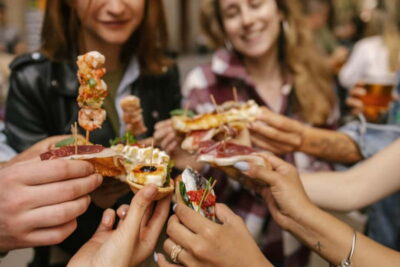
Barcelona Tapas Walking Tour: Food, Wine & History
Read our review →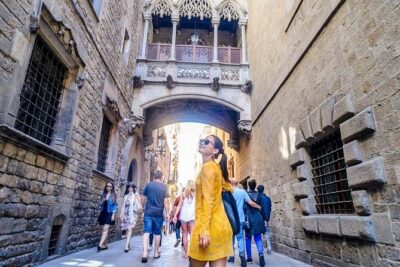
Barcelona Helicopter, Sailboat & Old Town Private Walking Tour
Read our review →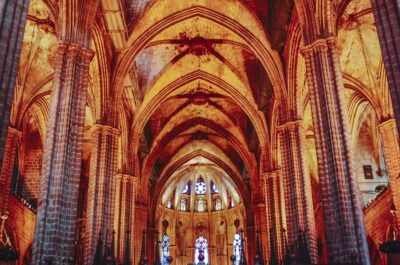
Guided Food Walking Tour with Tapas and Wine
Read our review →Where else this one turns up