
Reviewed · MUSEUM VISITS
KBr Fundación MAPFRE – Photography Exhibitions
One great photo show can teach you how to look. At KBr Fundación MAPFRE in Barcelona, you get serious photography in a modern, well-kept setting, with two exhibition spaces to move between in one day. I especially like that the ticket includes a free QR audio guide in English, Catalan, and Spanish, so you can follow along at your own pace. One thing to consider is that timing can matter, so double-check you arrive when the exhibition is actually open, since at least one guest reported a closed setup at their entry time.
This is not a giant, endless museum. It is built for focused looking, and that makes a quick visit feel worthwhile. The current temporary feature, Walker Evans: Now and Then, runs until May 24, 2026, and it sits alongside a Fundación MAPFRE Collections show of Pérez Siquier. If you are sensitive to a quiet room, you will also want to bring headphones or plan to buy a cheap pair on site.
If you love documentary photography, street-level realism, or the shift from black-and-white to color, this center is a strong stop. You are paying about $5, but you are seeing internationally recognized work and getting tools to understand it. The value is real, as long as you plan around opening hours.
In This Review
- Key highlights worth planning for
- KBr Fundación MAPFRE Barcelona Photo Center in Port Olímpic: the setting matters
- Your one-day flow: the two exhibition spaces you should plan around
- Stop 1: Walker Evans: Now and Then (temporary show)
- Stop 2: Pérez Siquier. Fundación MAPFRE Collections
- How long should you stay?
- Walker Evans: Now and Then, what to look for besides the famous name
- Look for his documentary discipline
- Watch how the city and the people coexist
- Notice the shift into Polaroid experiments
- Pérez Siquier and the move from black-and-white to color
- Track the evolution through series
- Understand his role in photography’s artistic rise
- Let the work teach you its own tempo
- The free QR audio guide: your best friend in a photo museum
- Languages and focus
- Mobile internet requirement, plus a Wi-Fi fallback
- Headphones are required, so plan for sound
- My practical tip
- Price and value: why $5 is a strong deal for major photography
- Opening hours and timing: when you can actually go
- Rules that affect your visit (and how to not get annoyed)
- Who should book, and who might feel underwhelmed
- Should you book KBr Fundación MAPFRE Photography Exhibitions?
- FAQ
- What is the KBr Fundación MAPFRE Photography Exhibitions experience?
- How much does it cost?
- How long is the visit?
- Where do I present my voucher?
- What are the opening hours?
- Is there a free audio guide, and what languages are available?
- Do I need headphones?
- Is it wheelchair accessible?
Key highlights worth planning for
- Port Olímpic location, easy to fit into a Barcelona day
- Two exhibition spaces that keep the visit feeling varied
- Walker Evans: Now and Then through May 24, 2026, from early work to Polaroid experiments
- Pérez Siquier. Fundación MAPFRE Collections, tracing a move into color photography
- Free QR audio guide in English, Catalan, and Spanish (with Wi-Fi backup)
- Headphones required, so come ready or grab the €1 option at the counter
KBr Fundación MAPFRE Barcelona Photo Center in Port Olímpic: the setting matters
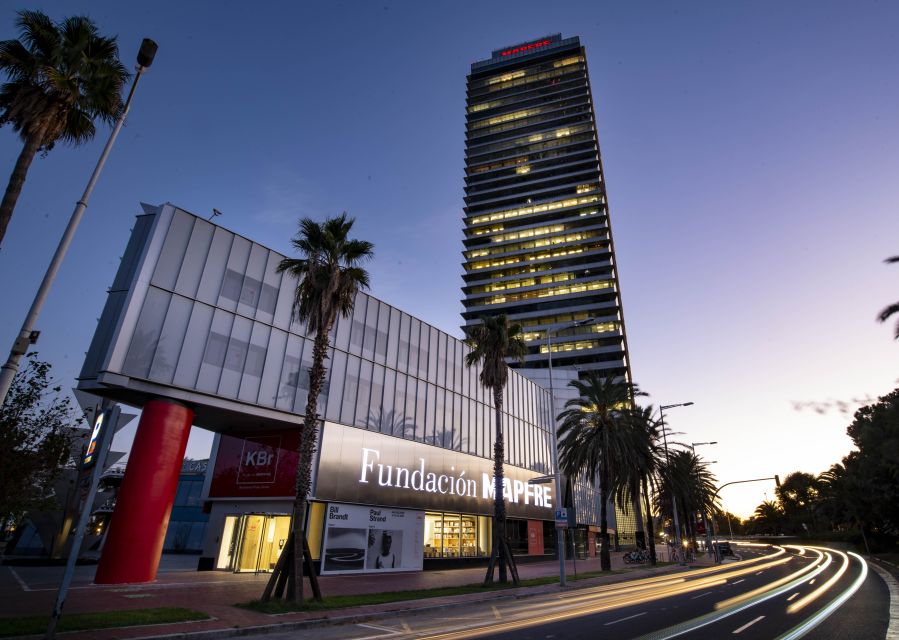
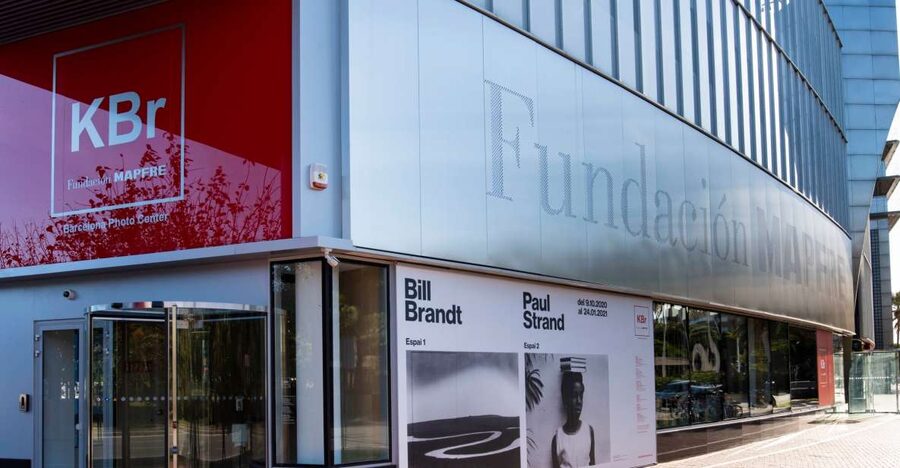
The KBr Fundación MAPFRE Barcelona Photo Center sits in the Port Olímpic area, where the vibe is practical and city-like, not old-world maze-like. That location choice matters. It makes a photography visit feel like part of your day, instead of a big production.
Inside, the space is modern and tidy, and it supports a slower pace of looking. You are not fighting for room or light. If you are the type who likes to stand a long time in front of one photograph, the layout helps.
Also, this is a one-day experience. That sounds obvious, but it changes how you approach it. You do not need to cram it between other heavy attractions. You can focus on the shows that are on view, use the audio guide, and still be done without feeling rushed.
A practical note from how the experience is set up: the experience is built around a ticket plus a self-guided audio system. There is no promise that you will be guided from room to room. You guide yourself, and the center gives you the tools to do it.
Your one-day flow: the two exhibition spaces you should plan around
You can think of this visit as two main stops inside the photo center. The exhibitions work like chapters. You will likely get more out of the day if you treat each space as its own mini-lesson.
Other things to see around Barcelona
- Barcelona E-Bike Photography Tour
★ 5.0 · 843 reviews - Barcelona: Sunrise Paddleboarding with Instructor and Photos
★ 4.9 · 782 reviews - Barcelona: Paddleboarding at Sunrise. Includes: instructor, photos, equipment
★ 4.7 · 570 reviews
Stop 1: Walker Evans: Now and Then (temporary show)
The temporary exhibition space, running until May 24, 2026, focuses on Walker Evans (1903 to 1975). This is not just a name on a wall. Evans is presented as a key figure in modern photography and as one of the major visual chroniclers of 20th-century United States.
The themes are the reason this show earns attention. Evans is famous for photographing everyday life with a direct, austere gaze. He also had a habit of looking closely at urban scenes and the anonymous faces of people caught in a country changing fast. That combination is what makes his work feel simple at first glance, then more complicated the longer you look.
This exhibition offers a career overview, with material reaching back to Evans’s early work in the 1920s. It also includes his later experiments with Polaroid in the 1970s. In other words, you get the arc of his thinking, not just a highlight reel.
One detail I like for your planning: the exhibition is organized with clarity. You are not bouncing randomly. You are shown how he develops, how the documentary style evolves, and how his observational skill remains the core of his images. If you care about process and vision, that structure helps.
Stop 2: Pérez Siquier. Fundación MAPFRE Collections
The second space shifts to Carlos Pérez Siquier, a central figure in Spanish photography (1930 to 2021). If Evans helps you understand documentary realism, Pérez Siquier helps you understand how Spanish photography modernized its language, especially through color.
This exhibition brings together works from the Fundación MAPFRE collections, with pieces incorporated into their photography collection since 2022. That matters because you are seeing a curated body of holdings, not just a random assortment.
Pérez Siquier’s background is part of the story. He developed his modern and poetic approach from his hometown of Almería. His work reflects Spain’s social and cultural transformations with sensitivity and irony. He also played a role in building photography as an artistic discipline by co-founding the Agrupación Fotográfica Almeriense and launching AFAL, a magazine that supported the medium.
This show traces his transition from black-and-white to color through emblematic series such as La Chanca, Informalisms, and The Beach. If you like watching style change over time, this is a strong way to do it without needing a photography degree.
How long should you stay?
The experience is one day, but within that day you control the pace. I suggest you budget time for both spaces and for the audio guide to load properly on your phone. If you rush, the exhibitions will still be impressive. But you will miss the point, which is slow looking and reading the image.
Walker Evans: Now and Then, what to look for besides the famous name
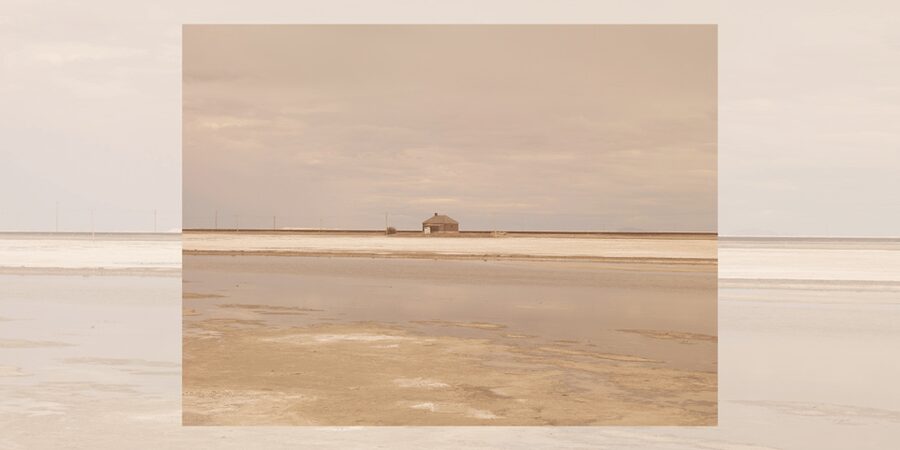
Walker Evans can be intimidating if you think you need to “get” art instantly. This exhibition is designed to make that easier. It lays out his career and influence through images that look plain but carry a lot of weight.
Here are a few ways to focus your attention while you’re inside.
One ticket rarely covers it all. Here's what else is nearby.
- Barcelona: Sagrada Familia Entry Ticket with Audio Guide★ 4.6 · 105,312 reviews
- Barcelona: Park Güell Admission Ticket★ 4.4 · 76,534 reviews
- Barcelona: Casa Batlló Entry with Self-Audioguide Tour★ 4.7 · 25,359 reviews
- Barcelona: Montjuïc Cable Car Roundtrip Ticket★ 4.5 · 22,368 reviews
- Barcelona: Hola Barcelona Public Transport Travel Card★ 4.5 · 20,985 reviews
- Barcelona: 24 or 48-Hour Hop-On Hop-Off Bus Tour★ 4.4 · 20,872 reviews
Look for his documentary discipline
Evans is described as a pioneer of documentary style, and the photographs reflect that. He combines a direct view with an unending curiosity for signs of popular culture and everyday life. That phrase might sound academic, but in practice it means you should watch for the everyday details that many photographers ignore.
In this show, pay attention to how the camera stays honest, with no obvious theatrics. The emotions are often quiet. That is what makes the work land.
Watch how the city and the people coexist
The exhibition points to urban scenes and anonymous faces of people in a country in transformation. You can treat each photograph as a small document: what the place is, what the person is doing, and what the picture suggests about the moment.
When you do that, you start seeing Evans as more than a street photographer. He becomes a visual chronicler. He records the texture of a society.
Notice the shift into Polaroid experiments
A career spanning early 1920s work and 1970s Polaroid experiments gives you a chance to compare technique. Polaroid is often associated with intimacy and immediacy, and that shift is part of why Evans matters long-term.
So as you move through the show, ask yourself how the visual language changes. Does it still feel austere? Does it still feel observational? What gets different, and what stays the same?
If you only look for “iconic images,” you might miss that the show is really about influence and method.
Pérez Siquier and the move from black-and-white to color
If Walker Evans gives you a lesson in looking honestly, Pérez Siquier gives you a lesson in changing how you see.
This exhibition connects several ideas that matter for a modern photography fan: Spanish visual language in the 20th century, the meaning of artistic irony, and the technical leap of embracing color.
Track the evolution through series
The show highlights series including La Chanca, Informalisms, and The Beach. That structure helps you notice how subject matter and mood evolve.
You can also use these series as markers. Ask: what does black-and-white make possible in the earlier images? What does color add later? Color is not just “more color.” It changes the feel of space, skin tones, and atmosphere, and it can shift how irony lands.
Understand his role in photography’s artistic rise
Pérez Siquier is described as a pioneer of color photography and as a co-founder of the Agrupación Fotográfica Almeriense and the magazine AFAL. That context helps you see why his images are not just aesthetic. They are part of a bigger effort to establish photography as an artistic discipline.
In practical terms, it means you should look for the modern poetic angle. Even when scenes seem everyday, there is a thoughtfulness in how the image is built. If you like photography that carries attitude, this show rewards you.
Let the work teach you its own tempo
One pattern across strong photography exhibitions is that they control your time. Pérez Siquier’s images are a good example. You might start by admiring composition. Then you notice irony. Then you start thinking about social transformation.
It is not a one-minute experience. Plan for a slower pace and you will feel the show click.
The free QR audio guide: your best friend in a photo museum
The standard ticket includes an audio guide. It is accessible via a QR code available in the room. That setup means you do not need an extra device. You use your phone, and you listen as you go.
Languages and focus
The audio guide is available in English, Catalan, and Spanish, and it is free. That is a big plus in a photography setting, because images often carry context that you might not guess just by looking.
If you are traveling with mixed language comfort, this helps everyone. Even if you do not speak the language perfectly, you can follow the key ideas.
Mobile internet requirement, plus a Wi-Fi fallback
A mobile device with active mobile internet connection is required. If you do not have data, you can connect to the free Wi-Fi network available in the space.
This is the kind of detail that can save your day. Before you arrive, it can help to download any offline maps, but for the audio, you mainly need the phone connected to the room’s Wi-Fi or your own data.
Headphones are required, so plan for sound
Headphones are required to avoid disturbing other visitors. It is recommended to bring your own headphones. If you forget, you can also purchase headphones for €1 (jack type) at the ticket counter, depending on availability.
This is worth taking seriously. In a photo center, people tend to stand still. Sound carries. If you want a calm visit, use headphones.
My practical tip
Bring wired headphones if you can. A €1 jack purchase sounds small, but it can create a wait at the counter if they run out. If you already have your own, you skip the stress.
Price and value: why $5 is a strong deal for major photography
At about $5 per person, this is one of those museum experiences that feels like it should cost more. The reason is simple: you are not just buying access to photos. You are buying a structured viewing experience for world-recognized photography, plus a free audio guide.
You can also look at the value through the lens of time. The duration is one day. That means you can see two different photographic worlds without paying for a multi-stop ticket or a guided tour package.
Even if you only have a couple hours, this can still be worth it because the exhibitions are likely to give you enough depth in each room. And if you do have longer, the audio guide turns the visit into something you can revisit in your mind later.
Is it perfect? No. One guest reported issues when arriving for a timed entry and struggling to get a refund. That is a reminder to plan carefully. But on the math of cost to art quality and built-in guidance, it is a good value.
Opening hours and timing: when you can actually go
The center has set hours that change by season, so check your calendar before you plan the day.
- October 1 to March 31: Tuesday to Sunday (and holidays) 11:00 am to 7:00 pm
- April 1 onward: Tuesday to Sunday (and holidays) 11:00 am to 8:00 pm
Also, the ticket is valid for one day, and starting times depend on availability. If you like planning ahead, pick a time slot that gives you room to arrive on schedule, get settled, and start the audio guide without rushing.
For peace of mind, I recommend showing up with a little buffer. Photo museums reward patience, and you do not want to cut off your listening time.
Rules that affect your visit (and how to not get annoyed)
This experience is straightforward, but there are two “don’t” items you should know.
- Swimwear is not allowed
- Food is not allowed
It sounds minor, but it affects what you pack. If you are combining this with beach time, plan your route so you are dressed for indoor gallery time. Also, if you are hungry, plan a snack plan outside the center.
Who should book, and who might feel underwhelmed
This is a great match for you if:
- you like documentary photography and want to understand it beyond a few famous images
- you enjoy seeing how photographers evolve over decades
- you want a calm, focused exhibition visit you can do in one day
- you appreciate context, and you like using an audio guide hands-on
It may be less ideal if:
- you need a highly interactive experience, because this is self-guided with an audio guide
- you hate depending on your phone for audio access, since the QR audio relies on connection
- you are very schedule-sensitive and cannot afford any risk with timed entry
If your main goal is an emotional, hands-on activity, this is not that type of attraction. It is about looking, reading the visual language, and staying with the images long enough for meaning to land.
Should you book KBr Fundación MAPFRE Photography Exhibitions?
Yes, I would book it if you care about photography as craft and as social observation. For about $5, you get major exhibitions, two spaces to explore, and a free audio guide that helps you read what you are seeing. The Port Olímpic location also makes it easy to fit into a Barcelona day.
One caveat: check the opening times for your date and aim to arrive during the hours posted. If you are selecting a time slot, confirm it matches the day’s schedule. That small step can help you avoid the frustrating scenario where the room is not operating as expected.
If you want a museum stop that respects your time and gives you something to think about afterward, this is a smart choice.
FAQ
What is the KBr Fundación MAPFRE Photography Exhibitions experience?
It is a one-day visit to the KBr Fundación MAPFRE Barcelona Photo Center in Port Olímpic, Barcelona, to see photography exhibitions in two exhibition spaces.
How much does it cost?
The price is $5 per person.
How long is the visit?
The activity is valid for 1 day.
Where do I present my voucher?
Present your voucher at the ticket desk.
What are the opening hours?
From October 1 to March 31, it is open Tuesday to Sunday (and holidays) from 11:00 am to 7:00 pm. From April 1, it is open Tuesday to Sunday (and holidays) from 11:00 am to 8:00 pm.
Is there a free audio guide, and what languages are available?
Yes. The audio guide is free, accessed via a QR code in the room. It is available in English, Catalan, and Spanish.
Do I need headphones?
Headphones are required. You can bring your own. If you forget, you can buy headphones at the ticket counter for €1 (jack type), depending on availability.
Is it wheelchair accessible?
Yes, it is wheelchair accessible.
The latest to open for booking



Museum Visits, side by side.

FC Barcelona Museum “Barça Immersive Tour” Ticket
Read our review →
Park Güell and Gaudí House Museum Entry Ticket
Read our review →
Moco Museum Barcelona: Modern & Contemporary Art
Read our review →
Girona & Dali Museum Small Group Tour with Pick-up from Barcelona
Read our review →
Barcelona Card: 25+ Museums and Free Public Transportation
Read our review →
Barcelona Interactive Spanish Cooking Experience
Read our review →
Where else this one turns up