
Reviewed · SCUBA DIVING TOURS
PADI Course and Diving in Levante Beach, Barcelona
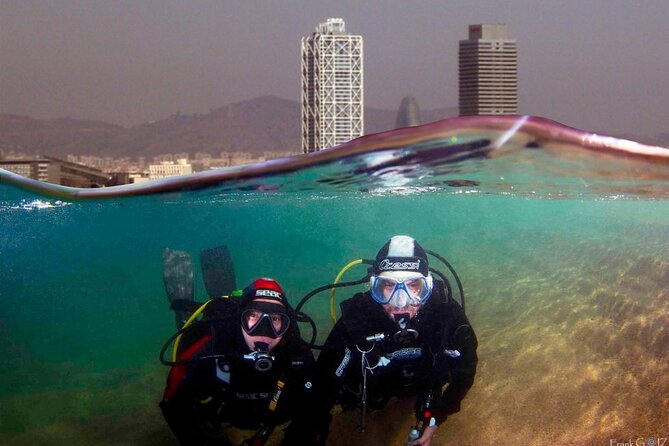
Scuba training in Barcelona starts at 9:00 sharp. This one-day PADI course takes you from on-land theory to three guided underwater sessions at Levante Beach, with a small group capped at six. I like that the basics are structured and supported, plus the certification details come with clear limits, up to 12 meters and always with a PADI pro. One drawback to plan around: you cannot take a plane for 24 hours after finishing.
You meet at Passeig Marítim del Bogatell, 3574, Sant Martí, 08019 Barcelona, right at 9:00 am, and the location is near public transport. It is not recommended if you have hearing or respiratory problems, and it may not be a fit if you take prescription medicines.
In This Review
- Key highlights you will care about
- A one-day PADI program in Barcelona that feels practical
- Price and value: what you are really paying for
- Where to start at 9:00 am in Sant Martí
- What happens before you go in the water: registration and theory
- Levante Beach practice sessions: three chances to get comfortable
- What your PADI certification lets you do after Barcelona
- Gear included, but plan how you will handle the beach side
- Small group size means you get attention when it counts
- The 24-hour flight rule: plan your travel so you do not scramble
- Who should book this Barcelona course, and who should think twice
- Barcelona logistics: making the most of a single course day
- Should you book this one-day PADI course in Barcelona?
Key highlights you will care about
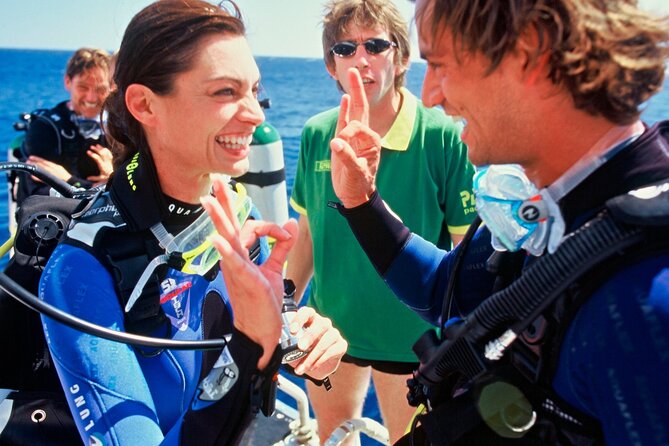
- Levante Beach, right by the water, for hands-on practice after the required classroom work
- Three instructor-led underwater sessions to work toward your PADI certification level
- Certification with a clear travel limit, max depth 12 meters, always accompanied by a PADI professional
- Scuba equipment included, so you avoid last-minute gear headaches
- Maximum group size of 6, which usually means more time with your instructor when questions pop up
- Weather matters, since the activity needs good conditions to run
A one-day PADI program in Barcelona that feels practical
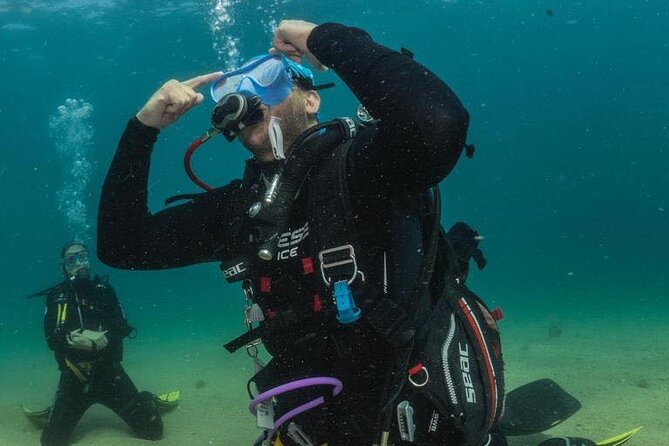
Barcelona is great for a short break. And this course fits that exact rhythm. You start the day with the registration and necessary theory, then you move to Levante Beach for the water training that leads to your PADI certification. It is the kind of structured, measurable experience you can actually fit into a busy itinerary without turning the day into a guessing game.
What I like most is how “real” the outcome is. The course is not just a fun beach outing. It is a path to a credential that is recognized internationally through PADI, with a specific depth limit and supervision rules. That matters because scuba rules are not vague. You are trained to operate within a defined range, and that makes it easier to trust the process when you travel.
The other thing I appreciate is the simplicity of what you bring into the day. The listing includes scuba equipment and PADI certification. The not-included item is minor, bottled water. So you can focus on showing up prepared instead of assembling a kit.
Rating check: the course sits at 3.7 out of 5 based on 3 ratings. That is not a huge sample size, but it does suggest you should weigh it carefully and ask questions before booking if you have any concerns about timing or fitness.
Price and value: what you are really paying for
The price is $347.22 per person for an approximately 1-day experience. On paper, that might sound like a lot if you only compare it to a beach day. But the value changes once you factor in what is included.
You are paying for:
- Scuba equipment
- PADI certification
- A full schedule that starts at 9:00 am and includes theory plus three underwater training sessions
If your goal is a recognized PADI credential, this is the “all at once” approach. You are not spending extra time and money hunting down gear. You are also not stuck in limbo after you leave Barcelona, because the certification is part of the package.
Where the cost can feel less ideal is if you are primarily looking for a quick thrill and you do not actually want the certification. In that case, you could end up paying for training structure that you will not use later. The honest tradeoff is that PADI certification is intentionally time and safety focused.
Other things to see around Barcelona
- Barcelona: PADI Discover Scuba Diving
★ 4.7 · 1,016 reviews - Discover PADI Diving in Barcelona
★ 4.5 · 79 reviews - From Barcelona: Tossa de Mar Scuba Diving and 3-Course Meal
★ 5.0 · 45 reviews
Where to start at 9:00 am in Sant Martí
Your start point is Passeig Marítim del Bogatell, 3574, Sant Martí, 08019 Barcelona, and the day begins at 9:00 am. This is helpful because it gives you a real anchor in the morning. Show up ready, because the day starts with registration and theory, not a casual “hang out and see” period.
Because the meeting point is listed as near public transportation, you can plan less like a taxi route and more like a transit route. That is a big deal on a tight schedule. If you are staying somewhere in the city, you can line up your morning commute around the 9:00 am start without building in a huge buffer.
Also note the group size: the activity caps at 6 travelers. For a course with theory and water practice, a small group matters. It usually means your instructor can actually keep an eye on everyone without turning the day into a rushed conveyor belt.
What happens before you go in the water: registration and theory
The course runs in two clear phases.
First comes the meet-up. You complete registration at the diving school, then you do the necessary theory. In practical terms, this is where your course gets you ready for what comes next, because scuba training cannot be “learn it in the water.” The theory portion sets up how you should understand safety, procedures, and what you are going to do during the water sessions.
Once the theory part is done, you head to the water at Levante Beach. That timing is important. You are not jumping straight into a wetsuit with no context. You are building confidence in the rules before you test them at the shoreline.
A detail that I think helps first-timers: the course is designed with a defined target. You are working toward certification through three instructor-led underwater practice sessions. That keeps the water time from feeling like random play. There is a reason for each step, even if you are nervous at the start.
Levante Beach practice sessions: three chances to get comfortable
The training takes place at Levante Beach, and you do three instructor-led underwater sessions to complete your PADI certification level.
Here is what that structure does for you:
- It gives you repetition. One session builds basic comfort, the next helps you refine, the last helps you apply it more confidently.
- It gives your instructor multiple shots to correct small mistakes early, instead of waiting until your final attempt.
- It reduces the “all-or-nothing” feeling that can happen in shorter, less structured experiences.
One extra note from real course experience feedback: an instructor named Sid is mentioned in positive terms for communication and guidance. If your instructor is Sid, you can reasonably expect a calm, explanatory approach that helps you understand what is happening instead of guessing your way through.
What your PADI certification lets you do after Barcelona
The big promise here is that once you finish, you can use your training when you travel. But the key is how the course defines the limits.
After certification, you can go to a maximum depth of 12 meters, and you must be accompanied by a PADI professional. Those two details matter for your future planning.
Why it matters:
- A 12-meter limit gives you a safe, clear boundary for your next steps. You are not being sold something vague like you can suddenly handle any site anywhere.
- “Always accompanied” sets expectations. It means you should plan dives around professional guidance rather than expecting full independence.
If your travel dream is to explore underwater sites with confidence, this certification gives you a starting point. And because it is PADI, many dive operations worldwide recognize the training level. The course also tells you that you will be able to discover the seabed in person, which is where the whole day stops being theoretical and starts being real.
One ticket rarely covers it all. Here's what else is nearby.
- Barcelona: Sagrada Familia Entry Ticket with Audio Guide★ 4.6 · 105,312 reviews
- Barcelona: Park Güell Admission Ticket★ 4.4 · 76,534 reviews
- Barcelona: Casa Batlló Entry with Self-Audioguide Tour★ 4.7 · 25,359 reviews
- Barcelona: Montjuïc Cable Car Roundtrip Ticket★ 4.5 · 22,368 reviews
- Barcelona: Hola Barcelona Public Transport Travel Card★ 4.5 · 20,985 reviews
- Barcelona: 24 or 48-Hour Hop-On Hop-Off Bus Tour★ 4.4 · 20,872 reviews
Gear included, but plan how you will handle the beach side
The course includes use of scuba equipment, which is one of the easiest wins in the whole day. You do not need to source a mask, regulator, or other gear on short notice.
What you do need to think about is the beach side of the day:
- You will be moving between the school and the water at Levante Beach.
- You may want to bring a small plan for hydration, because bottled water is not included.
A simple fix is to bring your own water if you want it, or buy a bottle nearby before you start. Since the only explicitly listed non-inclusion is bottled water, it is an easy gap to cover without turning the day into a shopping expedition.
Also remember that the activity needs good weather. If conditions are not right, the experience may be canceled and you will be offered a different date or a full refund. That means you should not schedule the rest of your itinerary so tightly that a date change would wreck your whole plan.
Small group size means you get attention when it counts
The tour caps at 6 travelers, which is small enough that your instructor can:
- check in on your comfort level during the training
- answer questions as they come up
- keep safety routines consistent across participants
That sounds like a “nice to have,” but in scuba training it can be the difference between feeling stressed and feeling guided. Theory gives you the rules, but the water part tests whether you can follow them under real conditions.
If you like hands-on coaching and you want time to ask basic questions, this small group format is a strong fit.
The 24-hour flight rule: plan your travel so you do not scramble
One important rule is stated clearly: you cannot take a plane flight until 24 hours after finishing the course.
That affects where you place this day in your overall trip. If you are doing Barcelona as a stop before heading somewhere else, you’ll want your departure day to be after a full day buffer.
If you do not have that buffer, the smartest move is to schedule your course on a day when you do not need to fly the next morning. This is not just a paperwork rule. It is there because scuba training and flying are both hard on the body, and the course is telling you to give yourself time.
Who should book this Barcelona course, and who should think twice
Most travelers can participate, but there are clear exclusions and “not recommended” categories.
This is not recommended if you:
- have hearing problems
- have respiratory problems
- take prescription medicines
- are planning to take a plane 24 hours after the course
If any of that applies to you, the right move is to ask questions before booking. Even if you feel fine, scuba training is safety driven, and the course is telling you the decision is not something to gloss over.
Who it fits best:
- You want a recognized PADI certification without spending days traveling between locations.
- You are okay with an early start and a full day structure.
- You want to learn the fundamentals and earn a credential that supports underwater travel up to 12 meters with professional accompaniment.
Barcelona logistics: making the most of a single course day
Because this is an approximately 1-day experience, you should treat it like a mini program, not a flexible activity.
A smart way to plan:
- Put the course day near the beginning of your Barcelona time if you want the rest of the trip to be low-stress.
- If you are meeting at 9:00 am, plan your night the way you would for any early-morning commitment.
- After the course, remember the 24-hour no-flight rule, so build in a normal day before you travel again.
Also, keep in mind that your day is weather-dependent. If you are traveling in a season with changeable skies, having this course as a mid-trip day gives you more flexibility if the operator needs to reschedule.
Should you book this one-day PADI course in Barcelona?
Book it if you want a straightforward way to earn a PADI scuba certification in a single day, with gear and the certification included, and you like the idea of a small group capped at 6. The structure is clear: theory first, then three instructor-led underwater practice sessions at Levante Beach.
Consider skipping or asking extra questions first if timing is tight for you because of the 24-hour flight restriction, or if you fall into the “not recommended” categories like respiratory issues, hearing problems, or prescription medicine use. Also, with only 3 ratings supporting the 3.7/5 score, it is worth doing a quick reality check on whether this format matches what you personally want from a Barcelona experience.
If your goal is real certification and a legit step toward future underwater travel within the 12-meter boundary, this is a practical choice. If you mainly want a scenic splash and nothing more, you may feel like you are paying for training that goes beyond what you need.
The latest to open for booking


Scuba Diving Tours, side by side.

Scuba Diving Tour, Lunch and a Visit to Tossa de Mar
Read our review →
SCUBA DIVING INITIATION – Dive in and experience underwater adventures – 2 hours
Read our review →
Where else this one turns up