
Reviewed · SEGWAY RIDES TOURS
Segway Flexible Private Tour in Barcelona
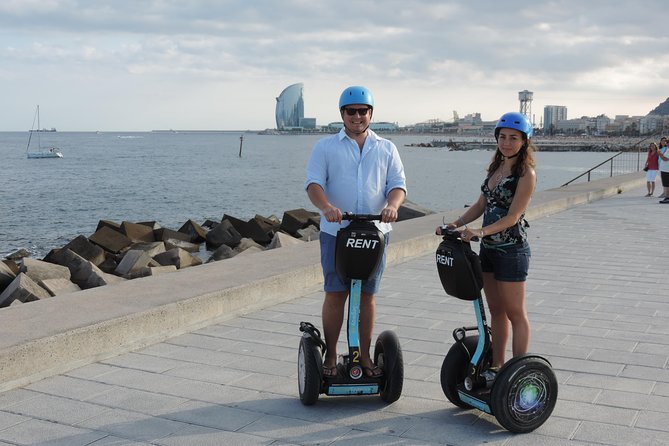
Barcelona moves fast, and this tour matches. You get a private Segway ride that mixes ancient streets with modern design, with a guide who sets the pace for you. I like that you can customize the route or let the guide choose a sightseeing loop, so the day feels more like a plan than a checklist.
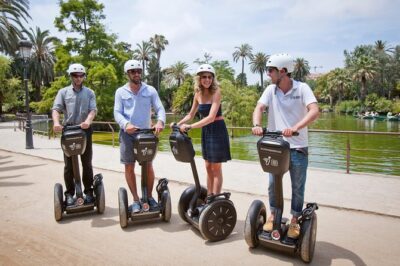
Another big win is how quickly it clicks. With helmets provided, a training session before you roll out, and patient instruction from guides like Ivan, Felipe, and Pablo, you spend more time gliding past the sights and less time stuck figuring out logistics.
One consideration: Segways have rules. The minimum age to ride a Segway is 16 (with electric bicycles available for younger riders), and there are weight limits, so it may not fit every group perfectly.
In This Review
- Key highlights worth planning for
- How the Segway training and safety work in the real world
- Meeting point in Ciutat Vella and how departure timing feels flexible
- Torre Romana, Port Vell, and the Roman-to-sea storyline Barcelona loves
- Columbus at the end of La Rambla, plus the old shipyards and Olympic waterfront
- Gaudí sightings in one ride: Sagrada Família, Gaudí squares, and two Modernist icons
- Arc de Triomf to Ciutadella Park: an 1888 Expo walk without the walking
- From El Born to the Gothic Quarter edge: culture centers, stations, and sea walls
- Tickets, time, and why the price feels fair at about $58.87
- Who should book this Segway tour, and who should choose something else
- Should you book it? My practical call for Barcelona first-timers
- FAQ
- What is the duration of the Segway tour?
- Where does the tour start and end?
- Is the tour private?
- Are helmets provided?
- Do you need prior experience to ride a Segway?
- What is the minimum age to ride a Segway?
- Is there a weight limit for riders?
- What about rain?
- Are attraction tickets included?
- What is the cancellation policy?
Key highlights worth planning for
- Flexible route choices, guided by you or the instructor
- Helmet included plus hands-on practice so you feel steady
- Fast sightseeing coverage, with short stops for photos and explanations
- Iconic Barcelona mix, from Roman remnants to Gaudí and Olympic areas
- Ciutadella Park monuments, including 1888 Expo landmarks
- Family-friendly alternatives, like electric bicycles for younger participants
How the Segway training and safety work in the real world
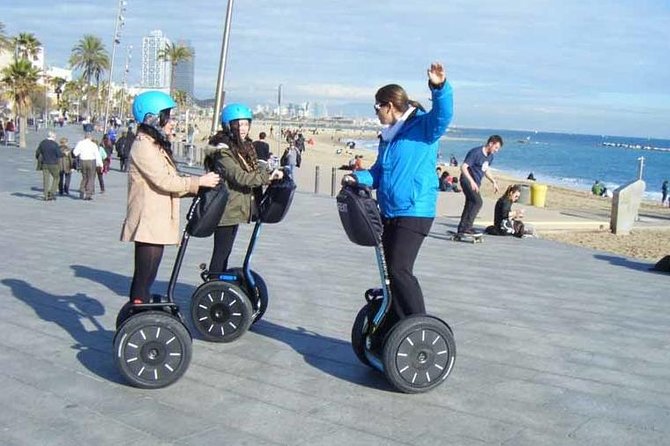
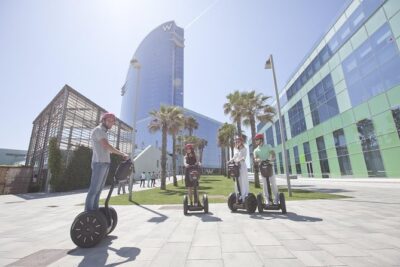
This tour is built around confidence. Helmets are mandatory, and you can get a helmet in your size right at the start. Then you do a training session so everyone can handle starting, stopping, and turning in street conditions.
That matters more than you’d think. Barcelona is full of pedestrians, bikes, and traffic patterns that can feel busy even when you’re just walking. The goal here is simple, you get enough control to move calmly with the group. Guides are also known for being patient, which is a big deal if it’s your first time on a Segway.
Safety rules are clear. The tour is forbidden for people under the influence of alcohol, drugs, or strong medicine. You also need valid ID or passport at the time of the tour, and a copy is accepted.
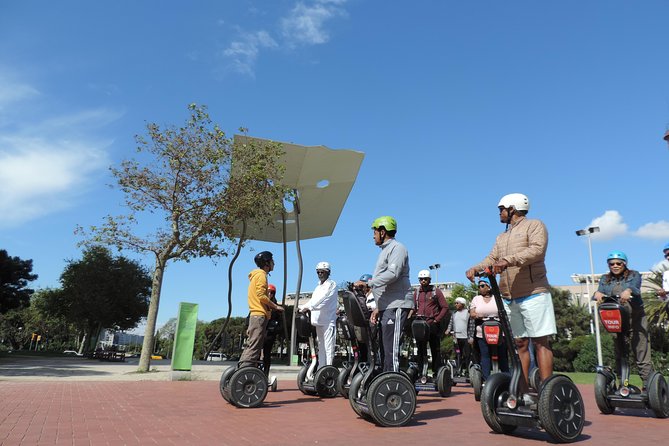
One more practical detail: although it’s described as private, local law affects how rides run. Groups are split into smaller sets of 6 participants plus 1 guide, with a separation of no less than 50 meters between groups. So you are still with your own party, but the company may operate in multiple mini-groups to follow regulations.
Meeting point in Ciutat Vella and how departure timing feels flexible
You meet at Carrer del Correu Vell, 6, in Ciutat Vella (near public transportation). The tour returns to the same meeting point, which makes planning easy if you want lunch beforehand or a post-tour walk after.
You’ll also notice a “you choose the pace” vibe. The tour is private and customizable, and you depart when you want within your scheduled time window. That flexibility is one of the main reasons this can be a great first-day activity in Barcelona.
There is still real-world timing. You must arrive 15 minutes early for check-in and practice. If you’re late, the tour may be postponed to another available slot. If you’re traveling with kids, it’s worth building in extra time so the whole group can check in, fit helmets, and start training without stress.
And yes, weather is part of the plan. Raincoats are provided, and the activity operates in all weather conditions. If you’re visiting in shoulder season, bring comfortable shoes you don’t mind getting splashed, and dress for wind.
Cover more ground, standing up
- Barcelona Segway Tour
★ 5.0 · 680 reviews - Barcelona Segway Tour
★ 4.7 · 630 reviews - Barcelona: City Highlights Guided Segway Tour
★ 4.9 · 624 reviews
Torre Romana, Port Vell, and the Roman-to-sea storyline Barcelona loves
The tour starts with a history anchor that puts Barcelona in context fast. You begin near the ancient Roman walls, at Torre Romana, dated to the 4th century AD. It’s a short stop, but it’s a useful mental reset. Instead of thinking of Barcelona as all modern beaches and Gaudí, you get a quick reminder that this city grew from the Roman colony of Barcino.
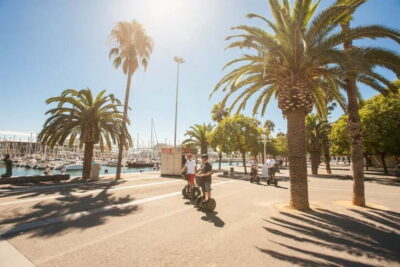
From there, you roll toward the harbor area, where Port Vell is the next stop. Today it’s a modern marina, but it sits on the old harbor route that shaped how the city met the sea. This stretch is a good Segway zone because you can enjoy open views while still getting the guide’s explanation.
Then comes a colorful punctuation mark near Port Vell, the Cara de Barcelona sculpture by Roy Lichtenstein (1992, created for the Barcelona Olympics). It’s pop art mixed with a sports-era civic message. Even if you’re not a sculpture person, it works on a ride, because the guide can point out how art and city identity show up in unexpected places.
If you care about photos, this segment is practical. The landmarks are close enough that you get quick photo moments without burning time in slow bottlenecks.
Columbus at the end of La Rambla, plus the old shipyards and Olympic waterfront
Next you glide toward the Monument a Colom, the tall column at the end of La Rambla. It’s iconic, 60 meters high, built in 1888, topped with Columbus pointing toward the sea. It’s a classic viewpoint anchor for understanding Barcelona’s geography. You see how the city’s “big boulevard” lines up with the harbor energy.
After that, you move through the area around the Royal Shipyards, the Les Drassanes Reials, a Gothic complex from the 13th century that was used for building and repairing ships. Even without museum time, the exterior setting gives you a feel for Barcelona as a maritime power, not just a modern tourist hub.
La Rambla itself is next, and here the Segway angle helps. It’s one of the most famous boulevards, packed with shops, cafés, and street life. On foot, it can feel like you’re threading through crowds. On Segway, you can keep the moving rhythm while the guide shares context on how the street evolved.
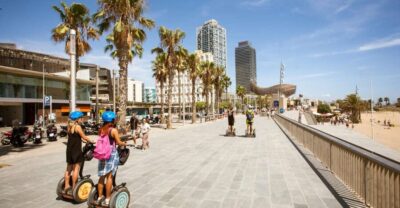
Then the route shifts toward Olympic territory at Port Olímpic. You’ll spend time around the Olympic stages and the coastline vibe, with beach views that make it feel like Barcelona is two cities at once, old neighborhoods and big event-era architecture.
A stop in Barceloneta follows, the historic seaside quarter that began as a fishing area and is now known for its beach promenade and seafood scene. It’s a good place to understand why Barcelona’s waterfront is so central to daily life.
Finally, you pass by La Monumental, the old bullring built in 1914, known for its mix of Moorish and Byzantine architectural styling. It’s used today for concerts and exhibitions, so even if you’re not attending an event, it helps to connect “historic facade” with “still in use.”
Gaudí sightings in one ride: Sagrada Família, Gaudí squares, and two Modernist icons
This is where the tour earns its reputation for covering big-name sights without turning into a full museum day.
You’ll stop at Basilica de la Sagrada Família, Gaudí’s masterpiece still under construction since 1882. The plan gives you time for viewpoints and photos, but the stop is marked as admission not included. That means you should expect an exterior and area-focused experience rather than a full interior visit.
Right next door is Plaça de Gaudí, a quieter green pocket with pond views and a relaxing break spot. It’s the kind of pause that makes the Segway day feel balanced instead of rushed.
Then you return to the “photo you came for” square, Plaça de la Sagrada Família, where you can frame the Nativity façade from a comfortable open area. Short stop, big payoff.
After the Sagrada Família area, you move through a Modernist stretch that puts Gaudí and Catalan Modernism in conversation. You’ll see La Pedrera (Casa Milà), completed in 1912, known for its undulating stone façade, wrought-iron balconies, and sculptural rooftop chimneys. Admission is not included, so treat it as a strong street-level stop.
Casa Batlló is next, completed in 1906 and famous for its colorful, organic forms. Again, admission is not included, but the exterior is the point here. The guide can help you spot design ideas you might miss if you just speed-walk past.
Then you roll along Passeig de Gràcia, a luxury boulevard that’s also a Modernist showcase. It’s lined with major buildings, so even quick Segway stops feel meaningful because you’re not just seeing one landmark, you’re seeing a pattern of design culture.
Before you head out from this zone, you may also pass by other Modernist houses and palaces nearby, including Palau Macaya, Casa de les Punxes, and Palau del Baró de Quadras, with architecture tied to Josep Puig i Cadafalch. These stops aren’t about buying tickets. They’re about training your eye to what makes Barcelona’s Modernism feel different from other European styles.
Arc de Triomf to Ciutadella Park: an 1888 Expo walk without the walking
As the tour swings toward the park area, you get a breather from the densest central streets.
You’ll ride by the Arc de Triomf, built in 1888 as the main entrance to the Universal Exhibition. It’s Neo-Mudéjar in style with decorative brickwork and sculptures. It’s a perfect photo moment because the structure is so clear and symmetrical, and it helps you connect the dots on how Barcelona reinvented itself around big international events.
Nearby, you’ll also see decorative modern street lamps by Pere Falqués, small details that make the city feel designed, not just historic. The route also includes a monument honoring Francisco Rius i Taulet, tied to organizing that 1888 Universal Exhibition. These are the kinds of city-story breadcrumbs a guide makes easy to notice.
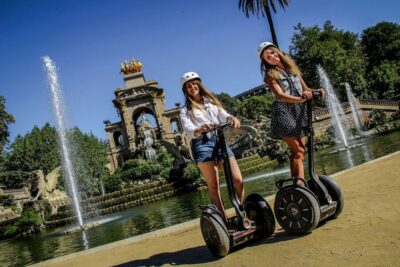
Then you enter Parc de la Ciutadella, one of Barcelona’s largest and most popular green spaces. It’s a powerful contrast zone. You get lakeside paths, fountains, historic monuments, and open space to reset your brain.
In the park, you’ll pass by the Castell dels Tres Dragons, a Modernist building originally built as a café-restaurant and later used for a Zoology Museum. Admission is not included, so again, it’s about exterior impressions and the context your guide provides.
You’ll also see monuments that tie directly to the 1888 Expo, including Homenatge a l’Exposició Universal de 1888, plus the Hivernacle and Umbráculo greenhouses built for exotic plants. If you like architectural “why does that structure exist here?” moments, these greenhouse stops hit the sweet spot.
Other quick stops can include the Pergola del Monumental and the Cascada Monumental. The cascading fountain area is especially memorable on a ride because it feels theatrical without requiring museum ticket time. The park’s main lake is nearby too, a scenic pause that gives you a chance to catch your breath and take in the setting.
The route also reaches political and historic landmarks inside the park, including the Parliament of Catalonia in an 18th-century building that was once used as an arsenal. That’s a strong “how the city’s power structures changed” moment that doesn’t need a long walking detour.
Other things to see around Barcelona
- Montserrat Monastery Small Group or Private Tour Hotel pick-up★ 5.0 · 5,144 reviews
- Tour Welcome Barcelona with Local Guide in Eco Tuk Tuk Private★ 5.0 · 1,882 reviews
- Barcelona Private Tour by Sidecar Motorcycle★ 5.0 · 1,750 reviews
- Barcelona: Private Group Bike Tour★ 4.8 · 1,420 reviews
- Barcelona Helicopter, Sailboat & Old Town Private Walking Tour★ 5.0 · 1,395 reviews
- Barcelona: Helicopter, Boat Ride & Old Town Private Tour★ 4.7 · 1,357 reviews
From El Born to the Gothic Quarter edge: culture centers, stations, and sea walls
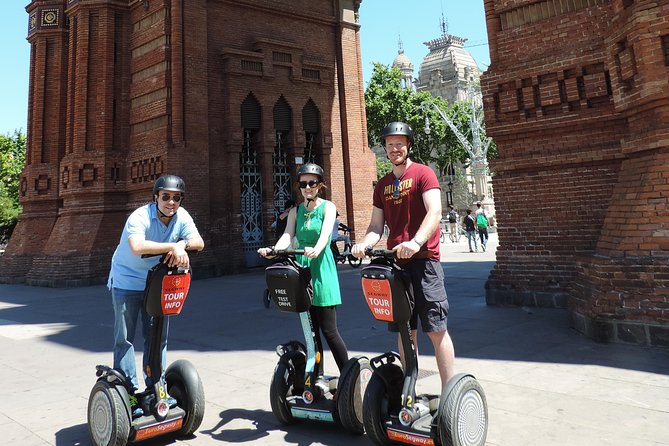
After Ciutadella, the ride shifts toward El Born and the surrounding historic zones. You’ll pass the Homenatge a Picasso sculpture and then reach El Born Centre de Cultura i Memòria. That site preserves archaeological remains and hosts exhibitions, but your stops here are short and ticket free, focused on the location and what it represents.
The neighborhood of El Born itself is part of the point. Narrow streets, medieval feel, and lots of culture make it a district you usually only understand by spending time there. A Segway route helps you cover more of the area without feeling trapped in a walking marathon.
Next, you’ll see Estació de França, a major train station with classical and Modernist elements, including iron-and-glass roofwork and marble details. It’s a transport hub, but the architecture is striking enough to count as a sightseeing stop.
You’ll also pass Basílica de Santa Maria del Mar, a Catalan Gothic church built in the 14th century. Admission is not included. Still, the exterior and the approach area work well because this building’s proportions and stained-glass fame are the kind of thing a guide can point out quickly.
On the waterfront side, Pla de Palau has Antoni Gaudí lampposts that are iconic Modernist details. Even though they’re small compared to basilicas, they’re exactly the kind of visual cue that makes your ride feel like a “city designed by artists” story rather than only “big monuments.”
You may also pass Baluard de Migdia and Muralla de Mar, remnants of 17th-century city walls that once protected the harbor. These are great for the perspective shift from modern marina life to older defensive Barcelona, and they usually pair with views of the old harbor area.
Casa Llotja de Mar is another important stop along the way. It’s a former merchants’ exchange built in the 14th century, with Gothic and Neoclassical architecture, and it ties the city’s commerce history to the present-day cultural vibe.
Tickets, time, and why the price feels fair at about $58.87
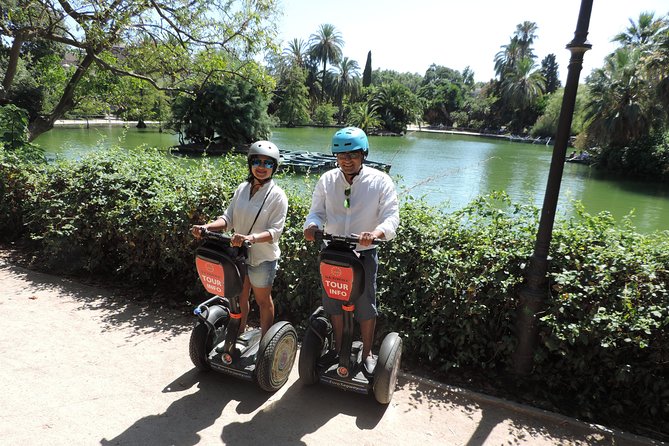
At $58.87 per person, this tour costs more than a walking loop, but it can be good value if you want maximum coverage in limited time.
The main tradeoff is ticket time. The tour’s goal is to show sights, views, and places that are harder to find, without including entrance to museums and other buildings. That keeps the ride flowing, and it’s why a 2 to 3 hour experience can feel like you saw far more than that on foot.
Some stops are listed as admission free, and one stop, Cara de Barcelona, is marked as admission included. Others, like Sagrada Família, La Pedrera (Casa Milà), and Casa Batlló, are marked as not included. So if seeing the interiors is your priority, you’ll still want to plan separate ticketed visits on another day.
Where the money really goes is instruction and time saved. You’re getting gear, safety setup, guidance, and a route that can reduce backtracking. One reason the guides get high praise is that they keep it moving without feeling like you’re on autopilot. People often mention how easy it is to master and how much they covered without feeling exhausted.
Who should book this Segway tour, and who should choose something else
This tour works best if you fit the activity basics.
You should book if you want an active sightseeing day, first-timers included. The training session and helmet setup are designed to make you feel capable quickly, and the route covers Roman, Gothic, Modernist, and Olympic-era Barcelona in one sweep.
It also suits families with teens, with a key rule. The minimum age to ride a Segway is 16. For underaged participants, the company provides electric bicycles suited for children, and the tour price stays the same. So younger kids are not left behind, they ride a different vehicle option.
It may not work if you have weight constraints or balance concerns. The minimum weight is 45 kg and maximum is 117 kg for Segway riders. Also, the tour is forbidden for people under the influence of alcohol, drugs, or strong medicine.
Finally, consider your travel style. If you want long quiet time inside churches and museums, this ride is more about the outside, the streets, and the viewpoints. It’s fast and efficient, not slow and contemplative.
Should you book it? My practical call for Barcelona first-timers
I’d recommend booking if you have limited time and you want a strong overview with personality. The route mix is a win: Roman wall origins, harbor atmosphere, Modernist architecture, Gaudí landmarks, and a full park section in Ciutadella. Add in the route flexibility, and it becomes easier to shape the day around your interests.
If you’re the type who gets overwhelmed by crowds, Segway travel can help because you keep moving while still getting stops for photos and explanations. Guides like Ivan, Felipe, and Pablo are repeatedly noted for making the experience smooth, especially for first-time riders.
One reason to pause before booking is if your group’s main goal is interior visits. Since admission to several major attractions is not included, you’ll likely still need separate tickets if you want full church and building interiors.
If you want to get your bearings fast and see a lot without feeling like you ran yourself into the ground, this is a solid use of your time.
FAQ
What is the duration of the Segway tour?
The experience is listed as lasting from about 5 minutes to about 3 hours, depending on the schedule and the route.
Where does the tour start and end?
It starts at Carrer del Correu Vell, 6, Ciutat Vella, 08002 Barcelona, Spain, and ends back at the same meeting point.
Is the tour private?
Yes, it is private, with only your group participating. Local rules can split your group into smaller sets of 6 participants plus 1 guide.
Are helmets provided?
Yes. Helmets are mandatory and rental is free, with all sizes provided.
Do you need prior experience to ride a Segway?
No. A training session is given so every rider can drive in the city.
What is the minimum age to ride a Segway?
Local laws say the minimum age to ride a Segway is 16. The minimum age to participate in the tour is 12, and children under the Segway age ride electric bicycles instead, at the same tour price.
Is there a weight limit for riders?
Yes. The minimum weight is 45 kg and the maximum is 117 kg.
What about rain?
The tour operates in all weather conditions, and raincoats are provided. The company still recommends you dress appropriately and bring your own rain gear if you prefer.
Are attraction tickets included?
Some stops are marked as free, one stop is marked as included, and several major sights are marked as not included, including Sagrada Família, La Pedrera (Casa Milà), and Casa Batlló.
What is the cancellation policy?
You can cancel for free up to 24 hours in advance for a full refund. If you cancel less than 24 hours before the experience starts, the amount paid is not refunded.
The latest to open for booking




Segway Rides Tours, side by side.
Where else this one turns up