
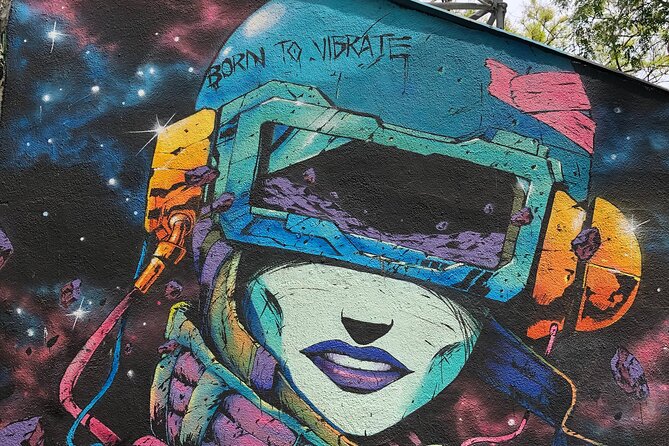
Reviewed · WALKING TOURS
Street Art, Sculptures & Crime Stories Walking Tour – Barcelona
Street art in Barcelona comes with a dark side. This walk links murals and mosaics to real neighborhood history, from El Raval’s rough past to El Born’s modern edge, guided by locals like Liliia who explain what you’re seeing and why it matters. You’ll also get practical city recommendations along the way, not just art talk.
I love two things most: first, the tour frames each artwork as a response to local life, so it feels like you’re reading the city, not just looking at paint. Second, the format is relaxed, with a small group (max 15) that gives you time to ask questions and actually understand the stories behind the walls. The only catch is that you are walking for about 2.5 hours, so it’s not the best choice if you want minimal steps or long sit-down breaks.
In This Review
- Key highlights to look for
- Street Art, Sculptures, and Crime Stories: What This Walk Really Does
- The Route in 2.5 Hours: Raval to Born Without Racing
- El Raval: Where Murals Tell Social Struggle and Darker Stories
- La Rambla: Miró’s Pavement Mosaic and Street Art You Walk Past
- Gothic Quarter: Roman Walls, Gothic Arches, and Modern Spray Paint
- El Born and La Ribera: Optical Illusions, the Staring Building, and Santa Caterina Market
- Price and Logistics: Is $108.37 Worth It?
- What You’ll Learn Without Feeling Like a Lecture
- Comfort and Timing Tips for a Mostly-Walking Day
- Who Should Book This Street Art and Crime Stories Walk?
- Should You Book This Barcelona Street Art Walk?
- FAQ
- How long is the Street Art, Sculptures & Crime Stories Walking Tour in Barcelona?
- Where does the tour start and end?
- What is the meeting point address?
- Is the tour offered in English?
- What is the group size limit?
- How much does it cost?
- Are admission tickets included?
- Are snacks included?
- Is there a mobile ticket?
- Is service animal access allowed?
- What is the cancellation policy?
Key highlights to look for
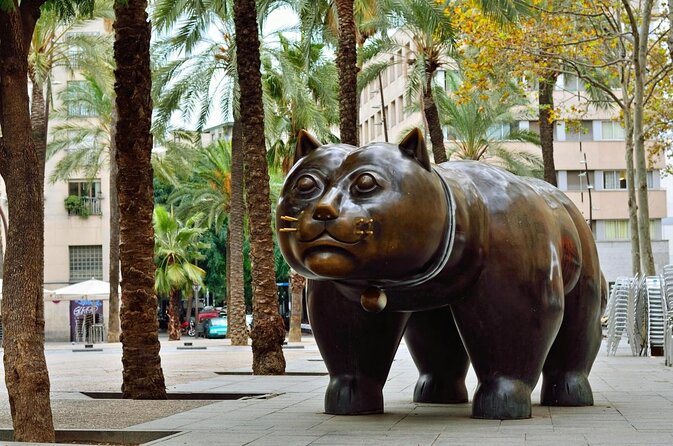
- Crime-story context in El Raval, where street art points to social struggle and darker events that shaped the neighborhood
- Joan Miró’s mosaic in the pavement on La Rambla, the kind of famous artwork you see daily but often never notice
- Picasso-era Barcelona clues in the Gothic Quarter area, plus modern murals placed against ancient stone
- Optical illusion street art and the staring building in El Born, where the architecture and the street art play tricks together
- Extra local tips from guides like Liliia, including coffee and lunch suggestions after the walk
Street Art, Sculptures, and Crime Stories: What This Walk Really Does
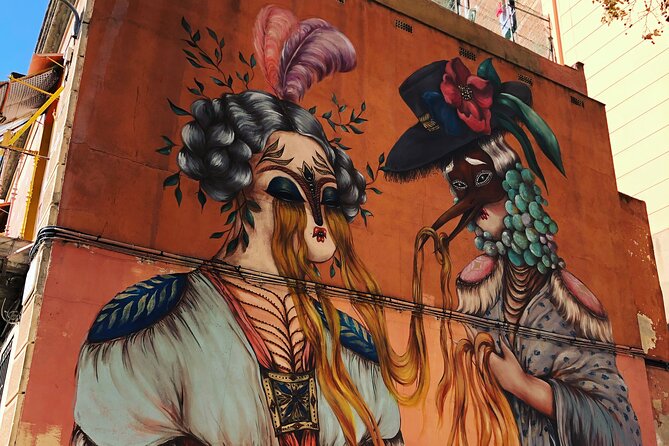
Barcelona’s street art scene can feel like a collage until someone puts the pieces in order. This tour does that job for you. Instead of treating murals like random Instagram backdrops, it connects them to place, tension, and change over time. That matters because Barcelona has a habit of layering eras on top of each other, and the best street art is often the part that remembers what the tourist map skips.
You also get a mix of styles, not just graffiti tags. Expect large-scale murals, small hidden works in alleys and doorways, and public mosaics you might otherwise walk over. Even better, some stops include admission tickets while others are free, so you’re not paying again and again for little detours.
A strong point here is the guide experience. Multiple standout comments mention Liliia as friendly and patient, taking time to explain the context and answering questions clearly. That kind of pace makes the story stick, especially if you’re not already an urban art expert.
The Route in 2.5 Hours: Raval to Born Without Racing
This is an easy-to-understand walking plan. You start at Carrer Nou de la Rambla, 105 in Ciutat Vella, and you finish at Carrer Antic de Sant Joan, 7 in Ciutat Vella, close to Ciutadella. The tour runs about 2 hours 30 minutes, so it’s long enough to feel like a real neighborhood experience, but not so long that you’ll hate your shoes by the midway point.
You’ll move through four areas, each with a different mood:
- El Raval sets the tone with crime-story energy and political street art.
- La Rambla shifts to recognizable landmark territory and pavement art.
- The Gothic Quarter adds the ancient backdrop, Roman and Gothic, against modern works.
- El Born / La Ribera gives you optical illusions, modernist architecture quirks, and market-adjacent street art.
In plain terms: you’re getting a short-cut to how Barcelona changes from district to district, while still focusing tightly on street art and the stories attached to it.
Other things to see around Barcelona
- Barcelona Street Art and Graffitti Bicycle Tour
★ 5.0 · 361 reviews - Barcelona Street Art Tour with Exclusive Artist Studios Visit
★ 5.0 · 152 reviews - Raval Street Art and Graffiti Guided Tour in Barcelona
★ 5.0 · 81 reviews
El Raval: Where Murals Tell Social Struggle and Darker Stories
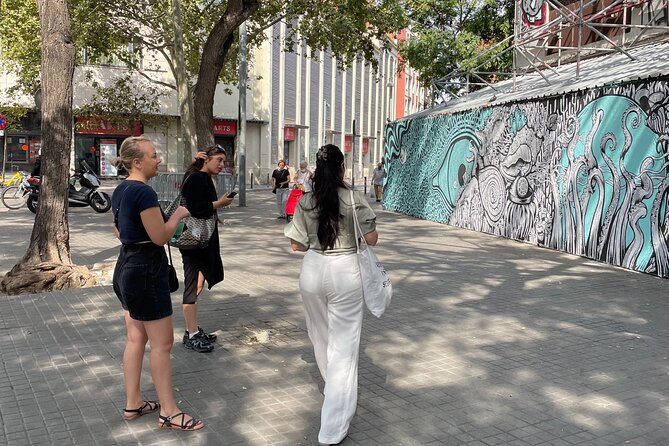
El Raval is the neighborhood that makes sense of why street art exists. Here, walls don’t just decorate. They argue. They remember. They react. This stop is your biggest one, about 1 hour, and it’s the emotional core of the tour.
What I like about this part is how it balances scale and hiding places. You’ll look at large murals tied to social struggles and local legends, but you’ll also hunt for smaller pieces tucked into doorways and narrow alleys. That mix matters because it trains your eyes. After Raval, you start noticing the details instead of only the obvious artworks.
You’ll also get the kind of historic context that turns a random mural into a specific conversation. The tour references a dramatic historical killing that inspired neighborhood art, which helps you understand why some images feel sharp, urgent, and even confrontational. In addition, expect iconic mosaics that symbolize Raval’s rebellious spirit and show how Barcelona’s street creativity can carry memory in bright, public form.
Practical note: Raval is lively and intense in vibe, and you’ll likely spend more time looking than walking fast. If you like urban history, political street art, and the idea that art is a response to real life, this is the stop that will feel most meaningful.
La Rambla: Miró’s Pavement Mosaic and Street Art You Walk Past
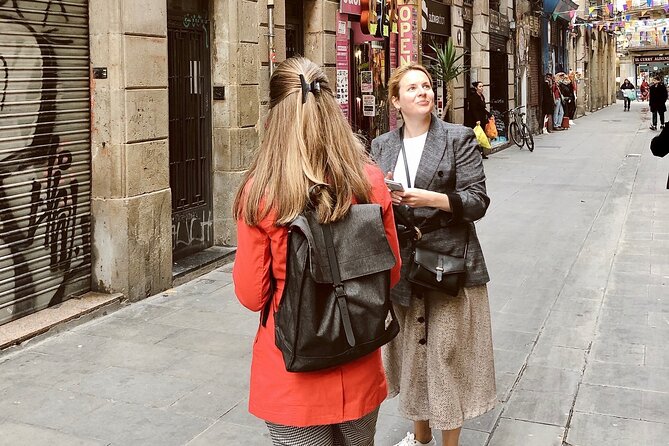
Then the walk hands you a familiar Barcelona scene: La Rambla. This section is shorter, about 20 minutes, and it works like a reality check. You’re on one of the city’s best-known boulevards, surrounded by the everyday motion of people, stalls, and performers. But right under your feet is art most visitors miss.
The headline here is Joan Miró’s famous mosaic artwork embedded in the pavement. It’s a Catalan master’s colorful tribute that millions walk over without noticing. The tour’s value is that it slows you down for those small seconds, so you actually see it instead of speeding past.
You’ll also look at contemporary local street art with philosophical themes. The focus is on identity, freedom, and city life, which sounds abstract until you see how those themes show up in actual murals and small installations. Even if you’re not big on theory, it helps to know what the artists are wrestling with.
This stop is also useful if you’re the kind of traveler who wants street art but still wants a mainstream landmark moment. You get both, without turning the day into a museum marathon.
Gothic Quarter: Roman Walls, Gothic Arches, and Modern Spray Paint
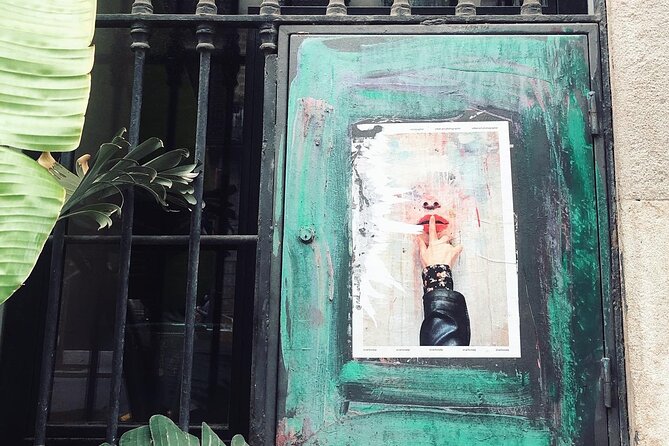
Next you move into the Gothic Quarter, the old-core feeling of Barcelona where stone feels ancient and every corner looks like it could hold a secret. Here, the tour leans into contrasts: thousand-year-old architecture against fresh modern artwork.
You’ll spend about 20 minutes in this area, and it’s a strong pairing of visual drama and historical layering. Look for modern murals that blend into Gothic arches and also connect to the Roman ruins nearby. That clash of eras is what gives this stop its punch. The message is simple: Barcelona does not erase the past, it reuses it.
One of the standout references in this stop is Picasso himself, specifically artworks created during his early Barcelona days. Even if you only recognize Picasso by name, the tour framing helps you understand why his presence matters here. It turns a neighborhood corner into a timeline.
As you walk, keep an eye out for hidden contemporary pieces tucked into ancient alleys and courtyards. Those little finds are exactly where the tour approach pays off. When you’re in the Gothic Quarter on your own, you often stick to the big streets. This gets you off that track, just enough.
Admission ticket is included for this stop, so it’s not purely a street-view walk. That helps justify the price if you like a bit of ticketed time mixed in with outdoor scenes.
El Born and La Ribera: Optical Illusions, the Staring Building, and Santa Caterina Market
El Born is where the tour’s energy shifts from gritty and historical to playful and modern. This is the longest stop at about 40 minutes, and it’s built for visual surprises.
You’ll look for optical illusion street art created by internationally known local artists. The point isn’t just that it looks cool. It’s that the artwork tricks your perception in a way that makes you walk differently, slower, and more curious. It feels like the city is part of the artwork too.
Then comes one of the most memorable references: the staring building facade. It’s described as an eerie modernist structure where the windows and details seem like they are watching you as you pass. Even if you don’t know modernist architecture from your couch, this should register quickly. Your eyes will do the work.
You’ll also connect the street art to daily neighborhood life around Santa Caterina Market, including vibrant murals nearby and the wavy, Gaudí-inspired roof shape you’ll see above. That roof matters because it’s one more reminder that Barcelona’s creativity is not only in museums. It’s baked into the way the city looks and how people gather.
This stop is free of admission charges, so it’s a great place for your brain to rest while your eyes keep working.
One ticket rarely covers it all. Here's what else is nearby.
- Barcelona: Sagrada Familia Entry Ticket with Audio Guide★ 4.6 · 105,312 reviews
- Barcelona: Park Güell Admission Ticket★ 4.4 · 76,534 reviews
- Barcelona: Casa Batlló Entry with Self-Audioguide Tour★ 4.7 · 25,359 reviews
- Barcelona: Montjuïc Cable Car Roundtrip Ticket★ 4.5 · 22,368 reviews
- Barcelona: Hola Barcelona Public Transport Travel Card★ 4.5 · 20,985 reviews
- Barcelona: 24 or 48-Hour Hop-On Hop-Off Bus Tour★ 4.4 · 20,872 reviews
Price and Logistics: Is $108.37 Worth It?
At $108.37 per person for about 2 hours 30 minutes, you’re paying for three things: a local guide, a tight art-focused route across four neighborhoods, and a mix of ticketed and unticketed moments.
Here’s how the value works in practice:
- Small group size (max 15) keeps it from turning into a noisy herd. That’s important on street art walks because you want space to look closely.
- The tour includes mobile tickets, which reduces friction on the day.
- Language is English, which is great for readability if you’re not comfortable with quick multilingual explanations.
- Admission ticket is included on key stops (El Raval and the Gothic Quarter), while other stops are free. That mix can feel fair because you’re not paying admission on every block.
- You might also be able to customize for your group, which can help if you care more about street art style or more about the crime-story angle.
Also, it’s booked about 34 days in advance on average, which usually signals demand. If you have a narrow travel window, it’s smart to plan early.
The only real “cost” is time on foot. If you want to spend the whole day eating, shopping, or soaking up beach time, this may feel like too much walking in one go. But if you want a smart route and clear explanations, the price tends to make sense.
What You’ll Learn Without Feeling Like a Lecture
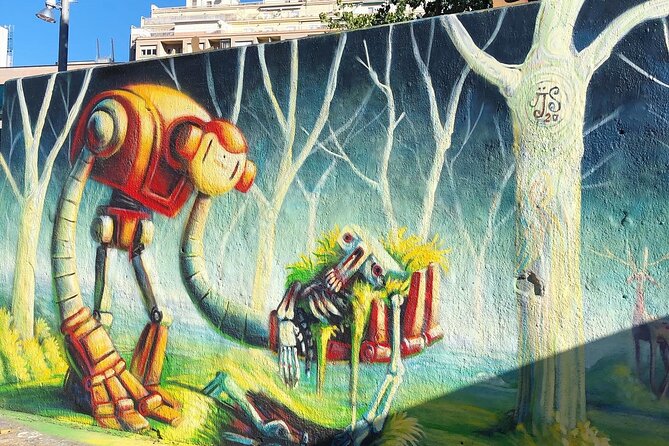
Street art tours can go two ways: either you get a list of artists and dates, or you get stories with no structure. This one feels more like story-led guidance. The best comments about the guide experience point to clear explanations, friendly personality, and the ability to answer questions in a way that doesn’t make you feel silly for asking.
Liliia is repeatedly mentioned as a highlight, praised for taking time and for giving recommendations beyond the art itself, including places for coffee and lunch. That matters because it turns the tour into a mini-plan for the rest of your day. You’re not just done once you reach the finish point.
And because the tour crosses multiple districts, you also learn how Barcelona thinks in layers. Street art is not separate from the city. It’s often a commentary on it.
Comfort and Timing Tips for a Mostly-Walking Day
Because this is about 2 hours 30 minutes of walking, plan accordingly:
- Wear shoes you can stand in. You’ll be looking up, looking down, and sometimes pausing to spot small details.
- Bring water. Snacks are not included.
- Expect different vibes: the Raval leg will feel more intense and story-heavy, while El Born is more playful and visual.
- It helps to arrive a few minutes early at the start in Ciutat Vella, Carrer Nou de la Rambla, 105, because street-level tours move fast once everyone is together.
If you’re using public transport, the tour is described as near public transportation, so you should be able to connect easily on both ends. You finish in Born near Ciutadella, which is an easy springboard for a late coffee, a market snack, or a relaxed wander.
Who Should Book This Street Art and Crime Stories Walk?
This is a great fit if you like:
- Street art with context, not just photos
- Neighborhood history that feels human and grounded
- Seeing art integrated into real streets, not isolated in galleries
- A guide who can explain what you’re seeing in a friendly way
It may not be ideal if you:
- Want a pure highlights tour of the most famous sights, with minimal off-main-road wandering
- Dislike political or darker historical storytelling
- Need frequent long breaks, because this is structured around short, focused stops
If you’re traveling with a partner or small group who also likes art, the small group limit is a plus. If you’re solo, it can be a smart way to meet the city through a focused route without planning every turn yourself.
Should You Book This Barcelona Street Art Walk?
I think you should book it if you want street art that comes with meaning, and if you like walking through neighborhoods with a guide who helps you see what most people miss. The best part is the pairing of places and themes: Raval’s sharper stories, La Rambla’s pavement surprise, the Gothic Quarter’s ancient contrast, and El Born’s playful optical art plus the Santa Caterina area.
Skip it if you’re not up for 2.5 hours of walking or if you only want blockbuster attractions with no political or crime-history angle.
If you do book, do one simple thing: bring your curiosity. This tour rewards attention. The art is there whether you notice it or not, and the guide experience makes the difference.
FAQ
How long is the Street Art, Sculptures & Crime Stories Walking Tour in Barcelona?
It runs for about 2 hours 30 minutes.
Where does the tour start and end?
It starts at Carrer Nou de la Rambla, 105, Ciutat Vella, 08001 Barcelona, Spain. It ends at Carrer Antic de Sant Joan, 7, Ciutat Vella, 08003 Barcelona, Spain, near Ciutadella.
What is the meeting point address?
The meeting point is Carrer Nou de la Rambla, 105, Ciutat Vella, 08001 Barcelona, Spain.
Is the tour offered in English?
Yes, the tour is offered in English.
What is the group size limit?
The tour has a maximum of 15 travelers.
How much does it cost?
The price is $108.37 per person.
Are admission tickets included?
Admission ticket details vary by stop. El Raval and the Gothic Quarter include admission ticket, while La Rambla and El Born / La Ribera are listed as free at their stops.
Are snacks included?
No, snacks are not included.
Is there a mobile ticket?
Yes, it uses a mobile ticket.
Is service animal access allowed?
Service animals are allowed.
What is the cancellation policy?
You can cancel up to 24 hours in advance for a full refund. If you cancel less than 24 hours before the start time, the amount paid will not be refunded.
More Walking Tours in Barcelona



The latest to open for booking



Walking Tours, side by side.
Barcelona Tapas and Wine Experience Small-Group Walking Tour
Read our review →
Tapas Walking Tour with Food, Wine, and History
Read our review →

Barcelona Tapas Walking Tour: Food, Wine & History
Read our review →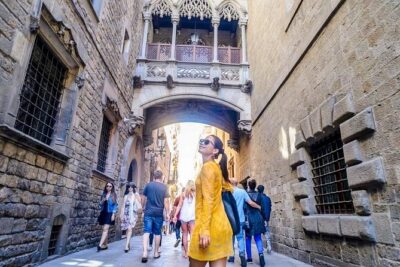
Barcelona Helicopter, Sailboat & Old Town Private Walking Tour
Read our review →
Guided Food Walking Tour with Tapas and Wine
Read our review →Where else this one turns up