
Reviewed · GOTHIC QUARTER WALKS
Barcelona Gothic Quarter History Tour
Barcelona hides big stories in stone corners. This 2-hour Gothic Quarter walk strings together eras you usually keep in separate books, from a Roman cemetery site to Plaça Reial. I especially love the small group size (up to 8) and the way the guide, Andrea, uses clear, detailed storytelling so you notice the buildings and street details you would otherwise speed past.
One thing to plan around: this is an outdoor walking tour and it runs in good weather. If the sky turns ugly, you may need to switch dates or get a refund.
Key highlights to expect
- MUHBA Via Sepulcral Romana stop, starting with an old Roman cemetery site
- Plaza del Pi and Santa María del Pi context, plus Petrixol Street treasures
- Barcelona Cathedral history explained in plain language
- Plaça del Rei with Roman past, the Crown of Aragon, and the inquisition topic
- Plaça Reial finish, including a story about a 200-year-old shop
- Small group walk with Andrea, in English (with Spanish also available via the guide)
In This Review
- A 2-hour Barcelona Gothic Quarter route that covers Roman to modern stories
- Price and value: what $57.99 really buys you
- Meeting at Carrer de Duran i Bas at 4:00 pm, then ending at Plaça Reial
- Roman roots at MUHBA Via Sepulcral Romana and Temple d’August
- Plaza del Pi, Santa María del Pi, and Petrixol Street details that change how you look
- Barcelona Cathedral and Plaça del Rei: medieval power, Crown of Aragon, and the inquisition topic
- MUHBA Temple d’August and the Roman Forum feel in context
- Placa Sant Felip Neri, the Spanish Civil War, and Catalan Judaism
- Plaça Reial to finish: a 200-year-old shop story and a satisfying walk end
- Who should book, and who might skip this one
- FAQ
- How long is the Barcelona Gothic Quarter History Tour?
- What language is the tour offered in?
- Are entrance tickets included?
- Where do you meet and where does the tour end?
- What is the maximum group size?
- Can I cancel for a full refund?
A 2-hour Barcelona Gothic Quarter route that covers Roman to modern stories
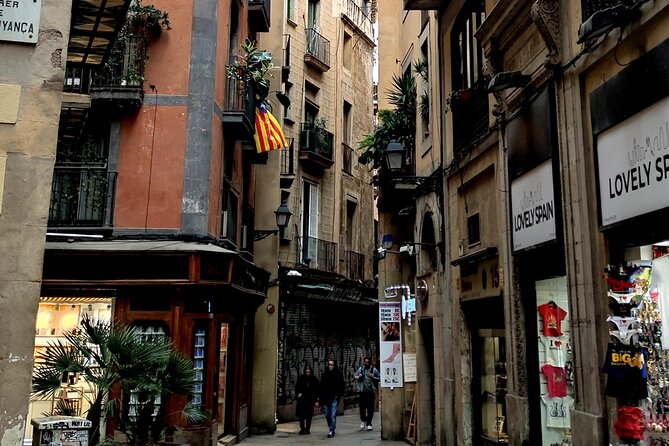
This is the kind of tour that helps you get your bearings fast. You start in Ciutat Vella and move through the oldest-feeling streets in Barcelona, with stops spaced for short explanations rather than long lectures. The result is that you leave with a mental map, not just a list of famous sights.
I also like that it mixes themes, not just architecture. You get Roman landmarks (MUHBA sites), medieval power (the Cathedral area and Plaça del Rei), and later historical moments like the Spanish Civil War and Catalan Judaism. That mix matters because the Gothic Quarter is not one time period. It is layers. If you are only visiting the “pretty” side, you miss why the area feels so dramatic and personal.
The pacing is built for a 2-hour window, with each stop given a focused chunk of time. In practice, that means you can ask questions, take photos, and still feel like you made real progress across the neighborhood.
If you prefer a tour that stays strictly with medieval Gothic architecture, this one may feel a bit wider than expected. But if you want a guided walk that turns Barcelona’s streets into a timeline, it fits well.
Price and value: what $57.99 really buys you
At $57.99 per person for about 2 hours, the big value isn’t just the price tag. It is what you get for it: an in-person guide, English service, and a tight route that hits multiple major landmarks.
The tour includes all fees and taxes, and the stops listed are marked as admission ticket free. That matters because it reduces “surprise costs” during your walk. You are not trying to budget for multiple paid entries while you are already paying for the guide experience.
It is also a smart use of time. Two hours in this part of Barcelona can easily feel like you walked around famous streets without understanding them. Here, you spend that time with explanations tied directly to what you are seeing in front of you. That is where the money goes.
One more practical value point: it caps at 8 travelers. A smaller group usually means less time waiting, more time noticing details, and a better chance to ask follow-ups. If you hate feeling like you are stuck behind a line, this structure is a plus.
Meeting at Carrer de Duran i Bas at 4:00 pm, then ending at Plaça Reial
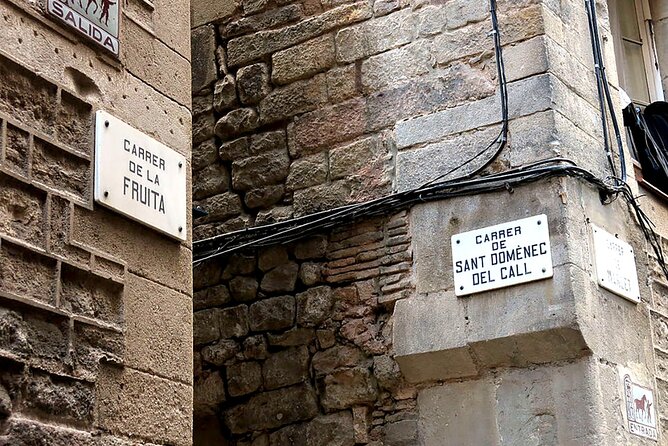
The tour starts at Carrer de Duran i Bas, 11 in Ciutat Vella. It begins at 4:00 pm, and you finish at Plaça Reial. That end point is handy because you land near a lively square where you can keep exploring afterward.
You also get a mobile ticket, so you are not hunting for printed documents. Confirmation is received at booking time, and the tour is designed to be easy to find since it is near public transportation.
I would treat this as an afternoon-to-early-evening plan. You should dress for walking through narrow streets and be ready for some standing during the explanations. Service animals are allowed, and most people can participate, which helps if you want history without heavy workout vibes.
Finally, one scheduling note to keep in mind: the tour requires good weather. If you are visiting in a season with unpredictable showers, it’s worth being flexible. The tour is built to work best when you can fully enjoy the streets between stops.
Get lost in the medieval lanes
- Barcelona all included: Sagrada, Park Güell, Montjuic & Gothic
★ 5.0 · 2,169 reviews - Barcelona Gothic Quarter Tapas & Taverns Food & Wine Tour
★ 5.0 · 1,470 reviews - Barcelona: Old Town and Gothic Quarter Walking Tour
★ 4.8 · 1,393 reviews
Roman roots at MUHBA Via Sepulcral Romana and Temple d’August
You start with MUHBA Via Sepulcral Romana, described as an old Roman cemetery. This is a strong opening because it sets a tone right away. Instead of starting with a postcard building, you begin with a site connected to how people lived and died in earlier Barcelona. It makes the Gothic Quarter feel less like a sealed museum zone and more like a place where history never fully left.
This MUHBA stop is quick, about 5 minutes, and that short time is a feature, not a drawback. You get enough framing to understand what you are looking at before you move on. You are not stuck there while your feet and patience wear down.
Later, the tour returns to the Roman thread at MUHBA Temple d’August, described as a temple that was part of the Roman Forum. This stop gives you a different Roman flavor than the cemetery. Instead of focusing on burial and memory, you shift to a place tied to public space and civic life.
Why I like this “Roman pair” approach: you see two different kinds of Roman structures in the same guided session. Even with short stops, the guide’s explanations help you connect the dots between sites that might otherwise seem unrelated.
A small consideration: because each MUHBA segment is brief, you should come ready to listen. If you like long, independent museum time, you might want to do extra solo visits afterward. But for a 2-hour orientation walk, the Roman stops are well placed.
Plaza del Pi, Santa María del Pi, and Petrixol Street details that change how you look
Next up is Plaza del Pi, where the tour focuses on Catalan Gothic and Santa María del Pi. This is a great moment to pause because the square gives you room to take in the church and the surrounding street geometry. Gothic details can be easy to miss if you only glance while walking. Here, the timing gives the guide space to point out what matters and why it looks the way it does.
Plaza del Pi also ties into Petrixol Street, described as having treasures the guide will talk about. Petrixol is the kind of side street where a casual walk can turn into a “wait, where did that come from?” moment. A guided stop helps you notice the scale, the character, and the reason this area became known.
This segment is around 15 minutes, which is long enough to actually understand the main points. It is also long enough to get your questions answered. If you have ever stood in front of a church and felt like you were reading an essay with no glossary, this is the stop where you get that glossary.
Possible drawback: if you are already very comfortable with Catalan Gothic and you just want the biggest wow moments, this might feel a bit more explanation-heavy than you expect. But if you want context that makes the stone and shapes readable, this is exactly where the tour delivers.
Barcelona Cathedral and Plaça del Rei: medieval power, Crown of Aragon, and the inquisition topic
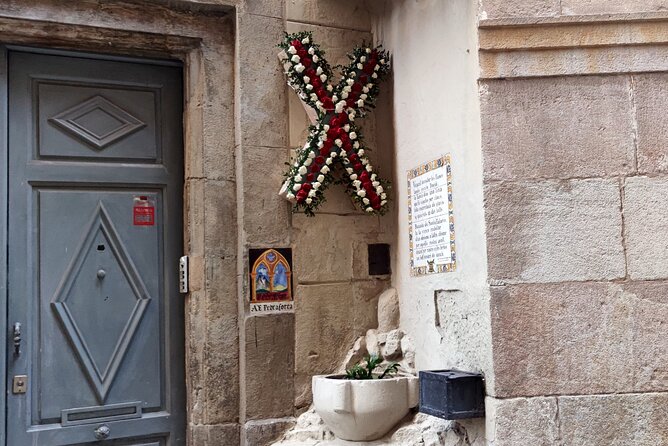
The tour then moves to Barcelona Cathedral, using about 10 minutes to talk through the cathedral’s history. Even in a short time, a guided approach can make a cathedral feel like a living story instead of a fixed monument. You get the timeline and the reasons behind why it became such a focal point.
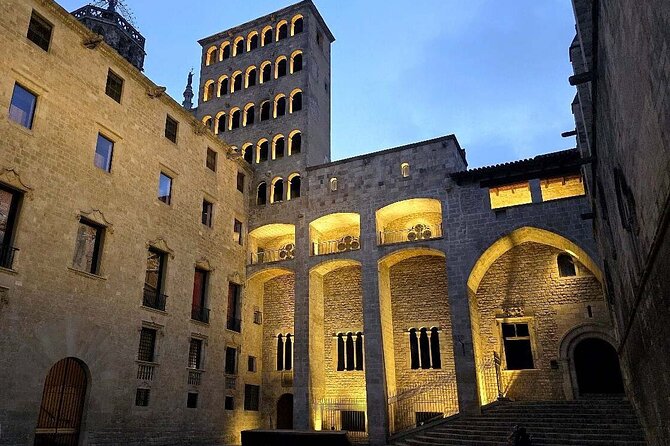
Then comes Plaça del Rei, where the tour covers the Roman past, the Crown of Aragon, and the inquisition topic. This stop is longer, about 15 minutes, because it covers multiple layers.
Why this works: Plaça del Rei sits at the crossroads of what Barcelona has been, politically and culturally. The Roman past theme connects you back to the MUHBA sites. The Crown of Aragon theme helps explain medieval power. And the inquisition topic brings in a darker thread, which is part of the area’s historical record.
A consideration here is tone. If you do not want conversations touching heavy subjects like the inquisition, go in knowing the tour includes it as part of the historical map. I appreciate that it does not sugarcoat what history includes, even if that means the walk gets more serious for a moment.
MUHBA Temple d’August and the Roman Forum feel in context
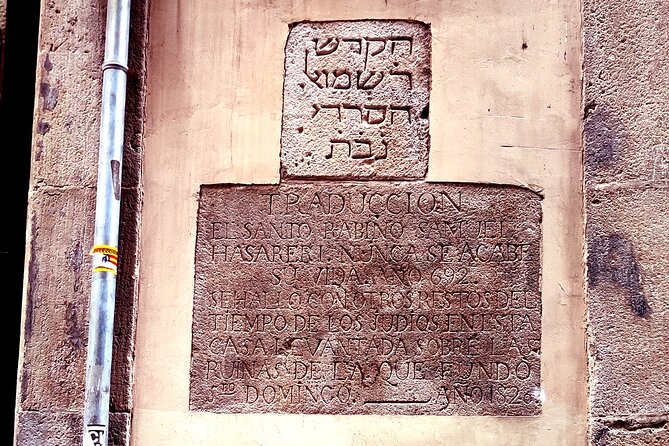
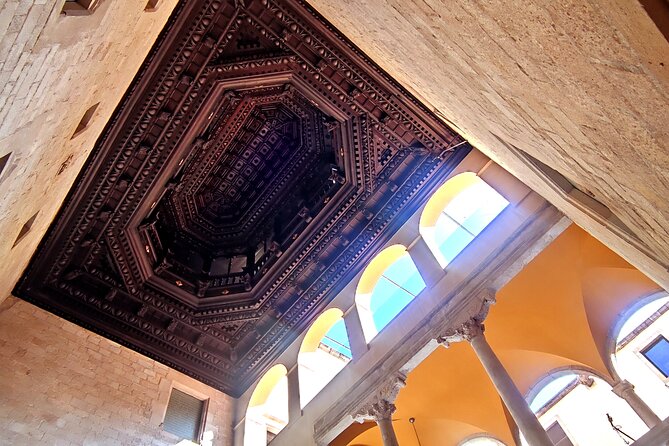
If you felt the Roman cemetery set a reflective mood, Temple d’August helps you switch back to structure and place. The tour describes this as a temple part of the Roman Forum, which means you are looking at something tied to how people moved, gathered, and shared public space.
This stop is about 10 minutes. That is enough for an informed look, especially if the guide is pointing out what makes it feel Roman in design and setting. The best value comes from the guidance, not from trying to figure it out from signage alone.
Even if you have seen Roman remains elsewhere, Barcelona’s version is tied into the Gothic Quarter’s tight streets. That contrast is memorable. You understand the quarter as something built over older layers, not just a style from one century.
If you are the type who likes to read plaques and go slowly, the short timing might feel quick. But given the tour is built around multiple eras, the pacing is the trade-off.
Other things to see around Barcelona
- Barcelona: Tapas Walking Tour with Food, Wine, and History★ 4.8 · 4,261 reviews
- Highlights & Hidden Spots of Barcelona Bike Tour w/ Local Guide★ 4.5 · 3,009 reviews
- Barcelona Tapas Walking Tour: Food, Wine & History★ 4.5 · 1,928 reviews
- Barcelona 3-hour Bike or E-Bike Tour: Highlights and Hidden Gems★ 5.0 · 1,429 reviews
- Barcelona: 2.5-Hour Bike or E-Bike Historical Tour★ 4.5 · 1,262 reviews
- Barcelona Old Town Tapas Tour: Vermouth, Bites & Hidden Gems★ 5.0 · 627 reviews
Placa Sant Felip Neri, the Spanish Civil War, and Catalan Judaism
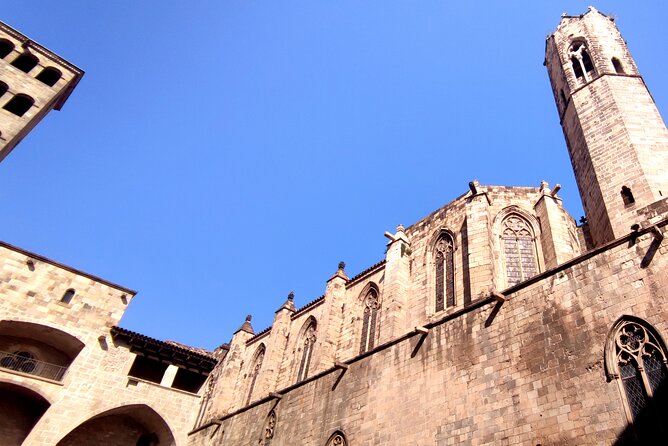
The tour includes Placa Sant Felip Neri, described with a theme of the Spanish Civil War, for about 10 minutes. This is one of the moments where the walk becomes more than “old stones.” It connects the Gothic Quarter to modern conflict and memory.
I like having that kind of stop in the same guided session as medieval landmarks. It prevents the area from becoming a themed postcard. Instead, you get reminders that history kept rolling forward, even in these same streets.
After that, there is a stop where the guide talks about Catalan Judaism. The tour does not give more detail in the basic outline, but the presence of this topic is meaningful. It signals that the quarter is not only about Christian landmarks and political power. There is more story here, and the guide is bringing it into the route.
A practical consideration: because these themes can be emotionally heavy, you may want to mentally pace yourself. If you are traveling with kids or you want a lighter tone, you should consider whether your group is comfortable hearing about the Civil War and the inquisition. For many adults, this is part of why the tour feels honest.
Plaça Reial to finish: a 200-year-old shop story and a satisfying walk end
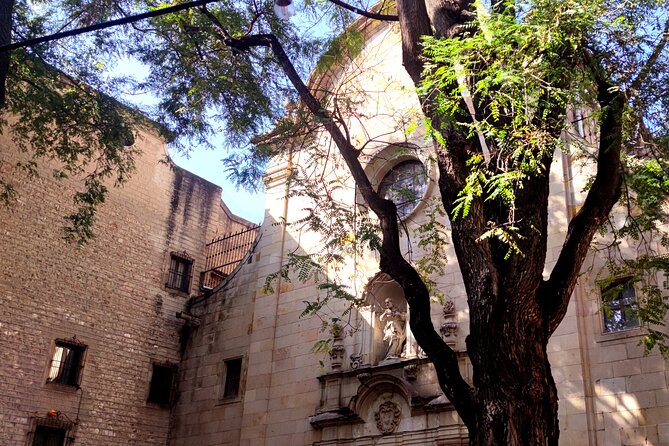
The last stop is Plaça Reial, and the tour is set up so you finish there after walking from the meeting point. This gives you an easy finale because Plaça Reial is tied to something memorable in the tour narrative: a 200-year-old shop and the broader history of the plaza.
This finish matters for two reasons. First, you end with a clear landmark, so you do not feel lost once the tour ends. Second, it is a nice shift from the heavy historical themes back to the human scale of daily life.
This is also where I appreciate the pacing. You do not end in a classroom. You end in a place where you can look around on your own, grab a drink if you want, or keep wandering into nearby streets.
In the guided walk, there is also mention of delightful bites. Even without details on what they are, that kind of touch usually makes the ending feel more personal. It is a small reward at the right moment, and it is exactly the kind of local-feeling added value that makes a guided history tour feel less like a lecture.
Who should book, and who might skip this one
Book this tour if you want a high-signal Gothic Quarter introduction in a short time. It is a strong fit for first-timers who want structure: you start with MUHBA Via Sepulcral Romana, move through Plaza del Pi and Barcelona Cathedral, hit Plaça del Rei, then cover Temple d’August, the Spanish Civil War, and Catalan Judaism before ending at Plaça Reial.
I would also recommend it if you like small-group walking. With a max of 8 travelers, the tour has room for patience, slower explanations, and noticing details you might miss on your own. Andrea’s style, based on the way the experience is described, is part of the appeal: clear, energetic, and tuned to what you are seeing in real time.
Skip or choose something else if you want a strictly architectural tour focused only on Gothic buildings, and you do not want any mention of heavy historical topics like the inquisition or the Spanish Civil War. Also skip if you dislike weather-dependent outdoor walking and you know your schedule cannot flex.
If your goal is to understand why the Gothic Quarter looks the way it does, and why it feels layered, this tour is a good value at $57.99. The combination of free-admission stops and an expert guide makes it easier to spend your money on the experience, not on paperwork and tickets.
FAQ
How long is the Barcelona Gothic Quarter History Tour?
It runs for about 2 hours.
What language is the tour offered in?
It is offered in English. The guide is listed as English and Spanish as well.
Are entrance tickets included?
All fees and taxes are included, and the stops in the route are listed as admission ticket free.
Where do you meet and where does the tour end?
You start at Carrer de Duran i Bas, 11, Ciutat Vella, and you end at Plaça Reial in Ciutat Vella.
What is the maximum group size?
The tour has a maximum of 8 travelers.
Can I cancel for a full refund?
Yes. You can cancel up to 24 hours in advance for a full refund. If you cancel less than 24 hours before the start time, you will not get a refund.
The latest to open for booking


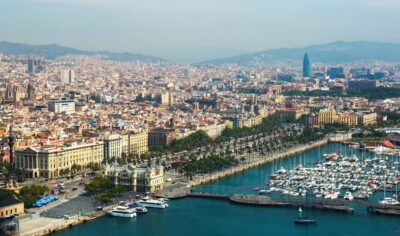
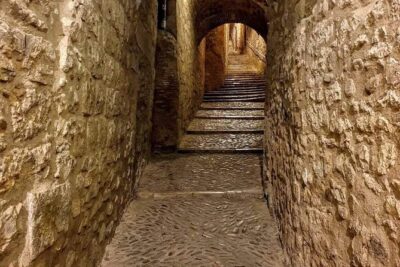

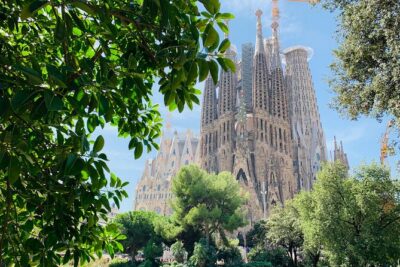
Gothic Quarter Walks, side by side.
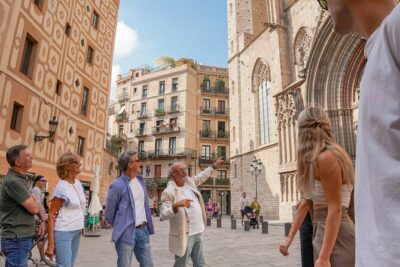
Barcelona all included: Sagrada, Park Güell, Montjuic & Gothic
Read our review →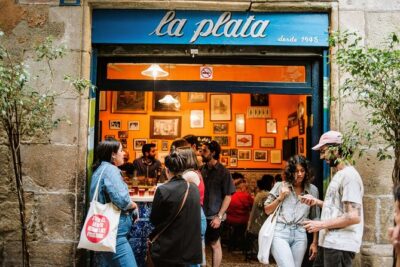
Barcelona Gothic Quarter Tapas & Taverns Food & Wine Tour
Read our review →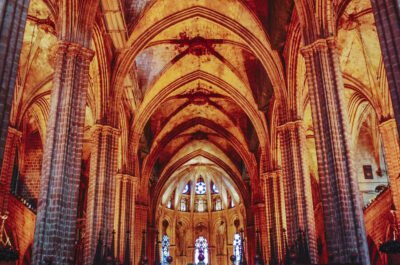
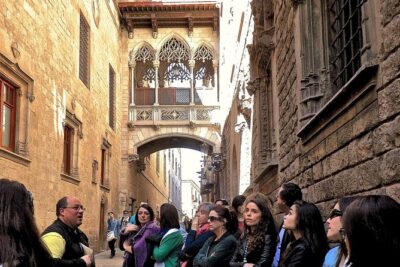
Barcelona Old Town & Gothic Quarter Small Group Tour
Read our review →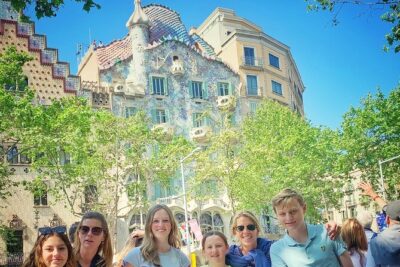
Ramblas, Old Town, Gothic and Gaudi Architecture Walking Tour
Read our review →
El Born and Gothic Quarter Wine & Tapas Bar Tour
Read our review →
El Born Food Walking Tour with Tapas and Drinks
Read our review →
Kids and Family Gothic Quarter Walking Tour in Barcelona
Read our review →Where else this one turns up