
Reviewed · GOTHIC QUARTER WALKS
Barcelona: Gothic Quarter Walking Tour
Stone myths start where the map ends. On this 3.5-hour German-language walk through the Gothic Quarter and into the Ribera, I like how the guide turns small streets and squares into a clear story you can actually follow. You get a Middle Ages to early 1700s timeline, but told with real character, not museum lectures.
One thing to consider: this is mostly an exterior-view experience, and the guide speaks German. If you do not read German well, you may still enjoy the mood, but you might miss some of the finer points and punchy anecdotes.
In This Review
- Key things I’d bet you’ll notice
- Why the Gothic Quarter works so well on foot
- Meeting at Plaça de Catalunya, then dropping into medieval mood
- Roman clues: water, convalescent colonies, and the port city mindset
- Medieval power, a holy city, and the story engine of Barcelona
- Swords, brotherhoods, and the Crown of Aragon arc
- Jewish Quarter echoes and the Inquisition reality check
- Spanish Civil War memory: My Immortal and the city’s scars
- A Gothic theme park feeling, stone by stone, and the egg dance
- Royal palace stories and why King Fernando’s fear matters
- Santa Maria del Mar in the Ribera: a collaborative project with legends
- Cloister stop: what to wear so you can participate
- Finishing at Passeig del Born: the Ribera’s last image
- Price and value: $212 per group up to 4
- Who should book this Gothic Quarter walk
- A quick decision: should you book?
- FAQ
- What language is the tour guide?
- How long is the walking tour?
- Where do you meet, and where does it end?
- Is the tour mostly outside, or are there interior visits?
- Are entry fees included?
- Is it wheelchair accessible?
- What should I wear for the cloister stop?
Key things I’d bet you’ll notice
- German storytelling that stays organized, not random facts dumped on you
- Johannes-style pacing, with time for your questions and personal needs
- Roman to early 18th-century themes that connect across alleyways
- A strong Ribera shift that ends with Santa Maria del Mar and the Born area feel
- Practical city tips mixed into the history talk, including food and shopping pointers
- One cloister stop where clothing matters, so plan ahead
Why the Gothic Quarter works so well on foot
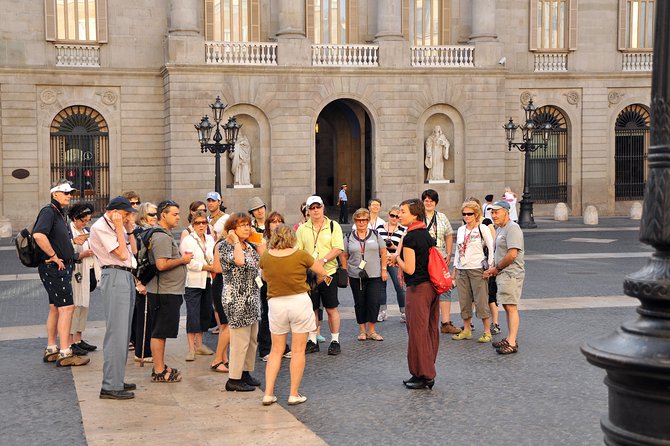
The Gothic Quarter can feel like a maze until someone gives it a thread. This tour does that job fast. In about half a day, you move from big-picture history to the kind of detail you would only notice if you lived here: how streets bend, why certain corners feel important, and how old Barcelona keeps resurfacing in new architecture.
I like that the walk is relaxed. You are not sprinting from landmark to landmark. The route sticks to streets and squares, with frequent chances to stop for photos and a bathroom break when you need one. That matters here, because the real magic is in the small views, not the long lines.
The other big win is the “old and new together” angle. Barcelona is a working port city, so you feel it even in the oldest-looking areas. You will spend time in the Barrio Gòtic and the Ribera Quarter, but the stories make it clear this is not a frozen theme park. It is a city that keeps reinventing itself.
Meeting at Plaça de Catalunya, then dropping into medieval mood
You meet at Plaça de Catalunya, in front of Hotel Olivia Plaza, Plaça de Catalunya 19. From there, the walk quickly trades the openness of the plaza for narrower lanes and tucked-away squares. It is a smooth mental shift, and it helps you start seeing the Gothic Quarter as a place people actually moved through day to day, not just something to photograph.
If you are the type who likes to get your bearings fast, this beginning is smart. The guide starts you thinking in timelines rather than just names. You learn to notice what kind of story you are walking through: Roman-era traces, medieval power struggles, Jewish Quarter remnants, and later Spanish Civil War memory that still leaves scars on the city.
At the start, you also get a sense of how the guide will talk. The standout from strong feedback is that guides like Johannes tend to keep it structured, then add extra support with supplemental photos. That means when the street changes, your brain changes with it.
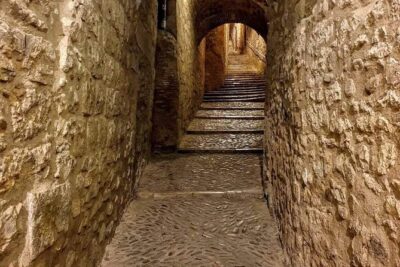
Get lost in the medieval lanes
- Barcelona all included: Sagrada, Park Güell, Montjuic & Gothic
★ 5.0 · 2,169 reviews - Barcelona Gothic Quarter Tapas & Taverns Food & Wine Tour
★ 5.0 · 1,470 reviews - Barcelona: Old Town and Gothic Quarter Walking Tour
★ 4.8 · 1,393 reviews
Roman clues: water, convalescent colonies, and the port city mindset
The tour begins by going back to Roman times, when the city was already thinking about infrastructure and people. One theme you hear is Roman luxury, including flowing water and the idea of a convalescent colony. The guide uses that to explain why ports and big cities often start by solving practical problems, then layer culture on top.
Why this matters for you: it is easy to arrive in Barcelona and assume the city begins with Gothic churches and medieval rulers. Roman Barcelona reminds you that this place has always been built on movement, trade, and the everyday needs of bodies, not just big monuments.
You will notice how the guide connects this to later periods. The point is not to memorize Roman dates. It is to recognize that later eras kept reusing space and reinterpreting what came before.
Medieval power, a holy city, and the story engine of Barcelona
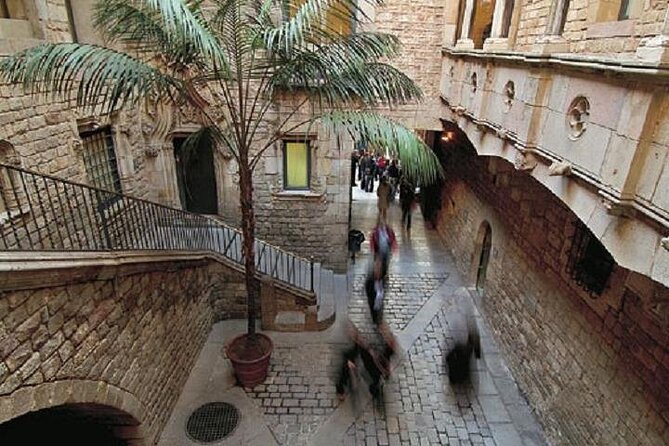
Next the tour swings into medieval politics and the “who had authority” question. You get topics like a holy city gets concurrence, a birth of a nation with a nasty affair and bloody situation, and advice of the hundreds and the general. These sound intense because Barcelona’s medieval history was intense.
But the way they are presented is what makes the walk engaging. Instead of dry courtroom descriptions, you get short dramatic story beats, then a short explanation of what they meant for regular life. You see how religion, civic power, and military needs were tied together in the streets you are walking.
I also like that the tour includes the more human side of legend. The dragon story and the young girl in the pines plus the French soldier’s bayonet are not just fantasy flavor. They help you understand how Barcelona carried meaning through stories, especially when official records were not the only way people made sense of the past.
Swords, brotherhoods, and the Crown of Aragon arc
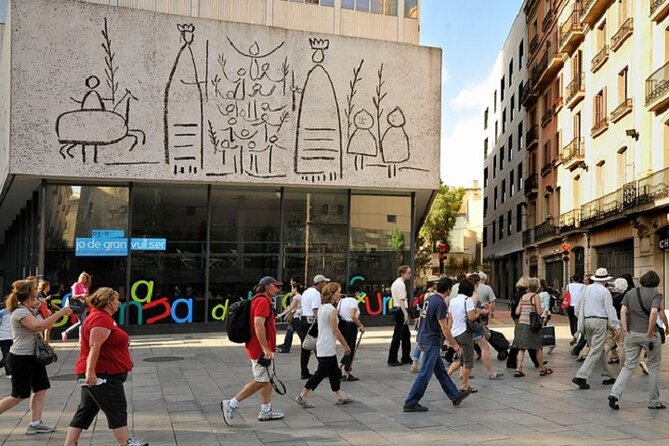
The walk spends time on the idea of brotherhood and the darker edges of medieval life. You hear about a slightly spooky brotherhood, then the crown of Aragon theme: from the little city to a maritime force. This is where the tour becomes very “Barcelona,” because the city’s identity is tied to the sea.
Even if you do not care about royal genealogy, you will understand the bigger mechanism: maritime power grows because cities organize labor, ships, trade routes, and alliances. When you hear about the crown’s rise, your mental map of Barcelona changes. You start seeing the old streets as part of a network, not just isolated scenes.
You also get the King Martin’s death, the beginning of the end of codetermination. That is a strong example of how the tour explains systems. It is not only about who was in charge, it is about how people negotiated power, then how that negotiation broke down.
Jewish Quarter echoes and the Inquisition reality check
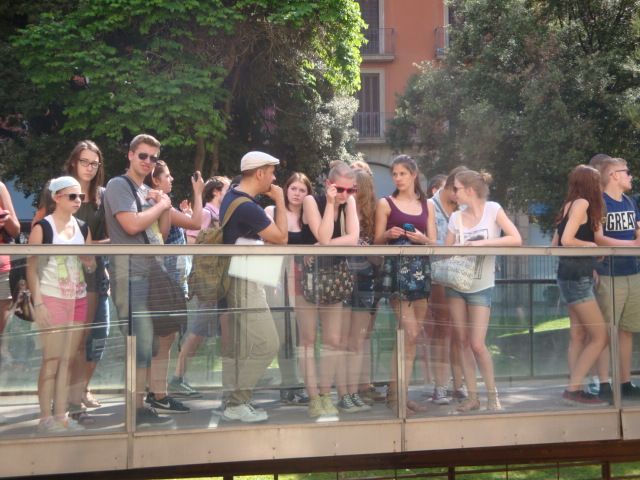
In the middle section, you shift toward the Jewish Quarter, framed as remnants of a lost world. The guide treats it respectfully, linking physical traces in the city to the bigger historical story of communities that once lived here.
Then the tour addresses darker episodes: the Inquisition and the hound kings, with praise is nothing to play with. The language is dramatic, but the intent is clear. You are not being asked to thrill over violence, you are being asked to understand fear and control as tools that shaped where people could live, worship, and speak.
For you, this part is about perspective. You will leave with a better sense of why some streets and corners in the old city feel charged. Not all history here is heroic. Some of it is painful. And that matters, because Barcelona does not hide those layers. It layers them into daily life.
Other things to see around Barcelona
- Barcelona Tapas and Wine Experience Small-Group Walking Tour★ 5.0 · 5,804 reviews
- Barcelona: Tapas Walking Tour with Food, Wine, and History★ 4.8 · 4,261 reviews
- Barcelona: Food Walking Tour with Tapas and Wine★ 4.9 · 2,180 reviews
- Barcelona Tapas Walking Tour: Food, Wine & History★ 4.5 · 1,928 reviews
- Barcelona Helicopter, Sailboat & Old Town Private Walking Tour★ 5.0 · 1,395 reviews
- Barcelona: City Walking Tour with a Local Guide★ 4.9 · 1,384 reviews
Spanish Civil War memory: My Immortal and the city’s scars
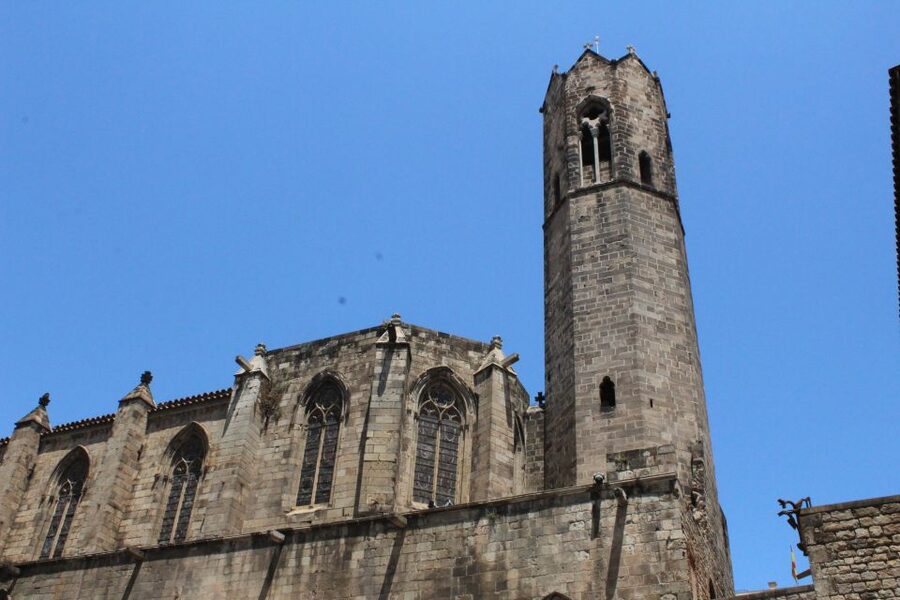
The tour includes a stop connected to My Immortal, described as a romantic place and the scars of the Spanish Civil War. This is an important reminder that the Gothic Quarter is not only medieval. Barcelona’s modern conflicts still shape the mood of places.
Why I think this is valuable: when you travel, you often see war memorials in a separate box, like a designated site you can visit and then move on. Here it is integrated into the walk. That makes the city feel honest, not staged.
You will also hear about the mulberry grave and the vengeance of the Bourbon kings, including the head of the general. Pair that with the Civil War memory, and you get a throughline: power changes, but consequences echo in stone and naming and local storytelling.
A Gothic theme park feeling, stone by stone, and the egg dance
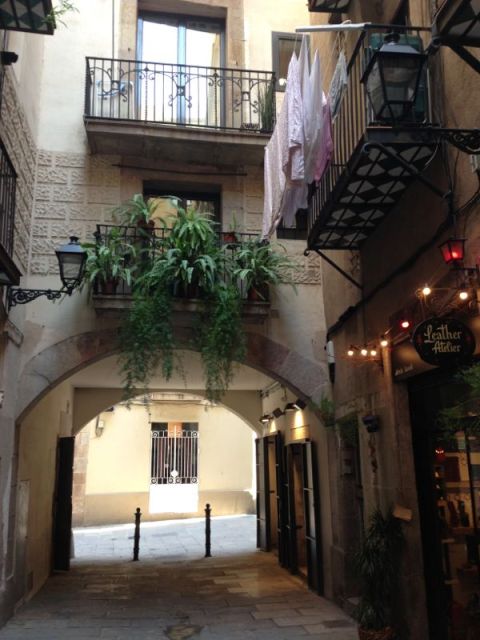
The guide adds some playful, slightly spooky stops that keep you from getting numb to history. There is a Gothic theme park angle, even houses move, stone by stone. You also get watch that egg dance. Those bits can sound like theatrical filler, but they serve a purpose.
They break the timeline into moments you can remember. When your brain stores travel, it often uses images and mini-stories. If everything was grim, you would tune out. If everything was fun, you would miss the meaning. This tour aims for the middle: enough personality to keep you alert, enough context to keep it grounded.
This is also where structure helps. If the guide is good, the weird details become stepping stones. The alleyway is not random. The odd story is connected to something historical or social.
Royal palace stories and why King Fernando’s fear matters
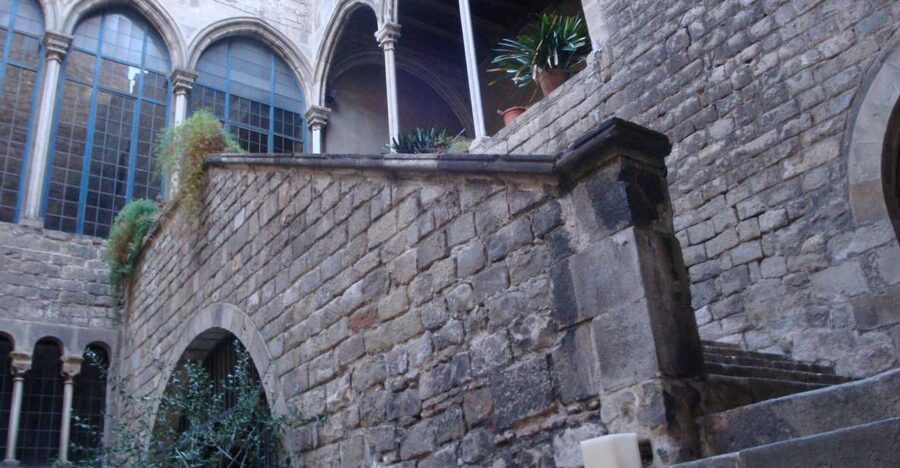
Another theme you hear is the royal palace segment, where King Fernando fights his fears and does not receive Columbus at home. Even if you already know the broad Columbus story, the tour framing helps you see it differently through royal psychology and court drama.
You learn why legends matter in a port city. Barcelona was a political hub with its own priorities. Stories about visitors and power reveal how the city imagined itself.
Then you move toward the Ribera side of town, and the whole tone starts to shift. The streets still feel old, but you feel more energy in the environment. It gets easier to imagine daily life here, not only courtly life.
Santa Maria del Mar in the Ribera: a collaborative project with legends
The walk reaches Santa Maria del Mar, described as the first collaborative project, with legends and heroes. This is a great place to slow down, because the Ribera has a different feel than the tight Gothic lanes. You get a better sense of how communities built together, not only kings and nobles.
Even without entering interiors, you can still sense why this place became a symbol. The guide uses it to connect architecture to social reality, showing how collective effort can be a political statement.
For me, this section is one of the most rewarding parts of the route because it balances the darker material earlier. You have history with teeth, then you get a history with teamwork.
Cloister stop: what to wear so you can participate
The tour includes a cloister visit. That is the one place where clothing rules matter. You are asked to wear at least knee-length clothing and cover your shoulders.
If you are planning around beach clothes, this is where you should be careful. Bring a light layer or plan something that meets the requirement. It is not about “fashion.” It is about access.
The payoff is that a cloister adds atmosphere. Even if you stay focused on what the guide explains, the space changes how you experience the story. You start to feel the rhythm of older religious life, the quiet center that framed the louder city outside.
Finishing at Passeig del Born: the Ribera’s last image
At the end, you finish at Passeig del Born, 22, 08003 Barcelona. This ending is smart because it drops you into a more recognizable, more open “modern city” zone after you have spent time in narrow medieval streets.
Use those last minutes well. If you want to turn this history into a longer afternoon, you can immediately keep walking, grab a snack, or head toward the places the guide hinted at earlier.
And based on strong feedback, one practical perk is that guides often share tips on where to eat and what to look for in local specialties and shopping. That kind of advice is gold because it saves you time once your walking energy is spent.
Price and value: $212 per group up to 4
This tour is priced at $212 per group, up to four people. That is not cheap in absolute terms, but it can be good value when you look at what you get: 3.5 hours of guided storytelling in German, a route that covers both the Barrio Gòtic and the Ribera Quarter, and a guide who can tailor pacing and respond to your personal needs.
Here is the practical math you can use: if you split with three friends and fill the group, that is roughly $53 per person for a half-day walking experience. Even if you do not fill every spot, it may still be worth it if you prefer a guided thread instead of trying to build one yourself through guidebooks.
Also, this is the kind of experience where paying for a good guide often beats paying for extra entries. Most stops are exterior, and entry fees are not included. You are paying for interpretation, not ticket lines.
Who should book this Gothic Quarter walk
Book it if you want:
- A story-driven walking tour that makes medieval Barcelona readable
- A German guide experience with strong structure and added visuals, including supplemental photos
- A route that covers both Gothic Quarter feel and a Ribera finish with Santa Maria del Mar
Consider another option if:
- You strongly need interior visits and ticketed sights. This tour is mostly outside.
- You need a language you are not prepared to follow. The guide is German, and the tour is built around that.
A quick decision: should you book?
I think you should book this tour if you enjoy cities that reward attention. Barcelona’s old streets can look like a postcard until someone explains the logic behind them. With this walk, you get that logic in a form that stays fun, not heavy.
If you show up ready to walk, ready to ask questions, and ready to follow along in German, you will likely leave with a tighter mental map and a lot of memorable stories you can repeat later.
FAQ
What language is the tour guide?
The live tour guide speaks German.
How long is the walking tour?
The duration is 3.5 hours.
Where do you meet, and where does it end?
You meet in front of Hotel Olivia Plaza at Plaça de Catalunya, 19. The tour finishes at Passeig del Born, 22, 08003 Barcelona.
Is the tour mostly outside, or are there interior visits?
You will admire monuments from their exteriors. Interior visits are not part of the program, with a couple of exceptions.
Are entry fees included?
No. Entry fees are not included.
Is it wheelchair accessible?
Yes, the activity is wheelchair accessible.
What should I wear for the cloister stop?
Wear at least knee-length clothing and cover your shoulders.
The latest to open for booking


Gothic Quarter Walks, side by side.
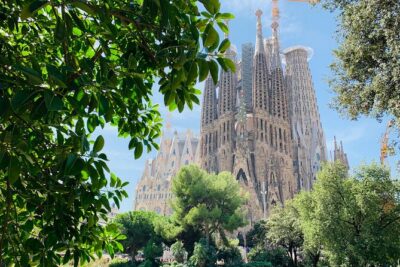
Barcelona all included: Sagrada, Park Güell, Montjuic & Gothic
Read our review →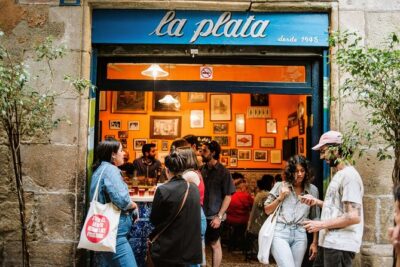
Barcelona Gothic Quarter Tapas & Taverns Food & Wine Tour
Read our review →
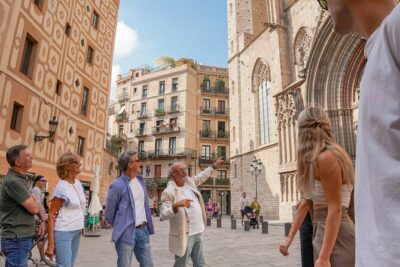
Barcelona Old Town & Gothic Quarter Small Group Tour
Read our review →
Ramblas, Old Town, Gothic and Gaudi Architecture Walking Tour
Read our review →
El Born and Gothic Quarter Wine & Tapas Bar Tour
Read our review →
El Born Food Walking Tour with Tapas and Drinks
Read our review →
Kids and Family Gothic Quarter Walking Tour in Barcelona
Read our review →Where else this one turns up