
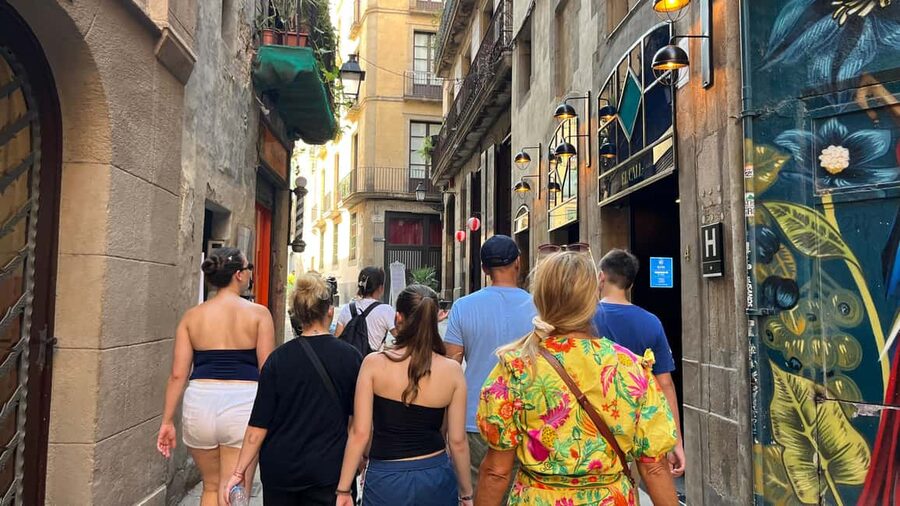
Reviewed · GOTHIC QUARTER WALKS
Barcelona Gothic WalkingTour: Roman Walls & Hidden Courtyard
Roman ruins hide inside Barcelona’s Gothic streets. This 2-hour walk threads Roman layers to the Gothic Quarter’s legends, moving at a steady pace through narrow lanes and tucked-in courtyards. I especially like how the route lands you at Barcelona Cathedral and then explains what you are actually seeing, not just what a building date might be.
What I like most is the Jewish Quarter stop, where you get time to understand the street-level context around one of Europe’s oldest synagogues. One drawback to consider: it is a guided walking tour with frequent stops, so if you love to linger quietly in one place for a long time, you might feel the schedule moving along faster than you want.
In This Review
- Key highlights worth your attention
- Roman Aqueduct to Roman walls, why this start matters
- Barcelona Cathedral: more than a big church facade
- Plaça de Sant Jaume and the counts and kings story
- A municipal building tied to the executioner role, then back to power
- Temple of Augustus, the old empire showing through
- Jewish Quarter: one of Europe’s oldest synagogues in context
- Church of Saint Philip Neri and the Spanish Civil War scars
- Bishop’s Bridge and the kind of detail you miss alone
- The oldest palm tree and turtle fountain, a fun ending with meaning
- Price and value: $26 for a tight 2-hour story
- Who this tour suits best, and who should pick something else
- Should you book Barcelona Gothic WalkingTour: Roman Walls & Hidden Courtyard?
- FAQ
- How long is the tour?
- What is the price per person?
- Where do I meet the guide?
- What language is the tour offered in?
- Is the tour wheelchair accessible?
- Is there a private group option?
- What should I bring for the walk?
- What does the tour include besides the walking?
- What is the cancellation policy?
Key highlights worth your attention
- Roman Aqueduct start point: you begin with the city’s oldest bones, then build forward in time
- Cathedral storytelling: legends and architecture get tied to what stands in front of you
- Jewish Quarter focus: you get context around one of Europe’s oldest synagogues
- Spanish Civil War traces: you see how trauma left marks on religious buildings
- Oldest palm tree payoff: you touch the palm tree ending at the turtle fountain for luck
Roman Aqueduct to Roman walls, why this start matters
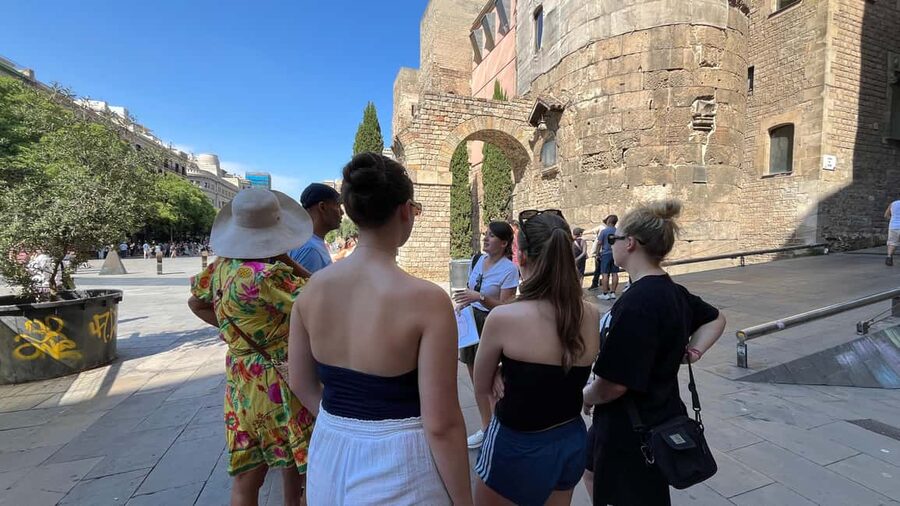
The tour begins at the Roman Aqueduct area, which is a smart move if you want Barcelona to make sense. Most visitors hit the Gothic Quarter and think it started when the Middle Ages began. Starting here forces a different mental map: the city keeps reusing the same ground, and later builders wrap their stories around older stone.
From the first moments, you get the sense that this is not a generic walking loop. Your guide points out how Roman engineering shows up again and again, even after centuries of redesign. That matters because the Gothic Quarter is easy to treat like a postcard. On this tour, you learn how to look at it like a layered record.
Practical tip: plan to stay present with your feet. The streets are narrow, and you will be walking more than you might expect for a 2-hour tour. Comfortable shoes are not optional if you want to enjoy the details instead of counting blisters.
Barcelona Cathedral: more than a big church facade
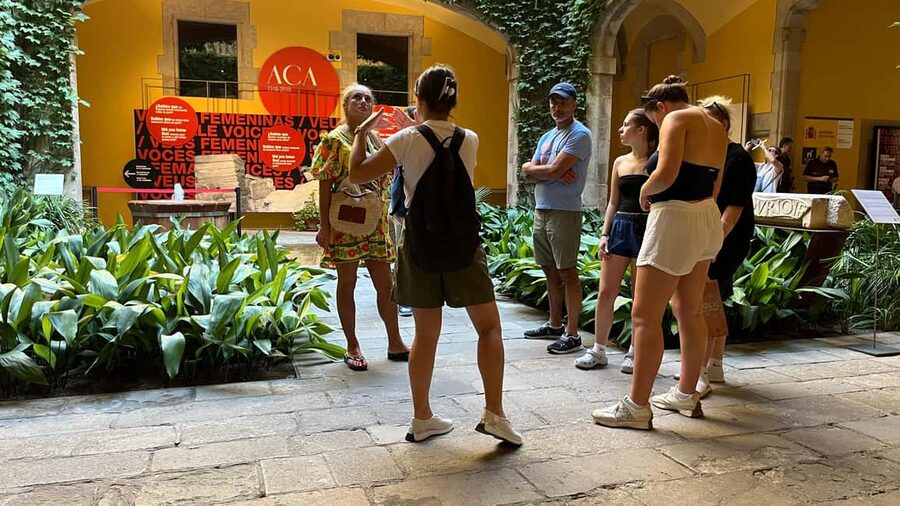
Barcelona Cathedral is the kind of landmark everyone photographs, but not everyone knows how to read. During the stop, you get guided time to understand why certain features exist and how stories attach to them. The guide’s approach is practical and human. Instead of drowning you in dates, you get explanations that help you connect the building to real life as it evolved.
I like this style because it keeps the Cathedral from turning into a museum worksheet. You are still looking at stone and structure, but you are also learning the beliefs, power, and daily rituals that shaped what was built and what got preserved.
If you are sensitive to religious spaces, this stop is also a good reminder to keep your tone respectful and your pace calm. Churches can feel intense when you are walking fast. Here, the guide helps you slow down just enough to notice the right things.
One more point: the Cathedral stop sets the emotional temperature for the rest of the tour. Once you see how much history is packed into sacred architecture, it is easier to accept the darker parts later, including the traces from the Spanish Civil War.
Get lost in the medieval lanes
- Barcelona all included: Sagrada, Park Güell, Montjuic & Gothic
★ 5.0 · 2,169 reviews - Barcelona Gothic Quarter Tapas & Taverns Food & Wine Tour
★ 5.0 · 1,470 reviews - Barcelona: Old Town and Gothic Quarter Walking Tour
★ 4.8 · 1,393 reviews
Plaça de Sant Jaume and the counts and kings story
As you move through the core civic area around Plaça de Sant Jaume, the tour shifts from religious power to political power. This is where the former residence areas of the Counts of Barcelona and the Kings of Aragon come into focus. Even if you have never studied medieval Catalonia, the guide makes the relationships feel tangible.
In plain terms, you learn how authority worked in stone. Palaces and official buildings were not neutral backdrops. They were built to control public space, send messages, and legitimize rule. When you connect that to what surrounds the squares today, the Gothic Quarter stops being just pretty streets. It becomes a political stage you can still walk through.
This section is also a good reality check for your expectations. If you come hoping for “secret doors,” you might miss the deeper kind of secret. The tour’s payoff is not hidden treasure. It is hidden meaning, the sort you only notice when someone points at the right detail and explains why it mattered.
A municipal building tied to the executioner role, then back to power
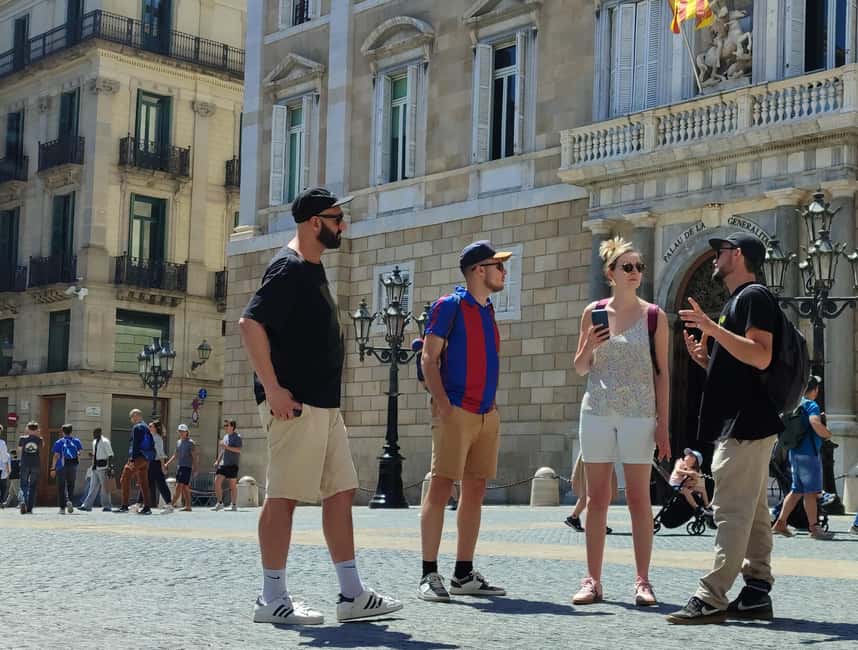
One of the stops on this walk is an Antigua casa del verdugo Municipal, a building associated with the role of the executioner. The phrase can sound grim, but the point of the stop is educational. You see how public punishment and civic control were part of the same urban world as churches, squares, and official residences.
This is the kind of stop that many tours skip because it is uncomfortable. I actually think it adds value. It gives you a fuller picture of how medieval cities operated, where justice was public and fear was part of governance. You do not need gory details. You just need the context.
The practical side: expect the guide to keep it tasteful and focused on history and architecture, not shock. Still, if you are traveling with kids, you might want to gauge their comfort level with darker civic history. This tour includes Civil War traces later, so the tone is not strictly light.
Temple of Augustus, the old empire showing through
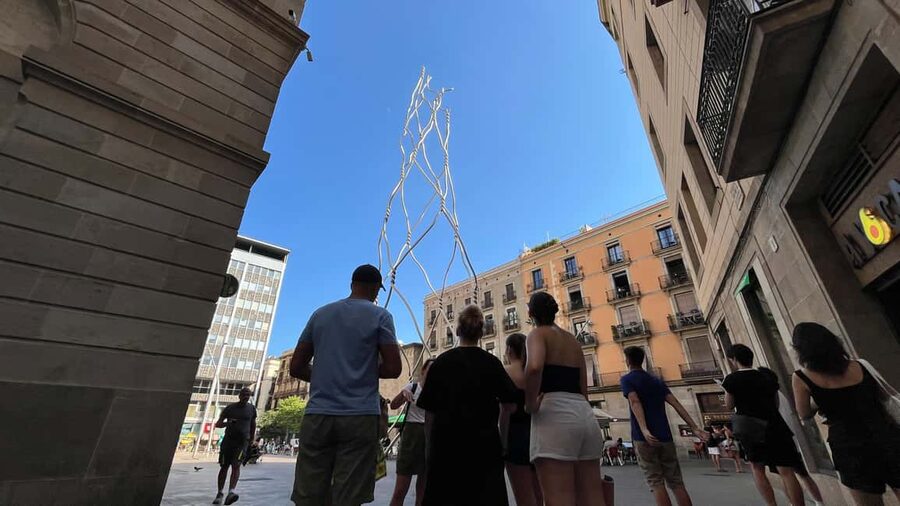
Then you get a stop at the Temple of Augustus, one of those places that makes you do a double take. Even if you do not know the story behind it, the guide helps you see the significance of sitting in a city shaped by empire.
What I like here is the pacing. After the heavier themes, returning to Roman context feels like a reset. It also shows you a key theme of the whole tour: Barcelona keeps layering. The Roman age is not a distant chapter. It is structural DNA.
If you enjoy architecture, this is one of your best chances to get a clear explanation without needing to read ten guidebooks beforehand. You walk away with a mental map, and you will notice the “why” behind what you see later that day, even outside the tour route.
Jewish Quarter: one of Europe’s oldest synagogues in context
The Jewish Quarter stop is the emotional heart for many people. You wander through the streets with context, and you get guided time around one of Europe’s oldest synagogues. The guide does not treat this as a checklist stop. It is framed as a neighborhood history lesson you can walk through.
This matters, because the Gothic Quarter can blur different eras into one visual style. When you add the Jewish Quarter story into the same streets and stone, you start to understand how multicultural life and later changes shaped the city. The guide’s storytelling style helps you connect the architecture to the people who lived, prayed, and navigated risk over time.
I also appreciate how the guide encourages you to look for small cues. You notice details you would otherwise step over, like street-level features and the way buildings relate to one another. It is the difference between seeing a place and understanding it.
If you want a tour that makes you see the Quarter with new eyes, this is a strong reason to book.
Other things to see around Barcelona
- Barcelona: Tapas Walking Tour with Food, Wine, and History★ 4.8 · 4,261 reviews
- Highlights & Hidden Spots of Barcelona Bike Tour w/ Local Guide★ 4.5 · 3,009 reviews
- Barcelona Tapas Walking Tour: Food, Wine & History★ 4.5 · 1,928 reviews
- Barcelona 3-hour Bike or E-Bike Tour: Highlights and Hidden Gems★ 5.0 · 1,429 reviews
- Barcelona: 2.5-Hour Bike or E-Bike Historical Tour★ 4.5 · 1,262 reviews
- Barcelona Old Town Tapas Tour: Vermouth, Bites & Hidden Gems★ 5.0 · 627 reviews
Church of Saint Philip Neri and the Spanish Civil War scars
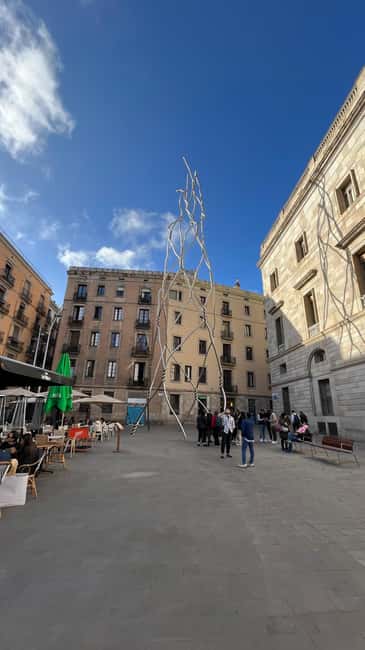
One of the most memorable aspects is the stop at a church with traces of the Spanish Civil War, Church of Saint Philip Neri. This is where the tour stops being purely “old city sightseeing” and becomes a look at modern history embedded in older walls.
The guide’s job here is delicate. You get a respectful explanation of the heartbreaking events and you learn how scars can remain visible even when the city continues around them. It is not presented as doom and gloom, but as history you can still read.
This is also where you learn why the tour is labeled Roman walls to hidden courtyard, because the hidden part is not just physical. It is the hidden layer of memory in everyday buildings. A wall can be both a place of worship and a record of violence.
Consideration: if you are not in the mood for heavier history, plan your day so you can digest it afterward. A quiet dinner walk afterward helps.
Bishop’s Bridge and the kind of detail you miss alone
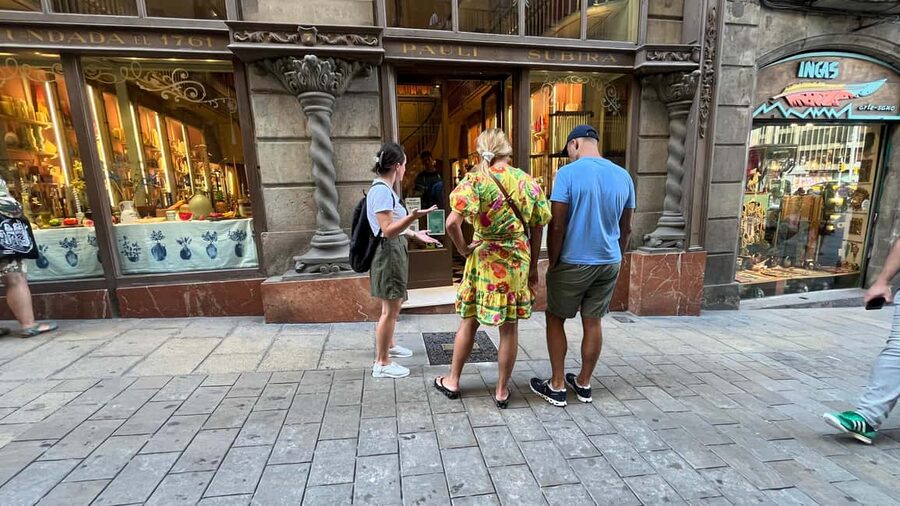
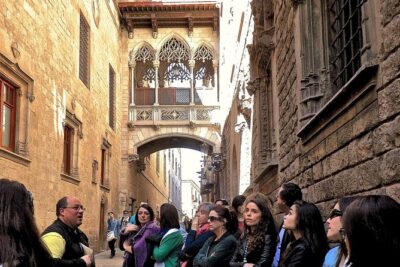
As you head toward Bishop’s Bridge, the tour leans into small visual payoffs. You get explanations for why certain spots matter, and you learn how to connect places that look unrelated at first glance.
This segment is especially useful if you are the type who likes to walk a city after a tour and actually recognize things. Without that guidance, Gothic streets can start to feel interchangeable. With guidance, you start to see patterns, transitions, and the logic of how people moved through space.
The route back to the Roman Aqueduct ties things up nicely. You end where you started, and that loop makes the time travel feeling real. Roman foundations on one end, medieval and modern history on the other, and your brain finally understands the “stacked” city.
The oldest palm tree and turtle fountain, a fun ending with meaning
The last moment is playful on purpose. You reach the house featuring Barcelona’s oldest palm tree and you touch the palm tree for good luck. The guide also points out the turtle fountain, where you can touch it as part of the luck ritual.
This ending works because it gives you a reset after the heavier historical stop. It also helps you remember the tour by anchoring it in a simple physical memory. You can be a stone-and-architecture person and still appreciate a quirky local custom like this.
Is it magical? No. But it is a human touch, and it makes the final minute feel like Barcelona instead of just history.
Price and value: $26 for a tight 2-hour story
At $26 per person, this tour sits in the “budget enough to try, focused enough to matter” category. The value is not only that you visit multiple landmarks. It is how the guide connects them into a single narrative.
For a two-hour time window, you get:
- guided stops in major civic and religious settings
- Jewish Quarter context around one of Europe’s oldest synagogues
- a dedicated moment for Spanish Civil War traces
- a memorable local custom at the end with the oldest palm tree
If you already plan to wander the Gothic Quarter on your own, you might think a tour is extra cost. But the big difference is interpretation. Someone points out what you would likely miss, and they do it in a way that does not feel like memorizing a school report.
Also, the small-town feel of the experience helps. Guides like Vicky, described as professional, friendly, and kind, and Egor, described as fun and relaxed, are praised for storytelling that feels like real life, not a Wikipedia dump. That tone is part of the value.
My practical take: if you only have a day or two in Barcelona and you want one guided hit that makes the Quarter click, $26 is a fair price for that result.
Who this tour suits best, and who should pick something else
This walk is a great match if you want:
- history explained through stories and architecture, not just facts
- a guided route that helps you see hidden connections
- a mix of Roman, medieval, Jewish Quarter, and 20th-century history
- an ending with a Barcelona custom, not just another photo stop
It might be less ideal if you:
- hate guided groups and prefer totally independent wandering
- need lots of alone time at each major stop
- prefer history to be strictly light and not include war traces
Good news: the tone is not overly academic. The guide keeps things moving and easy to follow, and the narrow streets give the walk its own atmosphere.
Also check your day planning. Bring sunscreen and a sun hat if you are touring in warm months. Even in shaded lanes, you can still feel the sun hit during breaks between stops.
If you want private time, the tour offers private group options, which can help if your group needs a slower pace.
Should you book Barcelona Gothic WalkingTour: Roman Walls & Hidden Courtyard?
I think you should book this tour if your goal is to understand the Gothic Quarter quickly, without wasting time on guesswork. The route covers the big anchors you want to see, but it adds value by connecting them with real context, including the Jewish Quarter and Spanish Civil War traces. The ending with Barcelona’s oldest palm tree and the turtle fountain also makes the whole experience stick with you.
Skip it only if you do not like guided pacing or if war-related history will distract you from enjoying your day. Otherwise, it is one of the better “bang for your time” ways to make the Quarter feel personal and not just old.
FAQ
How long is the tour?
The tour duration is 2 hours.
What is the price per person?
The price is $26 per person.
Where do I meet the guide?
Meet at Roman Aqueduct and look for a guide with the Tres Gatos logo on a t-shirt.
What language is the tour offered in?
The tour is offered in English and Russian.
Is the tour wheelchair accessible?
Yes, the tour is wheelchair accessible.
Is there a private group option?
Yes, private group availability is offered.
What should I bring for the walk?
Bring comfortable shoes, a sun hat, and sunscreen.
What does the tour include besides the walking?
You get a guided tour of the Gothic Quarter, exploration in the Jewish Quarter, a visit to a church with traces of the Spanish Civil War, and you can touch Barcelona’s oldest palm tree for good luck.
What is the cancellation policy?
You can cancel up to 24 hours in advance for a full refund.
The latest to open for booking


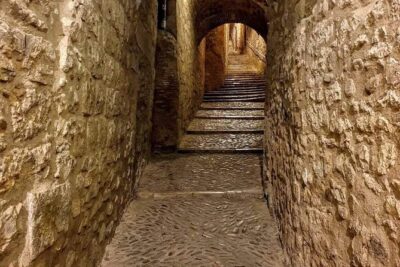

Gothic Quarter Walks, side by side.
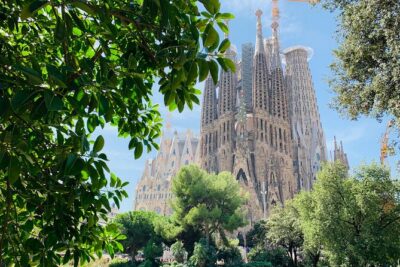
Barcelona all included: Sagrada, Park Güell, Montjuic & Gothic
Read our review →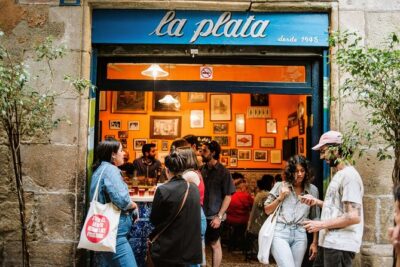
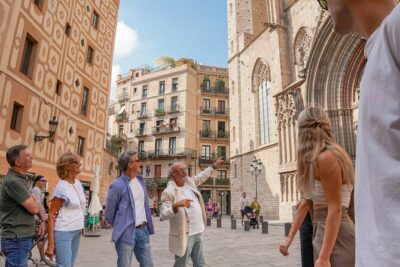
Barcelona Gothic Quarter Tapas & Taverns Food & Wine Tour
Read our review →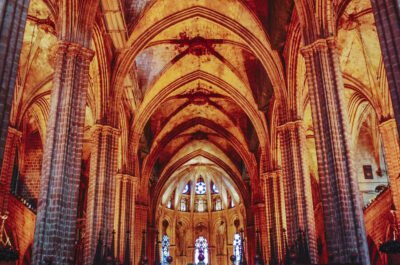
Barcelona Old Town & Gothic Quarter Small Group Tour
Read our review →
Ramblas, Old Town, Gothic and Gaudi Architecture Walking Tour
Read our review →
El Born and Gothic Quarter Wine & Tapas Bar Tour
Read our review →
El Born Food Walking Tour with Tapas and Drinks
Read our review →
Kids and Family Gothic Quarter Walking Tour in Barcelona
Read our review →Where else this one turns up