

Reviewed · GOTHIC QUARTER WALKS
Barcelona Historical Walking Tour: Gothic Quarter and El Born
Gothic streets tell their own story. This Barcelona Historical Walking Tour links the old lanes of the Gothic Quarter to El Born with on-foot sights, artist lore, and quick hits that larger bus routes miss.
I like that it keeps things organized with a small group (up to 20) and a pace that leaves room to spot details and take photos. I also love the money-saving structure, with most stops offering free entrance so you can spend on meals instead of tickets.
One consideration: two major churches have admission tickets not included, so expect to pay for Catedral de Barcelona and Basilica de Santa Maria del Mar if you want to go inside.
In This Review
- Key things to know before you go
- Gothic Quarter and El Born in 2 hours: why this walk feels efficient
- Where the tour starts, where it ends, and how the route flows
- Els 4 Gats and the artist thread: when Barcelona mixed art with everyday life
- Roman Barcino to medieval Gothic: the stops that make the stones make sense
- Squares with real weight: Sant Felip Neri, El Call, and the power centers of the city
- Plaça del Rei and Plaça de l’Àngel: royal drama and grain trade myths
- Basilica de Santa Maria del Mar and Catedral de Barcelona: what you’ll want to plan
- Price value: what $30.25 buys you, in real terms
- What makes the guides matter, and what you should watch for
- Who should book this tour, and who might want to skip it
- Should you book? My quick decision guide
- FAQ
- How long is the Barcelona Historical Walking Tour?
- What does the tour cost?
- What language is the tour offered in?
- How many people are in a group?
- Where does the tour start and where does it end?
- Are entrance tickets included?
- Is a mobile ticket used?
- How close is the meeting point to public transportation?
- What is the cancellation policy?
Key things to know before you go
- Max 20 people makes it feel personal, not like a crowd shuffle
- Mostly free stops keep the total cost under control
- Artist and architect crossovers (Picasso and Gaudi) show up in surprising places
- Roman and medieval layers show up close together, especially around the Gothic Quarter
- Small, story-driven squares connect daily Barcelona to politics and war
- End point at Santa Maria del Mar sets you up for an easy continuation into El Born
Gothic Quarter and El Born in 2 hours: why this walk feels efficient
Barcelona’s oldest center can feel like a maze, even when you’re map-savvy. This 2-hour historical walk helps you connect the dots fast, by steering you through the Gothic Quarter and El Born in a logical line of sights you can actually reach on foot.
What makes it work is the mix. You’re not just looking at stone. You’re getting stories tied to what you see, from artist hangouts to political anniversaries and Roman leftovers. Guides also use visual aids during the walk in some cases, so you get a clearer picture of what used to be there and why it matters.
If you’re trying to get your bearings on a first day, this tour is a strong move. It’s short enough to stay energetic and long enough to give you a real mental framework for what comes next, like where to eat, where to linger, and what to revisit later on your own.
Where the tour starts, where it ends, and how the route flows
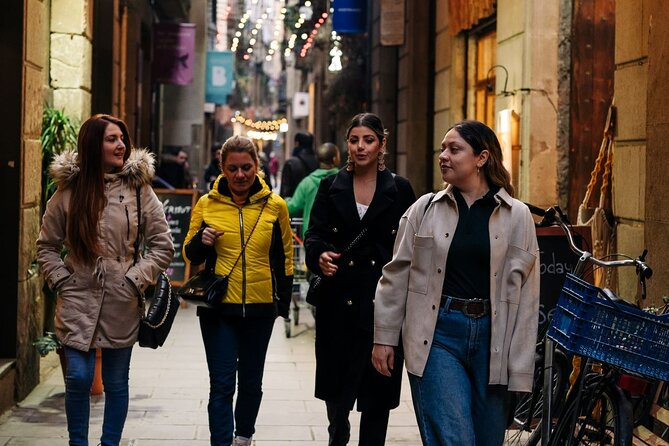
You start at Plaça del Vuit de Març in Ciutat Vella (08002). You finish at Basilica de Santa Maria del Mar at Plaça de Santa Maria (08003). That end point is handy because it drops you near the heart of El Born, where the streets are full of small galleries, cafés, and places to keep wandering.
The route is designed around quick stop-ins and short pauses, with about 10 minutes per location. That rhythm is part of the value. You get enough time to read the scene, hear the story, and move on before you lose steam.
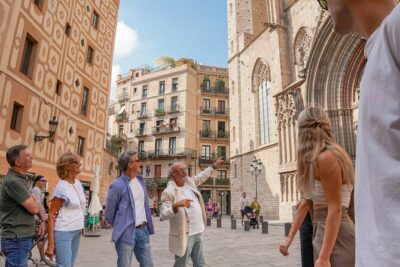
Also, it’s timed for real street walking. The Gothic streets can be tight, and big groups can turn into a bottleneck. A group size capped at 20 helps a lot, and the pace stays relaxed enough that you can still stop for photos.
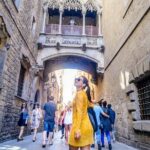
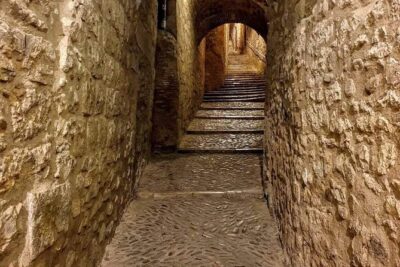
Get lost in the medieval lanes
- Barcelona all included: Sagrada, Park Güell, Montjuic & Gothic
★ 5.0 · 2,169 reviews - Barcelona Gothic Quarter Tapas & Taverns Food & Wine Tour
★ 5.0 · 1,470 reviews - Barcelona: Old Town and Gothic Quarter Walking Tour
★ 4.8 · 1,393 reviews
Els 4 Gats and the artist thread: when Barcelona mixed art with everyday life
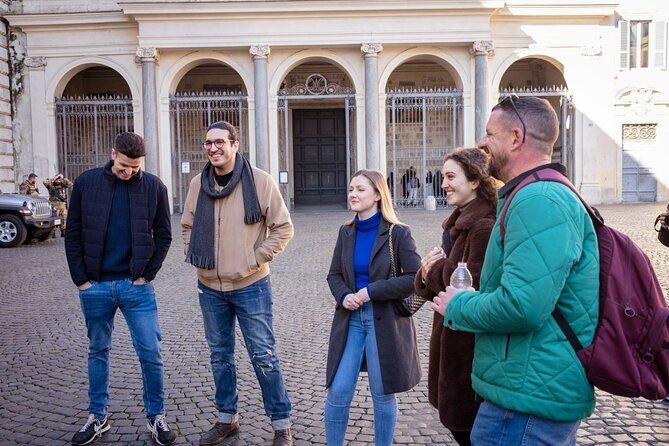
The walk kicks off at Els 4 Gats, a historic café and restaurant that became a favorite meeting spot for artists, intellectuals, and modernists. This is one of those places where you can almost feel the creative buzz, because the building itself has an Art Nouveau personality. It’s also the kind of stop that turns names into something you can picture, especially when your guide links the scene to the kinds of people who would have gathered here.
Right after that, you’ll pause at El Mon Neix En Cada Besada, a photomosaic installed in 2014. It connects to the Catalan defeat on September 11, 1714, from the War of the Spanish Succession. The story matters because it ties into La Diada (Catalonia Day), and you’ll hear what freedom has meant in this city over time.
These first two stops set the tone. Barcelona’s art scenes are not separate from its political scenes. You’re learning a city that layers culture, identity, and daily life in the same streets.
Roman Barcino to medieval Gothic: the stops that make the stones make sense
Next comes Catedral de Barcelona, a Gothic-style church in the middle of the action. Your guide connects it to the patron saint, Eulalia, including the legend of her torture and death at the hands of the Romans. The church stop is visually powerful, but the key practical point is the admission: entrance is not included, so if you want to go inside, plan on paying on the spot.
Then you’ll reach Casa de l’Ardiaca, a strange and fascinating mix of Gothic and Renaissance elements. This spot is famous for housing parts of a Roman wall and aqueduct elements, which is why it’s such a useful stop. It helps you understand that the Gothic Quarter is not a single era frozen in place. It’s a patchwork built over earlier remains.
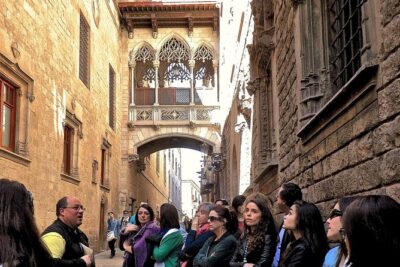
After that, the route crosses Pont del Bisbe, also tied to Carrer de Bisbe (Bishop Street), which was a main thoroughfare in Roman-occupied Barcino. There’s a legend linked to the bridge too, and your guide will explain it in a way that tends to catch even skeptical people.
Squares with real weight: Sant Felip Neri, El Call, and the power centers of the city
Barcelona’s squares often look pretty, then you learn what happened there, and they feel heavier. Plaça de Sant Felip Neri is a perfect example. It’s tucked away in the Gothic Quarter, but its past includes the Spanish Civil War. You’ll hear how the square still carries scars from that time, which changes how you read the space once you know.
From there, you head to MUHBA – El Call, the Jewish quarter. You’ll walk through narrow medieval streets and learn about the community’s history, including the presence of a synagogue and stories passed along over the centuries. If you’ve never thought closely about El Call before, this is the stop that often makes the whole tour feel broader than just Gothic architecture.
Then comes Plaça de Sant Jaume, a hub of government activity surrounded by historic buildings. This is where the city’s official side sits, and it helps you see that Barcelona’s “old” isn’t only churches and cafés. It’s also civic life and power.
Plaça del Rei and Plaça de l’Àngel: royal drama and grain trade myths
Next is Plaça Del Rei, a charming-looking square that holds the Royal Palace and a darker backstory. Even if you don’t love political history, this stop works because it gives you context for why the buildings look the way they do, and why the square became a focal point.
Then you’ll finish the square section at Plaça de l’Àngel, the former Wheat Square. Grain trading was a major deal here, and the name connects to a heavenly legend your guide explains during the stop. This is the kind of story that sticks because it connects a mundane trade to a memorable myth. After you hear it, you start noticing how names and places in the Gothic Quarter act like coded souvenirs.
Other things to see around Barcelona
- Barcelona: Tapas Walking Tour with Food, Wine, and History★ 4.8 · 4,261 reviews
- Highlights & Hidden Spots of Barcelona Bike Tour w/ Local Guide★ 4.5 · 3,009 reviews
- Barcelona Tapas Walking Tour: Food, Wine & History★ 4.5 · 1,928 reviews
- Barcelona 3-hour Bike or E-Bike Tour: Highlights and Hidden Gems★ 5.0 · 1,429 reviews
- Barcelona: 2.5-Hour Bike or E-Bike Historical Tour★ 4.5 · 1,262 reviews
- Barcelona Old Town Tapas Tour: Vermouth, Bites & Hidden Gems★ 5.0 · 627 reviews
Basilica de Santa Maria del Mar and Catedral de Barcelona: what you’ll want to plan
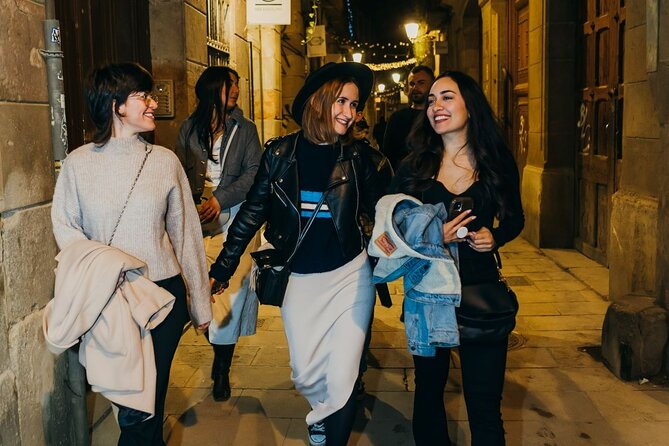
Two church stops are tied to admission tickets not included: Catedral de Barcelona and Basilica de Santa Maria del Mar. Your guide will point out the key things to look for, but whether you pay and go inside is up to you.
If you do add the tickets, you’re likely to appreciate Santa Maria del Mar even more because it’s a Catalan Gothic church with deep connections to the city’s maritime life. Finishing near this basilica also makes your day flow naturally. Instead of turning around and backtracking, you can keep exploring around the finish point.
If you prefer to keep costs down, you can still enjoy the exterior viewpoints and focus on the stories. Just be aware that the tour’s “mostly free” value depends on which interiors you choose to enter.
Price value: what $30.25 buys you, in real terms
At $30.25 per person for about 2 hours, this tour is priced like a proper guided walk, not a budget hustle. The value comes from three things.
First, you’re paying for organization and storytelling. Walking the Gothic Quarter on your own is fun, but you’ll miss the links between places and dates. Second, the tour leans heavily on free-entry stops, so your additional costs stay limited. Third, the cap of up to 20 people means you’re not just part of a moving wall.
The only real wildcard is church admissions. If you enter both churches, your total day cost rises. If you enter only one, your budget stays very controlled. Either way, the tour is set up so you’re not being forced into constant paid stops.
What makes the guides matter, and what you should watch for
The most praised element across guides is how they keep the walk lively and easy to follow. I like that the tour is designed around short, repeatable stops, because that structure helps you absorb more without getting tired.
Many guides bring extra tools, sometimes using a visual display to show past scenes, and you might also get mini trivia and answer-time moments. Names that come up often include Juan, David, Thami, Jorge, Sonia, Lidia, Vanesa, Tammy, Jordan, Craig, Justin, Mariah, and Sara. You should treat that as a good sign. It suggests that the people leading the tour typically do more than recite dates.
The pace also matters. Several accounts describe a slower walking rhythm that works for photos, and it can feel teen-friendly too if you’re traveling with younger companions who need a bit of humor and movement.
Who should book this tour, and who might want to skip it
This is a great fit if you want to:
- Get your bearings fast in Barcelona’s oldest core
- Understand why the streets look the way they do, with Roman and medieval context
- Learn the stories behind squares, churches, and name changes
- Keep costs reasonable with many free stops
You might choose something else if you only want big-ticket highlights, or if you plan to spend your day purely on longer museum-style visits. Also, because it’s a walking tour through older streets, you should expect uneven surfaces and tight lanes.
Weather can be a factor too. One account mentioned rain, and your best approach is simple, bring a light rain layer and keep going. The tour is built for the reality of street walking.
Should you book? My quick decision guide
Book it if you want a smart first pass through the Gothic Quarter and El Born that links art, politics, and architecture in a way you can remember. At $30.25 with many free stops and a cap of 20, it’s a practical way to start a Barcelona trip without spending your whole day in queues.
If you’re the type who loves interiors and church details, plan to budget for the two paid entrances. If you’re more exterior-focused, you can still get a lot from the stops that are free.
If you do book, I’d reserve ahead since the tour is commonly booked about a month out. And if your plans are flexible, you can cancel for a full refund as long as you do it at least 24 hours before the start time.
FAQ
How long is the Barcelona Historical Walking Tour?
It runs for about 2 hours.
What does the tour cost?
The price is $30.25 per person.
What language is the tour offered in?
It is offered in English.
How many people are in a group?
The maximum group size is 20 travelers.
Where does the tour start and where does it end?
It starts at Plaça del Vuit de Març, Ciutat Vella, 08002 Barcelona, and it ends at Basílica de Santa Maria del Mar, Plaça de Santa Maria, 1, Ciutat Vella, 08003 Barcelona.
Are entrance tickets included?
Most stops are free, but tickets are not included for Catedral de Barcelona and Basilica de Santa Maria del Mar.
Is a mobile ticket used?
Yes, it uses a mobile ticket.
How close is the meeting point to public transportation?
The meeting point is near public transportation.
What is the cancellation policy?
Free cancellation is available. You can cancel up to 24 hours in advance for a full refund. If you cancel less than 24 hours before the start time, the amount paid is not refunded.
More Walking Tours in Barcelona


The latest to open for booking


Gothic Quarter Walks, side by side.
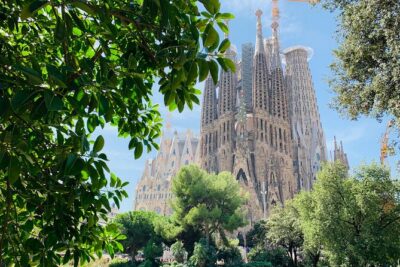
Barcelona all included: Sagrada, Park Güell, Montjuic & Gothic
Read our review →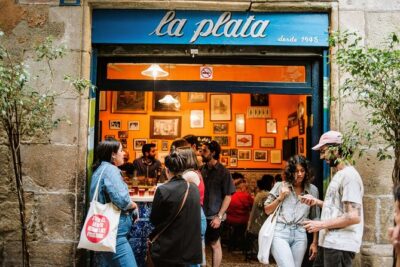
Barcelona Gothic Quarter Tapas & Taverns Food & Wine Tour
Read our review →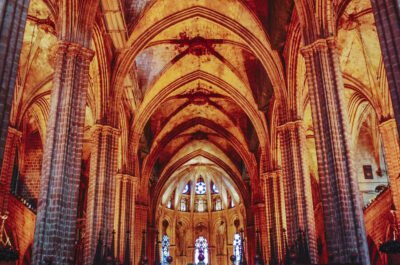
Barcelona Old Town & Gothic Quarter Small Group Tour
Read our review →
Ramblas, Old Town, Gothic and Gaudi Architecture Walking Tour
Read our review →
El Born and Gothic Quarter Wine & Tapas Bar Tour
Read our review →
El Born Food Walking Tour with Tapas and Drinks
Read our review →
Kids and Family Gothic Quarter Walking Tour in Barcelona
Read our review →Where else this one turns up