

Reviewed · SCAVANGER HUNTS TOURS
Barcelona Scavenger Hunt and Sights Self-Guided Tour
Barcelona turns into a game in two hours. This self-guided experience feels built for real walking time, since clues land on your smartphone as you explore the Modernist District. I especially like the map help in the app and the mix of sight spotting plus questions that teach you what you are looking at. One drawback to note: you control the pace, so you’ll want to be comfortable navigating on foot without a person herding you along.
What makes it work is the way it turns famous facades into something you actually notice. You’ll solve tasks on-site, earn points for answers, and even tackle creative photo challenges, so the route stays fun for both adults and kids. It also helps that it is designed as a private activity, meaning it is just your group moving through Barcelona at your tempo.
If you want a low-cost way to make your first look at Gaudí feel more personal, this is a smart pick. The route hits Casa Amatller, Casa Batlló, Casa Milà (La Pedrera), the Monument a Narcís Monturiol, and La Sagrada Família, starting on Pg. de Gràcia and ending right back there.
In This Review
- Key things to know before you start
- Phone-Based Clues and Points: How the Hunt Actually Feels
- Starting on Pg. de Gràcia, Then Turning Gaudí Into a Game
- Casa Amatller: Where the Hunt Teaches You to Look Twice
- Casa Batlló: Riddles That Make the Facade Feel Personal
- Casa Milà (La Pedrera): Learning by Searching for Clues
- Monument a Narcís Monturiol: A Nice Break From Pure Facades
- La Sagrada Família: The Big Finish With On-Site Answers
- Price and Value for a Two-Hour Modernist Hunt
- Who Should Book This Barcelona Scavenger Hunt
- Should You Book This One?
- FAQ
- Is this tour self-guided?
- How long does the Barcelona hunt take?
- What language is it offered in?
- Where does the scavenger hunt start and end?
- Do I need to bring anything to play?
- How do I access the game after booking?
- Can I take breaks during the tour?
- Which sights are included on the route?
- Is there free cancellation?
Key things to know before you start

- Smartphone-delivered clues mean no paper packets to carry, just your phone
- A built-in map function helps you get from stop to stop without second-guessing
- Questions and photo tasks keep it engaging, including for kids and teens
- On-site details matter since many answers are hidden in signs, pictures, or visual clues
- Self-paced timing lets you pause for breaks instead of rushing the route
Phone-Based Clues and Points: How the Hunt Actually Feels
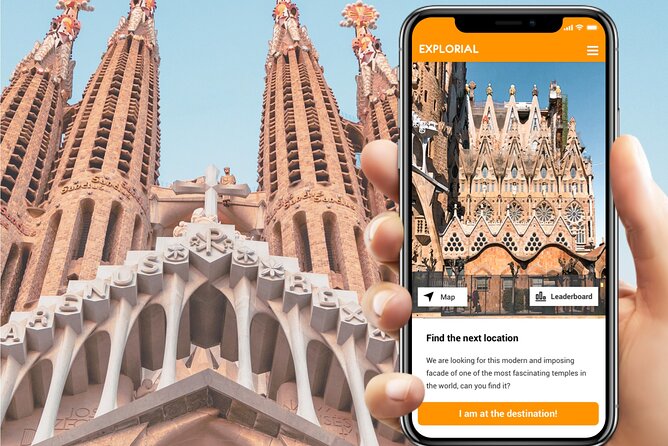
This tour is designed around one simple idea: Barcelona is best learned by looking closely while you walk. Instead of a fixed guided script, you get an interactive experience where the app delivers clues, prompts you to find the right spot, and then asks you questions tied to what you see there. That matters because you are not just passing by. You are slowing down in the right places.
The “no extra gear” part is a real win. Clues are delivered to your smartphone, so you do not need to carry anything else to play. Once you buy your ticket, you receive an access code you use in the app. From that moment, your phone becomes the whole game system: navigation, tasks, and point scoring.
Your energy is guided by three types of challenges. First, you “find sights” using hints and the app’s map. Second, you “solve questions” once you arrive, and the answers are often hidden in signs, pictures, or other visual elements you can spot on location. Third, you add points through photo tasks that reward creativity. Think of it as sightseeing with built-in reasons to pay attention, and built-in reasons to laugh when a photo prompt goes sideways.
The format also explains the best way to approach it. You should expect short moments where you stop, read carefully, and interpret. Then you walk on to the next location and do it again. If you like structure but hate rigid schedules, this hits a sweet spot.
Starting on Pg. de Gràcia, Then Turning Gaudí Into a Game
The route begins at Pg. de Gràcia, 35 in L’Eixample, and it ends back at the same meeting point. That is convenient because you are not stuck planning a separate return, and you can easily build it into a longer day of exploring.
Starting on Pg. de Gràcia is also practical. This area is right where you expect to find high-profile Modernist architecture, so the hunt begins with momentum instead of lag. You will be walking through the Modernist District, and the app’s map function is there to help you get to each stop without getting lost.
Because it is self-guided, you should decide how you want to play. If you like a brisk pace, you can move from task to task. If you prefer calmer sightseeing, you can take your time at each sight, read signs carefully, and work the riddles slowly. The experience is not limited in time, which is a big deal if you plan to stop for photos, admire details, or just take a breath before your next question.
One more detail that shapes your experience: this is a private activity, so only your group participates. With a game like this, that typically makes it feel less awkward and more natural for families and mixed-age groups, since you are all sharing the same prompts and discoveries.
Other things to see around Barcelona
- Barcelona: Sagrada Familia Entry Ticket with Audio Guide
★ 4.6 · 105,312 reviews - Casa Batllo Admission Ticket with Intelligent Audio Guide
★ 4.5 · 3,168 reviews - Barcelona: Mies van der Rohe Pavilion Ticket and Audio Guide
★ 4.6 · 380 reviews
Casa Amatller: Where the Hunt Teaches You to Look Twice
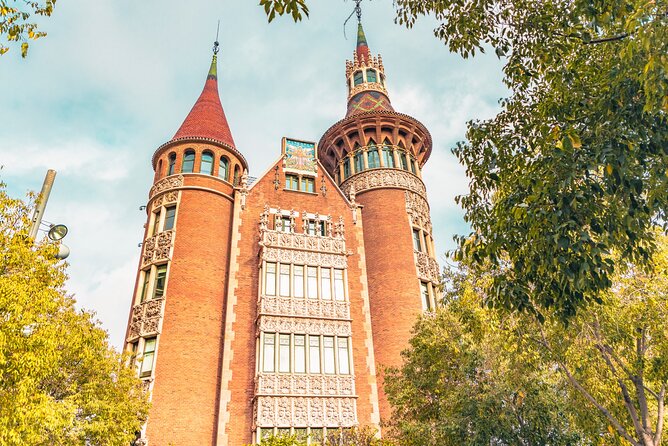
Casa Amatller is the first stop, and it is a strong opener because it sets the tone for the whole hunt. When you arrive, you will use hints to confirm you are at the right place, then you will face tasks that require close observation. Since many answers are hidden in signs, pictures, or other visual details, this stop rewards patience.
For me, this is where the concept really clicks. Without an interactive prompt, Modernist buildings can blur together fast. Here, you are nudged to notice specific things, then you are asked to connect those details to an answer. That turns passive viewing into a mini investigation, the kind that keeps kids and teens from tuning out.
A practical consideration: if you are traveling with younger kids, plan for small breaks. The game flow encourages you to read and search, and that is easier when everyone has time to catch up. The good news is that the tour is not limited in time, so you can keep the energy positive and avoid that “we must finish” stress.
Casa Batlló: Riddles That Make the Facade Feel Personal
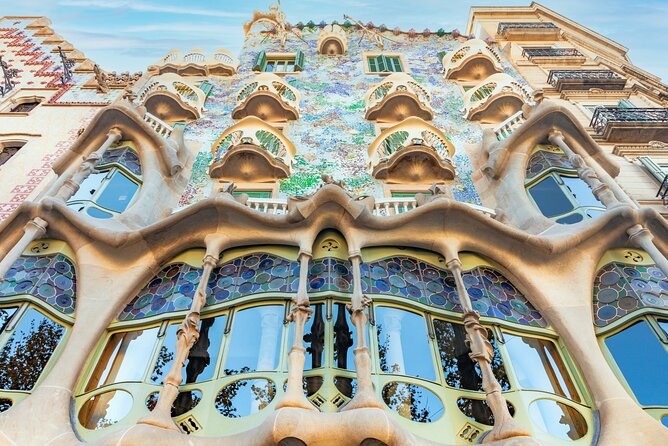
Next up is Casa Batlló, one of the stops that most people recognize even if they do not know the name at first glance. In this game format, recognition is just the start. You are asked questions once you are there, and those questions are tied to what you can see around the building.
This is also where the scoring system helps. Photo tasks and points give you a reason to try again if your first answer or photo idea is not working. It is a low-pressure way to keep the fun going, especially if someone in your group gets stuck on a riddle.
One thing to keep in mind is that the experience is self-guided, meaning nobody is going to walk you through each building step-by-step. The app does the job for you, but your success still depends on you slowing down enough to spot the relevant details.
If you like games that reward attention, you will likely find Casa Batlló to be one of the more satisfying stops. It is a place where the architecture does a lot of the work, and the prompts tell you where to look so you do not miss what makes it special.
Casa Milà (La Pedrera): Learning by Searching for Clues
Casa Milà, also known as La Pedrera, is the third architectural stop. Like the earlier sites, the hunt pushes you to find the right spot, then answer questions using information you can spot on-site. Since the answers are often hidden in signs, pictures, or visual clues, your job becomes interpretation, not just guessing.
This is a great stop for people who love the small stuff. When you have a prompt in front of you, you naturally scan for details you might otherwise walk right past. That is why this format can work even if you are not an architecture “expert.” You do not need background knowledge to participate, because the questions guide you to the information directly where it matters.
The main drawback here is time. Casa Milà can take longer if your group wants to be thorough, especially if you get pulled into the photo challenge portion. That is not a problem in a self-paced format, but it is worth knowing if you plan to connect this tour with another timed activity right after.
If you want to make the most of La Pedrera, give yourselves a little extra breathing room. Let one person focus on finding the clue location, while another checks for the sign or visual hint that leads to the answer.
Monument a Narcís Monturiol: A Nice Break From Pure Facades
Between the big-name Gaudí stops, you reach the Monument a Narcís Monturiol. This is a different kind of pause in the route, and that contrast helps keep the scavenger hunt from turning into a nonstop building parade.
Because the game uses questions and points throughout, you still get an interactive component at this monument. The prompt style shifts the experience from “read the architecture” to “read the object and its context,” which can be a nice refresh if the previous stops started to feel similar.
This stop also matters because it changes the rhythm of your walk. After you have been looking at large architectural forms, monuments tend to bring your attention to a narrower view and a different kind of detail. It can help kids reset and refocus, and it can help adults avoid the fatigue that comes from rushing through multiple major sights.
If you are prone to “photo-only” mode, this is a good checkpoint. Do the question prompt before you zoom in for pictures. The game is designed so the learning is built into the searching process.
One ticket rarely covers it all. Here's what else is nearby.
- Barcelona: Park Güell Admission Ticket★ 4.4 · 76,534 reviews
- Barcelona: Casa Batlló Entry with Self-Audioguide Tour★ 4.7 · 25,359 reviews
- Barcelona: Montjuïc Cable Car Roundtrip Ticket★ 4.5 · 22,368 reviews
- Barcelona: Hola Barcelona Public Transport Travel Card★ 4.5 · 20,985 reviews
- Barcelona: 24 or 48-Hour Hop-On Hop-Off Bus Tour★ 4.4 · 20,872 reviews
- Barcelona: Park Guell Guided Tour with Skip The Line Entry★ 4.7 · 17,563 reviews
La Sagrada Família: The Big Finish With On-Site Answers
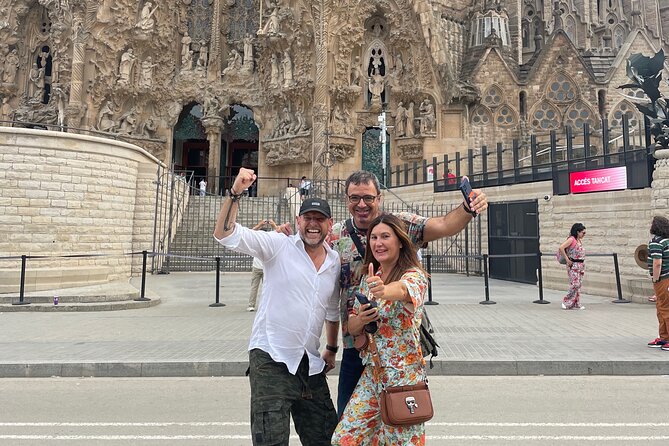
La Sagrada Família is the fifth stop, and it is naturally one of the most exciting points to arrive at during the hunt. This is the kind of place where people often take photos immediately. The game nudges you to do something slightly different first: answer questions tied to what you can find around the site.
Because many answers are hidden in signs, pictures, or other visual elements, you will likely end up spending a bit more time looking around the main view area instead of only snapping from one angle. That changes your relationship with the sight. You start to notice information you would otherwise skip.
If you are traveling with kids, this is also a good place to lean on the game’s structure. Questions give them tasks, and photo prompts give them a creative outlet. One review specifically highlighted how the scavenger hunt kept teenagers engaged at ages 13 and 16, which is exactly the scenario where a predictable game format helps.
The only real consideration at the end is energy. By the time you reach Sagrada Família, you have already been walking between major landmarks. If you want the best experience, keep your group hydrated and ready to slow down for the final set of tasks, since the best answers come from observation, not speed.
Price and Value for a Two-Hour Modernist Hunt

At $10.58 per person for an experience that runs about 2 hours (on average 1 to 2 hours), this tour is priced for accessibility. The value is not that it replaces big attraction tickets. It is that it replaces the “I’m looking, but I’m not really learning” feeling.
What you are paying for is the guided structure without the guided speech. The app does the work of telling you where to go, what to search for, and how to turn a façade into a puzzle. For first-time visitors, that can compress a lot of sightseeing effort into a single easy-to-handle adventure.
It also helps that the game is family-friendly in practice. The tasks include games and riddles, and the experience includes photo challenges. That means you are not stuck doing purely adult-style looking and reading. At this price, that kind of flexibility is hard to beat.
And then there is the “hidden sight” effect. One of the strongest themes from people who recommend this type of scavenger hunt is that it gets you to notice details and spots you might walk past in a normal stroll. If you already know Barcelona a bit, that still works because you get prompted to look where you might not.
Who Should Book This Barcelona Scavenger Hunt
I think this tour fits best if you want a fun, interactive way to explore Barcelona’s Modernist District without committing to a fixed tour schedule. It is especially good if you:
- are visiting Barcelona for the first time and want a structured introduction to the Modernist area
- want something that keeps multiple ages engaged (adults plus kids or teens)
- prefer exploring at your own pace and stopping when you want
It is also a solid choice if you like learning through doing, not through lectures. The questions are designed so answers can be found in signs and visual elements on-site, which is a friendly way to pick up context while you are already seeing the sights.
One group that might find it less satisfying: people who want a fully guided narrative with deep historical explanations at every stop. This experience is about prompts and on-site discovery, not a continuous spoken guide.
Finally, if you are the kind of traveler who enjoys a scavenger hunt format in other cities, Barcelona is a great match. You get high-recognition architecture plus a playful challenge structure that turns the walk itself into the activity.
Should You Book This One?
If you want a low-cost, self-paced way to turn Casa Amatller, Casa Batlló, Casa Milà, and La Sagrada Família into something you actively notice, I’d book it. The smartphone clue approach is easy, the route is compact enough for a half to two-hour window, and the game format is built to keep groups entertained.
Skip it only if you strongly prefer a traditional guided tour with an expert speaking at every stop. Otherwise, this is a smart way to get more out of your walking time and leave Barcelona feeling like you actually saw the details.
FAQ
Is this tour self-guided?
Yes. You explore the route on foot at your own pace. The app delivers the clues and tasks while you move from stop to stop.
How long does the Barcelona hunt take?
It lasts about 1 to 2 hours on average, with the overall duration listed as approximately 2 hours.
What language is it offered in?
It is offered in English.
Where does the scavenger hunt start and end?
It starts at Pg. de Gràcia, 35, L’Eixample, 08007 Barcelona, Spain and ends back at the same meeting point.
Do I need to bring anything to play?
No. Clues are delivered to your smartphone, so you do not need to carry anything else.
How do I access the game after booking?
After you purchase the ticket, you receive an access code to use in the app. You then download the app, go to the starting point, and begin.
Can I take breaks during the tour?
Yes. The experience is not limited in time, so you can explore at your own pace and take breaks.
Which sights are included on the route?
The route includes Casa Amatller, Casa Batlló, Casa Milà (La Pedrera), the Monument a Narcís Monturiol, and La Sagrada Família.
Is there free cancellation?
Yes, free cancellation is available. You can cancel up to 24 hours in advance for a full refund.
The latest to open for booking





Scavanger Hunts Tours, side by side.
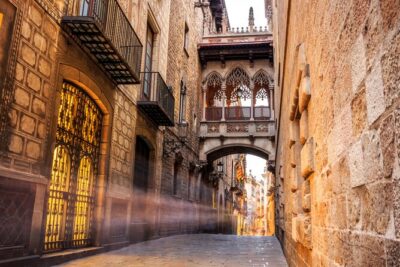
Barcelona Gothic Quarter Scavenger Hunt and City Highlights Walking Tour
Read our review →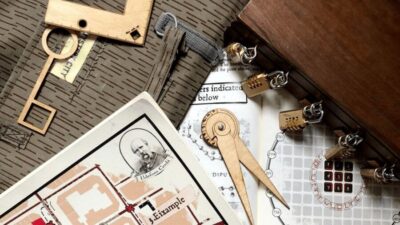
“The Secret of Cerdà” Treasure Hunt Walking Tour
Read our review →
The Search for the Snake Stone City Treasure Hunt
Read our review →
Private Family Treasure Hunt | Guided, fun & 100% Offline | Xventura Barcelona
Read our review →
Private Treasure Hunt The Explorer | Guided, fun & 100% Offline | Xventura
Read our review →Where else this one turns up