
Reviewed · HOP-ON HOP-OFF BUS TICKETS
Barcelona Sightseeing Hop-On Hop-Off Bus Tour
Hop on, plan less, see more Barcelona. This is one of the easiest ways to get your bearings fast in a big city, with an unlimited hop-on hop-off ticket and two routes that cover major sights like Gaudí’s Casa Batlló, Camp Nou area highlights, and the harbor. I also like the double-decker format for high, quick views without having to line up for every stop, though there are a couple of practical hiccups to watch for, like audio that can fall out of sync with the landmarks and a bus that may run hot in the back.
You can use the pass for roughly 4 hours to 2 days, starting at 9:00 am, so you can do a quick first sweep or spread it over two calmer days. Each listed stop is timed at about 10 minutes, which works best when you hop off, take a few photos, orient yourself, and decide what needs a longer return.
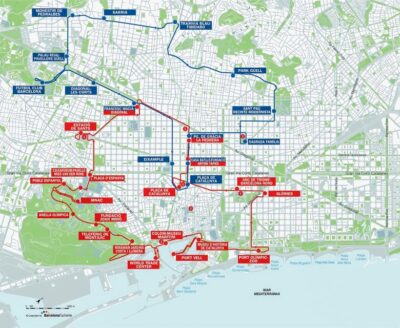
The tour is built around two route flavors. The West Route (Orange Line) leans toward FC Barcelona’s Camp Nou area and major art stops like MNAC, while the East Route (Green Line) threads through Gaudí territory and keeps sliding you toward the Mediterranean side of town.
In This Review
- Key points to know before you ride
- How the hop-on hop-off bus fits real travel time
- The West Route (Orange Line): Camp Nou area, MNAC, and art breaks
- The East Route (Green Line): Gaudí icons and the push toward the sea
- Where the tour starts: Plaça de Catalunya and the easiest way to orient
- A quick modernist run: Casa Batlló, Passeig de Gràcia, and the surrounding streets
- Plaça d’Espanya: the gateway feeling toward Montjuïc and big squares
- CaixaForum and Poble Espanyol: an indoor break and a fun detour
- MNAC and the art question: what to do with 10 minutes
- Joan Miró Foundation and a cable car idea for better views
- Port Vell stops: World Trade Center and Sant Miquel del Port
- Port Olímpic and the end-of-day feel near the marina
- The final watery break: Parc de la Ciutadella area and Cascada Monumental
- On board experience: audio in 16 languages, headphones, and deck views
- Price and value: is $60 a smart buy?
- Should you book this hop-on hop-off bus tour in Barcelona?
- FAQ
- How much does the Barcelona Sightseeing Hop-On Hop-Off Bus Tour cost?
- What time does the tour start?
- How long can I use the ticket?
- Does the ticket let me hop on and off more than once?
- What routes are included in the ticket?
- Is there an audio guide on the bus?
- How long are the stops on the route?
- Is the bus suitable for most travelers?
- Is there free cancellation?
Key points to know before you ride
- Two routes, one ticket: Orange Line and Green Line both feed into your day without paying again.
- Audio in 16 languages with headphones: You get guided commentary as you ride, not just at stops.
- Short 10-minute stop windows: Great for orientation, not for museum marathons.
- Double-decker viewpoints: You can scan streets, plazas, and coastline without getting lost.
- Watch for audio timing and heat: The stop display and narration can be glitchy, and the back of at least one bus can feel warm.
- Switching lines is easy: You’re not locked into one direction the whole day.
How the hop-on hop-off bus fits real travel time
Barcelona can feel like a choose-your-own-adventure city, but public transit planning can steal energy from the fun. This bus tour is designed to remove that friction, because you pay once and then you decide when to get off and how long to stay in each area.
The big value here is the flexibility of an unlimited pass over 4 hours to 2 days. If you’re the type who wants to see a lot up front, ride the loop once, and then come back on foot to anything that grabs you, this is a smart structure.
One practical note: because the listed stops are around 10 minutes, you should treat this as a fast city sampler. If a place you love is a museum, you may need to plan a return on another day or earlier in your trip.
The West Route (Orange Line): Camp Nou area, MNAC, and art breaks
The Orange Line is where the tour turns toward Barcelona’s western highlights and major museums. It’s the route I’d pick when you want a mix of architecture, big museum names, and viewpoints.
A key stop is Plaça d’Espanya, which sits near the Montjuïc area and is known for grand fountains and the Venetian Towers. This is a good jumping-off point if you want an easy transition toward Montjuïc sights later, because it helps you avoid the guesswork of how to get there from the center.
From there, the route hits CaixaForum, a cultural center housed in a striking modernist former textile factory. If your schedule includes a hot afternoon or you want a calmer indoor block, this is the kind of stop that can give you a breather without burning a ticket window.
Next up is Poble Espanyol, an open-air museum built for the 1929 World’s Fair that recreates traditional Spanish architecture with artisan workshops. It’s an unusual stop for a bus line, and that makes it worth a quick walk-through if you like architecture, crafts, and atmosphere more than a single landmark photo.
Then comes the heavyweight, Museu Nacional d’Art de Catalunya (MNAC), in the Palau Nacional. This is one of the big art stops on the list, with Catalan-focused collections including Romanesque murals and Gothic works, so even if you do not go inside, the area signals you’re in a different “museum quarter” of Barcelona.
The Orange Line also aligns well with the feel of El Born nearby (mentioned as part of the West route idea), so if you hop off and later return by foot or on another ride, you’ll already understand where you are.
Get off wherever catches your eye
- Barcelona: 24 or 48-Hour Hop-On Hop-Off Bus Tour
★ 4.4 · 20,872 reviews - Barcelona: City Sightseeing Hop-On Hop-Off Bus Tour
★ 4.4 · 10,061 reviews - City Sightseeing Barcelona Hop-On Hop-Off Bus Tour: 24 or 48-Hour
★ 4.0 · 5,250 reviews
The East Route (Green Line): Gaudí icons and the push toward the sea
The Green Line is built for people who want Barcelona’s most famous creative energy as soon as possible. It starts right in the center and threads through the kind of streets that make you stop and look up.
Your anchor point early on is Casa Batlló, one of Antoni Gaudí’s modernist masterpieces and a UNESCO World Heritage Site. Even if you only admire the façade from outside, the colorful mosaic style and organic shapes make it a perfect “first wow” stop before you wander elsewhere.
From there, you roll along Passeig de Gràcia, Barcelona’s premier boulevard, known for luxury boutiques and a run of iconic modernist buildings. The stop is especially useful because it gives you a clean way to understand the concentration of Gaudí-style architecture in one corridor, including neighbors like La Pedrera.
Another central waypoint on the same overall area is Plaça Francesc Macià, dedicated to the Catalan leader Francesc Macià. It also functions as a busy intersection with shops and modern buildings, so it can be a handy place to hop out, refuel, and then choose your next direction.
Finally, this route’s logic moves you toward the waterfront side of the city, so when you finish the Gaudí-focused portion, you can pivot toward harbor views and maritime neighborhoods without chaining multiple rides.
Where the tour starts: Plaça de Catalunya and the easiest way to orient
Plaça de Catalunya is the starting pulse of many visitors’ days, and this tour uses it smartly as the first stop. It’s described as a central square with grand fountains and major street connections like La Rambla and Passeig de Gràcia, which is exactly what you want when you first arrive.
Think of this as your orientation platform. Grab a coffee nearby, look at street signs, and use this point to decide whether you want a Gaudí-heavy day (Green Line) or a museum and western highlights day (Orange Line).
A quick modernist run: Casa Batlló, Passeig de Gràcia, and the surrounding streets
If you like architecture, the early stops are the payoff. Casa Batlló is not just a building you pass by, it’s a color-and-shape moment that helps you understand why Gaudí still controls the conversation in Barcelona.
Passeig de Gràcia is also a practical stop, because it links you to what you actually want to walk. If you hop off here for those 10 minutes, you can scan the facades and decide whether you want to spend more time on one of the big names on the boulevard.
One caution: those stops are short. If you have your heart set on entering a specific site, use the bus ride to set your route and come back with more time, rather than trying to cram it into the stop window.
Plaça d’Espanya: the gateway feeling toward Montjuïc and big squares
Plaça d’Espanya is the kind of place that makes you feel you’re heading somewhere significant. With its fountains, Venetian Towers, and close connection to Montjuïc and the Magic Fountain area, it plays a “gateway” role for the route.
This is also one of the stops where a short walk can do a lot of work. Even with limited time, you can get a strong sense of scale and direction, then use that confidence to plan the next leg on foot or with public transit.
One ticket rarely covers it all. Here's what else is nearby.
- Barcelona: Sagrada Familia Entry Ticket with Audio Guide★ 4.6 · 105,312 reviews
- Barcelona: Park Güell Admission Ticket★ 4.4 · 76,534 reviews
- Barcelona: Casa Batlló Entry with Self-Audioguide Tour★ 4.7 · 25,359 reviews
- Barcelona: Montjuïc Cable Car Roundtrip Ticket★ 4.5 · 22,368 reviews
- Barcelona: Hola Barcelona Public Transport Travel Card★ 4.5 · 20,985 reviews
- Barcelona: Park Guell Guided Tour with Skip The Line Entry★ 4.7 · 17,563 reviews
CaixaForum and Poble Espanyol: an indoor break and a fun detour
If your ideal day has one classic museum plus one weird, memorable stop, you’ll probably enjoy this pair. CaixaForum gives you a cultural center inside a former textile factory, and that industrial modernist shell is part of the experience even when you’re not focused on a single exhibit.
Then Poble Espanyol offers something different: an open-air recreation of Spanish architectural styles with artisan workshops. It’s a practical choice when you want your bus day to include something human-scaled and walkable, not just big city monuments.
For the best use of your time, step off with a simple plan. Look first, then decide if you need a longer stop, because the listed 10 minutes are ideal for orienting and selecting.
MNAC and the art question: what to do with 10 minutes
MNAC is one of those names you can’t ignore if you’re into art. The museum’s collections are described as spanning Romanesque murals and Gothic masterpieces, all housed in the Palau Nacional.
With only 10 minutes at the stop, you’ll likely focus on the setting and the route around the building, not a full ticketed museum visit. That said, even a quick pass can help you decide if MNAC should move to the top of your list later.
If you do want to enter, I’d treat this bus as your “get there and check the area” tool. Then schedule your museum time separately when you have room to linger.
Joan Miró Foundation and a cable car idea for better views
On the East side of the cultural map is the Fundació Joan Miró near Plaça de Neptú. It’s dedicated to Joan Miró with displays that include paintings, sculptures, and drawings, which makes it a strong target if you want modern Catalan creativity.
If you’d rather swap one museum stop for a view stop, the Port Cable Car Barcelona can be a smart add-on. The cable car runs from the port area toward Montjuïc, and the point is the panorama, with views of the Mediterranean, the city, and major landmarks.
This is also the kind of stop that can reset your energy. A short ride can make the rest of your walking feel easier, especially when the day starts to heat up.
Port Vell stops: World Trade Center and Sant Miquel del Port
The tour doesn’t just drop you near the beach, it places you in the working-port mood of Port Vell. World Trade Center Barcelona is listed as a sleek modern complex with views over the harbor, so it’s a useful “change of scenery” stop after the museums and façades.
Nearby is Parroquia de Sant Miquel del Port, a church that adds a historic anchor to the waterfront area. Even if your main goal is views, pairing a religious landmark with modern harbor architecture helps you understand how layered the city is.
Port Olímpic and the end-of-day feel near the marina
Port Olímpic is described as a marina area built for the 1992 Olympics, known for modern architecture, a lively restaurant and bar scene, and beaches nearby. It’s a strong finish location because it’s easy to walk around and you’re close to where people naturally linger.
If you’ve been jumping between stops all day, this can be the spot to slow down. Use your bus time to reach it, then shift into “stroll mode” so your day doesn’t feel like a checklist.
The final watery break: Parc de la Ciutadella area and Cascada Monumental
The last stop on the list points you toward the Parc de la Ciutadella area, including the Cascada Monumental and a lake with rowboats. That’s an excellent way to balance your sightseeing, because it gives you green space and a classic Barcelona park scene at the end of a bus day.
The name on the stop list is a little mixed, but the key takeaway is the park features: you get a big water-focused landmark and a calm setting where the city feels less frantic.
This stop works especially well on days when your schedule includes art stops. You can end with open air and photos that do not look like every other street shot in Barcelona.
On board experience: audio in 16 languages, headphones, and deck views
The ride itself is part of the value. The tour includes travel maps and an informative audio guide in 16 languages with headphones, which helps you turn transit time into guided time.
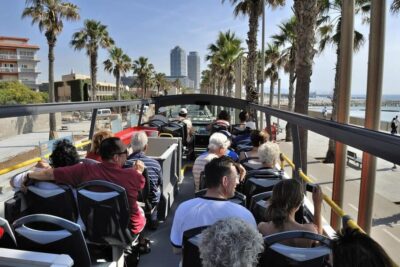
The most important tip is to sit where you can see clearly. On a double-decker bus, the upper deck tends to give the best line of sight for spotting landmarks as the route moves, and the clean, accessible design mentioned in feedback suggests it’s generally comfortable for getting around.
Now the downside, and it matters: the audio can be out of sync with the landmarks, and the stop display with GPS-style information can be unreliable. Don’t let that derail you. Use your eyes first, watch for stop names on signage when you get close, and keep your map handy as a backup.
If you’re traveling in hot weather, keep your comfort in mind too. Feedback includes a note that one bus may not have AC in the back, which can make late-morning or afternoon rides feel unpleasant. If you get a choice of seats, favor the cooler area of the bus and plan for water.
Price and value: is $60 a smart buy?
At $60 per person, the question is not whether you get a nice ride, you do. The question is whether the structure saves you time and stress compared to planning transit and timing.
This ticket usually makes sense if you want:
- Big coverage fast, like Gaudí landmarks plus major museums plus the port area
- A day plan that you can adjust mid-stream
- A low-effort way to reach different neighborhoods without getting stuck in navigation mode
It may not be the best deal if you already have your Barcelona plan locked into a few close-together sites. In that case, you might spend less by using public transit directly and putting that $60 toward a museum you truly want to enter.
Also, the list shows many stops with free admission labels, but the tour is clearly focused on the bus ride plus audio and maps. If you’re planning to enter major attractions, budget for separate entry fees where needed, because admissions are not listed as included.
Should you book this hop-on hop-off bus tour in Barcelona?
I think this is a good booking when you’re trying to do Barcelona efficiently without feeling trapped by transit schedules. It’s especially strong as a first-timer strategy because it connects Gaudí-centered streets, major art stops, and the port in one ticket.
If you’re sensitive to heat, prefer the “best seat” approach, and expect that audio timing may not be perfect. If you handle that with a simple plan, like watching the street scenes and using your map as a backstop, the flexibility makes the $60 feel fair.
FAQ
How much does the Barcelona Sightseeing Hop-On Hop-Off Bus Tour cost?
The price is $60.00 per person.
What time does the tour start?
The start time listed is 9:00 am.
How long can I use the ticket?
The duration is listed as approximately 4 hours to 2 days.
Does the ticket let me hop on and off more than once?
Yes. The pass is described as an unlimited hop-on-hop-off ticket.
What routes are included in the ticket?
You get access to 2 bus routes: the West Route (Orange Line) and the East Route (Green Line).
Is there an audio guide on the bus?
Yes. The tour includes an informative audio guide commentary in 16 languages, plus headphones.
How long are the stops on the route?
The itinerary shows about 10 minutes at each stop.
Is the bus suitable for most travelers?
The additional info says most travelers can participate, and one piece of feedback highlights that the bus is clean and accessible.
Is there free cancellation?
Yes. You can cancel up to 24 hours in advance for a full refund.
The latest to open for booking


Hop-On Hop-Off Bus Tickets, side by side.

City Sightseeing Barcelona Hop-On Hop-Off Bus Tour: 24 or 48-Hour
Read our review →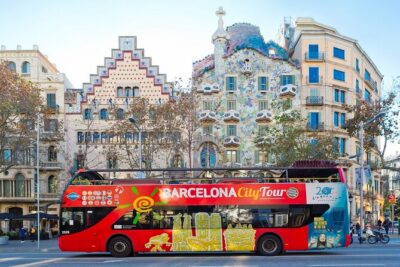
Barcelona City Tour Hop-On Hop-Off with Optional Boat
Read our review →
Shore Excursion: Barcelona City Tour Hop-On Hop-Off
Read our review →

Where else this one turns up