
Reviewed · GOTHIC QUARTER WALKS
Gothic and Born District Photographic Workshop
Barcelona asks for a camera. This small-group photo workshop turns the Gothic Quarter and El Born into a practical set of picture prompts, with smartphone-friendly guidance and free admission listed for the main stops.
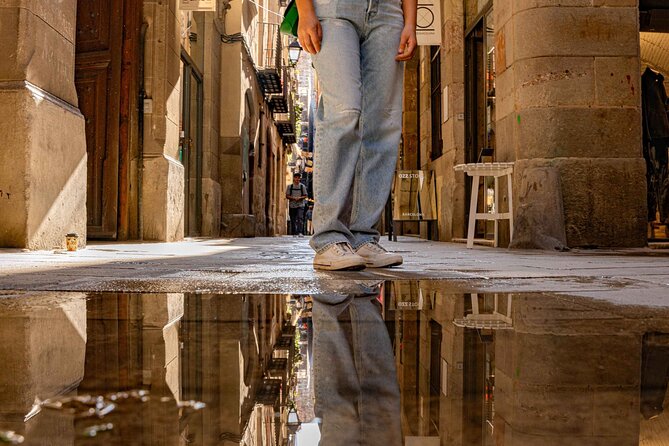
I like how the route is built around specific places you can photograph fast, including the sweeping angles at Barcelona Cathedral and the built-in framing opportunities around Pont del Bisbe. I also appreciate that it feels designed for real skill levels, not just experts: you get tips for beginners and also useful composition ideas if you already shoot.
The main thing to watch is the pace. It is about 2 hours, so you will walk through narrow streets and land at each spot for a short session, which can feel quick if you want long stays.
In This Review
- Key things I’d focus on before you go
- Gothic Quarter and El Born: Why these streets are a photo magnet
- Price and value for a 2-hour photography plan ($59.28)
- Meeting point and timing: start at Av del Portal de l’Àngel
- Stop 1, Barcelona Cathedral: photographing grand lines without getting stuck
- Stop 2, Pont del Bisbe: a bridge made for perspective games
- Stop 3, Plaça Sant Felip Neri: architectural secrets at a human scale
- Stops 4 and 5, Plaça de Sant Jaume and Plaça del Rei: square photos with political geometry
- Stop 6, El Born and La Ribera: end with street-level storytelling
- What the guide actually gives you: photo tips you can use right away
- How to prepare: smartphone setup and comfort for short stops
- Photo printing is optional, but plan if you want it
- Who this Barcelona photo workshop is best for
- FAQ
- FAQ
- How long is the Gothic and Born District Photographic Workshop?
- What does the workshop cost?
- Is the workshop offered in English?
- Where do I meet the group?
- Where does the workshop end?
- What is the maximum group size?
- Is there a mobile ticket?
- Are admissions included for the main stops?
- Can I take photos with just my smartphone?
- Is photo printing available?
- Is free cancellation available?
- Should you book this Barcelona workshop?
Key things I’d focus on before you go
- A tight 2-hour loop that hits the Gothic Quarter classics plus El Born, without wasting time
- Free admission listed for the first five photo stops, so you can focus on photos
- Pont del Bisbe framing practice, great for perspective tricks and reflections
- Square-to-street transitions, from Plaça de Sant Jaume to El Born’s small lanes
- Small group size (max 12), which makes questions easier and feedback more personal
- Optional photo printing (€5) if you want a quick souvenir in hand
Gothic Quarter and El Born: Why these streets are a photo magnet
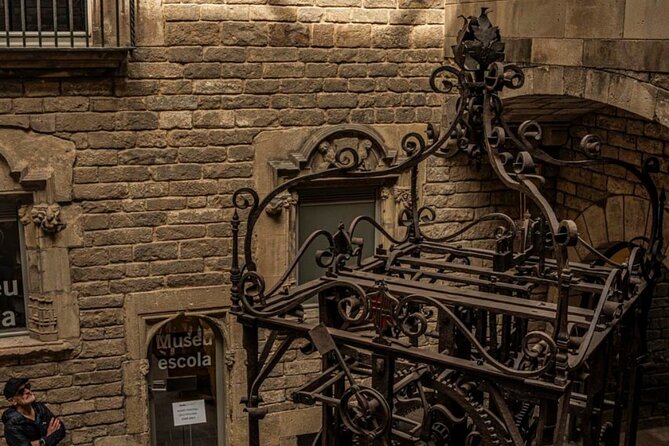
Barcelona’s older quarters are basically a photographer’s playground. The stonework, the tight passages, and the way light hits arches and doorways make it easy to build pictures with strong lines and clear focal points.
What I like about this workshop is that it does not treat the Gothic Quarter and El Born like a sightseeing checklist. It helps you look with intent. Instead of wandering aimlessly, you follow short, mission-style stops where you practice composition right where the architecture supports it.
You also end near Mercat del Born, which is convenient. You finish with options to keep exploring on your own, grab a snack, or head back toward your next plan without feeling like you’re stuck far from transit.
Price and value for a 2-hour photography plan ($59.28)
At $59.28 per person for about 2 hours, the value here comes from two things you cannot easily DIY: a guide who gives photo feedback on the spot, and a route that focuses your time. You are not paying for an all-day wandering tour, you are paying for concentrated practice.
The other value boost is what the workshop info shows for the first part of the walk: admission ticket free at the key photo stops (Barcelona Cathedral, Pont del Bisbe, and the main squares listed). That matters because it reduces friction. You spend less time figuring out entry logistics and more time getting the shot angles you came for.
One small note on cost creep: an extra option for photo printing is available for €5. If you want it, budget for it, but you can also skip it and just take your photos home digitally.
Get lost in the medieval lanes
- Barcelona all included: Sagrada, Park Güell, Montjuic & Gothic
★ 5.0 · 2,169 reviews - Barcelona Gothic Quarter Tapas & Taverns Food & Wine Tour
★ 5.0 · 1,470 reviews - Barcelona: Old Town and Gothic Quarter Walking Tour
★ 4.8 · 1,393 reviews
Meeting point and timing: start at Av del Portal de l’Àngel
The start is at Av del Portal de l’Àngel, 8 (Ciutat Vella), with the workshop starting at 10:30 am. The end is at Mercat del Born, Plaça Comercial, 12 (Ciutat Vella). That end point is smart, because it puts you in a lively area where you can extend your walk after the workshop ends.
The tour is offered in English, and it runs as a maximum 12-person group. That size is a big deal for a photo workshop. In smaller groups, you are less likely to feel lost in the crowd, and it is easier to ask practical questions about settings, framing, or how to handle tricky lighting.
It also says you are near public transportation. Even if you arrive a bit early, you can usually get yourself sorted without stress.
Stop 1, Barcelona Cathedral: photographing grand lines without getting stuck
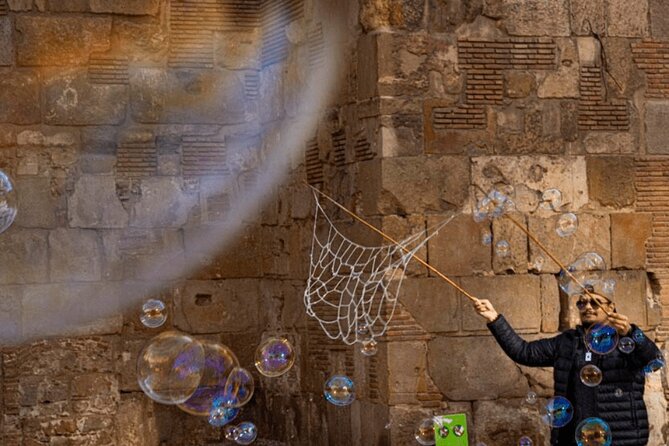
Barcelona Cathedral is all about scale and geometry. Even if you only have a smartphone, you can learn a lot by focusing on straight lines, strong corners, and how the facade changes as you move a few steps left or right.
In your first short stop, the goal is usually not to get one perfect photo. It is to build a small set of images with different framing choices. Try wide angles for the big architecture, then step in mentally for tighter compositions, like doorways, arches, or repeating stone patterns.
The workshop lists the admission ticket for this stop as free, which is helpful. You are not wasting time paying or searching for an entry route while you are trying to practice your angles.
A practical consideration: cathedrals can bring crowds around key viewpoints. If you have patience, you will still get good shots by taking your time with composition rather than chasing the exact same angle as everyone else.
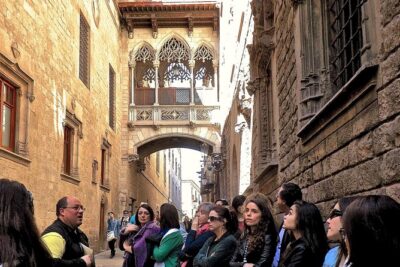
Stop 2, Pont del Bisbe: a bridge made for perspective games
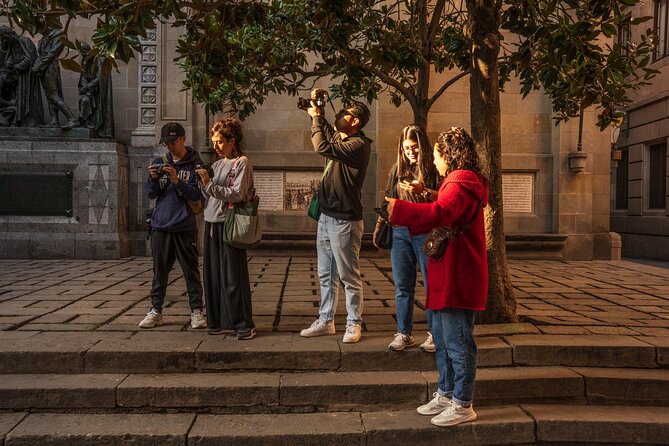
Pont del Bisbe is where you can practice one of the most satisfying photo skills in the city: perspective control. Bridges naturally offer you leading lines, built-in depth, and options to include both the structure and the surrounding environment.
This stop is great for a couple of reasons. First, it is a natural framing tool. Second, you can experiment by changing your position: a small shift of your stance can change the entire composition, especially if you are including parts of the streets, arches, or the water-related setting nearby.
The workshop lists admission ticket free here as well, so you can treat this stop like an open photo lab. Use the time to capture variations, not just one photo and done.
If you are working with a smartphone, focus on stabilizing your shots. Bridges often mean uneven surfaces and sudden foot movement. A steady stance helps a lot.
Stop 3, Plaça Sant Felip Neri: architectural secrets at a human scale
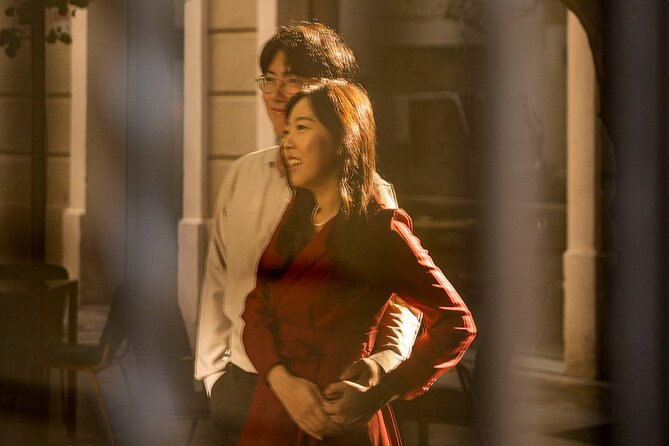
Plaça Sant Felip Neri is the kind of place that rewards slowing down. Instead of only going for the biggest view, you practice close-to-medium framing: stone details, small architectural relationships, and the way the square layout creates natural borders for your photo.
This is also where the workshop explicitly nudges you toward smartphone photography. If you’ve been getting good shots but feel like your photos look flat, this stop helps you correct that by focusing on lines, edges, and layers in a smaller space.
One reason I like this stop for mixed skill levels is that you can make it simple or complex. Beginners can keep it straightforward: one subject, one frame, clean lines. More advanced photographers can look for patterns, symmetry, and repeating elements.
The main drawback is time. You get a short window, so come ready with a couple of shot ideas. For example, decide before you arrive if you are going to shoot straight-on, at an angle, or with a doorway-like foreground element.
Other things to see around Barcelona
- Barcelona E-Bike Photography Tour★ 5.0 · 843 reviews
- Barcelona: Sunrise Paddleboarding with Instructor and Photos★ 4.9 · 782 reviews
- Barcelona: Paddleboarding at Sunrise. Includes: instructor, photos, equipment★ 4.7 · 570 reviews
- Costa Brava: Kayak, Snorkel, Photos, Lunch, Beach & Cliff Jump!★ 5.0 · 508 reviews
- Barcelona: Instagram Tour of the Most Scenic Spots★ 4.9 · 332 reviews
- Barcelona: Photo Shoot + Exclusive Video of the Best Moments★ 4.9 · 256 reviews
Stops 4 and 5, Plaça de Sant Jaume and Plaça del Rei: square photos with political geometry
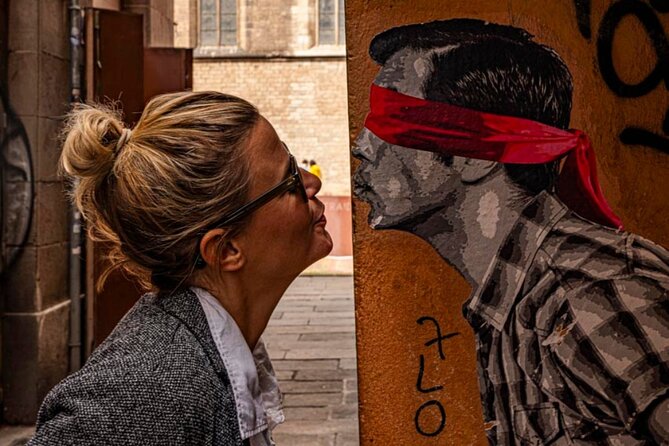
Two more squares follow, and they are useful because squares teach you a different kind of composition than streets. You are dealing with open space, strong building edges, and lots of lines pointing toward a center or key facade.
Plaça de Sant Jaume is a classic setting for practicing how to balance architecture with the space around it. You can frame buildings like subjects, but you also need to pay attention to how the square itself affects the photo. If you place the horizon or main building edge incorrectly, the image can feel off even if the subject is sharp.
Then Plaça del Rei is where you can build unique postcards. The workshop uses this stop as a picture-making moment, which is a smart use of time. It pushes you to produce an image you would actually want to share, print, or keep as a travel memory.
Since both stops are listed as admission ticket free, you can stay focused on composition. Just remember that squares can have people moving through. Use that by planning quick shots, rather than waiting for empty space forever.
Stop 6, El Born and La Ribera: end with street-level storytelling
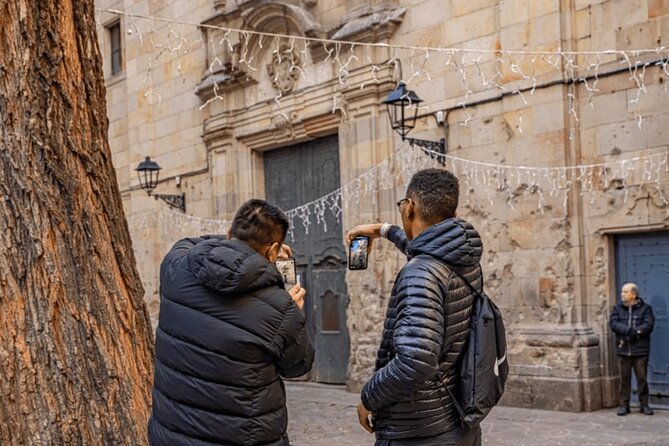
El Born and La Ribera are where Barcelona’s older districts start to feel intimate again. After cathedral angles and squared-off compositions, you shift to a street-level approach where textures and small scenes become part of the story.
This final stop works well because it lets you practice what you learned earlier, but in a more flexible environment. Instead of waiting for a single perfect viewpoint, you can keep your eyes open for doorways, intersections, and framed bits of architecture.
It is also a helpful moment for editing your own photo plan. If you felt stuck earlier, this is where you can regain confidence by repeating a composition style that worked: leading lines, doorway frames, or a layered foreground and background.
The workshop ends at Mercat del Born, which helps a lot if you want to keep exploring afterward. You are finishing in a central area, not at the far edge of nowhere.
What the guide actually gives you: photo tips you can use right away
A good photo workshop is not about fancy gear. It is about teaching you to see, and helping you fix small mistakes as you shoot.
From the way the workshop is described, the guide focuses on practical photography advice tied to each stop. You get tips that fit the location you are standing in, so the lesson feels immediate. That is especially helpful in the Gothic Quarter, where lighting can change fast, shadows can cut across stonework, and narrow streets can make it hard to frame wide shots.
This is also why the tour works for different skill levels. If you are brand new, you get a simple structure: arrive, shoot a few frames, adjust. If you already take photos, you get things to tweak: angle, composition balance, and how to handle the space around your subject.
One more real advantage: with a group capped at 12, the guide can likely help more than just the loudest person. You can ask what you need and get an answer that applies to what you’re pointing your camera at.
How to prepare: smartphone setup and comfort for short stops
This workshop uses practical stop timing, about 20 minutes per main location. That means you should show up ready to shoot quickly. If you need to change settings, do it before you reach the photo spot.
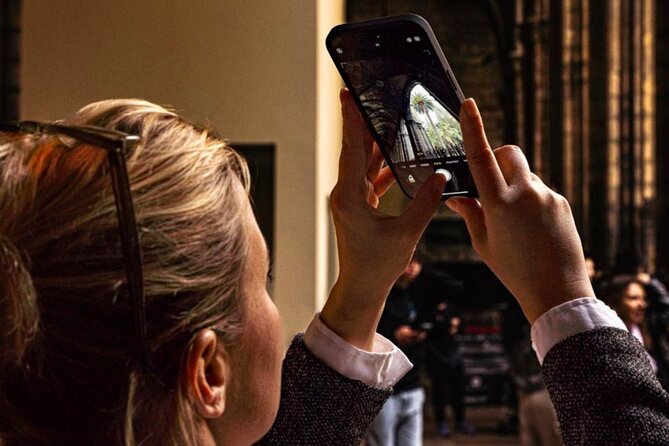
You do not need special instructions in the listing, but you will enjoy it more if your smartphone is ready. Bring a charged battery. Have enough space for photos. If you use a camera app with grid lines or level helpers, turn them on beforehand.
Comfort matters too. The info says you need moderate physical fitness. In practice, that usually means walking on uneven old-stone streets and moving between tight spaces. Wear shoes you trust.
Finally, the workshop uses a mobile ticket. Make sure you can access it on your phone without scrambling. A dead battery on a walking tour is the enemy.
Photo printing is optional, but plan if you want it
If you want something tangible, there is an extra option for photo printing for €5. That can be a fun way to turn your favorite shot into a small takeaway.
Just keep expectations realistic. Printing adds time and cost. If your priority is learning and getting the best photos, you can skip printing and keep everything digital. If your priority is a quick souvenir, you can factor the €5 into your budget.
Who this Barcelona photo workshop is best for
I think this works best if you like two things: great architecture and a structured photo plan. You will also like it if you want the Gothic Quarter and El Born experience without spending the whole day figuring out where to stand.
It is a good match for beginners because the stops give you a clear mission, and the guide offers feedback tied to what you are photographing. It also fits more advanced photographers because the places are complex enough to justify multiple angles and shot variations.
If you prefer long, slow wandering where you can linger for an hour at one facade, this might feel too tight. The schedule is built for movement and learning in short bursts.
FAQ
FAQ
How long is the Gothic and Born District Photographic Workshop?
It runs for about 2 hours.
What does the workshop cost?
The price is $59.28 per person.
Is the workshop offered in English?
Yes, it is offered in English.
Where do I meet the group?
You start at Av del Portal de l’Àngel, 8, Ciutat Vella, Barcelona.
Where does the workshop end?
It ends at Mercat del Born, Plaça Comercial, 12, Ciutat Vella, Barcelona.
What is the maximum group size?
The workshop has a maximum of 12 travelers.
Is there a mobile ticket?
Yes, it includes a mobile ticket.
Are admissions included for the main stops?
The workshop information lists admission tickets as free for the stops at Barcelona Cathedral, Pont del Bisbe, and the listed squares.
Can I take photos with just my smartphone?
The workshop includes a stop with instructions to capture photos with your smartphone.
Is photo printing available?
Yes, photo printing is available for an extra charge of €5.
Is free cancellation available?
Yes, you can cancel for a full refund up to 24 hours in advance of the experience start time.
Should you book this Barcelona workshop?
Book it if you want a compact, guided photo route through the Gothic Quarter and into El Born, with practical tips and a structure that keeps you shooting instead of wandering. The price looks fair for the time, the included guide services, and the way the stop plan uses free admission at multiple photo points.
Skip it if you need long stretches at one spot, or if you dislike moving through narrow streets on a tight schedule. If you’re comfortable with a moderate fitness walking pace and you want photos you can actually use, this is a smart way to get there.
More Workshops in Barcelona


The latest to open for booking
Gothic Quarter Walks, side by side.
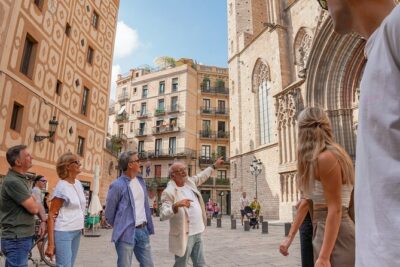
Barcelona all included: Sagrada, Park Güell, Montjuic & Gothic
Read our review →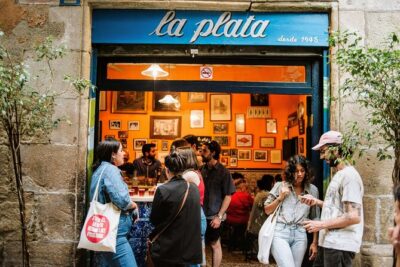
Barcelona Gothic Quarter Tapas & Taverns Food & Wine Tour
Read our review →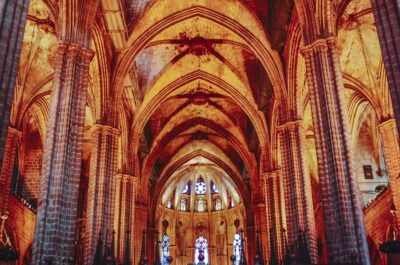
Barcelona Old Town & Gothic Quarter Small Group Tour
Read our review →
Ramblas, Old Town, Gothic and Gaudi Architecture Walking Tour
Read our review →
El Born and Gothic Quarter Wine & Tapas Bar Tour
Read our review →
El Born Food Walking Tour with Tapas and Drinks
Read our review →
Kids and Family Gothic Quarter Walking Tour in Barcelona
Read our review →Where else this one turns up