
Reviewed · GOTHIC QUARTER WALKS
Gothic Quarter & Beyond: Leisurely Local Discoveries
The Gothic Quarter feels bigger when you slow down. This small-group tour connects lesser-seen medieval corners with places that explain how Barcelona layers its past. Two things I especially like: you get lots of chances to ask questions, and there’s a true eat like a local snack moment that keeps the pace friendly. One thing to consider, though, is that the route depends on good weather, so plan to be flexible.
I also like how the stops focus on quieter sites, not just the same postcard boxes. You’ll end up at major highlights like the Palau de la Música Catalana but also several buildings most first-time visitors miss, including Roman leftovers and convent history in unexpected places.
In This Review
- Key highlights worth your attention
- A 3.5-hour Gothic Quarter walk designed for questions
- Centre Cívic Convent de Sant Agustí: a convent reshaped by war and power
- Sant Pere de Puelles: the first Benedictine nuns and the city pushing back
- Capella d’en Marcús: a small chapel tied to travelers and care
- Basilica dels Sants Martirs Just i Pastor: tradition vs. 14th-century reality
- MUHBA Temple d’August: the quiet reminder that Barcelona is over 2,000 years old
- Palau de la Música Catalana: UNESCO music culture, not just architecture
- Museu Frederic Mares: objects collected like a personal archive
- How the route makes sense for value and photos
- Weather, comfort, and who should book this
- Should you book Gothic Quarter & Beyond?
- FAQ
- How long is the tour?
- What language is the tour offered in?
- How many people are in the group?
- Where does the tour start and end?
- Are admissions included for the stops?
- Is the tour outdoors?
- Do I get a mobile ticket?
- Is there free cancellation?
Key highlights worth your attention
- Small-group pace: A maximum of 12 means the guide can answer your questions without rushing you.
- Ticket-free listed stops: The tour’s featured sites are marked as admission free for this visit.
- Snack time built in: You’ll pause for a traditional snack, not just photo stops.
- Convent and chapel stories: You’ll see how religious life shaped the city across centuries.
- Roman meets Gothic: MUHBA’s Temple of Augustus columns are a practical reminder of how old Barcelona really is.
- Photo-friendly, off-main-street views: Several moments are made for pictures that look more local than tour-bus.
A 3.5-hour Gothic Quarter walk designed for questions
This is a 3 hours 30 minutes guided experience that keeps things moving, but not at a sprint. The big advantage is the group size: with up to 12 people, you’re not just receiving a lecture, you’re actually able to ask and clarify.
The tour is offered in English, starts at Carrer del Palau de la Música (Ciutat Vella), and ends at Museu Frederic Mares in Plaça Sant Iu. It’s a format that works well if you want to get your bearings quickly and then keep exploring after.
Value matters here. At $61.54 per person, you are paying for a guide who points out what to look at and why it matters, plus a traditional snack along the way. And because the planned stops are marked as free admission, you avoid the common add-on costs that turn a “cheap tour” into an expensive afternoon.
Also, the tone is relaxed. One review specifically praised a guide named Laura for being clear and easy to follow, and for sharing helpful ideas for lunch and shopping after the tour. That kind of practical guidance makes the whole walk feel like it helps you travel smarter, not just tour harder.
Centre Cívic Convent de Sant Agustí: a convent reshaped by war and power
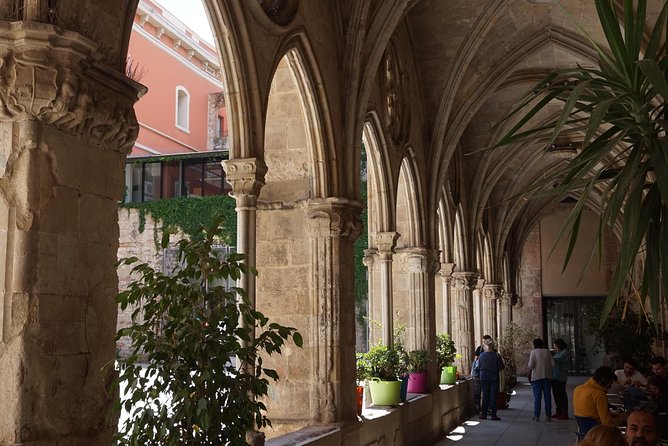
Your first stop is Centre Cívic Convent de Sant Agustí, a site with a timeline that feels like Barcelona in miniature. The Augustinians began building in 1349, but they abandoned that location after construction of the Fortress of the Ciutadella. Later, between 1728 and 1750, they created the new convent and church.
Here’s why this matters for your visit: you aren’t just seeing one era. You’re seeing the city respond to power and conflict, and then repurpose space over time. Today, much of the old convent is used as a civic center and includes the Barcelona Photographic Archive and the Chocolate Museum.
Even better, the original convent isn’t completely gone. The Gothic Convent of San Agustín el Viejo still conserves parts of what came before, including a restored wing of the sanctuary and a lateral section of the church. It’s a good first stop because it teaches you how to read buildings here: layers, changes, and survival.
Potential drawback: because parts of the complex are used for other cultural spaces, your view of some sections may depend on how the site is operating that day. Still, you’ll get enough context to recognize what you’re looking at and why it’s worth your time.
Get lost in the medieval lanes
- Barcelona all included: Sagrada, Park Güell, Montjuic & Gothic
★ 5.0 · 2,169 reviews - Barcelona Gothic Quarter Tapas & Taverns Food & Wine Tour
★ 5.0 · 1,470 reviews - Barcelona: Old Town and Gothic Quarter Walking Tour
★ 4.8 · 1,393 reviews
Sant Pere de Puelles: the first Benedictine nuns and the city pushing back
Next you’ll step into the history of Sant Pere de Puelles, an ancient monastery with roots back to 945 AD. That year it was consecrated, and it became Barcelona’s first convent of Benedictine nuns.
The Romanesque building originally sat outside the city walls, which is a helpful clue for imagining how the area functioned before the modern city swallowed it. Over time, the monastery went through major changes in fortune: attacks by Arab troops, fires, and then the expulsion of the religious community in the 19th century.
The end point is also specific. In 1879, the nuns moved to a permanent site in Sarrià-Sant Gervasi. For you, this stop works as a reality check: cities don’t just grow, they also break, relocate, and rebuild identities.
Time on this stop is short, so come ready to take in the big picture. If you’re the type who enjoys early medieval context, this is one of the stops that will make the rest of the walk easier to understand.
Capella d’en Marcús: a small chapel tied to travelers and care
Capella d’en Marcús is tiny compared to some of the other stops, but it’s loaded with meaning. It was sponsored by Bernat Marcús, who supported construction of a small Romanesque chapel in 1166.
The purpose was practical. It was meant to house travelers, and it also served as a hospital for the poorest people in Barcelona. That mix of care and wayfinding is what makes this place feel human. It’s not only about architecture, it’s about what strangers needed to survive.
And there’s a location detail that really clicks when you’re walking Barcelona: the chapel sits in the right place because it was on the old Roman road that led to France. So even if you only glance at the chapel for a few minutes, the idea of movement through the city sticks with you.
Basilica dels Sants Martirs Just i Pastor: tradition vs. 14th-century reality
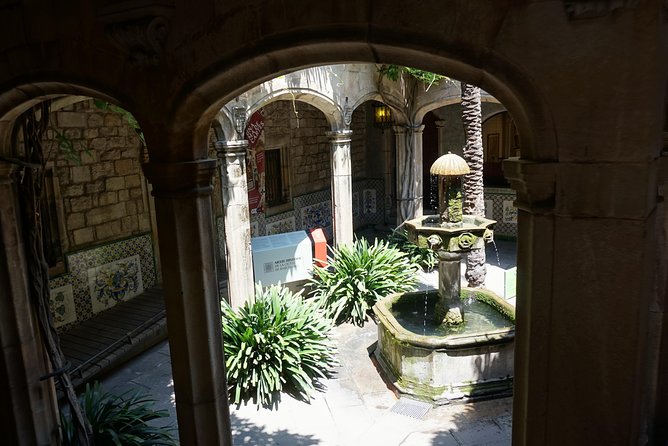
The Basilica dels Sants Martirs Just i Pastor is often described as Barcelona’s oldest church, at least according to tradition. Even if you treat that claim cautiously, the building still delivers what you want from a Gothic Quarter stop: an authentic-looking 14th-century church in a spot most people ignore.
This is exactly the kind of location that changes your experience of the area. Instead of chasing the loudest sights, you get a sense of scale. It’s one of the Gothic Quarter’s most beautiful and least explored spots, which is a nice way of saying it feels calmer and more local in practice.
A drawback to note: because it’s a church, your ability to see everything clearly may depend on daily activity. But the exterior and the surrounding context are still worth it, and the guide’s framing helps you understand why it belongs in this walk.
MUHBA Temple d’August: the quiet reminder that Barcelona is over 2,000 years old
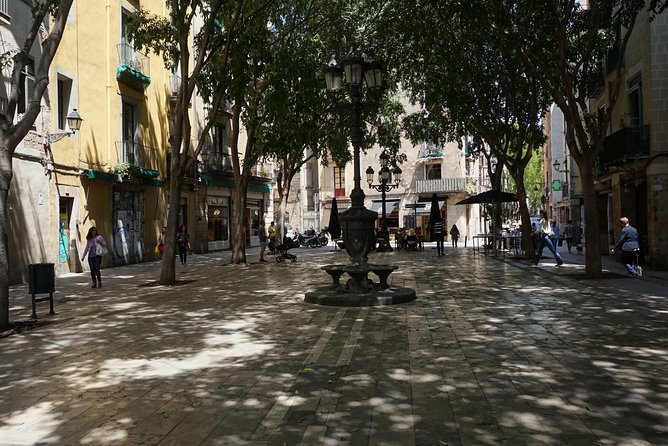
Now you get one of the best “how is this still here?” moments on the route: MUHBA Temple d’August. It’s located on Carrer Paradís, and it feels like a secret only because it’s so easy to miss from the street.
Inside a small medieval courtyard, four columns from the Temple of Augustus have survived. They are more than 2,000 years old, which makes the Gothic Quarter feel even more layered. You’re standing near structures that predate the medieval city by a long margin, and that changes how you interpret everything else you’ve seen.
I like this stop because it’s not just impressive, it’s also educational. It teaches you how older materials and forms can stay in the urban fabric long after the original building is gone.
This stop is also photo-friendly, not because it’s flashy, but because it’s intimate. The courtyard setting makes your pictures look like they belong to Barcelona, not to a postcard template.
One ticket rarely covers it all. Here's what else is nearby.
- Barcelona: Sagrada Familia Entry Ticket with Audio Guide★ 4.6 · 105,312 reviews
- Barcelona: Park Güell Admission Ticket★ 4.4 · 76,534 reviews
- Barcelona: Casa Batlló Entry with Self-Audioguide Tour★ 4.7 · 25,359 reviews
- Barcelona: Montjuïc Cable Car Roundtrip Ticket★ 4.5 · 22,368 reviews
- Barcelona: Hola Barcelona Public Transport Travel Card★ 4.5 · 20,985 reviews
- Barcelona: 24 or 48-Hour Hop-On Hop-Off Bus Tour★ 4.4 · 20,872 reviews
Palau de la Música Catalana: UNESCO music culture, not just architecture
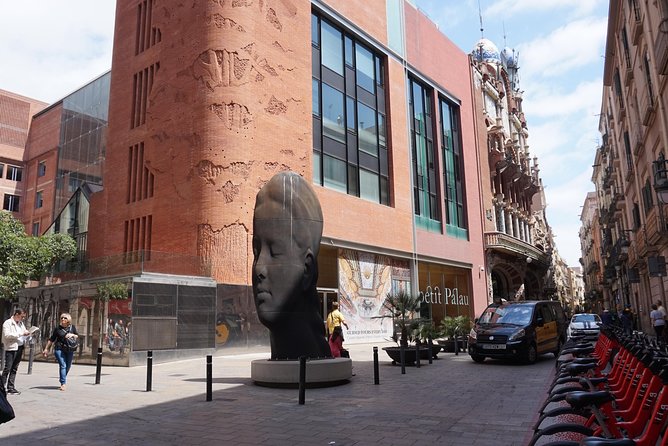
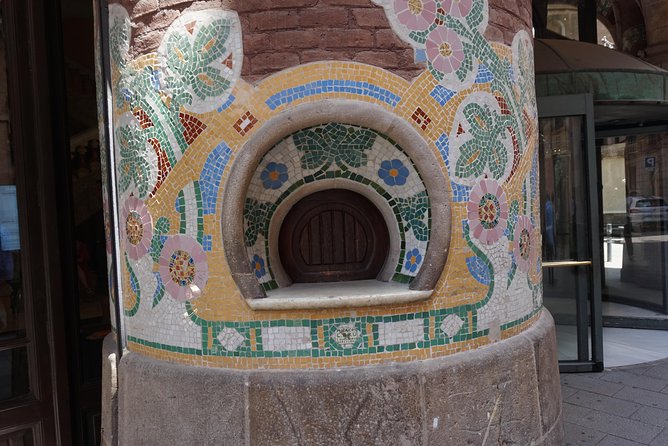
The tour then heads to Palau de la Música Catalana, one of Barcelona’s must-know sites even if you don’t think you’re a “music person.” This concert hall is the only one in the world declared a UNESCO World Heritage Site, according to the tour framing.
What’s useful for you is the story behind the building. It was designed by architect Domènech i Montaner as the home of the Orfeó Català choir. And it wasn’t built as a top-down palace project, it was funded by public donations. That last detail matters. It means people actually supported the cultural space, which gives you more respect for the place when you see it.
This is also one of those stops where the guide’s narration makes a difference. If you only look at the building, you can miss why it’s so important to Catalonia’s architectural and musical heritage. A good guide ties it to the city’s identity, not just the facts.
Museu Frederic Mares: objects collected like a personal archive
Your final major stop is Museu Frederic Marès in the heart of the Gothic Quarter. The museum is partly housed in the former royal palace that once belonged to the Counts of Barcelona, which gives the space extra gravity before you even walk inside.
Frederic Marès collected artworks and objects throughout his life, and the museum holds an extensive collection. This is a museum stop that can feel different from the usual “see masterpieces, move on” routine. Because the collection is personal, you might find pieces you never expected to care about.
Time here is short, so think of it like a curated introduction. If you want a deeper museum session after the tour, this is exactly the sort of place where you can extend your visit on your own because you’ll leave with an interest in what you saw.
How the route makes sense for value and photos
Part of the appeal of this tour is how it balances big names and lesser-visited stops. You’re guaranteed a major highlight with Palau de la Música Catalana, but the rest of the route is built to reward curiosity.
Here’s the value math in plain terms. You’re paying $61.54 for about 3.5 hours, guided explanations in English, and a traditional snack. Add in that the listed sites are ticket-free, and you avoid the common problem where the tour price looks good until you start paying admission five minutes later.
Also, the pacing is set for photos without turning the walk into a selfie line. Several stops are naturally camera-friendly because the architecture and courtyards create strong frames even if you’re not hunting for the most famous monuments.
One more practical perk: you end near Museu Frederic Mares, so it’s easy to keep moving on foot afterward. Many people like that the tour ends in a place that naturally supports a longer browse.
Weather, comfort, and who should book this
The tour requires good weather. If conditions are poor, the experience is offered on a different date or you get a full refund. That’s important because this is not a sit-down experience, it’s a walking day with multiple stops.
Most people can participate, and it’s near public transportation. Service animals are also allowed, which is always good to see when you’re booking.
This tour is a strong fit for:
- First-time visitors who want a Gothic Quarter orientation with real context
- Travelers who like architecture, especially Romanesque and Gothic layers
- People who want fewer crowds and more Q&A time
- Anyone who enjoys finding quiet corners for photos
It’s less ideal if you:
- Want a long museum time at each stop
- Don’t enjoy walking between sites, even if it’s paced for a comfortable experience
- Are booking on a day you absolutely cannot shift due to weather
Should you book Gothic Quarter & Beyond?
I’d book it if you want a guided route that prioritizes under-the-radar stops and leaves you feeling smarter about what you’re seeing. The small group size, the snack break, and the mix of convent history, Roman leftovers, and the UNESCO music hall make the afternoon feel like more than a checklist.
If you’re the type who likes to figure out Barcelona with a guide’s help first, then roam on your own afterward, this is a good choice. The price looks fair for what you get, especially with ticket-free listed admissions included across the planned sites.
FAQ
How long is the tour?
The tour runs about 3 hours 30 minutes.
What language is the tour offered in?
The tour is offered in English.
How many people are in the group?
The tour has a maximum of 12 travelers.
Where does the tour start and end?
It starts at Carrer del Palau de la Música (C/ Palau de la Música, Ciutat Vella, 08003 Barcelona) and ends at Museu Frederic Mares (Plaça Sant Iu, 5, Ciutat Vella, 08002 Barcelona).
Are admissions included for the stops?
The stops listed for the tour are marked as admission ticket free.
Is the tour outdoors?
The experience requires good weather.
Do I get a mobile ticket?
Yes, it uses a mobile ticket.
Is there free cancellation?
Yes, you can cancel for a full refund up to 24 hours before the experience starts.
The latest to open for booking

Gothic Quarter Walks, side by side.
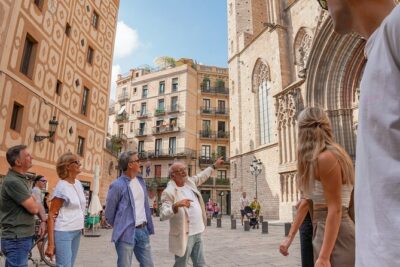
Barcelona all included: Sagrada, Park Güell, Montjuic & Gothic
Read our review →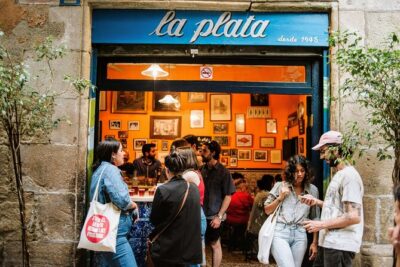
Barcelona Gothic Quarter Tapas & Taverns Food & Wine Tour
Read our review →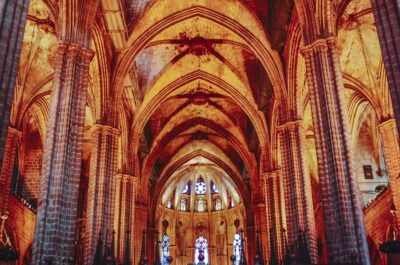
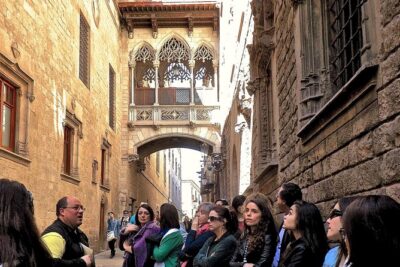
Barcelona Old Town & Gothic Quarter Small Group Tour
Read our review →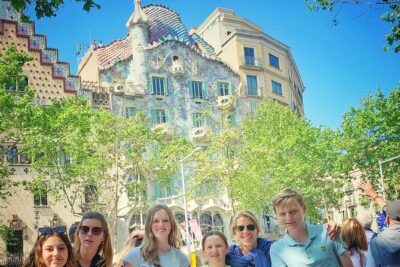
Ramblas, Old Town, Gothic and Gaudi Architecture Walking Tour
Read our review →
El Born and Gothic Quarter Wine & Tapas Bar Tour
Read our review →
El Born Food Walking Tour with Tapas and Drinks
Read our review →
Kids and Family Gothic Quarter Walking Tour in Barcelona
Read our review →Where else this one turns up