
Reviewed · GOTHIC QUARTER WALKS
Gothic Quarter Donation-Based Walking Tour in English
Gothic Quarter, mapped with smart stops. This English walking tour threads you through Barcelona’s oldest lanes and civic spaces, with built in time to photograph the details you’d normally miss. I love the way the route starts in Plaça Reial and quickly moves you into the Gothic Quarter story, without wasting your time circling.
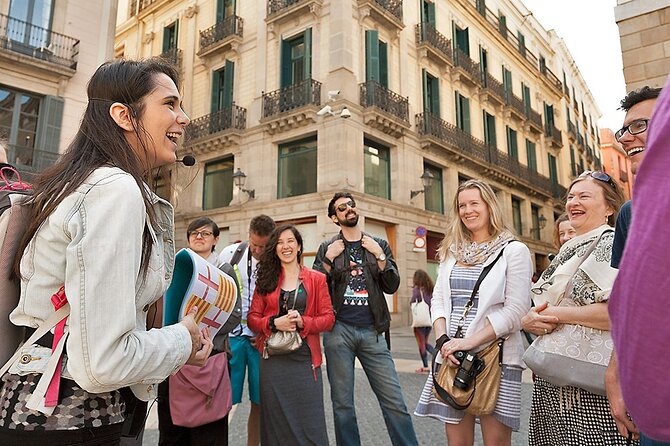
I also like that your local guide keeps the pace lively and answers questions, including recommendations for the rest of your trip. One drawback to flag, especially in hot weather, is that the tour can feel fast paced and a bit long during humid conditions, so plan water and take a breather when you can.
In This Review
- Key highlights to look for
- A donation-based route through the Gothic Quarter, in plain English
- Where you start, where you end, and how the 2.5 hours fit
- Plaça Reial to Plaça del Pi: easing into Barcelona’s old street rhythm
- El Call and Plaça de Sant Jaume: community life and political power
- Barcelona Cathedral: reading Catalan Gothic on the street
- Plaça Sant Felip Neri and Plaça Nova: war scars and the Roman edge
- Placa del Rei and Santa Maria del Mar: medieval royalty, then a soaring church
- How to get the most from the tour (without overthinking it)
- Who should book this Gothic Quarter donation-based walk
- Should you book it?
- FAQ
- What is the duration of the Gothic Quarter walking tour?
- How much does the tour cost?
- Is the tour offered in English?
- Where does the tour start and where does it end?
- What time does the tour start?
- What attractions do we see during the walk?
- Is admission required for the stops?
- How many people are in the group?
- Is the ticket mobile?
- Can I get a refund if plans change?
Key highlights to look for
- Donation-based format with a low entry price that still includes a professional local guide
- Small group size (max 20) for a more conversational walk
- Photo built-in breaks at each landmark, so you are not just speed-walking past stonework
- Gothic Quarter essentials plus El Born ending, with a natural place to keep eating and strolling afterward
- Major landmarks are tied to real context, from medieval faith and community life to political power
A donation-based route through the Gothic Quarter, in plain English
If you want Barcelona’s old streets to make sense fast, this tour is a solid way to do it. The format is simple: a professional English-speaking local guide leads you on foot through the layers of the Gothic Quarter, plus nearby landmarks that connect medieval Barcelona to what you see today.
I like tours that do more than point at buildings. This one explains how the area evolved over centuries, and it gives you practical time to pause for photos. At the same time, it is not a long, exhausting slog. It is about getting your bearings, then using that new context to explore on your own afterward.
The price is also worth a careful look. At $3.62 per person for a guided, 2.5 hour experience, you are paying for orientation, storytelling, and local recommendations. In other words, you are not just buying a “walk by famous things” ticket.
Where you start, where you end, and how the 2.5 hours fit
The tour starts at Plaça Reial at 11:00 am in Ciutat Vella, and it ends near Plaça del Fossar de les Moreres in the city center, close to El Born. That ending matters. El Born is where you can naturally keep going: grab a drink, eat something, and continue wandering without needing extra transportation plans.
Expect around 2 hours 30 minutes total. The stop lengths feel balanced for a guided walking format, with enough time to get the big picture and still capture the key architectural details. Since the tour runs in a maximum group of 20 people, it is easier to ask a quick question, too.
Do note the pacing comment from experience: in humid weather, the walk can feel quick. If you are heat-sensitive, bring water, wear breathable shoes, and do not be afraid to slow down for a minute when the group stops. Your comfort will make the history land better.
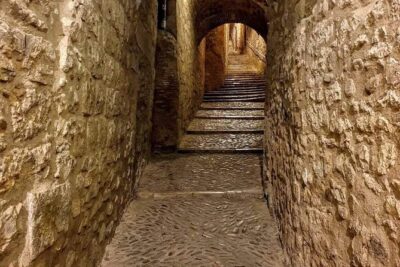
Get lost in the medieval lanes
- Barcelona all included: Sagrada, Park Güell, Montjuic & Gothic
★ 5.0 · 2,169 reviews - Barcelona Gothic Quarter Tapas & Taverns Food & Wine Tour
★ 5.0 · 1,470 reviews - Barcelona: Old Town and Gothic Quarter Walking Tour
★ 4.8 · 1,393 reviews
Plaça Reial to Plaça del Pi: easing into Barcelona’s old street rhythm
You begin in Plaça Reial, just off La Rambla in Ciutat Vella. This square is one of those places that looks like a postcard, but it also works as a smart warm-up for the rest of the day. It has elegant neoclassical buildings, palm trees, and plenty of cafés. In practical terms, it is a great starting point because it feels social and easy to orient yourself.
What I find especially useful here is the mix of art and city design. You get pointed toward Gaudí-designed lampposts and the Font de les Tres Gràcies fountain. Those details help you shift from “I see pretty architecture” to “this is how Barcelona decorates public space.” You get a quick lesson in how the city treats landmarks as part of everyday life.
Then you move to Plaça del Pi, in the Gothic Quarter. This is a quieter, more local-feeling square than Plaça Reial, with the Santa Maria del Pi church towering above. It is a nice contrast stop. Instead of grand civic energy, you get a more intimate feel: cafés, artisan stalls, and an art market vibe. If you like your history with everyday texture, this is the place to pay attention to how the square supports daily life.
Potential drawback: because squares like these are popular meeting and lounging points, they can get busy. That is usually not a problem for the tour itself, but if you are trying to get perfectly framed photos, you may need to time your shots with the group flow.
El Call and Plaça de Sant Jaume: community life and political power
Next is a deep breath in the story at the Jewish Quarter, known historically as El Call. You are guided through the medieval maze of narrow streets, and the tour focuses on how the Jewish community shaped life in this part of the city. This is one of the strongest stops for history lovers because it connects street geography to lived experience.
You will also be pointed toward key reference points in the area, including the Medieval Synagogue and the Call Interpretation Centre. Even if you do not go inside, having those names in your head helps you recognize what you are looking at when you return later on your own.
After that, the walk turns toward politics at Plaça de Sant Jaume, often described as Barcelona’s political heart. This square is associated with power centers like the City Hall and the Palau de la Generalitat. And even beyond the modern institutions, you get context that this has been a center of authority since Roman times.
This stop is valuable because it changes your perspective. Instead of treating the Gothic Quarter as only religious or artistic, you start to see it as a place where decisions got made. That shift is exactly what helps the rest of the area click when you explore independently.
Barcelona Cathedral: reading Catalan Gothic on the street
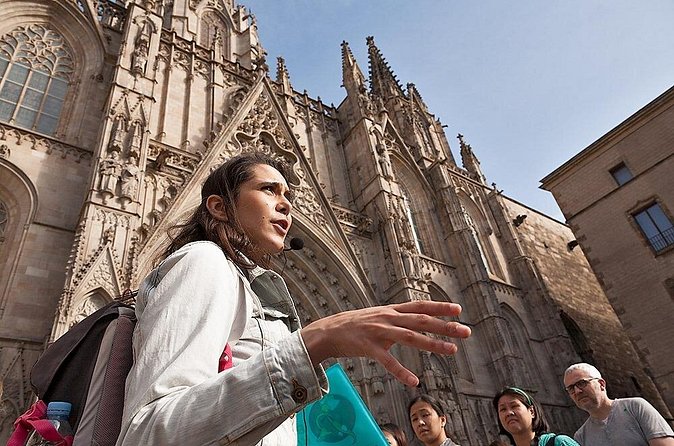
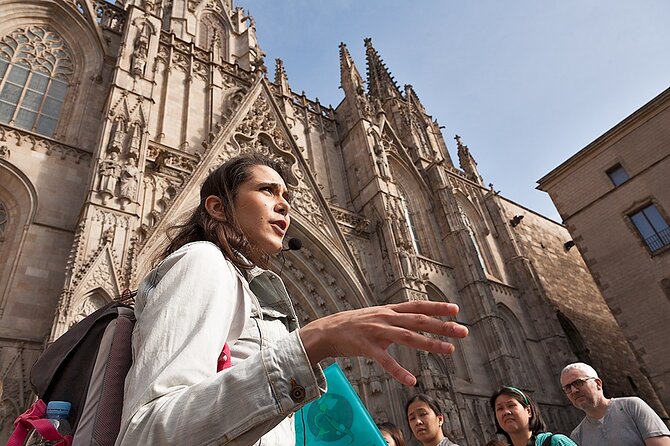
The tour then brings you to the Barcelona Cathedral, and specifically to its façade, a standout example of Catalan Gothic architecture. If you care about stonework, this is where you slow down naturally.
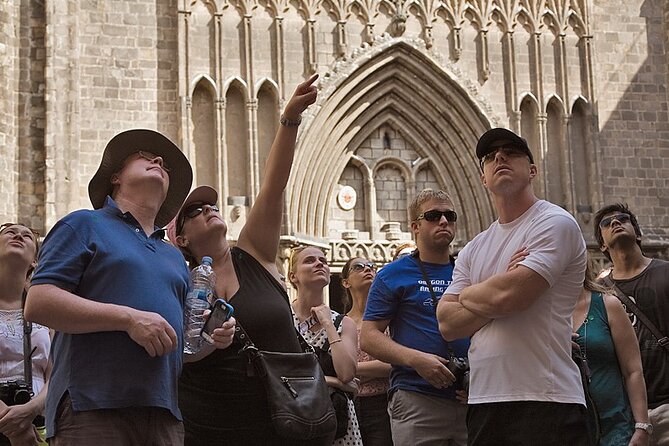
You look at intricate carvings and soaring spires, plus the grand central arch that anchors the composition. A good guided explanation turns these features from decoration into clues. You start to understand why the façade looks the way it does, and how gothic style communicates authority and faith through scale and detail.
One thing I appreciate about placing the Cathedral after Plaça de Sant Jaume is pacing. By then, you already have the civic-power context, so the Cathedral stop does not feel random. It feels like the religious counterpart to the political story you just learned.
If you are sensitive to crowds, keep in mind that Cathedral areas attract visitors throughout the day. Going with the group helps because you are not stuck trying to interpret every detail while also fighting for a clear view.
Plaça Sant Felip Neri and Plaça Nova: war scars and the Roman edge
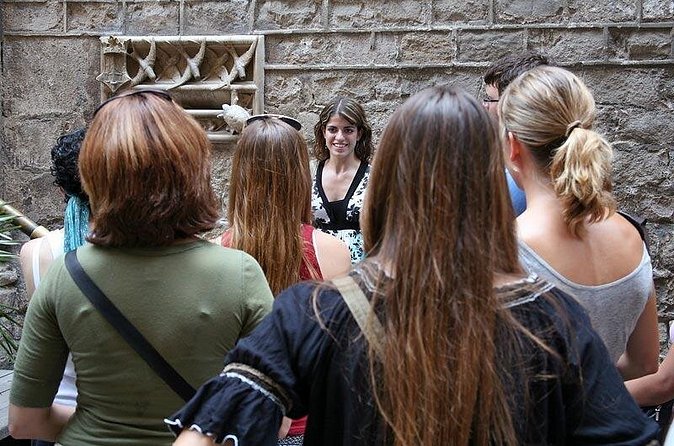
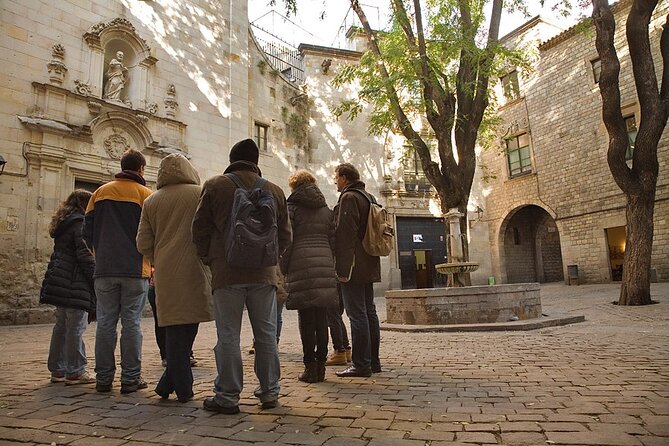
Not every Gothic Quarter tour includes the quieter, more specific corners. Here you get Plaça Sant Felip Neri, a place with a serious historical marker: the façade shows shrapnel scars from the Spanish Civil War. That detail changes the mood of the walk, and it is a reminder that the city is not only medieval. It has lived through modern trauma too.
You also get pointed toward a baroque church and a peaceful fountain in the same area. That contrast is what makes this stop useful. One moment you are looking at damage and memory. The next, you can notice how a small square provides calm in the middle of a big travel zone.
Then you move toward the Roman layer with Plaça Nova, described as a gateway to Roman Barcelona. Here, you see remnants of the ancient city wall and two defense towers. This stop is a reality check. The Gothic Quarter is often treated like one neat timeline, but you learn that Rome is not far under the surface. The tour helps connect the “old city” feeling to an actual sequence of construction and survival.
Practical tip for this part: wear shoes with good grip. Near older stone, foot traffic plus uneven ground can make slipping more likely. A short, careful pace will help you enjoy the architectural details.
Other things to see around Barcelona
- Barcelona Tapas and Wine Experience Small-Group Walking Tour★ 5.0 · 5,804 reviews
- Barcelona: Tapas Walking Tour with Food, Wine, and History★ 4.8 · 4,261 reviews
- Barcelona: Food Walking Tour with Tapas and Wine★ 4.9 · 2,180 reviews
- Barcelona Tapas Walking Tour: Food, Wine & History★ 4.5 · 1,928 reviews
- Barcelona Helicopter, Sailboat & Old Town Private Walking Tour★ 5.0 · 1,395 reviews
- Barcelona: City Walking Tour with a Local Guide★ 4.9 · 1,384 reviews
Placa del Rei and Santa Maria del Mar: medieval royalty, then a soaring church
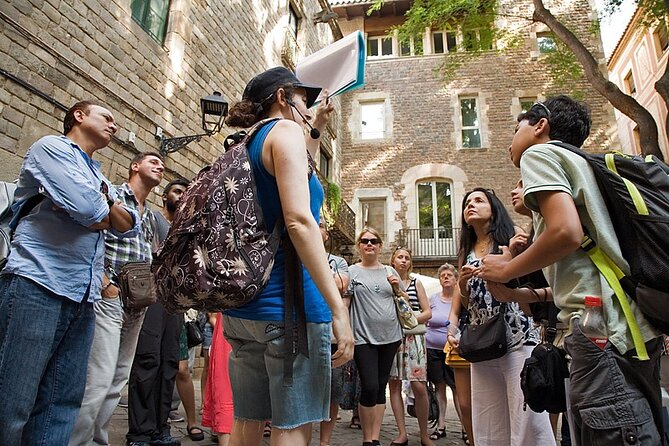
The next stop is Placa del Rei, in the heart of the Gothic Quarter, where you get some of the most cinematic medieval framing in the whole walk. The square is surrounded by landmark architecture, including the Grand Royal Palace and the Watchtower of King Martí. It is a great place to understand how power was staged in public space.
I like this stop because it ties architecture to roles. When the guide points out the kind of structures you are looking at, it becomes easier to imagine what the square felt like in its prime, and why it mattered.
Finally, the tour ends at the Basilica de Santa Maria del Mar in El Born. This is a Catalan Gothic masterpiece with a rose window, soaring arches, and twin towers. It is also a 14th-century church, so it brings you right back into the medieval craftsmanship theme that started at the Cathedral.
This ending works especially well if you want to keep exploring after the tour. Because you finish in El Born, you can turn the basilica visit into a longer outing: linger for more photos, then head into nearby streets for food and strolling.
How to get the most from the tour (without overthinking it)
Here are a few ways to make this walk work for you.
First, treat it as orientation plus story. Once you understand why Plaça Reial, El Call, civic squares, and the Cathedral area connect, you will navigate the Gothic Quarter easier later.
Second, bring small practical habits for comfort. The route is a walking tour, and the pacing can feel quick in humid weather. Water, a hat, and breathable layers will help. If you take your time at each stop for 30 to 60 seconds before the group moves, you will catch more of the stone details the guide is pointing out.
Third, lean on the guide for after-tour ideas. One of the best parts of this experience is that your guide will happily offer recommendations for the rest of your trip. That kind of local suggestion often saves you from the two extremes: wasting time on places that do not fit your style, or spending your evening in a tourist-only bubble.
Who should book this Gothic Quarter donation-based walk
This tour is a great fit if you:
- Like history, but want it told in a way that matches the streets you are standing on
- Want an English guide and a straightforward walking route that feels manageable
- Prefer small group tours, with room for questions
- Want a friendly way to meet other people traveling solo or in small groups
It may be less ideal if you:
- Hate hot, humid walking and need long breaks
- Prefer very slow sightseeing with long pauses, not a brisk guided flow
Should you book it?
If you are spending limited time in Barcelona and you want the Gothic Quarter to make sense fast, I think this is a strong choice. The 4.9 rating with 72 reviews and the high recommendation rate point to one thing clearly: the tour delivers information that actually helps you see what is around you.
The “think about it” part is weather and pacing. If you are traveling during sticky summer days, plan hydration and be ready for a fairly quick rhythm. If that is under control, you get a satisfying mix of major landmarks, lesser-known spots like Plaça Sant Felip Neri, and a clean ending near El Born.
If your goal is smart orientation, photo-friendly stops, and a guide who can steer your next moves, book it.
FAQ
What is the duration of the Gothic Quarter walking tour?
The tour lasts about 2 hours 30 minutes.
How much does the tour cost?
The price is $3.62 per person.
Is the tour offered in English?
Yes, it is offered in English.
Where does the tour start and where does it end?
It starts at Plaça Reial (Pl. Reial, Ciutat Vella, 08002 Barcelona, Spain) and ends at Plaça del Fossar de les Moreres (Ciutat Vella, 08003 Barcelona, Spain), near El Born.
What time does the tour start?
The start time is 11:00 am.
What attractions do we see during the walk?
You will stop at places including Plaça Reial, Plaza del Pi, the Jewish Quarter (El Call), Plaça de Sant Jaume, Barcelona Cathedral, Plaça Sant Felip Neri, Plaça Nova, Placa del Rei, and Basilica de Santa Maria del Mar.
Is admission required for the stops?
The stops listed for the tour are shown as admission ticket free.
How many people are in the group?
The tour has a maximum of 20 travelers.
Is the ticket mobile?
Yes, the tour uses a mobile ticket.
Can I get a refund if plans change?
Yes, you can cancel for a full refund up to 24 hours before the experience starts. Free cancellation is offered, and confirmation is received at booking. Service animals are allowed, and the tour is near public transportation.
The latest to open for booking



Gothic Quarter Walks, side by side.
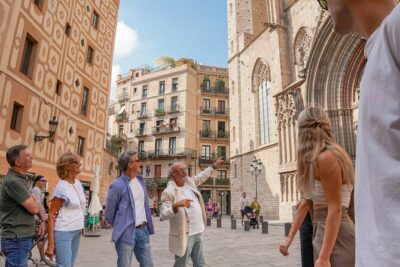
Barcelona all included: Sagrada, Park Güell, Montjuic & Gothic
Read our review →
Barcelona Gothic Quarter Tapas & Taverns Food & Wine Tour
Read our review →
Barcelona Old Town & Gothic Quarter Small Group Tour
Read our review →
Ramblas, Old Town, Gothic and Gaudi Architecture Walking Tour
Read our review →
El Born and Gothic Quarter Wine & Tapas Bar Tour
Read our review →
El Born Food Walking Tour with Tapas and Drinks
Read our review →
Kids and Family Gothic Quarter Walking Tour in Barcelona
Read our review →Where else this one turns up