
Reviewed · GOTHIC QUARTER WALKS
Gothic Quarter & El Born Private Tour: Origins of Barcelona
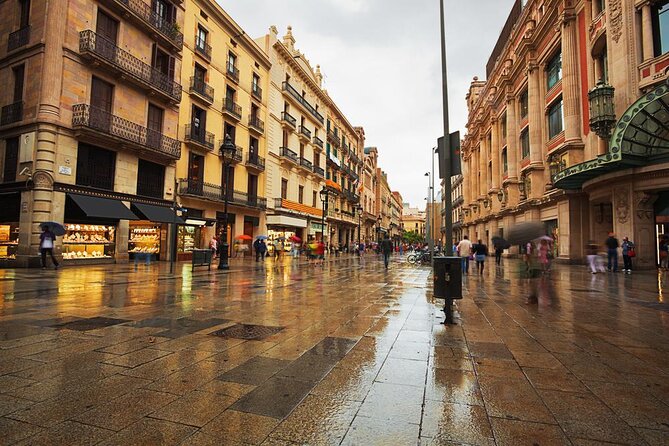
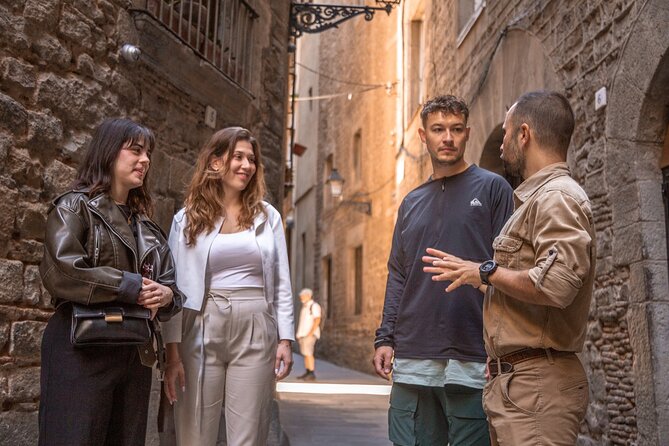
Barcelona hides Rome in plain sight. This private 3-hour tour through the Gothic Quarter and El Born connects the dots between layers of the city, from Roman beginnings to medieval churches and Jewish heritage, all paced like a local stroll. You’ll move through narrow streets and small plazas where everyday Barcelona feels close, not staged.
I especially like how this tour mixes big-name monuments with practical “what to look for” guidance. You’ll get quick orientation at places like the Barcelona Cathedral (Santa Eulalia) and Santa Maria del Mar, then shift to Modernisme at Palau de la Música Catalana and the food world at Mercado de Santa Caterina. A second win for me is the way the guide steers you toward context, not just photos, including archaeology points like MUHBA Temple d’August.
One thing to consider: it’s a walking tour in dense historic streets, so if you hate cobblestones or long time on your feet, you may want to plan extra breaks and wear comfortable shoes. The good news is that every stop is short, so you are not trapped in one place too long.
In This Review
- Key highlights you should care about
- Gothic Quarter and El Born: why these neighborhoods matter
- Roman city walls and MUHBA Temple d’August: the start of Barcino
- Santa Eulalia and Palau de la Música: Gothic meets Modernisme
- Mercado de Santa Caterina: a food stop that actually teaches
- Santa Maria del Mar and the Major Synagogue story
- Las Ramblas finish: use the drop-off wisely
- Price, pace, and who should book this private tour
- FAQ
- How long is the Gothic Quarter and El Born Origins of Barcelona tour?
- Where does the tour start and where does it end?
- Is this tour private?
- What sites are included during the walk?
- Do I need tickets for the attractions?
- What is included in the price?
- What is not included?
- How do tickets work for the tour?
- Is there free cancellation?
Key highlights you should care about
- Roman layers in the Gothic Quarter, with a focus on Barcino origins and MUHBA Temple d’August
- Icon sights without ticket stress, since most visits are exterior views and included
- Modernisme details at Palau de la Música Catalana, including what made it a standout for Barcelona’s bourgeois society
- El Born food culture stop at Mercado de Santa Caterina, with a look at classic Spanish staples
- Jewish heritage context tied to Catalonia and Sephardic influence, plus a stop at the Major Synagogue area
- A smooth finish near Las Ramblas, so you can keep exploring on your own after the tour ends
Gothic Quarter and El Born: why these neighborhoods matter

The Gothic Quarter and El Born are the part of Barcelona where history feels physical. Streets are tight, buildings are close, and you do not need to hunt for context, the city hands it to you. This tour is built around that idea: it takes you from the earliest roots of the city to later religious, cultural, and social life, while keeping the pace friendly for a half-day plan.
What makes this pairing smart is that the Gothic Quarter and El Born tell different pieces of the Barcelona story. The Gothic Quarter is where you feel the medieval religious and civic heartbeat most strongly. El Born brings in a different energy, especially around artisan shops and markets, where you see how old streets still serve daily life. You are not just seeing sights, you are walking through the original logic of the city.
I also like that the tour covers multiple identities of Old Town Barcelona. You get Christian landmarks, but you also get time on Jewish heritage and the influence of Sephardic culture in Spanish history. That matters, because it helps you read the city with more than one lens.
Roman city walls and MUHBA Temple d’August: the start of Barcino
Most Barcelona tours start with medieval stuff. This one starts with the earlier layer, when the Romans and Iberian tribes shaped the city long before the Gothic skyline took over. You begin at Barcino Sculpture at Plaça Nova, then your guide sets the scene for how Barcelona was founded and how that ancient footprint became part of the later city.
The first stop focuses on the Roman city wall in Barcelona. Even if you are not a hardcore archaeology fan, this is a great way to get oriented, because it explains why certain streets and blocks ended up where they did. A short, 15-minute stop like this is not meant to replace a museum visit. It is meant to give you a mental map, so later landmarks make more sense.
Then you move to MUHBA Temple d’August, with a focus on the oldest section of Barcelona and the ruins of one of its most important ancient structures. The Temple of Augustus is right in the Gothic area, which is the cool part. You get that head-turn moment where you realize the city did not reset itself. It kept building, over and over.
If you like stepping back in time, this opening is one of the best parts of the itinerary. If you hate archaeology talk, you can still use it as a quick way to understand the geography of Old Town without committing to a long dig.
Get lost in the medieval lanes
- Barcelona all included: Sagrada, Park Güell, Montjuic & Gothic
★ 5.0 · 2,169 reviews - Barcelona Gothic Quarter Tapas & Taverns Food & Wine Tour
★ 5.0 · 1,470 reviews - Barcelona: Old Town and Gothic Quarter Walking Tour
★ 4.8 · 1,393 reviews
Santa Eulalia and Palau de la Música: Gothic meets Modernisme
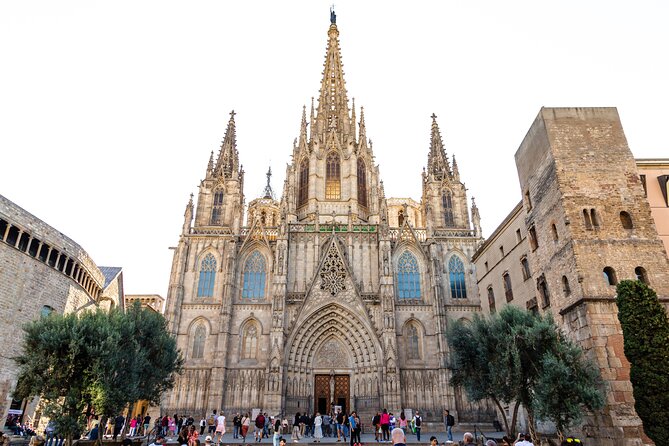
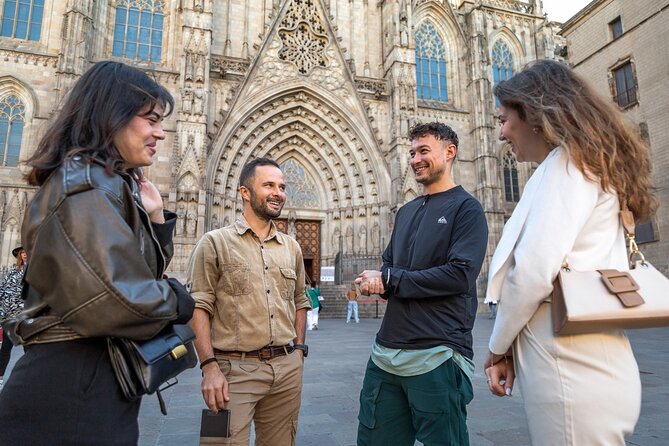
You then shift into the two big architecture poles of Barcelona. First comes Barcelona Cathedral, specifically the Cathedral of Santa Eulalia, described here as a Gothic 15th-century cathedral and the seat of the Archbishop of Barcelona. Even in a short exterior stop, you can see how this building operates as a religious anchor for the city. It helps you connect the spiritual center to the wider Old Town layout.
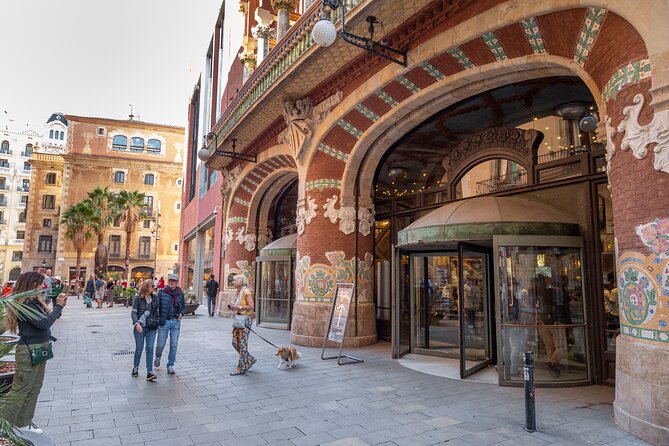
Right after, you get a contrast stop at Palau de la Música Catalana. This is where Barcelona’s later Modernisme era shows off. The tour frames it as a Modernist masterpiece and highlights the role it played for the bourgeoise society of Barcelona. That social context is useful, because it turns the building from just pretty stone into a sign of who had the power and money to build like this.
One practical note: since the tour is set up for exterior visits, you can enjoy the architecture without spending your precious time buying entry tickets or lining up. That makes the tour feel efficient, especially if you are also planning other paid attractions during your trip.
The potential drawback? If you are the type who wants to go inside iconic buildings as a priority, you may finish this tour wanting more interior time at at least one stop. The route gives you strong outside context, not full inside touring.
Mercado de Santa Caterina: a food stop that actually teaches
El Born is where you start feeling the day-to-day Barcelona side of things, and the tour channels that with a stop at Mercado de Santa Caterina. This market sits in the heart of El Born, and it is a great place to see how local food culture stays visible in a historic district.
In about 15 minutes, you get a guided look at stalls displayed with classic staples like jamon, cheeses, seafood, and olives. The key value here is not that you can eat a full meal during the stop. The value is that you learn what to look for, what is typical, and how markets work as community hubs.
If you are building your own Barcelona food plan, this kind of stop helps a lot. You can use the same mental cues later when you are picking a tapas spot or deciding whether a menu looks like it is aimed at locals or mainly at tourists.
The only consideration is timing. Fifteen minutes is short, so do not expect a deep market tasting session. Think of it as a taste of the marketplace vibe, plus useful info for your next meal.
Santa Maria del Mar and the Major Synagogue story
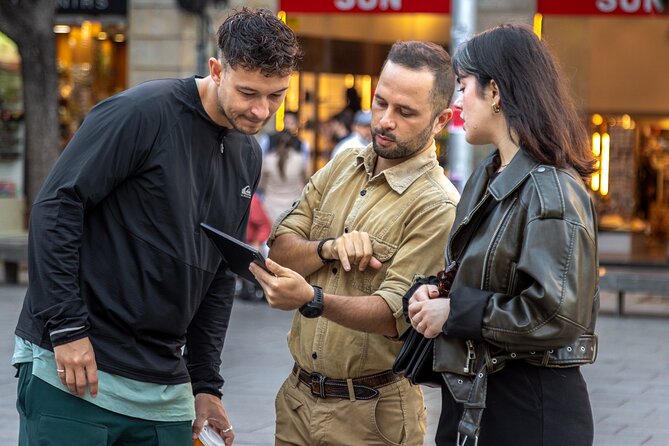
Next you visit Santa Maria del Mar, one of the most iconic Gothic churches of the Old Town. The tour notes that it was finished in the 1380s and that it reflects medieval religious architecture in Barcelona. This is the kind of church stop where you can understand the city’s values from a distance, the shape, scale, and how it dominates the surrounding streets.
What makes this moment land well is that it follows your Modernisme stop. You go from later design energy back to medieval stone, and the timeline clicks into place. You start to see the city as a set of eras rather than a single picture.
Then the tour moves into Jewish neighborhood atmosphere, with a stop at the Major Synagogue area. Here the focus is on Jewish heritage of Barcelona and Catalonia and the large footprint of Sephardic culture in Spanish history. That context matters because it helps you understand why certain cultural traces exist in places where you might otherwise only notice churches and palaces.
Important practical point: the Major Synagogue ticket is not included. If you want to go inside, you will need to plan for a separate entry ticket. Even if you do not, the guide’s historical framing can still change how you look at the neighborhood.
If you are sensitive to learning about complex history, go in with an open mind and let the guide keep the story grounded. This stop is not just a photo opportunity.
Las Ramblas finish: use the drop-off wisely
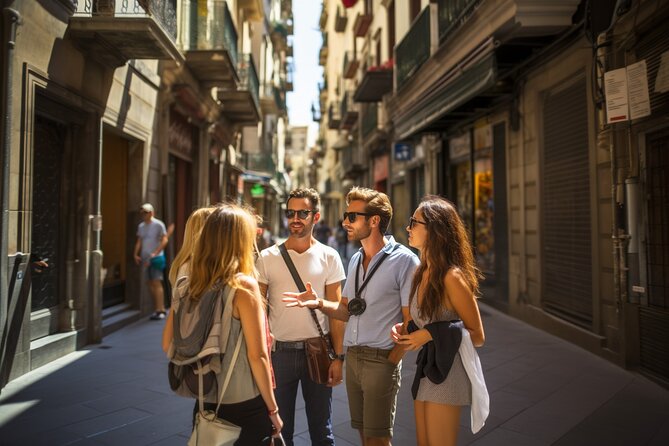
The tour ends near La Rambla, and that is a smart move because it gives you options immediately after the walking portion. The route includes a Las Ramblas segment with a focus on the street’s energy, including its tree-covered restaurants and flower shops. Even if you never plan to spend hours there, it is a useful reference point for getting your bearings.
What I like about a finish here is that you can choose your next step. Want dessert and people-watching? You are there. Want to connect to transit or continue into other neighborhoods on foot? The location makes that easier.
Try to be aware that Las Ramblas is more of a loud, central artery than a quiet Old Town street. Use it as a transition, not your whole plan. If you want something calmer after the tour, you can head away from the main drag and look for side streets around your last drop-off area.
Other things to see around Barcelona
- Montserrat Monastery Small Group or Private Tour Hotel pick-up★ 5.0 · 5,144 reviews
- Tour Welcome Barcelona with Local Guide in Eco Tuk Tuk Private★ 5.0 · 1,882 reviews
- Barcelona Private Tour by Sidecar Motorcycle★ 5.0 · 1,750 reviews
- Barcelona: Private Group Bike Tour★ 4.8 · 1,420 reviews
- Barcelona Helicopter, Sailboat & Old Town Private Walking Tour★ 5.0 · 1,395 reviews
- Barcelona: Helicopter, Boat Ride & Old Town Private Tour★ 4.7 · 1,357 reviews
Price, pace, and who should book this private tour
At $179.59 per person for about 3 hours, this is not a budget walking tour. The value comes from two things: it is private (only your group participates) and it includes all fees and taxes, plus local recommendations. It also uses a format where most major stops are exterior views, meaning you typically do not need to buy multiple attraction tickets just to get the core sights.
This price makes the most sense if you want:
- A guided timeline of Barcelona’s origins, not a stop-and-go checklist
- An expert guide to point out architectural and archaeology clues fast
- Flexibility and attention for your group, especially if you care about history but hate wasting time
If you are traveling solo and you are tight on budget, you might compare costs with group tours. But if you want a guide to tailor the pace and you plan to spend the rest of your trip exploring from a stronger foundation, this one can feel like a good investment.
The tour is described as suitable for most travelers, and service animals are allowed. Since it is near public transportation and ends on La Rambla, it is easy to stitch into a broader Barcelona itinerary.
Should you book this Gothic Quarter and El Born tour?
I think you should book it if you want a single, well-structured walking route that connects Roman roots, Gothic landmarks, Modernisme at Palau de la Música Catalana, and El Born market culture, all without turning your day into a ticket-buying marathon. The private format plus local recommendations are the real comfort features, especially if you like getting a clear sense of how the city evolved.
You might skip or look for another option if your top priority is going inside many attractions, because several major stops are exterior visits and the Major Synagogue entry is not included. Also, if walking on cobblestones for several hours is a deal-breaker, plan footwear and pace carefully.
FAQ
How long is the Gothic Quarter and El Born Origins of Barcelona tour?
It runs for about 3 hours.
Where does the tour start and where does it end?
The meeting point is Barcino Sculpture, Plaça Nova 40, in Ciutat Vella. The tour ends near La Rambla.
Is this tour private?
Yes. Only your group will participate.
What sites are included during the walk?
The tour covers Roman city wall context, Barcelona Cathedral (Santa Eulalia), Palau de la Música Catalana, Mercado de Santa Caterina, Santa Maria del Mar, MUHBA Temple d’August, the Major Synagogue area, and La Rambla.
Do I need tickets for the attractions?
No tickets are required for the attractions on this tour because visits are set up as exterior views. The Major Synagogue stop notes that an admission ticket is not included.
What is included in the price?
The price includes all fees and taxes, plus local recommendations.
What is not included?
Personal expenses are not included.
How do tickets work for the tour?
You get a mobile ticket.
Is there free cancellation?
Yes. You can cancel up to 24 hours in advance for a full refund.
The latest to open for booking

Gothic Quarter Walks, side by side.
Barcelona all included: Sagrada, Park Güell, Montjuic & Gothic
Read our review →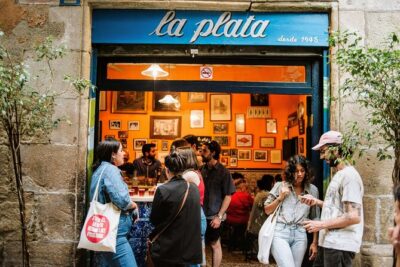
Barcelona Gothic Quarter Tapas & Taverns Food & Wine Tour
Read our review →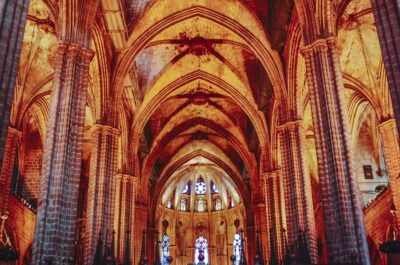
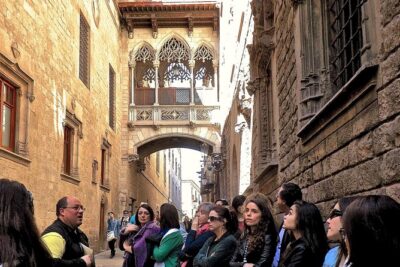
Barcelona Old Town & Gothic Quarter Small Group Tour
Read our review →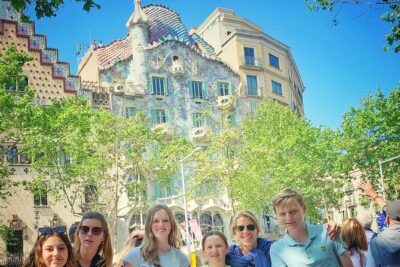
Ramblas, Old Town, Gothic and Gaudi Architecture Walking Tour
Read our review →
El Born and Gothic Quarter Wine & Tapas Bar Tour
Read our review →
El Born Food Walking Tour with Tapas and Drinks
Read our review →
Kids and Family Gothic Quarter Walking Tour in Barcelona
Read our review →Where else this one turns up