
Reviewed · GOTHIC QUARTER WALKS
Gothic Quarter – Private Tour
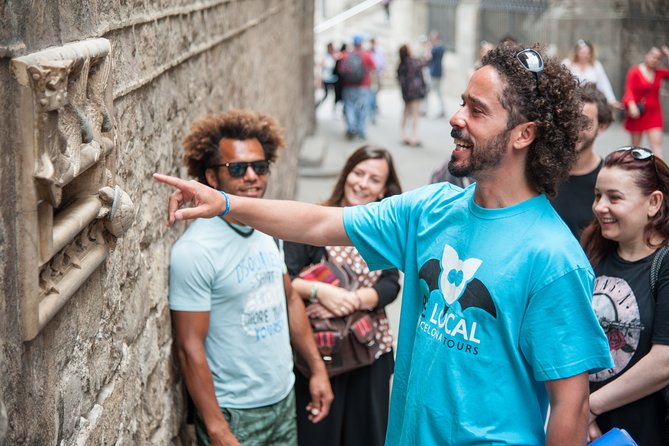
Barcelona’s past is walking distance away. This private Gothic Quarter tour is a 2.5 hour route that threads together Barcelona’s Roman, medieval, and modern layers, with stops like the Rambla, Roman outdoor tombs, and the Cathedral of Santa Creu and Santa Eulalia. I love how the guide work turns confusing alleys into a clear story, and I also love that it stays practical, with lots of route and landmark context plus helpful food and area tips from guides like Patrick and Carlos.
You’ll also like the energy. Many reviews single out Patrick for sharp pacing and humor, and Carlos for engaging explanations that help first-timers feel oriented fast. One drawback to plan for: this is a walking tour through narrow old streets, and it requires good weather, so you’ll want flexible plans if skies are iffy.
In This Review
- Key things to know before you go
- Why the Gothic Quarter feels like a time machine
- Your walking route: Plaça de Catalunya to Sant Jaume Square
- Rambla first, because it sets the tone
- Medieval narrow streets, churches, and palaces you can actually place
- Roman outdoor tombs and the “hidden in plain sight” feeling
- A 14th century Catalan Gothic church stop
- Old Jewish Quarter alleys with medieval flavor
- A hidden square with a baroque church marked by war
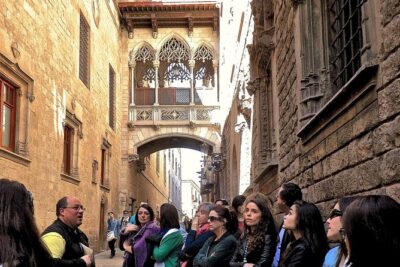
- Neo-Gothic bridge and its unsettling symbols
- Palau history and Catalonia’s government power
- Roman Barcino temple remains in a corner
- Santa Àgata, Royal Palace of Aragon, and the Cathedral finish
- Price and pace: is it good value at about $66.52?
- Who should book this Gothic Quarter private tour
- Should you book it?
- FAQ
- How long is the Gothic Quarter private tour?
- What does the tour cost?
- Is it a private tour?
- Where do we meet and where does it end?
- Is pickup available?
- Is transport included?
- What language is the tour offered in?
- Does the price include taxes and a guide?
- What if the weather is bad or I need to cancel?
Key things to know before you go
- A Roman-to-medieval route that hits major landmarks without feeling like a checklist
- Catalan Gothic architecture stops like a standout 14th century church you’ll see in the heart of the Quarter
- Jewish Quarter alleys and medieval streets that explain how communities shaped the area
- Civil War history in a baroque square marked by bomb damage
- A neo-Gothic bridge with unsettling symbol lore and an explanation of why it exists
- Guide-led storytelling with flexible pace, including accommodations noted by guests with mobility needs
Why the Gothic Quarter feels like a time machine
The Gothic Quarter works because it’s layered. One minute you’re on a grand urban avenue tied to the city’s identity, the next you’re in medieval lanes where the scale feels smaller and the past feels closer. That contrast is exactly what this tour is built around, moving you between eras instead of treating the area like one uniform “old town.”
Your guide gives you the link between what you see and why it matters. That’s the difference between snapping photos and actually understanding the place. If you’ve ever felt lost in Barcelona’s older neighborhoods, you’ll probably enjoy having someone map the logic for you, especially when the streets twist and signage alone won’t do the job.
It’s also a tour that seems to fit different travel styles. Reviews describe it as engaging for families and young adults, and the private format matters here. You can move at your speed, ask questions, and keep the pace comfortable.
Your walking route: Plaça de Catalunya to Sant Jaume Square
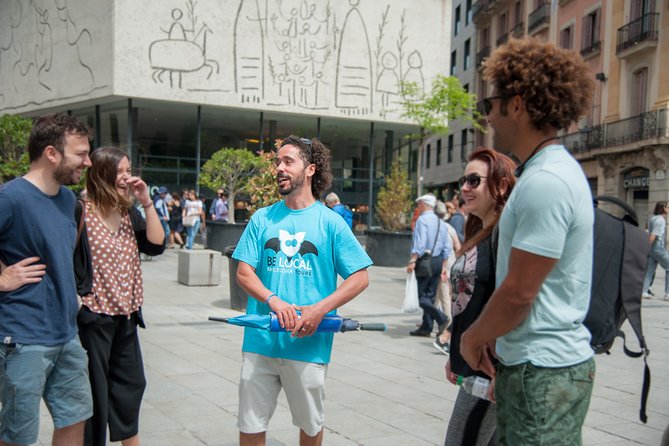
The tour starts at Plaça de Catalunya in L’Eixample, and it ends around Pl. de Correus / Sant Jaume Square. The meeting point is central, which is good news for transit. It’s also a big open plaza, so do yourself a favor and give yourself a few extra minutes to get oriented before the guide arrives.
If you choose pickup, it’s offered within 0.5 km of Catalunya Square. The guide carries a company card, which makes identification easier once you’re in the right zone. The private nature also means you’re not tied to a rigid group rhythm, which can help a lot when you hit tighter streets and uneven sidewalks.
The tour runs about 2 hours 30 minutes. That duration is long enough for real context and multiple eras, without turning into an all-day slog. You’ll likely get a satisfying “big picture” feeling by the time you reach the cathedral area.
Get lost in the medieval lanes
- Barcelona all included: Sagrada, Park Güell, Montjuic & Gothic
★ 5.0 · 2,169 reviews - Barcelona Gothic Quarter Tapas & Taverns Food & Wine Tour
★ 5.0 · 1,470 reviews - Barcelona: Old Town and Gothic Quarter Walking Tour
★ 4.8 · 1,393 reviews
Rambla first, because it sets the tone
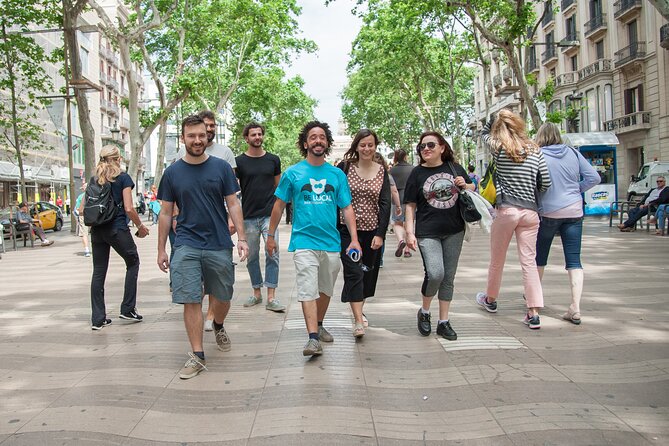
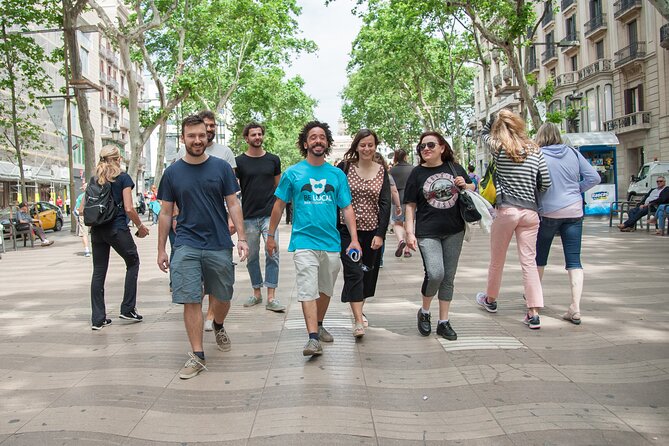
The first stop is La Rambla, described as an avenue with deep history, the soul, and a symbol of Barcelona. Even if you’ve walked the Rambla before, having it as a starting point helps. It’s like the tour gives you a city-level frame before stepping down into the tight medieval grain.
Think of the Rambla here as your orientation tool. It pulls you from the modern city into the older urban DNA. Your guide can connect the wide thoroughfare’s importance to the quieter lanes you’ll explore next, and you’ll understand why Barcelona’s history isn’t just “ancient ruins,” it’s embedded in streets people still use today.
A practical note: the Rambla is busy. Starting there can be a little noisy at first, but that early context helps you settle into the walk when you turn into the calmer, narrower sections.
Medieval narrow streets, churches, and palaces you can actually place
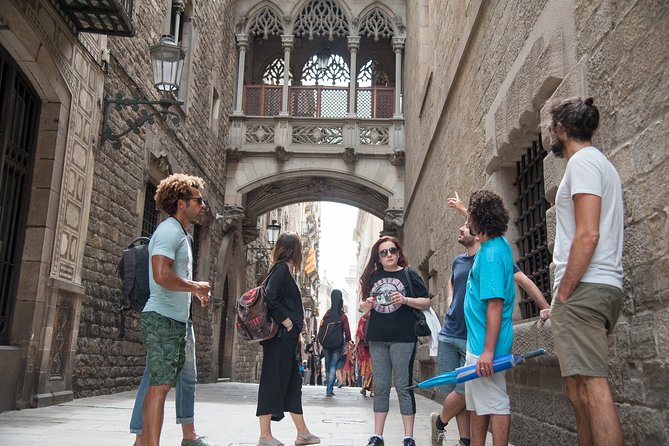
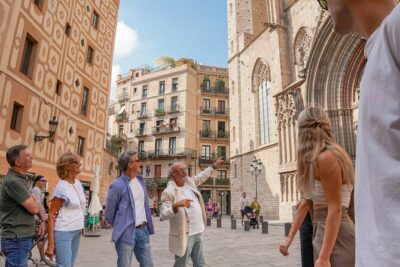
One major theme of the route is the medieval narrow streets with important churches and palaces from different historical periods. This is where the Gothic Quarter earns its name in a human way. The streets feel designed for wandering, and your guide’s job is to prevent that wandering from becoming aimless.
I like how the tour doesn’t just point at buildings. It places them in time. When you understand what a church or palace represented, the stonework stops being just pretty scenery and turns into evidence of power, faith, and civic identity.
A likely perk for you, especially if it’s your first trip: the guide’s explanations can help you recognize patterns. You start seeing how the city’s institutions and different rulers shaped the street plan and neighborhood priorities.
Roman outdoor tombs and the “hidden in plain sight” feeling
The route includes an old imperial burial site with Roman outdoor tombs. Roman sights in Barcelona can feel fragmented if you only catch them from the outside. Here, the tour treats the tombs as part of a longer story, so they don’t feel like a random detour.
What I find valuable about this stop is the perspective shift. Barcelona isn’t only medieval and Gothic. Roman Barcino sat here too, and the tour keeps nudging you to see how layers repeat. That helps you understand why some corners feel “leftover” or tucked away, when really they’re older than the layout around them.
Even if you’re not a Roman-history person, you’ll probably appreciate it because the guide connects the tombs to the bigger timeline you’re walking through.
A 14th century Catalan Gothic church stop
You’ll also visit a wonderful 14th century church, described as a masterful example of Catalan Gothic architecture in the heart of the Gothic Quarter. This is one of those stops where the guide attention makes the difference between noticing details and missing them.
Catalan Gothic can look similar at a glance to other Gothic styles, but local features add the identity. Your guide can point out what’s distinctive about the style as it appears here, and that makes you slow down in the right places. It’s also a great “reset moment” in the middle of the walk, when you can step away from the street and absorb the architecture.
If you love photography, this is also where your camera time tends to feel worthwhile. You’ll know what you’re looking at instead of just photographing stone.
Other things to see around Barcelona
- Montserrat Monastery Small Group or Private Tour Hotel pick-up★ 5.0 · 5,144 reviews
- Tour Welcome Barcelona with Local Guide in Eco Tuk Tuk Private★ 5.0 · 1,882 reviews
- Barcelona Private Tour by Sidecar Motorcycle★ 5.0 · 1,750 reviews
- Barcelona: Private Group Bike Tour★ 4.8 · 1,420 reviews
- Barcelona Helicopter, Sailboat & Old Town Private Walking Tour★ 5.0 · 1,395 reviews
- Barcelona: Helicopter, Boat Ride & Old Town Private Tour★ 4.7 · 1,357 reviews
Old Jewish Quarter alleys with medieval flavor
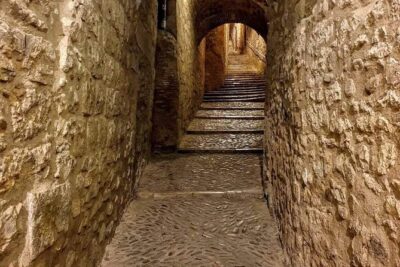
Next comes the old Jewish quarter, a maze of alleys with a medieval flavor, tied to the area that once housed a large Jewish community. This is one of the most important cultural stops on the route because it explains the neighborhood beyond architecture.
I like that the tour treats the Jewish Quarter as a lived place, not just a backdrop. When your guide explains what the community’s presence meant in the urban fabric, the alleys feel purposeful rather than merely charming.
This part of the walk is also naturally slow. Narrow lanes reward attention. You’ll likely find it easier to picture how people moved through daily life, which makes the Gothic Quarter feel less like a museum and more like a community that evolved.
A hidden square with a baroque church marked by war
The tour includes a hidden square with a baroque church where there are marks of the Spanish Civil War bombings. This stop adds weight to the day. Barcelona can feel “pretty historical” at first, but war scars bring the story into the human present.
Your guide’s job is to interpret what you’re seeing so it doesn’t just look like random damage. When you understand the context, you stop thinking of the church as only an art object and start seeing it as part of the city’s resilience and memory.
If you prefer a strictly light sightseeing day, this is the place where the tone shifts. It’s still part of why the tour feels real, not sanitized.
Neo-Gothic bridge and its unsettling symbols
Then you reach an elaborate neo-Gothic bridge, famous for its design and for its curious history of disturbing symbols. A bridge stop might sound like a detour, but it’s often where symbolism gets interesting fast.
What I like about this kind of stop is that it turns you into a careful observer. Instead of treating the bridge like a pretty connector, your guide helps you understand why the symbolism is there and how it reflects the era and mindset behind the design choices.
This is the sort of stop where you’ll likely end the tour with new questions, and that’s a good sign. You’ll want to look back at the architecture in a more analytical way, not just admire it.
Palau history and Catalonia’s government power
An old medieval palace is on the route, described as a symbol of Barcelona’s power in the past, and today it serves as the seat of the Government of the Autonomous region of Catalonia. This stop is a reminder that power in Barcelona didn’t end in medieval times.
What makes it worth your time is the direct connection between past authority and present governance. You see how the city’s power structures evolve, but the need to project authority through prominent buildings stays consistent.
If you’ve been curious about regional identity in Catalonia, this stop helps you connect politics to place. You’re not learning abstract facts, you’re reading history through brick and location.
Roman Barcino temple remains in a corner
The tour includes remains of the temple of the ancient Roman city of Barcino in a corner hidden from view. This kind of stop is exactly where tours win. On your own, you might walk right past it and never understand what you were seeing.
It’s a good fit for the tour theme, Roman layers tucked into modern streets. And it’s a good mental exercise too: you start realizing how much of Barcelona’s past is physically present, even when it doesn’t scream for attention.
Santa Àgata, Royal Palace of Aragon, and the Cathedral finish
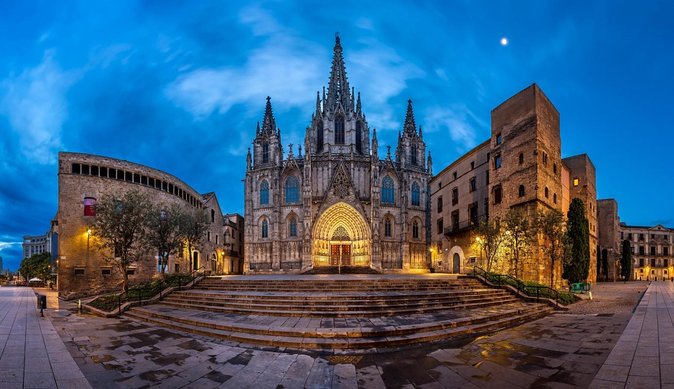
Near the end you reach a Gothic and neo-Gothic square featuring the old Royal Palace of the Kings of Aragon and the Chapel of Santa Ágata. This is a strong historical anchor point because it ties together royal power and religious architecture.
Then comes the highlight for many people: the Cathedral of Santa Creu and Santa Eulalia. It’s described as one of the city’s most impressive churches, with a splendid neo-Gothic façade over a medieval structure, and a story filled with a long timeline.
Even if you’ve seen cathedrals elsewhere, this one tends to land because the façade and older structure create visible continuity and change at the same time. Your guide helps you make sense of how the cathedral’s story grew through time instead of being treated as a single completed monument.
Price and pace: is it good value at about $66.52?
At $66.52 per person for about 2 hours 30 minutes, this tour can be very good value if you care about context. You’re paying for a private guide experience, plus the included experienced local guide and GST.
Transport isn’t included, so you’ll want to handle getting to the start point. The good news is the meeting location is near public transportation, and you can also use pickup if you’re within 0.5 km of Catalunya Square.
This price also makes sense when you compare the output of a guided storytelling route versus bouncing between sights on your own. The tour isn’t just “see buildings.” It’s “understand why they’re there,” and that turns a handful of stops into a connected timeline.
What about group size? This is private, meaning only your group participates. That matters for families, couples, and friends who want questions answered without feeling rushed, and it also matters if you have slower walking needs, since reviews mention the guide accommodating walking speed.
Who should book this Gothic Quarter private tour
This tour fits best if you want real orientation fast, especially if it’s your first time in Barcelona. It also fits history lovers, but you don’t need to be a specialist. The guide storytelling style, including humor and kid-friendly moments noted in reviews, makes the content easier to follow.
I’d especially recommend it if:
- You like walking tours with clear structure and frequent explanations
- You want the Gothic Quarter’s story from Roman roots through medieval and later eras
- You’d rather ask questions than read lonely plaques
If you dislike walking, you might find the narrow streets and uneven sidewalks challenging. The tour says most travelers can participate, but “can participate” is not the same as “comfortable for everyone.” I’d plan a slower pace day, or be ready to take breaks.
Should you book it?
Yes, if you want a guided route that makes the Gothic Quarter readable. For the price, the big win is the guide-led storytelling, with strong indications that guides like Patrick and Carlos deliver context in a way that keeps people engaged and moving at a human pace. You also get a strong mix of sights, Roman remains, medieval churches, Jewish Quarter streets, Civil War scars, and the cathedral finish.
I’d hold off only if you’re traveling with limited walking tolerance or you’re unlikely to handle good-weather requirements. Otherwise, this is one of those Barcelona experiences that helps everything else click for the rest of your trip.
FAQ
How long is the Gothic Quarter private tour?
It’s approximately 2 hours 30 minutes.
What does the tour cost?
The price is $66.52 per person.
Is it a private tour?
Yes. It’s private, so only your group participates.
Where do we meet and where does it end?
You start at Plaça de Catalunya, L’Eixample, 08002 Barcelona. The tour ends at Pl. de Correus in Ciutat Vella, around Sant Jaume Square.
Is pickup available?
Pickup is offered if you are within 0.5 km of Catalunya Square. The guides carry a company card.
Is transport included?
No. Transport is not included.
What language is the tour offered in?
It’s offered in English.
Does the price include taxes and a guide?
Yes. GST is included, and you get an experienced local guide.
What if the weather is bad or I need to cancel?
The experience requires good weather. If it’s canceled due to poor weather, you’ll be offered a different date or a full refund. Free cancellation is available up to 24 hours in advance for a full refund.
The latest to open for booking



Gothic Quarter Walks, side by side.
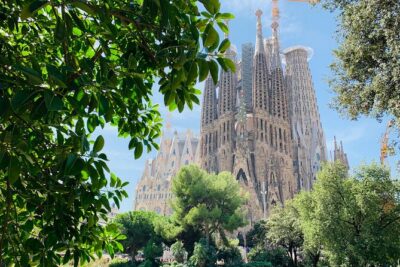
Barcelona all included: Sagrada, Park Güell, Montjuic & Gothic
Read our review →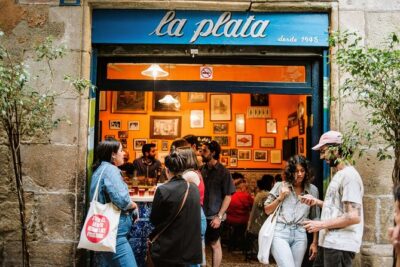
Barcelona Gothic Quarter Tapas & Taverns Food & Wine Tour
Read our review →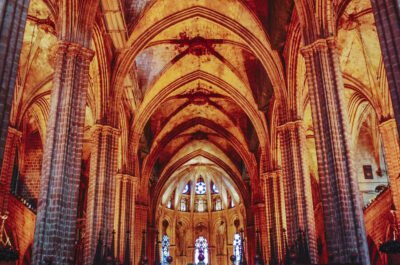
Barcelona Old Town & Gothic Quarter Small Group Tour
Read our review →
Ramblas, Old Town, Gothic and Gaudi Architecture Walking Tour
Read our review →
El Born and Gothic Quarter Wine & Tapas Bar Tour
Read our review →
El Born Food Walking Tour with Tapas and Drinks
Read our review →
Kids and Family Gothic Quarter Walking Tour in Barcelona
Read our review →Where else this one turns up