
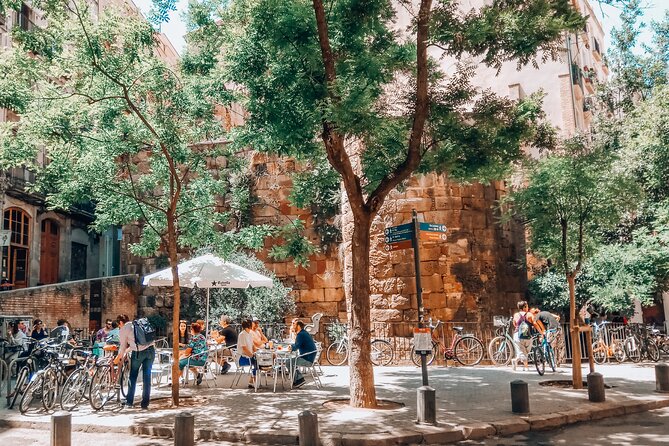
Reviewed · GOTHIC QUARTER WALKS
Introduction to Barcelona’s Old Town Gothic Quarter Walking Tour
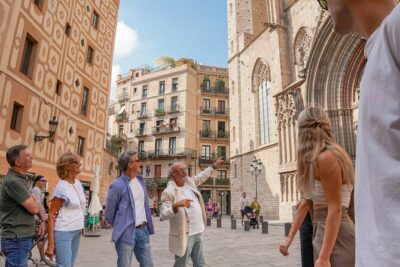
Gothic Quarter stories start in odd places. This walking tour in Barcelona’s Old Town links Roman ruins, medieval power, and even Olympic-era pop art, with a guide who adjusts the pace and stops to match your interests, season, and the day’s weather. It runs about 2 hours 35 minutes, uses a mobile ticket, and works well if you want a focused walk through Ciutat Vella without feeling lost.
I especially like two things. First, you get tailored storytelling from local hosts like Laura or Matt, who mix architecture with human details, not just dates and stone names. Second, the route is packed with “how did I miss that?” moments, from carved symbolism on façades to public art you can’t unsee once someone points it out.
One consideration: this is mostly an exterior walk. Admission fees are not included, and the tour typically does not go inside buildings that require tickets, so if you’re hunting for lots of indoor sights, you may want a follow-up plan for cathedral time or other paid entries.
In This Review
- Key highlights you will feel on the walk
- Getting oriented fast: from Edifici de Correus to Santa Maria del Mar
- Gothic Quarter power play: Pont del Bisbe, Casa de l’Ardiaca, City Hall, and the Generalitat
- Roman plumbing, medieval fountains, and Picasso’s Mediterranean friezes
- Castells, Gaudí streetlamps, and Plaça Reial’s elegant chaos
- Royal squares, cathedral symbolism, and the best kind of Roman surprise
- Plaça de Sant Jaume to Plaça Reial: politics, then a lively finish
- Price and who this tour fits best
- Should you book this Gothic Quarter walking tour?
- FAQ
- How much does the Barcelona Old Town Gothic Quarter walking tour cost?
- How long is the tour?
- Is this tour a small group?
- Is admission to buildings included in the price?
- Where does the tour start and where does it end?
- What is the cancellation policy?
Key highlights you will feel on the walk
- Small group size (max 10 adults) keeps the pace calm and questions easy.
- English language tour makes the Gothic Quarter feel readable and navigable.
- 2,000 years in one loop, from Roman Barcino to Catalan political squares.
- Architecture with punchlines, like civic symbolism and the darker quirks carved into stones.
- Modern art fits the old city, including Roy Lichtenstein’s El Cap and Picasso’s friezes.
- Personal post-tour suggestions help you turn the walk into a smarter day plan.
Getting oriented fast: from Edifici de Correus to Santa Maria del Mar
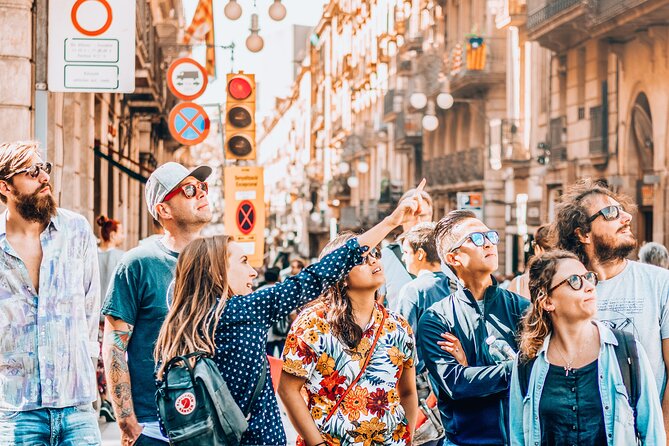
You start at Edifici de Correus (Pl. de Correus, 1). Most people stroll past it as just another big building. Here, it becomes the tour’s “reset button,” a fine Spanish eclectic landmark from the early 20th century with classical columns, ornate sculptural details, and carved eagles that help you orient immediately. It is also a functioning post office, which gives the whole morning a real city feel instead of museum-only vibes.
Then comes El Cap de Barcelona, the colorful pop-art head near the port. It was created by American artist Roy Lichtenstein for the 1992 Olympics, made from concrete with ceramic mosaic, and it is delightfully playful. Yes, it can spark debate about modern art in an older neighborhood. But that tension is part of what Barcelona does well. The city did not stop evolving because the streets are medieval.
Next is Basilica de Santa Maria del Mar, the “sea” basilica that feels honest and purposeful. It was built between 1329 and 1383 with funding from local merchants, sailors, and stonemasons, not royalty. I love the contrast: the exterior looks fortress-like, while the interior is clean and soaring. The carved porters on the entrance connect the church to the daily grind of moving stone, salt, and supplies in a trading city.
If you’re a first-time visitor, this opening stretch does a smart job. You learn what to look for, and you get a sense of how Barcelona layers power, trade, and faith into the street scene. You’re not just collecting sights, you’re building a mental map.
Gothic Quarter power play: Pont del Bisbe, Casa de l’Ardiaca, City Hall, and the Generalitat
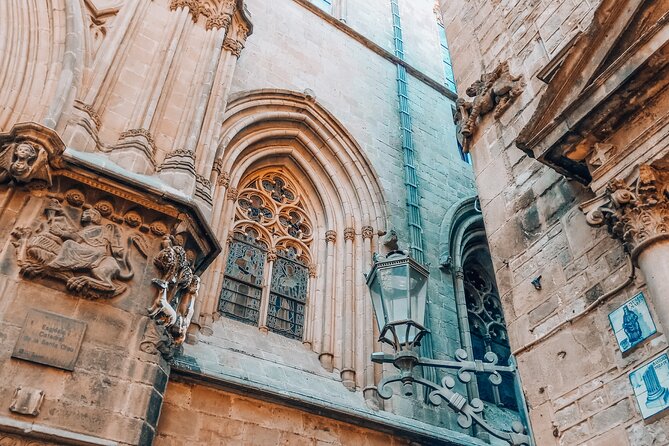
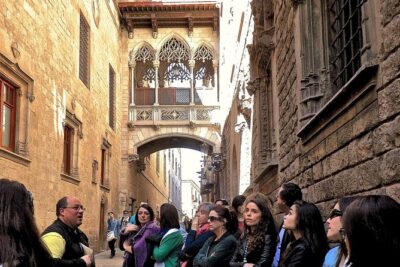
Pont del Bisbe is a small bridge with a big attitude. It looks like it belongs to the Middle Ages, but it was actually built in 1928 as part of a romantic restoration that “medievalized” parts of the Gothic Quarter. The architect was Joan Rubió i Bellver, a disciple of Gaudí, which explains why the craftsmanship still feels intentional.
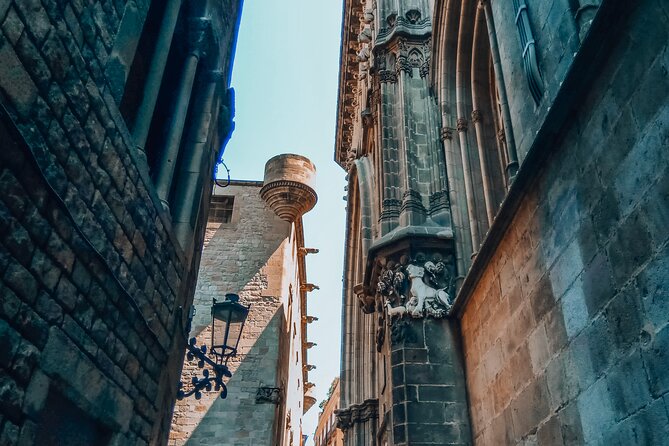
What makes the stop feel like a story is the underside carving: a skull pierced by a dagger. People repeat the superstition that removing it would bring disaster to the city. You do not have to treat that as fact to enjoy the idea, because it’s exactly the kind of Gothic theater Barcelona loves, right there in stone.
Just nearby is Casa de l’Ardiaca, tucked next to the cathedral. At street level it looks like a calm little building, but it has layers: originally Roman, later a medieval archdeacon’s residence, and today it hosts the city’s historical archive. The inner courtyard is peaceful and photogenic with a fountain and palm tree, plus Gothic flourishes that feel film-set perfect.
Then you shift from church-adjacent power to civic power at Ajuntament de Barcelona. This is Barcelona’s city hall, facing Plaça de Sant Jaume across from the Catalan government. The façade is neoclassical and symmetrical, but inside the walls there’s a mix of styles, including Gothic halls. Even if you don’t go in, the coat of arms over the entrance, with the cross of Saint George and the Aragonese royal crown, anchors you in the political identity of the city.
A quick step brings you to Casa Padellàs, originally a 15th-century mansion that was dismantled stone by stone in the 1930s and moved to avoid demolition. Today it houses part of the MUHBA (Barcelona’s History Museum), but the more important takeaway is what sits beneath it. It is built over ruins of Roman Barcino, reminding you that Barcelona rearranges the past when it has to.
Finally in this stretch, you reach Palau de la Generalitat de Catalunya, the political heart of Catalonia for over 600 years. The façade on Plaça de Sant Jaume is Renaissance, while the interior mixes Gothic and Baroque elements. Look for Saint George above the entrance, and then take in the visual conversation between the Palau (regional authority) and the Ajuntament (municipal authority).
This section works because it teaches you a pattern. In Barcelona, politics, religion, and community funding are all written into architecture. Once you see the pattern, the Gothic Quarter stops feeling random.
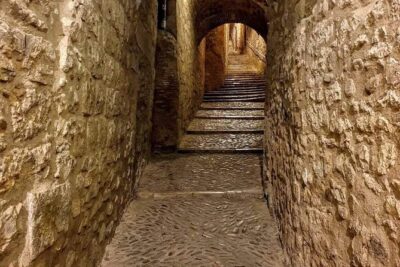
Get lost in the medieval lanes
- Barcelona all included: Sagrada, Park Güell, Montjuic & Gothic
★ 5.0 · 2,169 reviews - Barcelona Gothic Quarter Tapas & Taverns Food & Wine Tour
★ 5.0 · 1,470 reviews - Barcelona: Old Town and Gothic Quarter Walking Tour
★ 4.8 · 1,393 reviews
Roman plumbing, medieval fountains, and Picasso’s Mediterranean friezes
After the civic focus, the walk nudges you back toward the city’s infrastructure side. At Aqüeducte Romà, you will see what remains of the Roman aqueduct: modest, near Plaça Nova, and easy to miss if you are not paying attention. That “small and tucked in” feeling is exactly the point. Roman Barcelona survived because of systems, not just monuments. The reconstructed stretch near the old city entrance arches toward a modern building, like the past is still peeking through the cracks.
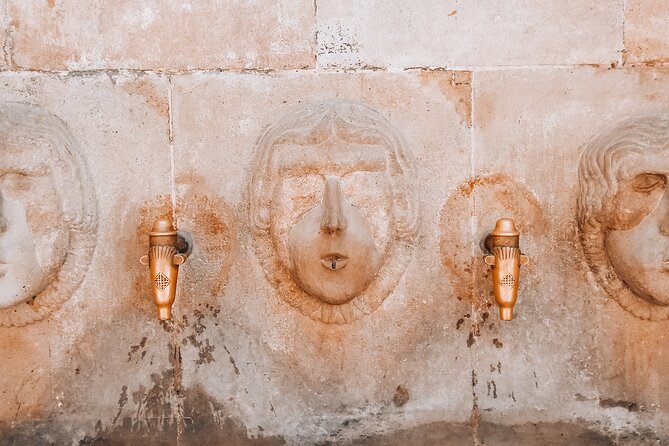
Just a short pause away is Font dels Senyors (the Fountain of the Lords) near Plaça del Rei. This Gothic fountain is simple, but it is deeply human. It was part of the medieval water system feeding noble residences, and the stone shows wear and grooves from centuries of use. It’s not a massive spectacle, but it connects you to daily ritual, not just royal ceremony.
Then comes one of the most memorable “wait, what am I seeing?” stops: Col.legi d’Arquitectes de Catalunya, the building with Els Tres Frisos de la Mediterrània. These three concrete friezes are public art with a temperature problem. Designed by Picasso and carved by Carl Nesjar in the 1960s, they depict Mediterranean scenes with children and mythological creatures. The figures were sandblasted into raw concrete, so the effect is sketch-like and slightly rough, and yes, it was controversial for mixing brutalist public space with Picasso’s visual language.
From a practical viewpoint, this stop is useful. It trains your eye for how Barcelona treats public art as part of civic identity, even when it does not “blend in” perfectly.
Right after that, you reach Capella de Santa Àgueda, a 14th-century chapel used for royal prayer. The exterior has tall narrow windows and an austere Catalan Gothic feel. While the tour usually admires from outside, this chapel is also linked to a major artistic treasure, the Epiphany Altarpiece by Jaume Huguet.
If your brain likes connections, this middle stretch is a win. You move from Roman water delivery to medieval noble daily life to modern public art and religious iconography, all within walking distance.
Castells, Gaudí streetlamps, and Plaça Reial’s elegant chaos
Monument als Castellers is the energetic counterweight to all that stone and politics. This sculpture captures a moment from the castell tradition, where a team builds human towers and the small child, the enxaneta, crowns the stack. The sculpture shows that triumphant hand-raise with careful faces and limbs, emphasizing the balance and tension that make castells so compelling.
Then you walk to Palau Reial Major, once the nerve center of medieval power. It is not one single palace but a complex added over centuries. The headline feature is the Gothic Saló del Tinell with its impressive arches, built to impress visiting nobles. If you want a quick mental movie of the place, stand near the square and picture ceremonial crowds and power meetings taking place under those vast Gothic ribs.
Next, Muralla Romana brings you back to the Roman city wall. Built around the late 3rd and early 4th century CE to enclose Barcino, it originally had 74 towers and two main gates. Parts still survive and are sometimes built into later buildings, so you can literally see Rome reused instead of erased. Look for massive stone blocks and careful joins without mortar, plus hints of reused inscriptions or column fragments tucked into masonry.
After that, the tour heads toward the Gaudí signals hiding in plain view. Faroles modernistes d’Antoni Gaudí are the elegant streetlamps in Plaça Reial. They were designed in 1879 when Gaudí was only 27, and they already show the imagination that would define his career. Each lamp stands on a slender cast-iron column with twisting vine-like details and a winged helmet at the top, a nod to Mercury.
In the same zone is Font de les Tres Gràcies, a 19th-century fountain dedicated to the Three Graces. They appear back-to-back, holding up water basins above their heads. It may not be the most famous landmark in Barcelona, but it is highly photogenic and easy to enjoy while people-watching.
This whole stretch feels like the tour’s heartbeat. You go from medieval power to living Catalan tradition, then to modernist design details and public space energy.
Royal squares, cathedral symbolism, and the best kind of Roman surprise
Now the walk settles into the ceremonial core. Palau Episcopal sits next to the cathedral and served as the bishop’s official residence since Romanesque times, though the current structure mainly dates to the 12th and 13th centuries. It is easy to overlook from the street, but that’s part of its power. This is where religious administration happened, negotiated and managed, close to royal and civic authority.
Tucked along a quieter street is Palau Centelles, a late Gothic 15th-century noble home linked to the Centelles family. The coat of arms is still visible above the door. Today it houses part of the Catalan Ministry of Foreign Affairs, so it remains tied to modern governance even as it preserves the atmosphere of fortified medieval nobility.
Overlooking the old port is Casa Llotja de Mar, originally a 14th-century merchant exchange. This is Barcelona’s commerce brain in stone, where traders, shipowners, and bankers made deals that helped the city grow into a Mediterranean powerhouse. Later, it was wrapped in an 18th-century neoclassical shell, so you see a cleaner façade than you might expect from its medieval origins.
The tour then points you toward memory and documents at Arxiu de la Corona d’Aragó. This Gothic archive, founded in the 14th century, is described as one of the oldest and most important in Europe, holding documents that span centuries of Mediterranean history. The building looks sober from the outside, which is fitting for a place designed to protect paper and preserve decisions.
Close by stands Mirador del Rei Martí, a tall, narrow watchtower rising above the royal palace complex. It was built in the 16th century and is named after King Martin I of Aragon. Even if you don’t go inside, it adds vertical drama to Plaça del Rei’s skyline.
A quieter stop follows at Capella de Santa Llúcia, built in the late 13th century. It originally served as a funerary chapel, then later became linked to a religious nursing order. Dedicated to Saint Lucy, patron of the blind, it carries a sense of purpose even when it blends into the cathedral’s walls.
Then comes Basilica dels Sants Martirs Just i Pastor, tucked into a quiet square where it feels easier to slow down. The current Gothic church dates to the 14th century, but Christian worship on the site dates back to at least the 4th century. The basilica honors Roman children Just and Pastor, executed for refusing to renounce their faith.
For one of the coolest surprises, look for MUHBA Temple d’August. Hidden behind a narrow doorway off Carrer Paradís, it reveals four towering Roman columns, the remains of the Temple of Augustus. Built in the 1st century BCE, it was buried and built over over time. Seeing it in a medieval courtyard is the kind of Roman moment Barcelona is famous for, and it is free to enter.
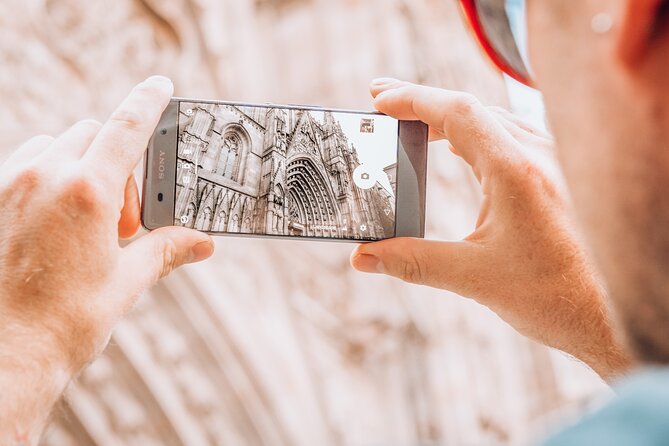
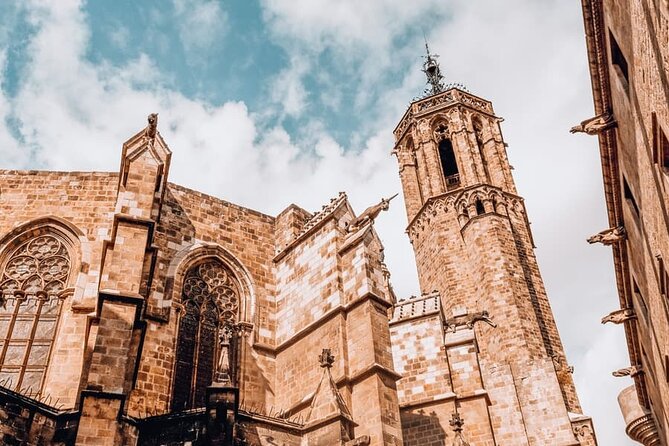
Finally, you reach the big one, Barcelona Cathedral. The Cathedral of the Holy Cross and Saint Eulàlia is a textbook Gothic landmark with tall spiky symbolism. Tradition says Saint Eulàlia was executed at 13, and 13 white geese are kept in the cloister in her memory, even if the tour often stays outside. The façade you see includes a neo-Gothic enhancement from the 19th century, and there are playful hidden creatures carved into the stone, including an elephant and a unicorn.
All of that funnels neatly into Plaça del Rei, Barcelona’s medieval ceremonial center. It feels enclosed and intimate, framed by Palau Reial Major, Capella de Santa Àgueda, Mirador del Rei Martí, and Casa Padellàs.
This section is where you learn the “why” behind the architecture. It is not just pretty buildings. It is how people in power, faith, and commerce kept the city running.
Plaça de Sant Jaume to Plaça Reial: politics, then a lively finish
You close with the modern pulse of medieval foundations at Plaça de Sant Jaume. This square has served as a civic heart for more than 2,000 years, starting as the Roman forum. Today it still functions as the place where municipal and Catalan government face each other, side by side. Expect it to feel built for public life, with the space cleared for protests, festivals, and castells.
Then the walk finishes where Barcelona tends to relax back into pleasure: Plaça Reial. This iconic 19th-century square was built on the site of a former convent and designed as a grand public space with neoclassical symmetry, palm trees, arched walkways, and iron balconies. In the center, you’ll find the Font de les Tres Gràcies, with Gaudí’s streetlamps nearby. After all the stone seriousness, this is a good place to sit, recharge, and plan your next step, whether that means heading toward La Rambla or circling back to focus on one or two details you want to see again at slower speed.
Other things to see around Barcelona
- Barcelona Tapas and Wine Experience Small-Group Walking Tour★ 5.0 · 5,804 reviews
- Barcelona: Tapas Walking Tour with Food, Wine, and History★ 4.8 · 4,261 reviews
- Barcelona: Food Walking Tour with Tapas and Wine★ 4.9 · 2,180 reviews
- Barcelona Tapas Walking Tour: Food, Wine & History★ 4.5 · 1,928 reviews
- Barcelona Helicopter, Sailboat & Old Town Private Walking Tour★ 5.0 · 1,395 reviews
- Barcelona: City Walking Tour with a Local Guide★ 4.9 · 1,384 reviews
Price and who this tour fits best
At $43.37 per person for about 2 hours 35 minutes, the value comes from two things: the small group and what you get besides walking. With max 10 adults, you are not squeezed into a loud line, and you can ask questions while the guide points out the symbolic stuff you would otherwise miss. The tour also includes post-tour recommendations, so you leave with a direction for food and follow-up sights.
It also helps that the route mixes time periods. If you only like Gothic churches, you get them. If you also enjoy Roman remnants, civic symbolism, or modern art intrusions like Lichtenstein’s head and Picasso’s friezes, you get those too. And because the experience can be adjusted based on your interests and the day’s conditions, it tends to feel less templated.
This is a great fit for you if:
- You want an organized way to see the Gothic Quarter without getting overwhelmed.
- You like architecture, symbolism, and city history told in plain language.
- You want a single morning foundation you can build on later.
It may not be the best fit if you are determined to spend a lot of time inside paid attractions. Since admission fees are not included and the tour usually does not go into ticketed buildings, you might need to add cathedral time or another indoor stop on your own.
Should you book this Gothic Quarter walking tour?
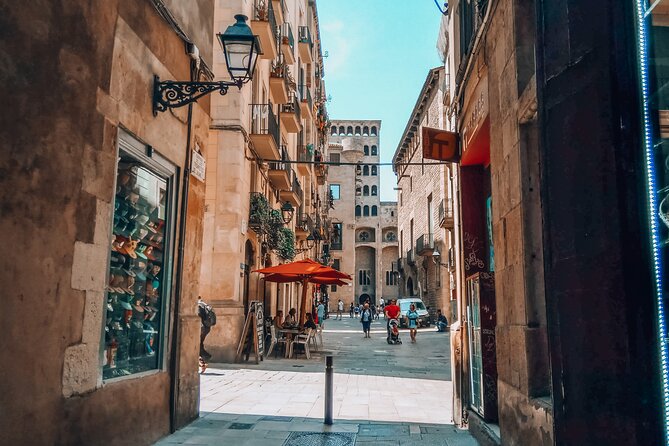
If you want to understand Barcelona instead of just photograph it, I’d book it. The route is smart, the group size is right, and the stops train your eye for the “invisible” details, like carved civic symbols, Roman infrastructure clues, and the way modern art and medieval streets coexist.
My call: book it if you’re aiming for clarity and confidence in the Old Town. Skip it only if you primarily want indoor ticketed sights, because this walk is built for outside architecture, storytelling, and a guided sense of place.
FAQ
How much does the Barcelona Old Town Gothic Quarter walking tour cost?
The tour price is $43.37 per person.
How long is the tour?
It runs for about 2 hours 35 minutes.
Is this tour a small group?
Yes. It is limited to a maximum of 10 travelers.
Is admission to buildings included in the price?
No. Admission fees are not included, and the tour typically does not enter buildings that require a fee.
Where does the tour start and where does it end?
It starts at Pl. de Correus, 1, Ciutat Vella, 08002 Barcelona. It ends at or near Plaça Reial (Pl. Reial, Ciutat Vella, 08002 Barcelona).
What is the cancellation policy?
You can cancel for free up to 24 hours in advance of the experience start time for a full refund.
The latest to open for booking


Gothic Quarter Walks, side by side.
Barcelona all included: Sagrada, Park Güell, Montjuic & Gothic
Read our review →
Barcelona Gothic Quarter Tapas & Taverns Food & Wine Tour
Read our review →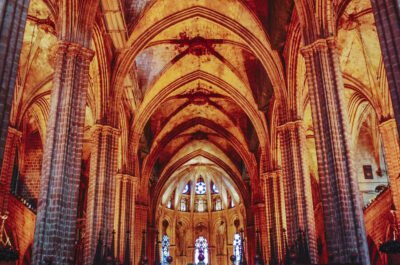
Barcelona Old Town & Gothic Quarter Small Group Tour
Read our review →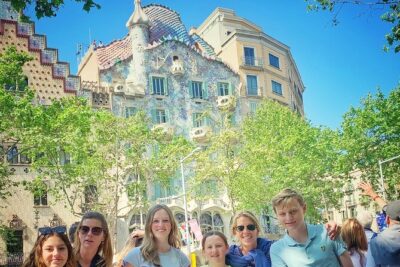
Ramblas, Old Town, Gothic and Gaudi Architecture Walking Tour
Read our review →
El Born and Gothic Quarter Wine & Tapas Bar Tour
Read our review →
El Born Food Walking Tour with Tapas and Drinks
Read our review →
Kids and Family Gothic Quarter Walking Tour in Barcelona
Read our review →Where else this one turns up