
Reviewed · GOTHIC QUARTER WALKS
Luca’s Hidden Old Barcelona: the Gothic and El Born Tour
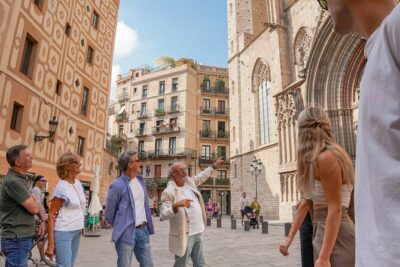
Barcelona’s old streets have real teeth. This 2h15 walk with Luca takes you from Plaça de Sant Jaume through the Gothic Quarter and into El Born, where buildings come with political drama, Roman leftovers, and Jewish history. I love how the tour threads centuries together without making it feel like a textbook. I also love the value, because so many key stops have free admission. One drawback to plan for: it’s a lot of time on your feet, and the sun can be intense on a summer day.
Luca’s energy is the secret sauce. He’s the kind of guide who uses real details, asks if you have questions, and keeps the story moving, even when the history gets heavy. By the end, you’ll have a clearer sense of where you are, and you’ll likely want to wander longer on your own with his food and sightseeing suggestions in mind.
In This Review
- Key Highlights You’ll Care About
- Price and What You Really Get for $13.27
- Your Two-Quarter Walk: Gothic Quarter to El Born
- Stop 1: Plaça de Sant Jaume, Barcelona’s Political Heart
- Stop 2: MUHBA Temple d’August, Roman Echoes in Stone
- Stop 3: Catedral de Barcelona (Outside Only)
- Stop 4: A Main Gothic Quarter Feature You Might Miss
- Stop 5: MUHBA El Call, The Medieval Jewish Neighborhood
- Stop 6: Esglesia de Sant Felip Neri and the Shadow of Civil War
- Stop 7: Basilica de Santa Maria del Mar, a Fan Favorite Church
- Stop 8: El Fossar de les Moreres, Madrid Versus Barcelona
- Stop 9: Passeig del Born, Medieval Entertainment Energy
- The Real Value: Stories That Make the Streets Coherent
- Group Size, Pacing, and Language Notes That Matter
- What You’ll Do With the Rest of Your Day (Practical Tips)
- Who Should Book This Tour
- Should You Book Luca’s Hidden Old Barcelona?
- FAQ
- How long is the Luca’s Hidden Old Barcelona: the Gothic and El Born Tour?
- What language is the tour offered in?
- Is this a small group tour?
- Is there a mobile ticket?
- Do I need to pay admission for the stops?
- What is the cancellation policy?
Key Highlights You’ll Care About
- Small-group vibe (max 15): more Q and personal attention than big bus-style tours
- Free entries on most stops: you get guided access to key sites without extra ticket costs
- Political stories you can actually feel: from local government to the Madrid versus Barcelona conflict
- Jewish quarter and civil war context: you’ll understand why certain corners look the way they do
- Architecture stops that are mostly exterior: good for photos and street-level orientation
- An ending in El Born: easy to transition into food and evening strolling
Price and What You Really Get for $13.27
At $13.27 per person for about 2 hours 15 minutes, this is priced like a bargain compared to many “historical walking tour” options in major cities. The smart part is that the tour is not only telling stories. It’s getting you to locations with free admission where you would otherwise either miss the significance or feel awkward wandering without context.
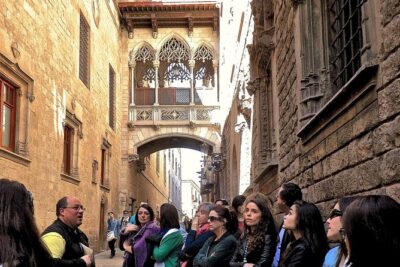
You’re also paying for an actual guide, not just a route. That matters here, because the Gothic Quarter can feel like one long maze of stone streets. Luca helps you sort what is older, what was rebuilt, and what the buildings mean in Barcelona’s push and pull with power over time.
One practical detail: the tour is in English and uses a mobile ticket. That’s helpful if you prefer not to juggle printouts while you’re walking around Ciutat Vella.
Your Two-Quarter Walk: Gothic Quarter to El Born
This tour is designed as a straight, walkable arc through some of Barcelona’s most historical neighborhoods. You start in the Gothic core and end in El Born, so you finish near a lively area for food and evening plans.
From a “first visit” point of view, this is a strong move. The Gothic Quarter is not just pretty. It’s political. It’s layered. And it’s full of “wait, why is that here?” moments. El Born continues that theme, with its medieval neighborhood feel and the kind of sites that connect local identity to major Spanish history.
The walking pace is manageable for most people, but it’s still a walking tour. Expect plenty of time outdoors, which can be great in mild weather and tougher in peak heat.
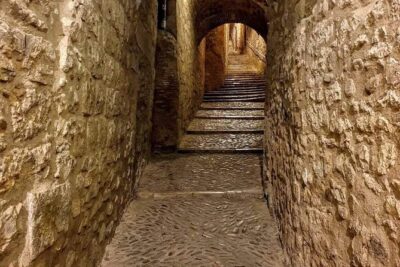
Get lost in the medieval lanes
- Barcelona all included: Sagrada, Park Güell, Montjuic & Gothic
★ 5.0 · 2,169 reviews - Barcelona Gothic Quarter Tapas & Taverns Food & Wine Tour
★ 5.0 · 1,470 reviews - Barcelona: Old Town and Gothic Quarter Walking Tour
★ 4.8 · 1,393 reviews
Stop 1: Plaça de Sant Jaume, Barcelona’s Political Heart
You begin at Pl. de Sant Jaume 3, in the center of Ciutat Vella. This square is one of those places where you can look around and immediately sense power. The town hall and the regional government sit here, and the stop is framed as a political and social center that has mattered for roughly the last 2,000 years.
Why this matters: if you start here, the rest of the tour makes more sense. Later stops about conflict and identity do not feel random. They feel like consequences. You start to see Barcelona as a place where politics is not only in government buildings, it’s also in how neighborhoods and memory are shaped.
This is also a good “orientation moment.” If you’ve never walked this area before, the square helps you build a mental map fast.
Stop 2: MUHBA Temple d’August, Roman Echoes in Stone
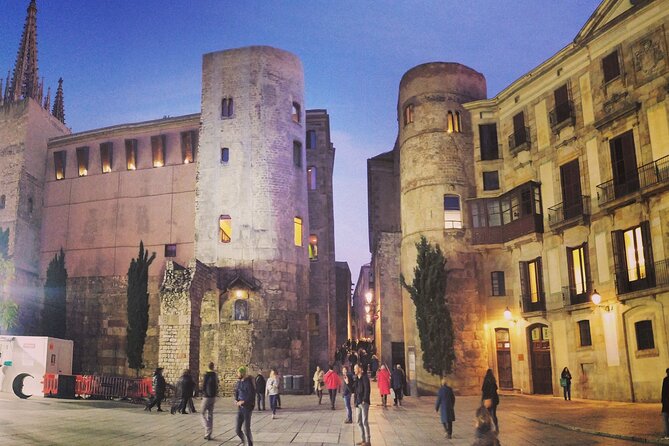
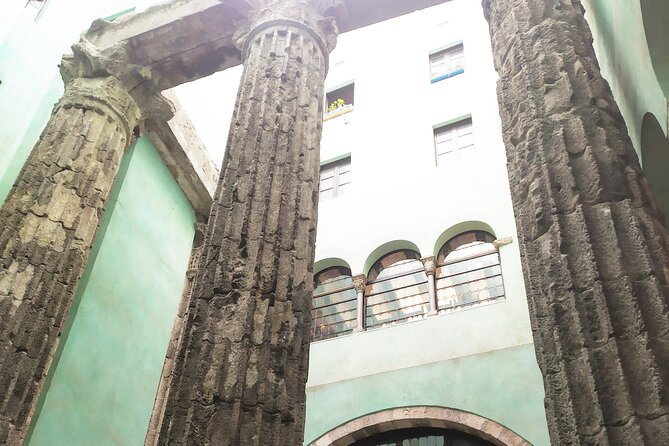
Next you hit MUHBA Temple d’August, where you’ll see four columns tied to the huge temple of Augustus that once stood in this location. This is one of the cleverest parts of the tour because it shows how Barcelona’s “old” is not only medieval. It goes deeper.
Even if you are not a Roman-history person, columns like these change how you read the city. You start noticing that today’s Gothic streets sit on top of older layers.
The good news: admission is free at this stop, so you get real content without extra ticket friction.
Stop 3: Catedral de Barcelona (Outside Only)
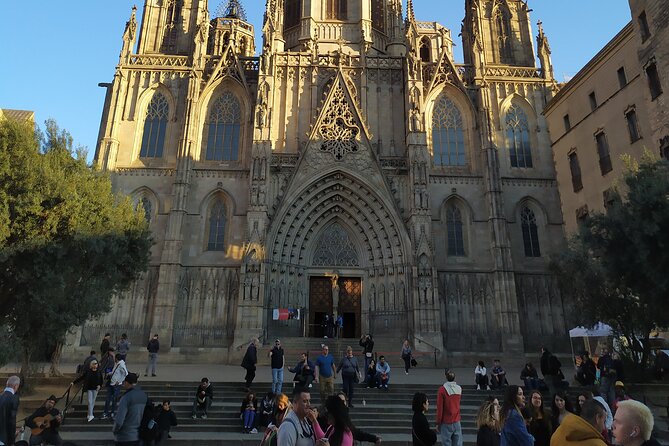
Then it’s on to Catedral de Barcelona, with the focus on the outside. Admission is not included here, which you should treat as a heads up. In practice, the value of this stop is orientation and spotting key Gothic elements from the street.
If your goal is interior cathedral time, this tour may not fully satisfy that. But if your goal is understanding the Gothic Quarter’s look and logic, the outside approach works well, especially in a walking format where you want to keep moving.
Stop 4: A Main Gothic Quarter Feature You Might Miss
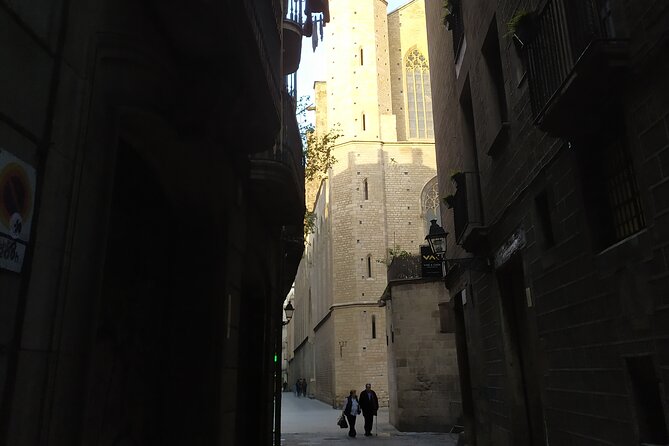
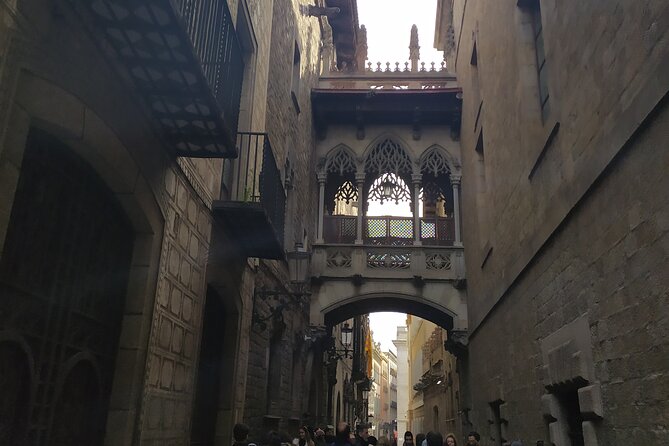
The tour makes a point of stopping at one of the Gothic Quarter’s headline features. The key idea is simple: Luca slows you down at a moment that would be easy to rush past if you were exploring alone.
Why you’ll appreciate this: the Gothic Quarter is full of details, but your eyes need a guide to know what to prioritize. This stop gives you a “now look at this” moment, so you stop seeing it as random old stone and start seeing patterns.
Other things to see around Barcelona
- Barcelona: Tapas Walking Tour with Food, Wine, and History★ 4.8 · 4,261 reviews
- Highlights & Hidden Spots of Barcelona Bike Tour w/ Local Guide★ 4.5 · 3,009 reviews
- Barcelona Tapas Walking Tour: Food, Wine & History★ 4.5 · 1,928 reviews
- Barcelona 3-hour Bike or E-Bike Tour: Highlights and Hidden Gems★ 5.0 · 1,429 reviews
- Barcelona: 2.5-Hour Bike or E-Bike Historical Tour★ 4.5 · 1,262 reviews
- Barcelona Old Town Tapas Tour: Vermouth, Bites & Hidden Gems★ 5.0 · 627 reviews
Stop 5: MUHBA El Call, The Medieval Jewish Neighborhood
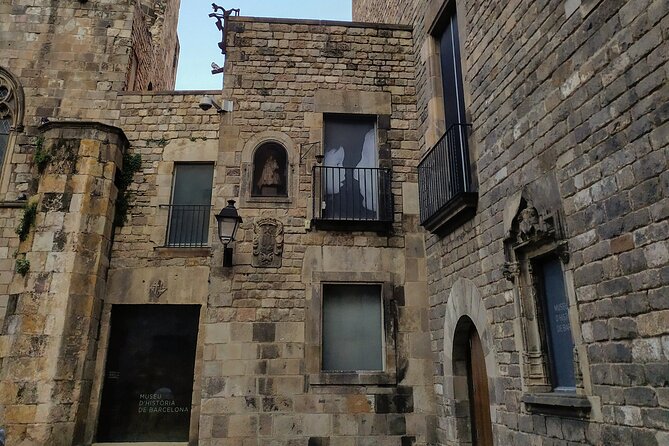
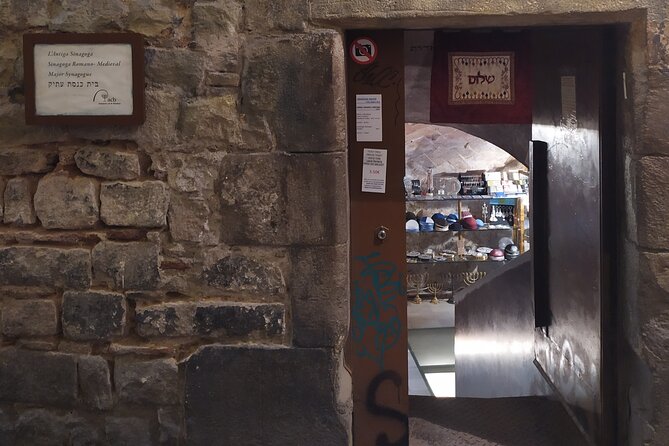
From the Roman and Gothic layers, the story shifts into MUHBA – El Call, the medieval Jewish neighborhood. This stop is where history becomes personal in a different way, because it brings in the lives and community that shaped the area long before modern tourism took over.
Admission is free here, so it’s another high-value stop. And it’s also a meaningful pause in the route. El Call helps you understand that Barcelona’s past is not only rulers and wars. It’s also neighborhoods, daily life, and cultural change.
Stop 6: Esglesia de Sant Felip Neri and the Shadow of Civil War
At Esglesia de Sant Felip Neri, you get a striking contrast. The church is described as Gaudí’s favorite church during his lifetime, and it’s also connected to one of the cutest little squares in the old city. But the story turns darker, with discussion of the Spanish civil war.
This stop is a reminder that beauty and tragedy can share the same stones. Luca’s approach keeps it readable rather than gloomy for the sake of drama. He helps you understand why certain places carry a recent history that still matters.
Admission is free for this stop, so you get that context without extra costs.
Stop 7: Basilica de Santa Maria del Mar, a Fan Favorite Church
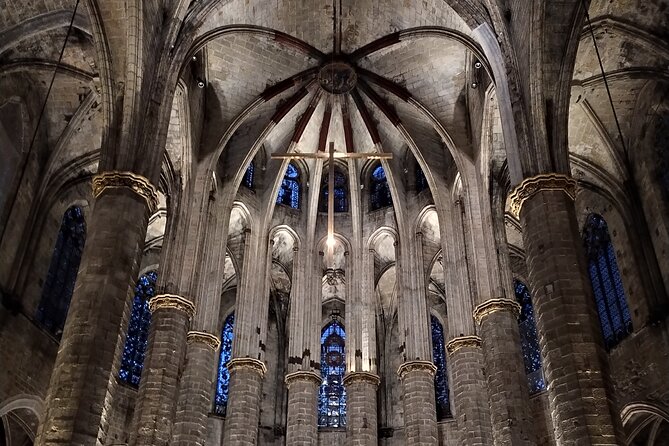
Then you reach Basilica de Santa Maria del Mar, framed as the most loved church in Barcelona. You spend time outside, and the focus is on why this church holds such a strong place in local affection.
If you’ve ever walked past a famous church and thought, Okay, pretty, and then moved on, this is the moment to slow down a bit. Luca helps you look at it like a piece of community identity, not just architecture.
Admission is free here in the tour format.
Stop 8: El Fossar de les Moreres, Madrid Versus Barcelona
This is one of the most important stops on the whole route, El Fossar de les Moreres. It’s presented as a fundamental place to understand the political conflict between Madrid and Barcelona.
I like this kind of stop because it ties big-picture Spanish history to a specific location you can stand in front of. You’re not learning abstract slogans. You’re learning why memory gets anchored in real places.
It’s also free in the tour’s structure, which is another win.
Stop 9: Passeig del Born, Medieval Entertainment Energy
Finally, the tour ends with Passeig del Born, described as a medieval entertainment square. In other words, you get a lighter-feeling beat before you step out into the present-day streets.
This last stop helps you reset your brain. After the deeper political and historical content, you finish with a sense of how the medieval city would have felt in motion.
The tour ends near El Born Centre de Cultura i Memòria by Mercat del Born, right around Plaça Comercial. That’s a practical way to finish because you’re already in an area where it’s easy to eat and keep exploring.
The Real Value: Stories That Make the Streets Coherent
A lot of city tours hit a checklist: landmark, date, photo, next. What makes this one worth your time is how it connects the dots across the route.
You start at the political center. You get Roman remains. You hit Gothic architecture and a core Gothic feature. Then you move into El Call, shift to Gaudí’s favorite church with civil war context, return to a beloved church, and end with the conflict story tied to El Fossar de les Moreres. After that, you step into the medieval entertainment vibe of the Born.
That thread is why the tour feels like more than sightseeing. You walk away with mental hooks that help you understand what you see later, even if you go off-script the moment the tour finishes.
Group Size, Pacing, and Language Notes That Matter
The tour caps at 15 travelers, and smaller groups can happen. That affects your experience more than people expect. When the group is small, questions get answered without rushing, and you spend less time waiting for everyone to catch up in narrow streets.
The tour is offered in English, and one honest consideration is that Luca talks with a fast, energetic style. If your English is still in progress, you might need a bit more concentration. The good side: the guide also asks for questions, and he is set up to keep communication clear.
Timing-wise, you’re out for about 2h15, and it works well as a “start your visit” activity because it gives you a base map of what matters in this area.
What You’ll Do With the Rest of Your Day (Practical Tips)
This tour ends in El Born, and that’s a smart place to stop. You can keep walking right away, or you can use Luca’s kind of end-of-tour suggestions to choose a meal without guessing.
From the review details, Luca also shares a big list of food and sightseeing recommendations, plus he seems to follow up after the tour with extra info. Even if you ignore half the list, having a curated shortlist saves you time and helps you avoid the most generic traps.
If you want a simple plan: do this early, then spend the rest of your day wandering with one goal in mind. Try to spot the things you just learned how to read, like layers of power, the significance of the squares, and the reason certain neighborhoods feel different from block to block.
Who Should Book This Tour
Book it if you want:
- A walking tour that gives you context fast
- Gothic Quarter orientation plus El Born history in one route
- Political storylines tied to specific places
- A guide who brings energy, humor, and lots of concrete details
Skip it, or consider a different format, if:
- You need frequent breaks and not much time outdoors
- You have reduced mobility and would prefer a different arrangement (this tour is not suitable for reduced mobility, though pacing can be adapted and private options may be arranged)
- You’re hoping for mostly indoor museum-style stops, because several key points are exterior or street-level
Should You Book Luca’s Hidden Old Barcelona?
Yes, if you like your history grounded in real streets and real locations. The price is low enough that you are not taking a big risk, and the structure is built for value: free entry at many stops, professional guidance, and an ending in El Born that sets you up for the rest of your day.
The only real “watch out” is the practical one. You’re walking in an old city core that can get hot and sun-heavy. If you travel in summer, wear sunscreen, bring water, and plan to keep your eyes open for shade breaks.
If that sounds like your kind of Barcelona day, this is a very solid way to understand the Gothic Quarter and El Born beyond postcard surface level.
FAQ
How long is the Luca’s Hidden Old Barcelona: the Gothic and El Born Tour?
It runs about 2 hours 15 minutes.
What language is the tour offered in?
The tour is offered in English.
Is this a small group tour?
Yes. It has a maximum of 15 travelers.
Is there a mobile ticket?
Yes, the tour includes a mobile ticket.
Do I need to pay admission for the stops?
Many stops have free admission. The cathedral stop is outside only, and its admission ticket is not included.
What is the cancellation policy?
You can cancel for a full refund up to 24 hours before the experience starts. If you cancel less than 24 hours before, the amount you paid is not refunded.
The latest to open for booking


Gothic Quarter Walks, side by side.
Barcelona all included: Sagrada, Park Güell, Montjuic & Gothic
Read our review →
Barcelona Gothic Quarter Tapas & Taverns Food & Wine Tour
Read our review →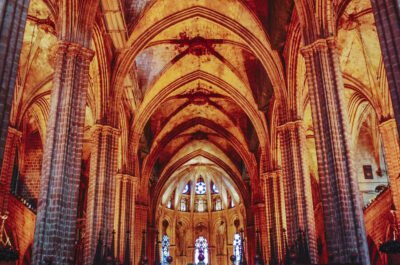
Barcelona Old Town & Gothic Quarter Small Group Tour
Read our review →
Ramblas, Old Town, Gothic and Gaudi Architecture Walking Tour
Read our review →
El Born and Gothic Quarter Wine & Tapas Bar Tour
Read our review →
El Born Food Walking Tour with Tapas and Drinks
Read our review →
Kids and Family Gothic Quarter Walking Tour in Barcelona
Read our review →Where else this one turns up