
Reviewed · GOTHIC QUARTER WALKS
Private Barcelona Jewish Quarter Tour with Local Expert Guide
Jewish Barcelona changes how you read the city. I like that this private tour pairs El Call alley atmosphere with Major Synagogue context, so you get meaning, not just photos. It is also a smart pick if your schedule is tight, because you cover multiple key zones without feeling rushed.
Two big reasons I think this works: you get a local expert to translate what you are seeing, and you also leave with practical suggestions on where to go next for food and drinks. One thing to plan for, though, is that the Old Synagogue stop has an admission fee that is not included.
Because it is private, the pacing is more flexible than the usual big-group tours. The downside is simple math: at $167 per person, it is best when you value one-on-one attention enough to pay for it.
In This Review
- Key moments that make this tour click
- How this 2-hour private tour turns Barcelona’s streets into a story
- Starting at Conesa Entrepans, then stepping into the Gothic Quarter
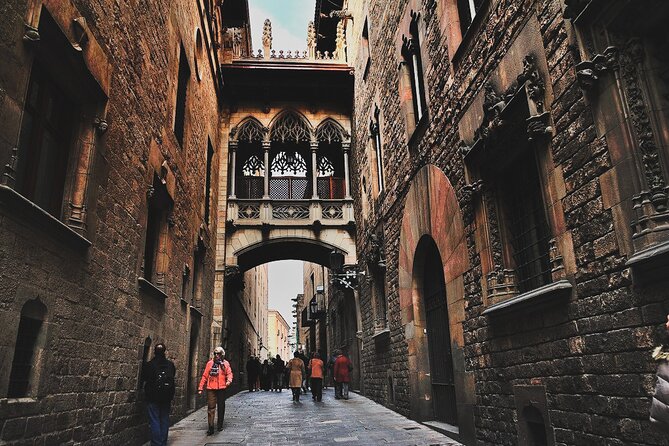
- Stop 1 in the Jewish Quarter: alleys, the Inquisition, and lingering medieval atmosphere
- Stop 2 at the Major Synagogue: what makes it special and what costs extra
- MUHBA El Call stops: where the city explains itself through narrow streets
- MUHBA El Call, round two: calm streets and a physical reason for the shadows
- Finishing in the Gothic Quarter: medieval streets, a Jewish bath ruin, and Synagogue Major
- Price and value: when $167 per person makes sense
- What to expect from your guide, and how to stay unbothered if plans change
- Practical tips for a better walk in the Jewish Quarter and El Call
- Should you book this Private Barcelona Jewish Quarter Tour?
- FAQ
- Where does the tour start?
- What time does the tour begin?
- How long is the Private Barcelona Jewish Quarter Tour?
- Is this tour truly private?
- What language is the tour offered in?
- How much does the tour cost?
- Are entrance fees included?
- Which stops have free admission?
- Can I cancel for a full refund?
Key moments that make this tour click
- A guided walk built around El Call street life, not just landmarks
- Major Synagogue stop in the Jewish Quarter area, with extra admission to budget
- MUHBA El Call context, including why the streets feel narrow and shaded
- Gothic Quarter tie-ins, like the medieval city framework around the Jewish sites
- Food and next-stop advice from your guide, so your day keeps moving after the tour
How this 2-hour private tour turns Barcelona’s streets into a story
This is the kind of tour that helps you understand Barcelona in layers. You start in the Jewish Quarter and then connect it to the Gothic Quarter, where medieval streets still shape how you move. In about two hours, you get the key locations that explain how Jewish life formed, grew, and was violently disrupted.
What I like is the pacing. The stops are short and focused, which makes sense because most of the value is in seeing small details up close, then learning what they mean. If you are only in town for a couple of days, this kind of structure can help you get your bearings fast.
Also, the fact that it is a private walking tour matters here. These are tight streets and small sites where a guide can point things out and adjust to your questions. In a group setting, you often wait your turn. Here, you can keep the momentum.
Starting at Conesa Entrepans, then stepping into the Gothic Quarter
Your meeting point is Conesa Entrepans, in the Gothic area, Carrer de la Llibreteria, 1 (nearby public transport). Starting at 10:00 am, you are going early enough to catch calmer streets before the day swells.
From the start, the tour is set up for an easy walk with a moderate fitness level. You are not doing a long hike, but you are navigating older urban blocks, so comfortable shoes help. If rain rolls in, you will still be walking, so a compact umbrella is a good idea.
This is also the part of the day where having a local guide pays off. In the Gothic Quarter, everything looks historic from a distance. Your guide’s job is to help you tell what is Jewish history, what is Roman influence in the architecture, and what is later medieval development.
Get lost in the medieval lanes
- Barcelona all included: Sagrada, Park Güell, Montjuic & Gothic
★ 5.0 · 2,169 reviews - Barcelona Gothic Quarter Tapas & Taverns Food & Wine Tour
★ 5.0 · 1,470 reviews - Barcelona: Old Town and Gothic Quarter Walking Tour
★ 4.8 · 1,393 reviews
Stop 1 in the Jewish Quarter: alleys, the Inquisition, and lingering medieval atmosphere
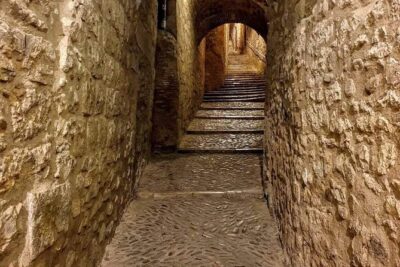
The tour’s first stop is the Jewish Quarter area, a maze of alleys where the medieval vibe feels close to the surface. Jews began settling here as early as the 9th century, and the neighborhood’s reputation was shaped by envy and fear. There were accusations that Jews possessed knowledge that made people nervous, with rumors that they were sorcerers.
Then comes the brutal turning point. In 1492, the Inquisition ravaged the quarter, and Jews were expelled from Barcelona. Standing in those narrow streets, you are not just looking at buildings, you are watching how a city remembers what it tried to erase.
You will also encounter details that help the story feel local. The area includes the old synagogue site context, the Alchemist’s House, and antique dealers. Even when you see shops or newer storefronts, the street layout keeps pulling you back into the Middle Ages.
This stop is about 10 minutes, and the admission ticket is free.
Stop 2 at the Major Synagogue: what makes it special and what costs extra
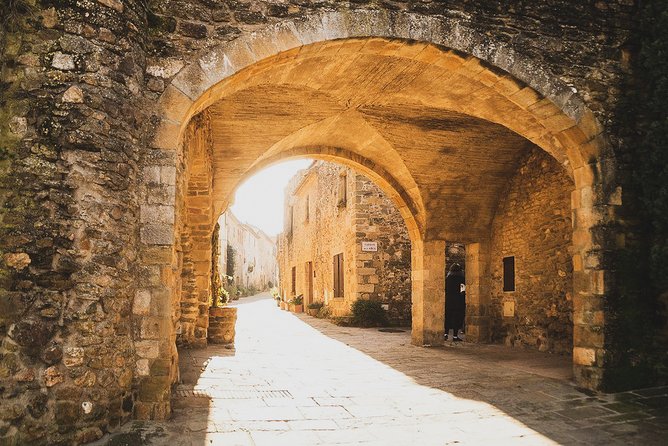
Next is the Old Synagogue area, often described as the oldest synagogue in Europe. Some sources link its roots to the ancient Roman period, and the architecture may show Roman influence. Even if you do not go deep into architectural terms, the key is the continuity of place, Roman-era references and later Jewish community life all tied to one site.
This is where budgeting matters. The Major Synagogue admission is not included, so you should plan for extra cost at this stop. The time here is around 20 minutes, which is long enough to see the key points without feeling stuck.
Also, because this is a religious and historical site, it is worth moving at a respectful pace. Your guide can help you decide what to focus on, especially if you are balancing this tour with other major Barcelona sights that day.
MUHBA El Call stops: where the city explains itself through narrow streets
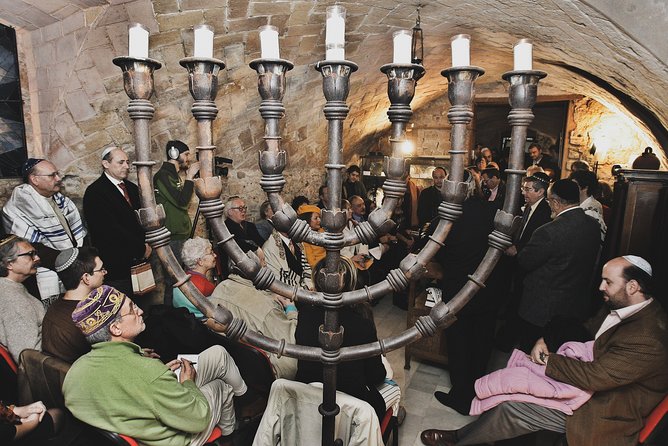
You then shift into the heart of the Gothic Quarter for MUHBA sites tied to El Call, the historic Jewish quarter. This is near the pedestrian area of La Rambla, so it is easy to locate, but the atmosphere changes quickly once you step into the quieter side streets.
Carrer de Sant Domènec is the kind of street name that carries real weight here. It was considered the main street of the Jewish quarter, with kosher butchers’ shops and the homes of respected members of the community. This is one of the best parts of the tour because it turns a geographic label into daily life. You start to imagine what a morning, a market visit, and a community gathering might have looked like.
The word El Call itself matters too. In Catalan, it refers to the place of residence of Jewish communities. Your guide also sets the broader European timeline in context, pointing out that Jewish community history in Europe is often framed from the early Middle Ages to the French Revolution. The story also mentions that the last European Jewish quarter to cease in 1870 was in Rome.
This portion is about 20 minutes, and admission here is free.
MUHBA El Call, round two: calm streets and a physical reason for the shadows
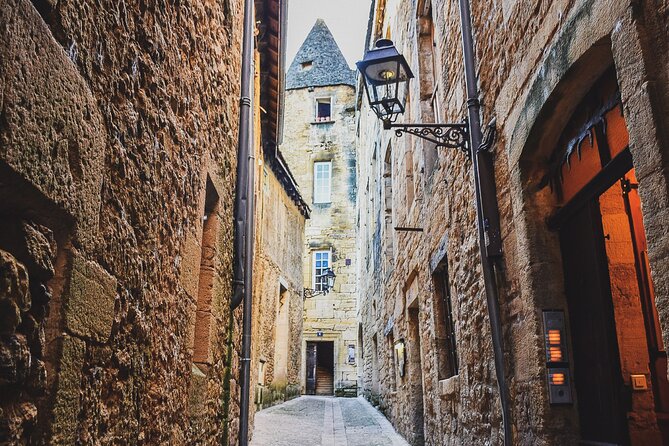
A second MUHBA stop continues the El Call story with details that explain the feel of the neighborhood. In the past, El Call was an active center of city life, but today the streets are calm and uncrowded.
A key fact your guide will likely highlight is that about 5,000 Jews lived there. The quarter was surrounded by a rampart, which meant space was limited. As a result, buildings grew upward, and you can feel that in the street proportions. The streets tend to look narrower and darker compared with other Gothic Quarter blocks.
This is one of the reasons I like having a guide for this area. You can walk El Call alone and admire the vibe, but it is the explanation of space limits and building height that makes it click. Suddenly the streets stop being just scenic. They become evidence.
Like the earlier MUHBA stop, this lasts about 20 minutes and is free.
Other things to see around Barcelona
- Montserrat Monastery Small Group or Private Tour Hotel pick-up★ 5.0 · 5,144 reviews
- Tour Welcome Barcelona with Local Guide in Eco Tuk Tuk Private★ 5.0 · 1,882 reviews
- Barcelona Private Tour by Sidecar Motorcycle★ 5.0 · 1,750 reviews
- Barcelona: Private Group Bike Tour★ 4.8 · 1,420 reviews
- Barcelona Helicopter, Sailboat & Old Town Private Walking Tour★ 5.0 · 1,395 reviews
- Barcelona: Helicopter, Boat Ride & Old Town Private Tour★ 4.7 · 1,357 reviews
Finishing in the Gothic Quarter: medieval streets, a Jewish bath ruin, and Synagogue Major
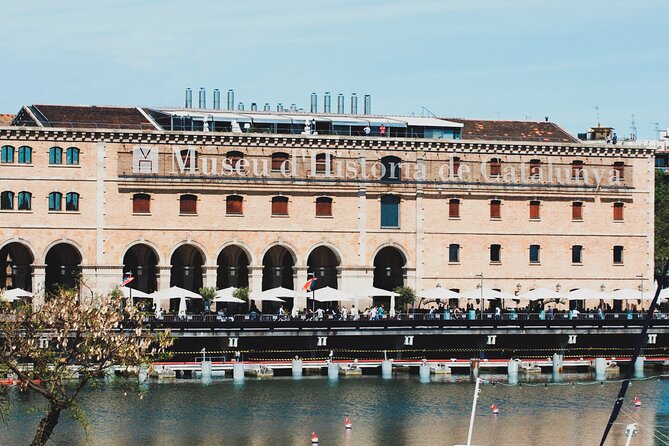
The final area is Barcelona’s Gothic Quarter, known for surviving medieval buildings from the 14th to 15th centuries. You are walking between Plaza Catalunya and Calle Laietana, so you also start to feel how the older city framework connects different neighborhoods.
Here is a detail that makes this stop more than a photo-op. In the area there is a shop called Oliver, where you can visit ruins of an ancient Jewish bath. It is the kind of site that feels small until you realize how important it is for understanding everyday ritual life.
You also get another street connection: the Jewish quarter’s main street is currently called Sant Domènec del Call. That kind of continuity is exactly what a good guide helps you notice, because it turns street names into living history.
Finally, the tour points you toward the Ancient Barcelona Synagogue, also called Synagogue Major, located at Carrer de Marlet, 5. It is currently functioning as a museum with exhibits that show the history of the Jewish quarter. This is a 10-minute stop and admission is free.
Price and value: when $167 per person makes sense
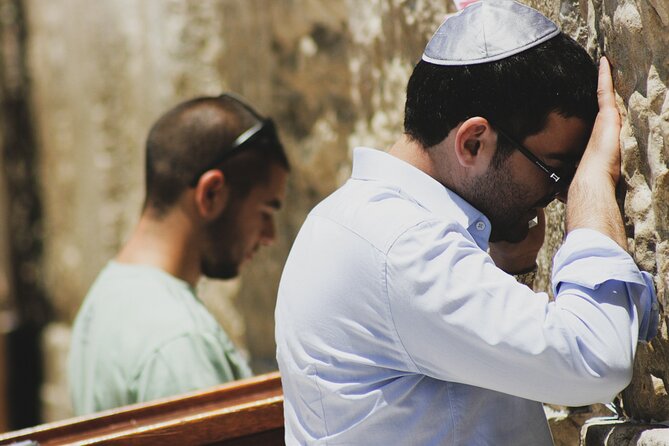
At $167 per person for a roughly 2-hour private tour, the value comes from three places.
First, it is private. You are paying for guided attention in a part of Barcelona where the streets are narrow and the details matter. If you love context, the guide can connect architecture, street layout, and historical events into something you can actually carry with you.
Second, you get both must-see and off-the-beaten-path moments, plus expert advice for what to do after. That matters more than people think. If you already know the main attractions, a guide who helps you choose your next neighborhood walk and your next meal can save hours of guesswork.
Third, timing. This tour is often booked around 88 days in advance, which suggests it fills up. If you have a tight itinerary, reserving early is a way to avoid scrambling later.
The main value downside is that this price can feel steep if you are the type who enjoys self-guided wandering. If you just want general impressions and do not care about detailed explanations, a self-paced route might be cheaper.
What to expect from your guide, and how to stay unbothered if plans change
The best versions of this tour are led by guides who can bring the material to life, with clear explanations and a friendly style. One name you may see is Sebastian, who has been praised for deep knowledge of Barcelona and Jewish history and for being personable during the walk.
Now, I also think it is fair to mention a practical risk. There have been occasions where a guide did not show up or a tour was canceled due to emergencies or scheduling mix-ups. That is not something you control, but you can reduce your stress.
My advice: confirm your booking details the day before, and if weather looks rough, keep a backup plan for something else you can do nearby in the Gothic Quarter. That way, one hiccup does not derail your whole morning.
Practical tips for a better walk in the Jewish Quarter and El Call
A few small choices can make this tour more comfortable and more enjoyable.
- Wear shoes you trust. The streets are narrow and historic, and the walk is paced for attention, not for comfort speed.
- Bring a light rain layer or umbrella. Weather can turn the streets slick, and you will still be outdoors.
- Come with at least one question. If you ask about what a street name means or why the quarter is shaped the way it is, the guide can tailor the flow.
- Use the food advice right after. This tour ends back near the meeting point, so ask where to eat and drink while the guide’s context is still fresh in your mind.
- Plan your Major Synagogue budget. Since entrance is not included at that stop, check what the extra admission means for your total day cost.
Should you book this Private Barcelona Jewish Quarter Tour?
If you want more than a checklist, I think this is a strong choice. You get a tight route that connects the Jewish Quarter to El Call and then into the Gothic Quarter, with enough time at each stop to learn what you are looking at. The focus on street-level context, MUHBA explanations, and the extra site connections like the Jewish bath ruins makes it feel like you are reading the city, not just touring it.
Book it if:
- you enjoy historical explanations tied to specific places
- you want a private pace, not a big-group scramble
- you care about what to do and where to eat after your walking tour
Skip it or downgrade your expectations if:
- you are only chasing general sights and do not want to spend time on context
- you dislike tours where one stop includes an extra paid admission
If you do book, do one simple thing: confirm details ahead of time so the day stays smooth.
FAQ
Where does the tour start?
It starts at Conesa Entrepans in the Gothic area at Carrer de la Llibreteria, 1, Ciutat Vella, 08002 Barcelona.
What time does the tour begin?
The start time is 10:00 am.
How long is the Private Barcelona Jewish Quarter Tour?
It lasts about 2 hours.
Is this tour truly private?
Yes. It is a private walking tour, and only your group participates.
What language is the tour offered in?
It is offered in English.
How much does the tour cost?
The price is $167.00 per person.
Are entrance fees included?
Not fully. Entrance fees are not included, and the Major Synagogue stop specifically lists admission as not included. The other stops shown are free.
Which stops have free admission?
The stops tied to the Jewish Quarter area, MUHBA El Call segments, and the Gothic Quarter area are marked as free. The Major Synagogue stop is marked as not included.
Can I cancel for a full refund?
Yes, you can cancel for free up to 24 hours in advance for a full refund.
The latest to open for booking



Gothic Quarter Walks, side by side.
Barcelona all included: Sagrada, Park Güell, Montjuic & Gothic
Read our review →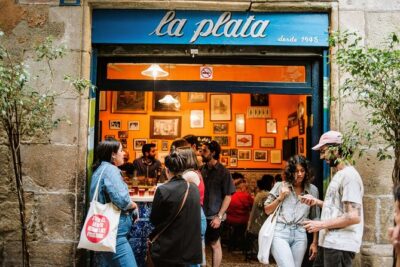
Barcelona Gothic Quarter Tapas & Taverns Food & Wine Tour
Read our review →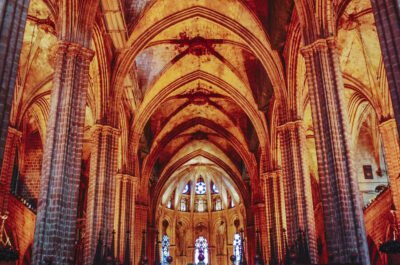
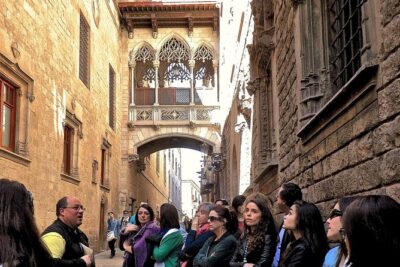
Barcelona Old Town & Gothic Quarter Small Group Tour
Read our review →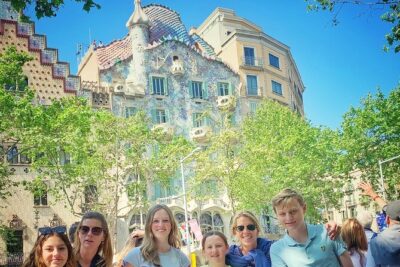
Ramblas, Old Town, Gothic and Gaudi Architecture Walking Tour
Read our review →
El Born and Gothic Quarter Wine & Tapas Bar Tour
Read our review →
El Born Food Walking Tour with Tapas and Drinks
Read our review →
Kids and Family Gothic Quarter Walking Tour in Barcelona
Read our review →Where else this one turns up