
Reviewed · CATHEDRAL TOURS
Walking tour of the Gothic Quarter of Barcelona + Cathedral
Barcelona’s Gothic Quarter makes sense fast. This guided walk ties together layers of the city, from Roman Barcino to medieval power centers, with the Cathedral and key squares built into the route. You’ll also get a smart pace, about 3 hours total, so you’re not sprinting between stops.
What I like most is the way the guide helps the stones tell a story, not just a sightseeing checklist. You’ll spend time at major landmarks like Plaça del Rei and the Barcelona Cathedral area, and the commentary is the kind that turns reading signs into understanding. One consideration: most stops are viewed from the outside, and admission tickets are not included for several key buildings, so if you want lots of interior time, you may need to plan extra visits.
Even so, the experience feels easy to manage. The meeting point is explained clearly, and the guide emails a phone number the day before, which helps if you’re running late or want quick directions. My only real caution is weather: the tour requires good weather, so have a rain plan.
In This Review
- Key highlights you’ll feel right away
- Why this Gothic Quarter and Cathedral walk feels different than a drive-by
- Price and logistics: what you’re really paying for
- How the 3-hour route flows from Plaça de l’Àngel to Santa Maria del Pi
- Stop 1: Basílica dels Sants Màrtirs Just i Pastor and the look of early Gothic Barcelona
- Stop 2: Palau de la Generalitat de Catalunya and why a medieval building still matters
- Stop 3: Temple d’August, Roman Barcino, and imperial cult symbolism
- Plaça del Rei: the square where power meets street-level drama
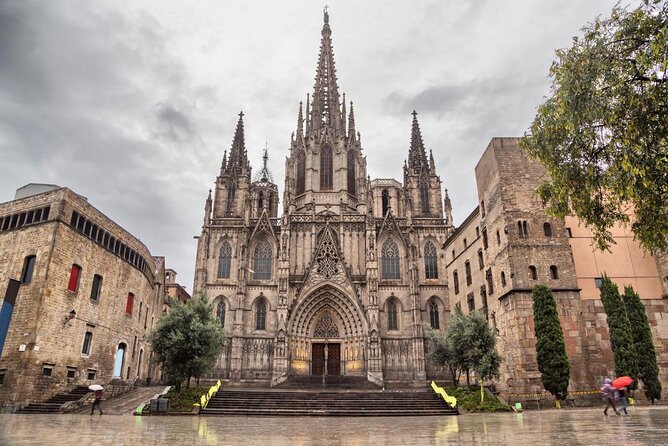
- Barcelona Cathedral: learning the story without going inside
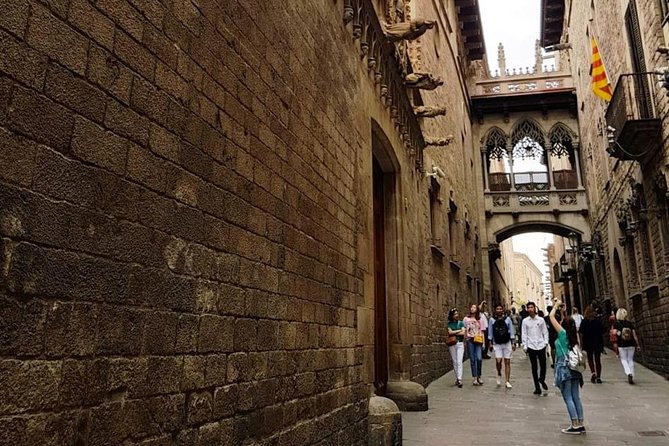
- Casa de l’Ardiaca and Plaça de Sant Felip Neri: where the guide makes the Quarter feel smaller
- Basilica de Santa Maria del Pi: the inside finish you’ll remember
- What makes the guide experience stand out (and why it matters)
- Who should book this Gothic Quarter and Cathedral walk
- My practical tips before you go
- FAQ
- Is the tour offered in English?
- How long is the walking tour?
- Where does the tour start and where does it end?
- Is this a private tour?
- Are admission tickets included?
- Do I get a mobile ticket?
- Are service animals allowed?
- What is the cancellation policy?
- Should you book this tour?
Key highlights you’ll feel right away
- A tight 3-hour route that still includes eight distinct stops across medieval to Roman Barcelona
- Cathedral-area orientation so the Gothic details start making sense in context
- Outside viewpoints with guided storytelling, not a hurried photo stop
- Courtyard and side-area attention, the sort of places you would miss without guidance
- Final inside visit at Basilica de Santa Maria del Pi, which gives the tour a payoff
- English tour plus a mobile ticket, easy to follow once you’re there
Why this Gothic Quarter and Cathedral walk feels different than a drive-by
The Gothic Quarter can be visually stunning, but it’s also easy to get lost in the details. This tour works because it builds a mental map in your head. You start near Plaça de l’Àngel and end inside Basilica de Santa Maria del Pi, and along the way you learn what each place used to mean, who used it, and why it still shapes how the streets look today.
I also like that the route spans time periods you usually treat separately. Roman Barcelona shows up with the Temple d’August. Medieval civic power shows up at the Palau de la Generalitat. Then you shift into the Gothic and Renaissance feel of the cathedral area and surrounding squares. That mix makes the Quarter feel coherent, not random.
Value matters too. At $180.24 per person for about three hours, you’re paying mainly for guided interpretation and a route that hits the right stops in the right order. You’re not buying a bundle of paid museum entries. Instead, the value is in how efficiently you learn to read the city, and in the fact that it’s a private experience for your group only.
Price and logistics: what you’re really paying for
Let’s be honest about the math. Several stops explicitly note that admission tickets are not included, and many of the sights are not accessed inside the enclosure. That means the experience is built around walking, viewpoints, and explanation, not a long list of timed entry tickets.
So where does the money go?
- A guide who ties the city’s layers together (Roman, medieval, Gothic, Renaissance).
- A timed, paced route where each stop gets around 20 minutes.
- A format designed for group clarity, including a clearly explained meeting point and a mobile ticket.
For some people, that’s exactly what they want. If you like history but hate wasting time, guided walking is one of the best ways to get it done. For others, it might feel like less interior access than expected, especially since the Barcelona Cathedral itself is listed as not accessed inside the enclosure.
If you’re the type who reads quickly and then wants to see something with context, this is a strong fit. If you’re planning a cathedral-heavy trip and you want inside access across multiple buildings, you might pair this walk with one or two separate timed-entry visits.
Gothic spires above the old city
- Barcelona: Cathedral of Barcelona Entry Ticket
★ 4.5 · 1,701 reviews - Barcelona Cathedral: Ticket, Guided Tour and VR Experience
★ 4.5 · 202 reviews - Cathedral of Barcelona Entrance Ticket – Optional Private Guide
★ 4.0 · 114 reviews
How the 3-hour route flows from Plaça de l’Àngel to Santa Maria del Pi
The tour begins at Plaça de l’Àngel in Ciutat Vella and ends at Basilica de Santa Maria del Pi (Plaça del Pi, 7). That matters, because you start near the heart of the Quarter and you finish at a church that feels like a natural “closing scene” for the day’s walk.
Expect a steady cadence:
- Eight stops
- About 20 minutes per stop
- A simple rhythm of walk, look, listen, and move on
Also, this area is well set up for public transport, so if you’re mixing this with other sightseeing, you’re not committing to a long transit plan just to reach the start.
One more practical note: you’ll spend a lot of time outdoors. Even if you’re mostly seeing stone facades and street-level features, comfy shoes pay off fast in the Gothic Quarter.
Stop 1: Basílica dels Sants Màrtirs Just i Pastor and the look of early Gothic Barcelona
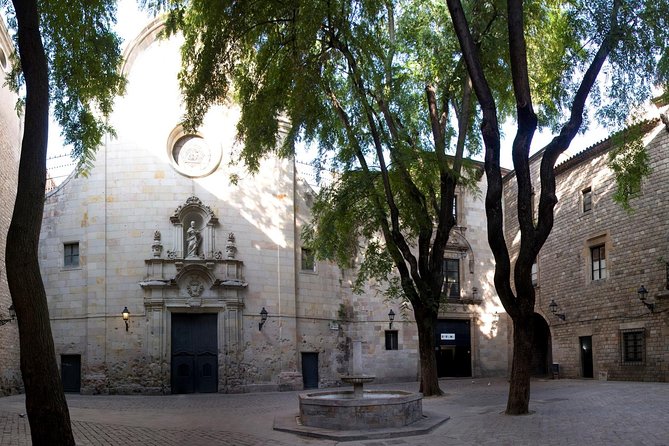
You kick off at Basílica dels Sants Màrtirs Just i Pastor. The big hook here is that it’s a neo-Gothic Catholic church associated with the year 1342. Since the tour notes it is not accessed inside the enclosure, the value is visual and contextual.
What you should do: slow down and actually look at the church from the outside. When a guide points out what makes it neo-Gothic and explains why it sits where it does in the Quarter’s story, the facade stops being just pretty architecture. It becomes a clue.
This is also a good first stop because it sets the tone. You’re training your eyes before the tour moves into civic power and even earlier Roman context.
Stop 2: Palau de la Generalitat de Catalunya and why a medieval building still matters
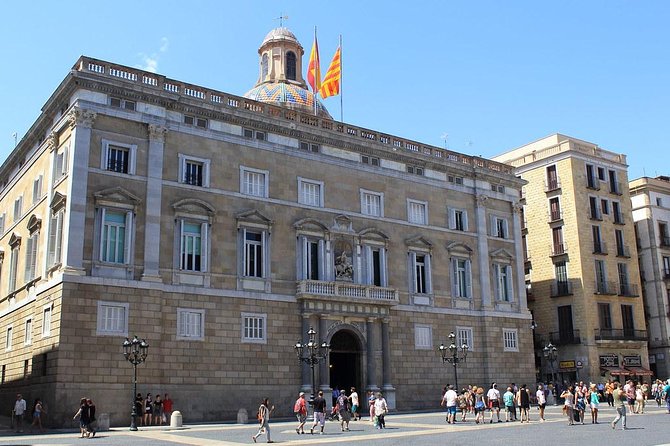
Next up is the Palau de la Generalitat de Catalunya. This is the seat of the Presidency of the Generalitat of Catalonia, and it’s one of the few buildings of medieval origin in Europe that still functions as a government seat.
Even without entering, you can feel the meaning of this stop. The building is a reminder that the city did not freeze in time. Power and institutions evolved, but the stone shell remains.
What I’d watch for is how the guide frames the palace as a living link between past and present. It’s not just medieval decoration. It’s a workplace for government today, which changes how you interpret its importance.
If your travel style is more “understand what I’m looking at” than “check off monuments,” this is one of the stops that earns its place in the itinerary.
Stop 3: Temple d’August, Roman Barcino, and imperial cult symbolism
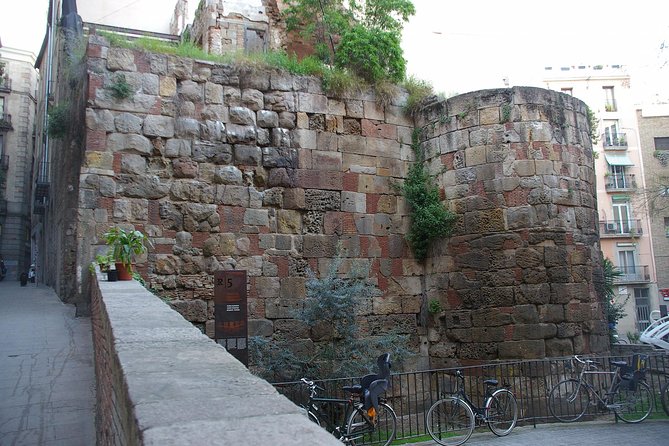
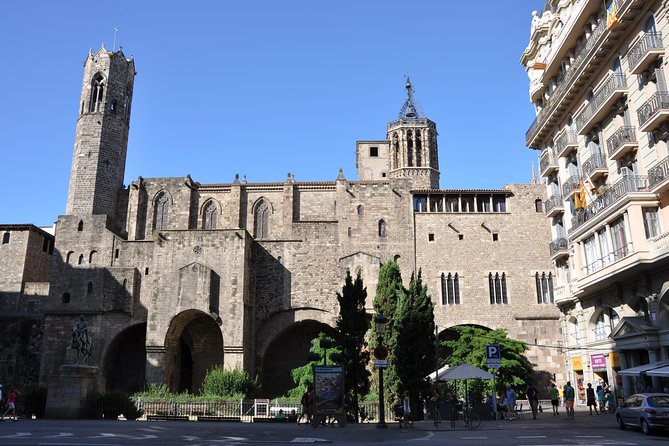
Then the tour shifts you much farther back with the Temple d’August. The Temple of Augustus in Barcelona is described as a Roman temple dedicated to the imperial cult of César Augusto, built in Barcino, the colony founded with Augustus’s permission.
You won’t be going inside, but you’ll get something many quick city walks miss: an explanation of what Roman Barcino was doing politically and culturally. The imperial cult angle helps you understand why a “temple” wasn’t only religious. It was a way to link loyalty, identity, and power across the empire.
This is a great stop for first-time visitors because it gives you a mental foundation. After this, when you see medieval and Gothic landmarks, you start thinking about what came before them, not just what’s visible now.
Get lost in the medieval lanes
- Barcelona all included: Sagrada, Park Güell, Montjuic & Gothic★ 5.0 · 2,169 reviews
- Barcelona Gothic Quarter Tapas & Taverns Food & Wine Tour★ 5.0 · 1,470 reviews
- Barcelona: Old Town and Gothic Quarter Walking Tour★ 4.8 · 1,393 reviews
- Barcelona Old Town & Gothic Quarter Small Group Tour★ 5.0 · 1,308 reviews
- Ramblas, Old Town, Gothic and Gaudi Architecture Walking Tour★ 5.0 · 723 reviews
- Barcelona: El Born and Gothic Quarter Wine & Tapas Bar Tour★ 4.8 · 674 reviews
Plaça del Rei: the square where power meets street-level drama
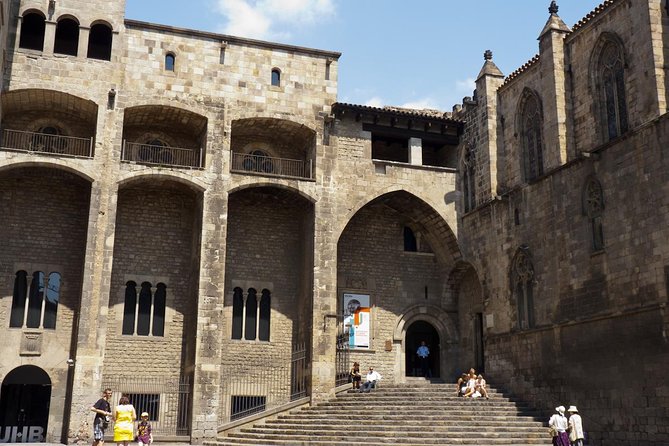
Plaça del Rei is where the tour pauses for a different kind of viewing. You’re told to discover the history the plaza hides: a monumental square surrounded by Gothic and Renaissance buildings, and also one of the places where the Quarter’s layout feels like a stage.
The stop is listed with admission free, which is nice, because you’re not juggling ticket constraints while you’re trying to absorb an atmosphere.
What I like here is that a square is a built-in perspective tool. From one location, you can compare styles and spot how buildings frame civic life. The guide’s job is to help you connect the architecture to events and roles, so the plaza becomes more than an empty backdrop for photos.
Barcelona Cathedral: learning the story without going inside
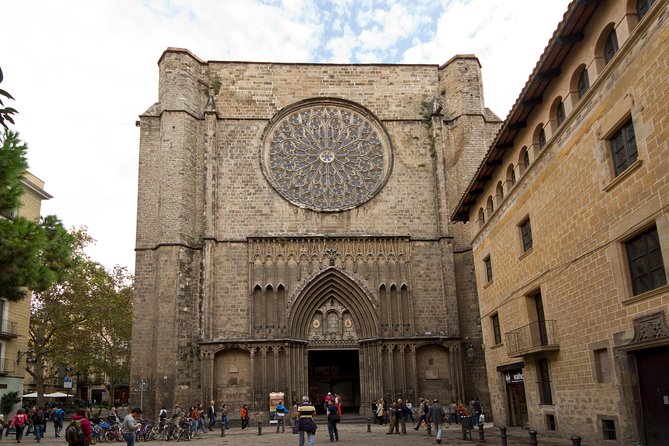
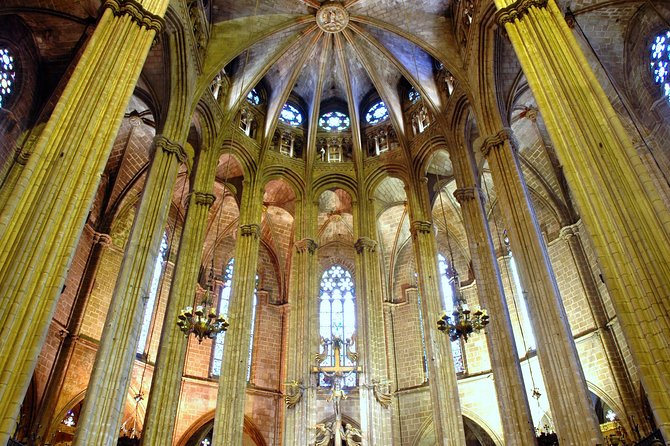
Next you’re at Barcelona Cathedral. The itinerary specifically notes that it is not accessed inside the enclosure, but you’ll learn its history with the guide.
If you’ve ever visited a major church and felt like you only saw the outside, you know the frustration. Here, the advantage is the explanation. Even from outside, the cathedral’s significance comes through once you understand how it fits into the city’s bigger timeline.
Look at it as a guided orientation stop. You’re getting the big picture for what the cathedral is, why it matters, and how it ties into the surrounding Quarter. That makes later independent visits easier, because you’ll know what you’re trying to find when you return.
Just keep expectations realistic: you’re not getting a cathedral interior visit as part of this specific walk.
Casa de l’Ardiaca and Plaça de Sant Felip Neri: where the guide makes the Quarter feel smaller
Two of the stops are about discovering the less obvious side of the neighborhood.
First, Casa de l’Ardiaca. It’s described as one of those secret tourist spots that very few people know. Again, it’s not accessed inside the enclosure, so the value is interpretive. This is the kind of place where the guide helps you notice details you would almost certainly walk past.
Then Plaça de Sant Felip Neri. It’s listed as admission free, and the tour highlights that the square is famous for its essence and the history it hides. Since it’s a square, it becomes an easy place to reset your brain between architectural stops. The guide’s framing is what turns it into more than another pretty corner.
These two stops are also where I’d expect the tour to show its strongest “local reading” skill. Based on feedback, the guide doesn’t just point at famous sites. They steer you toward side spaces and courtyards you might otherwise miss unless you’re the kind of traveler who reads every plaque.
Basilica de Santa Maria del Pi: the inside finish you’ll remember
The tour ends at Basilica de Santa Maria del Pi, and this is the only stop in the list that clearly states you enter together. That makes it a smart ending point: you get a real change of pace after mostly exterior viewing.
Finishing with an inside visit helps the whole experience land. Earlier stops train your eye and your understanding, and the final building rewards you with atmosphere you can physically step into.
If you’re deciding how much energy to spend at each stop, I’d treat the final basilica as your “give me the details” moment. Slow down. Let the guide’s explanation shape how you look. When a tour ends with entry, you want to use that last stretch actively, not on autopilot.
What makes the guide experience stand out (and why it matters)
From the feedback, the strongest praised aspects are about the guide and how they lead you.
The biggest win is storytelling quality: the guide explains the historical development of Barcelona in a way that turns scattered facts into a clear sequence. You don’t just hear dates. You learn why each building exists and how its role fits into the Quarter’s evolution.
Second is navigation of overlooked spaces. The commentary points you toward buildings and interior court-like spaces you might not notice on your own unless you’re doing serious reading. That’s a practical kind of value. In a neighborhood like this, good guidance saves time and prevents you from missing the best angles.
Finally, there’s the small but meaningful logistics detail: the meeting point is explained well, and the guide emails a phone number the day before. That reduces stress. You start the walk feeling oriented, not anxious.
In short, you’re paying for interpretation plus confidence that you’ll actually find the good parts.
Who should book this Gothic Quarter and Cathedral walk
I think this tour is a strong match if:
- You want a guided orientation to the Gothic Quarter and cathedral area.
- You like history, but you want it organized into a walkable route.
- You prefer paying for interpretation more than paying for multiple ticketed interiors.
- You’re traveling in a group and you value a private experience for your group only.
It might not be ideal if:
- You’re hoping for frequent inside access at most stops.
- You want to spend a long time inside Barcelona Cathedral as part of this same walk.
- Your idea of value is mostly museum-style entries rather than guided street-level context.
My practical tips before you go
- Wear shoes you trust. This is a walking-heavy neighborhood, and you’ll stand and look at facades a lot.
- Bring a light layer and plan for weather. The tour requires good weather, so dress for variability.
- If you like photos, take them briefly during explanation gaps. The best learning moments often happen while you’re looking, not while you’re holding the camera.
FAQ
Is the tour offered in English?
Yes. The tour is offered in English.
How long is the walking tour?
It runs for about 3 hours (approx.).
Where does the tour start and where does it end?
You start at Plaça de l’Àngel, Ciutat Vella, Barcelona, Spain, and you end at Basilica de Santa Maria del Pi, Plaça del Pi, 7, Ciutat Vella, Barcelona.
Is this a private tour?
Yes. It’s listed as a private tour/activity, with only your group participating.
Are admission tickets included?
For several stops, admission tickets are not included. Some areas are free, including Plaça del Rei and Plaça de Sant Felip Neri. The final stop includes entering Basilica de Santa Maria del Pi, but the tour notes other admission tickets as not included.
Do I get a mobile ticket?
Yes. A mobile ticket is included.
Are service animals allowed?
Yes. Service animals are allowed.
What is the cancellation policy?
You can cancel for a full refund up to 24 hours in advance of the experience start time. If you cancel less than 24 hours before, the amount paid is not refunded. The tour also requires good weather, and if canceled due to poor weather, you’ll be offered a different date or a full refund.
Should you book this tour?
If you want to understand the Gothic Quarter quickly, this is a good choice. The itinerary is built to help you connect Roman, medieval, and Gothic Barcelona, and the guide-led approach is what people seem to remember most.
Book it especially if you’re trying to make your first day in the Quarter feel organized. You’ll finish with an inside visit at Basilica de Santa Maria del Pi, which gives the walk a satisfying end point.
Skip it or pair it with extra visits if your top priority is lots of cathedral and church interior time at multiple stops. This one is mainly about guided seeing, not ticket-heavy indoor hours.
More Walking Tours in Barcelona




The latest to open for booking



Cathedral Tours, side by side.
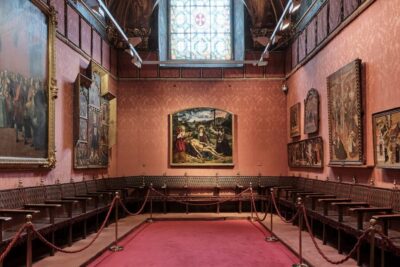
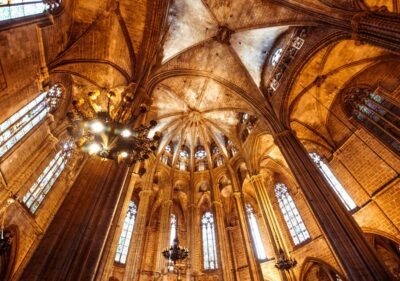
Barcelona Cathedral: Ticket, Guided Tour and VR Experience
Read our review →
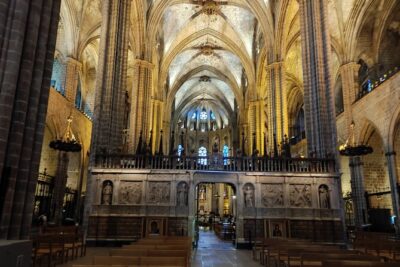
Cathedral of Barcelona Entrance Ticket – Optional Private Guide
Read our review →
Photo Walking Tour Barcelona Cathedral Gothic Quarter El Born
Read our review →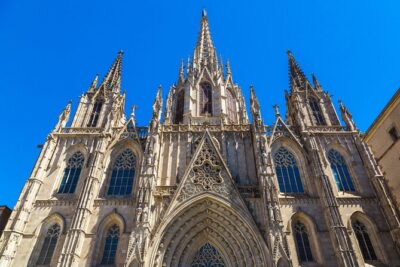
Barcelona Cathedral: Ticket, Guided Tour, Terrace + VR Experience
Read our review →
Barcelona Private Photoshoot at Cathedral & Kiss Wall
Read our review →
Barcelona Photoshoot Experience Cathedral Born & Ciutadella Park
Read our review →Where else this one turns up