
Reviewed · GOTHIC QUARTER WALKS
Barcelona Gothic Quarter Self Guided Walking Tour with Mobile App
Barcelona’s Gothic Quarter gets a phone-based glow. This self-guided walk uses an offline mobile app with both audio and written stops, letting you set the pace across landmark after landmark. I like how the route ties big names and small details together, from the Francesc Macià monument to Barcelona Cathedral and the 2,000-year-old Temple of Augustus.
I especially like two things here. First, you get a low-cost, pay-once tour that you can use again later during your 1-year app access. Second, there are standouts that make the price feel like a steal, including a Picasso highlight at the Col·legi d’Arquitectes de Catalunya that costs you nothing.
One drawback to plan around: this is a screen-and-battery experience. If your phone runs low, the audio and map can turn from helpful to annoying, so I recommend downloading everything ahead of time and carrying a small power bank.
In This Review
- Key highlights in the Gothic Quarter route
- Price and what $5.09 buys you
- Starting at Plaça de Catalunya and finding the Francesc Macià message
- Avinguda del Portal de l’Àngel: shopping street with a past
- Santa Anna Church: Romanesque-Gothic that feels tucked away
- A historic restaurant stop tied to Gaudí, Picasso, and Casas
- Font de Santa Anna: a watering trough with a story
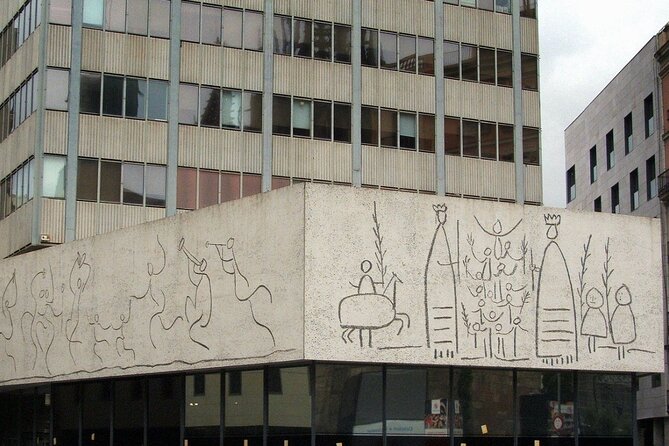
- Col·legi d’Arquitectes de Catalunya and Picasso you can see for free
- Archdeacon Lluís Desplà residence: symbolism and the dancing egg
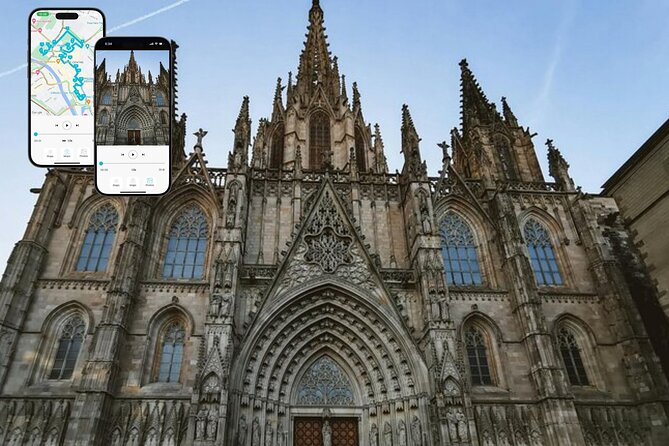
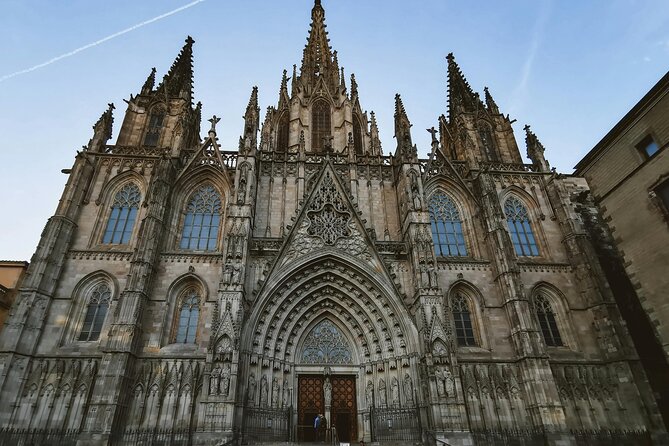
- Barcelona Cathedral: Saint Eulalia and 13 geese
- Monument to the Heroes of 1809: a turn to hardship
- Plaça de Sant Felip Neri: bombing scars you can still see
- Pont del Bisbe and the Saint Jordi legend
- Temple of Augustus: one of Barcelona’s oldest, less-obvious stops
- Basilica of Saints Justus and Pastor: the walking tour finish line
- Should you book this self-guided Gothic Quarter tour?
- FAQ
- How long is the Barcelona Gothic Quarter self-guided walking tour?
- Where does the tour start and where does it end?
- Is the tour offered in English?
- Do I need an internet connection during the tour?
- Are entrance tickets or paid attractions included?
- Does the tour include audio guidance and a written guide?
- Do I need headphones?
- What phone or platform does the app work on?
- Is there a limit on the number of participants?
- Are service animals allowed?
- What is the cancellation window?
Key highlights in the Gothic Quarter route
- Offline audio and map after download, so you can keep going without chasing signal
- Francesc Macià monument with a hidden message, a great opener for Catalan storytelling
- Santa Anna Church (12th century) that feels like the kind of quiet corner you’d miss on your own
- Free Picasso stop at Col·legi d’Arquitectes de Catalunya, one of the route’s best value moments
- Cathedral legend of Saint Eulalia and 13 geese told in a way that makes the building feel alive
- Wall scars at Plaça de Sant Felip Neri tied to the 1938 bombings, heavy but important
Price and what $5.09 buys you
At $5.09 per person for a roughly 2 hours 15 minutes walk, this is priced like a budget-friendly add-on that still gives you structure. You are not paying for a human guide, you are paying for a guided route with audio cues, photos to confirm you are at the right place, and an interactive map.
That matters, because the Gothic Quarter is a maze. Even with good intentions, you can lose time. This tour helps you avoid the “wait, where am I?” spiral by giving each stop a clear visual identity and a planned walking sequence.
The tradeoff is also clear: you are doing this on your own, using your phone for cues. If you want a live guide to answer questions or adjust the route for your interests, you will miss that here.
Starting at Plaça de Catalunya and finding the Francesc Macià message
The tour begins at Plaça de Catalunya, a practical starting point that is easy to reach by public transportation. From there, the first big moment is the monument dedicated to Francesc Macià, where you’re guided to notice an architect’s hidden message.
This is a strong warm-up stop. Early on, the app gets you looking closely, not just walking through scenery. You’ll be primed for Catalan history and symbolism, which pays off later when the route shifts from monuments to churches, legends, and small details.
Tip from what I’ve learned the hard way before with phone-guided tours: start the day with the app ready to go. Download the audio, photos, and map before you leave your hotel, and keep an eye on battery level as you walk.
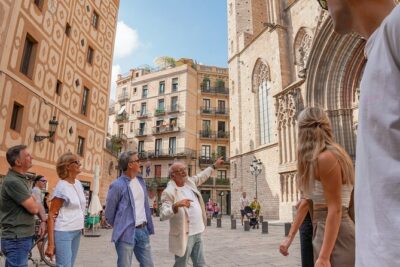
Get lost in the medieval lanes
- Barcelona all included: Sagrada, Park Güell, Montjuic & Gothic
★ 5.0 · 2,169 reviews - Barcelona Gothic Quarter Tapas & Taverns Food & Wine Tour
★ 5.0 · 1,470 reviews - Barcelona: Old Town and Gothic Quarter Walking Tour
★ 4.8 · 1,393 reviews
Avinguda del Portal de l’Àngel: shopping street with a past
Next you move onto Avinguda del Portal de l’Àngel, a street that used to be a textile hub but is now known for global brand shopping. The route doesn’t ask you to shop, it asks you to notice how quickly a city repurposes space while keeping a trace of what came before.
This stop works well because it’s a breather between the more “story-heavy” landmarks. It also helps you reorient your sense of direction before you head toward the older, quieter religious sites.
If you hate walking through crowded shopping streets, try to time this portion for a less busy moment in the day. The tour runs daily during daytime hours, but your comfort depends a lot on when you start.
Santa Anna Church: Romanesque-Gothic that feels tucked away
One of the route’s favorite-feeling stops is the 12th-century Church of Santa Anna. The commentary guides you toward its Romanesque-Gothic character, which is exactly the kind of detail you can miss if you’re only glancing while walking.
I like this kind of church stop on self-guided routes because you get the best of two worlds. You don’t need to fight ticket lines or crowded entry times, and yet the architecture rewards close looking from outside.
This is also where a phone-first approach can help. With so many stone facades in the Gothic Quarter, the app’s visual identification makes it easier to confirm you’re at the right building.
A historic restaurant stop tied to Gaudí, Picasso, and Casas
The app then brings you to a historic restaurant once frequented by Antoni Gaudí, Pablo Picasso, and Ramon Casas i Carbó. Even if you don’t go in, this pause gives you a sense of how creative the neighborhood has been for generations.
I treat these “you won’t actually enter” stops as atmosphere builders. They remind you that the Gothic Quarter isn’t just monuments and postcards. It’s also where artists and thinkers gathered, and that context changes how you read the streets.
If you want to stretch the walk, you could use nearby café time to rest your feet after the church portion. The tour itself moves efficiently, but your body might ask for a breather.
Font de Santa Anna: a watering trough with a story
Next is the Font de Santa Anna, described as a watering trough for travelers’ horses. This is the kind of detail that makes a city feel lived-in, not museum-still.
It’s also a smart stop for learning. A fountain might look decorative at first glance, but the app encourages you to connect it to everyday movement through older streets.
If you’re a “look for what’s useful” type of traveler, you’ll probably enjoy how this tour keeps dragging you back to practical city history.
Other things to see around Barcelona
- Barcelona: Sagrada Familia Entry Ticket with Audio Guide★ 4.6 · 105,312 reviews
- Casa Batllo Admission Ticket with Intelligent Audio Guide★ 4.5 · 3,168 reviews
- Barcelona: Mies van der Rohe Pavilion Ticket and Audio Guide★ 4.6 · 380 reviews
- Barcelona: Montjuïc Cable Car Ticket with Audio Guide★ 3.9 · 270 reviews
- Montjuïc Cable Car Entry Voucher with Audio Tour on Your Phone★ 3.5 · 37 reviews
- The Gothic Trail – Ghosts of Barcelona Exploration Game★ 4.5 · 33 reviews
Col·legi d’Arquitectes de Catalunya and Picasso you can see for free
At Col·legi d’Arquitectes de Catalunya, the route points you toward one of Picasso’s largest masterpieces, and the big kicker is that it’s free. This is one of the best moments on the itinerary because it gives you a payoff without making you pay extra for a ticketed attraction.
I like how the tour balances famous names with real places. You’re not just told Picasso was around Barcelona, you’re directed to a specific location where his work can be understood in context.
Because the tour’s format says all stops are visited from the outside, you might not expect a “free artwork” moment to be accessible. Still, the commentary is meant to help you spot what you need and understand why it matters.
If you’re trying to build a short list of money-saving culture stops in the Gothic Quarter, this one earns its spot.
Archdeacon Lluís Desplà residence: symbolism and the dancing egg
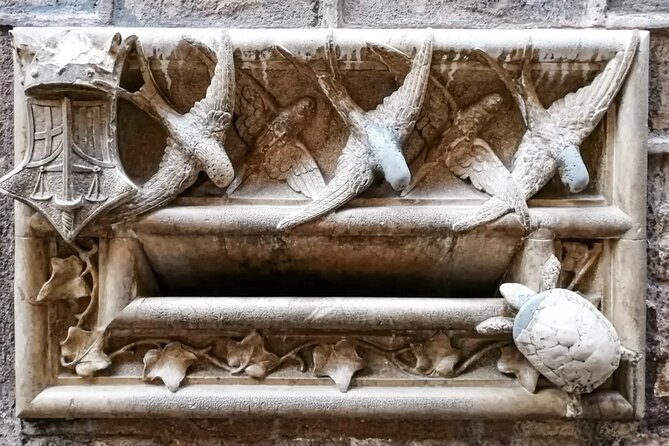
The walk continues to the 15th-century residence of Archdeacon Lluís Desplà, where the app focuses on a symbolic letterbox and a whimsical dancing egg. This is classic Gothic Quarter magic, where even a small feature has been given a story.
I found this style of stop especially satisfying on a self-guided route. It makes you slow down. You stop treating buildings like backdrops and start treating them like puzzles.
You’ll get the most out of this stop if you take your time and compare what you see to what the audio tells you to look for. These are not “blink and miss” details.
Barcelona Cathedral: Saint Eulalia and 13 geese
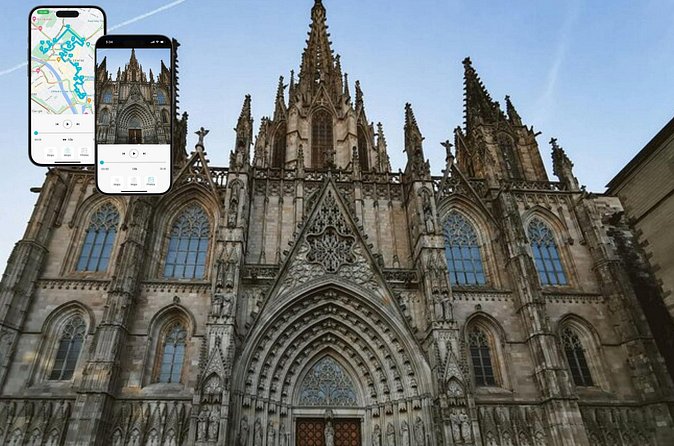
Then comes the big one: Barcelona Cathedral. The app helps you connect its architecture to its storied history, with a standout legend about Saint Eulalia and 13 geese that preserve her memory inside.
Even if you are not entering (the tour is outside viewing), you can still read the building’s presence. A cathedral is visual storytelling in stone. When the audio gives you the legend, the cathedral stops feeling like a generic landmark and starts feeling like a place with continuing meaning.
This is also a natural photo stop, since the scale of the cathedral makes it hard to “get it all” in passing. Plan to pause longer than you think you need here.
Monument to the Heroes of 1809: a turn to hardship
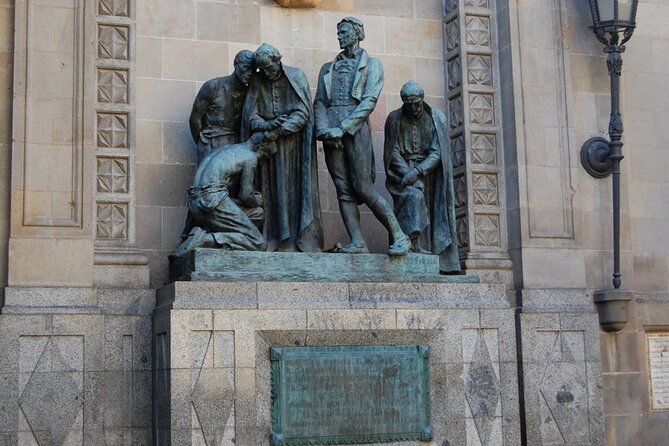
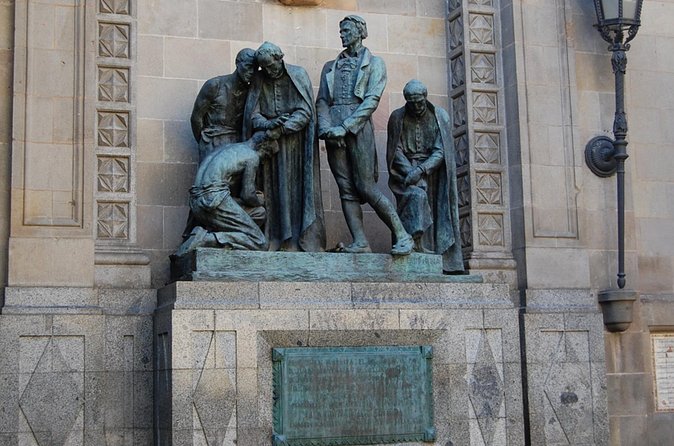
After the cathedral, the route goes to the Monument to the Heroes of 1809, where the commentary frames dramatic events that shaped Barcelona’s past. This stop shifts the mood from religious legend to civic memory.
I like this pivot, because it keeps the walk from becoming only pretty stone. You’re reminded that history is not only celebrations and saints. It’s also conflict and survival.
If you start getting “tour fatigue,” this is still a good mental reset, since the theme is clearly different and the story gives you direction for what to focus on.
Plaça de Sant Felip Neri: bombing scars you can still see
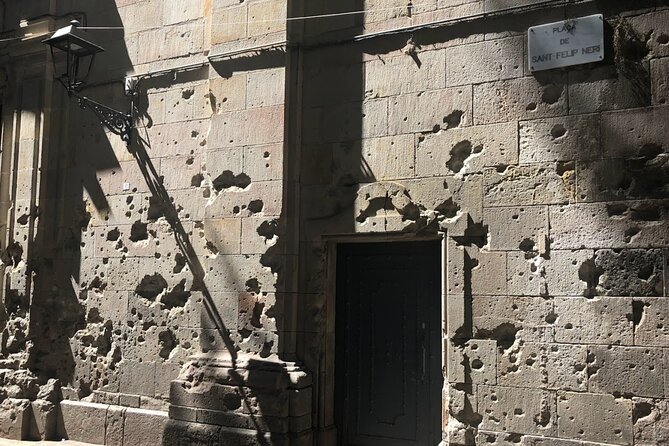
Next is Plaça de Sant Felip Neri, where the walls still show scars from the 1938 bombings. This is one of the most sobering stops on the route, and it’s exactly the kind of local history that becomes more meaningful when you hear it tied to the exact setting.
I recommend treating this moment with respect. Even if you are only viewing from outside, you’ll feel the weight of place when you understand what the damage represents.
It also gives your walk emotional balance. After legends, fountains, and Picasso, this lands as a reminder that the Gothic Quarter has been through real fear, not just romanticized past.
Pont del Bisbe and the Saint Jordi legend
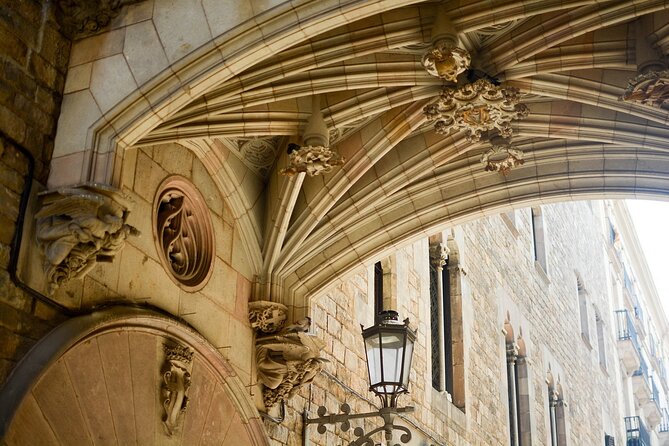
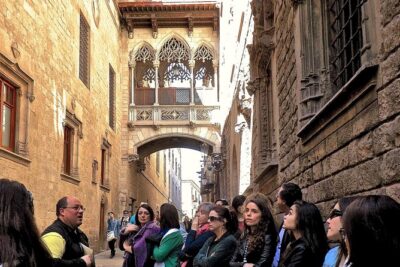
You then walk past Pont del Bisbe, with the commentary steering you toward the legend of Saint Jordi, the dragon-slaying knight. This is a “myth through city design” stop, where a familiar story becomes part of street-level Barcelona.
I like myth stops because they help you interpret details you would otherwise ignore. A bridge is a bridge, until you know why that legend is tied to it.
Also, if your timing runs a little late, this is the kind of stop where even a brief pause still feels worthwhile, since the story gives you a reason to look.
Temple of Augustus: one of Barcelona’s oldest, less-obvious stops
The route reaches the Temple of Augustus, described as 2,000 years old and one of the oldest and less-visited treasures in the area. This is the kind of stop that makes a self-guided walk feel smarter than a random wander.
Even from outside, a Roman site tends to create that “how is this here?” feeling. The audio’s focus on age helps you feel the scale of time without needing extra context.
If you like layers of history, this is a high point because it connects the Gothic Quarter to earlier Rome-era Barcelona.
Basilica of Saints Justus and Pastor: the walking tour finish line
Finally, the tour ends at the Basilica of Saints Justus and Pastor at Plaça de Sant Just, s/n in Ciutat Vella. It’s described as one of Barcelona’s oldest churches, with stories and legend attached.
This ending makes sense because it’s a strong “wrap up” landmark for a Gothic Quarter route. You can stand there and take in the whole vibe of the neighborhood after walking it in sequence.
If you still have energy afterward, you’ll be well placed to keep exploring nearby streets. The route’s finish is in the right kind of zone for a second loop on foot.
Should you book this self-guided Gothic Quarter tour?
If you want a guided-feeling walk for very little money, this is a smart choice. I think it’s especially good for travelers who like history through stories, like architecture you can study at your own pace, and who don’t mind using their phone as the guide.
Book it if you:
- want offline audio and written guidance you can reuse with your 1-year app access
- enjoy short city stops where you look closer, not longer lines
- want a route that keeps you moving through the heart of the Gothic Quarter efficiently
Skip it if you:
- hate relying on phone battery, maps, and icons
- need entrances and indoor viewing for every major stop
- prefer a human guide for Q and A or real-time route changes
FAQ
How long is the Barcelona Gothic Quarter self-guided walking tour?
It takes about 2 hours 15 minutes, including walking time between stops and time to listen to the commentary.
Where does the tour start and where does it end?
It starts at Plaça de Catalunya (Eixample, 08002 Barcelona) and ends at the Basilica of Saints Justus and Pastor (Plaça de Sant Just, s/n, Ciutat Vella, 08002 Barcelona).
Is the tour offered in English?
Yes, it is offered in English.
Do I need an internet connection during the tour?
No. Once you download the tour, you have offline access with no internet connection needed.
Are entrance tickets or paid attractions included?
No. The tour does not mention entry tickets, and all stops are visited from outside without entering locations.
Does the tour include audio guidance and a written guide?
Yes. Audio and written guide are included in the app.
Do I need headphones?
Headphones are not included. The tour data does not specify that you must use headphones, just that headphones are not provided.
What phone or platform does the app work on?
The tour includes access on iOS and Android.
Is there a limit on the number of participants?
Yes. The maximum group size is 50 travelers.
Are service animals allowed?
Yes, service animals are allowed.
What is the cancellation window?
Free cancellation is available up to 24 hours in advance for a full refund.
More Walking Tours in Barcelona



The latest to open for booking

Gothic Quarter Walks, side by side.
Barcelona all included: Sagrada, Park Güell, Montjuic & Gothic
Read our review →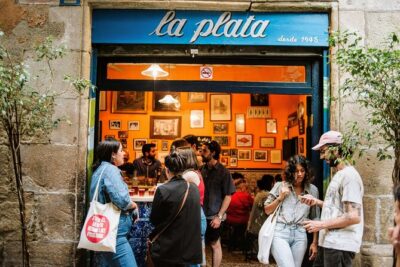
Barcelona Gothic Quarter Tapas & Taverns Food & Wine Tour
Read our review →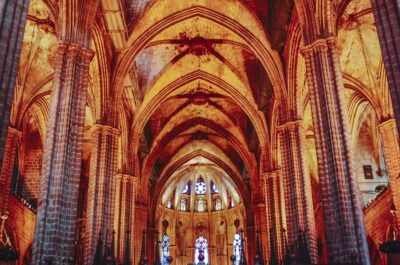
Barcelona Old Town & Gothic Quarter Small Group Tour
Read our review →
Ramblas, Old Town, Gothic and Gaudi Architecture Walking Tour
Read our review →
El Born and Gothic Quarter Wine & Tapas Bar Tour
Read our review →
El Born Food Walking Tour with Tapas and Drinks
Read our review →
Kids and Family Gothic Quarter Walking Tour in Barcelona
Read our review →Where else this one turns up