
Reviewed · GOTHIC QUARTER WALKS
Barcelona’s El Raval and the Gothic Quarter: A Self-Guided Audio Tour
A phone map can replace a guidebook. This self-guided audio walk threads El Raval and the Gothic Quarter with stories you can pause and replay. You start on La Rambla near Font de Canaletes, then wander through alleys, squares, and landmark stops at your own speed.
I like that the route is built for real walking time, roughly 1 hour 15 minutes to 1 hour 30 minutes, not some hurried sprint. I also like the content mix, from the eerie House of Mercy baby-drop story to Mercat de la Boqueria, which has been operating since the 1100s, plus art and architecture like Palau Güell and Botero’s El Gato de Botero.
One thing to consider: setup and navigation can be a little fiddly at the start, and GPS can misread your position in narrow streets. Also, you need your own smartphone and headphones, since those are not included.
In This Review
- Key points before you go
- El Raval and the Gothic Quarter, by audio and on your feet
- Price and time: why this is good value
- Start at Font de Canaletes, then let the city set the tempo
- VoiceMap setup: go offline and get your bearings fast
- El Raval after La Rambla: dense streets and sharper stories
- Mercat de la Boqueria: step inside a market that’s been going for centuries
- Botero’s El Gato and the playful ritual of touching art
- Palau Güell: Gaudí nearby, but not always in your typical itinerary
- The route’s rhythm: alleys, shortcuts, and key squares
- Can Culleretes and Meson del Cafe: food stops with attitude
- Gothic Quarter neo-gothic hits: Cathedral area and Pont de Bisbe
- El Peto and Barcino: the city as layers of survival
- Navigation reality check: what to do if GPS wobbles
- Who this audio walk is best for
- Should you book this El Raval and Gothic Quarter audio tour?
- FAQ
- Where does the El Raval and Gothic Quarter audio tour start and end?
- How long is the walking tour?
- How much does it cost?
- Can I use it offline?
- What do I need to bring?
- Is this tour refundable if I cancel?
Key points before you go
- Offline audio and maps help you keep your data plan safe while you wander.
- A built-in map is there when GPS gets confused in tight lanes.
- Lifetime access means you can repeat the walk anytime.
- You control the pace, with pauses for squares like Plaça de Sant Jaume, Plaça Nova, and Plaça Sant Felip Neri.
- Story stops that feel specific, from House of Mercy to El Peto with 4,000 donated photos.
El Raval and the Gothic Quarter, by audio and on your feet
If you like Barcelona, but you also like doing things your own way, this format works. El Raval and the Gothic Quarter are older neighborhoods than most cities manage in a single downtown, so the streets do a lot of storytelling even before the audio kicks in.
What makes this tour worth your time is how it chooses variety. You get the gritty edge of El Raval after La Rambla, then you shift toward the neo-gothic look of the Gothic Quarter, with stops tied to art, food, and architecture.
And because it’s self-guided, you can linger when you feel like it. That matters in places like these, where one extra minute looking up at stone or stepping into a market can change the whole vibe.
Price and time: why this is good value
At $11.99 per person, you are paying for a route that takes about 1 hour 15 minutes to 1 hour 30 minutes and covers a lot of ground on foot. You are not buying museum tickets, and you are not paying for transportation, so most of what you’re getting is knowledge plus structure.
For the price, I think the real value is that you get a guided experience without the usual group constraints. You can walk at your pace, stop when something grabs you, and then continue when you’re ready.
Also, the audio is included in English, and you keep lifetime access, so if you return to Barcelona later, you can reuse the same content instead of hunting for a new tour.
Get lost in the medieval lanes
- Barcelona all included: Sagrada, Park Güell, Montjuic & Gothic
★ 5.0 · 2,169 reviews - Barcelona Gothic Quarter Tapas & Taverns Food & Wine Tour
★ 5.0 · 1,470 reviews - Barcelona: Old Town and Gothic Quarter Walking Tour
★ 4.8 · 1,393 reviews
Start at Font de Canaletes, then let the city set the tempo
The tour begins at Font de Canaletes on La Rambla, address La Rambla, 133 (Ciutat Vella). Since the ending returns you back to the same meeting point, you can treat this as a self-contained circuit built for one sitting.
Before you set off, plan to do two simple things. First, get your headphones ready. Second, make sure the VoiceMap app is working before you step into the first lanes, because the early part of the walk is where you set your rhythm and your confidence.
This is a private activity, meaning only your group participates. In practice, that means the experience feels calm, because you are not herded through tight passages by a crowd.
VoiceMap setup: go offline and get your bearings fast
The tour includes an offline option for audio, maps, and geodata. That’s not just a convenience, it’s smart for Barcelona, where you can easily blow through mobile data while walking between spots.
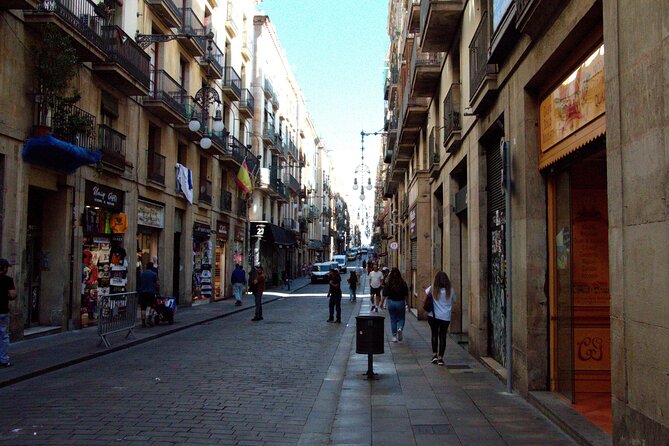
Still, there is a practical downside to GPS-guided experiences in old towns. Narrow streets, tall buildings, and close corners can mess with how a phone estimates your location. If that happens, don’t panic. Use the map shown in the app to reorient yourself, and keep moving in the direction your screen indicates.
If the app feels confusing at first, that’s usually a readiness issue, not a you issue. Once you’re a few stops in, the route tends to click.
El Raval after La Rambla: dense streets and sharper stories
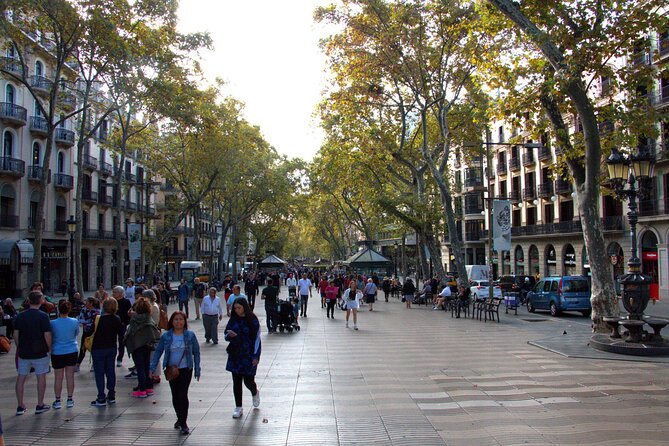
After leaving La Rambla, the walk moves into El Raval, once described as the most densely populated urban area in all of Europe. That context matters because it explains why the neighborhood feels layered, and why the streets hold so many different eras at once.
You will also hear about El Raval’s former role as the city’s Red Light District. The tour doesn’t ask you to judge it as entertainment, it frames the neighborhood historically, which helps you understand why you see a mix of old housing, new business, and constant change in such a small space.
One stop that really changes the tone is the House of Mercy story. You’ll learn how destitute mothers used to drop off unwanted babies through a hole in the wall. It’s heavy material, and the audio format gives you a chance to absorb it at your own pace rather than rushing past a plaque.
Mercat de la Boqueria: step inside a market that’s been going for centuries
From El Raval, the route connects you to Mercat de la Boqueria, with the note that it’s been operating since the 1100s. Markets like this do more than sell food. They show how a city organizes daily life, and they’re perfect for audio because the sensory world is already doing half the work.
On this walk, you’ll have the chance to step into the market. If you plan to browse, do it briefly and keep an eye on your phone battery, but even a short visit makes the neighborhood feel alive in a way that a photo never can.
This is also a good moment to pause, because the market space gives you room to stand, listen, and reset before you head deeper into the Gothic vibe.
Other things to see around Barcelona
- Barcelona: Sagrada Familia Entry Ticket with Audio Guide★ 4.6 · 105,312 reviews
- Casa Batllo Admission Ticket with Intelligent Audio Guide★ 4.5 · 3,168 reviews
- Barcelona: Mies van der Rohe Pavilion Ticket and Audio Guide★ 4.6 · 380 reviews
- Barcelona: Montjuïc Cable Car Ticket with Audio Guide★ 3.9 · 270 reviews
- Montjuïc Cable Car Entry Voucher with Audio Tour on Your Phone★ 3.5 · 37 reviews
- Gaudi and La Sagrada Familia Exterior Self-Guided Audio Tour★ 3.5 · 25 reviews
Botero’s El Gato and the playful ritual of touching art
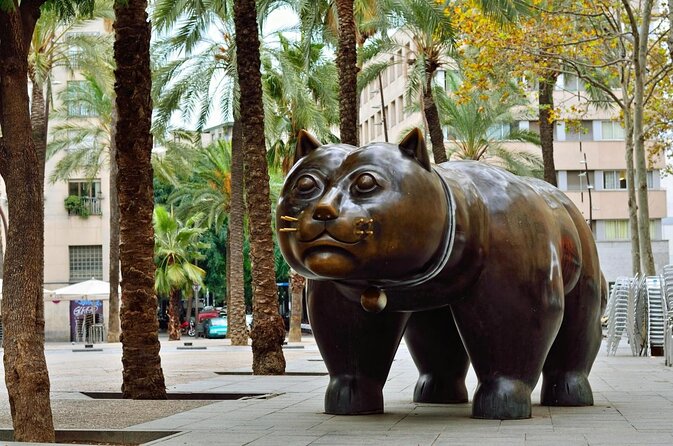
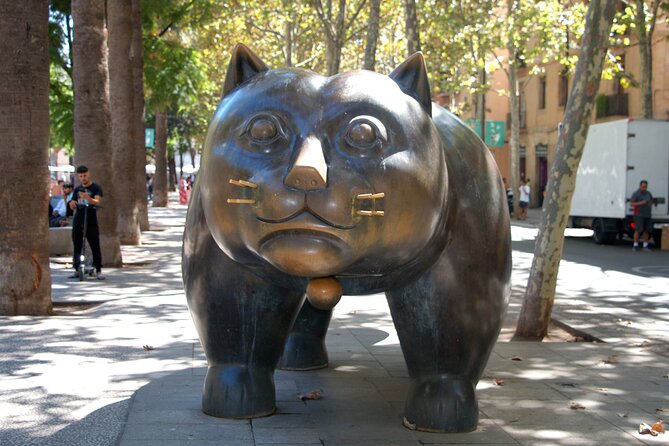
One of the most memorable moments on the route is Fernando Botero’s fat feline statue, El Gato de Botero. You’ll even have the opportunity to rub the crown jewels on the statue, a famous bit of public interaction.
I like this stop because it’s not solemn for the sake of being solemn. It’s an example of how public art can become a living part of street culture. If you try it, just be mindful of flow around the statue, since it’s the kind of place people naturally stop and photograph.
Palau Güell: Gaudí nearby, but not always in your typical itinerary
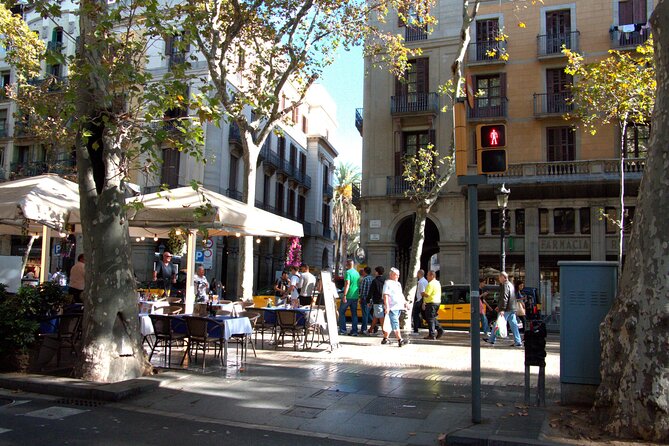
The tour guides you to Palau Güell, described as one of Gaudí’s more understated buildings. Even if you don’t go inside, the exterior and the location feel like a reminder that Barcelona’s best architecture is not only found behind ticket lines.
This is a good spot for slow looking. You’ll be walking narrow lanes and moving through the kind of street pattern that makes you instinctively look up.
And because the tour is self-guided, you can spend extra time here if you’re the type who likes to see how shapes and details repeat.
The route’s rhythm: alleys, shortcuts, and key squares
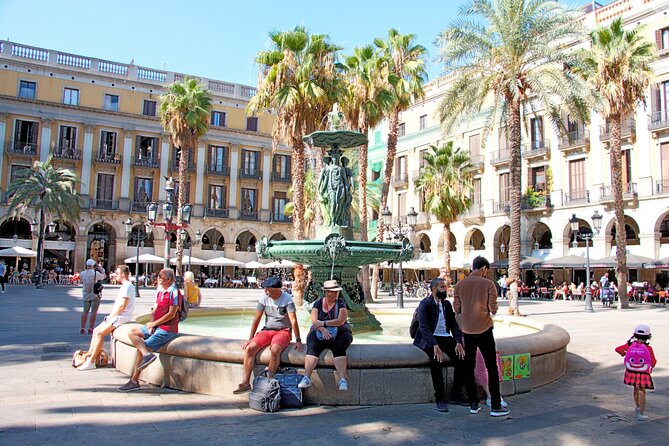
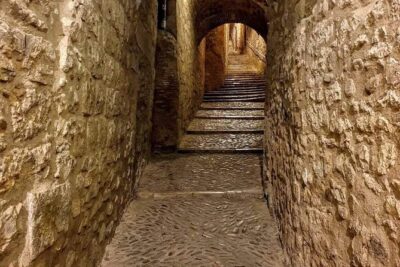
A big part of the appeal is how the tour uses the city’s actual walking patterns. You’ll move through narrow lanes and hidden alleys, and you’ll pop through popular squares like Plaça de Sant Jaume, Plaça Nova, and Plaça Sant Felip Neri.
These squares aren’t just scenic. They work as natural “reset points” for your ears and your feet. When you hear a story in a tight lane, you stay alert. When you step into a square, you can breathe, check the app map, and decide whether you want to keep pace or slow down.
There’s also a shortcut through Carrer d’Avinyo, which inspired Picasso’s Les Demoiselles d’Avignon. That’s the kind of connection I love in a walking tour, because it turns a regular street into something you understand as part of an artistic trail.
Can Culleretes and Meson del Cafe: food stops with attitude
The tour includes Can Culleretes Restaurant, where you’ll hear two origin stories and decide which one you believe. I appreciate this choice because it keeps the tour from becoming a list of monuments. It also gives you a reason to think about how stories get attached to places over time.
It then brings you to Meson del Cafe, described as where you’ll find the city’s best coffee. The route adds that you might even bump into the mayor. That part is obviously not something you can plan for, but it hints at the neighborhood’s status and how often public figures pass through central Barcelona.
If you like food breaks that feel integrated into the walk, these are worth prioritizing. If you don’t want caffeine, you can still use these stops as moments to rest your legs and regroup.
Gothic Quarter neo-gothic hits: Cathedral area and Pont de Bisbe
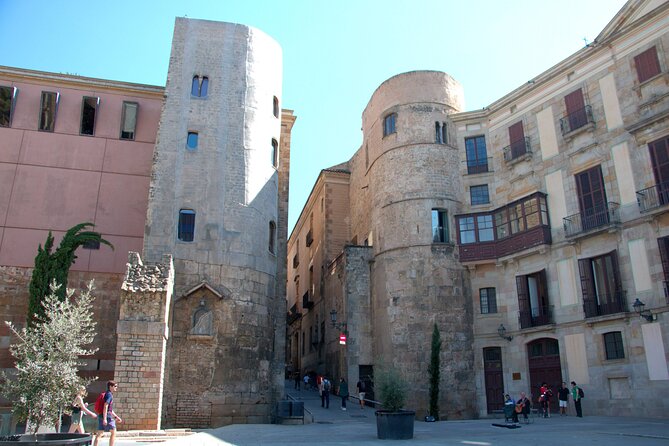
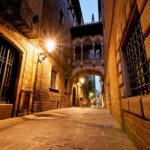
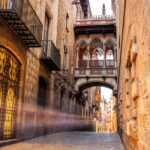
Once you’re in the Gothic Quarter, the audio shifts toward neo-gothic attractions, including the Cathedral of Barcelona and Pont de Bisbe, the Bishops Bridge. These are the kinds of sights that can feel familiar if you’ve seen photos, but they land differently when you arrive on foot through tight streets.
Pont de Bisbe is especially good for slowing down. It’s a small area where you can see how the bridge and surroundings frame the street scene.
And the Cathedral of Barcelona works well in an audio format because you can stand there longer without worrying you will waste time. You can take it in, then move on when you’re ready.
El Peto and Barcino: the city as layers of survival
Two stops push the tour from sightseeing into human-scale meaning.
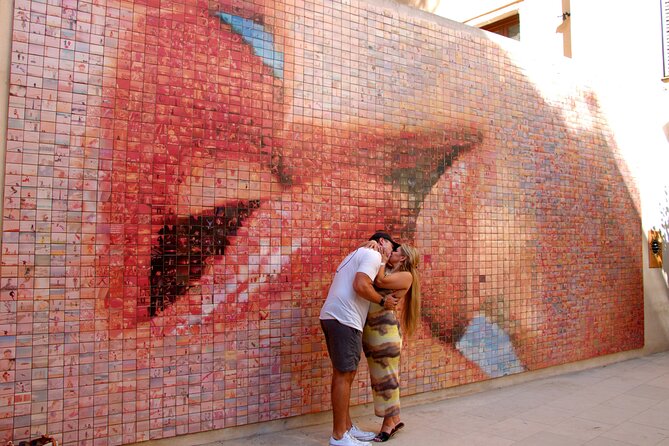
First is El Peto, a kissing mural made of 4,000 photographic images of freedom donated by the public. It’s visual, personal, and a bit different from the usual monument-first approach. The audio helps you understand what you’re seeing, so the mural feels like a message, not just a photo wall.
Then you’ll hear how the small fortified Roman village of Barcino developed into the Barcelona of today. The tour also points out where tombs of the dead once lined the ancient village wall. That detail makes a huge difference because it turns “old streets” into “old lives,” connected to the ground under your feet.
Navigation reality check: what to do if GPS wobbles
Even though the app includes offline maps and a built-in map, GPS can still act weird in older cities. A common pattern is that the pin drifts or jumps, especially near tall buildings or narrow lanes.
Here’s the practical way to handle it. Follow the map in the app first, not the little blue dot. If it’s still confusing, pause, take a few steps to a clearer street corner, and restart audio at the right moment for your position.
Also, remember you are walking. If GPS is off, it doesn’t mean you’re lost forever. It usually means you need a tiny position correction and then you’re back on track.
Who this audio walk is best for
This tour suits you if you want a structured route but hate being rushed. It’s also a good fit if you enjoy absorbing stories while walking, then stopping naturally when something catches your eye.
It’s especially useful if you like neighborhood variety in one go. You get El Raval’s edge, the Gothic Quarter’s architectural drama, and city-life moments at markets and cafés, all in one roughly 75-minute loop.
If you hate app-based navigation or you expect a traditional live guide, you might find the start slightly awkward. But if you’re comfortable using your phone for directions, this style can feel relaxing.
Should you book this El Raval and Gothic Quarter audio tour?
Yes, I’d book it if you want a low-cost, self-paced way to understand two major Barcelona neighborhoods without ticket crowds. The combination of offline access, a map that helps you stay oriented, and stories tied to specific places like House of Mercy, Mercat de la Boqueria, Palau Güell, Pont de Bisbe, El Peto, and Barcino makes the walk feel purposeful.
I would skip it if you depend on flawless GPS guidance, or if you’re not willing to bring your own smartphone and headphones. Also, since it’s a walking route with narrow lanes, plan comfortable shoes.
If your goal is to see Barcelona like a local, not like a checklist, this is a strong match.
FAQ
Where does the El Raval and Gothic Quarter audio tour start and end?
It starts at Font de Canaletes on La Rambla (La Rambla, 133, Ciutat Vella, 08002 Barcelona) and ends back at the same meeting point.
How long is the walking tour?
It takes about 1 hour 15 minutes to 1 hour 30 minutes, and the route includes multiple stretches that are around 75 minutes.
How much does it cost?
The price is $11.99 per person.
Can I use it offline?
Yes. The tour includes offline access to audio, maps, and geodata.
What do I need to bring?
You need your own smartphone and headphones. The VoiceMap app is provided, but those personal devices are not included.
Is this tour refundable if I cancel?
No. This experience is non-refundable and cannot be changed for any reason.
More Self-Guided Tours in Barcelona


The latest to open for booking





Gothic Quarter Walks, side by side.
Barcelona all included: Sagrada, Park Güell, Montjuic & Gothic
Read our review →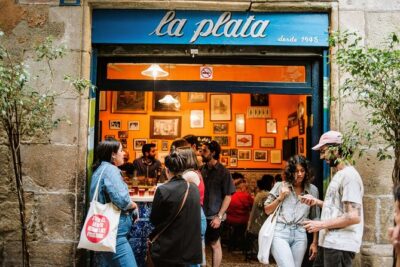
Barcelona Gothic Quarter Tapas & Taverns Food & Wine Tour
Read our review →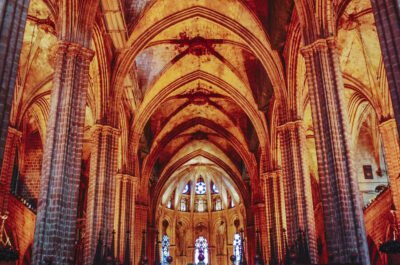
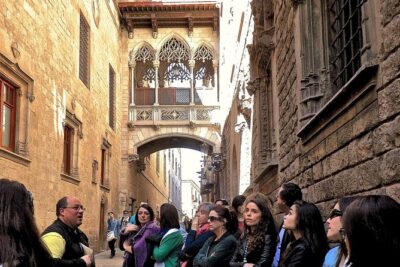
Barcelona Old Town & Gothic Quarter Small Group Tour
Read our review →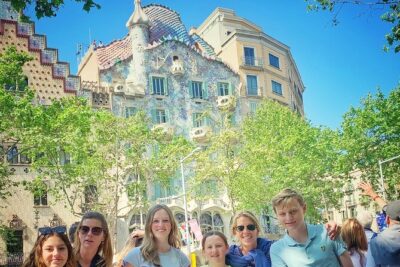
Ramblas, Old Town, Gothic and Gaudi Architecture Walking Tour
Read our review →
El Born and Gothic Quarter Wine & Tapas Bar Tour
Read our review →
El Born Food Walking Tour with Tapas and Drinks
Read our review →
Kids and Family Gothic Quarter Walking Tour in Barcelona
Read our review →Where else this one turns up