
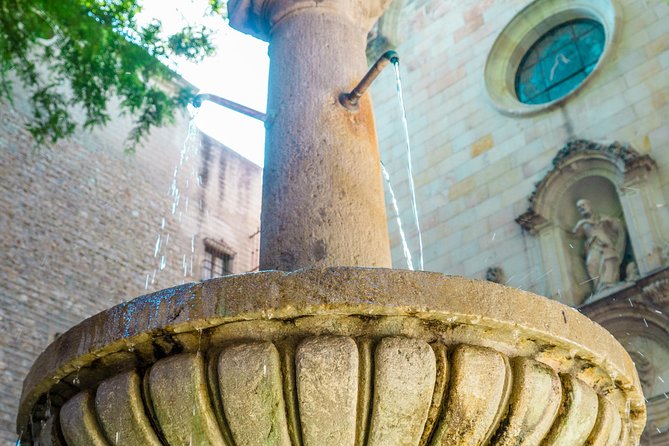
Reviewed · GOTHIC QUARTER WALKS
Jewish Walking Tour Barcelona by Expert Jewish Guide 2h
Barcelona hides Jewish history in plain sight. This 2-hour Jewish Walking Tour of Barcelona focuses on the ancient Jewish Quarter and the Major Synagogue area, with stops that connect medieval life to the political and religious forces that shaped it.
I especially like that the tour is guided by a real local professional, and that the storytelling tends to be specific, not generic. I also like the walking route through the Gothic Quarter maze, where you can actually picture how people moved through the El Call streets instead of just reading about it.
One thing to plan for: entrance details are not fully included, and there’s a €5 donation request onsite at the synagogue (plus entrance tickets are not included), so your total cost can be a bit more than the base price.
In This Review
- Key highlights to expect on this Barcelona Jewish Quarter walk
- Where the tour starts in Barcelona: Placa de Sant Jaume
- Major Synagogue: one of Europe’s oldest synagogue sites
- MUHBA El Call: turning winding alleys into real context
- Placa del Rei: where Jewish leaders served kings
- What your guide is really doing (and why it works)
- How long is 2 hours, and what that means for your day
- Price and value: is $96.79 worth it?
- Who this Jewish Quarter tour is best for
- Should you book this Barcelona Jewish Walking Tour?
- FAQ
- How long is the Jewish Walking Tour Barcelona?
- What language is the tour offered in?
- What is the price per person?
- Where does the tour start and end?
- Is hotel pickup or drop-off included?
- What is included in the tour price?
- Are entrance fees included?
- Is this tour private?
- Do I get a mobile ticket?
- What is the cancellation policy?
Key highlights to expect on this Barcelona Jewish Quarter walk
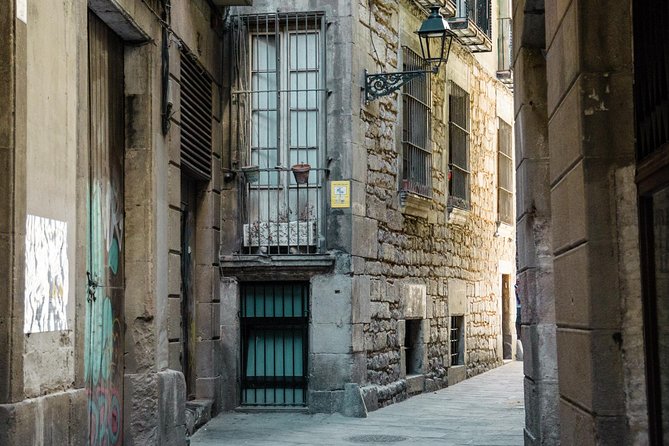
- Placa de Sant Jaume as a symbolic starting point, where civic power meets Jewish Barcelona
- Major Synagogue area presented as one of Europe’s oldest synagogue sites
- MUHBA El Call for the real street-level feel of centuries of Jewish life and tragedy
- Placa del Rei to connect Jewish leadership with kings and the turning points of history
- English-speaking, local-guided format that’s designed to make architecture and names easier to remember
- Easy meeting point in the Gothic Quarter near public transportation
Where the tour starts in Barcelona: Placa de Sant Jaume
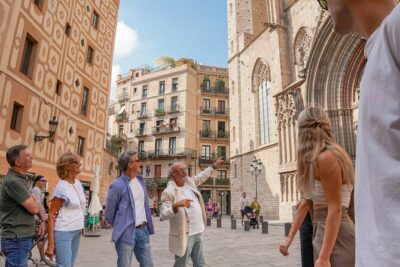
You begin at Conesa Entrepans, Carrer de la Llibreteria 1, in the Gothic Quarter, a good spot if you want to keep the day flexible. From there, the first stop is Placa de Sant Jaume, the political heart of Catalonia. Even if you only know Barcelona from Gaudí postcards, this square is a reminder that power and institutions have always been central here.
What I like about starting in Placa de Sant Jaume is that it gives you a frame. The Jewish story in Barcelona did not happen in a vacuum. It unfolded alongside town governance, royal authority, and church influence. When a guide points out the symbolic role of the area as a gateway to Jewish Barcelona, it helps everything that comes next feel connected, not like separate “sight stops.”
Practical tip: spend a minute or two scanning the square before you move on. You are learning names and relationships, and the layout will stick with you later when the streets tighten around you.
Major Synagogue: one of Europe’s oldest synagogue sites
Next you head toward the Major Synagogue site. The tour presents it as an ancient synagogue in central Barcelona, described as one of the oldest synagogues in Europe. That claim matters, because it changes your posture as you walk. You are not just looking at old stones. You are standing in a place where layers of religious life and community memory have accumulated over time.
A good guide usually tackles three things here:
- How the site fits into Barcelona’s wider history
- Why architecture can carry meaning even when you cannot see everything clearly
- How to hold the timeline in your head without getting lost in dates
Many guides for this tour are praised for exactly that kind of pacing and explanation. For example, names like Ella and Dina show up often, and the common theme is clarity plus warmth. You may also get practical orientation, like what to notice as you move, not just what something is.
One consideration: this stop involves time that is more about interpretation than long visits. If you want museums, indoor exhibits, and long ticketed stays, this may feel more like a history walk than a deep archaeological visit. Still, as a first exposure to Jewish Barcelona, it’s strong.
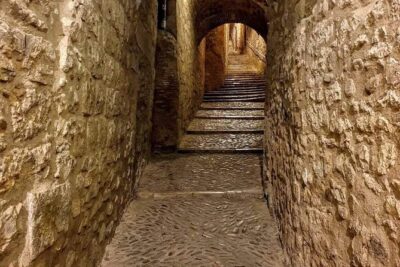
Get lost in the medieval lanes
- Barcelona all included: Sagrada, Park Güell, Montjuic & Gothic
★ 5.0 · 2,169 reviews - Barcelona Gothic Quarter Tapas & Taverns Food & Wine Tour
★ 5.0 · 1,470 reviews - Barcelona: Old Town and Gothic Quarter Walking Tour
★ 4.8 · 1,393 reviews
MUHBA El Call: turning winding alleys into real context
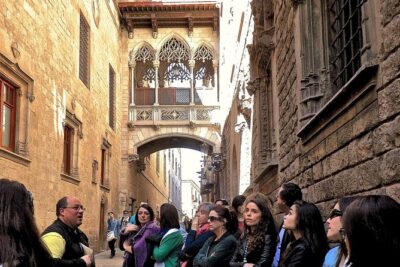
Then you step into the heart of the medieval neighborhood, MUHBA – El Call. This is where the tour’s walking format really earns its keep. The winding alleys are not just picturesque. They help you understand how daily life worked in a dense quarter: how close neighbors were, how paths curved, and how the neighborhood’s layout would shape everything from schooling to commerce to community gatherings.
The tour frames El Call as a place revealing centuries of Jewish life and also the tragedy that can follow when societies change. That balance is important. Barcelona’s Jewish Quarter is not only about survival and culture. It is also about rupture, persecution, and how quickly conditions could shift.
What I find most useful here is when guides point out details you would normally miss. One style of guiding described by visitors centers on the smallest architectural and street-level cues, so you can actually connect what you’re seeing to what you’re being told. Maps and visual aids sometimes appear, which can help if you feel turned around in narrow streets.
If you’re the kind of person who likes “how did people live?” questions, this segment will click. You’ll walk away with a mental map of the quarter and a better sense of why the neighborhood mattered beyond its landmarks.
Practical tip: the streets in El Call can feel tight underfoot. Wear comfortable shoes with grip, especially if the weather is damp.
Placa del Rei: where Jewish leaders served kings
The final major stop is Placa del Rei. This square is presented as a place where Jewish leaders served kings and history changed forever. That sounds dramatic, because it is. But what makes this stop valuable is that it adds political and historical gravity to everything you learned earlier.
In simple terms, your brain needs “why this mattered” anchors. Placa del Rei provides one. It reminds you that Jewish life in Barcelona was not only local neighborhood culture. It also connected to larger structures of rule, legitimacy, and conflict.
This is also a great place to ask questions, because your guide can connect the past you just walked through to broader patterns in Catalonia and Spain. Some guides, like Alan, are singled out for answering questions thoughtfully and connecting different threads of history. If that’s your guide too, you’ll probably leave with a clearer sense of how the Jewish community fit into the wider medieval world.
Timing note: the tour keeps moving, so if a topic hooks you, it’s worth asking right away. The guide usually has the full story arc in mind, and late questions can be harder to fit in.
What your guide is really doing (and why it works)
This experience is built around a simple formula: history plus place. The route is short enough to stay lively, but packed enough to make you feel like you learned something substantial. That is not easy to pull off, but strong guides do it.
Here are the high-praise strengths you can actively look for while you’re walking:
- Architecture reading: the guide explains buildings and layouts so you can visualize older realities
- Storytelling with names and personal context: anecdotes can make the human side of history stick
- Energy and Q-and-A flow: when the guide stays quick and friendly, the walk stays fun even if you are tired
- Context beyond the Jewish Quarter: Catalan and Spanish historical context helps everything connect
You might even hear your guide refer to long local experience. For instance, Dina is described as living in the area for over 40 years, and that kind of familiarity can make the explanations feel grounded. Other guides such as Lilac, Leilah, Rina, and Eyal show up repeatedly in feedback, with consistent praise for knowledge and warmth, plus pointing out small details you would never spot on your own.
If you want to get extra value, do this: keep a short list of questions in your head before you meet. For example, ask how the neighborhood changed over time, or why certain sites are positioned where they are. Most guides can tailor answers on the spot because they know how the story arc fits together.
How long is 2 hours, and what that means for your day
The tour runs about 2 hours on foot. That’s a sweet spot. You get enough time to cover the main landmarks tied to Jewish Barcelona, and you are not stuck for an entire half-day or longer.
The pace is usually steady. This is not the sort of tour where you linger for long photo sessions at every corner. If you love slow, scenic wandering, plan for some extra time before or after this tour to explore on your own.
Also, because it is offered in English and uses a mobile ticket, it can slot easily into a normal sightseeing day. It ends back at the meeting point, which is convenient if you want to hop onto another plan nearby in the Gothic Quarter.
Short on time? This still fits
- Barcelona: 2-Hour City Sights Guided Segway Tour★ 4.9 · 610 reviews
- Barcelona: 2-Hour Sailboat Tour with Snacks and Drinks★ 4.8 · 357 reviews
- 2-Hour Sailing Tour in Barcelona with Open Bar & Snacks★ 5.0 · 318 reviews
- Barcelona 2-Hour Gothic Walking Tour★ 4.7 · 317 reviews
- Barcelona Grand 2-Hour Segway Tour★ 4.8 · 240 reviews
- Barcelona: 2-Hour Segway Tour★ 4.9 · 216 reviews
Price and value: is $96.79 worth it?
At $96.79 per person for an approximately 2-hour walking tour, you are paying for more than “a walk in historic streets.” You are paying for:
- A professional local guide
- A structured route through key sites tied to Jewish Barcelona
- Interpretation that helps you connect architecture, politics, and daily life
That value makes sense if you care about context. If you just want photos of old buildings, you could wander the Gothic Quarter on your own. But if you want the sites to mean something, a good guide makes a big difference.
One extra budgeting note: the tour notes that entrance fees are not included, and there is a €5 donation requested onsite at the synagogue. This does not usually make the tour bad value, but it does mean you should expect a small add-on so you are not surprised at the end.
Booking tip: the tour is commonly booked about 48 days in advance, so if you have fixed dates or you’re traveling in peak season, it’s smart to reserve early.
Who this Jewish Quarter tour is best for
This tour is a strong fit if you:
- Want a focused Jewish Walking Tour Barcelona that covers the core landmarks
- Like history that connects to street-level geography
- Prefer a guided route in English, with time to ask questions
- Plan to explore the Gothic Quarter anyway and want it to have meaning
It may be less ideal if you:
- Want a long museum-style visit with lots of indoor time
- Need hotel pickup or fully arranged logistics beyond a neighborhood meeting point
- Are hoping all entrance costs are included in the base price
Should you book this Barcelona Jewish Walking Tour?
I think it’s worth booking if your goal is understanding, not just checking boxes. The route hits the big story beats, from Placa de Sant Jaume to the Major Synagogue area, into MUHBA El Call, and then to Placa del Rei for that political and turning-points angle. With consistently praised guides like Ella, Dina, Lilac, and Alan, the walking format stays engaging and informative.
Do book with two things in mind: wear good shoes for tight streets, and plan for the synagogue €5 donation since entrance fees are not included. If you want a compact, high-impact way to learn how Jewish life shaped Barcelona, this is one of the better calls you can make.
FAQ
How long is the Jewish Walking Tour Barcelona?
The tour is about 2 hours on foot.
What language is the tour offered in?
The tour is offered in English.
What is the price per person?
The price is $96.79 per person.
Where does the tour start and end?
It starts at Conesa Entrepans, Carrer de la Llibreteria, 1, Ciutat Vella, 08002 Barcelona, Spain. It ends back at the meeting point.
Is hotel pickup or drop-off included?
No, hotel pickup and drop-off are not included.
What is included in the tour price?
Included items are a professional local guide and a 2-hour walking tour of Jewish monuments.
Are entrance fees included?
No. Entrance fees are not included. A €5 per person donation is kindly requested onsite at the synagogue.
Is this tour private?
Yes. It is a private tour or activity, and only your group will participate.
Do I get a mobile ticket?
Yes, it includes a mobile ticket.
What is the cancellation policy?
Free cancellation is available, and you can cancel up to 24 hours in advance for a full refund. If you cancel less than 24 hours before the start time, the amount you paid will not be refunded.
More Walking Tours in Barcelona



The latest to open for booking




Gothic Quarter Walks, side by side.
Barcelona all included: Sagrada, Park Güell, Montjuic & Gothic
Read our review →
Barcelona Gothic Quarter Tapas & Taverns Food & Wine Tour
Read our review →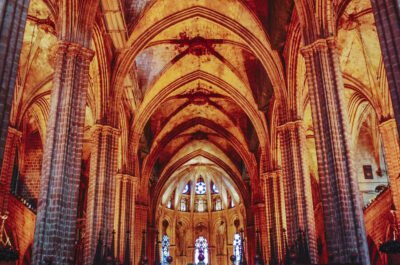
Barcelona Old Town & Gothic Quarter Small Group Tour
Read our review →
Ramblas, Old Town, Gothic and Gaudi Architecture Walking Tour
Read our review →
El Born and Gothic Quarter Wine & Tapas Bar Tour
Read our review →
El Born Food Walking Tour with Tapas and Drinks
Read our review →
Kids and Family Gothic Quarter Walking Tour in Barcelona
Read our review →Where else this one turns up