
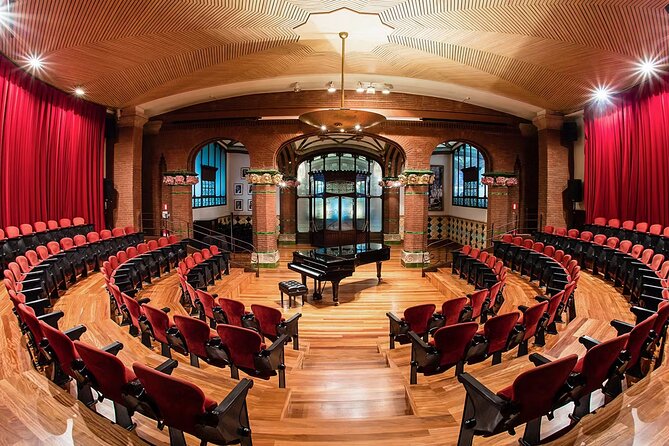
Reviewed · PALAU DE LA MÚSICA TICKETS
Palau de la Música Catalana Entry Tickets
Music and light share one room in Barcelona. The Palau de la Música Catalana is a UNESCO-listed concert hall where Catalan Modernism turns into bright, emotional architecture, and your ticket gives you a chance to see parts of a working venue most visitors never reach. You’ll also get a simple, structured experience, with a visit designed to fit into a busy Barcelona day.
I like how the entry focuses on the place itself, not a long lecture. You get access areas usually reserved for concertgoers, so the tour feels closer to being backstage than being stuck behind ropes. The one thing to keep in mind is the pace, the visit is about 50 minutes, so if you want a slow, linger-all-day photo session, you might feel a bit time-pressed.
In This Review
- Key highlights before you go
- Palau de la Música Catalana, a stop built for music and craft
- Your 50-minute itinerary, what to expect in real terms
- Step inside: light, color, and the Modernisme details
- Why acoustics matter here, even when you are touring
- How guided vs self-guided changes the value
- Price and value: is $39 worth it?
- Location and practical logistics in Barcelona
- Who should book these Palau entry tickets?
- What to do after your visit
- Should you book Palau de la Música Catalana entry tickets?
- FAQ
- How long is the Palau de la Música Catalana entry ticket experience?
- Is the tour available in English?
- What is included with the ticket?
- Where is it located, and is it easy to reach?
- Will I get a confirmation after I book?
- Can most people participate?
- What is the cancellation policy?
Key highlights before you go
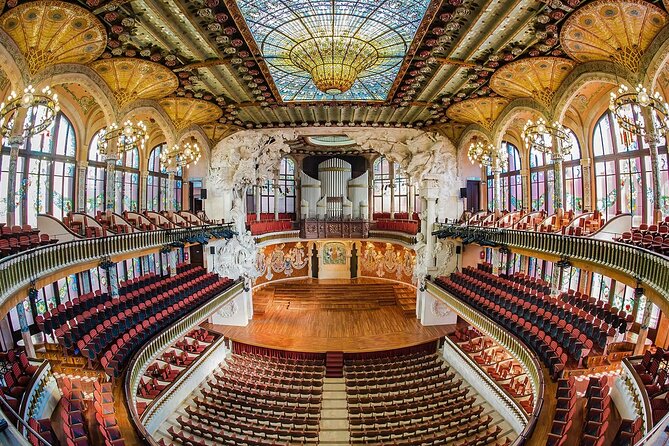
- UNESCO concert hall, not just a building: This is a World Heritage site that still hosts performances, and that shows in the design.
- Rare-access areas: Your ticket can get you into spaces normally reserved for people attending concerts.
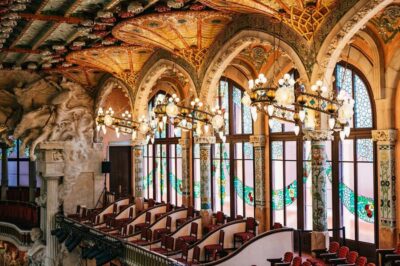
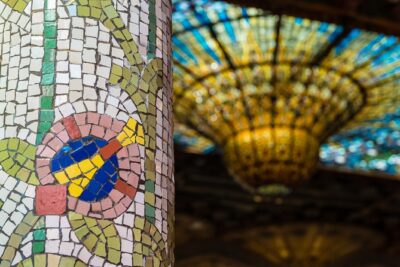
- Catalan Modernism details that hit fast: Think floral motifs, sculptural columns, and stained-glass light effects.
- Great acoustics are part of the point: The hall’s sound design is a major part of why people rate performances so highly.
- English option: You can take the experience in English, which makes planning easier.
- Book ahead because demand is real: On average, it’s booked about 78 days in advance.
Palau de la Música Catalana, a stop built for music and craft
If you like architecture that feels like it was made by artists with perfect timing, you’ll get it here. The Palau de la Música Catalana is Barcelona at its most imaginative, where decorative elements are not filler. They are part of how the room works, visually and acoustically, so even a short visit can feel satisfying.
What makes it worth your time is the combination of three things: the UNESCO status, the feeling that it is still alive with performances, and the chance to see areas typically kept for concertgoers. That rare access is a big deal. A lot of “entry tickets” get you into the lobby and maybe a hallway. Here, you’re pushed closer to the heart of the experience, where the hall’s design becomes obvious.
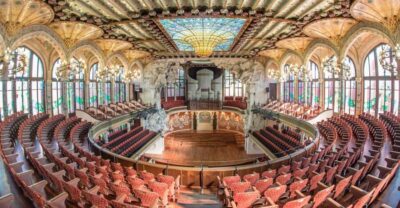
The hall is also a strong choice if you want culture without overthinking it. You don’t need musical training to enjoy it. You just need 50 minutes and good eyes. The stained-glass skylight and the sculptural details do the heavy lifting, turning light into something you can feel, not just look at.
Your 50-minute itinerary, what to expect in real terms
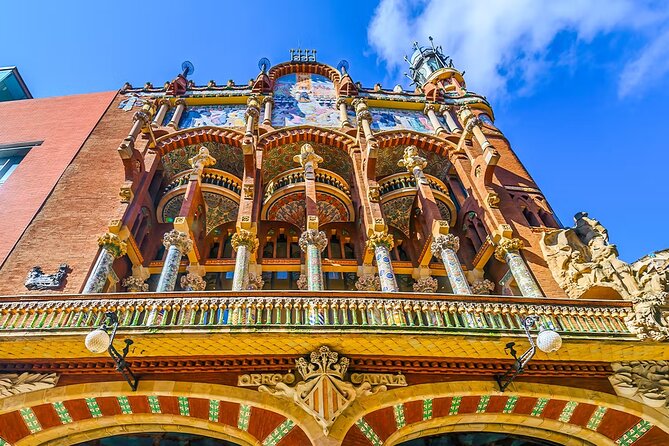
This experience is a single main stop: the Palace of Catalan Music, the Palau de la Música Catalana itself. Expect the tour to be about 50 minutes, so plan it as a focused visit in the middle of your day, not the kind of thing you stack with three other long stops.
You’ll start by stepping inside, and then you’ll move through key viewpoints that show the hall’s character quickly. The highlights usually include:
- a grand staircase where the details are meant to catch your eye
- architectural elements like floral columns
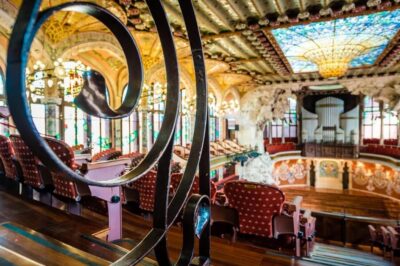
- the stained-glass skylight above, which changes how the whole space looks depending on the light outside
- areas that feel closer to where concert audiences typically gather
You can also choose between a guided or self-guided approach. That matters more than it sounds. If you love stories and context, a guided option helps you connect the dots between Catalan Modernism style and what you’re actually seeing. If you prefer a calm pace, self-guided is better because you can pause where your attention goes, not where a schedule tells you to stop.
One practical note: because the visit is time-boxed, go in ready. Wear comfortable shoes, keep your phone charged for photos, and expect to move. The Palau is the kind of place where the best angles are not all at the same spot, and you’ll get more out of it if you’re not trying to backtrack.
A concert hall built from stained glass
- Barcelona: Palau de la Música Entry Ticket
★ 4.6 · 4,907 reviews - Barcelona: Palau de la Música Guided Tour
★ 4.7 · 3,273 reviews - Palau de la Musica Catalana Guided Tour
★ 4.5 · 632 reviews
Step inside: light, color, and the Modernisme details
The first shock of the Palau is that it looks like a crafted dream, not a plain venue. Catalan Modernism shows up in the way the details are designed to be looked at from multiple angles, even from areas you might not think to linger.
A few standout visual moments you should plan around:
- Grand staircase energy: The staircase is a natural “reset” point where you can take in scale before you go deeper into the hall.
- Floral columns: These add a soft, organic touch that makes the architecture feel human, not industrial.
- Stained-glass skylight: This is the kind of detail that makes you stop without meaning to. It turns daylight into color, and the hall feels different when the light hits.
The stained glass is more than pretty. It also helps explain why the Palau has such a strong visual identity. The building is not just decorated. It is engineered for atmosphere. The same idea applies to sound: the room is shaped to support performance. Even if you are not seeing a concert in that moment, you can feel how serious the designers were about making the hall work.
Why acoustics matter here, even when you are touring
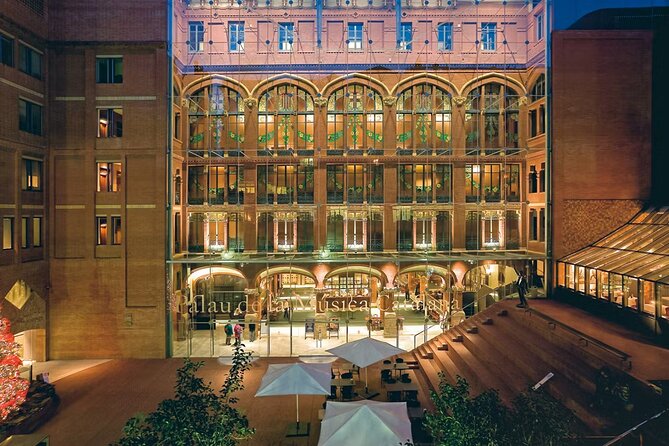
People get excited about this place for one big reason: it sounds right. In one detailed description of a performance experience in this venue, the musical quality stood out immediately, with instrumentalists praised as strong singers too, plus stage movement that supported the show. That combination is not random. The Palau was built as a performance machine.
So what does that mean for you as a ticket holder walking through during a tour? You get a different appreciation when you notice the hall is not only decorative. It is functional. The space guides where sound should go and how it should travel, which is a big reason why performances here can feel so immediate.
Even if your visit is only architectural, your brain connects design to purpose. You look at the hall and think, this is built for voices and instruments, not just applause photos. That’s a unique kind of satisfaction compared with many sightseeing stops that are purely visual.
How guided vs self-guided changes the value
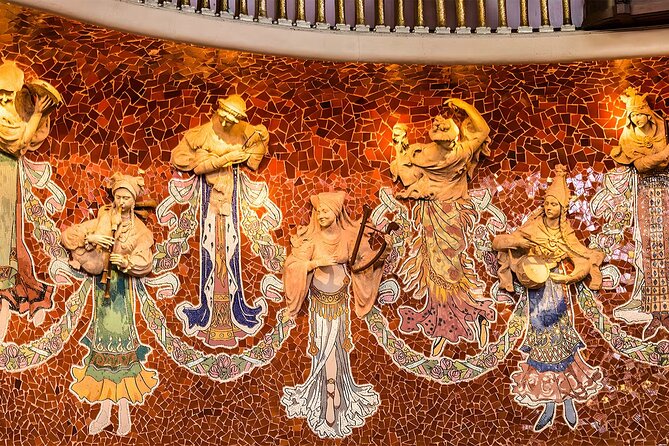
You can choose between a guided or self-guided option, and that choice can make the same building feel totally different.
Guided tends to be best if:
- you want quick context for Catalan Modernism details
- you like hearing how the design supports performance
- you want help spotting what matters most, without guessing
Self-guided tends to be best if:
- you like pacing yourself and spending extra time on the staircase or skylight
- you prefer quiet focus over a spoken script
- you want flexibility if you arrive feeling tired or rushed
Either way, the biggest value driver is the access. If you’re the type who hates feeling boxed into a generic route, the rare-access areas make this feel more special. You are not only passing through public space. You’re seeing parts that usually belong to concert life.
Price and value: is $39 worth it?
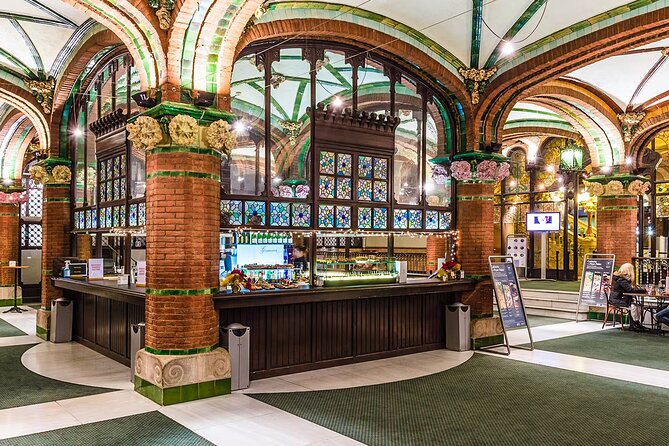
At $39.00 per person, this is not a budget filler, but it also isn’t priced like a high-end add-on. For me, the value comes from three places.
First, you’re paying for entry to a UNESCO-listed concert hall, not a quick exterior stop. Second, the experience includes admission, and it focuses on the hall itself, which is what you actually came for. Third, the tour’s unique selling point is that it can give you access areas usually reserved for concertgoers. That is the kind of detail that turns a normal ticket into a “wait, they let us in here?” moment.
Also consider timing. Tickets can sell fast, and the average booking window of 78 days ahead suggests strong demand. If you wait until the last minute, you might end up with fewer time slots or no tickets at all. For many people, that makes the ticket feel like money well spent, because getting in matters as much as what you see.
If you’re on a tight schedule, 50 minutes keeps it realistic. You can fit it around other Barcelona highlights without losing half a day.
Other things to see around Barcelona
- Barcelona: Sagrada Familia Entry Ticket with Audio Guide★ 4.6 · 105,312 reviews
- Barcelona: Park Güell Admission Ticket★ 4.4 · 76,534 reviews
- Barcelona: Montjuïc Cable Car Roundtrip Ticket★ 4.5 · 22,368 reviews
- Barcelona Aquarium: Entry Ticket★ 4.4 · 16,717 reviews
- Barcelona: Sagrada Familia Skip-the-Line Entry Ticket & Tour★ 4.8 · 12,789 reviews
- Barcelona: FC Barcelona Museum “Barça Immersive Tour” Ticket★ 4.4 · 10,944 reviews
Location and practical logistics in Barcelona
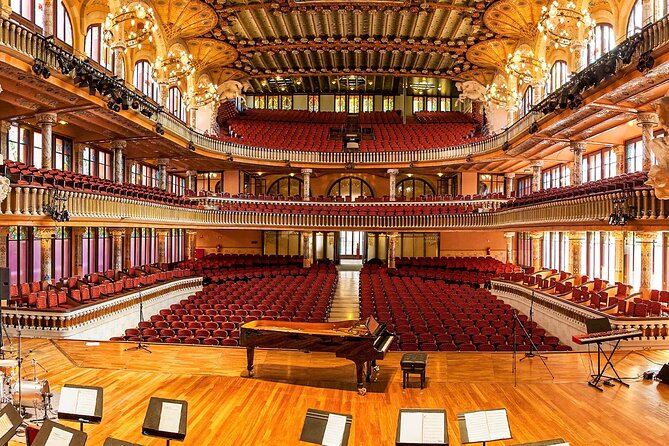
The Palau is near public transportation, which is a big practical win. You don’t want to spend valuable time figuring out local transit on the day you’re trying to hit a famous interior site.
For the easiest experience:
- plan to arrive slightly early so you can settle before the tour starts
- keep the day’s route simple, group nearby sights so you’re not crossing town just for one stop
- bring a camera, because the stained glass and staircase are photo magnets
The good news is that the experience is described as something most travelers can participate in, so it’s generally not a niche activity. The main constraint is the short time window, not a complicated prerequisite.
Who should book these Palau entry tickets?
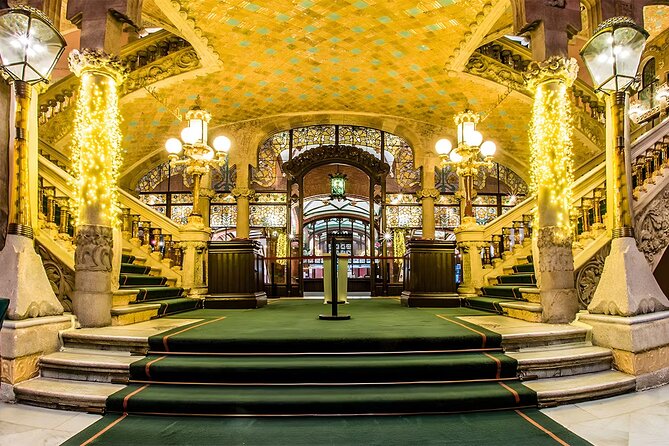
This is a smart pick if you match at least a couple of these:
- you love Barcelona architecture and want interiors, not just façades
- you want a UNESCO site that is also a living performance venue
- you like places where design supports real-world purpose, especially sound and stagecraft
- you want an option that works in English
- you prefer a clean, time-boxed experience (about 50 minutes)
It may be less ideal if:
- you want a long, slow tour with lots of time for lingering and reading every detail
- you’re hoping for a full show included in the ticket price, since the provided information describes an entry experience focused on the palace itself
What to do after your visit
Once you’ve seen the Palau’s key interior spaces, you’ll get more out of the rest of your day if you lean into the “Modernisme” theme. Look around for other decorative design in nearby neighborhoods and notice how Barcelona uses craftsmanship as identity.
If you’re planning your evening, consider whether you want more music after this. The Palau is famous for performances, and the design is built for them. Even if this ticket is only an entry experience, it can set you up to appreciate why people treat this hall like a must-see cultural stop.
Should you book Palau de la Música Catalana entry tickets?
Yes, you should book if you want a high-impact Barcelona interior that combines UNESCO significance, striking design, and access to areas tied to concert life. The ticket price makes sense when you factor in admission plus the fact that you are not limited to the most basic public zones. And the 50-minute timing makes it easy to plug into a packed itinerary.
If you’re the type who hates rushing, check timing carefully and pick the slot that fits your day best. Also, because tickets tend to get snapped up early, plan ahead rather than waiting for last-minute availability.
FAQ
How long is the Palau de la Música Catalana entry ticket experience?
The experience lasts about 50 minutes.
Is the tour available in English?
Yes, the experience is offered in English.
What is included with the ticket?
Admission is included with the ticket.
Where is it located, and is it easy to reach?
It is in Barcelona, and it is near public transportation.
Will I get a confirmation after I book?
Yes, confirmation is received at the time of booking.
Can most people participate?
The experience notes that most travelers can participate.
What is the cancellation policy?
Free cancellation is available. You can cancel up to 24 hours in advance for a full refund, and changes within 24 hours of the start time are not accepted.
The latest to open for booking



Palau de la Música Tickets, side by side.


Barcelona Guitar Trio & Dance at the Palau de la Musica
Read our review →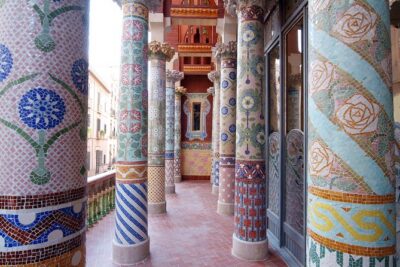
Palau de la Musica Catalana Admission Ticket with Audioguide
Read our review →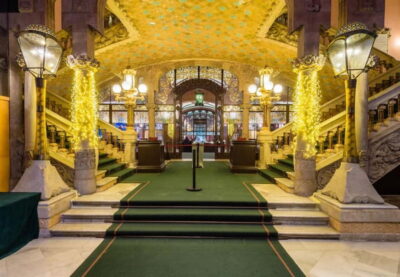
Where else this one turns up