
Reviewed · SCAVANGER HUNTS TOURS
The Joan Miró Mystery: Self-Guided Art Treasure Hunt in Barcelona
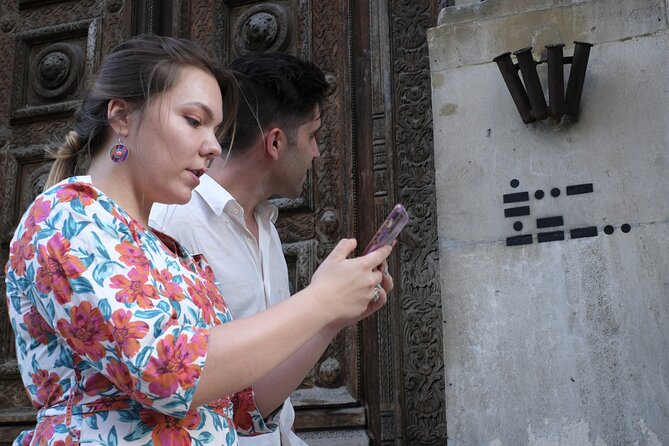
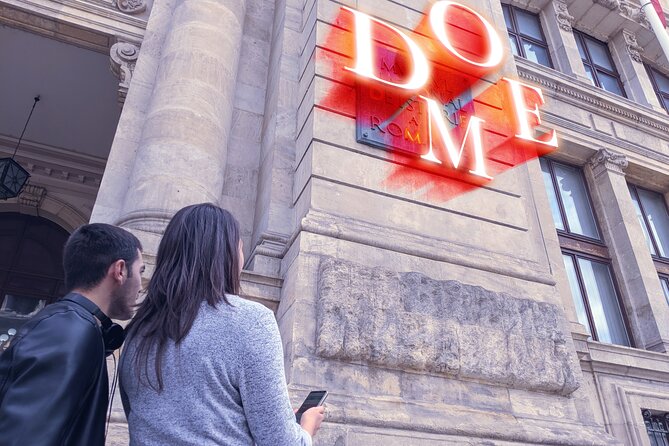
Want a scavenger hunt with art clues? This self-guided Joan Miró Mystery turns Barcelona streets into a phone-led challenge, where the story unfolds as you solve puzzles and move to the next spot. You do it at your own pace, with no guide herding you along.
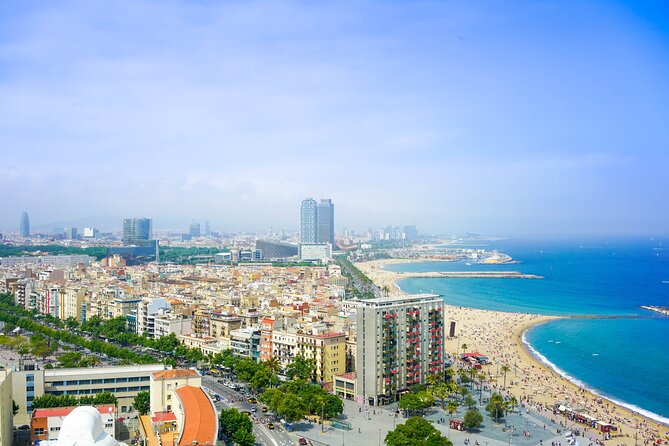
I like two things a lot. First, the mobile directions and challenges keep you moving without feeling like a lecture. Second, the route threads together well-known Miró landmarks like Joan Miró park (Women and bird) and Casa Joan Miró with markets and cinemas that feel more local than tourist-only.
One thing to consider: you are fully responsible for your timing and you will need a working phone. If your battery is low, street puzzles can go from fun to annoying fast.
In This Review
- Key highlights you should care about
- Turning Barcelona into a phone-led art game
- Price, value, and what your ticket really buys
- What happens on the ground, and how long to plan
- The phone setup: Questo app and your ticket
- Stop-by-stop route: your Miró mystery walk
- Stop 1: 08014
- Stop 2: Carrer d’Aragó, 2
- Stop 3: Arenas de Barcelona
- Stop 4: Gran Via de Les Corts Catalanes, 659 Garage
- Stop 5: Gran Via de Les Corts Catalanes, 493
- Stop 6: Carrer del Comte Borrell, 108
- Stop 7: Mercat de Sant Antoni
- Stop 8: Cinemes Renoir Floridablanca
- Stop 9: Teatre Goya
- Stop 10: Plaça Universitat
- Stop 11: La Rambla, 75
- Stop 12: Mercat de la Boqueria
- Stop 13: Mosaic de Joan Miró (finish area)
- The Miró angle: where the art theme actually helps
- Logistics that make this easier than most
- You can choose when you start
- Entry tickets are not part of the deal
- It avoids crowds by design
- Who should book this hunt in Barcelona
- Should you book the Joan Miró mystery?
- FAQ
- How long does the Joan Miró mystery take?
- Where does the experience start and end?
- Do I need entry tickets to visit the attractions on the route?
- Is this a guided tour?
- What phone app does the experience use?
- Can multiple people share one phone?
- Can I start at any time of day?
Key highlights you should care about
- Phone-first navigation: you follow clues, then get exact directions to the next stop on your screen.
- Art plus everyday Barcelona: Miró places mix with spots like Mercat de Sant Antoni and Mercat de la Boqueria.
- Flexible pace, 24/7 play: start when you want, take breaks, then continue.
- No guide, private group: just you and your group, not a crowd.
- No attraction tickets required: the experience can be completed without paying for entries.
- Open-air route with crowd avoidance: the game is designed to keep you outdoors and off packed areas.
Turning Barcelona into a phone-led art game
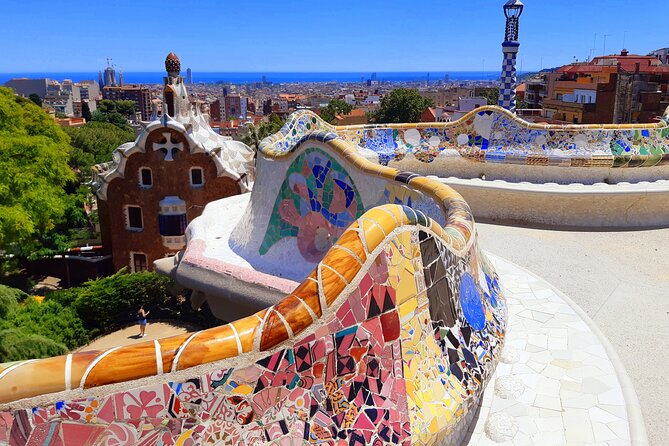
This is not a sit-down museum visit. It is a street-by-street treasure hunt built around Joan Miró, a Catalan artist you will start spotting in the city in a new way once you see how the clues connect places. Instead of one big narrative, you get short story moments that guide your attention, then you move on.
I like the format because it naturally forces you to slow down at intersections, facades, and public spaces. You are not just looking. You are looking with a purpose, like you are solving a mystery while you walk.
And because it is self-guided, you control the energy level. If you want a quick run, you can keep moving. If you want to linger near a Miró-related spot, the rules let you pause and reset before you continue.
Price, value, and what your ticket really buys
At $8.73 per person, you are paying mainly for the game framework: the Questo app experience, the puzzle sequence, the story writing, and the phone-based directions. You are not paying for a museum ticket, and you do not need attraction entry fees to finish the hunt.
That matters because you avoid the usual problem with art days, where the total bill creeps up with timed tickets and add-ons. Here, you can spend your money on one thing, then use it to explore multiple areas of Barcelona, mostly outdoors.
One more practical note. This kind of activity tends to get planned ahead. The average booking lead time is 29 days, so if your dates are tight, I would not wait until the last week to book.
Other things to see around Barcelona
- Barcelona: Sagrada Familia Entry Ticket with Audio Guide
★ 4.6 · 105,312 reviews - Casa Batllo Admission Ticket with Intelligent Audio Guide
★ 4.5 · 3,168 reviews - Barcelona: Mies van der Rohe Pavilion Ticket and Audio Guide
★ 4.6 · 380 reviews
What happens on the ground, and how long to plan
You should plan for about 2 to 2.5 hours. The route is built as a sequence of stops, and each segment is designed to take roughly 10 minutes once you are at the location. Real time will vary depending on how long you want to linger, how quickly you solve puzzles, and whether you stop for a snack or photos.
The best part is the pacing flexibility:
- You can start, take a break, and continue.
- The experience availability is 24/7, every day of the year.
- You can also get help from 24/7 customer support if something goes wrong with the app experience.
Because it is open air and designed to avoid crowding, it is often a smart option on days when you do not want to fight for space at major sights. You are still walking through central Barcelona, so wear shoes you trust.
The phone setup: Questo app and your ticket
After booking, you receive an email with instructions on how to download and play the game on your phone. You will use the mobile ticket and follow the app’s prompts to get from stop to stop.
A helpful detail: the experience recommends that each user purchase a ticket for the best experience. But the info also notes that several people can share a phone. That can work well for couples or friends who want to stay together and talk through clues.
So if you want the most comfortable setup, bring:
- a charged phone,
- headphones only if you like audio,
- and enough data or offline capability, depending on what the app recommends in your confirmation email.
Stop-by-stop route: your Miró mystery walk
Below is the order you will follow. Each stop is reached by solving a clue and puzzle, and once you arrive, you can spend as much time as you want before you start the next clue.
Stop 1: 08014
You begin in the 08014 area of Barcelona. The first challenge is how the game tees you up, not just where you stand. You solve a clue, then arrive at this initial point where you can take your time.
This opening matters because it teaches the rhythm of the hunt. By the time you finish the first segment, you will know whether you like these puzzles or prefer to move quickly.
One ticket rarely covers it all. Here's what else is nearby.
- Barcelona: Park Güell Admission Ticket★ 4.4 · 76,534 reviews
- Barcelona: Casa Batlló Entry with Self-Audioguide Tour★ 4.7 · 25,359 reviews
- Barcelona: Montjuïc Cable Car Roundtrip Ticket★ 4.5 · 22,368 reviews
- Barcelona: Hola Barcelona Public Transport Travel Card★ 4.5 · 20,985 reviews
- Barcelona: 24 or 48-Hour Hop-On Hop-Off Bus Tour★ 4.4 · 20,872 reviews
- Barcelona: Park Guell Guided Tour with Skip The Line Entry★ 4.7 · 17,563 reviews
Stop 2: Carrer d’Aragó, 2
Next you work your way to Carrer d’Aragó, 2. Like the first stop, you spend a few minutes thinking, then the game hands you directions to the next location.
If you are prone to overthinking puzzles, this is a good early test. The game keeps it moving so you are not stuck for long.
Stop 3: Arenas de Barcelona
Then the walk brings you to Arenas de Barcelona. This is one of the clearly identified anchors in the experience, and it fits the theme of using Miró-related storytelling to pull you through the city.
If you want a short photo break, this is a decent moment because the focus shifts from pure puzzle solving to just absorbing your surroundings.
Stop 4: Gran Via de Les Corts Catalanes, 659 Garage
Now you are directed to Gran Via de Les Corts Catalanes, 659 Garage. The game sometimes chooses practical street-level locations, and a garage entrance is a good example of that.
This is worth mentioning because it changes how you search. You will likely need to pay attention to the exact spot the app expects, not just the general neighborhood.
Stop 5: Gran Via de Les Corts Catalanes, 493
The next step continues along Gran Via de Les Corts Catalanes, 493. You repeat the same rhythm: puzzle, then arrive, then pause as long as you want.
If you get tired, you can use the built-in pauses to regain focus. Just remember the app is what keeps you in the right order.
Stop 6: Carrer del Comte Borrell, 108
Now you move to Carrer del Comte Borrell, 108. This stop is one more street address in the mid-walk stretch, which is where I think most people benefit from letting the app do the heavy lifting.
It also helps you experience Barcelona as more than a list of attractions. You are actually walking between them.
Stop 7: Mercat de Sant Antoni
Then you arrive at Mercat de Sant Antoni. Markets are a great setting for this kind of game because they naturally slow you down. Even if you are only there briefly for the clue moment, the environment makes the walk feel more local.
Practical note: markets can be lively, so if you want quieter moments, time your hunt so you avoid peak shopping hours.
Stop 8: Cinemes Renoir Floridablanca
Next up is Cinemes Renoir Floridablanca. This is one of the stops that makes the route feel more like a city stroll. Instead of only art and parks, you also get built-in variety.
And because the game is open air, you keep walking through different kinds of streets and squares.
Stop 9: Teatre Goya
After that you hit Teatre Goya. This is another entertainment venue that helps break up the walk.
It is a small reminder that Miró is not just paintings on a wall. The city around you is part of the story, and these real venues give you that everyday Barcelona context.
Stop 10: Plaça Universitat
You then go to Plaça Universitat. This is a more central-feeling stop, and it is a good point to re-check your phone settings if needed.
If you like taking breaks, this kind of plaza stop often makes it easy to breathe before you continue.
Stop 11: La Rambla, 75
Then the game heads you toward La Rambla, 75. This is also where the route starts to connect your hunt to the classic central axis of the city.
One person’s experience notes passing from the Sants area toward La Rambla, which is a smart way to think about this route. It can turn your commute-like walk into something more interesting.
Stop 12: Mercat de la Boqueria
Your next stop is Mercat de la Boqueria. Markets again, which gives you a consistent sense of place. The game keeps you moving, but you still get that market energy around you.
If you are visiting for a longer day, you could treat this as the part of your plan where you also consider a snack stop. Just keep one eye on your phone so you do not lose your place.
Stop 13: Mosaic de Joan Miró (finish area)
Finally, the hunt ends at the Mosaic de Joan Miró on La Rambla near 71 to 73. This is the perfect ending because it feels like a payoff. You finish at a Miró-themed public artwork marker right where the city has the most foot traffic.
At this point, you will likely look at other Miró details around town differently, because the game trained your attention.
The Miró angle: where the art theme actually helps
The listing highlights several named Miró connections, including Joan Miró park (Women and bird), Casa Joan Miró, and other lesser-known stops. What I like about that mix is that it creates a “why” for moving around.
Instead of hopping between unrelated landmarks, you are following a story structure. You get told enough to care, but not so much that you feel trapped in a script.
This kind of art theme works best when you treat it as attention training. As you go, ask yourself:
- What visual detail does the clue want me to notice?
- Does the story make me see the place differently?
- Am I walking with curiosity or just following directions?
You do not have to be an art expert. The value here is that you come away with a stronger sense of how Miró connects to different corners of Barcelona.
Logistics that make this easier than most
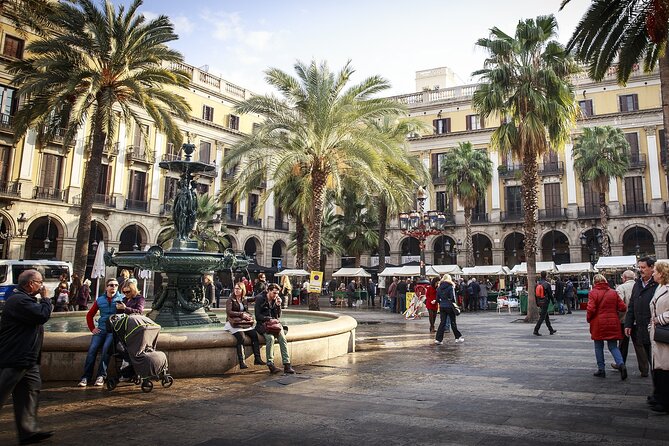
A few practical things make this a smoother experience than many guided tours.
You can choose when you start
Availability is 24/7, and the app supports the full year. That gives you flexibility if your day changes, or if you want to do the hunt after a museum plan.
Entry tickets are not part of the deal
Even though the route includes known places, the experience does not require attraction entry tickets to complete the game. That keeps it budget-friendly and reduces stress.
It avoids crowds by design
It is self-guided and open air, with a focus on avoiding packed areas. That does not mean it is empty, especially near central spots, but the structure is meant to keep the experience from turning into a shoulder-to-shoulder slog.
Who should book this hunt in Barcelona
This fits well if you:
- want a walk that mixes art and everyday city spaces,
- enjoy solving light puzzles and following clue logic,
- like having control over timing and pace,
- and prefer a mobile, self-guided format over a group tour.
It may be less ideal if you:
- hate phone-based navigation,
- get frustrated when you are unsure of what the clue expects,
- or dislike walking for a couple hours through central areas.
If you are traveling with kids, it can work if everyone enjoys the game, but the data only says most travelers can participate. So you will still want to judge your group’s puzzle tolerance.
Should you book the Joan Miró mystery?
I think it is a solid choice when you want more than a checklist of attractions. For a small price, you get a structured art story plus a route that takes you through parks, markets, and city landmarks without the usual timed-ticket headaches.
Book it if you like playful problem solving and you want a day that feels like you are exploring with a plan. Skip it if you want museum time with guided explanations, or if you expect a traditional art tour. This is more about how the city feels while you solve something, then learn just enough along the way.
FAQ
How long does the Joan Miró mystery take?
It usually takes about 2 hours to 2 hours 30 minutes.
Where does the experience start and end?
It starts at 08014 Barcelona, Spain and ends at the Mosaic de Joan Miró on La Rambla near 71 to 73, 08002 Barcelona.
Do I need entry tickets to visit the attractions on the route?
No. Entry tickets are not needed to complete the tour.
Is this a guided tour?
No. It is self-guided. There is no tour guide, and you follow the story and directions on your phone.
What phone app does the experience use?
The experience uses the Questo app.
Can multiple people share one phone?
The experience recommends each user purchase a ticket for the best experience, but it notes that several people can share a phone.
Can I start at any time of day?
Yes. The experience availability is 24/7, with opening hours listed as 12:00 AM to 11:30 PM.
The latest to open for booking

Scavanger Hunts Tours, side by side.
Barcelona Gothic Quarter Scavenger Hunt and City Highlights Walking Tour
Read our review →
“The Secret of Cerdà” Treasure Hunt Walking Tour
Read our review →
Barcelona Scavenger Hunt and Sights Self-Guided Tour
Read our review →
The Search for the Snake Stone City Treasure Hunt
Read our review →
Private Family Treasure Hunt | Guided, fun & 100% Offline | Xventura Barcelona
Read our review →
Private Treasure Hunt The Explorer | Guided, fun & 100% Offline | Xventura
Read our review →
The Goldheist – Private City Escape Game in Barcelona
Read our review →Where else this one turns up