Reviewed · 2-HOUR EXPERIENCES
Private Tour of 2 hours and a half of the Civil War in Barcelona
Barcelona hides Civil War scars in plain sight. This private Civil War tour traces how the conflict played out across Barcelona’s most recognizable streets and quarters, using real places instead of textbook summaries.
What I like most is the 2.5-hour pacing, which keeps the story moving without turning into a lecture, and the fact that the focus stays concrete, stop by stop. You’re also guided in a way that stays lively, and one guide named Rod is praised for enthusiasm and for answering questions clearly.
You’ll spend time in places such as Plaça de Catalunya, La Rambla, the Gothic Quarter, El Raval, and El Poble-sec, with each segment around 30 to 60 minutes. I also like that the stops are marked as admission ticket free, so you can spend your money on the guide and not on entry fees.
One consideration: this is a good-weather experience, so if conditions are poor you may need a different date or a refund.
In This Review
- Key highlights before you go
- Why a Civil War walk through central Barcelona works
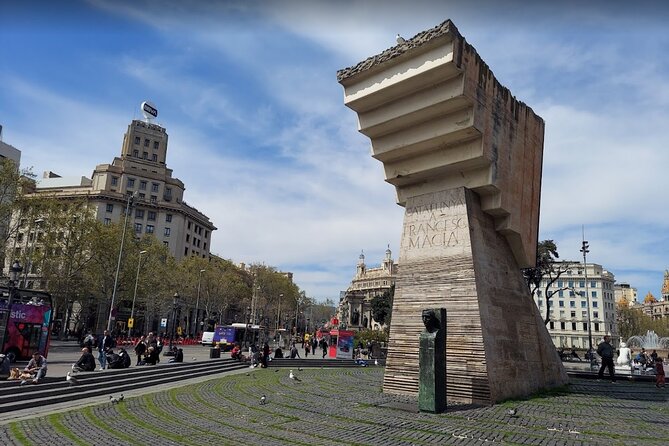
- Plaça de Catalunya: rallies, recruitment, and the power of public space
- La Rambla: political life, riots, and buildings used for shelter
- Barri Gòtic: Republican and Francoist headquarters in a maze of streets
- El Raval: barricades, trenches, and bombardments in a multicultural quarter
- El Poble-sec and Montjuïc tunnels: refuge you can still visit
- Price and logistics: is $181.48 per person worth it?
- What to expect during the 2.5-hour route
- Who this Civil War tour is best for
- Should you book this tour?
- FAQ
- How long is the Private Tour of the Spanish Civil War in Barcelona?
- Where does the tour start and where does it end?
- Is the tour offered in English?
- Are the stops free to enter?
- What happens if the weather is poor?
- Is there free cancellation?
Key highlights before you go
- A true private format: only your group participates, so you can ask questions and set your own pace.
- A clear route through five wartime zones: from Plaça de Catalunya down to La Rambla, through Barri Gòtic, El Raval, and into El Poble-sec.
- Free admission at each stop: each location is listed with admission ticket free, which improves value.
- War-era details you can actually picture: recruitment and rallies, riots, headquarters, street fighting, and bombardments tied to specific neighborhoods.
- A guide who connects dots: one review specifically calls out George Orwell and Catalonia, which is great if you want story connections beyond dates.
Why a Civil War walk through central Barcelona works
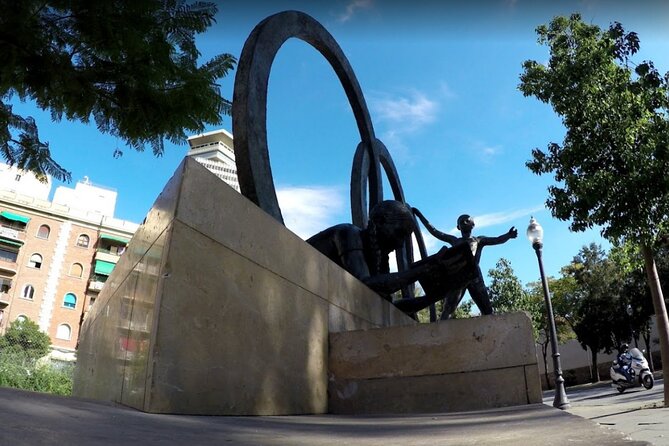
A lot of history tours are content to point at plaques. This one tries to do something harder: show you how people lived, panicked, organized, and fought in the same streets you walk today.
Barcelona during the Spanish Civil War was a patchwork of political pressure, public rallies, and neighborhood tension. You see it in the way the route moves from major public squares to narrow quarters and then up toward refuge on the hill near the port. If you like your history with street-level context, this format fits.
Because it is a private tour, you are not stuck watching the clock for a big group’s pace. And because it is offered in English, the explanations can stay specific and clear without you having to “translate in your head.”
Plaça de Catalunya: rallies, recruitment, and the power of public space
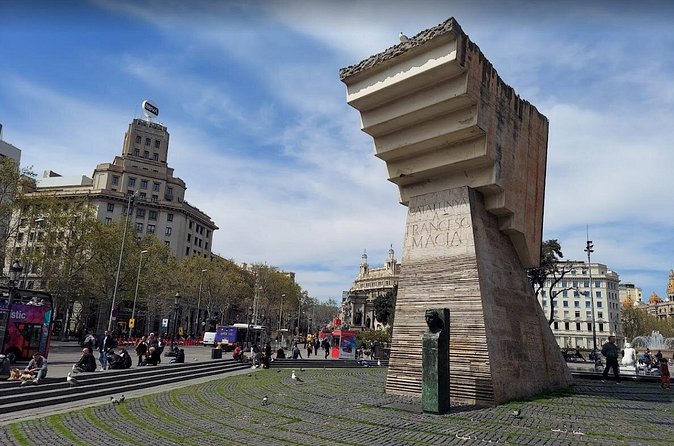
The tour starts at Plaça de Catalunya, right in the core of the city. In wartime, big public squares were not just scenery. They were places where crowds could be gathered, messages pushed, and troops recruited or mobilized.
Here, you focus on demonstrations and political rallies, and how that public energy became practical. It’s also a useful first stop because it gives you a baseline for the rest of the walk. Once you understand how recruitment and propaganda worked in a central hub, you’ll read the later neighborhoods differently.
A practical upside: Plaça de Catalunya is an easy place to meet and regroup. If you need a quick restroom break or want to confirm directions for the next stretch, you can usually handle it without stress. The main “drawback” is also simple: being in a busy center means you’ll want to keep your attention on the guide’s markers, not on the surrounding hustle.
Short on time? This still fits
- Barcelona: 2-Hour City Sights Guided Segway Tour
★ 4.9 · 610 reviews - Barcelona: 2-Hour Sailboat Tour with Snacks and Drinks
★ 4.8 · 357 reviews - 2-Hour Sailing Tour in Barcelona with Open Bar & Snacks
★ 5.0 · 318 reviews
La Rambla: political life, riots, and buildings used for shelter
Next comes La Rambla, the famous avenue people associate with shopping and strolling. During the Civil War, that same visibility made it a stage for clashes and riots. If you’ve ever wondered how a modern tourist street could also be a conflict zone, this is where the connection clicks.
The wartime detail that matters here is not just violence. It’s how the street’s social and political role pulled everyone into the contest. You also learn that some buildings along La Rambla functioned as shelters for people affected by bombing. That turns your idea of “home” and “safety” into something more complicated than it usually is in peacetime stories.
A tip for enjoying this segment: keep your eyes up as well as forward. The explanations may point out why certain building fronts and street positions mattered during the war. With a guide talking through it, La Rambla becomes more than a landmark. It becomes a map of fear, rumor, and sudden choices.
Barri Gòtic: Republican and Francoist headquarters in a maze of streets
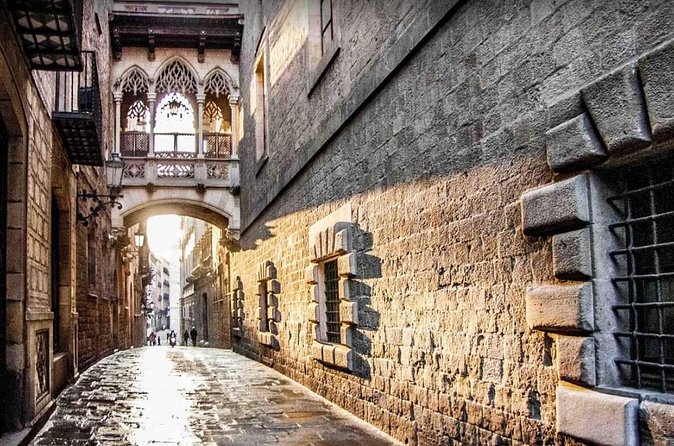
The Gothic Quarter is one of the most atmospheric areas of Barcelona today, all narrow lanes and historic squares. During the Civil War, it was also a strategic space. The neighborhood housed headquarters of both Republican forces and the Francoist army, which means the same corners you admire were tied to command and planning.
What you’re there to understand is how street fighting and shelling played out in a dense urban environment. In practical terms, a maze of narrow streets can protect movement and complicate defense. It also creates choke points, and that matters when shelling and fighting are part of the story.
This stop is listed at about an hour, which is a good amount of time. In other words, the guide should have room to connect multiple points without rushing. The potential downside is that Barri Gòtic can feel visually busy even on calm days. Bring your focus back to the key places the guide points out, and let the streets serve the story instead of stealing it.
If you want a strong “aha” moment, this is often the segment that delivers. You’ll likely leave with a mental image of the conflict as something that happened inside real neighborhoods, not out in some distant geography.
El Raval: barricades, trenches, and bombardments in a multicultural quarter
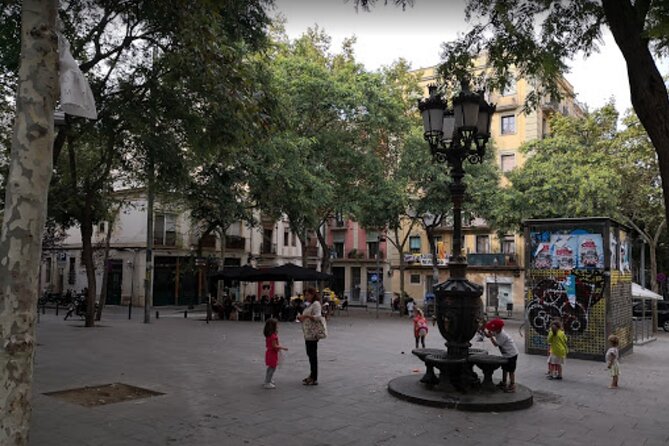
El Raval is known today for its mix of cultures and for the way it feels less like a postcard and more like a working district. In wartime, it also had a role tied to ground-level defense.
Here the story centers on barricades and trenches, built and used by both sides. That detail matters because it changes the conflict from a series of rallies and statements into something physical. People prepared positions. People dug in. People tried to make streets and buildings work for them.
The itinerary also notes clashes and bombardments, with historic buildings damaged or destroyed. That is heavy material, so it’s worth setting expectations. If you like history but prefer lighter themes, El Raval may feel emotionally weighty. Still, it is one of the most useful stops if you want to understand how war reshaped daily life in a city.
A practical way to get value here: ask your guide how the neighborhood layout influenced defenses. Even without inventing details, a good guide can explain the logic of trenches and barricades in dense urban space. That turns “what happened” into “why this place mattered.”
El Poble-sec and Montjuïc tunnels: refuge you can still visit
The last neighborhood on the route is El Poble-sec, on the side of a hill near the port. The shift is meaningful. You go from street-level conflict to refuge and defense systems built into the terrain.
This is where the tour becomes especially hands-on, because the area includes tunnels and air raid shelters built into the Montjuïc hill. The key point is that tunnels are still visitable today, which means you’re not only hearing about protection in theory. You’re walking through something that still exists.
Even if you do not go deep into technical details, the atmosphere of a shelter space changes how you interpret the rest of the tour. After learning about recruitment, rallies, riots, headquarters, trenches, and bombardments, these shelters provide the human response: hiding, surviving, and moving through underground spaces when the sky is dangerous.
If you want the most out of this segment, wear shoes that handle uneven or worn surfaces. Shelter spaces can be a bit of a contrast in lighting and footing, and you’ll enjoy it more if you feel steady. Also, if the weather is questionable, pay attention to whether the tour proceeds as scheduled, since good weather is required.
Other things to see around Barcelona
- Montserrat Monastery Small Group or Private Tour Hotel pick-up★ 5.0 · 5,144 reviews
- Tour Welcome Barcelona with Local Guide in Eco Tuk Tuk Private★ 5.0 · 1,882 reviews
- Barcelona Private Tour by Sidecar Motorcycle★ 5.0 · 1,750 reviews
- Barcelona: Private Group Bike Tour★ 4.8 · 1,420 reviews
- Barcelona Helicopter, Sailboat & Old Town Private Walking Tour★ 5.0 · 1,395 reviews
- Barcelona: Helicopter, Boat Ride & Old Town Private Tour★ 4.7 · 1,357 reviews
Price and logistics: is $181.48 per person worth it?
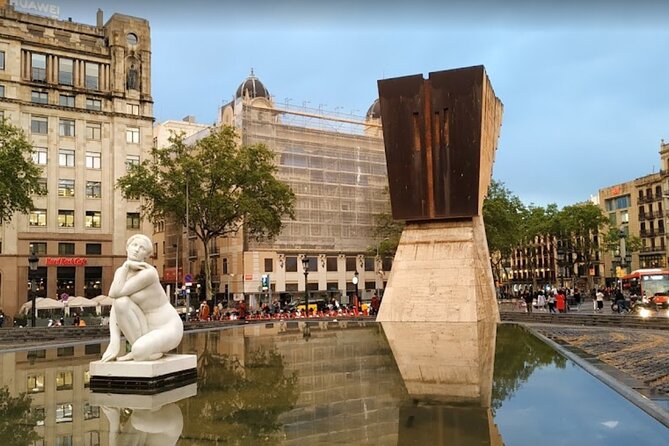
The price listed is $181.48 per person, for a 2 to 3 hour private tour in English. Private tours can feel pricey if you compare them to group walking tours, so you’ll want to judge value by what you get.
Here are the value drivers that actually matter for deciding:
- Private format: only your group participates. That means more flexible pacing and more chance for questions.
- Duration: the route is short enough to fit a travel day, but long enough to cover five distinct areas.
- Guide-led interpretation: the whole point is explanation tied to each location, not just sightseeing.
- Admission ticket free at stops: each location is listed with admission ticket free, so the price is largely paying for the guide and time rather than museum fees.
- Mobile ticket and group discounts: these are small comforts, but they help if you’re coordinating a travel party.
Where the cost might not feel ideal is if you already know a lot of Spanish Civil War history and just want a quick orientation walk. In that case, you might want a shorter, less expensive option. But if you want the narrative connections, this tour’s structure supports learning without overload.
A small practical note: the meeting point is Plaça de Catalunya, and the tour ends back at the same point. That makes planning easier, especially if you want to connect the walk to lunch or another activity without complicated transit.
What to expect during the 2.5-hour route
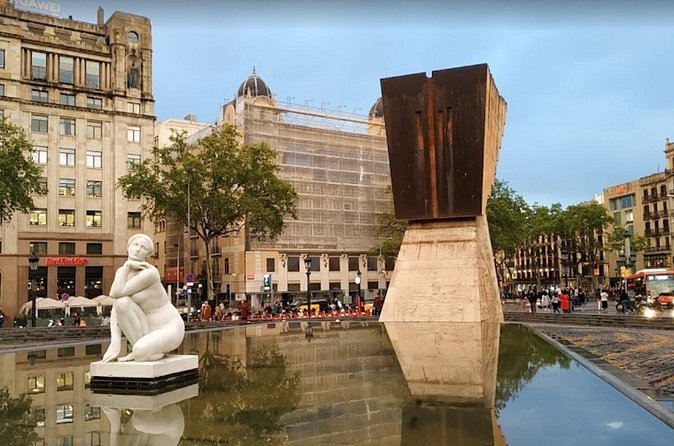
Think of the tour as a guided storyline with five “chapters.” Each stop has about 30 minutes, except Barri Gòtic, which gets around an hour. That longer segment matches its density and the complexity of headquarters, street fighting, and shelling in a tight urban layout.
Between stops, you’re mainly moving on foot through central Barcelona. The route is designed so you can feel how the conflict shifted from public space (Plaça de Catalunya), to a central thoroughfare (La Rambla), into dense quarters (Barri Gòtic and El Raval), and then toward refuge (El Poble-sec and Montjuïc tunnels).
Because it is offered in English, you should get consistent explanations without waiting for translation. You’ll also want to use the private format: if there’s something you care about, like Catalonia’s role or links to writers connected to the conflict, bring it up. One review highlights George Orwell and Catalonia, which suggests the guide may connect the broader story to people and ideas you recognize.
Who this Civil War tour is best for
This is a strong choice if you:
- enjoy history that lives in the streets, not just museum walls
- want a guided walk that covers multiple neighborhoods in one go
- prefer a private format where questions are welcome
- like connecting Barcelona to larger Spanish Civil War themes, including Catalonia and wider cultural references
It’s also a good fit if you’re the type of traveler who hates wasted time. The tour is structured, timed, and focused, with free-entry stops that keep you from constantly checking tickets or worrying about extra costs.
Who might want to think twice? If you dislike conflict-focused tours or would rather avoid intense subjects like bombardments and street fighting, this may feel too heavy. Still, if you want a realistic view of how war reached everyday space, those details are the point.
Should you book this tour?
I’d book this if you want a clear, walkable route that turns Civil War history into something you can picture in your head as you stand in the streets. The combination of private pacing, English interpretation, and admission ticket free stops improves value, especially at $181.48 per person.
Book it with confidence if you’re curious about how major public places and neighborhood layouts shaped what happened during the conflict. And if you care about story connections, ask your guide about Catalonia and people like George Orwell, since that kind of context is specifically called out in one of the strong reviews.
If you only want casual sightseeing or you are traveling on a day when weather might be unstable, it’s worth checking timing closely. This experience requires good weather, and that can matter for outdoor walking and for the final tunnel visit.
FAQ
How long is the Private Tour of the Spanish Civil War in Barcelona?
The tour lasts about 2 to 3 hours (approximately). The itinerary is timed across five stops, with one stop around 1 hour and the others around 30 minutes each.
Where does the tour start and where does it end?
The tour starts at Plaça de Catalunya (Pl. de Catalunya, 08002 Barcelona, Spain). It ends back at the same meeting point.
Is the tour offered in English?
Yes, the tour is offered in English.
Are the stops free to enter?
The itinerary lists admission ticket free for each of the stops, which means you should not need separate admission tickets for those locations.
What happens if the weather is poor?
The experience requires good weather. If it is canceled due to poor weather, you will be offered a different date or a full refund.
Is there free cancellation?
Yes. You can cancel up to 24 hours in advance for a full refund. If you cancel less than 24 hours before the start time, the amount you paid will not be refunded.
The latest to open for booking

2-Hour Experiences, side by side.


2-Hour Sailing Tour in Barcelona with Open Bar & Snacks
Read our review →
Jewish Walking Tour Barcelona by Expert Jewish Guide 2h
Read our review →